

You’ll encounter djinn not as servants but as autonomous beings of smokeless fire—*nār as-samūm*—emerging from pre-Islamic Arabian deserts with the same dangerous gift humanity possesses: free will. These chimeric entities inhabit liminal territories between sand dunes and mirages, demanding offerings at wells and protection through iron talismans. Unlike Disney’s sanitized portrayal, authentic djinn embody humanity’s contradictions as both benevolent guardians and malevolent tormentors, their essence rooted in Mesopotamian veneration and confirmed through Quranic revelation. What follows reveals the apotropaic systems developed to negotiate with these eldritch intelligences.
Key Takeaways
- Djinn originate from pre-Islamic Arabia as beings of smokeless fire, possessing free will and acting as spiritual counterparts to humanity.
- Fire Ifrits and water Marids represent elemental tribal affiliations, with djinn capable of shapeshifting and manipulating weather phenomena like tempests.
- Desert sand spirits inhabit dunes and mirages, prompting ancient communities to make ritualistic offerings at wells and carved stone invocations.
- Protective measures include iron talismans, inscribed Quranic verses, and reciting Ayat al-Kursi when traversing djinn territories in deserts.
- Djinn embody contradictions as both benevolent guardians and malevolent tormentors, demanding respect rather than servitude from mortal encounters.
Smokeless Fire Ignites Imagination
The imaginative folklore surrounding djinn reveals humanity’s ancient recognition that consciousness needn’t anchor itself to corporeal forms.
They’re chimeric by nature—shape-shifters who blur boundaries you’ve constructed between species, between visibility and invisibility.
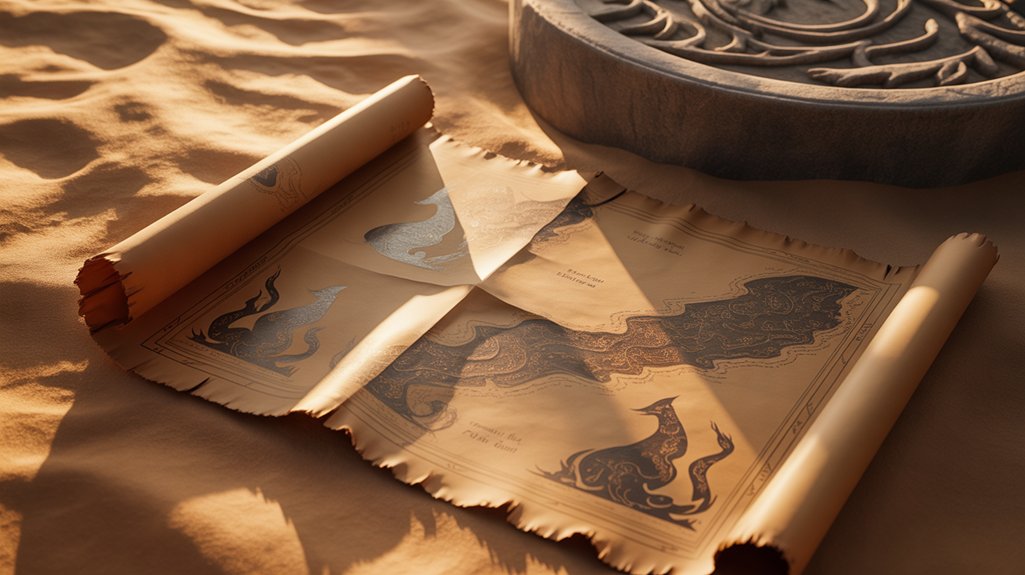
Desert peoples understood this: beneath scorching sands, in sirocco winds carrying furnace-breath across dunes, djinn move. Unseen. Unbound.
Their smokeless fire burns without consuming itself, a perpetual energy challenging your physics, your theology, your certainty that reality operates within predictable parameters.
They represent radical freedom—existence without predetermined form, will without constraint.
##
You’ll find the Djinn’s genesis rooted in pre-Islamic Arabia, where ancient peoples recognized these eldritch beings as children of smokeless fire—entities born from the primordial elements themselves, predating human creation by millennia.
Their chimeric powers manifest through elemental manipulation, shapeshifting across corporeal and ethereal forms, and the dangerous granting of wishes that inevitably twist mortal desire into catastrophe.
Cultural depictions evolved from seventh-century Quranic codification through medieval Persian manuscripts and into contemporary folklore, while protective rituals—inscribed talismans bearing Quranic verses, iron amulets, salt circles—remain crucial defenses against their unpredictable wrath.
Origins in Ancient Arabia
Long before Muhammad received his revelations in the seventh century CE, Arabian nomads whispered of beings that moved through the hammada’s shimmering heat—entities neither wholly corporeal nor entirely ethereal, born from smokeless fire and dwelling in the liminal spaces between known and unknown.
You’ll find jinn mythology rooted in pre-Islamic Arabia, where these ancient spirits commanded worship alongside established deities. The term itself derives from “to hide,” capturing their eldritch essence.
Mesopotamian traditions shaped these beliefs, introducing chimeric fire-and-wind entities into Arabian consciousness. Desert inscriptions reveal devotional practices: offerings left at desolate wells, invocations carved into stone.
Some jinn were venerated as protective forces; others feared as malevolent phantoms haunting empty wadis. This reverence transcended simple superstition—it represented humanity’s attempt to negotiate with powers beyond mortal comprehension.
Like the Norse peoples who inhabited distant northern lands, Arabian cultures developed rich mythological traditions that reflected their particular cultural expressions while addressing universal human questions about the numinous and unseen forces.
Elemental Nature and Powers
While humans remain bound to earth’s clay limitations, djinn emerge from an altogether different cosmology—smokeless fire (*nār as-samūm*) infusing their essence with mutable volatility absent in mortal frames.
You’ll find their elemental manifestations categorized by tribal affiliation: Ifrits channeling raw flame, Marids commanding aqueous depths, each subspecies reflecting primordial forces that predate human consciousness.
Their shapeshifting prowess transcends mere illusion—chimeric alterations into serpents, raptors, even your own reflection. This thermic constitution grants dominion over meteorological phenomena: summoning tempests, bending atmospheric pressure, manipulating thermal currents with eldritch precision.
Yet their most renowned ability—wish-granting—carries inherent dangers. The wish consequences stem from their elemental unpredictability; they’ll honor your request while twisting intention through their own incendiary logic, freedom purchased through terms only they truly comprehend.
These desert mythologies serve as cultural expressions that illuminate fundamental questions about power, autonomy, and the boundaries between human and supernatural realms.
Cultural Depictions Through Time
Through millennia of human consciousness, djinn have undergone profound metamorphoses across cultural landscapes, their essence refracted through the prismatic lens of each civilization’s fears and fascinations.
You’ll discover ancient Mesopotamians venerating these eldritch wind-spirits as dualistic harbingers of chaos. Pre-Islamic Arabian poets sought their favor through ritual verse, acknowledging their dominion over desolate wastes.
The Abbasid Era witnessed jinn folklore crystallizing into complex cultural symbolism—entities of possession, disease, chimeric guardians requiring Quranic protection.
1001 Arabian Nights” preserved their authentic nature: unpredictable, dangerous, morally ambiguous.
Today’s wish-granting genies represent profound departure from tradition. These weren’t benevolent servants but autonomous beings dwelling in liminal spaces, demanding respect, fearing iron, embodying humanity’s ancient recognition that invisible forces—capricious, powerful—shaped existence beyond mortal comprehension.
Protection Rituals and Talismans
When djinn manifested their presence through unexplained illness, sandstorm fury, or nocturnal whispers that drove mortals toward madness, communities across the Arabian Peninsula, North Africa, and Persia developed sophisticated apotropaic systems—defensive knowledge transmitted through generations who understood that survival required negotiation with the unseen.
You’d inscribe God’s names upon silver amulets. Wear them close. Protection practices centered on Quranic verses—particularly Ayat al-Kursi—recited at threshold moments when the eldritch domain pressed nearest.
Iron became your ally; djinn recoiled from its earthbound resonance. Talisman effectiveness depended on spiritual intermediaries performing ruqya, those exorcism rituals combining prayer with fumigation using frankincense and myrrh.
Offerings appeased territorial spirits. Each gesture acknowledged chimeric intelligences dwelling parallel to human existence, demanding respect rather than conquest.
Pre-Islamic Arabian Peninsula Texts

In examining pre-Islamic Arabian Peninsula texts, you’ll encounter the jinn as eldritch presences woven throughout the poetry of desert nomads. Their chimeric forms emerging from verses that captured the supernatural worldview of tribes traversing vast, unforgiving expanses between the 5th and 7th centuries CE.
These wandering peoples—the Bedouin—inscribed their encounters with concealed beings into oral traditions that traveled alongside caravans on frankincense routes, where merchants whispered of marid and ifrit haunting abandoned wells and windswept dunes.
The poetry itself becomes archaeological evidence, each qasida preserving fragments of a cosmology wherein the visible world pressed constantly against the hidden domain. Jannah and jahannam not yet codified, but the jinn already ancient, already feared.
Pre-Islamic Poetry References Djinn
Long before the Quran codified the existence of Djinn within Islamic cosmology, the *sha’ir*—those ancient poet-seers of the *Jahiliyyah* period—wove intricate verses that acknowledged these eldritch inhabitants of Arabia’s most forsaken territories.
You’ll find Djinn symbolism permeating pre-Islamic verse, where poets like Al Asha claimed direct communion with these chimeric entities dwelling in windswept wastes and skeletal ruins.
The *Majnun*—literally “possessed by Djinn”—weren’t merely madmen but vessels through which otherworldly wisdom flowed. These spirits served as poetic inspiration, their presence invoked before composition began.
The *sha’ir* understood what you’re discovering: that certain desolate places thrummed with invisible presences, simultaneously menacing and muse-like.
Poetry became protective incantation, acknowledgment of powers beyond mortal comprehension. The Djinn embodied humanity’s contradictions—benevolent guardians, malevolent tormentors, reflecting emotions scholars still struggle to categorize.
Arabian Desert Nomadic Tribes
| Djinn Territory | Associated Location | Tribal Response |
|---|---|---|
| Sand Spirits | Dunes, Mirages | Ritualistic offerings |
| Fire Djinn | Desert ruins, Caves | Protective charms |
| Wind Dwellers | Desolate wadis | Avoidance protocols |
Desert survival meant negotiating with unseen forces. Chimeric beings haunted specific sites—ruins whispered warnings, caves concealed otherworldly thresholds. Your ancestors understood: freedom required honoring boundaries between human and djinn territories, maintaining equilibrium through sacred practice.
Trade Route Supernatural Beliefs
These territorial understandings extended far beyond individual campsites, shaping the very infrastructure of commerce that connected distant civilizations.
You’ll discover that jinn folklore permeated every milestone along Arabia’s arterial pathways, altering mundane geography into eldritch cartography. Merchants wouldn’t pass Wabar or Hegra without reciting protective verses, acknowledging the chimeric guardians dwelling in those liminal spaces.
Trade route legends attributed monumental architecture—caravanserais, fortified cities—to jinn construction, supernatural labor manifesting in stone and mortar. Pre-Islamic poets invoked these entities against desert perils: sandstorms, thirst, bandits.
The spirits controlled natural phenomena, demanded respect. Before departure, traders performed elaborate rituals, understanding that successful passage required negotiation with invisible powers.
Commerce hence became spiritual transaction, every journey a covenant between human ambition and djinn sovereignty over trackless wastes.
Persian Peri Vs Arabian Jinn

While both entities inhabit the liminal spaces between mortal and divine domains, the Persian Peri and Arabian Djinn represent fundamentally divergent manifestations of supernatural power across the desert landscapes of the Near East.
Peri characteristics emerge from luminous origins—beings woven from light itself, redemptive forces that guide wanderers toward grace. The Djinn duality, however, reflects humanity’s own fractured nature: creatures forged from smokeless fire, wielding free will as both weapon and gift.
| Attribute | Persian Peri | Arabian Djinn |
|---|---|---|
| Elemental Origin | Light, ethereal air | Smokeless fire |
| Moral Alignment | Benevolent, consistently good | Dual-natured, unpredictable |
| Cultural Role | Agents of redemption | Teachers of consequence |
| Narrative Function | Grace, natural beauty | Chaos, desire’s price |
You’ll find Peris dwelling in nature’s sacred groves, fairy-like protectors of the unseen world. Djinn haunt the windswept dunes, eldritch presences testing mortals through temptation. These chimeric forces shape your understanding of supernatural agency across distinct mythological traditions.
Free Will and Moral Agency
Unlike the predetermined nature of celestial angels or the fixed malevolence of shaytanic forces, djinn navigate existence through the perilous gift of autonomous choice—a faculty that renders them spiritually cognate to humanity itself.
Djinn possess the dangerous gift of free will, making them spiritual counterparts to humanity rather than predetermined celestial beings.
This eldritch sovereignty manifests across the spectrum of moral choices, from Iblis’s primordial rebellion to devout djinn who prostrate in worship. The Quranic revelation confirms their accountability before divine judgment, where belief and deed determine eternal consequence.
The Architecture of Djinn Accountability:
- Dual Judgment Covenant – Both human and djinn souls face the Day of Reckoning, their actions weighed in celestial scales.
- Deceptive Sovereignty – Free will permits malevolent djinn to possess, influence, and manipulate human consciousness.
- Chimeric Morality – Individual djinn traverse the liminal space between righteousness and transgression.
- Interactive Agency – Their autonomous choices ripple through human affairs, necessitating spiritual vigilance.
Islamic tradition cautions against engagement with these fire-born entities, recognizing that freedom without wisdom becomes gateway to spiritual peril.
King Solomon’s Djinn Enslavement
You’ll find the most profound intersection of divine mandate and supernatural subjugation in Solomon’s dominion over the djinn, a relationship sanctioned, according to Quranic tradition, by Allah himself through the bestowal of unprecedented theurgical powers.
The wisest of Israel’s kings wielded his authority not through brute force but through sacred implements—most significantly the copper ring inscribed with the Ineffable Name, a talisman that reduced even the mightiest ifrits and marids to servitude.
His command altered these eldritch entities from autonomous fire-born intelligences into conscripted laborers, their chimeric strength channeled into raising Jerusalem’s Temple, those massive stone blocks lifted by hands that had once shaped desert winds and dwelling in smokeless flame.
Solomon’s Divine Authority Over Djinn
The ancient chronicles of the Levant speak with reverent certainty of Solomon ibn David—prophet, king, architect of divine will—who wielded dominion over the djinn through celestial decree rather than mortal cunning.
You’ll find in Islamic tradition that Allah’s gift transcended mere sorcery, granting Solomon’s wisdom absolute command over these eldritch fire-born entities.
The Seal—that talismanic ring inscribed with ineffable names—became his instrument of authority, compelling the Djinn hierarchy into service.
Through this divine apparatus, smokeless flame bent to mortal purpose. Temples rose. Treasures materialized from distant dimensions.
The Quran’s Surah Al-Anbya chronicles this unprecedented sovereignty, where prophet-king and chimeric spirit collaborated under heaven’s mandate, demonstrating that true freedom emerges not from chaos, but from divinely-ordered hierarchy where even supernatural beings acknowledge righteous authority.
Djinn Labor in Temple Construction
When Solomon’s divine mandate crystallized into architectural ambition, the djinn became heaven’s conscripted labor force—entities of primordial fire converted into quarrymen, architects, and burden-bearers.
You’ll find in Quranic accounts these eldritch beings compelled through Solomon’s wisdom to quarry stone, erect temples, and traverse continental distances bearing construction materials. The supernatural labor transcended mortal limitations—djinn architecture manifesting through strength no human could replicate, speed no earthly logistics could achieve.
This wasn’t mere slavery but hierarchical collaboration, Solomon’s divine favor granting him sovereignty over chimeric domains where human and otherworldly dimensions intersected. The djinn’s subjugation served higher purpose: constructing sacred spaces that would endure millennia.
Yet you must recognize the inherent tension—powerful beings of autonomous will, temporarily bound to mortal command, their freedom suspended until Solomon’s projects reached completion.
The Magical Copper Ring
Inscribed with divine names ineffable to mortal tongues, Solomon’s copper ring altered political sovereignty into thaumaturgical dominion—a signet that bridged terrestrial kingship with metaphysical command. This wasn’t mere jewelry. The ring symbolism represented humanity’s perennial struggle against cosmic forces, changing subjugation into liberation through sacred knowledge.
Among magical artifacts of antiquity, none wielded greater eldritch authority over the desert’s fire-born inhabitants. The copper band compelled Djinn obedience through theurgic inscription—God’s true name etched into metal became chains immaterial yet unbreakable. Benevolent and malevolent entities alike trembled before its power.
Solomon utilized their chimeric abilities: supernatural strength channeled toward constructing his temple, binding chaos to serve order. You glimpse here the dangerous allure of dominion—power obtained through binding another’s will, however ancient or otherworldly. Freedom’s paradox crystallized in copper.
Disney’s Aladdin Genie Portrayal
- Traditional Djinn demanded precise linguistic formulation to avoid catastrophic misinterpretation.
- Disney’s Genie actively protected Aladdin from harmful wishes.
- Ancient servitude bound Djinn through Solomon’s seal and occult imprisonment.
- The film’s lamp became merely inconvenient, not existentially binding.
This sanitization liberated Western audiences from folkloric terror while simultaneously imprisoning authentic Middle Eastern mythology beneath layers of pop-culture pastiche.
Freedom—the Genie’s ultimate desire—ironically mirrors what was stolen from the tradition itself.
Rationalist Explanations for Encounters
Though desert winds whisper tales of smokeless fire and entities dwelling between worlds, the scientific mind seeks terrestrial explanations for what countless travelers have interpreted as djinn encounters. Your brain, magnificent yet fallible, conjures chimeric forms through pareidolia—perceiving familiar patterns in windswept dunes, twisted acacia shadows, heat shimmer mirages.
The desert’s brutal isolation becomes catalyst for altered consciousness, dehydration-induced visions mistaken for eldritch presences.
Cultural interpretations shape perception. When your ancestors believed in smokeless beings, you inherited frameworks for understanding ambiguous phenomena. Unexplained sounds, sudden temperature shifts, inexplicable dread—all filtered through inherited mythological lenses rather than neurological analysis.
Historical “possession” cases reveal societies grappling with mental illness through available spiritual vocabularies. Rituals and exorcisms provided communal control over chaos, modifying psychological phenomena into manageable supernatural encounters.
Liberation comes through understanding: these psychological explanations don’t diminish desert mysteries but illuminate the profound relationship between environment, consciousness, and ancestral wisdom systems.
Modern Mental Health Perspectives
Contemporary psychiatric frameworks now grapple with phenomena that traditional societies attributed to djinn influence, recognizing patterns where supernatural interpretations intersect with diagnosable conditions.
Modern psychiatry confronts the spectral borderlands where djinn possession narratives converge with clinical diagnosis, demanding frameworks that honor both domains.
You’ll find cultural interpretations of psychological distress manifesting as possession narratives, particularly within communities where Bedouin cosmologies remain vibrant, where the eldritch touch of unseen beings explains dissociative episodes, auditory hallucinations, psychotic breaks.
Mental health professionals navigate these liminal territories carefully, understanding that dismissing djinn beliefs risks alienating patients whose worldviews encompass both material and immaterial domains.
Saudi Arabian legal proceedings reveal this chimeric intersection—cases where possession claims require psychiatrists versed in Islamic theology alongside clinical diagnostics.
The most effective interventions honor these dual realities. Validation, not contradiction. Therapists who acknowledge supernatural fears while addressing underlying disorders achieve breakthrough outcomes, recognizing that for many, psychological distress can’t be disentangled from spiritual vulnerability.
This synthesis respects ancient wisdom while providing evidence-based care, acknowledging that healing transcends purely mechanistic approaches to consciousness.
Djinn in Contemporary Culture
The chimeric nature of modern djinn reflects your own ambivalence toward power and consequence.
Paranormal investigators still document possession cases across continents, these reports bridging ancient belief with psychological interpretation.
Here exists no Disney sanitization—only the original understanding: djinn as autonomous beings whose interference demands respect, caution, vigilance.
Contemporary portrayals increasingly reject the servile genie archetype, reclaiming these desert spirits as cautionary embodiments of ambition’s price.
Frequently Asked Questions
Can Djinn Physically Harm Humans or Cause Illness?
You’ll find that djinn abilities encompass profound physical manifestations—these eldritch entities can indeed strike you with illness, madness, or corporeal harm through their chimeric nature.
Human encounters throughout pre-Islamic Arabia and Mesopotamian texts document possession, fever, and sudden affliction. The djinn’s smokeless fire essence penetrates your mortal flesh, disrupting physiological balance.
Ancient physicians recognized “djinn sickness,” treating victims with incantations, protective amulets.
You’re vulnerable when crossing threshold spaces—twilight, doorways, wilderness—where their domain intersects yours, unbound by conventional constraints.
How Do You Protect Yourself From Malevolent Desert Spirits?
You’ll need protective talismans—iron amulets, blue beads against the evil eye, inscribed verses from sacred texts worn close to your skin.
Desert rituals demand respect: burn frankincense at dusk, scatter salt across thresholds, never whistle after sunset.
The Bedouin knew these eldritch defenses well, passed down through countless generations wandering harsh sands.
Circle your camp counterclockwise. Speak no names aloud in darkness.
Ancient wisdom isn’t superstition—it’s survival against forces that predate human memory.
What Is the Difference Between Djinn and Demons?
You’ll find djinn origins rooted in pre-Islamic Arabia’s smokeless fire, autonomous beings neither wholly good nor evil—shapeshifters bound by their own moral compass.
Demons, however, exist across demon classifications as malevolent entities: Christianity’s fallen angels, Islam’s shaitan, Mesopotamia’s utukku.
The vital distinction? Djinn possess free will, choosing their path like you do. Demons embody corruption itself, eldritch forces devoted to humanity’s downfall.
One species walks the liminal threshold; the other dwells in darkness absolute.
Are There Female Djinn and What Are Their Characteristics?
You’ll encounter female djinn throughout Islamic tradition and pre-Islamic Arabian lore, possessing characteristics as formidable as their male counterparts.
These ethereal beings—sometimes called jinniyah or si’lat—demonstrate shapeshifting prowess, eldritch intelligence, and autonomous power.
Cultural representations portray them as seductresses, protective spirits, or vengeful entities. They’re mothers, warriors, sovereigns.
Unlike patriarchal human constraints, jinniyah exercise unrestricted agency across metaphysical domains, commanding elemental forces, making their own covenants.
Freedom incarnate.
Can Humans Communicate With or Summon Djinn Safely?
You’ll find ancient djinn rituals documented across medieval grimoires and Islamic texts, though safety remains precarious.
Pre-Islamic Arabian spiritual practices emphasized protective circles, copper talismans inscribed with Solomon’s seal, and precise invocations at liminal hours—dawn, dusk.
The eldritch nature of these entities defies simple containment. Summoning requires years of study, purification rites, knowledge of divine names.
Most scholars warn against casual attempts. These beings possess chimeric wisdom and volatile temperaments. Respect their autonomy.
Communication exists, but control? That’s humanity’s dangerous illusion.
Conclusion
You’ve traversed smokeless fire’s domain, witnessed djinn’s eldritch persistence across millennia. Consider this: surveys reveal that 86% of Middle Eastern respondents maintain belief in jinn’s corporeal existence—not mere folklore, but lived cosmology. These chimeric entities inhabit your world’s threshold spaces, dwelling between empiricism and faith, rationality and revelation. Whether you interpret encounters through psychiatric frameworks or honor ancestral wisdom, the djinn endure—patient, ineffable, watching from desert’s edge. Their stories aren’t concluded. They’re perpetually unfolding.