
Ancient cultures recognized shapeshifters as sacred cartographers mapping consciousness’s fluid boundaries, beings whose metamorphic changes encoded profound truths about identity, mortality, and civilization’s permeable borders. From Greco-Roman divine retributions like Lycaon’s lupine punishment to shamanic practitioners bridging mortal and otherworldly domains through psychoactive rituals, these chimeric figures served as pedagogical vessels—living testimonies to cosmic hierarchies, communal boundaries, and the eldritch tensions between human rationality and bestial essence. Jung later reinterpreted these transformation narratives as shadow confrontations, illuminating how ancient wisdom continues resonating through contemporary explorations of selfhood’s mutable architecture.
Key Takeaways
- Shapeshifters symbolized identity fluidity as sacred technology, enabling ancient cultures to navigate thresholds between human and animal realms.
- Transformation served as divine punishment for hubris, with altered beings becoming visible warnings against challenging cosmic hierarchy and authority.
- Shamans used metamorphic abilities through rituals and substances to bridge mortal and spiritual realms, authenticating their supernatural authority.
- Metamorphosis functioned as moral pedagogy, encoding community values and behavioral expectations through narratives of transformation and consequence.
- Ancient shapeshifters represented cultural adaptability and totemic connection, linking individual power to collective tribal meaning and social boundaries.
The Transformation Phenomenon Explained
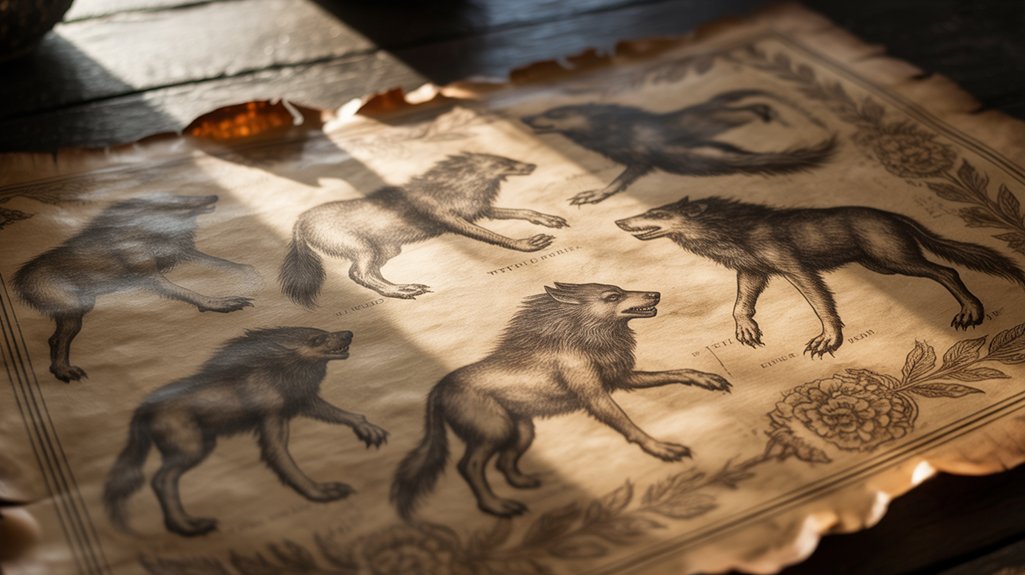
Since humanity first gazed upon the mutable face of nature—watching caterpillars emerge as butterflies, observing the moon’s cycling changes, witnessing serpents shed their skins—the phenomenon of metamorphosis has captivated the collective psyche and embedded itself within the mythological consciousness of civilizations spanning the ancient Near East, Mediterranean basin, and far reaches of Asia.
These mythical alterations transcended mere fantasy, serving as profound vessels for understanding identity’s fluid architecture. The shapeshifter embodied cultural adaptability itself—a living metaphor for humanity’s recognition that fixed forms deceive, that essence flows beyond appearance.
Ancient peoples understood change as sacred technology. The eldritch power to assume alternate shapes represented more than physical change; it manifested internal states made external, moral consequences rendered flesh.
Whether donning enchanted cloaks or surrendering to lunar cycles, shapeshifters navigated liminal thresholds between human and beast, virtue and corruption, self and other. These chimeric beings populated mythologies worldwide, their metamorphic abilities reflecting universal truths about existence’s mutable nature and identity’s perpetual negotiation.
##
The metamorphic traditions of ancient civilizations reveal alteration as a multifaceted mechanism—simultaneously wielded as divine retribution, shamanic enablement, and pedagogical instrument.
When deities imposed chimeric forms upon mortals who transgressed cosmic law, they inscribed moral boundaries into flesh itself, rendering hubris visible through bestial appendages and eldritch anatomies.
These shape-shifting narratives functioned as repositories of tribal wisdom, encoding lessons about identity’s fluid nature while establishing hierarchies of spiritual authority within communities that understood metamorphosis as both punishment and passage.
From the frozen Arctic emerged beings like the Mahaha of Inuit mythology, whose fixed supernatural form paradoxically demonstrated that not all mythical creatures required transformative abilities to embody cultural anxieties about the boundaries between human and other.
Divine Punishment Through Transformation
When mortals dared to transgress against the divine order, the gods wielded alteration itself as their most potent instrument of retribution—a punishment that didn’t simply end life but fundamentally rewrote the very essence of the offender’s being.
These divine consequences manifested through transformative justice: Lycaon’s impiety earned him lupine form, forever prowling as wolf rather than king. Ares condemned Alectryon to eternal cock-crow for failing his sentinel duty. Ascalabus became reptilian, his mockery of Demeter’s grief frozen into lizard flesh.
Most telling, Arachne’s hubris against Athena birthed her arachnid fate—perpetually weaving in shadow. Each metamorphosis served as eldritch proof of cosmic hierarchy, binding transgression to flesh in ways death never could.
The altered became living warnings, their chimeric existence evidence that challenging divine authority meant surrendering one’s very form.
Shamanic Power and Authority
Across tundra, desert, and forest canopy, spiritual intermediaries commanded metamorphic abilities that established their dominion over liminal domains where mortal flesh met otherworldly essence.
Through deliberate ingestion of psychoactive flora, rhythmic percussion, and incantatory practice, these practitioners dissolved corporeal boundaries to achieve animal embodiment. The alteration wasn’t theatrical pretense—it manifested authentic spiritual authority, allowing shamans to channel lupine cunning, avian perception, or ursine strength during healing ceremonies and divinatory rites.
This chimeric capacity positioned them as essential mediators between mundane villages and eldritch spheres beyond human comprehension. Their shapeshifting preserved cosmic equilibrium, preventing spiritual contamination from seeping into ordinary existence.
Communities recognized these figures not as charlatans but as necessary guardians whose metamorphic gifts authenticated their privileged access to supernatural wisdom, cementing hierarchies based on demonstrated power rather than inherited status.
Moral Lessons in Metamorphosis
While shamanic change conferred spiritual authority upon select intermediaries, alteration served equally potent functions as didactic instrument—ancient cultures encoded behavioral expectations within narratives where corporeal modification became consequence rather than gift.
Greek mythology’s Arachne, changed into spider by Athena’s judgment, embodied hubris punished through eternal weaving. Slavic folklore cast deceitful merchants as crows, their avian forms broadcasting transgressions across villages.
These weren’t arbitrary curses. Moral consequences manifested through flesh itself, creating living monuments to ethical failure. Yet transformative journeys sometimes catalyzed redemption—characters emerged from their chimeric states possessing newfound wisdom, their bestial interlude forcing confrontation with greed, betrayal, deceit.
The eldritch mechanics of shapeshifting warned against coveting such power; selfish desires spawned nightmarish results. Alteration therefore functioned as sacred pedagogy, binding community values into unforgettable corporeal testimony.
Identity and Tribal Belonging
Beyond moral instruction lay change’s deeper architecture—the intricate mechanisms through which shapeshifting articulated boundaries of selfhood within communal structures.
Identity fluidity wasn’t mere fantasy but sacred technology. The Navajo skin-walker, eldritch and feared, embodied tensions between individual autonomy and communal identity—demonstrating how alteration could either strengthen tribal bonds or violently sever them.
Ancient peoples understood what modernity forgot: the self wasn’t fixed but chimeric, capable of assuming multiple forms while maintaining essential belonging.
Totemic metamorphosis allowed warriors to channel bear-strength, shamans to adopt raven-wisdom, each modification anchoring individual power within collective meaning.
Shape-shifters consequently became cartographers of social boundaries, their fluid forms mapping acceptable ranges of personal expression.
To alter was to test limits—discovering where individual freedom ended and tribal cohesion began, where belonging shifted into exile.
Pre-historic Cave Art Evidence

Within the shadowed depths of France’s Cave of the Trois-Frères, dating to 13,000 BC, prehistoric artists rendered chimeric figures that blur the boundaries between human and beast—therianthropes whose antlered heads, predatory postures, and composite anatomies suggest more than mere artistic fancy.
The Sorcerer, that enigmatic fusion of man and creature painted upon ancient stone, stands as evidence to humanity’s primordial recognition of change as sacred power, a visual grammar for experiences that transcend ordinary flesh.
These eldritch images, replicated across German caverns and beyond, encode shamanic ritual and spiritual communion, preserving in ochre and carbon the oldest known proof that our ancestors sought to embody animal essence, to cross thresholds between worlds through the ineffable art of shapeshifting.
Cave Paintings Depicting Therianthropes
Deep within the limestone corridors of the Cave of the Trois-Frères, where shadows haven’t lifted in thirteen millennia, ancient hands etched something profound into stone—figures that refuse the boundaries between human and beast.
These chimeric forms, dating to 13,000 BC, represent humanity’s earliest documented engagement with therianthrope symbolism. The Sorcerer itself stands paramount: antlered, taloned, simultaneously predator and priest. Scholars recognize this cave art significance as evidence of shamanistic alteration rituals, though interpretations remain contested ground.
Each line carved into rock suggests something eldritch—a worldview where identity wasn’t fixed but fluid, where humans could traverse the membrane separating species. These weren’t mere decorations. They were threshold markers, depicting the liminal space where flesh becomes fur, where consciousness shifts between domains, where transformation served as spiritual technology.
France and Germany’s Caves
While France’s Trois-Frères commands scholarly attention, Germany’s subterranean galleries whisper their own evolution narratives—though these secrets haven’t surrendered themselves as readily to interpretation. Both nations preserve eldritch testimonies of humanity’s chimeric obsessions, their cave symbolism revealing ancient rituals that bridged flesh and fur.
| Location | Date | Significance |
|---|---|---|
| Trois-Frères, France | ~13,000 BC | The Sorcerer figure embodies therianthropic evolution |
| German caves | Prehistoric era | Humanoid-animal forms suggest nature-human unity |
These limestone sanctuaries served as theatrical spaces where identity dissolved. The therianthropes etched into stone weren’t mere decoration—they were portals. Evolution lived here, breathed through ochre and charcoal, granting communities access to powers beyond human limitation. Scholars continue parsing these enigmatic testimonies, recognizing them as humanity’s earliest documented yearning for transcendence through evolution. Such shape-shifting imagery finds echoes in lumberjack folklore, where fearsome critters embodied similar transformations between human and beast in frontier storytelling traditions.
Shamanic Ritual and Spiritual Power
Through ritualized alterations of consciousness, prehistoric shamans didn’t merely imagine themselves as beasts—they became them, or so the archaeological record suggests through its persistent visual evidence.
The Trois-Frères cave preserves this eldritch truth: the Sorcerer, that chimeric figure merging human and animal anatomies, stands as proof of shamanic symbolism transcending mere representation.
These practitioners employed trance-inducing substances and physical disciplines to breach the membrane separating dimensions, their spiritual journeys documented in ochre and charcoal upon limestone walls.
Metamorphosis wasn’t metaphor. It was technology—a method for accessing supernatural domains, harvesting insight, claiming power from dimensions beyond ordinary perception.
The cave paintings reveal cultures that understood shapeshifting as sacred practice, though scholarly interpretation remains contested, acknowledging the profound complexity underlying these ancient belief systems.
Greco-Roman to Slavic Shapeshifters
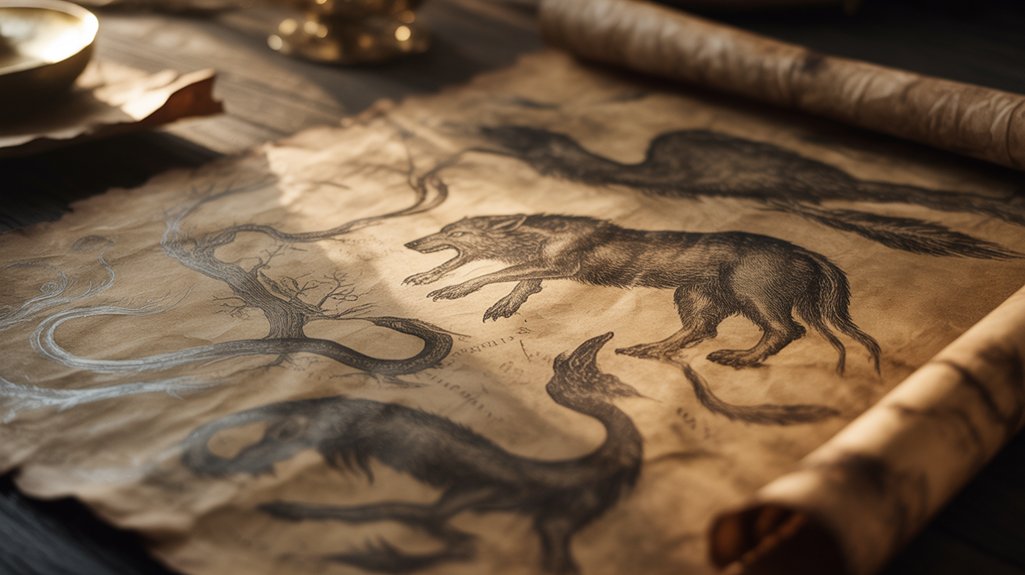
Across the sun-drenched marble temples of ancient Greece and Rome, through the mist-shrouded forests of pre-Christian Slavic lands, shapeshifting narratives reveal a profound cultural preoccupation with the malleability of form and the contested boundaries between divine, human, and animal domains. These mythological comparisons expose fundamental truths about power’s corrupting influence and change’s role in spiritual liberation.
Zeus’s metamorphic seductions and Proteus’s eldritch fluidity demonstrate divine authority unbound by corporeal limitations. Ovid’s “Metamorphoses” chronicles punishment changes—Arachne’s arachnid fate serving as eternal warning against hubris. Slavic werewolves embody chimeric duality, their nocturnal alterations revealing the cultural significance of humanity’s perpetual struggle against bestial impulses.
| Tradition | Change Method | Moral Function |
|---|---|---|
| Greco-Roman | Divine intervention, magical items | Punishment, seduction |
| Slavic | Moon cycles, enchanted talismans | Virtue testing, consequence |
| Both | Ritualistic means | Identity quests, self-discovery |
| Universal | Liminal catalysts | Personal change |
These narratives granted ancient peoples frameworks for understanding change’s liberating yet perilous nature.
Metamorphosis as Inner Conflict
When ancient storytellers etched alteration tales into cultural memory, they weren’t simply documenting fantastical bodily mutations—they were encoding humanity’s most visceral psychological battlegrounds into symbolic flesh.
Metamorphosis manifests as externalized internal struggles, where the chimeric body becomes battlefield for the warring self. These changes illuminate the profound identity crisis inherent to human existence:
The body transforms into contested territory where fractured selves wage war, rendering invisible psychological conflicts suddenly, terrifyingly visible.
- Arachne’s arachnid fate crystallizes pride’s eldritch consequences, her eight-legged form eternally weaving the defiance that condemned her.
- Slavic werewolves embody civilization’s fragile membrane, the beast erupting through skin when primal instincts overwhelm social conditioning.
- Zeus’s polymorphic seductions expose divine desire wrestling sacred duty, each animal incarnation revealing concealed psychological dimensions.
- Post-alteration narratives chart self-acceptance versus self-rejection, characters confronting their remade essences in mirrors both literal and metaphorical.
Physical metamorphosis consequently serves as psychic cartography—each scale, feather, and fang mapping emotional states and moral dilemmas.
The shapeshifter’s struggle transcends corporeal boundaries, revealing transformation as fundamentally psychological pilgrimage.
Baba Yaga’s Transformative Powers
In the dense forests of Slavic tradition, Baba Yaga’s altering powers manifest as both chimeric metamorphosis and calculated deception. Her shifts between crone, maiden, and avian forms reveal the eldritch fluidity at her essence.
These physical alterations serve neither idle whim nor theatrical display—they constitute deliberate mechanisms of testing, obscuration, and dominion over those who venture into her woodland domain.
The symbolism embedded within her changes transcends mere magical spectacle, encoding ancient wisdom about identity’s mutable nature, the forest’s guardian mysteries, and the threshold spaces where mortal understanding falters before primordial forces.
Baba Yaga’s Physical Transformations
Though her name evokes terror throughout the forests of Eastern Europe, Baba Yaga’s most unsettling attribute isn’t her iron-toothed grin or bone-strewn dwelling—it’s her mastery over corporeal alteration.
Her physical form shifts between withered crone and beguiling maiden, each change revealing Baba Yaga’s duality as both destroyer and benefactor. This symbolic representation extends beyond mere human guises; she assumes avian forms, wings carrying her across Slavic territories with eldritch speed.
Her chimeric nature serves as cultural commentary on deception’s role in survival, demonstrating how appearances mask deeper truths. These alterations work in concert with her elemental control and temporal manipulation, creating a figure whose very existence challenges fixed identity.
The fluidity of her flesh embodies ancient wisdom: power lies not in permanence, but in adaptation.
Her Shapeshifting Motivations
Behind every metamorphosis lies purpose, and Baba Yaga’s shapeshifting impulses reveal a complex taxonomy of intent that transcends simple categorization.
Baba Yaga’s intentions operate on multiple planes simultaneously—territorial sovereignty, pedagogical intervention, cosmic balance. She changes form to maintain dominion over her eldritch domain, that threshold space between mortality and oblivion where conventional laws dissolve.
Her chimeric manifestations serve transformative lessons, punishing hubris through corporeal reconfiguration, rewarding wisdom through revelation. The crone doesn’t shapeshift for mere deception; rather, she wields metamorphosis as philosophical instrument, forcing supplicants to confront their essential nature.
Control and instruction intertwine. Her motivations embody that fundamental duality permeating Slavic cosmology—benevolence entwined with malevolence, creation merged with destruction. Each change becomes test, judgment, teaching moment.
The witch’s power reflects nature’s unpredictable essence itself.
Symbolism of Her Changes
When Baba Yaga assumes the visage of a radiant maiden or contracts into her notorious crone form, these alterations encode profound metaphysical truths about existence’s fundamental architecture.
Baba Yaga’s duality manifests the eternal oscillation between creation and dissolution, her chimeric appearances reflecting nature’s chaos in its most eldritch expression. Each change operates as threshold magic—the maiden embodies life’s generative potential, while the crone personifies inevitable entropy.
This fluidity transcends mere deception; it reveals identity itself as permeable, unstable, fundamentally contingent. Her shape-shifting apparatus—the mortar grinding through dimensional barriers, the pestle steering between worlds—grants her dominion over liminal territories where human certainty dissolves.
These transformations ultimately symbolize nature’s refusal to conform to human categorization, her shifting forms serving as portals into understanding existence beyond binary constraints.
Film and Fiction Shapeshifters
Film and fiction have become modern vessels for the ancient archetype of the shape-shifter, converting millennia-old anxieties about change into celluloid and prose that resonates with contemporary audiences.
These contemporary manifestations echo primordial concerns about boundary dissolution, altering ancestral wisdom into fantasy narratives that probe the chimeric nature of existence itself.
Modern shapeshifters serve as portals for identity exploration:
- Mystique’s alterations challenge fixed notions of selfhood, embodying the eldritch anxiety between authentic self and performed identity
- Werewolf cinema externalizes humanity’s struggle with primal urges, manifesting suppressed instincts through metamorphic violence
- Kitsune adaptations preserve Japanese folklore’s nuanced examination of liminal consciousness, bridging human rationality and animalistic essence
- Amphibious creatures in metaphorical frameworks symbolize otherness, revealing society’s discomfort with those who transgress categorical boundaries
These narratives inherit ancient shape-shifting traditions, perpetuating timeless questions about change’s power to liberate consciousness from corporeal constraints while simultaneously threatening coherent selfhood.
Modern Identity Transformation Theories
As contemporary psychology excavates the architectures of selfhood, it discovers ancient shapeshifting myths weren’t primitive superstitions but sophisticated cartographies of consciousness—prescient mappings of what postmodern theorists now term “identity fluidity.”
Jung’s shadow concept resurrects the werewolf’s nocturnal alteration, reimagining lycanthropic change as the psyche’s confrontation with repressed aspects dwelling beneath civilization’s veneer.
The eldritch alterations witnessed in Norse berserkers and Celtic seal-women now illuminate postmodern existence, where individuals navigate chimeric personas across fragmented social landscapes.
Cultural hybridity emerges from post-colonial discourse, echoing the changeable boundary-crossing of Proteus and Puca—those ancient tricksters who embodied multiplicity itself.
These transformation narratives chart liberation’s path. They reveal selfhood not as fixed monument but flowing river, forever renegotiating authenticity against societal constraint.
The shapeshifter becomes sovereignty’s emblem: autonomous, refusing singular definition, embracing the perpetual becoming that defines consciousness unshackled from imposed categories.
Contemporary Shapeshifter Romance Popularity
Though ancient alteration myths originated in oral traditions spanning millennia, today’s shapeshifter romance genre—with its alpha wolves, feral cats, and territorial bears—commands unprecedented commercial dominance across digital platforms and traditional publishing houses alike.
These narratives, exemplified by titles like “Kidnapped by My Mate” and “Alpha and Aurora,” excavate the chimeric nature of shapeshifter identity, positioning change as sacred metaphor for adaptability and personal evolution. The genre’s eldritch appeal resides in its capacity to merge fantastical domains with recognizable emotional trajectories, allowing readers to traverse liminal spaces where primal instincts collide with contemporary social constraints.
Shapeshifter tales merge fantastical transformation with emotional truth, creating liminal spaces where ancient instincts meet modern constraints.
The altering act itself becomes ritual—an embodiment of power relationships, trust negotiations, and potential betrayal. These stories honor humanity’s enduring fascination with dual nature, granting audiences permission to explore territorial boundaries between civilization and wilderness.
Through shapeshifter romance, modern readers access ancestral wisdom about identity’s fluid architecture while satisfying desires for connection unbounded by conventional limitations.
Enduring Shapeshifter Cultural Relevance
Beyond commercial iterations and modern reimaginings, shapeshifter mythology persists because it addresses humanity’s most intractable questions about selfhood, authenticity, and the masks worn across social landscapes.
These eldritch narratives transcend mere entertainment, offering frameworks for understanding identity fluidity in societies increasingly aware of constructed personas. The cultural symbolism embedded within metamorphosis myths—from Loki’s chimeric deceptions to Proteus’s aquatic changes—speaks to psychological truths about human multiplicity, the capacity for reinvention, and the terror of losing one’s essential form.
Ancient shapeshifters weren’t simply fantasy constructs. They were mirrors.
Contemporary individuals maneuvering fragmented identities, shifting social roles, and the fluidity of self-presentation find resonance in these primordial tales. The werewolf’s involuntary change, the selkie’s dual existence between land and sea—these archetypal patterns illuminate ongoing struggles with authenticity versus performance.
Shapeshifter lore endures because it acknowledges uncomfortable realities: identity isn’t fixed, morality bends under pressure, and humanity’s true nature remains perpetually elusive, forever shifting beneath observable surfaces.
Frequently Asked Questions
What Are the Biological Explanations for Historical Shapeshifter Sightings?
Scholars attribute historical shapeshifter encounters to biological anomalies—hypertrichosis, porphyria, ergot poisoning—that manifested as bestial changes in candlelit shadows.
Psychological phenomena, including dissociative states and collective hysteria, conjured chimeric visions where none existed. Sleep paralysis birthed eldritch nocturnal visitors.
Yet these rational explanations don’t diminish the power of such sightings; they reveal how human neurology and rare medical conditions became woven into sacred narratives, altering sufferers into liminal beings who bridged mortal and mythic dimensions, forever haunting cultural memory.
How Do Shapeshifter Myths Differ Between Eastern and Western Cultures?
Cutting to the chase, Eastern symbolism embraces change as spiritual enlightenment—foxes, dragons, and tanuki shifting forms to transcend mortal limitations.
Western archetypes, conversely, frame metamorphosis through punishment and curse. Eldritch creatures like werewolves embody sin’s consequence, chimeric beings signal divine retribution.
Eastern traditions revere shapeshifters as enlightened intermediaries between domains; Western lore casts them as cautionary figures, souls trapped in liminal torment.
These divergent frameworks reveal fundamental cultural philosophies regarding nature’s relationship with human consciousness.
Are There Documented Cases of People Claiming to Be Shapeshifters?
Throughout recorded history, personal testimonies of alteration have emerged—shamanic practitioners claiming chimeric metamorphosis during ritual ecstasy, Norse berserkers asserting ursine possession, Navajo accounts of yee naaldlooshii encounters.
These declarations aren’t mere delusion. They’re cultural interpretations of profound liminal experiences, where consciousness transcends ordinary boundaries.
From Siberian tundras to Amazonian forests, individuals have witnessed their own eldritch alterations, documented in anthropological records spanning centuries.
Such testimonies reveal humanity’s persistent yearning to break free from fixed identity’s constraints.
What Role Did Shamans Play in Ancient Shapeshifter Beliefs?
What bridge spans the mundane and numinous more completely than the shaman’s altered body?
Ancient practitioners served as living conduits through shamanic rituals, donning animal pelts and masks to transcend their flesh. These intermediaries didn’t merely perform—they embodied spiritual change, their consciousness dissolving into beast-form during trance states.
From Siberian bear-dancers to Amazonian jaguar-shamans, they’ve walked between worlds, liberating communities from fixed reality’s constraints.
Chimeric metamorphosis granted them passage through eldritch domains where healing and prophecy dwelled.
How Have Shapeshifter Legends Influenced Modern Medical Understanding of Identity Disorders?
Shapeshifter legends haven’t directly influenced clinical understanding of identity disorders—psychiatry developed through distinct empirical pathways.
However, these ancient narratives preserved humanity’s earliest observations of identity perception’s fluid nature. The chimeric imagery found in Mesopotamian texts, Norse seiðr practices, and Mesoamerican nagual traditions documented psychological multiplicity centuries before modern diagnosis.
Today’s scholars recognize these weren’t primitive misunderstandings but sophisticated cultural symbolism acknowledging consciousness’s eldritch capacity for alteration, fragmentation, reconstruction.
Conclusion
Like shadows cast across millennia, shapeshifters persist in humanity’s collective consciousness, their chimeric forms bridging primordial caves and contemporary fiction. These liminal beings—neither wholly beast nor human—embody our deepest changes: psychological, spiritual, cultural. From Baba Yaga’s eldritch alterations to modern romance’s supernatural lovers, they’ve remained potent symbols of identity’s fluid nature. Ancient wisdom whispers still: change isn’t mere fantasy but humanity’s eternal condition, our protean souls forever shifting between worlds.