
Water nymphs wielded formidable power across ancient civilizations—Mesopotamian tablets documented offerings to prevent catastrophic floods, while Greek Naiads possessed dominion over healing arts and prophetic vision tied to specific springs. These beings weren’t metaphorical abstractions but tangible divine forces: Nereids rescued storm-battered sailors, Celtic spirits enforced moral boundaries through shape-shifting intervention, and communities inscribed sacred names on clay, recognizing that aquatic deities determined harvest abundance and maritime survival. The archaeological evidence reveals sophisticated ecological theology where divine feminine presences guarded freshwater territories with both nurturing beneficence and vengeful consequence—wisdom that contemporary environmental movements increasingly channel through revived ancient practices.
Key Takeaways
- Water nymphs possessed divine powers including healing abilities, prophetic vision, and control over floods and droughts affecting human communities.
- Naiads guarded freshwater sources while Nereids protected sailors, serving as mediators between divine will and mortal needs in mythology.
- Communities honored nymphs through sacred rituals and offerings at springs, recognizing their role as protectors and sources of wisdom.
- Nymphs embodied water’s dual nature as both nurturing life-source and destructive force, capable of bestowing blessings or exacting vengeance.
- Sacred springs served as thresholds to the divine, where nymphs’ healing waters cured afflictions and marked encounters with supernatural power.
Water’s Ancient Divine Guardians
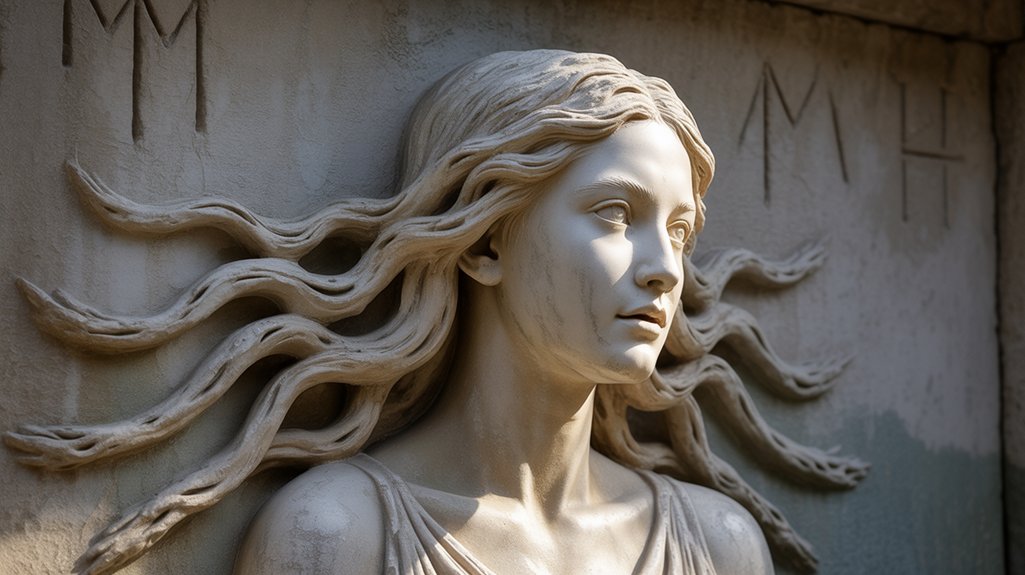
When ancient civilizations gazed upon the crystalline depths of springs and the serpentine courses of rivers, they didn’t perceive mere H₂O molecules in motion—they witnessed the living presence of divine entities whose very essence intertwined with each droplet, each current, each life-sustaining flow.
The Naiads emerged as eldritch guardians of freshwater territories, their fates bound inseparably to specific springs and lakes. Water symbolism permeated every aspect of these beings’ existence, altering them from abstract concepts into tangible protectors whose benevolence sustained communities. Towns bore their sacred names, acknowledging their healing powers.
Ancient springs harbored more than water—they cradled divine essences whose sacred presence transformed wilderness into sanctuaries worthy of worship and reverence.
Yet nymph relationships revealed complexity—the kidnapping of Hylas demonstrated their vengeful capacity when mortals trespassed against natural law.
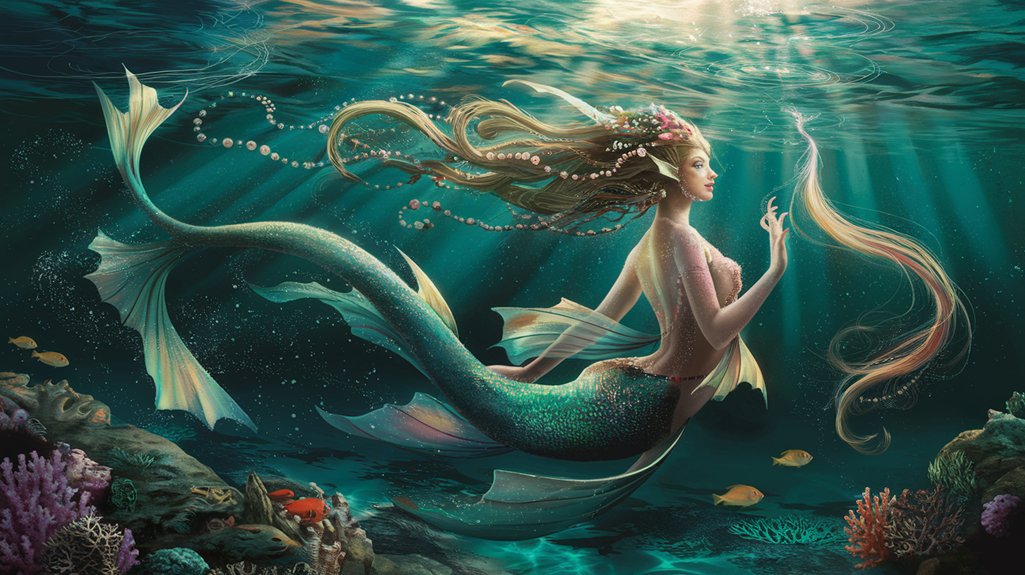
The Nereids navigated maritime domains, offering salvation to storm-battered sailors, while Oceanids—three thousand strong—embodied the ocean’s immensity. Through prayers and sacrifices, humanity sought their favor, recognizing that survival depended upon honoring these chimeric spirits who commanded water’s mysteries.
##
The aqueous divinities of ancient Greece existed within a precisely calibrated hierarchy, their essence bound to the waters they inhabited—freshwater Naiads dwelling in springs and rivers, marine Nereids gracing the Mediterranean’s depths, and the primordial Oceanids stretching across the world’s furthest waters.
These nymphs served as intermediaries between mortal suppliants and the Olympian powers, their immortal lives extending across centuries yet remaining tethered, paradoxically, to the finite geography of their sacred domains.
The Greeks understood what modern consciousness has forgotten: that certain rivers flowed with healing properties not from mineral content alone but from the numinous presence dwelling within the current itself, responsive to prayer, susceptible to desecration.
Similar reverence for water deities extended throughout the ancient world, from the Japanese mythology that honored river kami to the vast pantheons of Hindu water gods dwelling in the sacred Ganges.
Classification of Water Nymphs
Across ancient Hellenic landscapes where springs bubbled forth from limestone caves and rivers carved their sacred paths through mountain valleys, Greek mythographers distinguished water nymphs according to their dwelling places—a taxonomy that reflected both ecological observation and numinous experience.
Naiads dwelt in freshwater environments, subdivided by habitat: Crinaeae haunted fountains, Limnades commanded lakes, Pegaeae guarded springs, Potameides danced through rivers, Heleionomae lingered in wetlands. Naiad characteristics embodied the eldritch essence of flowing water itself—changeable, essential, untamed.
By contrast, Nereids—fifty daughters of Nereus and Doris—inhabited saltwater territories, their benevolent nature guiding storm-tossed sailors toward safe harbors. Nereid legends celebrated their merciful interventions.
Meanwhile, Oceanids numbered three thousand strong, children of primordial Oceanus, their dominion extending beyond aqueous boundaries into chimeric realms where water dissolved into mist, cloud, rain.
Roles in Greek Mythology
As mediators between divine will and mortal necessity, water nymphs functioned throughout Greek mythological narratives as agents of change, protection, and retribution—their interventions marking pivotal moments where human ambition collided with natural law.
Naiad characteristics revealed dual nature: beauty intertwined with vengeance, as Nomia’s blinding of unfaithful Daphnis demonstrated. These freshwater spirits bound themselves to springs and rivers, their fates inseparable from their aqueous domains.
Nereid assistance proved essential to maritime survival, with Thetis and her fifty sisters guiding sailors through eldritch depths. The three thousand Oceanids embodied nature’s chimeric aspects—clouds, flowers, currents—receiving prayers and libations from those who recognized their sovereignty.
Through ritual observance, mortals acknowledged these nymphs as guardians standing at the threshold between civilization and wild waters.
Sacred Rivers and Springs
Throughout Mediterranean landscapes, springs emerged as numinous thresholds where mortal communities encountered the divine feminine—each bubbling source claimed by its resident Naiad, whose existence pulsed in rhythm with the water’s flow.
These sacred springs became pilgrimage sites, their healing waters renowned for curing afflictions both corporeal and spiritual. Communities consecrated groves surrounding these eldritch fountains, offering goats and lambs to appease the resident nymphs.
Towns bore nymphs’ names—testament to their sovereignty over place and people. The Naiads weren’t mere decoration. They were protectors, their essence inextricably bound to their waters’ health.
Festivals erupted at these sites, communal gatherings acknowledging water’s dual nature: life-source and deity. To dishonor these springs meant courting disaster. Reverence wasn’t optional—it was survival, recognition that humanity’s prosperity flowed through these chimeric guardians’ grace.
Immortality and Divine Powers
While ancient texts consistently denied Naiads true immortality—that province reserved for Olympian deities—these aqueous beings nonetheless possessed lifespans stretching millennia beyond mortal reckoning. Their existence was measured not in years but in the persistence of their waters.
Their immortal essence flowed through sacred springs and riverways, granting them dominion over healing arts and prophetic vision. Communities prostrated themselves before these eldritch guardians, offering blood and grain to secure protection from catastrophic floods and withering droughts.
The nymphs’ divine influence extended beyond mere survival—they bestowed wisdom upon supplicants, cured barrenness, and mended afflictions deemed incurable by mortal physicians. Bound inextricably to their waters, they embodied nature’s chimeric duality: beneficent healers and fearsome arbiters whose favor determined agricultural prosperity.
Their power wasn’t absolute, yet it reshaped civilizations.
Mesopotamian Clay Tablet Documentation

Within the sacred precincts of Enki’s temples, Sumerian scribes pressed reed styluses into damp clay, inscribing invocations to eldritch water spirits whose primordial essence flowed through the Tigris-Euphrates river valleys—those serpentine arteries of civilization where humanity first grasped agriculture’s altering power.
These cuneiform records, dating from the third millennium BCE, reveal elaborate fertility rites conducted at riverside sanctuaries, where priestesses offered libations of beer and honey to chimeric deities who governed both the life-giving floods and the devastating droughts.
The tablets speak in fragments. Blessings. Warnings. Ancient contracts between mortal cultivators and the numinous forces dwelling in those dark, silt-laden waters.
Sumerian Enki Temple Inscriptions
Among the earliest written testimonies to water’s divine embodiment, the temple inscriptions dedicated to Enki stand as monumental records—etched into clay tablets circa 2600 BCE, these cuneiform texts reveal a civilization’s profound understanding of aqueous sanctity.
The sacred waters of the Abzu, that eldritch freshwater ocean beneath terrestrial foundations, flow through these hymns with altering force. Enki’s benevolence manifested not merely in hydraulic provision but in knowledge-transmission, skills bestowed upon humanity through chimeric intermediaries—water nymphs and river spirits who dwelt within temple consciousness.
Agricultural societies dependent upon Tigris-Euphrates irrigation systems understood these weren’t metaphors. They were survival.
Ritual offerings documented on countless tablets demonstrate existential recognition: water sustained both corpus and consciousness, physical nourishment intertwined with spiritual enlightenment, freedom flowing from divine aquatic generosity channeled through sacred vessels.
Tigris-Euphrates River Valleys
The rivers themselves spoke through clay—not metaphorically, but through deliberate inscription, through the steady hands of scribes who understood their survival depended upon recording water’s temperament with exactitude. These tablets documented agricultural rituals performed at riverbanks where mortal and eldritch forces negotiated annually for sustenance.
| Spirit Classification | Associated River |
|---|---|
| Fertility Nymphs | Euphrates |
| Flood Guardians | Tigris |
| Harvest Protectors | Both Rivers |
| Drought Preventers | Euphrates |
| Storm Mediators | Tigris |
River symbolism permeated every incantation, every offering bowl filled with dates and barley. The nymphs embodied water’s chimeric nature—simultaneously nurturing mother and devastating destroyer. Clay preserved this sacred knowledge, altering ephemeral ritual into permanent record, ensuring future generations understood the covenant binding humanity to these flowing deities.
Sacred Fertility and Agricultural Rites
When spring floods changed the Mesopotamian plains into sprawling mirrors of sky, scribes pressed their styluses into wet clay with ritualistic precision, documenting ceremonies that bridged mortal agriculture with numinous forces dwelling in river depths.
These tablets reveal elaborate fertility rituals performed at riverbanks, where communities offered livestock and grain as sacred offerings to water nymphs whose eldritch influence determined harvest abundance.
The goddess Inanna presided over this chimeric intersection of aquatic and terrestrial domains, her power flowing through irrigation channels that sustained civilization itself.
Seasonal festivals marked the rivers’ rising, altering practical hydrology into spiritual communion. Libations poured into currents carried human entreaties downstream, seeking benediction from spirits who dwelt beyond mortal comprehension yet governed survival itself.
Agricultural prosperity depended entirely upon maintaining this covenant with the deep.
Greek Nymphs Vs Celtic Spirits
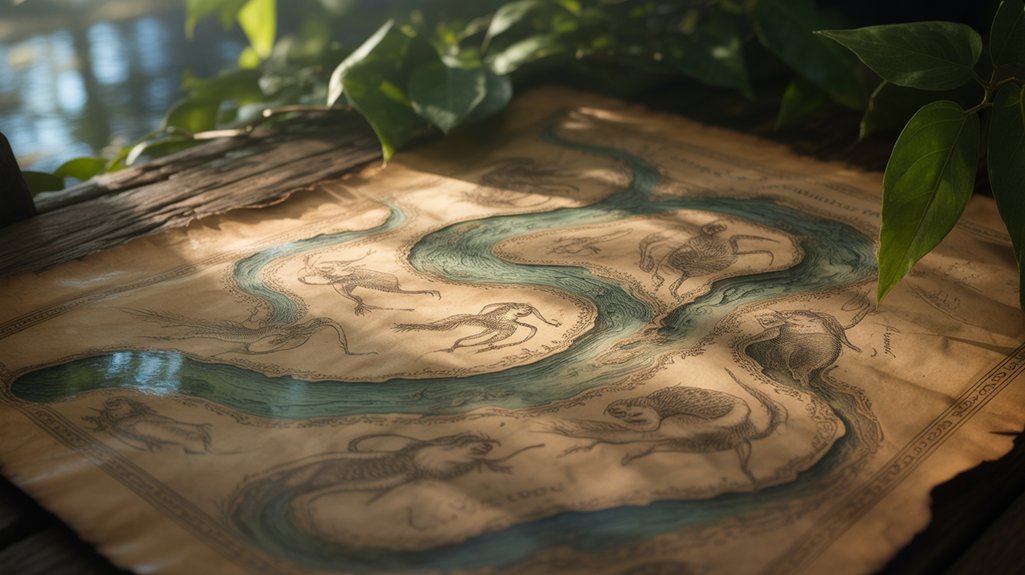
Although both traditions venerate water’s sacred essence, Greek naiads and Celtic river spirits diverge dramatically in their theological function and cultural manifestation. Naiads characteristics reveal hyper-localized deities bound to singular springs, rivers, fountains—each nymph inseparable from her aqueous domain, receiving ritualized worship for healing properties and agricultural abundance. These luminous daughters of rivers participated intimately in divine narratives, consorting with gods and heroes. Celtic alterations present altogether different metaphysics: shape-shifting entities like Kelpies and Gwragedd Annwn possessed chimeric fluidity, oscillating between human beauty and bestial form, their eldritch presence suffusing entire regions rather than specific waterways. Like the Inuit Qalupalik whose legend kept children from dangerous frozen waters, these aquatic beings served as cautionary tales that reinforced community awareness of nature’s treacherous elements.
| Aspect | Greek Naiads | Celtic Spirits |
|---|---|---|
| Form | Fixed feminine beauty | Shape-shifting human-animal |
| Association | Specific water sources | Regional lakes and rivers |
| Human Interaction | Nurturing, occasionally vengeful | Mischievous, often malevolent |
| Cultural Function | Worship, healing rituals | Cautionary folklore |
| Narrative Role | Divine relationships | Warning tales for travelers |
Transformation and Liminal Boundary Themes
Metamorphosis pulses through aquatic mythology as water nymphs traverse ontological borders that mortal flesh can’t breach—their essence mirrors the element they inhabit, perpetually flowing between states of being.
These eldritch entities embody mythical metamorphosis, altering themselves or catalyzing change in others who dare approach their riparian domains. Daphne’s arboreal conversion, Hylas’s abduction into watery depths—such boundary crossings reveal the chimeric nature of naiad guardianship, where protection and predation intertwine.
Rivers themselves constitute liminal thresholds between existence and oblivion, the sacred and profane. Water spirits police these transitional zones with fierce devotion:
- Their beauty masks primordial power—veneration withheld brings swift retribution, as mortals discover their souls forfeit to depths unknown
- Fertility and death flow through identical channels—nymphs heal and destroy with equal grace, rejuvenating nature while drowning the hubristic
- Form proves illusory—what appears maiden becomes maelstrom, liberation found only in accepting alteration’s inevitability
This duality grants nymphs unparalleled sovereignty over metamorphic processes.
Echo’s Tragic Unrequited Love
Echo’s tragedy unfolds through Hera’s curse—a divine punishment that stripped the Oread nymph of autonomous speech, leaving her only the power to repeat the final words of others, a fate that would seal her doom when she encountered the beautiful Narcissus beside Boeotian pools.
When the youth recoiled from her fragmentary declarations of desire, unable to comprehend the desperation beneath her echoed phrases, Echo’s corporeal form began its slow dissolution, flesh transmuting to stone even as her essence remained tethered to mountain caves and rocky precipices.
The metamorphosis proved incomplete, eldritch and cruel: her voice persisted as disembodied sound, forever trapped in the liminal space between presence and absence, condemned to mirror the words of wanderers who never knew the anguished nymph lingering in the stone itself.
Echo’s Cursed Voice
When Hera discovered the mountain nymph’s cunning distraction—Echo had detained the goddess with elaborate tales while Zeus pursued his dalliances—the divine punishment she enacted altered linguistic ability into a prison of perpetual repetition.
The curse stripped Echo of autonomous speech, leaving her only the power to reflect others’ final utterances. This eldritch constraint modified communication itself into torment, particularly when she encountered Narcissus upon the mountain slopes.
Echo’s longing voice could merely mirror his words, never articulating the depths of her devotion. Echo’s emotional turmoil intensified with each failed attempt at genuine expression, her consciousness trapped behind an impenetrable linguistic barrier.
The nymph’s essence gradually dissolved into vaporous absence, consumed by unfulfilled desire, until nothing remained but disembodied sound—a chimeric remnant haunting rocky valleys, forever repeating without origin.
Narcissus Rejects Her Love
Upon the forested slopes of Boeotia, where ancient pines cast shadows across mountain springs, the cursed nymph encountered Narcissus—son of the river god Cephissus and the nymph Liriope—whose beauty transcended mortal comprehension yet whose heart remained imperviously sealed against affection.
Echo’s unrequited love manifested as desperate pursuit through mountain passes, her fragmented speech offering only reflected devotion. The youth recoiled. His rejection cut with eldritch precision, each dismissive word another wound upon her already-broken existence.
She withered among limestone caves and forgotten glades, flesh dissolving into mist until solely her voice persisted—a chimeric echo haunting Helicon’s peaks.
Meanwhile, Narcissus remained transfixed by his own reflected visage in still waters, embodying the cruel symmetry of their tragic fate: both consumed by impossible love, yet forever separated by the impenetrable barriers of curse and vanity.
Fading Into Stone
As rejection’s bitter poison coursed through her ethereal form, the nymph’s physical essence began its inexorable dissolution—a change born not of divine mercy but of anguish’s corrosive power.
Echo’s sorrow manifested corporeally, flesh transmuting to mineral through heartbreak’s eldritch alchemy. The stone alteration wasn’t instantaneous—her limbs calcified incrementally, sinews hardening into granite striations as Narcissus’s disdain consumed her from within.
Ancient Greeks understood this chimeric shift between animate and inanimate as psychosomatic truth: extreme emotion could reshape reality’s fabric. Only her voice persisted, reverberating through mountain caverns, forever repeating others’ words.
This petrification served as memento mori, warning against self-obsession’s destructive wake. Her fossilized remains symbolized unattainable desire’s ultimate cost—the complete annihilation of self when genuine connection proves impossible.
Contemporary Film and Literature Adaptations
How does the ancient essence of water nymphs—those liminal guardians of springs, rivers, and oceanic depths—persist within the cinematic and literary consciousness of the twenty-first century?
Contemporary mythical adaptations resurrect these eldritch beings through cultural reflections that honor their dual nature: enchanting yet perilous, as witnessed in Guillermo del Toro’s “The Shape of Water,” where aquatic divinity meets human longing.
Neil Gaiman’s “The Ocean at the End of the Lane” positions water nymphs as custodians of primordial wisdom, their presence saturating the narrative with numinous authority.
Three Metamorphic Elements in Modern Water Spirit Narratives:
- Environmental Guardianship — These chimeric entities emerge as protectors of threatened waterways, their ancient covenant with nature renewed.
- Psychological Depth — Disney’s “The Little Mermaid” transmutes mythological archetypes into emotionally resonant characters while preserving oceanic connections.
- Darker Reimaginings — Christina Henry’s “The Mermaid” excavates subterranean mythological currents, revealing the shadowed undercurrents beneath sanitized folklore.
These adaptations liberate water spirits from static tradition, allowing them to flow freely through contemporary imagination.
Jung’s Archetypal Water Symbolism
The psychological excavation of water nymphs requires submersion into Carl Jung’s cartography of the unconscious mind, where water itself becomes the primordial medium through which humanity encounters its own obscured depths.
These eldritch entities—Naiads guarding springs, Nereids dwelling in oceanic abysses—manifest the anima’s chimeric nature, embodying both nurturing sustenance and annihilating force. Jung recognized this duality. Water nymphs represent unconscious symbolism materialized, revealing emotional depths that rational consciousness fears to acknowledge.
The altering properties attributed to these spirits mirror Jung’s conception of water as psychic catalyst. They heal. They destroy. They regenerate what civilization has withered.
As guardians of rivers and sacred wells, nymphs channel fertility through elemental channels, their presence marking thresholds between mundane reality and numinous encounter.
The collective unconscious speaks through their recurring appearances across disparate cultures—Greek, Celtic, Slavic—each tradition independently articulating humanity’s primal recognition that water flows through both external landscape and interior psyche, carrying messages from depths we’ve forgotten we possess.
Environmental Conservation Through Mythology
When ancient civilizations carved protective enchantments around wells and carved votive offerings into riverbanks, they weren’t merely performing superstitious theater—they were encoding ecological wisdom into mythological architecture. The Naiads of Hellenic tradition embodied mythic conservation, their eldritch presence altering abstract environmental principles into visceral spiritual reality.
These water guardians enforced nymphic stewardship through narratives of divine retribution: polluters faced supernatural consequences, their transgressions answered by drought, disease, contamination of flesh and spirit alike. The Greeks understood what modernity forgot. Sacred isn’t separate from ecological.
Rituals honoring freshwater nymphs—libations poured at dawn, sacrificial offerings deposited in limestone grottoes—established covenant between human communities and aquatic ecosystems. Purity themes permeating nymph mythology weren’t chimeric abstractions but pragmatic public health doctrines dressed in mythological garments.
These ancient conservation frameworks persist, their archetypal resonance fueling contemporary environmental movements where folklore becomes transformative praxis, where protecting watersheds means honoring the liminal guardians who’ve always dwelt there, patient, watching, remembering.
Reviving Ancient Water Reverence
Contemporary watersheds bear witness to civilizational amnesia, their banks stripped of mythological protection, their depths no longer trembling with numinous presence.
Yet ecological necessity births renaissance. Modern water guardians resurrect ancient rituals not as nostalgic theater but as ontological reclamation, recognizing that veneration preceded conservation by millennia. Water offerings—milk poured at spring sources, libations at river confluences—manifest something deeper than symbolic gesture. They acknowledge reciprocity.
The Naiads understood what industrial civilization forgot: water possesses agency. Their worship wasn’t primitive superstition but sophisticated ecological theology, embedding respect within cultural DNA. Those goat sacrifices, those named springs? Environmental contracts written in blood and memory.
Today’s activists channel eldritch wisdom whether they recognize their lineage or not. Protecting aquifers becomes sacred duty. Stream restoration, spiritual act.
The nymphs haven’t vanished—they’ve migrated into legislation, watershed councils, citizen science. Ancient reverence transmuted. The same power, different vessels. Recognition dawns: we never stopped needing water spirits. We merely stopped listening.
Frequently Asked Questions
What Offerings Did Ancient Cultures Give to Water Spirits?
Ancient cultures presented ritual offerings of milk, honey, flowers, and precious metals to aquatic deities at sacred sites along riverbanks and springs.
The Greeks cast libations into Mediterranean waters, while Celtic tribes deposited swords and torques into bogs—votive gifts for eldritch powers dwelling beneath.
Romans built elaborate shrines at Aquae Sulis. These weren’t mere superstitions but sacred contracts, binding mortals to numinous forces.
Blood sacrifice. Incense smoke. The ancients understood water’s chimeric nature demanded respect, acknowledgment, appeasement.
Can Water Nymphs Appear in Both Saltwater and Freshwater Sources?
Ancient taxonomies distinguished these beings distinctly—freshwater nymphs, the Naiades and Potamides, couldn’t traverse oceanic domains without losing their essence, their power bound to springs, rivers, and lakes like roots to soil.
Saltwater spirits—Nereids and Oceanids—inhabited maritime depths exclusively. This separation wasn’t arbitrary but metaphysical; each embodied their territory’s unique energies, chemistries, and eldritch frequencies.
Cross-domain manifestation would’ve created chimeric instability. The boundary between fresh and salt waters marked genuine ontological division, not merely geographic convenience.
How Did Ancient People Distinguish Between Malevolent and Benevolent Water Spirits?
Ancient cultures discerned good versus evil in aquatic entities through observational patterns—benevolent nymphs brought abundant harvests, clear springs, gentle currents.
Malevolent spirits revealed themselves through drought, drownings, pestilence. Signs of wrath manifested physically: turbulent waters, blood-red tides, sudden temperature shifts.
Greek προφήτης interpreted offerings rejected by rivers as ominous portents. Celtic druids read ripples, bubbles, reflections—eldritch messages from the depths.
Communities who honored these beings with libations, songs, sacrifices maintained harmony. Those who didn’t faced consequences both swift and merciless.
Were Water Spirits Ever Depicted as Male in Ancient Cultures?
Ancient mythology brims with male water spirits who commanded rivers, seas, and depths with sovereign authority.
Like chains breaking beneath turbulent waves, these figures defied modern assumptions. Poseidon’s trident pierced Greek consciousness, while Celtic kelpies—chimeric and eldritch—haunted Scottish lochs.
Slavic vodyanoy dwelled in murky currents, demanding tribute. Egyptian Hapy embodied the Nile’s masculine fertility, circa 3000 BCE.
Norse Aegir hosted gods in submarine halls. These masculine aquatic entities weren’t peripheral—they dominated ancient waterscapes, reflecting humanity’s respect for untamed, liberating forces.
What Happened to Believers Who Angered Their Local Water Deities?
Those who transgressed against aquatic divinities faced terrible punishments faced by communities throughout antiquity—drowning, crop devastation, drought’s merciless grip.
The eldritch forces demanded propitiation. Celtic tribes performed rituals at sacred springs, casting bronze votives into depths. Greek suppliants offered honey-cakes to Naiads. Mesopotamian priests conducted elaborate ablutions beside the Euphrates, circa 2000 BCE.
Blood sacrifice. Libations poured. The waters remembered every slight, every broken oath, waiting in their liminal darkness.
Conclusion
The numinous waters remain, coursing through contemporary consciousness as they did through ancient consciousness, their eldritch guardians whispering from liminal depths. These archetypal spirits—whether Mesopotamian Apsû, Greek Naiads, or Celtic well-dwellers—demand recognition, not as quaint folklore but as sacred ecological metaphors. Can humanity rediscover reverence for waterways through their mythic protectors? The confluence beckons: scholarly recovery, environmental stewardship, mystical reconnection. The nymphs wait, patient as stone, eternal as current.