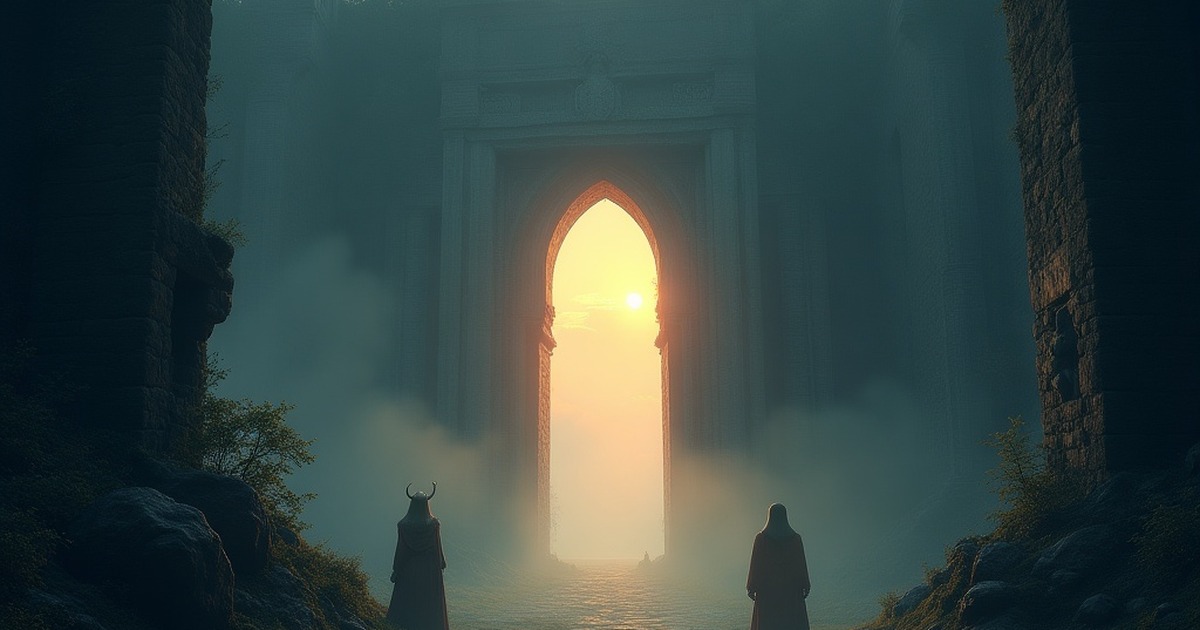
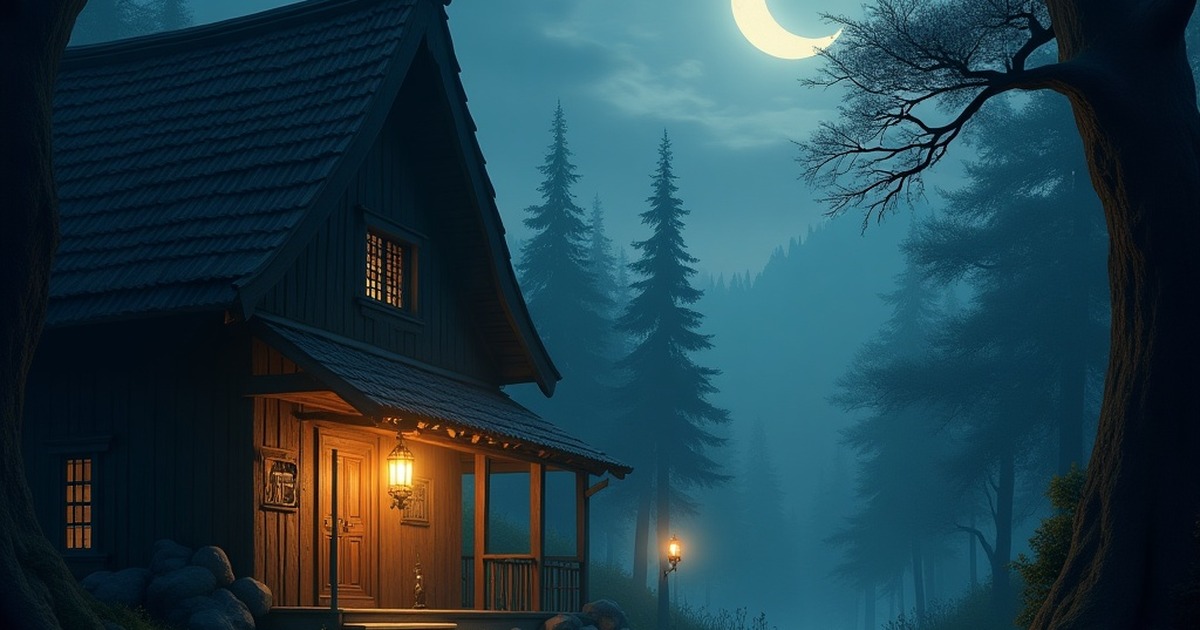
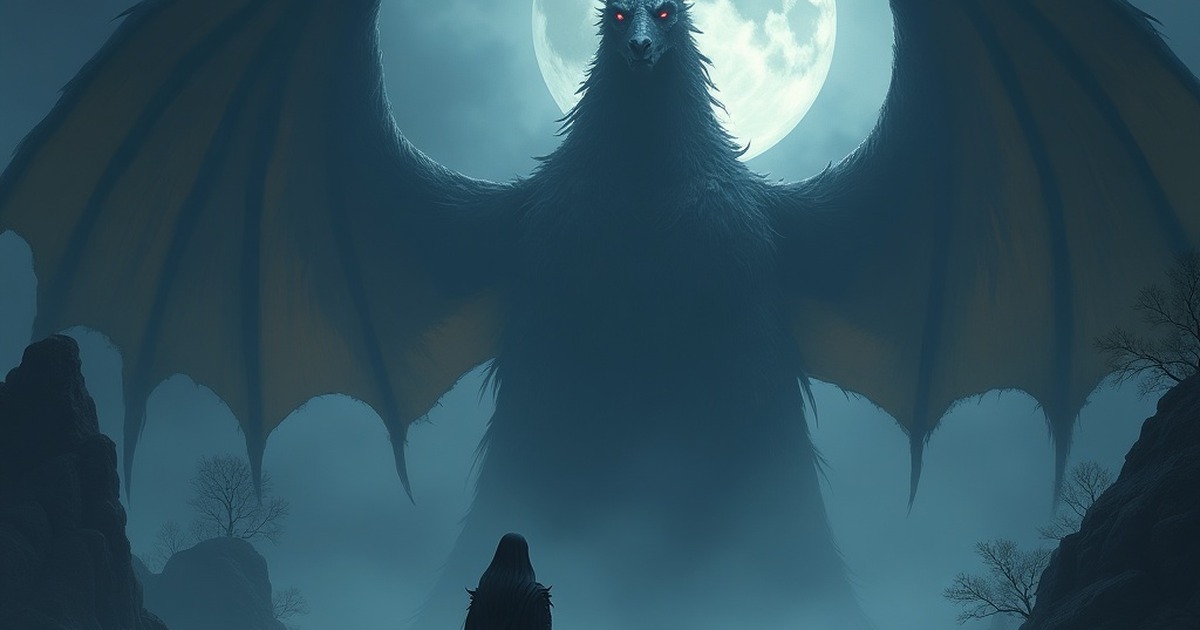
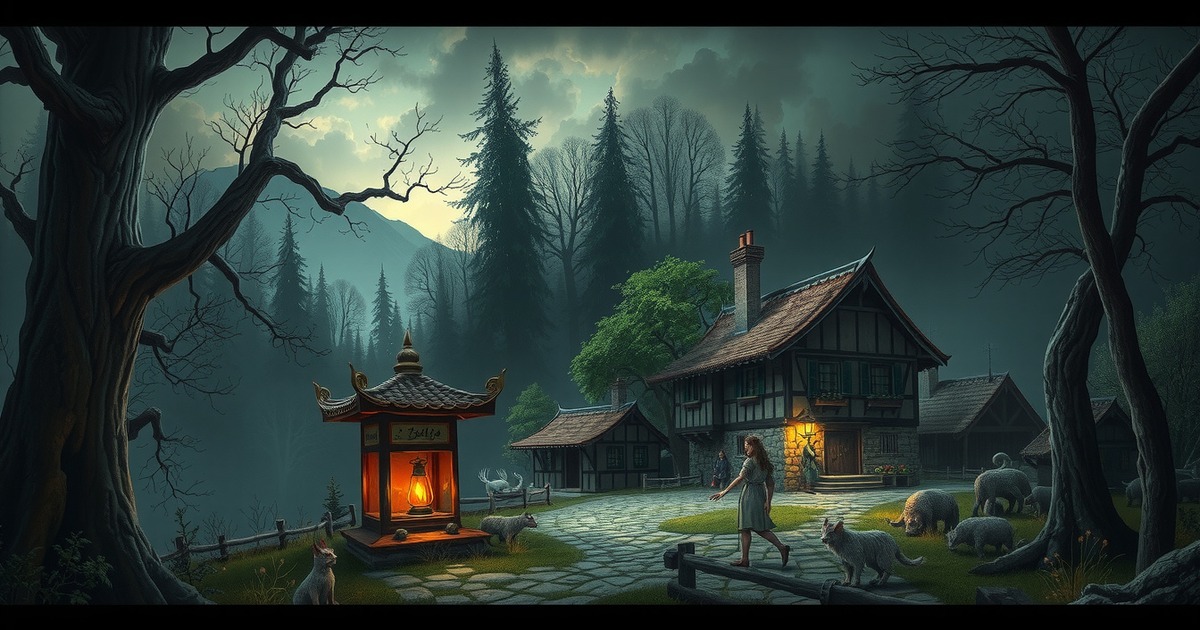
On windswept Irish nights, when mist rolls across ancient bogs and the boundary between worlds grows thin, a sound may rise that freezes the blood of all who hear it. The Banshee—from the Irish bean sídhe, meaning “woman of the fairy mound”—has haunted Celtic lands for millennia, her keening wail announcing what no mortal wishes to know: that death approaches. Neither fully ghost nor fairy, neither evil nor benevolent, the Banshee occupies a unique place in world mythology as a spirit whose purpose is singular and inescapable—to herald the passing of souls.
Quick Facts About the Banshee
| Origin | Irish and Scottish Gaelic folklore |
| Also Known As | Bean sídhe, Bean sí, Bean-nighe (Scottish), Cyhyraeth (Welsh) |
| Type | Spirit / Fairy / Death omen |
| Domain | The threshold between life and death, fairy mounds (sídhe) |
| First Recorded | 8th century Irish manuscripts, oral traditions far older |
| Associated Families | O'Neill, O'Brien, O'Connor, O'Grady, Kavanagh (traditional five) |
| Primary Ability | Death prophecy through keening (wailing lament) |
Origins and History
The Banshee's roots reach deep into pre-Christian Celtic spirituality, where the sídhe (fairy folk) were understood not as diminutive fantasy creatures but as powerful supernatural beings inhabiting a parallel realm. The aos sí (people of the mounds) included various spirits, and among them were female entities specifically connected to death and mourning.
In ancient Ireland, professional keeners (bean chaointe) were women hired to lament at funerals, their cries honoring the dead and helping souls transition to the afterlife. The Banshee may have evolved from—or always existed alongside—this tradition, representing a supernatural keener who needed no hiring, appearing unbidden when death was imminent.
The earliest written references appear in medieval Irish texts, though these document beliefs already ancient by the time quills touched vellum. Norman invaders in the 12th century noted Irish traditions of spirit women who wailed before deaths, suggesting the belief predated their arrival by centuries. By the 14th and 15th centuries, specific Banshees were associated with noble Irish families—spectral attachments that followed bloodlines through generations.
Traditionally, Banshees attached themselves to families of pure Gaelic Irish descent, particularly the “five great families”: the O'Neills, O'Briens, O'Connors, O'Gradys, and Kavanaghs. Later traditions extended this to any family with an “O” or “Mac” prefix in their surname. Having a Banshee was, paradoxically, a mark of prestige—it meant your bloodline was old and noble enough to warrant supernatural attention.
Physical Appearance: Many Forms of the Death Herald
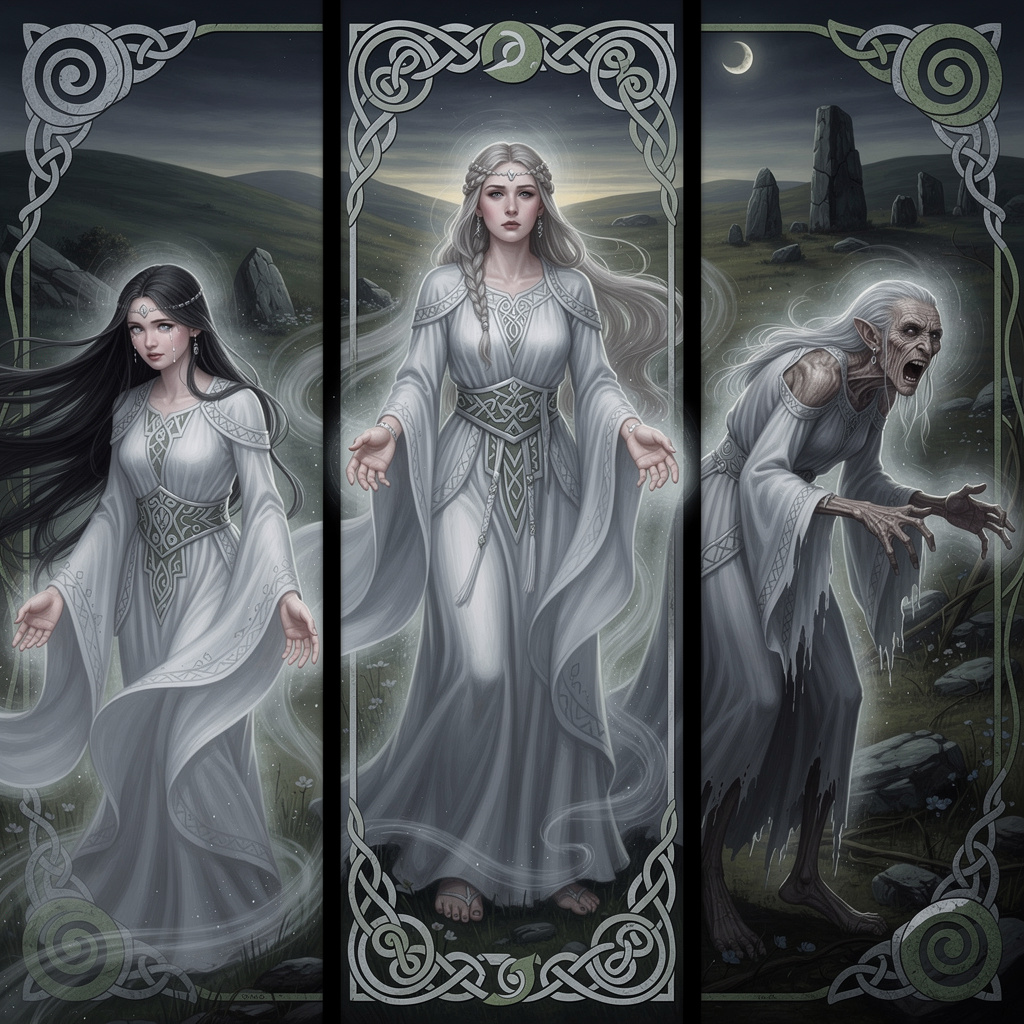
Unlike many supernatural beings with fixed appearances, the Banshee manifests in several distinct forms, each documented across centuries of Irish folklore:
The Old Hag
The most terrifying depiction shows the Banshee as an ancient crone with:
- Withered, corpse-like features
- Long, wild gray or white hair
- Hollow, empty eye sockets or eyes red from centuries of weeping
- A tattered grave shroud or hooded cloak
- Skeletal hands with long, yellowed nails
The Pale Lady
Other accounts describe a beautiful but unsettling woman:
- Deathly pale skin, almost translucent
- Long silver or golden hair she continuously combs
- Wearing white or gray robes
- Eyes that shine with otherworldly light
- An expression of profound, ancient sorrow
The Matron
A middle-aged woman form, combining elements of both:
- Dignified but sorrowful bearing
- Dark or red hair
- Green dress (the fairy color) with a gray cloak
- A connection to the specific family she attends
Some scholars suggest these three forms represent the Triple Goddess of Celtic belief—maiden, mother, and crone—unified in the Banshee as aspects of death that comes for all, regardless of age.
The Keening: Voice of Coming Death
More distinctive than any physical form is the Banshee's cry—the element that makes her truly terrifying. The keening (caoine in Irish) is described variously as:
- A mournful wail that rises and falls like waves
- A scream so piercing it shatters glass
- A low, sorrowful moan that seems to come from everywhere and nowhere
- A sound combining a wolf's howl, a woman's scream, and an infant's cry
- Music of unbearable sadness—beautiful in its horror
Those who have “heard” the Banshee (in folk accounts) describe the experience as uniquely disturbing. Unlike ordinary frightening sounds, the keening induces a specific certainty—the hearer knows, without doubt, that someone close to them will die. This knowing arrives not through logic but through the soul itself recognizing the truth.
The cry typically comes at night, often around midnight, and may be heard for three nights before the death occurs. In some traditions, the intensity of the keening indicates whether the deceased is particularly beloved or important—multiple Banshees wailing together foretells the death of a great person.
Powers and Behaviors
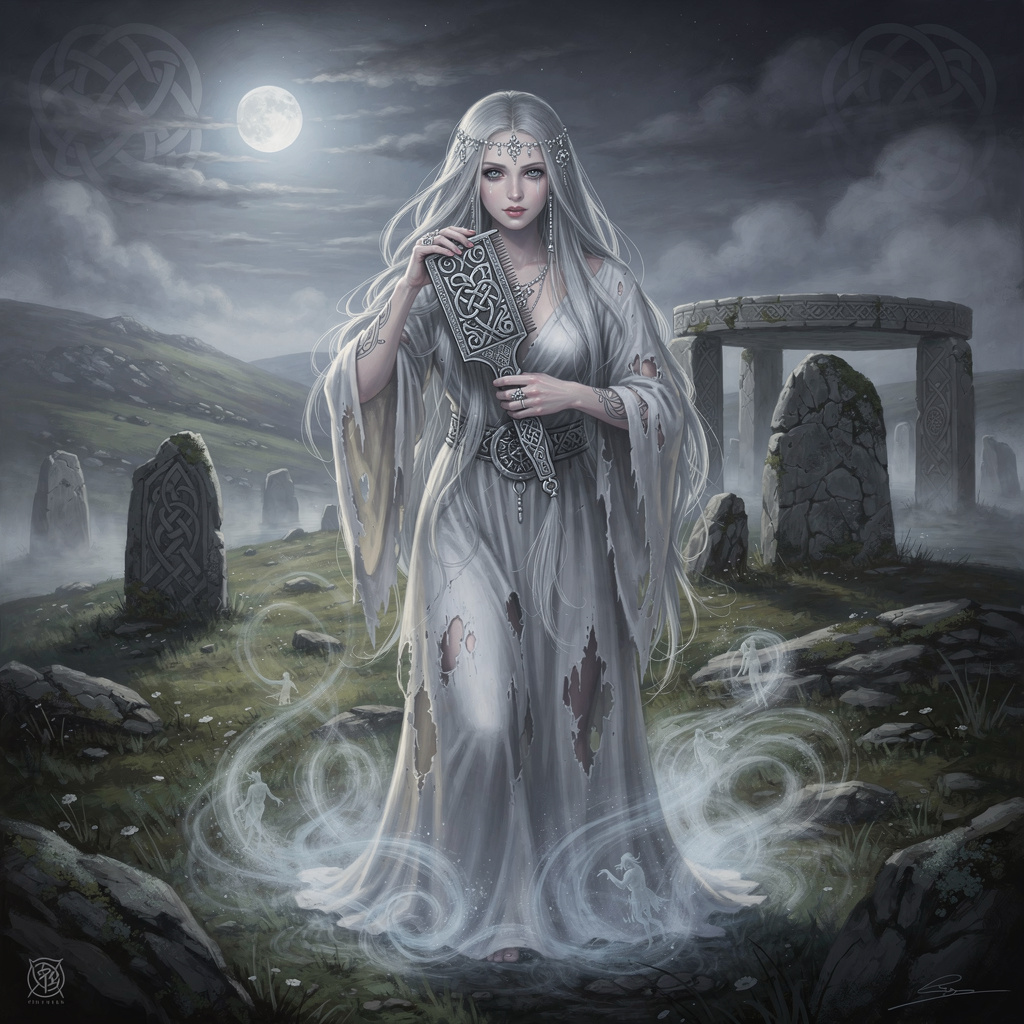
Beyond her prophetic wail, the Banshee exhibits several supernatural characteristics:
- Precognition: The Banshee knows of deaths before they occur—not merely sensing illness or danger, but perceiving the fixed moment when a soul will depart.
- Ethereal Nature: She can appear and vanish at will, pass through walls, and manifest only to specific individuals. Some see her while others present perceive nothing.
- Family Attachment: Once bound to a bloodline, a Banshee follows that family forever, even across oceans to Ireland's diaspora.
- Combing: The Banshee is often seen combing her long hair with a silver comb. Finding such a comb is dangerous—picking it up may summon the Banshee to you.
- Water Association: The Scottish variant, the Bean-nighe, is found washing the bloodstained clothes of those about to die in streams and rivers.
- Threshold Existence: She exists between worlds—between the living and dead, between the mortal realm and the fairy realm, neither fully in one nor the other.
Is the Banshee Evil?
This question has sparked debate among folklorists and within Irish communities for centuries. The answer, rooted in authentic Celtic tradition, is nuanced:
The Banshee is not evil. She doesn't cause death—she announces it. Like a messenger bearing bad news, she is not responsible for what she reports. In some traditions, she is a protective spirit who mourns because she genuinely grieves for the families she has watched over for generations.
Consider: the Banshee could simply let deaths occur without warning. Instead, she provides foreknowledge—time to summon family members, make peace, receive last rites, or say goodbye. From this perspective, her wail is a final gift, however terrible.
Some accounts even describe Banshees as former mortal women—perhaps ancestors of the families they attend—who loved their descendants so deeply that they remained after death to watch over them. Their keening is not malicious but the purest expression of supernatural grief.
However, later folklore (influenced by Christianity's tendency to demonize pre-Christian spirits) sometimes portrays Banshees as malevolent entities. In these versions, encountering a Banshee brings misfortune, and her cry might hasten death rather than merely predict it.
Regional Variations
Scottish Bean-nighe
The Scottish “Washer Woman” is found at fords and streams, washing the burial shrouds or bloodied clothing of those about to die. She appears as a small, sometimes deformed old woman. Unlike the Irish Banshee who merely wails, the Bean-nighe can be approached—and if you can get between her and the water, she must answer three questions and grant three wishes. But answering her questions wrong brings doom.
Welsh Cyhyraeth
The Welsh equivalent is heard but rarely seen—a disembodied groaning or wailing voice that travels along roads and waterways before deaths, particularly drownings or deaths away from home. The Cyhyraeth may also manifest as a spectral funeral procession (toili), walking the route an actual funeral will take.
American Banshee
Irish immigrants brought the Banshee to America, where she adapted to new landscapes. Accounts from the Appalachian Mountains, Boston Irish communities, and other areas with strong Irish heritage describe Banshee encounters continuing into the 20th century. The family attachment tradition persisted—Banshees followed their bloodlines across the Atlantic.
The Banshee in Irish History
Historical accounts claim Banshee wails accompanied the deaths of notable Irish figures:
- King Brian Boru before the Battle of Clontarf (1014 CE)
- Various O'Neill chieftains throughout medieval history
- Members of the O'Brien clan during succession conflicts
- Irish soldiers serving abroad, with the cry heard in Ireland though the death occurred overseas
These accounts demonstrate how deeply embedded the Banshee was in Irish cultural consciousness—important deaths were expected to be heralded by the keening spirit, and accounts duly recorded her appearances.
The Banshee in Modern Media
The wailing woman has found new voice in contemporary entertainment:
- The Banshees of Inisherin (2022): While not featuring a literal Banshee, the Oscar-nominated film uses the name metaphorically, exploring themes of death, loss, and Irish identity.
- Teen Wolf: The TV series featured Lydia Martin as a Banshee, reimagining the mythology for modern audiences.
- Dungeons & Dragons: Banshees appear as undead creatures whose wail can kill, though this interpretation diverges significantly from folklore.
- Video Games: From World of Warcraft to Dark Souls, Banshee-inspired enemies appear as wailing, death-dealing spirits.
- Marvel Comics: The X-Men villain/hero Banshee (Sean Cassidy) possesses a sonic scream, drawing on the mythology's central element.
- Irish Music: Traditional and modern Celtic musicians regularly reference the Banshee, keeping the legend alive through song.
Frequently Asked Questions About the Banshee
Does hearing a Banshee mean you will die?
Not necessarily you personally. The Banshee's cry announces a death in the family she attends—it could be any blood relative, near or distant. Traditionally, the closer the relationship to the dying person, the more clearly you hear the keening. Some accounts suggest only family members can hear their Banshee at all, while others present remain unaware of the wail.
Can you stop a Banshee from crying?
No. The Banshee cannot be silenced, bargained with, or prevented from her duty. She announces deaths that are already fated—the cry acknowledges a destiny already sealed. Attempting to interfere with a Banshee is not only futile but dangerous, potentially drawing her attention to yourself.
Why does the Banshee comb her hair?
The silver comb appears across many Banshee accounts. Scholars offer various interpretations: it may connect to Celtic beliefs about hair as a source of magical power; it might symbolize the preparation of the dead (combing hair was part of preparing bodies for burial); or it could simply be a mark of her otherworldly nature. Practically, in folklore, the comb serves as a lure—those who pick up a found “Banshee comb” invite misfortune.
Are Banshees related to fairies?
Yes, in the original Irish understanding. The bean sídhe (woman of the fairy mound) explicitly connects to the aos sí, the fairy folk of Irish tradition. However, unlike mischievous or dangerous fairies, Banshees have a specific function related to death rather than general supernatural activities. They might be considered a specialized subset of fairy-kind, or spirits that emerged from the fairy realm to serve as death heralds.
The Wail That Endures
In a world that has largely abandoned its old beliefs, the Banshee persists. Perhaps because death itself persists—the one certainty no amount of modernity can banish. The Banshee gives form to our deepest fear and, paradoxically, offers strange comfort: if death must come, at least it does not come unannounced. Someone—something—marks our passing with lament.
The Irish diaspora carried the Banshee across oceans, and she followed. In Boston apartments and Appalachian hollows, in Sydney suburbs and London flats, wherever Irish blood flows, the old stories say she watches still. Not malevolent, not merciful—simply present, fulfilling her ancient role at the threshold between worlds.
And on those nights when the wind rises and somewhere, somehow, you hear a sound that makes your soul grow cold—well. Perhaps it's just the wind. But the Irish would tell you to listen carefully. Someone might be trying to say goodbye.
Sources and Further Reading
- Lysaght, Patricia. The Banshee: The Irish Death Messenger. Roberts Rinehart Publishers, 1986.
- Yeats, W.B. Fairy and Folk Tales of the Irish Peasantry. Walter Scott, 1888.
- MacKillop, James. Dictionary of Celtic Mythology. Oxford University Press, 1998.
- Ó hÓgáin, Dáithí. The Lore of Ireland: An Encyclopedia of Myth, Legend and Romance. Collins Press, 2006.
- Briggs, Katharine. An Encyclopedia of Fairies. Pantheon Books, 1976.