In This Article
Picture this: a man clutching his lyre walks through the gates of death itself, his music so hauntingly beautiful that even the stones weep. Here is the thing: Orpheus's desperate journey to retrieve his beloved Eurydice from Hades isn't just one of mythology's greatest love stories—it's a window into how you can understand life's most fundamental mystery: what happens when we die?
This post contains affiliate links. If you purchase through these links, we may earn a commission at no extra cost to you.
I have spent years studying mythologies across cultures, and I can tell you that Greek underworld myths stand apart. Want to know the secret? They're not just stories about death; they're sophisticated explorations of justice, love, and what it means for you to be human. You will find that the ancient texts tell us these tales shaped how an entire civilization thought about morality, giving you a structure for understanding everything from personal loss to cosmic justice.
But here is what You probably miss: The Greeks didn't view death as an ending—they saw it as a continuation, complete with its own geography, politics, and eternal consequences. You will appreciate this. Their underworld wasn't simply a place of punishment; it was a complex world where heroes could journey and return, where love could challenge death itself, and where every soul faced judgment based on their earthly actions.
Ready for this? Let's explore this dark area together, because understanding Greek underworld myths means you will discover the very foundations of Western storytelling and philosophy.
The Geography and Structure of Hades
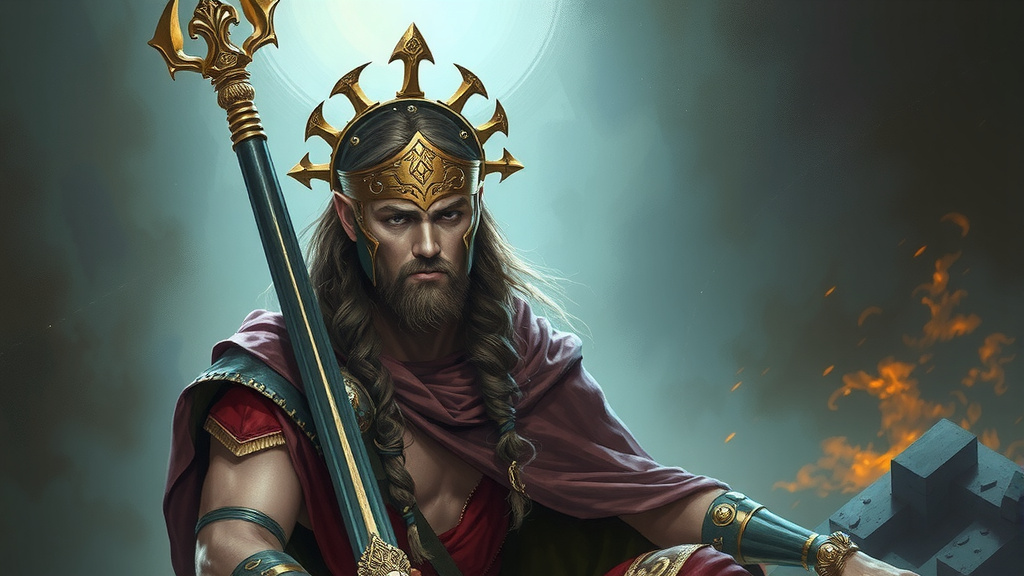
Here is where it gets interesting: The Greek underworld wasn't some vague spiritual area—it had a specific geography that ancient writers described in vivid detail. Think about it: You are looking at a vast subterranean kingdom with its own rivers, regions, and architectural marvels.
The Five Rivers of the Underworld
But wait, there is more. Every soul entering Hades had to handle these supernatural waterways, each carrying its own terrible power:
The River Styx served as the primary boundary between life and death. When gods swore by the Styx, they couldn't break their oath—even Zeus himself was bound by this rule. Here is what nobody tells you: Achilles' mother dipped him in these waters to make him invulnerable, though she missed that infamous heel.
Lethe, the River of Forgetfulness, erased all memories of earthly life. This matters to you because Souls drank from it to prepare for reincarnation, though some mystery cults taught initiates to avoid it entirely. Fair warning: Imagine losing everything that made you you—that's the terror Lethe represented.
Acheron, the River of Woe, was where Charon the ferryman collected his payment. No coin for passage? You would wander the shores for a hundred years. This is something you should know: is why Greeks placed coins on the eyes or under the tongue of the dead.
Cocytus, the River of Lamentation, was formed from the tears of you who had committed crimes. You will find that the constant wailing of the damned fed its waters—a haunting reminder that some suffering echoes through eternity.
But here is the catch: Phlegethon, the River of Fire, surrounded Tartarus with flames that never died. What you should remember is Unlike earthly fire that consumes and destroys, this flame preserved sinners for eternal punishment.
Regions and Areas Within Hades
Here is the truth: The underworld operated like a vast sorting system for souls. Where you ended up depended entirely on how you had lived.
Tartarus was basically ancient Greece's maximum-security prison. The Titans were locked here after losing to Zeus, but it also housed history's worst criminals. What makes this work for you? this myth enduring is the description that has stuck with me comes from Virgil: bronze walls surrounded by that river of fire, with a massive iron tower that could never be destroyed.
The Elysian Fields offered paradise for heroes and the extraordinarily virtuous. Picture eternal spring, beautiful meadows, and perfect weather. You can see how Heroes could choose to be reborn or stay in bliss forever. Pro tip: It's essentially the Greek version of heaven, though much harder for you to reach.
The Asphodel Meadows housed ordinary souls—neither particularly good nor evil. Plot twist: They wandered gray fields of ghostly flowers, living a shadow existence that's arguably worse than punishment. At least the damned felt something; these souls experienced only emptiness.
The Gates and Guardians
The bottom line? Cerberus, the three-headed dog, wasn't just a monster—he was a sophisticated security system. His job wasn't keeping people out; it was keeping souls in. As you might expect, You might observe that some accounts give him fifty or a hundred heads, but three became standard. As you explore, each head could see past, present, and future, making escape nearly impossible.
Charon the ferryman wasn't doing community service—he was running a business. You can see how ancient Greeks took his payment requirement so seriously that even the poorest families found coins for their dead. Let me explain: This wasn't just superstition; it reflected their belief that proper burial rites had real consequences in the afterlife.
Mind-blowing, right? How practical the Greeks made their afterlife. Every element served a purpose, from the rivers that sorted souls to the guardians who maintained order. You will find that It wasn't chaos—it was cosmic bureaucracy at its most efficient.
The Rulers and Inhabitants of the Underworld
Hades: King of the Dead
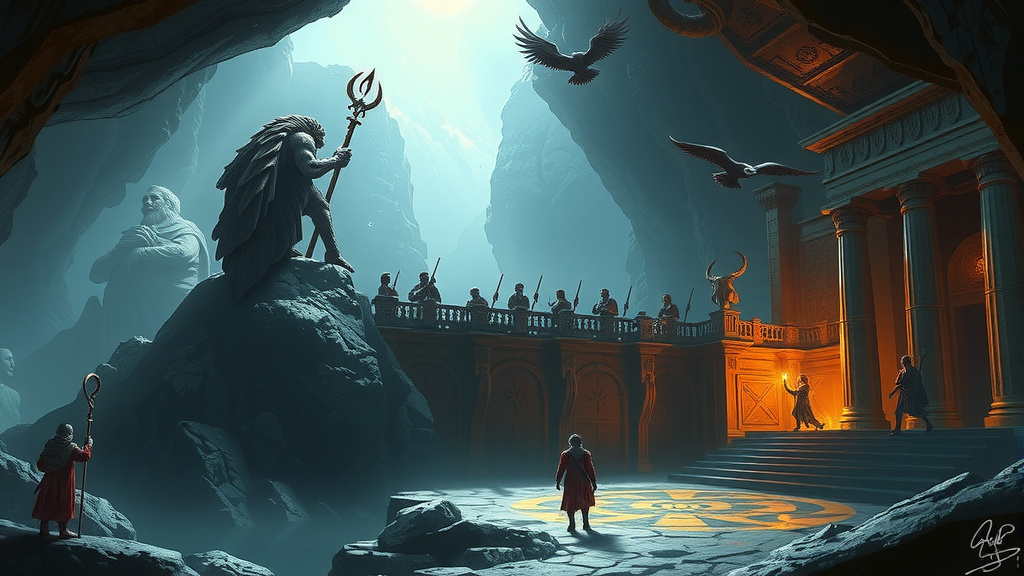
Here is something that might surprise you: Hades wasn't evil. He was stern, impartial, and absolutely committed to maintaining order in his area. Unlike his brothers Zeus and Poseidon, who constantly interfered in mortal affairs, you will find that Hades rarely left his kingdom. He had a job to do, and he did it with unwavering dedication.
Quick note: The Greeks actually avoided saying his name, calling him “Plouton” (the wealthy one) instead, because the earth held both the dead and precious metals. This is something you should know: dual nature—terrifying but necessary—made Hades a top complex figures in Greek mythology.
What strikes me about Hades is his fairness. For you, this means He didn't create arbitrary punishments or play favorites. When heroes came seeking favors, he listened to their cases and made decisions based on cosmic law, not personal whim. So what does this mean for you? That's more than you can say for most Greek gods.
Persephone: Queen of the Underworld
But here is what You probably miss: Persephone's story explains not just the seasons but the entire cycle of death and rebirth. Her abduction by Hades shocked the ancient world, but her eventual acceptance of queenship showed notable character development.
As queen, Persephone wasn't a victim—she was a powerful ruler in her own right. She could grant mercy (as she did with Orpheus) or order terrible punishments. Notice how you can The Romans called her Proserpina and emphasized her role as a goddess of springtime, but the Greeks understood her dual nature: bringer of flowers and sovereign of the dead.
Here is the good news: I have always found it interesting that her story reflects agricultural reality. Seeds must “die” in the dark earth before they can grow. Persephone's annual journey between worlds mirrors this eternal truth about renewal requiring sacrifice.
The Judges and Enforcers
Now here is the problem: Three judges determined every soul's fate: Minos, Rhadamanthus, and Aeacus. These are elements you will encounter: weren't random appointments—all three had been legendary kings known for their wisdom and justice during life.
Minos handled the final appeals and difficult cases. Rhadamanthus judged Asian souls, while Aeacus handled Europeans. Think about how you would This geographic division shows you how the Greeks adapted their mythology as their world expanded.
But it gets better: The Furies (Erinyes) were the underworld's enforcement division. These are elements you will encounter: weren't mindless monsters—they were agents of cosmic justice who pursued criminals, especially you who had committed crimes against family. You will notice that they represented the idea that some acts were so heinous that punishment was inevitable, whether in life or death.
Spirits and Supernatural Beings
The kicker? Hermes Psychopompos guided souls from the moment of death to their final judgment. This role transformed Hermes from a trickster god into something far more serious—the last friendly face many souls would ever see.
Thanatos (Death) and Hypnos (Sleep) were twin brothers, which explains why ancient peoples saw sleep as death's gentle cousin. Unlike the violent deaths brought by war or disease, Thanatos offered peaceful transition.
Hecate controlled the crossroads between worlds, making her essential for you attempting to communicate with the dead. You might wonder why She is often overlooked, but her role was crucial—she determined who could move between areas and under what circumstances.
The real question is: These weren't just characters in stories; they represented different aspects of death that the Greeks wanted to understand and categorize. As you explore, each figure served a specific function in making the incomprehensible reality of mortality more manageable for you.
Famous Journeys to the Underworld
Orpheus and Eurydice: Love's Ultimate Test
Let me tell you about the most heartbreaking story in all mythology. Orpheus wasn't just a musician—he was the musician, son of Apollo and the muse Calliope. His music could make stones weep, trees dance, and wild beasts lie down peacefully. But here is the catch: all that divine talent couldn't save his wife from a snake bite on their wedding day.
Most men would have accepted fate. You will appreciate this. Plot twist: Orpheus grabbed his lyre and walked straight into hell.
The journey itself was miraculous. Cerberus stopped snarling and let him pass. Charon ferried him across the Styx without payment. The tormented souls in Tartarus paused their eternal suffering to listen. Even the Furies wept—these beings who knew no mercy felt their hearts break at his music.
When Orpheus reached the throne room, he sang directly to Hades and Persephone. This matters to you because He didn't demand or threaten; he simply poured his heart out in song. The entire underworld fell silent. For the first and only time in mythological history, Hades himself shed tears.
“Take her,” Hades said. “But you must not look back until you both reach the surface.”
Here is where it gets interesting: Orpheus led Eurydice up through the dark passages, his music lighting the way. But just before they reached sunlight—just when salvation was within grasp—he turned around. You might observe that some versions say he heard her stumble and turned to help. What you should remember is Others suggest he doubted she was really there. Either way, she faded back into death, whispering “farewell” as she disappeared forever.
Why does this matter to you? this story endure for you? Because it captures the impossibility of recovering what we have lost. Love can move mountains, but it can't undo death. The tragedy isn't that Orpheus failed—it's that he succeeded, then threw away his miracle through human weakness.
Odysseus and the Nekyia
Homer's account of Odysseus summoning the dead is completely different from Orpheus's journey. Instead of descending into Hades, the hero digs a pit at the edge of the world and fills it with sacrificial blood to attract spirits.
What follows is one of literature's first séances. You can see how Odysseus meets his mother (who died while he was away), fallen comrades from Troy, and great heroes of the past. But here is what You probably miss: the most important encounter is with the prophet Tiresias, who reveals what Odysseus must do to reach home.
The genius of Homer's version is its restraint. These aren't dramatic confrontations with death gods—they're quiet conversations with people Odysseus has lost. His mother tells him she died of grief waiting for his return. His warrior friends want news of their families. As you might expect, It's heartbreaking in its humanity.
Achilles delivers the most famous line: “I would rather be a slave laboring for a poor farmer on earth than rule as king over all the lifeless dead.” This completely upends heroic values for you. Glory wasn't worth death, even for the greatest warrior who ever lived.
Aeneas and the Roman Adaptation
But wait, there is more. Virgil's account in the Aeneid reads like a guided tour of the afterlife. The Sibyl of Cumae leads Aeneas through every region of Hades, explaining the cosmic justice system in detail. This isn't a desperate rescue mission—it's educational.
Aeneas sees punishments that perfectly fit crimes. You will find that He visits the Elysian Fields and meets his father Anchises, who reveals Rome's glorious future. The entire journey serves to justify Roman imperial destiny.
But here is the good news: Virgil added something innovative: the possibility of purification. Souls could work off their sins through suffering, then choose new lives. This optimistic vision influenced Christian thought for centuries.
What strikes me about these three journeys is how they reflect different cultural needs for you. Orpheus represents pure emotion—love challenging the cosmic order. For you, this means Odysseus seeks practical information to solve immediate problems. Aeneas receives cosmic revelation about his people's destiny.
The deeper symbolism reveals each culture used underworld journeys to explore what mattered most to them: Greek individualism, Homeric pragmatism, or Roman imperial purpose.
The Punishments and Rewards of the Afterlife
Eternal Punishments for the Wicked
Greek punishment wasn't random torture—it was precise, personalized justice that reflected each criminal's specific crimes. Here is the truth: These weren't just horror stories; they were moral teachings about the consequences of extreme behavior that you can learn from.
Tantalus stands in a pool beneath fruit trees, but whenever he bends to drink or reaches for food, they recede just beyond his grasp. His crime? He killed his own son Pelops and served him as dinner to the gods (who immediately knew what they were eating and restored the boy to life). The punishment fits perfectly: he craved divine favor so desperately that he committed the ultimate taboo, so now he will crave basic sustenance forever.
Sisyphus pushes a boulder up a mountain for eternity, watching it roll back down just before reaching the top. Notice how you can He was humanity's greatest trickster, who actually managed to cheat death twice—first by chaining Thanatos himself, then by convincing Persephone to let him return to earth “temporarily” to scold his wife for not giving him proper burial. The endless, futile labor punishes you whose greatest sin was believing he was cleverer than the cosmic order.
Want to know the secret? Ixion spins forever on a wheel of fire because he tried to seduce Hera at Zeus's own table. Zeus created a cloud-copy of his wife to test Ixion's intentions, and the fool actually bragged about his conquest afterward. The spinning wheel represents the dizzying arrogance that led to his downfall.
The Danaides must fill leaky jars with water for eternity. These fifty sisters murdered their husbands on their wedding night (following their father's orders to avoid a prophecy). Think about how you would Since they spilled blood that should have created new life, they are condemned to spill water that can never fill anything.
What is brilliant about these punishments is their psychological sophistication. Each torment reflects the criminal's essential character flaw, magnified to cosmic proportions. They're not arbitrary cruelty—they're perfect justice that you can understand.
Rewards for Heroes and the Virtuous
The Elysian Fields weren't just paradise—they were a place where the best of humanity could continue growing. Heroes engaged in friendly competitions, philosophers continued their discussions, and artists created works of perfect beauty.
But here is what I find fascinating: getting there was incredibly difficult. Heroic deeds in battle weren't enough; you needed extraordinary virtue, divine favor, or initiation into mystery cults. You might wonder why The Greeks didn't believe in universal salvation—they believed excellence was rare and should be rewarded accordingly.
Some souls in Elysium could choose reincarnation to pursue even greater achievements. But if they lived three perfect lives and reached Elysium each time, they earned passage to the Islands of the Blessed—a paradise beyond paradise, where perfected souls existed in pure bliss.
The Judgment Process
After death, every soul appeared before the three judges. This wasn't a trial with lawyers and evidence—your entire life was visible to these divine magistrates. You will notice that they could see not just your actions but your motivations, the consequences of your choices, and the state of your character.
Most souls were neither exceptionally good nor evil, so they were sent to the Asphodel Meadows for a bland existence that reflected their mediocre lives. The Greeks didn't reward ordinary virtue with paradise—they believed extraordinary destinations required extraordinary lives.
Think about it: This judgment system shaped Greek ethics in deep ways. If you knew your every action was being weighed for eternal consequences, you might think twice about that business deal or political alliance. The underworld wasn't just about death—it was about how you should live.
Heroes Who Defied Death
Heracles and the Twelfth Labor
When Eurystheus ordered Heracles to capture Cerberus as his final labor, everyone assumed it was a death sentence. No mortal could enter Hades and return alive. But here is the thing: Heracles wasn't exactly a normal mortal.
He didn't sneak into the underworld—he marched straight through the front gates. When he encountered the ferry, he probably could have paid Charon, but instead he just glowered at the ferryman until he got free passage. Even death's bureaucracy bent to his will.
The confrontation with Hades is one of my favorite scenes in all mythology. Heracles simply asked permission to borrow Cerberus, promising to return the dog unharmed. When Hades agreed (probably because refusing would mean fighting the strongest man who ever lived), he added one condition: Heracles had to subdue Cerberus without weapons.
Picture this: the world's strongest hero wrestling a three-headed monster dog the size of a building, using nothing but his bare hands. Heracles won by basically hugging Cerberus until the dog submitted. Then he carried his prize to the surface, showed it to Eurystheus (who hid in a bronze jar), and returned it as promised.
While there, Heracles also rescued Theseus, who had been trapped in the Chair of Forgetfulness for trying to kidnap Persephone. But when he tried to free Pirithous too, the earth shook—some crimes couldn't be forgiven, even by the world's greatest hero.
Theseus and Pirithous's Failed Rescue
Now here is the problem: This story shows what happens when heroes let hubris override wisdom. Theseus and his best friend Pirithous had both lost their wives and decided they deserved goddesses as replacements. They helped each other kidnap Helen for Theseus (she was only a child at the time), then descended to Hades to steal Persephone for Pirithous.
The plan was doomed from the start. You can't just walk into someone's house and kidnap their wife, especially when that you is the lord of the dead and his wife is the queen of the underworld.
Hades pretended hospitality, offering them seats at his table. But here is the catch: the chairs were magical—once they sat down, they became part of the furniture, trapped forever. Theseus was eventually rescued, but Pirithous remained stuck. Some say he's still there, a reminder that even heroes face consequences for their actions.
Other Legendary Encounters
Alcestis represents one of mythology's most touching stories. When her husband Admetus was doomed to die young, she volunteered to take his place. But it gets better: Heracles, who was visiting at the time, wrestled Death himself and brought her back. It's one of the few myths where you dies for love and actually gets a happy ending.
Psyche's underworld journey in the Cupid and Psyche tale shows a different kind of heroism. Instead of fighting monsters, she had to resist temptation. When Persephone gave her a box of beauty cream for Venus, Psyche was forbidden to open it. Naturally, she couldn't resist taking just a peek—and fell into deathlike sleep. But her story ends with resurrection and transformation into a goddess.
These stories share common themes that matter to you: love challenging death, heroes testing divine limits, and the thin line between courage and foolishness. They suggest that while death is usually final, exceptional circumstances—and exceptional people—can sometimes bend the rules.
What I find most powerful is how these myths acknowledge death's reality while still celebrating human defiance. The heroes don't always win, but their courage in the face of the ultimate enemy makes them immortal in story, if not in life.
Symbolism and Cultural Impact
Psychological Interpretations
Carl Jung saw underworld journeys as maps of psychological transformation. When Orpheus descends into Hades, he's not just trying to rescue Eurydice—he's confronting his own capacity for loss and renewal. The underground area represents the unconscious mind, where your deepest fears and desires dwell.
Think about it: every major underworld myth involves you leaving their normal world, facing their darkest fears, and returning fundamentally changed. That's not just storytelling—it's the structure of psychological growth itself.
The rivers of Hades map emotional states you experience. Styx represents the boundary between your conscious and unconscious minds. Lethe is the forgetfulness you use to cope with trauma. Acheron embodies the woe you must acknowledge before you can heal. These aren't just geographic features in an ancient story—they're psychological territories you handle.
Here is what nobody tells you: Modern therapy actually uses similar structures. When therapists talk about “going into the darkness” or “facing your shadows,” they're describing the same process the Greeks dramatized through underworld myths.
Religious and Philosophical Significance
The mystery cults of ancient Greece—particularly the Eleusinian Mysteries—used underworld symbolism to promise initiates a better afterlife. Demeter's grief for lost Persephone became a template for understanding how death and rebirth operated both in nature and in human consciousness.
Orphic texts provided detailed instructions for handling the afterlife, including passwords to give the underworld guards and warnings about which rivers to avoid. These weren't just religious documents—they were cosmic GPS systems for the dead.
The philosophical implications were enormous for you. If the afterlife operated according to moral principles, then ethics weren't just social conventions—they were cosmic laws. Plato built his entire moral philosophy on this foundation, arguing that justice existed whether humans recognized it or not.
Influence on Later Literature and Art
Dante's Inferno is basically a Christian adaptation of classical underworld mythology. He uses Virgil as his guide, structures hell according to Greek principles of proportionate punishment, and populates it with figures from classical literature.
But here is where it gets interesting: the influence goes far deeper than obvious adaptations. Every story about you journeying into darkness and emerging transformed owes something to Greek underworld myths. Luke Skywalker in the cave on Dagobah. Alice falling down the rabbit hole. Dorothy in the Wizard of Oz. They're all variations on the same theme you recognize.
Modern superhero comics are full of underworld journeys. Characters regularly die and return, visit hell to rescue loved ones, or face cosmic judges who determine their fate. The specific imagery might be different, but the underlying structure remains unchanged.
Even video games use these patterns. How many times have you played a character who descends through increasingly difficult levels, faces a final boss in the deepest area, and emerges with new powers or knowledge? That's the underworld journey in interactive form.
What strikes me most is how adaptable these myths are for you. They work in ancient Greece, medieval Christianity, modern psychology, and contemporary entertainment because they address fundamental human experiences: loss, fear, moral choice, and the hope for transformation.
Across cultures, we find the Greek underworld wasn't just where people went when they died—it was where they went to discover who they really were. That's why these stories still matter for you. As long as humans face death, loss, and moral choices, you will need myths that help you handle the darkness and find your way back to the light.
The beauty of Greek underworld myths lies in their honesty. They don't promise easy answers or comfortable solutions. But they do offer something more valuable: the recognition that even in your darkest moments, you are not alone. Heroes have walked this path before you, and their stories can light your way.
Frequently Asked Questions
What are the main Greek underworld myths you should know about?
You should familiarize yourself with Orpheus and Eurydice's tragic love story, Odysseus's consultation with the dead, Heracles capturing Cerberus, and Persephone's abduction by Hades. These tales reveal different aspects of how you can understand death, love, heroism, and the afterlife in Greek mythology.
How do you enter the Greek underworld according to the myths?
You typically need to cross the River Styx with Charon the ferryman (requiring payment of a coin), pass by the three-headed dog Cerberus, and face judgment by the three judges. If you are living and attempting the journey, you would need divine assistance or extraordinary heroism to survive the experience.
What determines where your soul goes in the Greek afterlife?
Your destination depends on how you lived your earthly life. The three judges examine your actions, motivations, and character. You might end up in Tartarus for terrible crimes, the Asphodel Meadows for ordinary existence, or the Elysian Fields for heroic virtue. The judgment is based on cosmic justice, not arbitrary decisions.
Can you return from the Greek underworld once you have died?
Generally no, but the myths include rare exceptions. You might return if gods intervene (like with Alcestis), if you have extraordinary skills (like Orpheus almost did), or if you rescues you (like Heracles did for Theseus). These cases are exceptional and usually come with strict conditions.
What lessons do Greek underworld myths teach you?
These stories teach you about moral consequences, the power of love to challenge cosmic order, the importance of accepting death as part of life, and how courage can help you face your greatest fears. They show you that your actions in life have eternal significance and that true heroism often involves moral choices rather than just physical strength.
How do Greek underworld myths influence modern stories you read and watch?
You will find their influence everywhere: heroes journeying into darkness and returning transformed, the idea that love can conquer death, proportional punishment for crimes, and the concept of moral judgment after death. From superhero comics to fantasy novels to psychological thrillers, these ancient patterns still shape the stories you encounter.
What makes this work for you? Greek underworld myths different from other culture's death stories?
Greek myths give you a detailed geography and bureaucracy of death, emphasizing individual moral responsibility and the possibility of heroic intervention. Unlike many cultures that see death as purely final or purely spiritual, Greek myths present you with a complex system where justice, love, and courage can sometimes bend the rules while still respecting cosmic order.
Whether you are exploring these myths for personal understanding, academic study, or pure fascination with storytelling, you will find that Greek underworld tales continue to offer deep insights into human nature, moral choice, and the eternal questions that connect you to generations of seekers who came before.