Since the dawn of consciousness, humans have gazed at the stars and wondered how everything began. Every culture across the globe has crafted magnificent stories to explain the origins of the universe, Earth, and humanity itself. These creation myths from around the world aren't just ancient fairy tales-they're deep reflections of how our ancestors understood their place in the cosmos, their relationship with the divine, and the fundamental nature of existence.
This post contains affiliate links. If you purchase through these links, we may earn a commission at no extra cost to you.
I've spent decades studying these notable narratives, and I'm continually amazed by both their incredible diversity and their striking similarities. From the primordial waters of Egyptian mythology to the cosmic egg of Chinese legend, these stories reveal universal human concerns wrapped in the cultural clothing of their time.
What Are Creation Myths and Why Do They Matter?
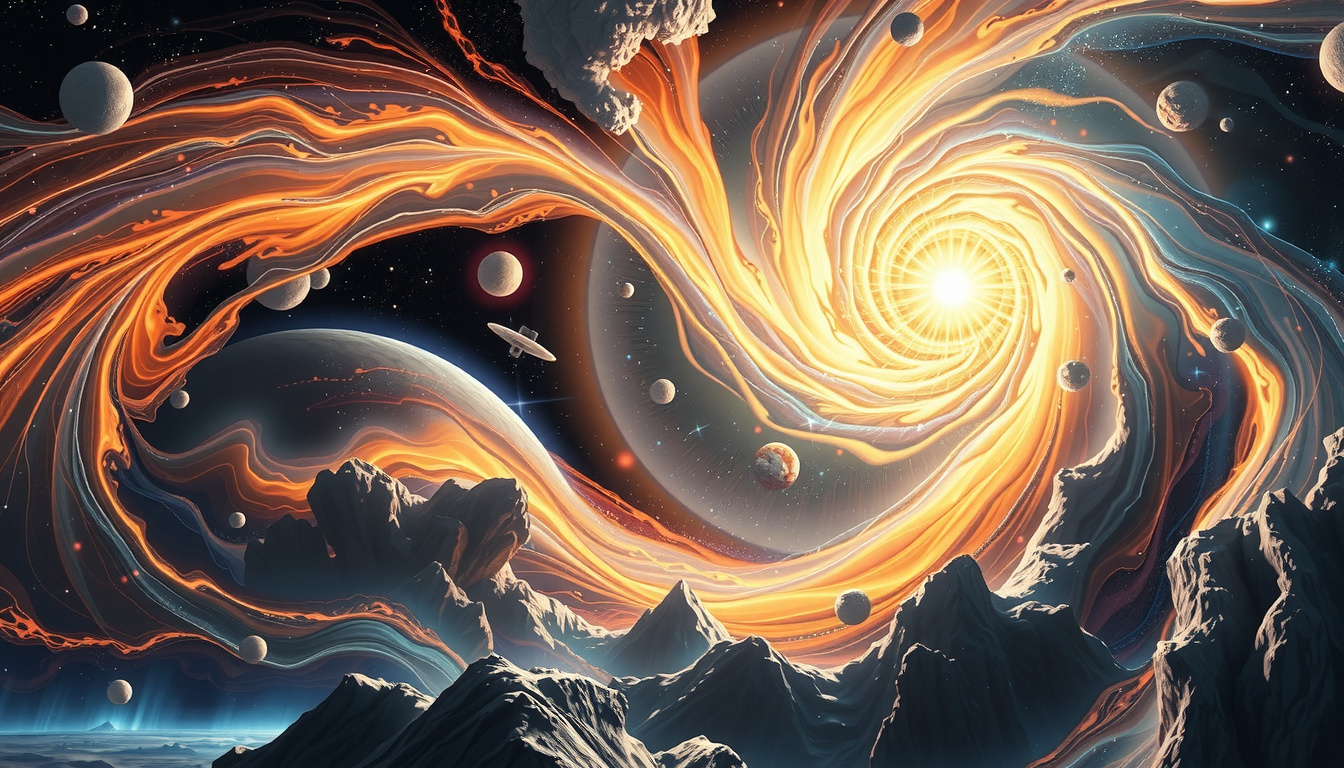
Creation myths from around the world are sacred stories that explain how the world and everything in it came to be. They're not meant to be scientific accounts-they're something far more deep. These narratives address the deepest questions humans can ask: Why do we exist? How did everything begin? What's our purpose in this vast universe?
In my research across various cultures, I've found that creation myths typically fall into several categories:
- Ex nihilo myths describe creation from nothing, often by a supreme deity's word or will
- Chaos myths begin with primordial disorder that's eventually organized into the world we know
- World-parent myths feature the cosmos emerging from the body of a cosmic being
- Emergence myths describe humanity rising through successive underground worlds to reach the surface
These stories served multiple functions in ancient societies. They provided explanations for natural phenomena that science couldn't yet address. They established social order by explaining the origins of customs and hierarchies. Most importantly, they gave people a sense of meaning and belonging in an often harsh and mysterious world.
The psychological impact of creation myths extends far beyond their original cultures. Carl Jung argued that these stories tap into universal archetypes embedded in the human psyche. Whether we're religious or secular, modern or traditional, we still grapple with the same fundamental questions these myths address.
Ancient Mesopotamian Creation Myths
The fertile crescent between the Tigris and Euphrates rivers gave birth to some of humanity's oldest recorded creation stories. The Babylonian Enuma Elish, composed around 1200 BCE but drawing on much older traditions, remains a top influential creation myths ever written.
The story begins with Apsu, the freshwater ocean, and Tiamat, the saltwater sea, existing in primordial unity. From their mingling emerged the first gods, whose noise and activity eventually annoyed their elders. Apsu decided to destroy them, but the clever god Ea killed Apsu first. Tiamat, enraged, prepared for war against the younger gods.
Enter Marduk, the storm god of Babylon. Armed with winds and lightning, he battled the chaos dragon Tiamat in cosmic combat. After defeating her, Marduk split Tiamat's body in half-one part became the sky, the other the earth. From Tiamat's tears flowed the great rivers, and from her eyes shone the sun and moon.
The creation of humanity comes with a darker twist. The gods created humans from the blood of Kingu, Tiamat's consort, mixing it with clay. Humans were designed specifically to serve the gods, to perform the labor that the deities no longer wished to do themselves.
This myth established patterns we see repeated across cultures:
- Primordial waters as the source of creation
- Cosmic combat between order and chaos
- Creation through divine conflict
- Humanity's subservient role to the divine
The Sumerian version, featuring the goddess Nammu and her son Enki, presents a slightly different perspective. Here, creation emerges more through divine planning than violent conflict, though the end result-humans serving gods-remains consistent.
Greek and Roman Creation Stories
Greek creation mythology offers us some of the most psychologically complex origin stories ever conceived. The Theogony by Hesiod, written around 700 BCE, presents a violent family drama played out on a cosmic scale.
In the beginning was Chaos-not disorder, but a gaping void. From Chaos emerged Gaia (Earth), Tartarus (the underworld), and Eros (love as a cosmic force). Gaia gave birth to Uranus (Sky), and together they produced the Titans, the Cyclopes, and the Hundred-Handed Ones.
Uranus feared his children and imprisoned them within Gaia's body, causing her tremendous pain. She convinced her son Cronus to castrate his father with a sickle. From Uranus's spilled blood came the Furies and the Giants, while his severed genitals, falling into the sea, gave birth to Aphrodite.
Cronus, paranoid about his own children overthrowing him, swallowed each baby immediately after birth. His wife Rhea saved Zeus by giving Cronus a stone wrapped in swaddling clothes instead. Zeus eventually freed his siblings and waged a ten-year war against the Titans, establishing the Olympic pantheon we know from classical literature.
The creation of humans varies in Greek accounts. In some versions, we're molded from clay by Prometheus. In others, we emerge from successive ages-Gold, Silver, Bronze, and Iron-each inferior to the last. This cyclical view of history, where humanity degenerates rather than progresses, contrasts sharply with modern optimism about human advancement.
Roman mythology largely adopted Greek creation stories but emphasized different aspects. Ovid's Metamorphoses presents creation as an ongoing process of transformation rather than a single foundational event. This perspective influenced later Christian interpretations and Renaissance art.
Norse and Germanic Creation Myths
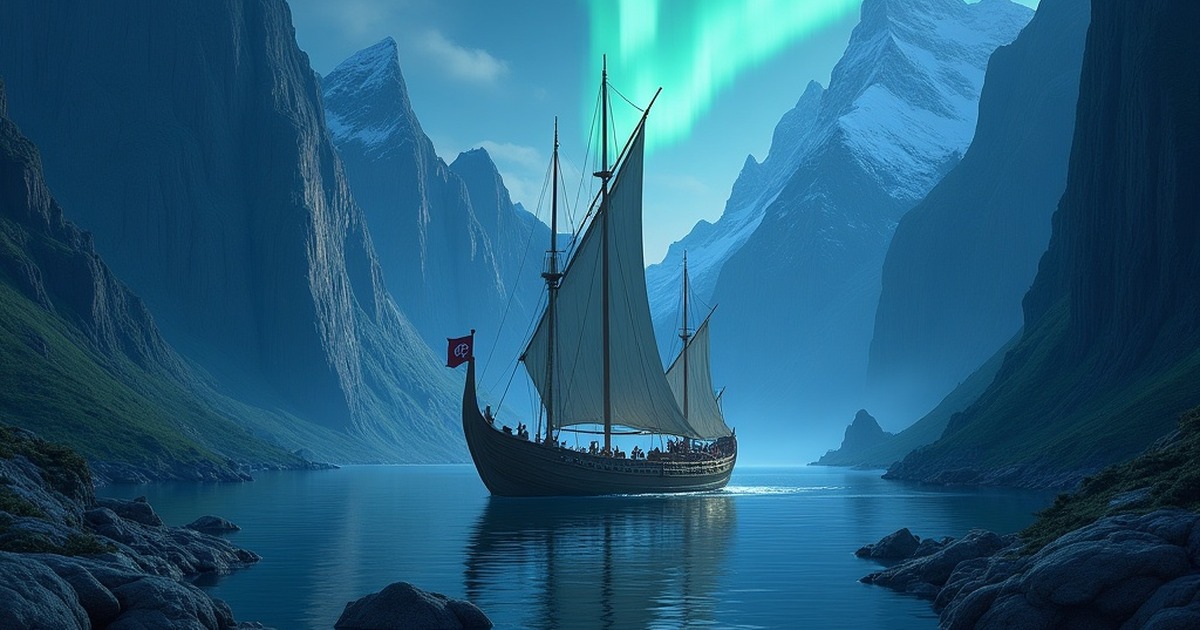
The Norse creation story, preserved primarily in the Prose Edda by Snorri Sturluson, reflects the harsh realities of Scandinavian life while offering deep insights into the cyclical nature of existence.
Before creation, there was only Ginnungagap-a yawning void between Niflheim (the area of mist and ice) and Muspelheim (the area of fire). Where cold and heat met, the primordial giant Ymir emerged from the melting ice, along with Audhumla, a cosmic cow whose milk nourished him.
Audhumla licked the salty ice blocks, revealing Buri, the first god. Buri's descendants-Odin, Vili, and Vé-eventually killed Ymir. From his body, they created the world:
- His flesh became the earth
- His blood the seas
- His bones the mountains
- His hair the trees
- His skull the dome of sky
The first humans, Ask and Embla, were carved from ash and elm trees. The gods gave them breath, consciousness, appearance, and the ability to speak. This creation from wood rather than clay reflects the deep connection between Germanic peoples and their forest environment.
What makes this work for you? Norse mythology unique is its apocalyptic vision. The world isn't permanent-it's destined for Ragnarok, the twilight of the gods, when everything will be destroyed in a final battle. Yet even this ending isn't final. After the destruction, a new world will emerge, and two humans hidden in the World Tree will repopulate the earth.
This cyclical worldview, where creation and destruction endlessly repeat, may reflect the harsh cycles of Scandinavian seasons or deeper philosophical insights about the nature of existence. I've found similar cyclical themes in Hindu and Buddhist cosmology, suggesting this might be a universal human intuition about time and change.
Eastern Creation Myths: Hindu, Chinese, and Japanese
Eastern creation myths from around the world often present time as circular rather than linear, with universes endlessly created, sustained, and destroyed in cosmic cycles lasting billions of years.
Hindu Creation Stories
The Hindu tradition offers multiple creation accounts, but a top beautiful involves Brahma emerging from a lotus that grows from Vishnu's navel as he sleeps on the cosmic serpent Shesha, floating on the universal ocean. Brahma then speaks or dreams the universe into existence through the sacred sound “Om.”
The Rig Veda's Nasadiya Sukta presents an even more sophisticated creation hymn, acknowledging the ultimate mystery of origins: “Who really knows? Who will here proclaim it? Whence was it produced? Whence is this creation?” This philosophical humility, admitting the limits of human understanding, contrasts with more confident creation accounts from other cultures.
Chinese Creation Mythology
Chinese creation mythology centers on Pangu, who emerged from the cosmic egg after 18,000 years of gestation. Finding himself in darkness, he cracked the egg with an axe. The light parts rose to become heaven, the heavy parts sank to become earth. For another 18,000 years, Pangu held them apart, growing taller each day to prevent their reuniting.
When Pangu finally died from exhaustion, his body became the physical world:
- His breath became wind and clouds
- His voice became thunder
- His left eye became the sun
- His right eye became the moon
- His body and limbs became mountains
- His blood formed rivers
- His hair became stars and forests
The goddess Nüwa later created humans by molding them from yellow clay. The wealthy and noble came from careful hand-crafting, while common people came from clay she flung from a rope-a creation story that conveniently justified social hierarchies.
Japanese Creation Traditions
Japanese creation begins with the primordial couple Izanagi and Izanami stirring the chaotic ocean with a jeweled spear. Drops falling from the spear formed the first island. The divine couple descended and began creating the Japanese archipelago through sacred marriage, each island born from their union.
Their story takes a tragic turn when Izanami dies giving birth to the fire god Kagutsuchi. Izanagi's journey to the underworld to retrieve her, and his purification rituals afterward, establish patterns of death, rebirth, and purification central to Shinto belief.
African Creation Stories Across the Continent
Africa's vast cultural diversity has produced an equally rich variety of creation myths from around the world, each reflecting the environment and values of its people. These stories often emphasize the interconnectedness of all life and humanity's responsibility as stewards of creation.
Dogon Cosmology
The Dogon people of Mali tell of Amma, the cosmic god who created the universe from clay. The first creation attempt failed when the earth, shaped as a woman, was too eager for her husband's embrace. This produced the jackal, a trickster figure representing disorder. Amma's second attempt created twins called Nommo-half-human, half-serpent beings associated with water and fertility.
What makes this work for you? Dogon cosmology notable is its sophisticated astronomy. They describe Sirius as a binary star system (confirmed by modern science only in 1862) and incorporate complex calculations about celestial movements into their mythological structure. I've studied their sand drawings and ritual dances that encode astronomical knowledge passed down for generations.
Yoruba Traditions
The Yoruba tradition from West Africa features Olodumare, the supreme deity, who sent Obatala down from heaven to create solid ground on the primordial waters. Using a snail shell filled with earth, a white hen, and a black cat, Obatala scattered soil on the waters. The hen scratched it around, creating the first dry land at Ile-Ife, still considered the sacred center of Yoruba cosmology.
Ethiopian and San Stories
Ethiopian creation myths often blend indigenous traditions with influences from Judaism, Christianity, and Islam. The Kebra Nagast describes creation through divine speech, similar to Genesis, but emphasizes Ethiopia's special role in cosmic history through the Queen of Sheba's connection to King Solomon.
South African San (Bushmen) stories often feature Kaggen, the trickster-creator who transforms into various animals. These stories reflect the San's intimate knowledge of desert ecology and their belief that spiritual power flows through all living things. The eland antelope holds special significance as Kaggen's first and most beloved creation.
Native American Creation Myths
Native American creation myths from around the world are as diverse as the hundreds of distinct tribes across North and South America, but they often share themes of emergence, transformation, and humanity's kinship with the natural world.
Hopi Emergence Stories
The Hopi emergence story describes humanity rising through successive underworlds guided by Spider Grandmother and the twin war gods. Each previous world was destroyed when people became corrupt and forgot their spiritual obligations. We currently live in the Fourth World, and our behavior determines whether we'll successfully transition to the Fifth World or face destruction like the previous worlds.
I've had the privilege of attending Hopi ceremonies where these stories are retold through ritual and dance. The power of these narratives isn't just in their content but in their continued living presence in community life.
Iroquois and Cherokee Traditions
Iroquois tradition tells of Sky Woman falling through a hole in the celestial world. Water animals, led by the Great Turtle, dove to bring up mud from the ocean floor. Placed on Turtle's back, the mud expanded to form North America-hence the name “Turtle Island” that many Native Americans use for the continent.
Sky Woman's daughter gave birth to twins: Sapling (the Creator) and Flint (the Destroyer). Their eternal conflict explains the presence of both beauty and danger in the natural world. This dualistic cosmology recognizes that creation and destruction are both necessary forces.
Cherokee stories describe animals as the first beings, who shaped the world before humans arrived. When the world was still soft mud, the Great Buzzard flew low, and where his wings touched down created valleys and mountains. Animals held a council to create the sun and establish day and night. Only later were humans added to this already-functioning system.
Aztec and Mayan Cosmologies
Aztec cosmology presents multiple world ages, each destroyed and recreated. We live in the Fifth Sun, created when the god Nanahuatzin sacrificed himself by jumping into the cosmic fire to become our current sun. This theme of divine sacrifice for creation permeates Mesoamerican mythology and influenced Aztec ritual practices.
Mayan creation, preserved in the Popol Vuh, describes the gods' repeated attempts to create suitable humans:
- First they tried clay (too weak)
- Then wood (too rigid and soulless)
- Finally, they succeeded with corn-the sacred grain that remains central to Mayan culture
The Hero Twins' adventures in the underworld established the cycles of death and rebirth that govern both agricultural seasons and human life.
Modern Interpretations and Cultural Legacy
Creation myths from around the world continue to influence contemporary culture in ways both obvious and subtle. They've shaped our literature, art, psychology, and even our approaches to scientific questions about cosmic origins.
Literary and Artistic Influences
Modern fantasy literature draws heavily on mythological creation stories. J.R.R. Tolkien's Silmarillion presents a creation myth clearly influenced by Christian theology but incorporating elements from Norse and Finnish traditions. His “Ainulindalë” describes creation as a great music sung by angelic beings, with evil entering through discord introduced by the rebellious Melkor.
Contemporary art continues to explore creation themes. From Georgia O'Keeffe's organic abstractions to James Turrell's light installations that evoke cosmic emergence, artists tap into the same wonder about origins that inspired ancient storytellers.
Scientific Parallels
Contemporary cosmology has produced its own creation story-the Big Bang theory-which shares surprising parallels with ancient myths. Both describe the universe emerging from a singular point or state, expanding and cooling to create the complex structures we observe today. Some physicists and philosophers have noted that scientific and mythological creation accounts address different but complementary questions: science explains “how” while myths explore “why” and “what does it mean?”
Psychological and Environmental Applications
Depth psychology, following Jung's insights, recognizes creation myths as expressions of universal psychological patterns. The separation of primordial unity into opposing forces (chaos/order, male/female, light/dark) reflects the psychological process of individuation-the development of conscious ego from the unconscious matrix.
Environmental movements have rediscovered the wisdom in creation myths that emphasize humanity's kinship with nature rather than dominion over it. Native American concepts of Turtle Island and African stories about humans as caretakers of creation offer alternatives to the exploitation model that has dominated Western thinking.
Enduring Relevance of Creation Stories
The search for meaning that drove ancient creation myths hasn't disappeared in our scientific age-it's simply taken new forms. Whether we're contemplating the cosmic microwave background radiation or the discovery of exoplanets, we're still asking the fundamental questions that creation myths address: Where did we come from? Are we alone? What's our purpose in this vast universe?
These creation myths from around the world remain relevant because they address aspects of human experience that science alone cannot fully encompass. They remind us that we're not just biological machines in a mechanical universe, but conscious beings capable of wonder, meaning-making, and creative transformation.
The creation myths of our ancestors continue to speak to us across the centuries because they encode not just beliefs about cosmic origins, but deep insights about what it means to be human in a mysterious and magnificent universe. They remind us that every culture, no matter how different its specific stories, shares the fundamental human drive to understand our place in the cosmic story-a story that continues to unfold with each generation's new discoveries and creative expressions.