Norse vs Greek Underworld Mythology – Complete Comparison 2025
Ever wondered why Norse warriors didn't fear death while Greeks built elaborate tombs? The answer lies in how these ancient cultures viewed what came after — and their differences are more striking than you might think.
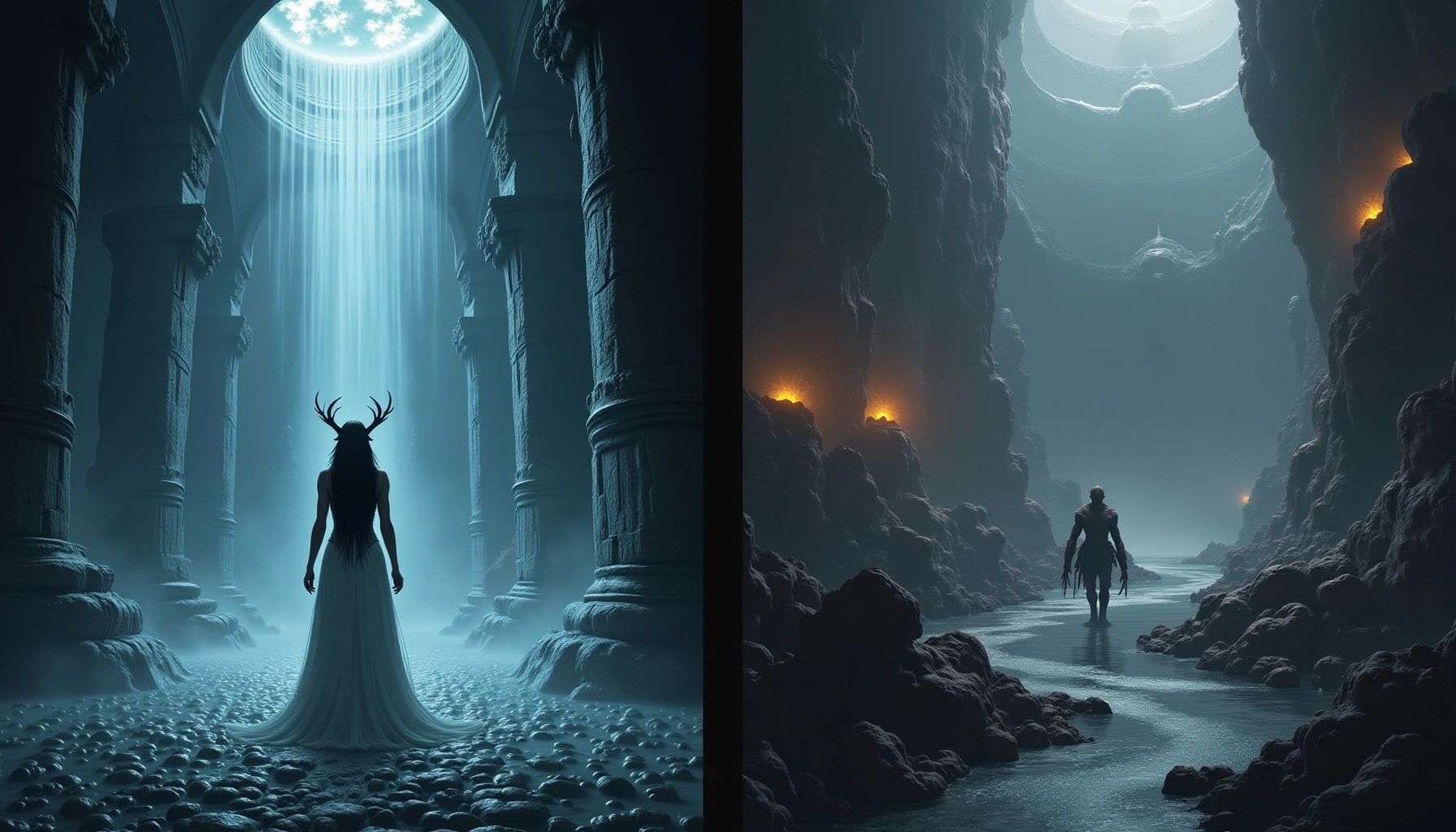
While Greek mythology painted the underworld as a shadowy realm of punishment and reward, Norse beliefs created a complex afterlife where death was just another battlefield. Recent archaeological discoveries from Viking Age burial sites reveal beliefs far more nuanced than pop culture suggests.
Disclosure: This article contains affiliate links. We may earn a commission at no extra cost to you.
The Prose Edda by Snorri Sturluson
The definitive primary source for understanding authentic Norse mythology and afterlife beliefs
What is the difference between Hel and Hades?
The fundamental difference between Hel and Hades goes beyond just names — it's a clash between two entirely different worldviews about death and justice.
Hel isn't technically a place of punishment. In Norse mythology, Hel (both the goddess and her realm) receives those who die of sickness, old age, or accident. Think of it more like a neutral waiting room than a courtroom. The 13th-century Prose Edda describes Hel as half-living, half-dead — a fitting ruler for a realm that's neither paradise nor torture chamber.
Hades, on the other hand, operates like an ancient justice system. Souls face judgment, with the righteous sent to Elysium and the wicked cast into Tartarus. Homer's Odyssey shows us a structured underworld with clear rules, punishments, and rewards.
Here's what recent archaeological evidence tells us: Viking Age burial goods were practical items — weapons, tools, food. Greek burial practices? Coins for Charon, elaborate pottery showing underworld scenes. The Vikings prepared for continued existence; the Greeks prepared for judgment.
Greek Mythology by Edith Hamilton
Essential foundation for understanding Greek underworld concepts and classical sources
Do Vikings go to Valhalla or Hel?
This is where Hollywood gets it spectacularly wrong. Most Vikings didn't expect to go to Valhalla.
Valhalla was exclusive — reserved for warriors chosen by Odin's Valkyries who died gloriously in battle. Even then, it wasn't eternal paradise. These einherjar (chosen slain) were recruits for Ragnarök, the final battle. Think military training camp, not heavenly reward.
The reality? Most Norse dead went to Hel's realm. Snorri Sturluson's Prose Edda makes this clear: Hel receives “those who die of sickness or old age.” In a world where most people were farmers, craftspeople, and traders, battlefield deaths were actually uncommon.
The Norse afterlife destinations included:
- Valhalla: Odin's hall for battle-chosen warriors
- Fólkvangr: Freyja's hall for half the battle dead
- Helheim: Hel's realm for natural deaths
- Rán's nets: Sea goddess's domain for drowned sailors
- Specific god halls: Some dead joined their patron deities
Archaeological evidence from Birka, Hedeby, and other Viking Age sites shows that wealthy warriors received elaborate burials with weapons — but even they often included everyday items, suggesting death was seen as a continuation of life, not a dramatic transformation.
How did Greeks view the afterlife?
Greek afterlife beliefs evolved dramatically over time, shifting from Homer's gloomy underworld to later philosophical concepts of moral judgment.
Early Greek beliefs (Homeric period): The underworld was universally dreary. In the Odyssey, even Achilles tells Odysseus he'd rather be a living peasant than king of the dead. Souls became mere shadows, retaining memory but losing vitality.
Classical period developments: Mystery religions like those at Eleusis promised better afterlives for initiates. Philosophers like Plato introduced concepts of soul purification and reincarnation.
Key Greek underworld features:
- River barriers: Styx, Lethe, Acheron, Cocytus — each serving specific functions
- Charon's ferry: Required payment (obol coins found in graves)
- Three judges: Minos, Rhadamanthus, and Aeacus determining fates
- Cerberus: Three-headed guardian preventing escape
- Distinct regions: Elysium for heroes, Tartarus for the wicked, Asphodel for ordinary souls
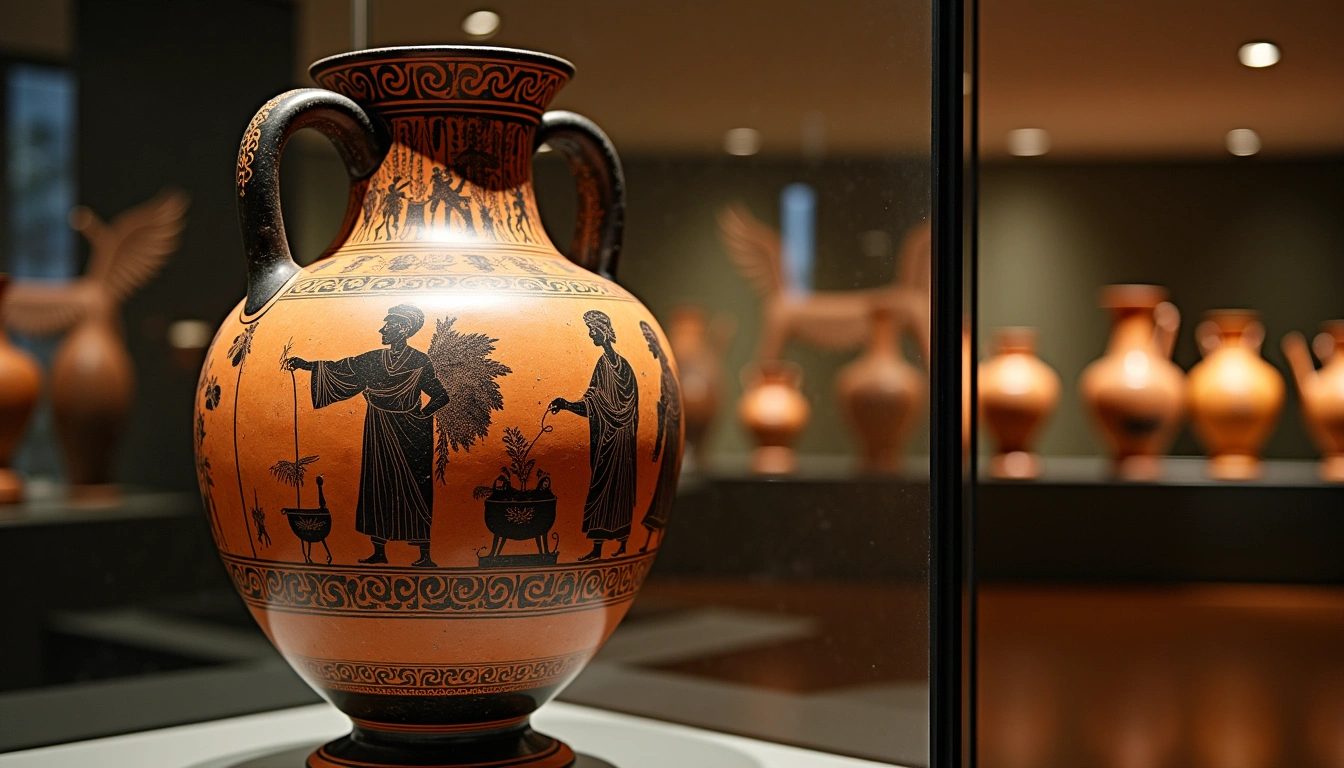
What's fascinating? Greek burial inscriptions often express anxiety about the afterlife. Norse rune stones? They focus on this life's achievements. The cultural mindset difference is stark.
Which mythology has a scarier underworld?
Depends on what terrifies you more: eternal torture or eternal boredom.
Greek underworld horrors:
- Tartarus's creative punishments (Tantalus, Sisyphus, Ixion)
- Permanent separation from loved ones
- Potential for eternal torment based on moral failings
- The Erinyes (Furies) pursuing oath-breakers
Norse underworld concerns:
- Níð — eternal shame and dishonor
- Náströnd — hall of corpses for oath-breakers and murderers
- Dragon Níðhöggr gnawing corpses
- No escape during Ragnarök's destruction
Here's the key difference: Greek punishments were often eternal and specific. Norse consequences focused on social shame and eventual cosmic destruction.
Modern psychological research suggests the Norse approach might actually be more terrifying — the fear of dishonor and social rejection triggers deeper anxiety responses than fear of physical punishment.
What happens to souls in Norse vs Greek mythology?
Greek soul journey:
Death → Hermes guides soul → Charon's ferry (payment required) → Judgment by three judges → Assignment to Elysium, Asphodel, or Tartarus → Eternal residence (with possible reincarnation in later beliefs)
Norse soul journey:
Death → Immediate sorting (battlefield vs. natural) → Valkyrie selection OR journey to Hel → Continued existence until Ragnarök → Participation in final battle OR destruction → Possible renewal in new world
The philosophical implications are profound. Greeks developed linear afterlife progression — you die, get judged, receive eternal consequences. Norse beliefs were cyclical — death is just another phase before the ultimate reset and renewal.
Soul composition differences:
Greek concept: Psyche (soul) + soma (body) = person. At death, psyche continues but diminished without physical form.
Norse concept: Complex soul with multiple parts including hugr (mind/spirit), hamr (shape/form), and fylgja (guardian spirit). Death didn't necessarily separate these components completely.
✅ Norse Approach
- Death as continuation, not transformation
- Practical preparation for afterlife needs
- Honor-based rather than morality-based sorting
- Cosmic cycle includes eventual renewal
✅ Greek Approach
- Clear moral framework for afterlife destinations
- Structured judgment process
- Possibility of heroic immortality
- Rich symbolic geography with meaning
Archaeological Evidence: What the Graves Tell Us
Recent excavations reveal striking differences between Norse and Greek burial practices — differences that illuminate actual beliefs versus literary idealization.
Viking Age burial evidence (9th-11th centuries CE):
- Ship burials with practical sailing supplies
- Weapons positioned for use, not display
- Food, drink, and cooking implements
- Textile evidence suggesting continued social status
- Servant/slave sacrifices at high-status burials
Greek burial evidence (Classical period):
- Coins for Charon found in mouths
- Pottery depicting underworld scenes
- Symbolic rather than practical grave goods
- Elaborate tomb architecture focusing on memory
- Written epitaphs requesting remembrance
The Ibn Fadlan account from 922 CE describes a Viking ship burial on the Volga — complete with ritual preparation for the afterlife journey. Meanwhile, Greek funerary inscriptions from the same period focus on moral character and proper rites.
Modern Influence and Popular Culture
How we understand these mythologies today has been shaped by centuries of artistic interpretation — not all of it accurate.
Norse mythology's modern trajectory:
- 18th-century Romantic revival emphasized warrior culture
- Wagner's Ring Cycle created operatic grandeur
- Marvel Comics simplified Valhalla into superhero heaven
- Video games focus on combat over cosmic philosophy
Greek mythology's cultural impact:
- Renaissance art established visual conventions
- Dante's Inferno blended Christian and Classical elements
- Modern therapy uses Greek tragic concepts
- Contemporary fiction often adopts Greek underworld structure
The irony? Most people know “Norse mythology” through German Romantic interpretation and Hollywood action films. Meanwhile, Greek underworld concepts feel familiar because they influenced Christian afterlife imagery for centuries.
Theological and Philosophical Implications
These aren't just ancient stories — they represent fundamentally different approaches to mortality, justice, and cosmic purpose.
Norse worldview implications:
- Honor matters more than moral behavior
- Death is tactical, not final
- Individual fate tied to cosmic destiny
- Renewal follows destruction
Greek worldview implications:
- Actions have eternal consequences
- Individual moral choices matter
- Justice operates beyond human understanding
- Knowledge and proper rites provide salvation
Consider this: Norse mythology gives us fatalism with hope (Ragnarök leads to renewal). Greek mythology offers justice with uncertainty (you might not understand the rules until it's too late).
Frequently Asked Questions
Q: Can someone go from Hel to Valhalla in Norse mythology?
A: Generally no. The Prose Edda suggests afterlife destinations are permanent until Ragnarök. However, some scholars argue that exceptional posthumous deeds (through family honor or divine intervention) might change one's fate.
Q: Did the Greeks believe in reincarnation?
A: Early Greek mythology (Homeric) didn't include reincarnation. Later philosophical schools, particularly those influenced by Orphism and Pythagoreanism, developed reincarnation concepts. Plato's Republic describes souls choosing new lives.
Q: Why didn't Norse warriors fear death if most went to Hel, not Valhalla?
A: Norse culture valued honor over life extension. Dying well brought family honor and ensured proper remembrance. Plus, Hel's realm wasn't portrayed as particularly unpleasant — just different from life.
Q: Which mythology influenced Christianity more?
A: Greek concepts heavily influenced early Christian theology through Hellenistic Judaism and Church Fathers who were classically educated. Norse mythology had minimal direct Christian influence, though some scholars see parallels in Ragnarök and Apocalypse imagery.
Q: Are there any similarities between Hel and Hades?
A: Both are underworld rulers who weren't inherently evil (unlike later Christian devil concepts). Both realms are described as cold and distant. However, Hades actively judged souls while Hel simply received them.
Q: What happened to children who died in each mythology?
A: Norse sources suggest children went to Hel regardless of death circumstances, though some might be claimed by family patron deities. Greek beliefs varied by period — classical sources often placed children in Elysium or special underworld sections, while earlier sources were less specific.
Final Verdict: Which Underworld Would You Choose?
After examining archaeological evidence, primary sources, and cultural context, the choice isn't between “good” and “bad” afterlives — it's between two entirely different philosophies of existence.
Choose the Greek underworld if you believe in:
- Moral accountability and eternal justice
- Individual choice determining destiny
- Clear rules with predictable outcomes
- The possibility of heroic immortality
Choose the Norse afterlife if you prefer:
- Honor-based rather than morality-based sorting
- Death as continuation rather than judgment
- Cosmic cycles with eventual renewal
- Community and family loyalty over individual virtue
The most important difference? Greek underworld mythology asks “What kind of person were you?” Norse afterlife beliefs ask “What kind of story did your life tell?”
For modern readers wanting to explore these concepts further, starting with The Prose Edda gives you authentic Norse perspectives, while Edith Hamilton's work provides foundational Greek understanding. Both reveal that our ancestors' views of death were far more sophisticated — and varied — than pop culture suggests.
Ultimately, these mythologies endure because they address humanity's deepest questions about mortality, justice, and meaning. Whether you find comfort in Greek moral structure or Norse cosmic cycles says something profound about your own worldview — and that's exactly why these ancient stories still matter in 2025.