This post contains affiliate links. If you purchase through these links, we may earn a commission at no extra cost to you.
The Ultimate Guide to Aztec Gods Mythology in 2025
Want to know the secret? Aztec gods mythology reveals one of history's most complex religious systems. You will discover ancient deities of Mexico, their roles in Aztec culture, creation myths, and lasting influence on modern traditions that still shape Mexican identity today.
In This Article
Here is the thing: When construction workers broke ground for Mexico City's metro system in 1978, you might be surprised to learn what they uncovered. Buried beneath the bustling capital lay the Templo Mayor—the Great Temple of Tenochtitlan—along with thousands of artifacts that would revolutionize your understanding of Aztec religious life.
In my experience studying these discoveries for years, what strikes me most isn't just the sheer complexity of Aztec mythology, but how deeply it shaped every aspect of their civilization. Here is what most people miss: You are looking at a pantheon of over 200 deities, each with intricate relationships, overlapping domains, and rich mythological narratives that rival any religious system in human history.
The Aztec Empire wasn't just a political powerhouse—it was a theological marvel. Ready for this? Their gods weren't distant, abstract figures but active participants in daily life, governing everything from sunrise to the growth of corn. Understanding these deities means you can understand how an entire civilization made sense of existence itself.
What fascinates me as a scholar is how Aztec mythology addresses universal human questions through distinctly Mesoamerican perspectives. Think about it: How do you explain creation and destruction? What is your relationship with nature? How do you find meaning in suffering? But here is what nobody tells you: The Aztec answers to these questions continue influencing Mexican culture five centuries after the Spanish conquest.
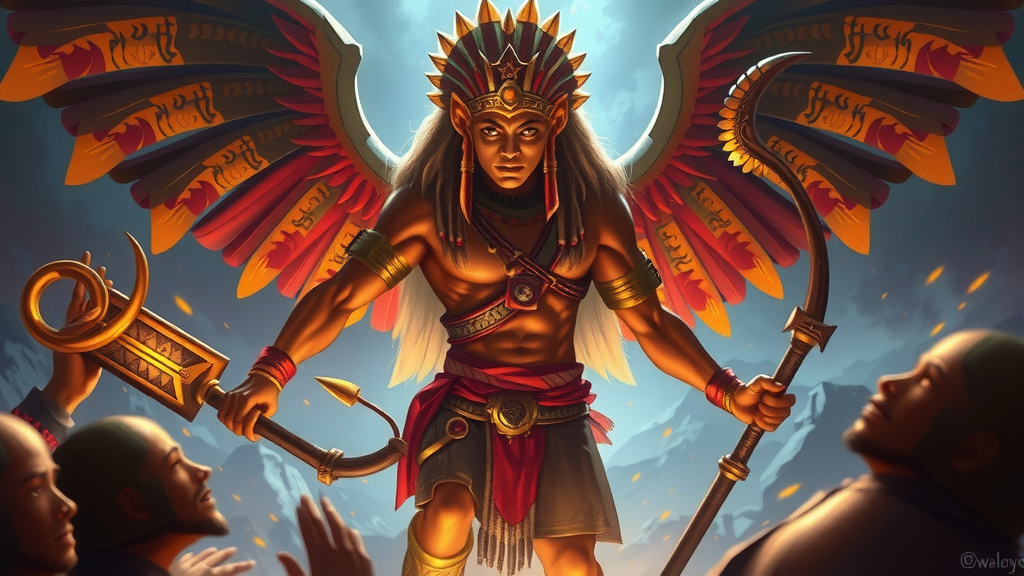
The Foundation of Aztec Cosmology and Creation Myths
Here is where it gets interesting: The Aztecs firmly believed time was cyclical, and their creation mythology reflects this beautifully through the concept of the Five Suns.
The Five Suns: Aztec Creation Cycles
Have you ever wondered why some cultures see time as linear while others view it as cyclical? According to Aztec cosmology, you are currently living in the fifth world. Four previous worlds—or “suns”—came before yours, each ruled by different gods and each ending in catastrophic destruction. But wait, there is more. This wasn't random chaos, though. The destruction and recreation of worlds represented cosmic necessity, the eternal struggle between opposing forces that keeps your universe in balance.
The First Sun belonged to Tezcatlipoca, the “Smoking Mirror,” god of night and conflict. Here is what nobody tells you: This world ended when Quetzalcoatl knocked Tezcatlipoca from the sky, and jaguars devoured the giants who inhabited the earth. The Second Sun saw Quetzalcoatl's rule, ending when Tezcatlipoca transformed humans into monkeys and hurricanes destroyed everything.
Tlaloc, the rain god, governed the Third Sun until Quetzalcoatl rained fire from the sky, turning humans into birds. Plot twist: The Fourth Sun belonged to Tlaloc's wife, Chalchiuhtlicue, whose reign ended in massive floods that transformed humans into fish.
What I find remarkable about these cycles is how they incorporate natural disasters that would have been real threats to Mesoamerican peoples—earthquakes, hurricanes, volcanic eruptions, floods. Here is the truth: The mythology doesn't just explain creation; it explains destruction as an inevitable part of your existence.
Teotihuacan and the Birth of the Fifth Sun
Here is where it gets interesting: The creation of your current world—the Fifth Sun—is perhaps the most beautiful and tragic story in Aztec mythology. After the fourth world's destruction, you will find that the gods gathered at Teotihuacan to decide who would become the new sun.
Two gods volunteered: Tecuciztecatl, a wealthy, proud deity, and Nanahuatzin, a humble god covered in sores. They built great fires and were supposed to throw themselves into the flames to become the sun. But here is the catch: Tecuciztecatl hesitated—four times he approached the fire, four times he backed away. But Nanahuatzin didn't hesitate. He leaped into the flames and emerged as the sun.
Shamed by this display of courage, Tecuciztecatl finally jumped and became the moon. Here is what most people miss: Both celestial bodies shone equally bright, creating chaos in the heavens. So the gods threw a rabbit at the moon to dim its light, which is why you can still see the rabbit's outline on the moon's face if you look carefully.
Now here is the problem: The sun wouldn't move across the sky. The gods realized they all had to sacrifice themselves to give the sun the energy to move. This self-sacrifice by the gods established the cosmic precedent for human sacrifice—not as cruelty, but as participation in the divine order that keeps your world functioning.
The Cosmic Tree and Four Directions
Want to know the secret? Aztec cosmology wasn't just about time cycles—it was deeply spatial. Picture the universe as a massive tree with roots extending into the underworld, a trunk supporting the earth, and branches reaching into thirteen levels of heaven. This World Tree stood at the center of creation, connecting all realms of your existence.
Each cardinal direction had its own color, deity, and symbolic associations. East (red) was associated with Tlaloc and fertility. Quick note: North (black) belonged to Mictlantecuhtli, lord of the dead. West (white) connected to Quetzalcoatl and wind. South (blue/green) linked to Huitzilopochtli and war.
But here is what nobody tells you: This wasn't just abstract theology—it shaped Aztec urban planning, architecture, and daily rituals. Tenochtitlan itself was laid out according to these cosmic principles, with the Templo Mayor at the center representing the World Tree.
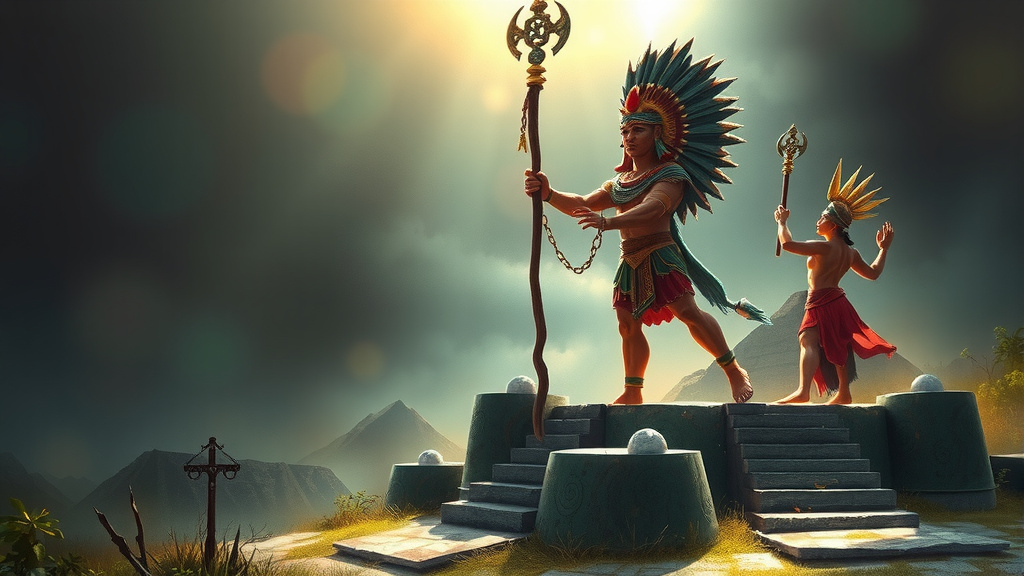
Major Aztec Deities and Their Domains
Ready for this? No Aztec deity captures the imagination quite like the major gods who shaped every aspect of civilization.
Quetzalcoatl: The Feathered Serpent
Here is the thing: No Aztec deity captures the imagination quite like Quetzalcoatl, the Feathered Serpent. I have always been struck by this god's contradictory nature—a serpent with bird feathers, representing the union of earth and sky, matter and spirit.
Quetzalcoatl wore many masks in Aztec mythology. As a creator god, he descended to the underworld to steal the bones of previous humans, mixing them with his own blood to create your species. As a culture hero, you will discover he gave humans knowledge of astronomy, calendar-making, and agriculture. As the god of wind, he swept the roads clean for the rain god Tlaloc.
But here is where it gets interesting: Quetzalcoatl's most famous story involves his time as a king of the Toltecs. According to legend, he ruled justly and promoted learning and arts while opposing human sacrifice. His rival Tezcatlipoca tricked him into getting drunk and committing shameful acts. In his guilt, Quetzalcoatl exiled himself, sailing east on a raft of serpents and promising to return.
This promise took on profound significance when Spanish conquistador Hernán Cortés arrived in 1519—the exact year, according to the Aztec calendar, when Quetzalcoatl was supposed to return. Mind-blowing, right? Some scholars debate whether Emperor Moctezuma actually believed Cortés was the returning god, but you can imagine the timing was certainly ominous.
What makes Quetzalcoatl fascinating from a comparative mythology perspective is how similar figures appear throughout Mesoamerica. The Maya had Kukulkan, essentially the same feathered serpent deity. So what does this mean for you? This suggests Quetzalcoatl represents something fundamental in Mesoamerican religious thought—perhaps the connection between earthly and divine knowledge.
Tezcatlipoca: The Smoking Mirror
Here is the truth: If Quetzalcoatl represented order and knowledge, Tezcatlipoca embodied chaos and hidden truth. His name means “Smoking Mirror,” referring to his obsidian mirror that could see into human hearts and reveal their deepest secrets.
Tezcatlipoca lost his foot in the primordial battle with the Earth Monster, and he's often depicted with an obsidian mirror or serpent where his foot should be. Here is what nobody tells you: This physical imperfection made him a patron of those who were wounded or different—an interesting contrast to the perfect gods of many other mythologies.
As the god of night, jaguars, and sorcery, you will find that Tezcatlipoca could appear in many forms. He would sometimes manifest as a young man to test humans' morality, or as a jaguar stalking through the darkness. His cult was particularly popular among warriors and rulers, who saw in him the necessary ruthlessness for maintaining power.
What's remarkable about Tezcatlipoca is his role as a trickster god. Like Loki in Norse mythology or Anansi in West African traditions, he brought change through deception and conflict. Here is the good news: Without Tezcatlipoca's challenges, the world would stagnate. His conflicts with Quetzalcoatl weren't just personal feuds—they represented the cosmic tension between opposing forces that drives all change.
Huitzilopochtli: God of War and the Sun
Here is where it gets interesting: While Quetzalcoatl and Tezcatlipoca were ancient Mesoamerican deities, Huitzilopochtli was specifically the patron god of the Mexica people who founded the Aztec Empire.
Born fully grown and armed from his mother Coatlicue, Huitzilopochtli immediately fought and defeated his siblings—400 brothers and a sister who had conspired to kill their mother during pregnancy. This birth myth established him as a warrior god and protector of his people.
But here is what most people miss: Huitzilopochtli wasn't just about warfare. As a sun god, he fought every day against the forces of darkness to ensure the sun would rise. Each dawn represented his victory over the star demons (his siblings) and the moon (his sister). This daily cosmic battle required constant nourishment through human sacrifice, particularly the hearts of warriors captured in battle.
The Aztecs believed they were Huitzilopochtli's chosen people, destined to help him maintain cosmic order through warfare and sacrifice. This belief fueled their military expansion and provided religious justification for the empire's aggressive policies.
What strikes me about Huitzilopochtli is how he represents the intersection of mythology and politics. Think about it: Unlike universal gods like Tlaloc or Quetzalcoatl, Huitzilopochtli was specifically Aztec. His cult reinforced their identity as a warrior people chosen for cosmic responsibility.
Tlaloc: The Rain God
Want to know the secret? If you want to understand agricultural civilizations, study their rain gods. Tlaloc, with his distinctive goggle-like eyes and fanged mouth, was probably the most consistently worshipped deity throughout Mesoamerican history.
Rain meant life. Without Tlaloc's blessing, crops failed and people starved. But here is the catch: Tlaloc was temperamental—he could send gentle rains for growth or destructive floods for punishment. He controlled lightning, thunder, and all forms of precipitation, making him one of the most feared and revered deities.
Tlaloc's realm was Tlalocan, a paradise where those who died by drowning, lightning strike, or certain diseases would spend eternity. Here is what nobody tells you: Unlike the difficult journey most souls faced to reach the afterlife, those claimed by Tlaloc went directly to his watery paradise, filled with flowers, butterflies, and eternal spring.
The rain god had many helpers called Tlaloque, who lived in mountains and controlled local weather patterns. Each mountain was thought to contain vast chambers filled with different types of water—some for gentle rains, others for storms. The Tlaloque would pour these waters through holes in the sky to create precipitation.
Fair warning: Child sacrifice was particularly associated with Tlaloc worship, as children's tears were thought to encourage rain. While this practice horrifies modern sensibilities, you should understand it demonstrates the desperate importance of water in Mesoamerican agriculture. The Aztecs believed the cosmos demanded sacrifice to maintain balance, and ensuring rain was worth any price.
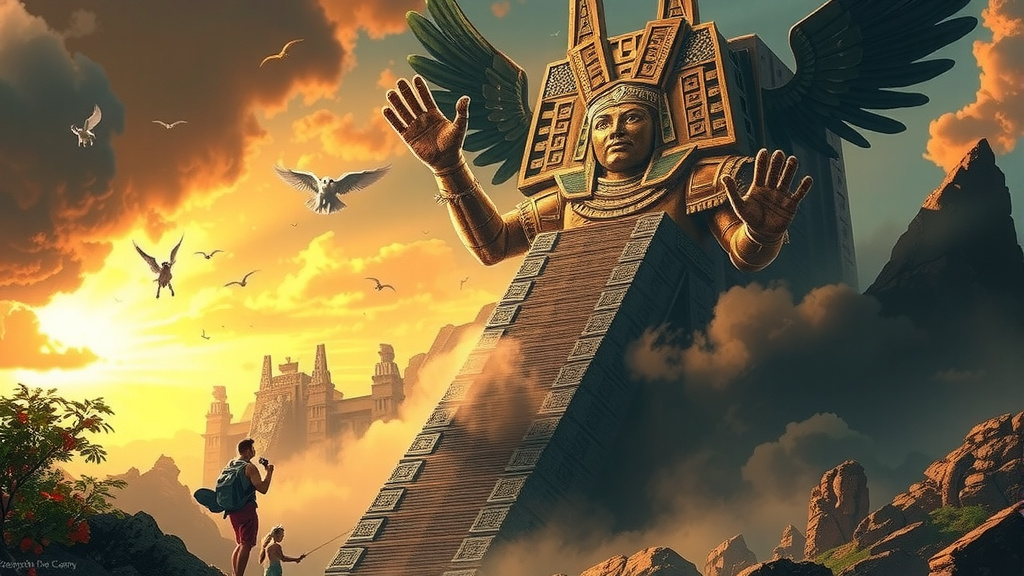
The Broader Pantheon: Gods of Daily Life and Nature
Here is the thing: Beyond the major gods, your daily life as an Aztec would be governed by dozens of specialized deities who oversaw everything from corn growth to human reproduction.
Agricultural and Fertility Deities
Want to know the secret? Understanding these gods gives you insight into what mattered most to ordinary Aztecs.
Xochiquetzal, the “Flower Feather,” was goddess of love, beauty, and sexual pleasure. She patronized prostitutes, artisans, and pregnant women. Her festivals featured flower-decorating contests and ritual bathing, celebrating fertility and feminine power.
Chicomecoatl, “Seven Serpent,” was the corn goddess—and since corn was the foundation of Mesoamerican civilization, she was incredibly important. You will find that farmers would leave ears of corn on her shrines and conduct elaborate ceremonies during planting and harvest seasons. Her priests were often women, reflecting the connection between feminine fertility and agricultural abundance.
Mayahuel, the agave goddess, governed the production of pulque, a mildly alcoholic drink central to Aztec religious and social life. She was depicted as a woman emerging from an agave plant, often nursing multiple babies—representing the nourishing aspects of the agave plant, which provided food, fiber, and drink.
Here is what's interesting: These deities weren't just spiritual abstractions. They had specific feast days, required particular offerings, and governed real economic activities. Farmers timed their work to religious calendars, and merchants carried protective amulets when traveling.
Death and Underworld Gods
Here is the truth: The Aztec underworld, Mictlan, wasn't a place of punishment like the Christian hell. It was simply where most dead souls went, ruled by the skeletal lord Mictlantecuhtli and his wife Mictlancihuatl.
Reaching Mictlan required a four-year journey through nine increasingly difficult levels. Souls had to cross rivers, climb obsidian mountains, and face various challenges. But here is what nobody tells you: Dogs were often buried with the dead because they could help souls cross the river that separated the living world from the dead.
Mictlantecuhtli wasn't evil—he was necessary. Death balanced life, and the lord of the dead maintained cosmic order just like other gods. He controlled the bones that Quetzalcoatl stole to create humans, making him a grandfather figure to all humanity.
So what does this mean for you? The Day of the Dead celebrations that continue in modern Mexico trace directly back to these Aztec beliefs about death and the afterlife. The idea that the dead return to visit their families, that death is part of natural cycles rather than an ending, and that skulls and skeletons are decorative rather than frightening—all of this comes from Aztec mythology.
Craft and Trade Deities
Ready for this? The Aztec economy was sophisticated, and specialized gods reflected this complexity. Yacatecuhtli, “Lord Nose,” was the patron of long-distance merchants called pochteca. These traders carried his image on dangerous journeys and made offerings at roadside shrines.
Xochitonal governed goldsmithing and precious metal work. Aztec goldsmiths were master craftsmen, and their patron deity required elaborate rituals and pure behavior. The Spanish were amazed by Aztec metalwork quality, though they melted most of it down for raw gold.
Even thieves had a patron—Tezcatlipoca in his aspect as Painal. This reflects the Aztec understanding that all human activities, even socially destructive ones, had their place in cosmic order.
What fascinates me about these craft deities is how they show Aztec society's specialization. This wasn't a simple agricultural society but a complex civilization with professional merchants, artisans, and traders who needed divine protection for their specific activities.
Religious Practices and Ritual Worship
Here is where it gets interesting: Standing before the reconstructed Templo Mayor, you can feel the power this structure once held.
Temple Architecture and Sacred Spaces
But here is what most people miss: It wasn't just one building—it was a cosmic map rendered in stone, representing the meeting point of earth, heaven, and underworld.
The Templo Mayor had twin temples at its summit: one dedicated to Tlaloc (painted blue for water and rain), the other to Huitzilopochtli (painted red for war and blood). This architectural design embodied the dual nature of Aztec existence—the need for both agricultural fertility and military strength.
But wait, there is more. Temples weren't just buildings; they were living entities that required constant feeding through sacrifice and offerings. Each temple had multiple levels representing different cosmic realms, and specific rituals had to be performed at each level.
Throughout Tenochtitlan, neighborhood temples (called teopan) served local communities. Every calpulli (neighborhood) had its own temple with resident priests who conducted daily ceremonies, maintained sacred fires, and taught religious knowledge to children.
Here is what nobody tells you: Sacred spaces weren't limited to temples. Mountains, caves, springs, and lakes all had religious significance. The Aztecs saw divinity in natural features and conducted ceremonies at these sites throughout the year.
Sacrifice and Offering Traditions
Here is the truth: Human sacrifice is probably the most misunderstood aspect of Aztec religion. You might think it was barbaric cruelty, but for the Aztecs, it was cosmic necessity—the debt humans owed to gods who had sacrificed themselves to create the world.
Different gods required different types of sacrifice. Tlaloc preferred children, whose tears resembled rain. Xipe Totec, the “Flayed One,” required victims to be skinned to represent the earth shedding its winter covering for spring growth. Huitzilopochtli demanded the hearts of warriors to nourish his daily battle against darkness.
But here is what most people miss: Sacrifice wasn't always human. The Aztecs offered flowers, incense, food, and their own blood through ritualized bloodletting. Priests regularly pierced their earlobes, tongues, and genitals with obsidian blades, offering the blood to feed the gods.
Auto-sacrifice—harming yourself for religious purposes—was actually more common than human sacrifice. Every Aztec was expected to offer their own blood periodically, and priests did so daily as part of their duties.
Pro tip: The scale of human sacrifice is debated among scholars. Spanish chroniclers may have exaggerated numbers to justify conquest, while some modern scholars argue the practice was more limited than commonly believed. What's clear is that it held profound religious meaning for practitioners, not sadistic pleasure.
Festivals and Calendar Ceremonies
Want to know the secret? Aztec religious life revolved around two interlocking calendars: the 260-day tonalpohualli (sacred calendar) and the 365-day xiuhpohualli (solar calendar). Together, they created a 52-year cycle called the Calendar Round.
Every day had religious significance determined by these calendars. The tonalpohualli consisted of 20 day signs combined with 13 numbers, creating 260 unique combinations. Each day had its own patron deity, lucky or unlucky influences, and appropriate activities.
But here is where it gets interesting: Major festivals punctuated the year. Xiuhmolpilli, the New Fire ceremony, occurred every 52 years when both calendars returned to their starting position. All fires in the empire were extinguished, and priests lit a new sacred fire on a victim's chest to ensure the world would continue for another 52-year cycle.
Toxcatl honored Tezcatlipoca through the sacrifice of a young man who had lived as the god's embodiment for an entire year. Ochpaniztli celebrated the corn harvest with ceremonies honoring Chicomecoatl. And that is not all. Panquetzaliztli marked Huitzilopochtli's birth through massive celebrations and warrior displays.
So what does this mean for you? These weren't just religious observances but community celebrations that reinforced social bonds, transmitted cultural knowledge, and marked agricultural seasons. The entire rhythm of Aztec life followed religious calendars.
Symbolism and Artistic Representation
Here is the thing: Aztec mythology is rich with animal symbolism, and understanding these creatures is key to interpreting their art and religious thought.
Sacred Animals and Natural Elements
Each animal represented specific divine qualities and cosmic forces that you would recognize throughout Aztec art.
Eagles symbolized the sun and sky, connecting to Huitzilopochtli and the solar journey across heavens. The famous image of an eagle perched on a cactus holding a serpent—now on Mexico's flag—comes from the Aztec foundation myth. This vision told the wandering Mexica where to build their capital.
Jaguars represented night, earth, and the underworld. Jaguar warriors were elite fighters who dressed in jaguar skins and emulated the animal's stealth and power. Here is what most people miss: Tezcatlipoca often appeared in jaguar form, prowling through darkness to test humans.
Serpents embodied earth's fertility and wisdom. Quetzalcoatl's feathered serpent form represented the union of earth (serpent) and sky (feathers). Snakes also symbolized the cyclical nature of time, shedding their skin like the world shedding each cosmic age.
Obsidian held particular sacred power as Tezcatlipoca's material. Volcanic glass was sharper than any metal blade and was used for ritual implements, weapons, and mirrors for divination. Its black, reflective surface made it perfect for seeing into hidden truths.
Here is what nobody tells you: Jade represented water, vegetation, and precious life. More valuable than gold to the Aztecs, jade was reserved for the most important religious artifacts and elite burials. Its green color connected it to Tlaloc and agricultural fertility.
Color Symbolism and Directional Associations
Want to know the secret? The Aztec world was organized by color-coded directions, each with its own deities, symbols, and meanings. This wasn't just decorative—it was a complete system for understanding cosmic order.
East (red) represented new life, sunrise, and Tlaloc's fertilizing rains. Red was the color of blood, sacrifice, and vital energy. Warriors painted themselves red before battle to channel this life force.
North (black) symbolized death, night, and Mictlantecuhtli's realm. Black obsidian came from this direction, along with cold winds and the spirits of the dead. But here is the catch: Death wasn't evil—it was necessary for cosmic balance.
West (white) meant completion, old age, and Quetzalcoatl's domain. White represented the bones of ancestors and the wisdom that comes with experience. The west was where the sun died each day before being reborn in the east.
South (blue/green) connected to Huitzilopochtli, war, and the hummingbird's rapid energy. Blue-green was also associated with precious turquoise and jade, making this direction both warlike and valuable.
Here is the good news: Center had no color but contained all colors, representing the integration of cosmic forces. The Templo Mayor stood at Tenochtitlan's center, making it the axis of the world where all directions met.
Aztec Art and Religious Expression
Here is the truth: Aztec art wasn't art for art's sake—it was religious communication. Every sculpture, mural, and decorative object conveyed theological meaning and participated in divine power.
The massive Stone of the Sun (often called the Aztec Calendar Stone) isn't actually a calendar but a cosmological map showing the five world ages with Tonatiuh, the sun god, at the center. His tongue extends as an obsidian knife, demanding sacrifice to continue his daily journey.
Coatlicue, the earth goddess and Huitzilopochtli's mother, appears in sculptures as a terrifying figure with a skirt of serpents, necklace of human hearts, and head composed of two serpent faces. This isn't meant to be beautiful in any conventional sense—it's meant to convey the terrible, awesome power of earth that both creates and destroys life.
But here is where it gets interesting: Codices (pictographic books) preserved mythological stories and religious knowledge. These weren't just illustrations but sacred texts that priests used for divination, calendar keeping, and transmitting oral traditions. Each image was dense with symbolic meaning that required years of training to interpret properly.
Architecture itself was religious art. The kicker? The angles of pyramids aligned with astronomical events, their proportions reflected cosmic ratios, and their decorations told mythological stories in stone. Walking through an Aztec temple complex was like moving through a three-dimensional religious text.
The Spanish Conquest and Transformation
Here is where it gets interesting: The Spanish conquest wasn't just military—it was theological warfare.
Destruction of Aztec Religious Sites
Catholic conquistadors and missionaries saw Aztec religion as demonic and systematically destroyed temples, sculptures, and codices. You should understand that Hernán Cortés ordered the Templo Mayor destroyed and a Catholic cathedral built on its ruins.
This wasn't just practical (reusing building materials) but symbolic—Christianity literally rising from the ashes of “paganism.” Spanish missionaries organized massive destruction campaigns called “spiritual conquests.” They burned thousands of codices, melted down religious sculptures, and filled sacred cenotes (water-filled caves) with rubble to prevent continued worship.
But here is what most people miss: The destruction wasn't complete. Some codices survived because Spanish priests realized they needed to understand Aztec religion to effectively replace it. Ironically, some of your best sources for Aztec mythology come from Spanish chroniclers trying to document what they were destroying.
Archaeological evidence shows that many sacred sites were simply abandoned rather than destroyed. Remote mountain shrines and cave sanctuaries continued to receive offerings long after the conquest, as indigenous people practiced their ancestral religion in secret.
Think about it: The psychological impact of this destruction can't be overstated. Imagine watching your gods' images burned, their temples demolished, and their priests killed or converted. For many Aztecs, this proved that their gods had been defeated by more powerful Christian deities.
Syncretism with Christianity
Here is the truth: Rather than completely disappearing, Aztec religious concepts merged with Catholic Christianity in complex ways that continue to influence Mexican culture.
The Virgin of Guadalupe, Mexico's patron saint, appeared to an indigenous man in 1531 on Tepeyac Hill—formerly sacred to Tonantzin, an Aztec earth goddess. But here is what nobody tells you: The Virgin's image incorporates Aztec symbols: she stands on a moon crescent (Coyolxauhqui), wears a star-covered cloak (the night sky), and appears with indigenous facial features.
Catholic saints absorbed characteristics of Aztec gods. Saint John the Baptist became associated with Tlaloc because both controlled water. Saint James (Santiago) merged with warrior deities because of his role as protector in battle.
The Day of the Dead perfectly exemplifies this syncretism. All Saints' Day and All Souls' Day provided Catholic cover for continuing Aztec traditions of feeding and honoring the deceased. The timing, offerings, and belief that the dead return to visit family all derive from pre-conquest practices.
And that is not all. Even architectural syncretism occurred. Many colonial churches were built directly on temple sites, sometimes incorporating carved stones from the original structures. You could worship in Christian buildings that retained subtle indigenous sacred geometry and symbolism.
Preservation of Mythological Knowledge
Want to know the secret? Despite systematic destruction efforts, Aztec mythology survived through various channels that allow you to study it centuries later.
Indigenous scribes, trained in both Aztec pictographic writing and Spanish alphabetic script, secretly recorded oral traditions in hidden documents. The Annals of Cuauhtitlan and other native-language texts preserved creation myths, genealogies, and historical accounts.
Spanish missionaries, particularly Bernardino de Sahagún, conducted extensive interviews with Aztec priests and nobles to create comprehensive ethnographic records. Sahagún's Florentine Codex remains your most complete source for Aztec religion, though it's filtered through Christian interpretation.
Oral tradition among indigenous communities preserved mythological knowledge across generations. Stories, songs, and ceremonial practices passed from grandparents to grandchildren, sometimes emerging centuries later when anthropologists began systematic documentation.
Here is the good news: Archaeological discoveries continue revealing new information about Aztec religion. The Templo Mayor project, ongoing since 1978, has uncovered thousands of offerings and architectural features that illuminate religious practices described in historical sources.
What amazes me is how much survived despite concerted efforts to eliminate it. The human need to preserve cultural identity proved stronger than colonial suppression, ensuring that Aztec mythology would endure to influence future generations.
Legacy and Modern Influence
Here is the thing: Walk through Mexico City or any Mexican town, and you will see Aztec mythology's continuing influence everywhere.
Contemporary Mexican Culture and Identity
You will notice everything from the eagle on the national flag to the skulls decorating Day of the Dead celebrations shows this influence. Mexican national identity deliberately incorporates Aztec symbolism as a way of asserting indigenous heritage and distinguishing Mexican culture from Spanish colonial legacy. The name “Mexico” itself comes from “Mexica,” the Aztec people's name for themselves.
The concept of mestizaje—racial and cultural mixing between indigenous and European peoples—draws on mythological themes of duality and synthesis that permeate Aztec thought. Modern Mexican identity celebrates this mixture rather than seeing it as contamination.
But here is where it gets interesting: Contemporary Mexican art movements, from muralism to modern painting, regularly reference Aztec gods and myths. Diego Rivera's murals in the National Palace depict Aztec creation myths and historical scenes, making ancient mythology part of modern political discourse.
Even Mexican Spanish contains hundreds of Nahuatl loanwords, especially for foods (chocolate, tomato, avocado), places (Mexico, Guatemala, Nicaragua), and cultural concepts. So what does this mean for you? Speaking Mexican Spanish means using Aztec vocabulary daily.
Archaeological Discoveries and Scholarly Research
Here is what's fascinating: Modern archaeology continues revolutionizing your understanding of Aztec religion. New discoveries challenge old assumptions and reveal the sophistication of indigenous theological thought.
The Templo Mayor excavations revealed the incredible complexity of Aztec religious practice. Each construction phase contained thousands of carefully arranged offerings from across the Mesoamerican world—shells from both coasts, jade from Guatemala, obsidian from central Mexico.
Recent discoveries at Teotihuacan have shown that this “City of the Gods” was already sacred to the Teotihuacanos themselves, not just later Aztec visitors. This suggests religious continuity across thousands of years in central Mexico.
Here is what nobody tells you: Underwater archaeology in sacred cenotes has recovered offerings that illuminate how the Aztecs understood the connection between caves, water, and the underworld. These aquatic sanctuaries received precious objects for centuries before and after the conquest.
Advances in deciphering Aztec pictographic writing continue revealing new mythological information. Each codex page contains layers of meaning that require expertise in astronomy, calendar systems, and symbolic associations to fully understand.
The bottom line? Digital humanities projects are making Aztec religious knowledge more accessible than ever. Online databases of codices, 3D models of temples, and virtual reality experiences allow people worldwide to explore this ancient religious system.
Popular Culture and Artistic Revival
Ready for this? Aztec mythology has found new life in contemporary popular culture, though not always with complete accuracy or cultural sensitivity.
Literature from authors like Carlos Fuentes and Octavio Paz incorporates Aztec mythological themes into modern storytelling, exploring how ancient gods and concepts speak to contemporary human experiences.
Film and television productions increasingly feature Aztec deities and myths, though Hollywood versions often mix different Mesoamerican cultures or perpetuate stereotypes about indigenous peoples as either noble savages or bloodthirsty primitives.
But it gets better. Video games and graphic novels have embraced Aztec mythology's visual richness, creating new artistic interpretations of gods like Quetzalcoatl and Tezcatlipoca for global audiences. While these popularizations aren't scholarly resources, they do introduce millions to Mesoamerican cultures.
Neo-indigenous movements throughout the Americas draw on Aztec mythology for spiritual and political inspiration. Groups practicing “Aztec religion” attempt to reconstruct ancient ceremonies and beliefs, though scholars debate the authenticity of these revivals.
The real question is: How do you share these fascinating mythologies without trivializing them or appropriating them inappropriately? The challenge with popular culture representations is balancing accessibility with respect for indigenous heritage.
Frequently Asked Questions
What were the most important Aztec gods you should know about?
The most important Aztec gods you should know include Quetzalcoatl (Feathered Serpent god of wind and wisdom), Tezcatlipoca (Smoking Mirror god of night and conflict), Huitzilopochtli (sun and war god), Tlaloc (rain god), and Coatlicue (earth mother goddess). You will find these deities appear most frequently in Aztec art and mythology, governing the fundamental aspects of life like weather, warfare, and agricultural cycles.
How did you become an Aztec priest or priestess?
If you wanted to become an Aztec priest, you would typically enter religious training as a child through the calmecac (elite school) system. You would learn complex rituals, calendar systems, astronomy, and hieroglyphic writing. Both men and women could serve as priests, though certain deities had gender preferences for their clergy. Your training would include bloodletting, fasting, and memorizing extensive oral traditions.
Why did the Aztecs practice human sacrifice if you were religious?
You need to understand that Aztec human sacrifice wasn't cruelty but cosmic necessity. The Aztecs believed the gods had sacrificed themselves to create your world and keep the sun moving across the sky. You were obligated to reciprocate this sacrifice to maintain universal balance. Different gods required specific types of offerings—Tlaloc needed children's tears to bring rain, while Huitzilopochtli needed warriors' hearts to fuel his daily solar journey.
What happened to Aztec religion after the Spanish conquest?
After the Spanish conquest, you would have seen systematic destruction of temples, codices, and religious artifacts. However, Aztec beliefs didn't disappear entirely. Instead, you can observe syncretism where indigenous concepts merged with Catholic Christianity. The Virgin of Guadalupe incorporated Aztec goddess symbolism, Day of the Dead continued pre-conquest traditions, and many indigenous communities practiced ancestral religions in secret.
How do you see Aztec mythology in modern Mexican culture?
You can see Aztec mythology throughout modern Mexican culture in the national symbols (eagle and serpent), Day of the Dead celebrations, hundreds of Nahuatl words in Mexican Spanish, and artistic movements like muralism. You will notice Mexican national identity deliberately incorporates Aztec symbolism to assert indigenous heritage and distinguish Mexican culture from European colonial influences.
What was the Aztec calendar system and how did you use it?
You would use two interlocking calendars: the 260-day tonalpohualli (sacred calendar) and 365-day xiuhpohualli (solar calendar). Together they created a 52-year cycle. You would consult these calendars daily to determine which gods ruled each day, what activities were favorable or forbidden, and when to conduct specific ceremonies. Your entire life rhythm, from planting crops to conducting warfare, followed these calendar systems.
Conclusion
Here is the thing: Standing in the shadows of Mexico City's cathedral, built atop the ruins of the Templo Mayor, you can feel the weight of history pressing down. Somewhere beneath your feet lie the foundations of Huitzilopochtli's shrine, where Aztec priests once fed the god's sacred fire with human hearts.
This layering of civilizations—Catholic on top of Aztec, Spanish over indigenous—tells the story of survival and transformation that defines Aztec mythology's legacy. These weren't just quaint stories primitive people told to explain thunder and rain. They were sophisticated theological systems that grappled with existence's fundamental questions through distinctly Mesoamerican perspectives.
What strikes me most after years of studying Aztec religion is its integration of mythology with daily life. You would have experienced every sunrise as Huitzilopochtli's victory over darkness. Every rainstorm was Tlaloc's blessing. Every death was a journey to Mictlan guided by cosmic principles. The Aztecs didn't separate sacred from secular because they understood that your existence itself was sacred.
But here is what most people miss: Their gods weren't perfect beings ruling from distant heaven but flawed, complex personalities who struggled with the same forces you face—creation and destruction, order and chaos, life and death. Tezcatlipoca lost his foot in cosmic battle. Quetzalcoatl got drunk and made mistakes. Even the gods had to sacrifice themselves to keep your world functioning.
This integration of divine imperfection with cosmic responsibility offers something vital for you as a contemporary spiritual seeker. The Aztec vision suggests that meaning comes not from perfection but from participation in larger patterns of existence that require sacrifice, struggle, and renewal.
Here is the truth: The mythology's survival through conquest, colonization, and modernization demonstrates its enduring power to address your human needs for meaning, identity, and connection to natural cycles. When Mexican families place photos and favorite foods on Day of the Dead altars, they're participating in worldviews that stretch back over a millennium.
The real question is: As you face contemporary challenges—climate change, social inequality, spiritual emptiness—how can Aztec mythology offer alternative ways of thinking about humanity's relationship with nature, community, and cosmic responsibility? These aren't dead gods from a vanished civilization but living symbols that continue speaking to your human experience across cultural boundaries.
The Aztecs believed they lived in the Fifth Sun, destined to end in earthquakes and destruction. Whether you take that literally or metaphorically, their mythology reminds you that all human civilizations are temporary, all worldviews are provisional, and all existence requires constant renewal through conscious participation in larger patterns of meaning.
So what does this mean for you? That's perhaps Aztec mythology's greatest gift to your modern understanding—not answers to cosmic questions, but better questions about what it means to be human in a universe where creation and destruction dance together in eternal, necessary tension.
Want to explore more ancient mysteries and mythological wisdom? You will discover that Mythical Archives contains extensive resources on comparative mythology, ancient civilizations, and the enduring symbols that shape human consciousness across cultures and centuries.