Mesopotamian cuneiform tablets from approximately 3000 BCE represent humanity's earliest systematic documentation of legendary creatures, emerging from Uruk's scribal workshops where chimeric beings received the same bureaucratic cataloging as agricultural records. The Epic of Gilgamesh (circa 2100 BCE) introduced Humbaba, while Egyptian Pyramid Texts preserved the Bennu bird's cyclical resurrection. Greek consciousness crystallized monsters through Homer's “Iliad” and Hesiod's “Theogony,” documenting the Chimera's leonine-caprine-serpentine form. Norse sagas from the 13th century CE first described the Kraken's abyssal terror. These ancient inscriptions converted oral darkness into permanent record, their clay and papyrus surfaces still whispering secrets to those who seek deeper understanding.
Key Takeaways
- The Epic of Gilgamesh (circa 2100 BCE) documented creatures like Humbaba, establishing mythical symbolism through Mesopotamian cuneiform tablets.
- Homer's “Iliad” and Hesiod's “Theogony” described the Chimera with leonine, caprine, and serpentine features in Greek literature.
- Job 41 depicted Leviathan as a primordial serpent, building on earlier Canaanite Ugaritic texts about Lôtān.
- Norse sagas from the 13th century, including Örvar-Oddr and Konungs skuggsjá, first documented the Kraken.
- Egyptian Pyramid Texts recorded the Bennu bird, symbolizing resurrection and cyclical eternity in ancient Egyptian mythology.
Monsters Born From Words
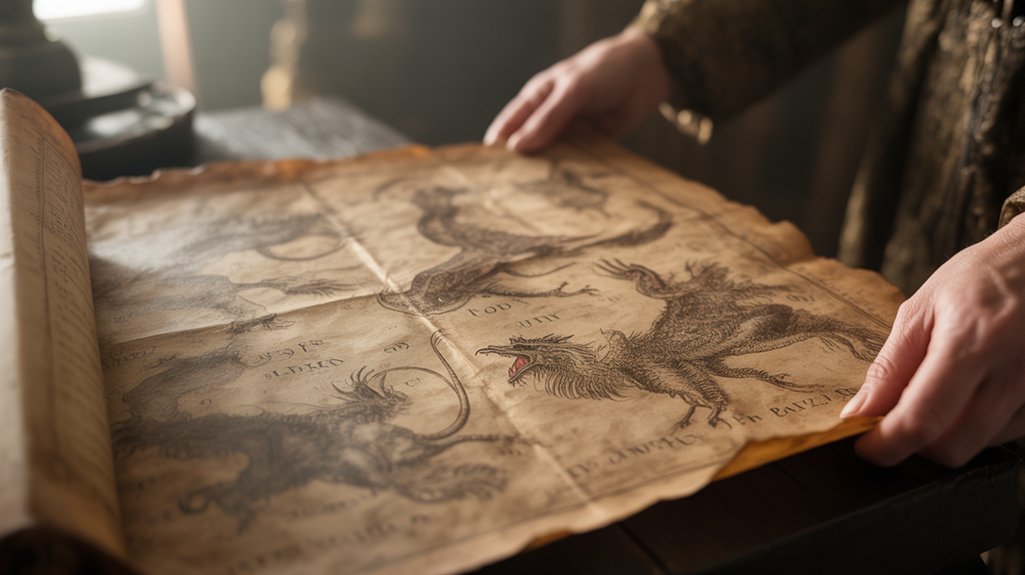
When ancient scribes first pressed reed stylus to clay tablet in the fertile valleys of Mesopotamia circa 2100 BCE, they didn't merely record history—they conjured beings into existence. The Epic of Gilgamesh and Sumerian King List birthed creatures through language itself, establishing mythical symbolism that would echo through millennia. These weren't simple descriptions. They were incantations.
Homer's eldritch visions—the one-eyed Cyclops, serpentine Scylla—emerged from oral tradition into written permanence, their chimeric forms forever embedded in Western consciousness. The Leviathan coiled through Hebrew texts, its chaos embodying divine power and primordial fear.
Medieval bestiaries continued this narrative evolution, blending zoological observation with allegorical instruction, moral lessons wrapped in scales and fangs. Each description served deeper purposes: conveying cultural values, articulating collective anxieties, mapping human experience onto monstrous forms.
Words possessed transformative power, altering abstract concepts into tangible terrors. Language became genesis. These ancient texts exemplified how storytelling to convey moral lessons transformed supernatural beings into enduring archetypes that shaped cultural consciousness. The monster and the text were inseparable, each breathing life into the other across time's vast expanse.
##
The ancient world's most enduring terrors emerged not from observation but from the fevered inscriptions of scribes who dared commit the unnameable to parchment, altering oral dread into permanent record.
Norse seafarers recorded the Kraken's eldritch presence in their sagas while Greek poets catalogued the Chimera's tripartite horror, even as Hebrew scholars wrestled with Leviathan's chaos-serpent nature in Job's verses, and Egyptian priests raised the Bennu's cyclical resurrection into cosmic principle.
These chimeric entities, born from cuneiform wedges and papyrus strokes, transcended mere mythology to become foundational archetypes that still haunt humanity's collective unconscious.
The Old Norse poems and sagas that preserved these creatures offered more detailed accounts of pre-Christian mythological beings than sources from other Germanic traditions, cementing Scandinavia's literary role as keeper of the North's most elaborate monster compendium.
Norse Sagas and Kraken
From depths concealed beneath medieval Scandinavia's frigid waters emerged tales of an eldritch leviathan that would reshape maritime mythology for centuries to come.
The Kraken first manifested in 13th-century Norse sagas, particularly the Örvar-Oddr saga and Konungs skuggsjá, where scribes documented this colossal aberration's capacity to drag entire vessels into abyssal darkness.
Norse mythology birthed countless sea monsters, yet none achieved the Kraken's enduring resonance. Viking seafarers, intimate with oceanic unpredictability, likely forged this myth to articulate mortality's proximity aboard their longships.
The creature's chimeric form—typically rendered as gigantic cephalopod—may derive from encounters with Architeuthis dux, the giant squid haunting deep waters.
Today's films, literature, and games preserve this primordial terror, ensuring the Kraken remains civilization's archetypal embodiment of maritime peril and mankind's perpetual confrontation with the unknown.
Greek Texts' Chimera Origins
While Scandinavian waters birthed tentacled nightmares, Mediterranean antiquity nurtured horrors of an altogether different taxonomy—composite beasts that violated nature's fundamental boundaries.
Homer's “Iliad” and Hesiod's “Theogony” preserved mankind's earliest textual encounters with the Chimera: leonine head, caprine torso, serpentine tail, breathing devastation across Lycian provinces. Bellerophon's aerial assault upon Pegasus ended its reign of fire—a triumph chronicled through ceramic vessels and marble reliefs that converted terror into art.
Chimera symbolism permeated Greek consciousness, embodying chaos that defied categorical order. Modern science resurrects this eldritch terminology for genetic experimentation, chimeric organisms born in laboratories rather than volcanic landscapes.
These Chimera adaptations—linguistic, biological, cultural—demonstrate mythology's perpetual evolution, ancient words shaping contemporary discourse about hybridization, alteration, humanity's enduring fascination with boundaries transgressed.
Biblical Leviathan Descriptions
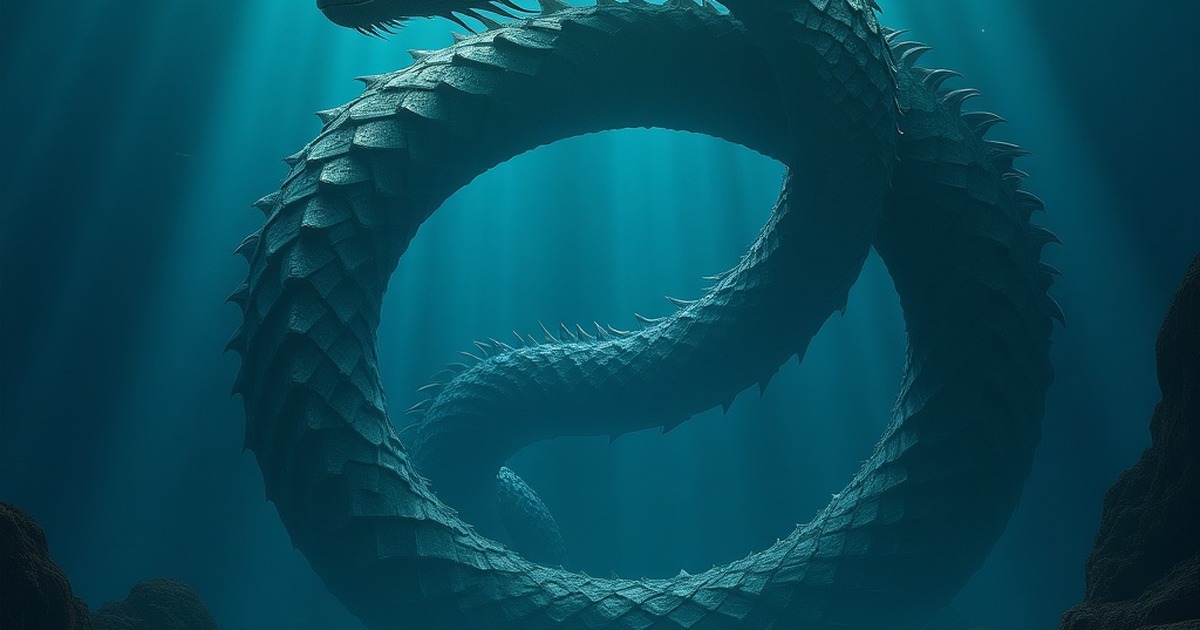
Ancient Near Eastern consciousness trembled before Leviathan, the primordial serpent whose coils churned Mediterranean depths into apocalyptic froth.
Job 41 chronicles this eldritch beast's imperviousness to human dominion, scales impenetrable, breath igniting coals, jaws rimmed with terror. The Hebrew scribes captured ancient chaos itself, a chimeric embodiment of pre-creation disorder that only divine sovereignty could master.
Psalm 104:26 reveals the creature's paradoxical nature—simultaneously playful and apocalyptic, frolicking in seas it could unmake. Ugaritic Lôtān preceded biblical accounts, establishing Leviathan symbolism across Canaanite consciousness.
This wasn't mere mythology but theological architecture: God's supremacy demonstrated through mastery of what mortals couldn't approach. The serpent's literary afterlife extends through millennia, representing civilization's eternal struggle against elemental forces, chaos contained but never extinguished, lurking in abyssal depths.
Egyptian Phoenix Mythology
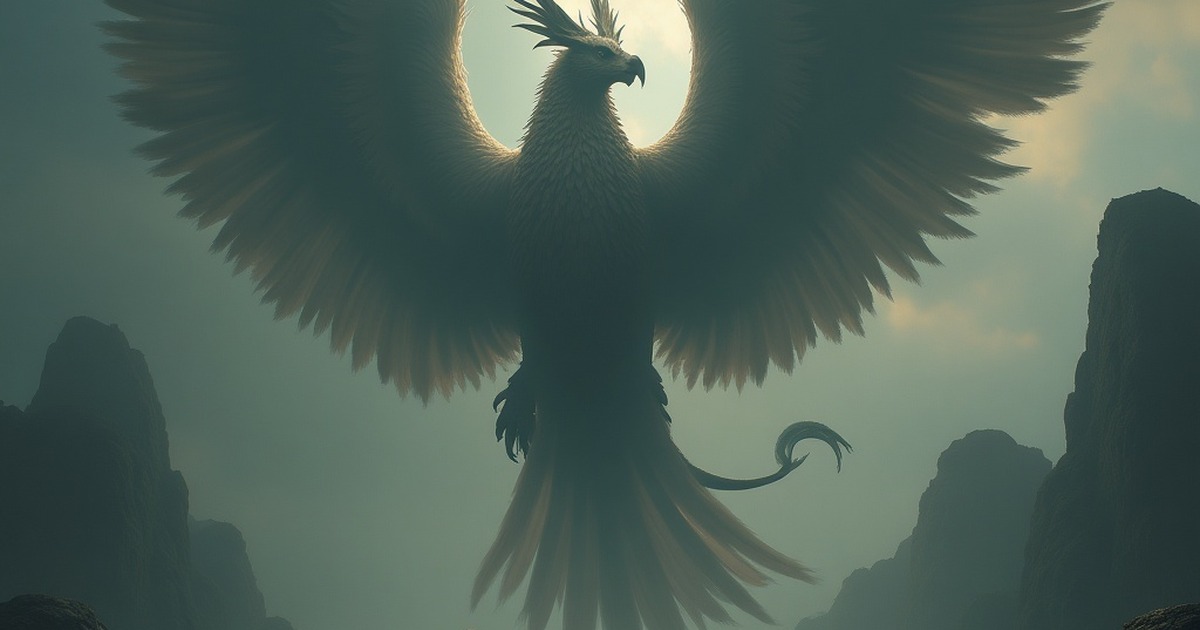
Through gilded corridors of Heliopolis—the sun's terrestrial throne—the Bennu bird materialized as Egypt's supreme articulation of cyclical eternity, a creature whose crimson-gold plumage mirrored Ra's celestial fire across predynastic consciousness.
Pyramid Texts from 2400-2300 BCE inscribe humanity's earliest encounter with resurrection themes, documenting how this eldritch avian embodied death's temporary dominion. The Phoenix's immolation wasn't mere destruction—it constituted cosmic necessity, a three-day alteration from ash to incarnate dawn.
Bennu symbolism permeated royal ideology; its appearance heralded dynastic shifts, political upheavals, terrestrial reconfigurations. This wasn't chimeric fantasy but sacred mathematics: one death equaling infinite rebirths, solar declension promising inevitable ascension.
Greco-Roman civilizations later appropriated this Egyptian wisdom, converting the Bennu into their Phoenix, yet Heliopolis remained the primordial site where consciousness first witnessed eternity wearing feathers.
Mesopotamian Clay Tablet Descriptions
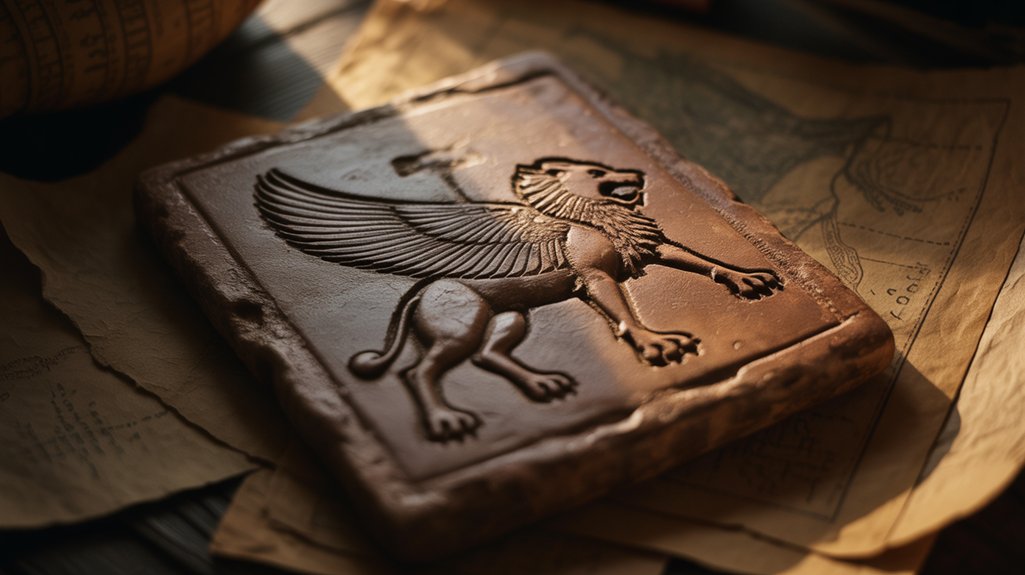
The cuneiform tablets of ancient Mesopotamia preserve encounters with beings that transcended mortal comprehension, their wedge-shaped inscriptions encoding creatures both chimeric and eldritch in their fundamental otherness.
From the Epic of Gilgamesh's chronicle of Humbaba—that cedar-dwelling terror whose breath was death itself—to the protective Lamassu stationed at Uruk's monumental gates, these clay records fulfilled dual imperatives: they articulated cosmic hierarchies while legitimizing royal authority through mankind's triumph over primordial chaos.
Each pressed symbol carried weight beyond narrative, converting mythological adversaries into instruments of religious orthodoxy and political dominance.
Epic of Gilgamesh Monsters
Inscribed upon fragmentary clay tablets dating to approximately 2100 BCE, Mesopotamia's most enduring epic preserves descriptions of creatures that transcend mere literary invention—they're manifestations of primordial terror given form.
Humbaba, sentinel of the Cedar Forest, embodies chaos through leonine features and supernatural breath—Humbaba symbolism represents civilization's boundary with untamed wilderness. His severed head becomes humanity's first trophy against eldritch nature.
The Bull of Heaven, Ishtar's instrument of divine wrath, devastates Uruk with earthquake-hooves and pestilential breath, demonstrating how legendary creatures articulated cosmic retribution.
These beings weren't mere antagonists; they're threshold guardians between mortal limitation and divine prerogative.
Gilgamesh himself, two-thirds godly, exemplifies chimeric hybridity, while Enkidu evolves from feral wildness to civilization, proving metamorphosis's possibility.
Ancient scribes understood: monsters externalize internal struggles against entropy, mortality, divine caprice.
Cuneiform Tablets From Uruk
Pressed into damp clay by reed styluses around 3000 BCE, humanity's first systematic mythology emerged from Uruk's scribal workshops—where administrative necessity birthed cosmic documentation. These ancient inscriptions catalogued mythical beings with bureaucratic precision, altering eldritch encounters into permanent record. The tablets mapped chimeric entities dwelling beyond civilization's boundaries.
| Creature | Form |
|---|---|
| Anzu | Lion-bodied, eagle-headed storm deity |
| Humbaba | Cedar Forest guardian with supernatural roar |
| Mushhushshu | Serpent-dragon serving divine powers |
| Lamassu | Protective human-headed winged bulls |
| Scorpion-men | Hybrid sentinels of mountain gateways |
Clay preserved what memory couldn't. Each cuneiform wedge encoded attributes, habitats, divine relationships—creating taxonomies of the impossible. These weren't mere stories but cosmic cartography, mapping supernatural territories with the same rigor scribes applied to grain tallies. Freedom demanded knowing what lurked beyond.
Religious and Political Functions
When scribes etched monster-catalogs onto humid clay, they weren't documenting folklore—they were architecting theocratic legitimacy through systematic mythography.
The Sumerian King List interwove chimeric beings with mortal dynasties, each eldritch entity validating royal bloodlines. Pure mythical significance changed into governance machinery.
Gilgamesh's encounters with Humbaba and the celestial Bull weren't adventure tales—they encoded divine sanction. Political symbolism permeated every cuneiform stroke.
The Enuma Elish positioned Tiamat's chaotic waters against Marduk's ordering violence, mirroring Babylonian imperial consolidation. Apkallu bestiaries served dual purposes: temple ritual and administrative doctrine, their fish-sage forms guarding cosmic boundaries while reinforcing earthly hierarchies.
Temple reliefs displayed these creatures flanking thrones. Calculated iconography.
Kings became intermediaries between mortal domains and primordial forces, their authority inseparable from creation's foundational struggles, rendered permanent in fired clay.
Egyptian Versus Greek Monster Origins
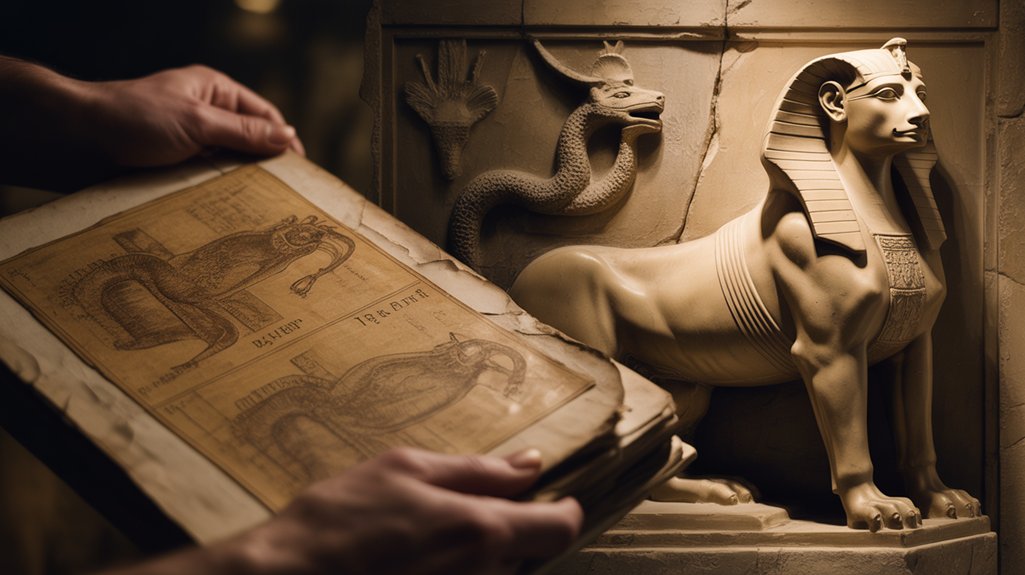
The chimeric beings that emerged from the Nile Valley and the sun-scorched Aegean shores embodied fundamentally divergent cosmological principles—where Egyptian monsters served as liminal guardians between mortal and divine domains, their Greek counterparts manifested as chaotic aberrations demanding heroic subjugation. The Egyptian Sphinx stood sentinel at temple thresholds, its leonine form merged with human intellect to protect sacred knowledge. Meanwhile, the Greek Minotaur prowled its labyrinthine prison, embodying bestial rage that threatened civilization's order.
| Aspect | Egyptian Tradition | Greek Tradition |
|---|---|---|
| Primary Function | Protective guardians, psychopomps | Adversarial obstacles, moral tests |
| Narrative Role | Assistants in afterlife journeys | Enemies requiring heroic defeat |
| Cultural Symbolism | Order maintaining cosmic balance | Chaos threatening societal structures |
| Textual Sources | Book of the Dead rituals | Hesiod's genealogies, epic cycles |
| Human Relationship | Reverence, spiritual alliance | Fear, combative engagement |
These eldritch forms reveal how civilizations constructed meaning through monstrous incarnations.
Moral Lessons Through Monster Myths
Beyond their roles as guardians or adversaries, these legendary beings crystallized abstract moral principles into visceral, unforgettable forms—serpentine coils and leonine fangs serving as pedagogical instruments for cultures that understood wisdom flows most readily through blood and terror.
The hubris consequences embodied within these narratives transcended mere entertainment, functioning as eldritch cautionary mechanisms that enforced cultural boundaries and ethical parameters.
Dragons and griffins emerged as allegorical sentinels, their chimeric forms demanding nature respect through destructive potential. The Minotaur's labyrinthine imprisonment illustrated how unchecked desires birth monsters—King Minos's arrogance manifesting in flesh and fury.
Consider these life-altering punishments:
- Medusa's serpent-crowned transformation exemplified jealousy's corrosive power
- The Chimera's hybrid anatomy symbolized ambition's chaotic unraveling
- The Kraken's abyssal dominion warned against maritime overreach
Each creature encoded specific transgressions, their monstrous anatomies serving as mnemonic devices. These weren't arbitrary horrors but carefully constructed moral architectures, designed to inscribe ethical boundaries upon collective consciousness through terror's indelible pedagogy.
Kraken in Norse Sagas
The Kraken emerged from thirteenth-century Norse sagas—particularly the Örvar-Oddr and Konungs skuggsjá—as an eldritch manifestation of oceanic terror, a colossal cephalopod whose tentacled mass could drag entire vessels into abyssal depths.
These ancient texts recorded the creature with startling specificity, describing physical attributes that modern scholars have traced to encounters with Architeuthis dux, the giant squid lurking in frigid Nordic waters.
What began as maritime observation evolved into mythic archetype, the boundary between witnessed creature and legendary beast dissolving in the cold spray of northern seas.
Norse Saga Origins
Within the frost-bound chronicles of thirteenth-century Norse literature, a creature of such eldritch magnitude emerged that it would forever change humanity's conception of oceanic terror. The Kraken materialized in the Örvar-Oddr saga and Konungs skuggsjá, legendary sea monsters transcending mere folklore to become archetypes of maritime dread.
These texts, preserved through generations of oral tradition before their written codification, described a colossal cephalopod capable of dragging entire vessels into abyssal depths. The creature embodied seafarers' primordial fears—the unknowable darkness beneath wave-swept surfaces.
Norse mythology reshaped observed phenomena, likely encounters with Architeuthis dux specimens, into chimeric manifestations of oceanic chaos. Medieval mariners, charting uncharted waters without modern instruments, required explanatory frameworks for catastrophic disappearances.
The Kraken provided that narrative. It represented humanity's eternal struggle against nature's incomprehensible vastness, crystallizing collective anxiety into tangible, mythological form.
Physical Descriptions Recorded
Chroniclers wielding quills dipped in walrus ink recorded dimensions that defied rational comprehension, their manuscripts preserving descriptions of a beast whose proportions eclipsed merchant vessels like shadows consuming candlelight.
The Örvar-Oddr saga and Konungs skuggsjá, both emerging from 13th-century Iceland, documented this eldritch entity's mythical anatomy with unwavering specificity. Tentacles capable of ensnaring longships. A cephalopod form stretching beyond a mile in certain testimonies.
These weren't mere embellishments; they represented humanity's attempt to catalogue the uncatalogued, to convert the chimeric intelligible through written word. Giant squids haunting North Atlantic depths likely inspired such accounts, their rare surface appearances altered through oral tradition into something far more terrifying.
Among legendary creatures populating Norse cosmology, the Kraken remained singular—quantifiable yet incomprehensible, documented yet unknowable.
Giant Squid Connections
Between documented zoology and maritime mythology, Architeuthis dux emerged as the corporeal foundation upon which Norse chroniclers constructed their oceanic nightmare.
Giant squid sightings throughout northern waters—tentacles breaching storm-tossed surfaces, bioluminescent flesh glimpsing through abyssal darkness—metamorphosed into the eldritch Kraken of 13th-century sagas. The Örvar-Oddr saga and Konungs skuggsjá preserved these chimeric accounts, weaving biological reality with supernatural dread.
Reaching forty-three feet, these cephalopods possessed sufficient scale to validate ancestral terror. The creature embodied humanity's primal fear of oceanic mysteries, that vast unknowable domain where light dies and pressure crushes.
Norse seafarers, confronting genuine leviathans in frigid depths, changed encounter into legend. This synthesis—observed phenomenon becoming mythological archetype—demonstrates how ancient texts encoded genuine natural history within their fantastic narratives, preserving truth through the vehicle of wonder.
Hollywood's Monster Renaissance Period
As cinema's luminous screens flickered to life in the latter decades of the twentieth century, Hollywood engineered a resurrection of legendary creatures that hadn't been witnessed since the Universal monster films of the 1930s—this time amplified by technological advances and shifting cultural anxieties.
The monster symbolism embedded within films like “Jaws” (1975) and “Alien” (1979) transmitted ancient fears through modern vessels, while “Star Wars” (1977) expanded chimeric possibilities across galactic mythologies.
The cultural significance of this renaissance manifested through:
- Lycanthropic revivals in “The Howling” and “An American Werewolf in London” (both 1981), returning folklore to visceral prominence
- Godzilla's 1998 Hollywood reimagining, bridging Eastern kaiju traditions with Western spectacle
- Peter Jackson's eldritch realizations in “The Lord of the Rings” trilogy (2001-2003), where CGI metamorphosed Tolkien's written creatures into tangible, breathing nightmares
This technological apotheosis allowed ancient archetypes to transcend their textual origins.
Pure resurrection through pixels and light.
Modern Explanations for Ancient Monsters
While ancient scribes inscribed their encounters with dragons, leviathans, and hybrid beasts onto papyrus and clay tablets with trembling conviction, contemporary scholars now excavate rational foundations beneath these mythological strata—discovering that many legendary creatures weren't born from pure imagination but from humanity's collision with natural phenomena they couldn't yet comprehend.
Biblical Leviathan and Behemoth embody chaos itself, their mythical symbolism rooted in whales and crocodiles that terrorized ancient waters.
The chimeric Greek monster, breathing eldritch fire, arose from volcanic eruptions and fossilized bones scattered across prehistoric landscapes.
Norse sailors altered giant squids into the Kraken through ancient interpretations filtered by terror and awe.
Griffins emerged when civilizations encountered Protoceratops remains, their eagle-lion fusion reflecting misunderstood paleontological evidence.
Even unicorns—those pure, horn-crowned phantoms—descended from Indian rhinoceros sightings, demonstrating how legendary creatures perpetually occupy liminal spaces between empirical reality and transcendent mystery.
Truth wore monstrous masks.
Cultural Identity Through Monster Tales
Monsters crystallize collective consciousness into corporeal form—each culture's legendary beasts functioning as encrypted repositories of ancestral wisdom, territorial boundaries, and moral architecture.
Chinese dragons, undulating through imperial consciousness, embodied sovereignty itself—their serpentine forms representing cosmic authority that legitimized dynastic rule. The cultural significance of such creatures transcended mere storytelling.
Dragons weren't decorative myths—they were sovereignty crystallized, cosmic authority rendered serpentine, transforming imperial power into undulating, celestial truth.
Mesopotamia's Humbaba guarded cedar forests, his eldritch presence demarcating civilization's fragile perimeter against primordial chaos. The Epic of Gilgamesh converted monster symbolism into philosophical inquiry about human limits.
Greek mythology weaponized chimeric terrors—the Minotaur's labyrinthine prison mirrored society's psychological complexities, while Cyclopes represented barbarism that heroes must transcend.
Medieval bestiaries codified this tradition, their illustrated manuscripts fusing zoological observation with allegorical instruction.
Mermaids proliferated across maritime cultures, their aquatic duality reflecting humanity's ambivalent relationship with oceanic vastness. Seduction and danger. Beauty and death. These creatures weren't fantasies—they were cultural DNA made visible.
Legacy of Creature Literature
Through millennia of textual transmission, legendary creatures evolved from oral fragments into canonical literature that fundamentally changed humanity's imaginative landscape. The cultural significance of chimeric beings—from Gilgamesh's Humbaba to the Mahabharata's divine avatars—transcended mere entertainment, becoming vessels for existential truths humanity couldn't otherwise articulate.
Hesiod's systematic cataloging of Cyclopes and Minotaurs established taxonomies of the impossible. Medieval bestiaries continued this literary evolution, blending eldritch horror with Christian allegory, their illuminated pages preserving both dragon and unicorn alongside mundane beasts.
Sabine Baring-Gould's “Book of Were-Wolves” represented scholarship's attempt to systematize shapeshifter lore, while Robert Brown's unicorn investigations traced mythic genealogies across continents. These texts weren't simply stories. They were codifications of cultural memory, reshaping whispered campfire tales into permanent monuments of ink and parchment.
Each manuscript became an anchor point where human consciousness grappled with darkness, divinity, and the monstrous unknown dwelling within.
Frequently Asked Questions
What Preservation Methods Kept Ancient Monster Texts Readable for Thousands of Years?
Clay tablet durability guaranteed. Mesopotamian accounts of chimeric beasts survived millennia—baked earth defies time's erosion.
Meanwhile, papyrus preservation relied on Egypt's arid tombs, where desiccated reeds harbored descriptions of eldritch entities like Ammit. Scribes understood their sacred duty: committing monster-lore to imperishable media.
Desert sands became allies. Stone inscriptions held their secrets longest, carved glyphs defying decay's hunger.
These weren't mere storage methods—they're portals connecting seekers to primordial knowledge, liberating ancient wisdom from oblivion's grasp through deliberate, reverential craftsmanship.
How Did Ancient Civilizations Translate Monster Descriptions Between Different Languages?
Ancient scribes navigated cultural exchanges through interpretive frameworks rather than literal translation, allowing chimeric beings to change across linguistic boundaries.
Language evolution shaped these creatures organically—Mesopotamian *lamassu* became Greek sphinxes through Persian intermediaries, each civilization reimagining the eldritch guardian through its own cosmological lens.
Scholars didn't merely transcribe words; they channeled essences. The practice liberated monstrous archetypes from rigid definitions, permitting adaptive mythology that honored source traditions while embracing regional alteration and spiritual autonomy.
Which Ancient Text Contains the Oldest Known Description of a Legendary Creature?
The Epic of Gilgamesh, inscribed upon Sumerian clay circa 2100 BCE, contains humanity's earliest documented legendary creature—Humbaba, the eldritch guardian of cedar forests.
This chimeric entity predates Greek mythology's monsters by millennia, establishing mythical origins that'd ripple through Mesopotamian consciousness.
When scholars conduct creature comparisons across civilizations, Humbaba emerges as the primordial archetype: a supernatural sentinel whose thunderous voice and flame-breathing nature echo through subsequent traditions, liberating ancient imagination from mundane constraints.
Did Ancient Authors Claim to Witness These Creatures or Acknowledge Them as Fiction?
Like smoke obscuring ancient flames, authorial intent remains ambiguous across millennia.
Greek naturalists—Herodotus, Pliny the Elder—presented chimeric beings as empirical fact, their texts bleeding eyewitness accounts into hearsay without distinction. They believed griffins guarded Scythian gold, manticores prowled Persian wastes.
Medieval scribes perpetuated this epistemological blurring, transcribing monsters alongside genuine fauna. The ancients didn't acknowledge fiction as moderns understand it; their cosmos permitted eldritch possibilities, every shadow potentially harboring the extraordinary, unbound by rationalist constraints.
What Materials and Tools Did Scribes Use to Record Monster Descriptions?
Ancient scribes chronicled chimeric beings through meticulous parchment preparation—stretching calfskin or goatskin with lime and pumice until translucent.
They crafted ink recipes from oak galls, iron sulfate, and gum arabic, creating permanent carbon-black solutions.
Some traditions employed vermillion from crushed cinnabar for illuminated initials marking eldritch passages.
Reed styluses in Egypt, bone pens in Mesopotamia, quills throughout medieval scriptoria—each tool shaped how humanity preserved its encounters with the numinous, the monstrous, the divine.
Conclusion
These primordial narratives—birthed from clay, papyrus, and rune-carved stone—remain threads in humanity's collective tapestry, binding disparate civilizations through shared wonder and terror. The chimeric beasts that haunted Babylonian nights and Egyptian underworlds weren't mere fantasy; they're cultural DNA, encoding ancestral wisdom within eldritch forms. Modern science may rationalize these creatures, yet their symbolic potency endures. Each generation rediscovers these ancient texts, finding new meaning in monsters that refuse obsolescence, proving mythology's immortal grip on human consciousness.