You catalogue myths today through the same impulse that drove twelfth-century scribes to illuminate bestiaries on vellum—encoding cultural boundaries between known and numinous. Medieval manuscripts organized creatures hierarchically, embedding moral theology within each illustration's lapis lazuli and gold leaf. Now you document chimeric entities through crowdsourced wikis, cryptozoology databases, and meme repositories, creating living taxonomies that mirror ancient scriptoria. Digital archives democratize mythological preservation, altering solitary ecclesiastical authority into collective intelligence where Reddit threads and Discord servers function as boundless grimoires, perpetually expanding humanity's cartography of the liminal.
Key Takeaways
- Medieval bestiaries organized creatures hierarchically with symbolic meanings, using illuminated manuscripts to teach spiritual lessons through natural observations.
- Digital archives like the British Library and Internet Archive democratize access to ancient texts, transforming monastery-confined knowledge into searchable databases.
- Crowdsourced platforms such as Reddit and community wikis enable collective mythological documentation, replacing solitary scribal authority with collaborative intelligence.
- Modern adaptations catalog contemporary creatures from fiction and folklore, mirroring medieval classification systems through digital repositories and user-generated content.
- Symbolism migrates from parchment to pixels, evolving meanings while preserving humanity's enduring need to document and categorize the unknown.
Medieval Manuscripts Meet Digital Databases

When the illuminators of medieval scriptoria bent over vellum pages in candlelit silence, carefully rendering each chimeric beast in gold leaf and crushed lapis lazuli, they couldn't have imagined their sacred work would one day pulse through fiber-optic networks, accessible to scholars across continents in milliseconds.
Yet here you stand, at this threshold between worlds.
The British Library's digitized collections and the University of Aberdeen's online archives have transmuted the *Physiologus* and its descendants into searchable data.
Digital archives transform medieval bestiaries into searchable databases, liberating centuries-old wisdom from monastery walls into pixels and light.
These bestiary adaptations preserve not merely images but entire cosmologies—the moral universes medieval Christians inhabited, where griffins signified Christ's dual nature and pelicans embodied sacrificial love.
Digital folklore now democratizes what monasteries once guarded.
You can trace the evolution from 2nd-century Alexandria through illuminated manuscripts, watching simple line drawings metamorphose into the Aberdeen Bestiary's ornate splendor.
The database becomes cathedral.
Ancient wisdom, unshackled from physical constraints, finds new life in virtual scriptoria where anyone may enter.
Today's digital catalogues preserve not only Christian bestiaries but also mythical creatures from traditions worldwide, their symbolism and cultural impact now accessible to global audiences.
##
You've witnessed how medieval scribes meticulously categorized griffins and basilisks through illuminated folios, their systematic taxonomies preserving eldritch knowledge within monastery walls—yet today's digital repositories employ similar rigor, converting ancient bestiary methods into searchable databases where chimeric beings exist as data points.
These contemporary platforms don't merely archive; they resurrect symbolic meanings that once flourished in *Physiologus* manuscripts, allowing Christian allegories and pagan symbolism to coexist across Wikipedia entries, Reddit threads, and specialized mythological wikis.
The democratization of monster documentation has shifted from clerical authority to crowdsourced wisdom, where anonymous contributors worldwide become modern illuminators, collectively mapping the liminal territories where cultural memory and digital permanence intersect.
Platforms like the Myth and Folklore Wiki exemplify this transformation, providing community-driven spaces where cultural references and mythological themes are preserved through user-generated contributions rather than institutional gatekeeping.
Medieval Bestiary Cataloguing Methods
As scribes labored within scriptoria's hallowed shadows, they employed systematic organizational principles that altered bestiary manuscripts into sacred repositories of knowledge.
You'll discover that medieval cataloguers arranged creatures through hierarchical taxonomies—beasts terrestrial, avian, aquatic, serpentine. Each entry interwove bestiary symbolism with natural observation, creating chimeric texts where leopards embodied sin's spotted nature and phoenixes prefigured resurrection.
These animal classifications weren't merely biological; they constituted spiritual cartographies. From Alexandria's 2nd-century *Physiologus* through the 12th century's ornate Aberdeen Bestiary, illuminators changed parchment into portals. Vermillion inks. Gold leaf catching candlelight. The pelican's self-wounding breast.
Every illustration served didactic purpose, teaching illiterate congregations through visual theology. This wasn't constraint—it was liberation through encoded wisdom, democratizing eldritch truths previously confined to ecclesiastical elites.
Digital Mythology Databases Today
Though medieval scribes confined their catalogues to vellum's finite surfaces, today's digital repositories manifest as boundless grimoires—the Internet Archive, Theoi Project, Perseus Digital Library—each serving as ethereal scriptorium where mythology databases transcend physical constraints.
You navigate these sanctuaries unshackled, querying chimeric beasts across continents with Boolean incantations. Digital folklore emerges democratized: Sumerian lamassu commune with Nordic draugr through hyperlinked genealogies, while manuscript facsimiles resurrect Aberdeen's twelfth-century bestiary in phosphorescent pixels.
Virtual mythologies flourish through collaborative enchantment. You contribute annotations, decode eldritch symbolism, share Polynesian taniwha interpretations alongside Slavic leshy variants.
These platforms honor living heritage—Indigenous communities upload oral histories, reclaiming narratives once appropriated by colonial collectors.
Advanced search architectures let you cross-reference geographic origins, temporal periods, symbolic functions. Freedom to explore replaces institutional gatekeeping.
The archive expands perpetually.
Symbolic Meanings Across Platforms
When symbols migrate from parchment to pixels, they undergo alteration—the pelican piercing its breast to nourish offspring, once emblematic of Christ's sacrifice in medieval bestiaries, now surfaces across digital platforms as shorthand for parental devotion, divorced from its Eucharistic origins.
You witness cultural symbolism's eldritch alteration daily: the phoenix reborn in corporate logos, dragons morphing from chimeric guardians of wisdom into gaming avatars. Digital storytelling strips ancient emblems of ecclesiastical weight, democratizing their meanings.
A basilisk no longer damns souls but represents toxic influence online. The ouroboros, that serpent consuming itself, becomes your infinite scroll metaphor.
These migrations aren't corruption—they're evolution. You're participating in meaning-making that medieval scribes would recognize: adapting archetypal imagery to contemporary anxieties, perpetuating symbolic literacy across technological chasms while maintaining resonance with primordial human concerns.
Crowdsourced Monster Documentation Evolution
The digital bestiary breathes with collective intelligence, converting solitary scribal authority into distributed documentation networks where thousands contribute their encounters with the monstrous.
You witness crowdsourced creativity reshaping medieval manuscript traditions into Reddit threads, Discord servers, collaborative wikis—each entry annotated, illustrated, debated.
Modern folklore emerges not from lone monks illuminating vellum but from communities documenting Slenderman's eldritch presence, cataloging cryptid sightings with GPS coordinates, archiving creepypasta entities through shared testimony.
This democratization mirrors historical bestiaries' moral function yet liberates interpretation from hierarchical gatekeeping.
User-generated artwork rivals illuminated manuscripts in complexity; narratives branch chimeric across platforms.
You participate in living mythology, where documentation becomes ritual, where collective memory supersedes institutional authority, where the monstrous adapts perpetually through your contributions—ancient knowledge reborn through distributed consciousness.
Medieval Bestiaries Catalogued Moral Lessons

You encounter one of Christianity's most potent teaching instruments when you examine the *Physiologus*, that second-century Egyptian manuscript born from the fertile intersection of Hellenic natural philosophy and emerging Christian symbolism.
This chimeric text—neither purely scientific treatise nor theological doctrine—transformed creatures both mundane and eldritch into vessels of moral instruction, drawing from ancient Greece's paradoxography tradition while serving the Medieval Church's pedagogical imperatives.
Within its pages, the lion's resurrection of stillborn cubs prefigured Christ's triumph over death, the pelican's self-wounding embodied divine sacrifice, each entry a carefully wrought allegory that would echo through monastery scriptoria for a millennium.
Second-Century Physiologus Manuscript
Between the 2nd and 4th centuries, somewhere in the lamp-lit scriptoria of Alexandria, Egypt, scribes crafted a manuscript that would encode the natural world as divine cipher—the *Physiologus*, earliest ancestor of all medieval bestiaries.
Within its pages, forty to fifty creatures—both earthbound and chimeric—became vessels for Christian allegories, each beast illuminating moral truths you'd inherit centuries later. The pelican, tearing flesh to resurrect its young, mirrored Christ's sacrifice. The panther, breathing sweet fragrance after three-day slumber, embodied resurrection's promise.
This wasn't mere cataloguing. It was spiritual cartography. Physiologus symbolism altered wolves into devils, lions into redeemers, converting Alexandria's intellectual ferment into portable theology.
Translated, copied, disseminated across Europe's monasteries and courts, this manuscript liberated divine wisdom from clerical monopoly, whispering sacred patterns to anyone who'd listen.
Egypt and Ancient Greece
Long before Christianity's symbolic menagerie crystallized into illuminated codices, Alexandria's scholars had already inherited Egypt's millennia-old tradition of reading divinity through animal forms—Anubis with jackal's head presiding over death's threshold, Thoth's ibis beak recording cosmic judgments, Sekhmet's lioness rage embodying both destruction and healing. This ancient symbolism flowed directly into the *Physiologus*, birthed between the 2nd and 4th centuries.
| Tradition | Mythological Creatures | Moral Framework |
|---|---|---|
| Egyptian | Anubis, Thoth, Sekhmet | Divine judgment |
| Greek | Chimeras, griffins | Philosophical virtue |
| Christian | Pelican, phoenix | Salvation narratives |
You'll find Alexandria's genius lay in transmutation—reshaping chimeric beasts into vessels for Christian doctrine. Those 40-50 entries became liberation through understanding, each creature illuminating paths toward spiritual autonomy.
Medieval Church's Teaching Tool
As ecclesiastical power consolidated across medieval Europe's scriptoria, bestiaries evolved from scholarly compilations into pedagogical instruments of extraordinary reach—manuscripts that could penetrate illiteracy's barrier through visual narrative.
The *Physiologus* emerged as foundational text, cataloguing forty creatures whose natures became moral allegories for Christian doctrine. You'd encounter the pelican, piercing its breast to resurrect offspring with sacrificial blood—Christ's passion rendered through animal symbolism. The lion, breathing life into stillborn cubs, embodied resurrection's mystery.
These weren't mere natural histories but eldritch codices where chimeric beings—griffins, basilisks, phoenixes—carried theological weight equal to earthly beasts. Illuminated margins converted parchment into sacred theater, each creature a living sermon.
Through such synthesis of observation and allegory, the Church democratized divine knowledge, binding heaven's mysteries to fur, feather, scale.
Different Beasts Across European Regions
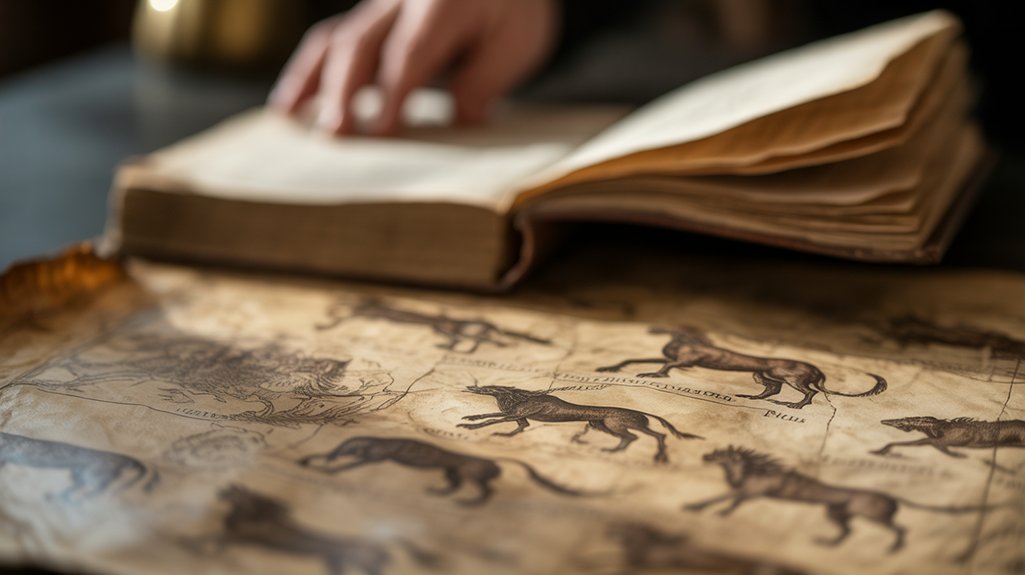
Throughout medieval Europe's fragmented territories, each region birthed its own chimeric inhabitants from the collective anxieties and wonder of isolated communities—creatures that embodied the particular character of their landscapes and the souls who dwelled there.
Regional creature comparisons reveal divergent manifestations of primal fears. The Basque *Iriarte* prowled Spanish forests as a spectral hound, while Wales conjured the *Afanc*—a beaver-demon lurking in dark waters. Italy's *Tarasque* embodied civilization's eternal struggle against chaos, subdued only through Saint Martha's intervention.
| Region | Creature & Symbolism |
|---|---|
| Germany | *Drachen*: treasure-guardians or malevolent antagonists reflecting conquest values |
| Scandinavia | *Hulder*: forest spirit embodying nature's seductive danger |
| Basque/Spain | *Iriarte*: canine phantom haunting mountain passages |
Mythical symbolism analysis demonstrates how geography shaped terror. Northern forests demanded eldritch seductresses; Mediterranean shores required dragon-adversaries. Each beast encoded regional wisdom—warnings transmitted through generations. You're witnessing humanity's cartography of the unknown, mapping fears onto landscapes that remained unconquered.
Animals Represented Human Virtues
Medieval bestiarists changed nature's creatures into moral codices, inscribing upon hide and feather the virtues Christianity demanded from the faithful.
You'll find these animal symbolism systems weren't mere decoration—they formed bridges between observable reality and transcendent truth, allowing unlettered souls to grasp eldritch mysteries through familiar forms.
The catalogue revealed:
- Lions embodied sovereignty and valor, their golden pelts reflecting Christ's resurrection—sleeping with eyes open, eternally watchful.
- Pelicans pierced their own breasts, feeding offspring with blood, chimeric representations of divine sacrifice.
- Panthers exhaled sweet breath after three-day slumbers, mirroring resurrection's promise through sensory metaphor.
- Foxes displayed cunning's shadow-side, their earthen dens symbolizing deception's buried nature.
These cultural narratives converted wilderness into scripture, each creature becoming a living parable.
You're witnessing humanity's ancient impulse: imposing meaning upon chaos, discovering virtue within fang and claw, making the natural world speak moral truths.
The Aberdeen Bestiary's Illuminated Pages
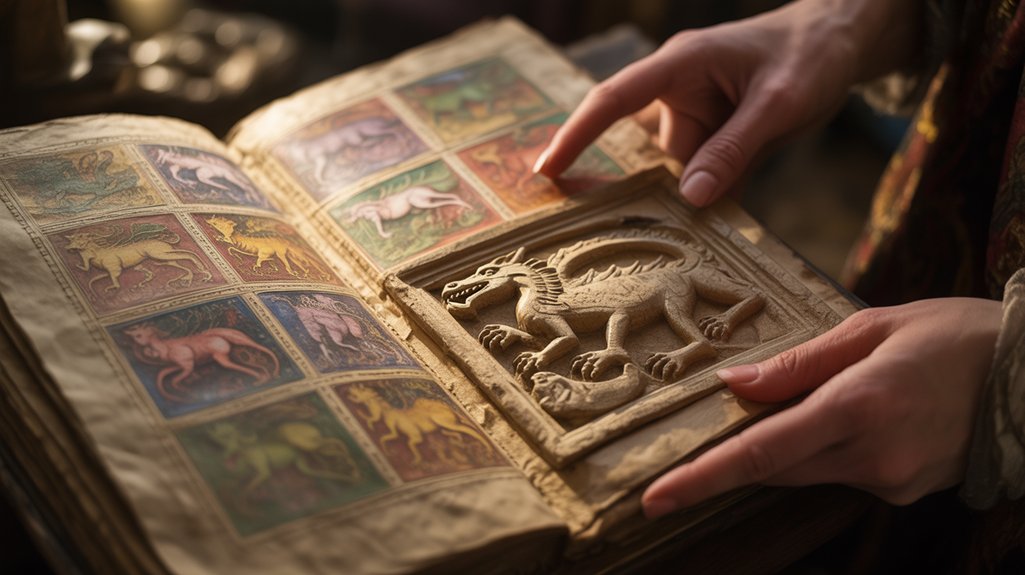
When you examine the Aberdeen Bestiary's illuminated pages, you witness the convergence of medieval artistic techniques—burnished gold leaf, pigments ground from lapis lazuli and vermillion, tempera bindings that have endured eight centuries—with a symbolic vocabulary where azure signifies celestial truth and gilt borders frame passages between earthly knowledge and divine mystery.
Each creature, whether the pelican piercing its breast to feed its young with blood or the chimeric manticore with its leonine body and scorpion's tail, emerges from vellum through layers of meaning, its form rendered in meticulous brushstrokes that alter natural history into spiritual allegory.
The illuminators understood that color carried doctrine: red for martyrdom, green for resurrection, white for purity—a chromatic theology inscribed upon bestial forms.
Medieval Artistic Techniques Used
As the twelfth century witnessed an unprecedented flowering of manuscript production across monastic scriptoria, the Aberdeen Bestiary emerged as a pinnacle of illuminated artistry—its pages bearing witness to techniques that altered vellum into portals of numinous revelation.
You'll discover illuminated techniques that changed pigment and gold leaf into visceral tableaux of spiritual truth. Artists wielded detailed line work and decorative borders to frame creatures both terrestrial and chimeric, their stylized forms radiating artistic symbolism that transcended mere representation.
These craftsmen understood their sacred task: rendering dragons alongside deer, each beast encoded with moral doctrine. Vibrant azures merged with vermilion, while gold caught candlelight in monastery halls.
The fusion created eldritch beauty—educational content wrapped in aesthetic magnificence, beckoning you toward enlightenment through visual splendor.
Symbolic Color and Gold
Pages ablaze with lapis lazuli and crushed malachite altered the Aberdeen Bestiary into something more than codex—a chromatic liturgy where each pigment carried theological weight.
You'll find symbolic hues wrapped around each creature, marking virtue against vice with Byzantine precision. Gold leaf changed mundane vellum into divine illumination, elevating bestial forms toward celestial domains where allegory breathed.
These weren't mere decorations; they were ontological markers, teaching tools forged in twelfth-century scriptoria where monks ground minerals into meaning. Red signaled passion or martyrdom. Blue invoked heaven's vault.
The chimeric beasts, rendered luminous through metallic accretion, became threshold guardians between material observation and spiritual truth. Each gilded talon, each vermillion tongue—calculated signifiers within an eldritch visual grammar that demanded contemplation, not passive viewing.
Freedom through understanding these encoded mysteries.
Creature Illustrations and Meanings
Within the Aberdeen Bestiary's vellum folios, approximately one hundred creatures materialize through pigment and gold—each illustration functioning as visual theology compressed into animal form.
You'll discover the pelican piercing its breast to resurrect its young with blood, embodying Christ's sacrifice. The lion breathes life into stillborn cubs after three days. Resurrection made manifest.
Creature symbolism alters natural history into spiritual cartography, where the unicorn's horn purifies poisoned waters—your salvation rendered tangible through illuminated art.
These twelfth-century monks understood what you seek: freedom through gnosis, liberation through symbolic literacy.
Each chimeric rendering serves as threshold between mundane observation and eldritch truth, inviting you to decode the medieval cosmos where every feather, scale, and claw whispers divine mysteries.
Harry Potter's Magical Creatures Fandom
Through digital repositories and collaborative wikis, contemporary devotees of J.K. Rowling's wizarding world perpetuate ancient bestiarian traditions through distinctly modern methods.
You'll discover creature classifications meticulously cataloged alongside fan theories that rival medieval scholarship in their devotional intensity. The fandom operates beyond institutional constraints, freely documenting chimeric beings and eldritch entities:
- House-elves, descendants of household spirits from Germanic folklore, classified according to magical binding and servitude patterns
- Hippogriffs, amalgamations of avian and equine lineages, cataloged with precise behavioral protocols and temperamental variations
- Thestrals, psychopomp creatures visible only to death-witnesses, documented through experiential testimonies
- Nifflers and Bowtruckles, featured extensively in *Fantastic Beasts*, analyzed for their ecological niches within magical ecosystems
These digital archives mirror illuminated manuscripts. Devotees gather in virtual scriptoriums, constructing knowledge repositories that democratize mythological preservation.
The *Fantastic Beasts* companion text functions as modern bestiary, yet community wikis transcend singular authorship, creating living, breathing compendiums.
Cryptozoology's Modern Monster Classification
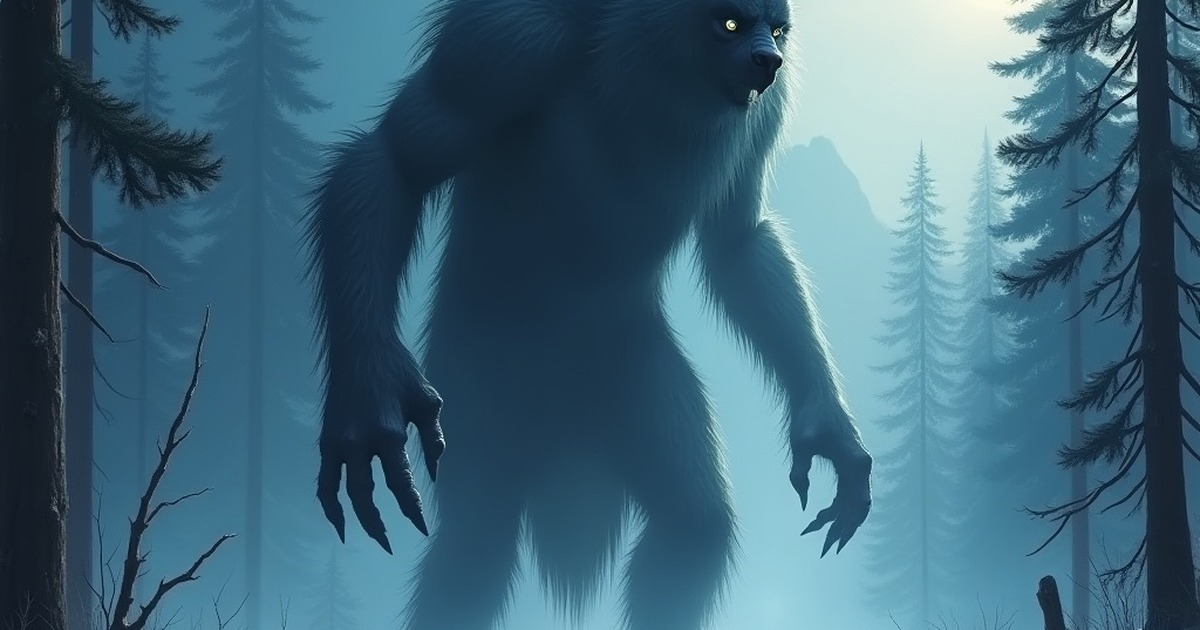
Where fictional universes construct their bestiaries with authorial intent, cryptozoology emerges from the contested territories between folklore and zoological fact, its practitioners documenting entities that allegedly traverse our material domain yet refuse taxonomic certainty. You'll find modern cryptozoologists wielding trail cameras and DNA sequencers, technological advancements that convert ancestral whispers into quantifiable data points. Their classification systems mirror medieval bestiaries—creatures sorted by habitat, morphology, eldritch characteristics. Bigfoot. Chupacabra. Entities chimeric in nature.
The cultural significance runs deeper than skeptics acknowledge. These databases of cryptid sightings preserve indigenous knowledge, colonial-era testimonies, contemporary encounters spanning continents and centuries. Public interest surges through documentary footage, amateur investigators prowling forests with thermal imaging, seeking what science dismisses yet folklore insists exists. This cataloging impulse—obsessive, reverent, methodical—reveals humanity's persistent need to map the unmapped, to impose order upon shadows that refuse illumination. Cryptozoology occupies liminal space: neither wholly scientific nor purely mythological, but something stranger still.
Internet Memes as Digital Bestiaries
Digital bestiaries emerge not from illuminated manuscripts but from server farms and smartphone screens, their specimens documented in JPEGs rather than gilt-edged vellum. You witness meme evolution as a living taxonomy, where Pepe the Frog and Wojak variants constitute chimeric entities born from collective digital consciousness.
These modern bestiaries transmit cultural commentary through viral propagation, their symbolic creatures morphing across platforms like eldritch shape-shifters adapting to new territories. Each iteration carries encoded meanings: the distracted boyfriend speaks to temptation's eternal pull, while success kid embodies triumph's primal satisfaction.
Memes mutate across digital ecosystems, each iteration encrypting cultural truths within viral vessels that traverse our collective consciousness.
The visual codex operates through immediate recognition, visceral impact. You decode complex social hierarchies, political tensions, existential dread through a single image macro.
Like medieval monks preserving knowledge through illustrated animals—each beast a moral cipher—you participate in contemporary myth-making, cataloguing humanity's follies, fears, aspirations through pixels that burn bright across networked consciousness before flickering into archival obscurity.
Myth-Making Continues Online Today
How does one mark the precise moment when folklore ceases to be transmitted through fireside whispers and becomes instead a phenomenon of fiber-optic cables, cascading through Reddit threads and Discord servers at light-speed?
You're witnessing metamorphosis—ancient patterns of myth-making adapted to digital infrastructure. Online folklore emerges spontaneously, collectively authored through wikis, creepypasta repositories, collaborative storytelling platforms. The Slender Man materialized in 2009, a tulpa born from forum posts, achieving chimeric existence between fiction and belief within months.
You participate in this, whether consciously or not, each shared story perpetuating eldritch narratives that would've required centuries to spread pre-internet.
Digital storytelling democratizes mythogenesis. No priestly class controls the canon anymore. Podcasts dissect cryptid sightings, YouTube channels archive paranormal encounters, TikTok spawns modern folklore overnight.
These narratives reflect contemporary anxieties—surveillance fears manifesting as digital haunts, algorithmic dread crystallizing into new cautionary tales. You're not consuming myths passively. You're forging them, comment by comment, sustaining humanity's eternal compulsion toward the numinous.
Frequently Asked Questions
How Did Non-European Cultures Catalogue Their Mythical Creatures Historically?
You'll find that non-European cultures preserved their chimeric beings through oral genealogies, temple iconography, and ritual performance rather than codified texts.
Ancient Mesopotamian scribes etched mythical symbolism onto clay tablets circa 2100 BCE, while Hindu priests maintained elaborate taxonomies within the Puranas, documenting creatures' cultural significance through sacred verse.
Indigenous Australian Dreamtime keepers transmitted knowledge through songlines—living maps where each eldritch entity anchored ancestral geography.
Chinese scholars compiled the *Shan Hai Jing*, cataloguing otherworldly beasts alongside geographic features, merging cosmology with cartography.
What Role Did Oral Tradition Play Before Written Bestiaries Existed?
You'll find oral storytelling served as humanity's first archive—living vessels carrying chimeric beings through generations before parchment existed.
These spoken chronicles weren't mere entertainment; they were cultural preservation itself, safeguarding eldritch knowledge through mnemonic patterns, rhythmic cadences, ceremonial repetition.
Each telling breathed life into creatures that ink couldn't yet capture. The storyteller became custodian and conduit simultaneously, their voice the only defense against oblivion, ensuring mythic truths survived in collective memory's sacred space.
Are There Legal Protections for Digital Folklore and Internet-Created Myths?
You're charting uncharted waters here. Digital copyright laws weren't crafted for folklore ownership—they protect individual creators, not collective mythmaking.
When you post a Slenderman story or SCP entry, you're contributing to chimeric, evolving narratives that resist traditional legal boundaries.
Creative Commons licenses offer some protection, yet internet myths remain eldritch hybrids: part copyrighted content, part communal heritage.
The law hasn't caught up to these liminal creations, leaving your digital folklore vulnerable, untamed, fundamentally free.
How Do Video Games Influence Modern Mythological Creature Cataloguing Systems?
Video games liberate creature design from static taxonomy, altering ancient chimeric forms through interactive gameplay mechanics.
You'll find digital bestiaries where players encounter, battle, and catalog monsters—creating experiential knowledge systems medieval scholars never imagined.
Franchises like *Monster Hunter* (2004) and *The Witcher* series demand studious observation of behavioral patterns, weaknesses, ecological niches.
These ludic encounters forge new mythological understanding: creatures become knowable through embodied struggle, not merely textual description.
The bestiary breathes, strikes back, evolves.
Can Artificial Intelligence Create New Mythical Creatures Independently?
You're witnessing something unprecedented: AI creativity now conjures entities that've never walked through human dreams.
Through mythical synthesis, algorithms weave chimeric beings from datasets spanning cultures—Mesopotamian tablets, Norse sagas, Japanese yokai scrolls.
Yet these aren't mere remixes. Neural networks generate eldritch forms with their own internal logic, physiology, behavioral patterns.
They birth creatures that exist in liminal space between human imagination and machine cognition.
Autonomous creation, yes. But true mythogenesis? That requires your belief, your stories, your freedom to embrace them.
Conclusion
You've inherited millennia of myth-making—from parchment-bound phoenixes to pixelated Pepes—yet the impulse remains unchanged. Your smartphone holds ten thousand chimeric beings, each catalogued, shared, disseminated across continents in microseconds. Where medieval scribes labored months illuminating a single basilisk, you craft legends instantaneously. The bestiary never died. It metastasized into forums, wikis, infinite digital scrolls. You're no passive observer—you're the contemporary scribe, documenting eldritch wonders for generations who'll marvel at your primitive, magnificent archive.