Your ancestors confronted nature's violence by conjuring monsters—Japan's Namazu, a restless catfish beneath the earth triggering seismic devastation; Greece's hundred-headed Typhon embodying volcanic fury; Maya's Huracan personifying atmospheric chaos. These chimeric deities converted incomprehensible geological forces into narratable adversaries, offering psychological technology for survival. Mesopotamian flood tablets from 2100 BCE document this cognitive pattern: pareidolia imposed familiar forms onto catastrophic randomness, while ritualized storytelling provided communities with explanatory frameworks. Today's climate monsters—from Godzilla's nuclear anxieties to emerging environmental metaphors—continue this ancient tradition, revealing how mythological wisdom bridges past and present understanding of planetary upheaval.
Key Takeaways
- Ancient civilizations created monster deities like Namazu and Rūaumoko to transform chaotic natural disasters into identifiable, narratable adversaries.
- Storm monsters such as Raijin and Huracan personified atmospheric violence, providing explanatory narratives for destructive meteorological phenomena.
- Volcanic gods like Hephaestus transformed geological terror into creation stories, portraying eruptions as divine actions rather than random events.
- Flood myths featured chimeric deities embodying duality—both fertility and destruction—helping societies understand agriculture-dependent survival.
- Human cognitive patterns naturally seek familiar forms in chaos, making monster narratives essential psychological tools for coping with disasters.
Monsters Embodied Ancient Catastrophes

When the earth convulsed beneath ancient feet, civilizations didn't reach for seismographs or meteorological instruments—they conjured monsters.
These mythical creatures altered incomprehensible chaos into tangible adversaries, beings you could name, fear, and perhaps appease. Japan's Namazu, that eldritch catfish thrashing beneath the islands, gave earthquakes a corporeal form—pinned by Kashima's sacred stone yet eternally restless.
Chaos became creature—something to name, to dread, to bargain with beneath trembling earth.
The Māori understood Rūaumoko's volcanic fury as divine slumber disturbed, each tremor his breath against the world above. Poseidon's trident struck the Mediterranean floor with chimeric rage, his tempestuous moods shattering cities.
The Iroquois personified tornadoes through Dagwanoenyent's witchcraft, wind given malevolent purpose. Taíno survivors knew Uracan's name before hurricanes carved their devastation.
In Finnish folklore, Louhi commanded storms and wielded witchcraft and mythical powers that shaped the narratives preserved in The Kalevala.
This disaster symbolism wasn't primitive superstition—it was sophisticated coping architecture. You're witnessing humanity's first attempts at categorizing catastrophe, converting random violence into mythology's structured narratives.
Sacred terror, made comprehensible.
##
You'll find that ancient civilizations, confronted by the earth's violent tremors and the sky's furious tempests, conjured forth pantheons of eldritch entities whose very existence explained the inexplicable—gods who shook mountains, witches who summoned tornadoes, chimeric beasts whose restless movements beneath the world's surface brought devastation to those above.
These weren't mere superstitions but sophisticated cosmological frameworks, carefully constructed across millennia from Polynesia to Mesoamerica, that changed chaos into narrative, terror into understanding.
Each culture's storm deities and seismic monsters reflected specific geological realities: Japan's catfish legends emerged from its position along tectonic fault lines, while Huracan's Caribbean dominion mirrored the cyclical violence of tropical weather systems.
Through these myths, communities preserved not only explanations of natural phenomena but also the collective memory of catastrophic events that shaped their history and traditions.
Earthquake Monsters and Legends
The earth trembles beneath humanity's feet, and across millennia, cultures have summoned forth their own explanations—not through seismic theory, but through the primal language of monsters.
Japan's Namazu—that eldritch catfish of impossible proportions—writhes beneath the islands, its tail flicks generating catastrophic ruptures, restrained only by Kashima's sacred stone.
The Maori recognize Rūaumoko's stirring within Papatuanuku's womb, his awakening manifesting as volcanic fury and seismic upheaval.
Tibet's mythological creatures include a colossal frog bearing Earth's weight, its movements birthing tremors.
Peru's Chincha honored Mama Pacha, the subterranean dragon whose restless coils shattered stone and soil.
This earthquake folklore reveals humanity's ancient covenant with the monstrous—acknowledging forces neither controllable nor comprehensible, only nameable through chimeric forms that bridge terror and reverence.
Storm Deities Across Cultures
Across hemispheres and epochs, humanity has gazed skyward at roiling cloudbanks and recognized not meteorological patterns but divine wrath incarnate—storm deities whose very breath conjures tempests.
Raijin's Taiko drums thunder across Japanese skies, his fierce countenance born from Izanami's decay. Storm symbolism manifests differently through Huracan's one-legged form—Maya chaos personified, wielding wind and fire with uncontrollable fury.
The Iroquois knew Dagwanoenyent's whirlwind body, capable of hurling mortals miles distant. A warning. Deity characteristics reveal humanity's desperate need to comprehend atmospheric violence through anthropomorphic vessels.
Ruamoko sleeps beneath Maori earth until volcanic awakening disrupts maternal lullabies. The Taino Uracan gave etymology to “hurricane” itself—linguistic evidence of mythology's enduring power.
Each tradition alters meteorological terror into narrative, granting agency where chaos reigned.
Volcanic Gods and Beasts
Molten veins pulse beneath continental crusts, and ancient peoples recognized these subterranean arteries as conduits not of magma but of divine agency—volcanic gods whose forge-fires reshape terrestrial boundaries.
You'll find Hephaestus laboring in Mediterranean volcanic chambers, his hammer-strikes manifesting as eruptions while crafting weapons for Olympian masters. These volcanic myths altered geological terror into divine creation narratives.
The Maori understood Rūaumoko's awakening beneath New Zealand's fault lines, his stirring body generating seismic tremors and lava flows. Each eruption became theological testimony.
Such deities weren't mere metaphors but eldritch presences dwelling in chthonic domains, their chimeric forms bridging mortal understanding and geological reality.
You're witnessing how ancient cultures granted agency to Earth's most violent expressions, changing unpredictable devastation into comprehensible divine will.
Weather Phenomena as Creatures
While volcanic deities dwelled in fixed chthonic chambers, atmospheric spirits possessed far more capricious natures—they manifested as corporeal entities traversing boundless skies, their bodies composed of wind, rain, and electrical discharge.
You'll find Huracan, the one-legged Maya storm deity, embodying hurricane chaos when provoked. The Iroquois recognized Dagwanoenyent, chimeric witch converted into living whirlwind, her unpredictable fury teaching respect for tornadic forces.
These storm spirits weren't merely metaphors; they represented tangible threats requiring propitiation. Ancient cultures understood weather's eldritch power through personification, granting agency to atmospheric violence.
Even earthquake entities like Namazu—the colossal Japanese catfish—and Rūaumoko, Maori god of subterranean tremors, demonstrated how myth altered incomprehensible geological forces into knowable, negotiable beings.
Freedom demanded understanding nature's mercurial temperament.
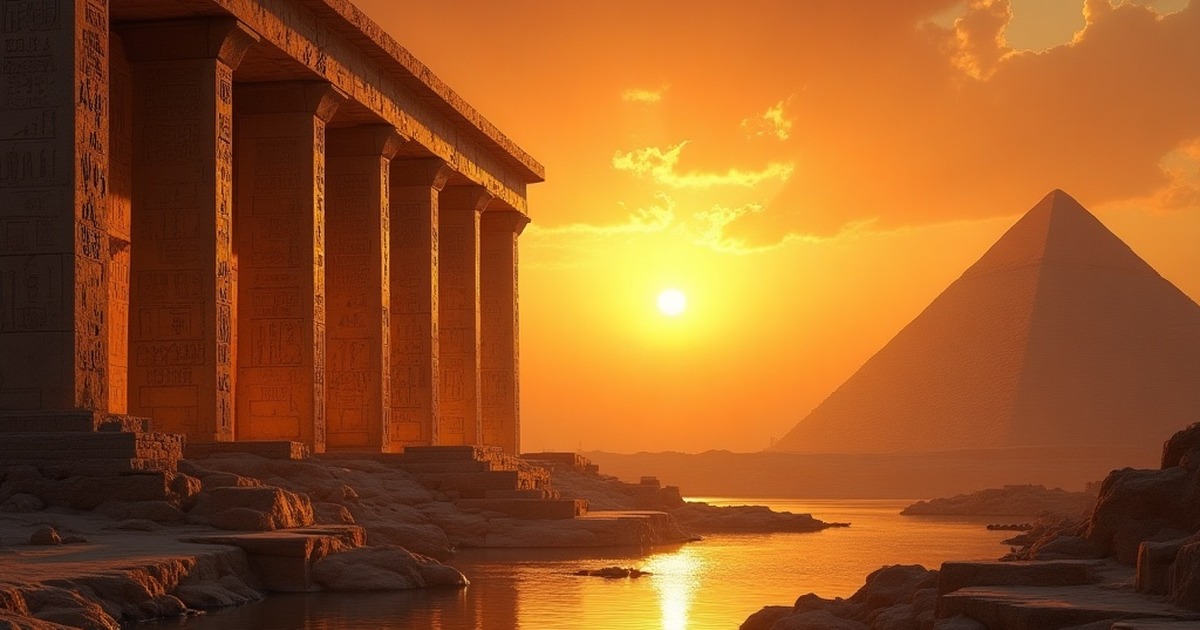
Mesopotamian Flood Tablets 2100 BCE
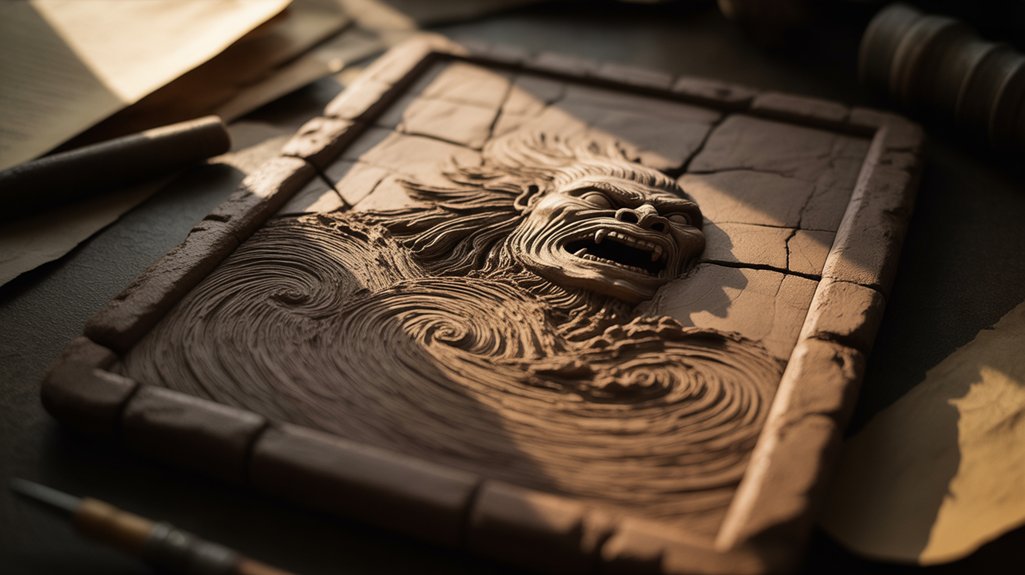
You must understand that the cuneiform inscriptions documenting Sumerian demons emerged not from mere superstition but from the violent, unpredictable reality of the Tigris-Euphrates River Valley, where civilizations built their granaries and temples upon floodplains that could shift from benefactor to destroyer within a single moon's cycle.
These ancient scribes, pressing wedge-shaped marks into wet clay around 2100 BCE, recorded something profoundly eldritch: supernatural entities wielding cosmic floods as instruments of divine judgment, their wrath inextricably linked to the annual inundations that simultaneously sustained and threatened Mesopotamian agricultural societies.
The tablets themselves become liminal objects—archaeological artifacts preserving the moment when experienced catastrophe crystallized into mythological framework, when drowning fields and shattered irrigation channels demanded theological explanation.
Sumerian Demon Cuneiform Records
The clay tablets of ancient Sumer preserve humanity's oldest written accounts of cataclysm—wedge-shaped cuneiform impressions that convert divine wrath into tangible record.
You'll find within these inscriptions creatures like Pazuzu, the chimeric storm-demon whose eldritch presence governed drought and tempest alike.
Sumerian mythology attributed environmental devastation to supernatural entities who mediated between cosmic order and earthly chaos.
These cuneiform inscriptions reveal how your spiritual ancestors understood catastrophe: not as random geological events, but as deliberate manifestations of otherworldly forces.
When Enlil released the deluge upon Utnapishtim's world, it wasn't merely water that descended—it was divine judgment made flesh through monstrous intermediaries.
The tablets demand you reconsider natural disasters as intersections where human transgression, supernatural agency, and physical destruction converged into culturally-encoded truth.
Tigris-Euphrates River Valley Location
Between these rivers—the Tigris surging swift and merciless from Armenian highlands, the Euphrates meandering through Syrian plateau before descending southward—sprawled Mesopotamia, that primordial crucible where cuneiform script altered flood memory into canonical truth. You'll find Mesopotamian geography shaped divine narratives: seasonal torrents changed theological doctrine. River activity dictated survival, death, cosmic order itself.
| Geographic Feature | Mythological Significance | Disaster Correlation |
|---|---|---|
| Tigris velocity | Divine wrath manifestation | Catastrophic overflow 2100 BCE |
| Euphrates sediment deposits | Creation narrative substrate | Agricultural destruction cycles |
| Floodplain elevation variance | Underworld proximity | Deluge punishment motifs |
| Confluence zones | Sacred boundary spaces | Apocalyptic inundation records |
Archaeological tablets from 2100 BCE preserve humanity's earliest attempts at explaining eldritch forces through divine punishment frameworks. The Epic of Gilgamesh emerged from these waterlogged memories—civilization's first chimeric interpretation of nature's fury.
Annual Flooding Agricultural Dependency
Seven millennia worth of survival hinged upon water's arrival—that annual benediction converting parched alluvium into sustenance, yet threatening annihilation should divine temperament shift.
You'll find within the 2100 BCE Mesopotamian tablets a civilization wrestling with paradox: floods birthed abundance, floods brought devastation.
Agricultural cycles synchronized with inundation patterns created chimeric deities embodying this duality—serpentine monsters churning silt-laden waters, bringing fertility's promise alongside obliteration's threat.
The Epic of Gilgamesh crystallizes this tension. Destruction. Rebirth. Endless repetition.
These flood myths weren't mere superstition but survival manuals encoded in divine language, cautionary frameworks acknowledging humanity's precarious dependence upon forces beyond mortal control.
Irrigation systems emerged from this understanding—practical responses intertwined with eldritch reverence, technological innovation married to mythological wisdom, demonstrating how ancient minds refused separation between sacred knowledge and agricultural necessity.
Greek Vs Japanese Mythologies

When civilizations grapple with the terrifying unpredictability of seismic destruction, they forge cosmological narratives that convert geological chaos into divine agency—and nowhere does this metamorphosis reveal itself more distinctly than in the earthquake symbolism of ancient Greece and feudal Japan.
You'll discover profound mythological parallels when examining these traditions. Poseidon's trident released eldritch tremors across the Aegean, his temperament as volatile as the tectonic plates beneath Hellenic soil. Meanwhile, beneath Japanese islands writhed Namazu, that chimeric catfish whose thrashing generated catastrophic ruptures—restrained only by Kashima's sacred stone.
| Aspect | Greek Mythology | Japanese Mythology |
|---|---|---|
| Deity/Entity | Poseidon, god of seas | Namazu, giant catfish |
| Mechanism | Divine mood swings, trident strikes | Physical agitation beneath earth |
| Control | Chaotic, unpredictable nature | Divine restraint by Kashima |
| Cultural Focus | Respect for oceanic-terrestrial power | Balance between natural forces |
| Philosophical Theme | Nature's inherent chaos | Consequences of divine oversight |
These frameworks weren't mere superstition—they represented sophisticated attempts at understanding your existence within an unstable cosmos.
Chaos Monsters Represent Societal Fears
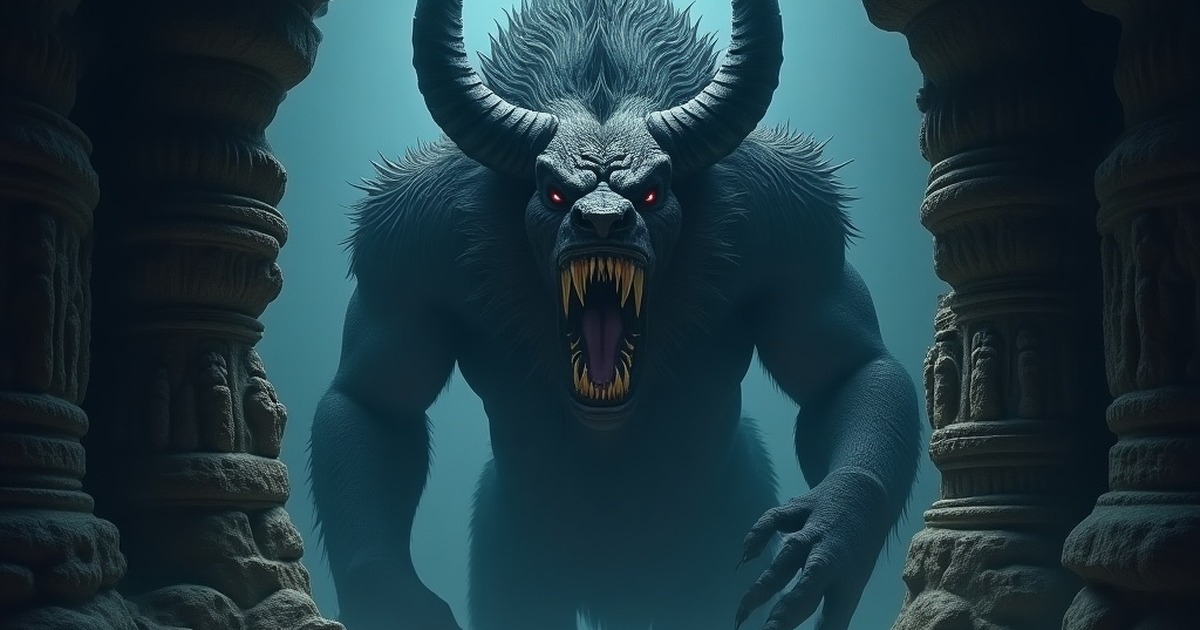
Through the archetypal form of chaos monsters, ancient civilizations externalized their most visceral terrors—altering abstract dread into tangible, narratable entities that could be named, ritualized, and perhaps thereby controlled.
You'll find this fear representation manifested across continents: Namazu thrashing beneath Japan's islands, Rūaumoko breathing fire through Aotearoa's volcanic peaks, Dagwanoenyent spiraling through Iroquois territories. Each chimeric form emerged from genuine catastrophe—the cultural symbolism encoding survival wisdom into narrative.
Three Manifestations of Disaster's Eldritch Face:
- Seismic terrors: Namazu (Japan) and Rūaumoko (Māori) personified earth's convulsions, their movements explaining tremors that shattered communities.
- Atmospheric fury: Huracan (Maya) and Dagwanoenyent (Iroquois) embodied wind's destructive capacity, altering meteorological phenomena into comprehensible adversaries.
- Aquatic wrath: Poseidon's temperament reflected oceanic unpredictability, his divine moods corresponding with tsunami and earthquake.
These weren't mere superstitions. They were sophisticated psychological technologies—frameworks allowing you to conceptualize, discuss, and ritually negotiate with forces that otherwise remained incomprehensibly vast.
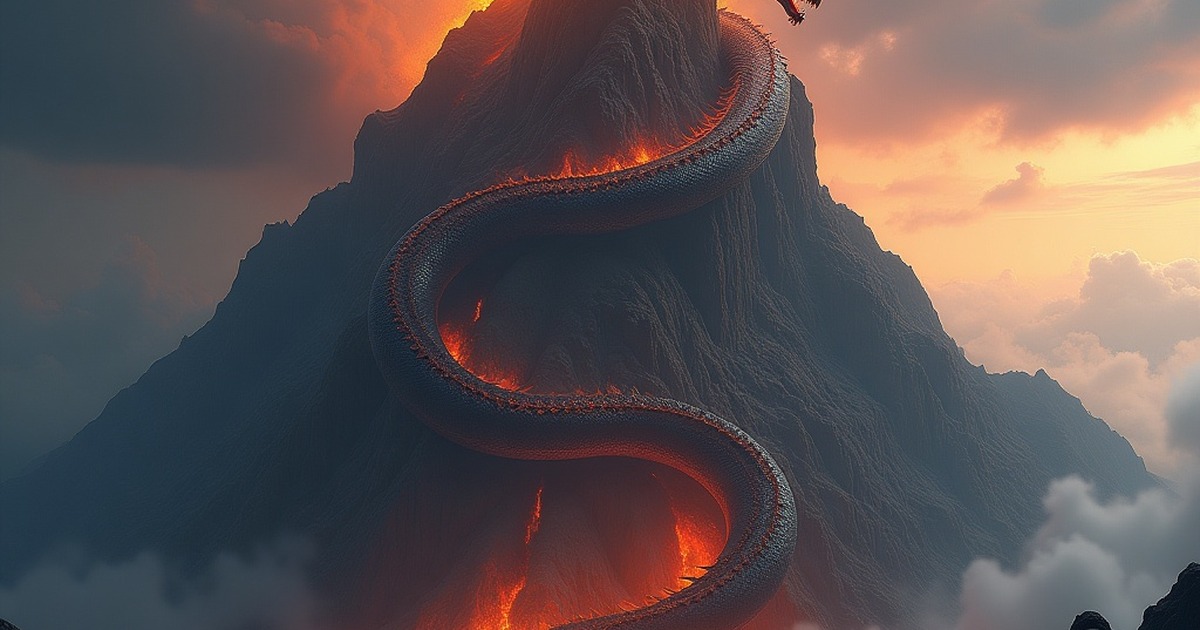
Typhon's Hundred Dragon Heads
When you encounter Typhon in the ancient texts, you confront a chimeric colossus whose hundred serpentine heads breathed volcanic fire and hurricane winds, each maw a portal to elemental destruction.
This monstrous physiology served the Greeks as both explanation and warning—Mount Etna's eruptions became Typhon's imprisoned rage, earthquakes his writhing beneath Sicilian stone.
His clash with Zeus encoded humanity's primal understanding: that order must eternally battle the eldritch forces dwelling in earth's molten depths.
Typhon's Monstrous Physical Description
The hundred dragon heads of Typhon rise from his shoulders in a writhing, polyphonic mass—each serpentine skull distinct in its horror, each throat capable of producing sounds that ranged from the bellowing of bulls to the hissing of vipers, from the roaring of lions to voices that mimicked human speech with unsettling clarity.
You encounter here Typhon's symbolism made flesh: a chimeric titan whose scale-covered body writhed with eldritch energy, whose limbs possessed giant's strength, whose every head breathed consuming fire.
This monstrous representation served ancient communities as embodied explanation for nature's fury. Each flame-wreathed skull materialized storm and eruption. Each curse-speaking mouth gave voice to chaos itself.
The Greeks altered geological violence into comprehensible narrative, crafting from Typhon a living metaphor for uncontrollable natural forces.
Volcanic Eruptions and Fire
How did ancient Mediterranean communities conceptualize volcanic fury before modern geology provided its explanations?
You'll find answers in Typhon's chimeric form—a hundred dragon heads breathing catastrophic fire, each maw channeling nature's wrath through eldritch flames. These volcanic myths weren't mere superstition; they represented sophisticated attempts to comprehend Mount Etna's terrifying eruptions.
When Typhon's serpentine heads belched fire and ash, ancient Greeks witnessed their deepest fears materialized: uncontrollable forces that could obliterate civilizations without warning. Zeus's ultimate victory, imprisoning this monster beneath Sicily's volcanic peaks, provided reassuring cosmological order.
Yet Typhon's continued thrashing underground explained each tremor, each explosive eruption—his imprisoned rage eternally manifesting as molten rock and poisonous gases.
You're witnessing humanity's primal need to personify destruction, altering incomprehensible geological violence into narratives of divine struggle.
Battle Against Olympian Gods
One hundred serpentine necks writhed skyward as Typhon confronted the Olympian pantheon—each dragon maw speaking languages both mortal and divine, bellowing simultaneously in voices that shattered mountains and curdled the Mediterranean's wine-dark waters.
This chaos representation embodied humanity's terror before nature's fury released. You'd witness Zeus himself retreating initially, the storm-lord's thunderbolts dimming against such eldritch magnitude. The cosmos trembled. Divine intervention became imperative—not merely for Olympian supremacy, but for civilization's survival against primordial entropy.
When Zeus finally struck with celestial fire, imprisoning the chimeric giant beneath Etna's volcanic dome, the myth encoded ancient understanding: natural disasters weren't random cruelties but cosmic battles requiring supernatural force to contain.
Each subsequent eruption whispered Typhon's rage, reminding mortals that chaos perpetually strains against order's fragile chains.
Godzilla Embodies Nuclear Fears
From the irradiated depths of post-war Japanese consciousness emerged something unprecedented—a creature born not from primordial chaos but from humanity's own atomic hubris. *Gojira*, revealed to audiences in 1954, wasn't merely entertainment.
A monster forged not by ancient gods but by atomic fire—humanity's hubris given terrible, thrashing form.
This eldritch leviathan embodied nuclear symbolism through visceral immediacy: the Lucky Dragon 5's contamination, Hiroshima's ashes, Nagasaki's shadows burned into stone. Where ancient peoples attributed tsunamis to serpentine deities, you witnessed post-atomic civilization conjuring its own chimeric herald of annihilation.
Consider Godzilla's cultural evolution across three distinct phases:
- 1954-1960s: Pure destroyer, radioactive breath manifesting mushroom clouds, cities reduced to smoldering graveyards.
- 1970s-1990s: Ambiguous guardian, defending Earth against cosmic threats while remaining fundamentally Other.
- 2000s-present: Complex symbol addressing environmental collapse, technological overreach, humanity's precarious stewardship.
The kaiju transcended geographic boundaries, appearing across thirty films, becoming your generation's cautionary myth—proof that monsters still explain catastrophe, though now we manufacture our own apocalypses rather than attributing them to angry gods.
Modern Cognitive Pattern Recognition Studies
Your brain constructs dragons from storm clouds because it must—because pattern recognition, that ancient cognitive machinery humming beneath conscious thought, can't tolerate randomness without imposing narrative structure upon it.
Modern neuroscience reveals this eldritch compulsion: when earthquakes shatter cities, when tsunamis devour coastlines, your neural pathways activate specific regions governing memory, emotion, storytelling.
The phenomenon psychologists term pareidolia—perceiving familiar forms within chaos—explains why Mesopotamian scribes envisioned Tiamat's serpentine coils in flooding rivers, why Japanese fishermen carved namazu catfish into temple stones.
This isn't primitive ignorance. It's cognitive coping, sophisticated as any scientific model. Your ancestors altered unpredictable geological violence into chimeric narratives they could comprehend, ritualize, potentially control.
Superstition emerged not from foolishness but from pattern recognition overreach, the brain's desperate architecture seeking signal within nature's terrifying noise.
These myths served psychological survival, rendering the incomprehensible manageable through sacred story.
Climate Change Metaphors Emerging
As contemporary civilization watches glaciers calve into warming seas, your collective consciousness births new monsters—carbon-bellied leviathans, methane-breathing titans, plasticine chimeras choking ocean gyres.
Modern mythology manifests in climate catastrophe: we conjure monsters from our own industrial sins, giving form to atmospheric betrayal.
These emergent climate metaphors echo ancient narratives with uncanny precision: Huracan's destructive tempests now manifest as Category 5 hurricanes intensified by warming waters, while Dagwanoenyent's tornado-spawning wrath mirrors increasingly volatile atmospheric conditions. Just as the Maya understood storms as divine retribution, you witness environmental catastrophe framed through moral causation—humanity's transgressions against nature materializing as eldritch forces.
The pattern persists. Rūaumoko's volcanic fury translates to feedback loops and tipping points, awakening dormant earth systems. Namazu's seismic thrashing becomes anthropogenic disruption, your industrial tremors destabilizing planetary equilibrium.
These climate metaphors aren't mere literary devices; they're cognitive frameworks inherited from cultures that survived environmental upheaval by personifying chaos. Your ancestors understood: when nature turns monstrous, civilization must reckon with its own chimeric relationship to earth's delicate systems.
Storytelling Unites Past Present
The monsoon-drenched clay tablets of Mesopotamia speak the same language as your smartphone screens flickering with storm warnings—both vessels carry stories that convert incomprehensible devastation into narratives your minds can grasp, metabolize, survive.
These storytelling connections transcend millennia, binding you to ancestors who witnessed Namazu's writhing beneath Honshu's volcanic soil, to Polynesians who felt Ruamoko's rage rumbling through island foundations.
You're participating in humanity's oldest liberation—transforming chaos into meaning through narrative architecture.
Cultural interpretations of chimeric disaster-spirits weren't primitive superstition but sophisticated psychological technology.
When Maya priests invoked Huracan's eldritch power, when Japanese communities negotiated with the cosmic catfish through ritual, they performed what you're attempting with climate data and predictive models: imposing comprehensible patterns onto nature's indifference.
The method shifts. The necessity remains eternal.
Your flood myths, earth-shaking monsters, divine retribution tales—these aren't relics. They're templates still active in collective consciousness, proving that storytelling remains your species' primary tool for metabolizing terror into something survivable.
Frequently Asked Questions
How Did Ancient Cultures Distinguish Between Natural Disasters and Divine Punishment?
You'll discover ancient cultures rarely distinguished between natural disasters and divine retribution—they were fundamentally identical.
Through cultural symbolism, earthquakes became titans stirring beneath earth's crust, tsunamis converted into leviathans rising from abyssal depths. Your ancestors perceived nature itself as conscious, willful, responding to human transgression.
The chimeric monsters weren't metaphors but literal manifestations of cosmic displeasure. Every catastrophe carried meaning, every tremor whispered judgment.
Freedom meant understanding these eldritch forces, appeasing them through ritual, sacrifice, reverence.
Were There Civilizations That Didn't Use Monsters to Explain Natural Phenomena?
You'd think *every* civilization conjured chimeric beasts, but civilization comparisons reveal striking mythological alternatives.
Ancient Confucian scholars interpreted earthquakes through cosmic imbalance—yin and yang disrupted, not monsters raging.
Early Buddhist texts attributed floods to karmic accumulation, spiritual debts manifesting physically.
The Stoics saw natura naturans, nature naturing itself, requiring no eldritch intermediaries.
These traditions offered you philosophical frameworks instead of creature-based explanations, treating catastrophes as mathematical inevitabilities within ordered systems.
Pure causation, stripped of monstrous dramaturgy.
Did Ancient Priests Deliberately Create Monster Myths to Control Populations?
You'll find the evidence for deliberate myth creation remains elusive, shrouded in antiquity's mists.
While Mesopotamian priesthoods circa 2000 BCE certainly wielded mythological narratives as societal architecture, distinguishing cynical population control from genuine cosmological belief becomes impossible across millennia.
These eldritch tales emerged organically from collective trauma, later crystallizing into institutional power structures.
The priests themselves likely believed their chimeric narratives—making them both sincere interpreters and pragmatic controllers of humanity's deepest fears.
How Accurate Were Ancient Observations of Disasters Compared to Modern Science?
Ancient observers possessed remarkable myth accuracy in documenting disaster interpretation—you'll find their empirical records mirror seismological data.
They tracked volcanic eruptions, tsunamis, earthquakes with precision that rivals modern instruments, though their cosmological frameworks differed. The eldritch tremors weren't plate tectonics but serpentine deities; pyroclastic flows became dragon's breath.
Yet their phenomenological descriptions—sulfurous fumes, ground liquefaction, atmospheric anomalies—prove scientifically valid. They saw truth, then clothed it in chimeric vestments you're only now learning to decode.
Can Studying Ancient Myths Help Predict How Societies Respond to Crises?
You'll discover that myth interpretation reveals archetypal crisis response patterns—ancient peoples' eldritch narratives encoding genuine psychological survival mechanisms.
When Mesopotamian floods birthed Tiamat's chimeric rage circa 2000 BCE, communities forged collective resilience through shared cosmology.
These aren't mere stories. They're blueprints for social cohesion under duress, showing you how societies transmute terror into meaning, chaos into ritual.
Modern crisis managers still unconsciously mirror these ancestral frameworks when confronting catastrophe, seeking narratives that unite rather than fragment.
Conclusion
You've witnessed how humanity's most eldritch terrors—from Tiamat's primordial chaos to Godzilla's atomic fury—serve as chimeric vessels for catastrophic truth. These monsters aren't mere fiction; they're cognitive anchors, altering incomprehensible devastation into narratives your ancestors could grasp, survive, remember. Today, as climate change spawns new apocalyptic metaphors, you're continuing this ancient practice, sculpting tomorrow's myths from today's existential dread. The pattern persists, eternal, unbreakable—humanity forever translating disaster into monsters, monsters into meaning.