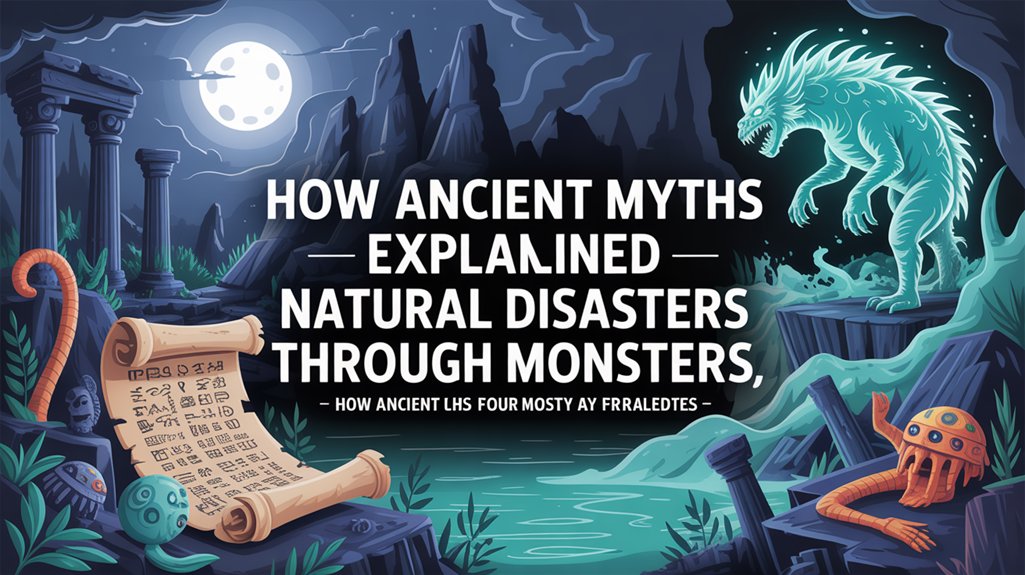
Ancient civilizations altered nature's violence into monstrous embodiments—Japan's Namazu catfish thrashing beneath islands to generate seismic fury, Mesopotamia's Tiamat personifying flood chaos, Greece's Typhon imprisoned beneath Etna's volcanic rage. These chimeric figures granted psychological coherence to incomprehensible catastrophes, encoding survival wisdom within narrative frameworks that acknowledged human vulnerability against elemental forces. From Māori Rūaumoko's prenatal movements causing tremors to Maya Huracan's cyclonic retribution, monsters served as cognitive tools for processing disaster, establishing patterns that echo through modern climate anxiety and contemporary environmental discourse awaiting exploration.
Key Takeaways
- Ancient civilizations personified unpredictable natural disasters as monsters, transforming chaotic forces into narratives that acknowledged human vulnerability and fear.
- Earthquakes were explained through creatures like Namazu, a thrashing catfish, and Rūaumoko, whose movements underground caused tremors and volcanic activity.
- Storm gods such as Raijin, Huracan, and Poseidon embodied thunder, hurricanes, and sea tempests as manifestations of divine temperament.
- Volcanic eruptions were attributed to fire deities like Pele, Hephaestus, and Vulcan, whose anger released destructive pyroclastic fury upon civilizations.
- Flood myths featuring figures like Utnapishtim and Tiamat encoded survival wisdom, framing catastrophic deluges as divine interventions requiring preparedness.
*Monsters as Disaster Metaphors**
Before humanity possessed seismographs or meteorological instruments, civilizations worldwide altered the terrifying unpredictability of natural disasters into corporeal forms—vast, writhing entities that could be named, feared, and perhaps appeased.
Japanese mythology converted seismic chaos into Namazu, an eldritch catfish whose subterranean thrashing generated earthquakes. The Earthshaker embodied disaster narratives through monster symbolism that granted psychological coherence to geological violence.
Namazu transformed incomprehensible seismic terror into comprehensible mythology—a thrashing catfish whose movements granted narrative structure to geological chaos.
Similarly, Māori traditions personified volcanic fury through Ruamoko, whose divine awakenings breached earth's surface. The Iroquois conjured Dagwanoenyent—chimeric witch-as-whirlwind—to explain tornadic devastation.
Taíno cultures shaped Uracan, storm deity whose name echoes through modern hurricanes, while Greek civilization attributed tectonic ruptures to Poseidon's trident-strikes.
These weren't primitive misunderstandings. They represented sophisticated frameworks for processing catastrophe, translating invisible geological and atmospheric forces into narratives that acknowledged humanity's vulnerability while maintaining cultural autonomy.
Thunder becomes divine wrath. Floods manifest as serpentine vengeance. Monster symbolism granted ancient peoples interpretive freedom against forces that defied control.
##
Across disparate civilizations, humanity has encoded its terror of geological and atmospheric catastrophes into bestiary form, altering earthquakes into the writhing of subterranean leviathans, storms into the breath of chimeric deities whose rage splits the heavens.
The Namazu beneath Japanese soil, Poseidon's trident striking Aegean bedrock, Huracan's tempestuous fury sweeping Maya cities into oblivion—each represents an ancient attempt to impose narrative upon chaos, to grant the eldritch forces of planetary violence a face, a motive, a mythology.
These disaster-beasts reveal humanity's oldest recognition: that survival demands not merely understanding nature's mechanisms but creating sacred intermediaries through which the incomprehensible might be negotiated, appeased, or at least named.
Even in the frozen Arctic, Inuit mythology personified environmental threats through creatures like the Mahaha, whose ice-blue form and lethal cold touch embodied the deadly power of extreme winter conditions that could freeze victims in moments.
Earthquakes and Sea Monsters
When the earth convulses beneath human settlements, ancient cultures have consistently attributed these terrifying tremors to colossal creatures dwelling in the planet's hidden depths—beings whose very existence blurs the boundary between geological force and animate malevolence.
Japan's Namazu, an enormous catfish restrained by Kashima's divine authority, creates seismic sea disturbances through its subterranean thrashing.
The Maori invoke Rūaumoko, whose restless slumber generates volcanic fury.
Tibet's cosmology positions an eldritch frog as Earth's foundation, its shifting weight producing tremors.
Polynesian tradition parallels this with Ruau-Moko's prenatal movements.
Peru's Chincha people conceived Mama Pacha as a chimeric dragon whose writhing precipitates disaster.
These mythological beasts represent humanity's attempt to anthropomorphize incomprehensible geological violence, altering impersonal tectonic forces into entities possessing intention, emotion, vulnerability.
Storms Through Divine Beasts
While seismic violence finds its mythological vessel in subterranean leviathans, atmospheric chaos demands its own pantheon of celestial aggressors—entities whose dominion extends across wind-torn skies and rain-lashed earth.
Japan's Raijin wielded thunder as cosmic percussion, his presence announced through lightning's eldritch brilliance. The Maya conceived Huracan, whose very name birthed the modern “hurricane,” an embodiment of divine retribution manifesting as cyclonic devastation.
Northern Iroquois spoke in hushed reverence of Dagwanoenyent, witch-goddess commanding tornadic fury across vast territories. Greek mariners understood Poseidon's temperament dictated survival, his trident summoning tempests that swallowed ships whole.
These storm deities weren't mere explanations—they represented humanity's recognition that atmospheric violence possessed intention, consciousness, rage. Transgression invited catastrophe. Respect earned passage.
Like these tempest makers, mythological creatures symbolize humanity's deepest fears about uncontrollable natural forces.
The message resonates still: freedom requires humility before forces beyond mortal comprehension.
Volcanic Creatures and Fire
Where tectonic plates fracture and magma breaches earth's crust, ancient peoples discerned not geological inevitability but divine forge-work—the hammering of cosmic smiths whose subterranean workshops produced both civilization's tools and its annihilation.
Greek Hephaestus wielded hammer and tongs beneath smoking mountains, while Roman Vulcan's anger manifested in pyroclastic fury. These volcanic deities embodied creation's chimeric nature: simultaneously nurturing and catastrophic.
Hawaiian Pele's fierce temperament shaped islands through molten rage, each eruption a manifestation of untamed feminine power.
Japanese Kagutsuchi represented this eldritch duality most starkly—his fiery birth simultaneously created and destroyed, killing mother Izanami while birthing volcanic forces.
Maya Huracan merged storm and magma, forging humanity from maize while wielding nature's most devastating weapons.
These fiery legends recognized truth: evolution demands conflagration.
Weather Demons and Destruction
Atmospheric chaos found personification in monstrous forms across cultures that recognized storms not as meteorological phenomena but as sentient malevolence—entities whose wrath altered skies into battlegrounds.
The Iroquois conceived Dagwanoenyent, Northern Witch of Tornadoes, whose eldritch power hurled transgressors across vast distances through whirling devastation.
Maya civilization worshipped Huracan—literally “he who's one leg”—a chimeric storm deity whose uncontrollable fury manifested in hurricane-force annihilation.
Japanese mythology portrayed Raijin, thunder god wielding drums that summoned lightning's violent descent.
These weather spirits represented humanity's mythological interpretations of atmospheric violence, changing incomprehensible meteorological events into narratives of divine anger.
Each tradition crafted beings whose temperaments mirrored the unpredictable ferocity of tempests. Understanding emerged through personification. Terror gained meaning through monster.
Mesopotamian Flood Monster Accounts
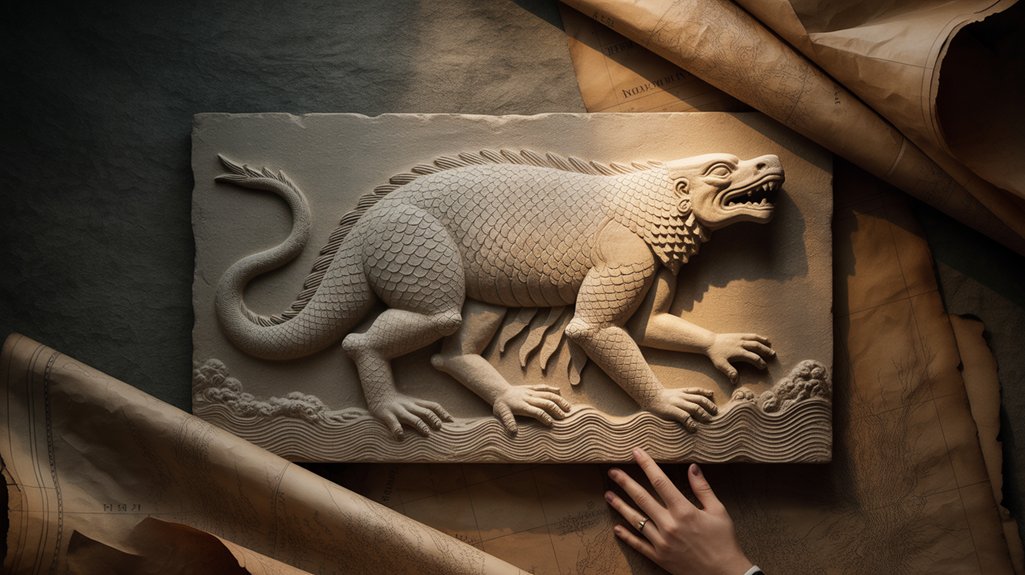
The cuneiform tablets of ancient Mesopotamia, etched with accounts of divine wrath and eldritch aquatic entities, preserve humanity's earliest written testimony of catastrophic deluge—narratives where Tiamat's chimeric offspring embodied the Tigris-Euphrates Valley's devastating seasonal floods that threatened to return civilization to primordial chaos.
Within the Epic of Gilgamesh, Utnapishtim's survival account transcends mere storytelling, offering pragmatic vessel-construction methods encoded alongside theological warnings, the clay tablets themselves having endured millennia to deliver their message of preparation against nature's fury.
These fragments reveal a sophisticated understanding: the Mesopotamians recognized their floods not as random devastation but as cyclical divine interventions, their mythological frameworks providing both explanation and actionable survival wisdom for communities dwelling in geography's most volatile cradle.
Epic of Gilgamesh Tablets
Carved upon twelve clay tablets sometime between 2100 and 1200 BCE, the Epic of Gilgamesh preserves within its cuneiform script a deluge narrative that predates biblical accounts by centuries—yet scholars must disentangle an essential misconception that's woven itself into modern interpretations.
Humbaba wasn't a flood monster. He guarded the Cedar Forest, separate from the deluge entirely. The actual flood narrative centers upon Utnapishtim, who received divine intervention from Ea, escaping the gods' catastrophic judgment through ark construction.
These epic tablets reveal humanity's fragility before capricious deities who wielded inundation as punishment, reflecting Mesopotamia's historical relationship with the Tigris and Euphrates' devastating overflows. The account preserves cultural memory of genuine disasters, altering environmental chaos into theological framework where natural catastrophe became divine will made manifest.
Tigris-Euphrates River Valley Flooding
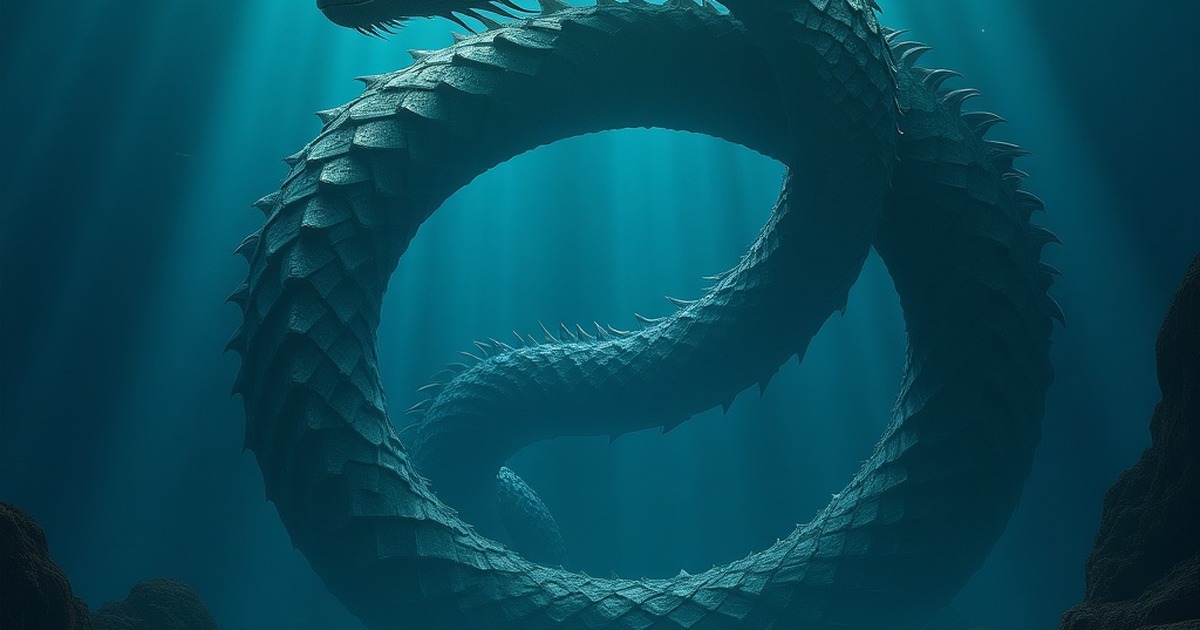
Between the twin arteries of the Tigris and Euphrates, ancient Mesopotamian consciousness crystallized around a fundamental paradox—the same waters that deposited life-giving alluvium across parched plains could convert overnight into instruments of annihilation. Here, flood mythology manifested through Tiamat, the chaos-dragon whose writhing embodied primordial devastation. Enlil, supreme among river deities, wielded inundation as divine punishment.
| Monstrous Entity | Mythological Function |
|---|---|
| Tiamat | Chaos-dragon representing primordial flood forces |
| Enlil | Divine orchestrator of catastrophic deluge |
| Utnapishtim's Flood | Divine retribution requiring human survival |
| Primordial Waters | Eldritch source of both creation and destruction |
| Chimeric Beings | Guardians of unpredictable river boundaries |
The Epic of Gilgamesh preserved these elemental terrors—Utnapishtim's ark floating above drowned civilizations. Terror. Reverence. Fertile silt mixed with human bones.
Cuneiform Tablets' Survival Methods
Pressed into wet clay tablets circa 2100 BCE, survival instructions emerged not as mere narrative embellishment but as sacred protocols encoded within the Atrahasis Epic and Gilgamesh's eleventh tablet—archival evidence that Mesopotamian scribes understood catastrophic floods as recurring phenomena demanding systematic preparation.
Utnapishtim's divinely-mandated ark construction represented flood preparedness as spiritual imperative: precise cubit measurements, waterproofing techniques using bitumen, provisions calculated for extended isolation. These weren't fanciful tales but survival manuals disguised as mythology.
Divine warnings arrived through dreams and whispered revelations from Ea, god of subterranean waters—eldritch communications that altered recipients into civilization's guardians. The tablets reveal humanity's earliest disaster protocols: heed omens, construct refuge, preserve life's diversity.
Ancient scribes recognized patterns within chaos. They documented what monsoon-swollen rivers taught through devastation, changing collective trauma into transmitted wisdom.
*Japanese Vs Norse Creature Types**
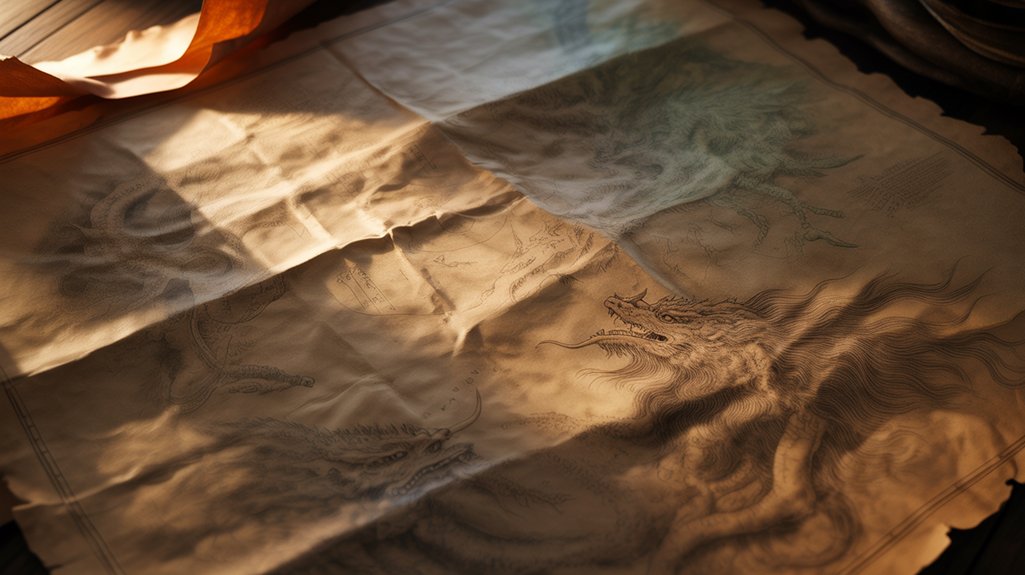
While Japanese mythology grounds its catastrophic creatures in the tangible domain—giving them forms drawn from the observable world of catfish, drums, and earthly tremors—Norse tradition raises its agents of destruction to cosmic proportions, where serpents encircle entire worlds and wolves swallow suns.
| Aspect | Japanese Creatures | Norse Creatures |
|---|---|---|
| Physical Form | Earthbound animals (Namazu the catfish, Raijin with drums) | Eldritch cosmic entities (Jörmungandr, Fenrir) |
| Disaster Personification | Localized geological events, storms | Apocalyptic world-ending cataclysms |
| Cultural Symbolism | Observable nature representation | Primordial chaos manifestation |
These mythological comparisons reveal divergent approaches to ancient storytelling. Japanese creatures embody immediate, witnessed phenomena—the ground's violent shaking, thunder's percussion. Norse creatures transcend earthly limits, their chimeric forms threatening existence itself. Both traditions convert ungovernable natural forces into comprehensible narratives, yet their monster origins reflect distinct cosmological philosophies about humanity's relationship with destruction.
Morality Lessons Within Monster Tales
Beyond their roles as personifications of ungovernable forces, these monstrous beings served a pedagogical function—their stories encoded ethical frameworks that governed human behavior in relation to both nature and community. The eldritch tremors of Namazu emerged from moral agitation, altering earthquake into consequence.
Cultural reflections manifest through deliberate narrative architecture:
- Ruamoko's volcanic rage taught reverence for familial bonds and natural hierarchies, wherein disrupted harmony births catastrophic awakening—destruction as divine response to human transgression.
- Dagwanoenyent's tornado-winds embodied cautionary wisdom, her chimeric form reminding communities that disrespect toward elemental powers invites retribution from those dwelling in liminal spaces between worlds.
- Huracan's storm-craft illuminated moral consequences of ecological imbalance, demanding human actions align with cosmic order lest creation itself turn hostile.
These mythological frameworks transcended mere explanation. They constructed moral universes where monsters weren't aberrations but teachers, their terrible power reflecting humanity's ethical relationship with forces beyond comprehension—pedagogy wrapped in scales, flame, and thunder.
Typhon's Mediterranean Volcanic Destruction
From the churning womb of Gaia emerged Typhon, a chimeric colossus whose hundred serpent-heads belched flames across the Mediterranean basin, his eldritch form towering to the stars themselves.
His apocalyptic confrontation with Zeus shattered mountains and boiled seas, a cosmic struggle that scorched the very foundations of the Hellenic world until the thunder-god imprisoned the beast beneath Sicily's smoking peak.
There Mount Etna still trembles with Typhon's rage, each pyroclastic eruption marking the monster's thrashing against his stone chains, forever binding myth to the geological violence that shaped ancient Greek understanding of their volatile landscape.
Typhon's Monstrous Physical Form
When ancient Mediterranean civilizations gazed upon Typhon's eldritch form, they witnessed nature's fury given flesh—a chimeric colossus whose hundred serpentine heads belched flame and ash across the Aegean world.
His monstrous imagery embodied volcanic devastation itself: dragon-skulls wreathed in sulfurous smoke, eyes blazing with subterranean fire, voices thundering across trembling coastlines. This wasn't mere allegory. Greeks witnessed Mount Etna's eruptions and recognized Typhon's imprisoned rage beneath Sicilian bedrock, his convulsions manifesting as lava flows that consumed settlements, his roars echoing through seismic tremors.
The titan's chaotic nature—part serpent, part humanoid, wholly catastrophic—reflected volcanic unpredictability, altering incomprehensible geological violence into tangible, if terrifying, narrative. Each eruption became proof: divine conflict raged beneath their feet, Typhon eternally struggling against Zeus's chains, Mediterranean stability perpetually threatened by primordial rebellion.
Battle With Zeus
As Zeus confronted Typhon across Mediterranean skies, the cosmological violence mirrored actual geological catastrophe—a divine war whose battlefield stretched from Thrace to Syria, leaving volcanic scars that ancient witnesses interpreted through mythological lens.
The titan's hundred dragon heads spewed flame and venom, generating earthquakes that fractured coastlines, volcanic eruptions that blackened horizons. Each thunderbolt Zeus hurled corresponded to seismic convulsions rippling through ancient settlements.
Typhon's symbolism crystallized primal terror—nature's eldritch fury personified through chimeric monstrosity. The cataclysmic engagement ended with Zeus' victory, the Olympian king casting Typhon beneath Mount Etna's volcanic depths.
There the monster writhed eternally, his rage manifesting as molten rock bursting through earth's surface. Ancient Greeks observed Etna's eruptions and recognized divine imprisonment—mythology altering incomprehensible geological processes into narratives of cosmic order subduing primordial chaos.
Mount Etna's Fiery Prison
Beneath Sicily's smoldering peak, Typhon's imprisonment converted Mount Etna into antiquity's most terrifying geological monument—a living tomb where divine punishment manifested through pyroclastic fury.
The monster's chimeric form—serpentine, multi-headed—writhed eternally beneath volcanic strata, each tremor betraying his eldritch rage against Olympian captors.
Ancient Greeks witnessed sulfurous plumes ascending skyward and understood: Typhon's legacy burned through geological time itself.
The volcanic symbolism transcended mere explanation; it embodied humanity's primal terror before nature's uncontrollable violence.
Fire and ash weren't random phenomena but divine retribution made tangible.
Mount Etna became sacred threshold, where mortal and divine dimensions intersected through catastrophic eruption.
Each lava flow carried ancient warning: nature's power dwarfs human ambition.
The Mediterranean's most active volcano consequently preserved cultural memory through perpetual destruction.
Godzilla's Atomic Monster Origins
Godzilla symbolism operates through three convergent mythic streams:
- Ancient Namazu revivified—the Earthshaker whose thrashing spawned catastrophe, now awakened by atomic fire rather than divine caprice.
- Prehistoric resurrection—dinosaurian anatomy channeling humanity's existential dread of nature's uncontrollable magnitude.
- Pacific fallout incarnate—radioactive testing's consequences materialized as reptilian judgment upon technological hubris.
The creature embodies eldritch punishment for severing humanity's covenant with natural order.
Yet Godzilla's subsequent metamorphosis—from destroyer to Earth's protector—mirrors shifting cultural narratives.
The monster becomes ally—cultural fears reframed as salvation when humanity confronts threats surpassing those of yesterday's nightmares.
Modern myth acknowledging that monsters once feared might become necessary guardians against greater darkness.
Cognitive Processing of Catastrophic Events
How does the human psyche transfigure incomprehensible devastation into narratives that can be grasped, mourned, and ultimately survived?
Ancient civilizations constructed cognitive frameworks through monstrous embodiments—Namazu's thrashing beneath Japanese islands, Ruamoko's volcanic stirrings in Maori cosmology, Dagwanoenyent's vengeful tornado-winds among the Iroquois. These weren't mere superstitions. They were sophisticated disaster narratives, transmuting eldritch chaos into comprehensible entities that could be named, appeased, predicted.
When the Maya invoked Huracan's tempestuous wrath, they weren't denying meteorological reality—they were processing it through ritualistic structures that preserved communal sanity.
The chimeric forms assigned to earthquakes, eruptions, and cyclones created cognitive boundaries around the boundless. Blame became focused; terror became manageable.
These mythological constructs functioned as psychological survival mechanisms, embedding catastrophe within narrative arcs where communities possessed agency through ceremony and sacrifice.
Modern Climate Anxiety Parallels
Our contemporary moment reproduces these ancient psychological patterns with unsettling precision. Rising seas and catastrophic storms trigger the same primal dread that birthed Namazu, the eldritch catfish writhing beneath Japan's islands, or Ruamoko, the Māori deity of volcanic fury dwelling in earth's molten core.
Climate anxiety manifests as humanity's recognition of forces beyond control, mirroring how our ancestors personified nature's wrath through chimeric monsters and vengeful gods. The psychological architecture remains unchanged: emotional coping through narrative construction.
Modern societies increasingly adopt ancient narratives' fundamental strategy, reshaping abstract environmental threats into tangible entities. Anthropomorphized hurricanes receive names. Wildfires become devouring beasts.
Indigenous storytelling traditions, which preserved millennia of environmental memory through oral transmission, now inform contemporary climate communication strategies. These aren't primitive superstitions resurrected—they're sophisticated psychological frameworks recognizing narrative's power to process overwhelming existential threats.
The monsters have merely changed shape, while humanity's need to name, story, and thereby comprehend catastrophe endures unchanged across civilizations.
Legacy of Monster Storytelling
Through millennia of accumulated wisdom, monster narratives haven't simply vanished into historical obscurity—they've evolved into fundamental templates that govern how contemporary societies conceptualize environmental threat. The eldritch forms of Namazu, Rūaumoko, and Dagwanoenyent persist as chimeric blueprints within collective consciousness, shaping modern disaster communication through metaphorical inheritance.
Ancient monsters never died—they transformed into the metaphors we still use to comprehend nature's wrath.
These mythical creatures established cognitive frameworks where catastrophic forces demand personification, alteration into comprehensible antagonists rather than abstract probabilities. Cultural interpretations of nature's fury—whether Huracan's devastating winds or volcanic tremors attributed to divine stirrings—created narrative structures that contemporary society unconsciously replicates.
Climate discourse still frames environmental chaos as malevolent, requiring appeasement or combat. The ancient practice of externalizing geological violence into monstrous entities wasn't primitive superstition but sophisticated psychological technology, offering communities agency against incomprehensible power.
This inheritance remains potent. Today's “monster storms” and “killer earthquakes” echo ancestral storytelling, proving that humanity's relationship with disaster continues channeling through archetypal forms first carved by civilizations confronting their own cataclysmic uncertainties.
Frequently Asked Questions
Did Ancient Cultures Use Different Monsters to Explain the Same Natural Disaster?
Ancient civilizations indeed conjured distinct eldritch beings to interpret identical catastrophes, their cultural interpretations shaped by geography and spiritual frameworks.
Mediterranean societies attributed earthquakes to writhing titans beneath stone, while Japanese mythology envisioned Namazu, the colossal catfish whose thrashing devastated landscapes.
Storms manifested as dragons in Chinese cosmology, thunderbirds among Indigenous peoples.
This mythical symbolism reveals humanity's sovereign impulse to reshape chaos into narrative, each culture crafting chimeric guardians and destroyers reflecting their unique relationship with nature's untamed power.
How Did Children Learn About Natural Disasters Through Monster Stories?
Like seeds planted in fertile minds, monster tales served as ancient educational storytelling vessels. Elders wove chimeric narratives around hearth fires, embedding survival wisdom within each creature's terrifying form.
Children absorbed these lessons through cultural transmission—not sterile instruction, but living mythology that honored their autonomy to question, interpret, understand. The typhon's rage taught earthquake preparedness; the jötunn's fury, winter's deadly grip.
Knowledge flowed freely through generations, unshackled by dogma, enabling youth to face nature's eldritch forces with ancestral wisdom coursing through their veins.
Were Monster Myths Shared Between Ancient Civilizations Through Trade Routes?
Trade routes carried more than silk and spices—they transmitted eldritch visions across continents.
Ancient merchants didn't simply exchange goods; they wove chimeric narratives together, altering disaster myths through cultural exchange. The Phoenicians bore storm-beast tales to Carthage, while Silk Road caravans merged Chinese dragon-floods with Persian divs.
These weren't stolen stories but organic transformations, each civilization recognizing universal truths within foreign monsters.
Archaeological evidence from third-century BCE Bactria reveals hybrid deities—testament to humanity's borderless need for explaining catastrophe's terrible beauty.
Did Skeptics in Ancient Times Question the Monster Explanations for Disasters?
Like philosophers scrolling through Twitter feeds of divine proclamations, ancient skeptics did challenge monster myths.
Skeptical thinkers—Xenophanes of Colophon (570 BCE), Thucydides, Democritus—rejected mythical interpretations of earthquakes and floods, proposing natural mechanisms instead.
They saw through the eldritch veil, recognizing how fear-born narratives constrained understanding.
Yet they weren't “atheists” in modern terms; they simply refused chimeric explanations when observation revealed pattern, when reason illuminated truth.
Their intellectual rebellion freed minds from supernatural tyranny, glimpsing empirical dawn.
Which Modern Natural Disasters Lack Corresponding Ancient Monster Myths?
Modern phenomena like climate change and technological disasters—nuclear meltdowns, oil spills, cyberattacks—lack ancient chimeric counterparts because they transcend humanity's ancestral experience.
The ancients couldn't conjure eldritch beings for invisible radiation or digital collapse, horrors born from industrial hubris rather than nature's wrath. These contemporary catastrophes demand new mythologies, unshackled from tradition's limitations.
Where volcanic fury birthed fire-breathing dragons, anthropogenic warming spawns nameless dread, a slow apocalypse too gradual, too human-made for the primal monster-craft that once liberated understanding through symbolic terror.
Conclusion
Humanity's chimeric beasts—those eldritch manifestations of tectonic fury and atmospheric wrath—have merely exchanged scales for spreadsheets. Today's monsters wear corporate logos, their volcanic breath replaced by carbon emissions, their seismic footfalls now melting ice caps with bureaucratic indifference. The ancients weren't primitive storytellers; they understood catastrophe's essence. Modern civilization, drowning in data yet starved for metaphor, has forgotten what Mesopotamian scribes knew: disasters demand narratives. Perhaps Godzilla's atomic roar wasn't evolution's end, but prophecy. The monsters never left; they simply incorporated.