Have you ever wondered why mermaid legends captivate cultures across the globe? These tales offer more than just enchanting narratives; they reveal deep-seated human emotions and societal values. From the alluring Sirens in Greek mythology to the dual nature of Mami Wata in African lore, each story presents a unique perspective on human desires and fears. What do these diverse interpretations tell us about the universal allure of these mysterious sea maidens?
Key Takeaways
- Greek Sirens and African Mami Wata emphasize the duality of temptation and natural harmony in mermaid legends.
- Slavic Rusalki and Celtic Selkies explore themes of transformation and freedom, contrasting with tragic fates.
- Japanese Ningyo and Native American water spirits highlight cultural diversity and the spiritual connection to water elements.
- Modern interpretations blend traditional folklore with contemporary themes of identity, belonging, and cultural heritage.
- Digital media amplifies and reshapes mermaid legends, reflecting evolving societal values and beliefs globally.
The Sirens of Greek Mythology

Although often confused with mermaids, the Sirens of Greek mythology present a far more menacing allure. Their siren songs beckon ancient sailors toward a tragic fate, illustrating a seductive danger that contrasts with the more benign depictions of mermaids. Greek mythology portrays Sirens as symbols of temptation, highlighting the oceanic allure that captivates those who yearn for freedom yet risk losing it through reckless abandon.
In this mythological context, Sirens embody a cautionary tale, warning against the perils of unchecked desire. Their influence on folklore is profound, echoing through stories that remind you to navigate your own seas with caution. Unlike mermaids, who often symbolize mystery and benevolence, Sirens serve as a reminder of the thin line between desire and destruction. As you reflect on these tales, consider how the Sirens' mythological symbolism resonates with your own journey, challenging you to balance allure with awareness.
African Legends of Mami Wata
When delving into the African legends of Mami Wata, you discover a fascinating tapestry of beliefs that weave together themes of beauty, power, and mystery. Mami Wata, revered as a water spirit, symbolizes both the allure and danger of the unknown. In contrast to European mermaids, often seen as sirens luring sailors to their doom, Mami Wata embodies duality—she can bring prosperity and protection or chaos and misfortune. This African water spirit's symbolism highlights a complex relationship with water, a source of life and unpredictability.
You'll find her depictions varying across regions, showcasing her as a beautiful woman, a serpent, or a combination of both. Mami Wata's presence in African cultures reflects a deep connection to nature and a desire for balance and freedom. Her legends continue to influence contemporary art, dance, and spirituality, offering a powerful narrative of liberation and self-discovery in the face of life's uncertainties.
The Rusalka of Slavic Folklore

When you explore the Rusalki of Slavic folklore, you encounter beings that blend the ethereal with the eerie, originating from tales of women who perished before their time. Unlike the more benevolent mermaids in other cultures, Rusalki often embody a duality, representing both the nurturing aspect of water and its potential for danger. You'll find their symbolism rich with interpretations, from tragic figures seeking redemption to ominous spirits warning of the perils of nature.
Origins and Mythology
Among the rich tapestry of Slavic folklore, the Rusalka stands out as one of the most intriguing water spirits, intertwining themes of tragedy and enchantment. The Rusalka's origins trace back to ancient sea mythology, where water spirits and mermaid-like creatures often embodied the duality of allure and danger. Unlike the more benevolent mermaids of Western lore, Rusalki are spirits of young women who met untimely deaths, often by drowning. They haunt the waterways, embodying both nature's beauty and its unpredictability.
These spirits, unlike their global counterparts, highlight a unique cultural emphasis on the harshness of fate. In comparing mermaid origins, the Rusalka reflects a distinctly Slavic perspective, where water spirits serve as reminders of life's inherent unpredictability and the freedom that comes from embracing it.
Symbolism and Interpretations
While exploring the symbolism of the Rusalka in Slavic folklore, it becomes evident that these water spirits embody themes of untamed nature and human emotion. You find that the Rusalka's connection to aquatic symbolism reflects a duality of beauty and danger, mirroring the unpredictable waters they inhabit. These spirits often represent the souls of women who met tragic fates, suggesting a cultural significance that resonates with themes of freedom and constraint.
Comparatively, the Rusalka shares similarities with other mythical sea maidens, yet uniquely highlights the emotional turbulence associated with Slavic lore. Their presence in lakes and rivers underscores a deeper connection to the human psyche's submerged desires. By understanding the Rusalka, you appreciate the intricate dance between nature's allure and humanity's inner struggles.
Japanese Tales of Ningyo
Japanese tales of ningyo, the country's unique mermaid-like creatures, offer a fascinating contrast to the Western depiction of mermaids. Unlike the alluring and often romanticized Western mermaids, ningyo possess distinct characteristics that set them apart. Typically described with a monkey's mouth, fish-like body, and shimmering scales, their appearance diverges from the human-like beauty of Western mermaids. This divergence extends beyond physical traits, deeply rooted in cultural significance.
In Japanese folklore, ningyo aren't merely mystical beings but symbolize omens and spiritual messages. If you encounter one, it might signal impending storms or disasters, a stark contrast to the Western tales of love and tragedy. Consuming ningyo flesh is believed to grant immortality, a notion that speaks to the intrinsic human yearning for freedom from mortality. The ningyo's enigmatic nature and the profound impact they have on Japanese culture highlight the diversity and richness of global mermaid lore.
The Selkies of Celtic Lore

In exploring the selkies of Celtic lore, you'll notice how these mythical beings highlight themes of transformation and identity, much like their mermaid counterparts in other cultures. Their ability to shed their sealskin and assume human form parallels the universal tension between dual identities. Yet, it's the poignant tales of love and loss that set selkies apart, illustrating how their fleeting interactions with humans often lead to profound emotional consequences.
Transformation and Identity
Among the myriad of mythical sea creatures, selkies stand out with their unique ability to transform from seals into humans, embodying themes of transformation and identity central to Celtic lore. This metamorphosis isn't just a physical change; it's an exploration of identity, a journey between worlds that resonates deeply with the human longing for freedom and self-discovery. Unlike other mythical beings, selkies navigate the fluid boundaries of their dual identity, offering a compelling narrative of transformation journeys. You see in their stories a reflection of your own quest for belonging and the tension between different facets of self. The selkies' ability to shift form becomes a metaphor for the fluidity of identity, inspiring you to embrace change and explore the depths of your own nature.
Love and Loss
When diving into the tales of selkies, you uncover a rich tapestry of love and loss that intertwines with their transformative nature. These mythical beings, both seal and human, offer poignant love stories that captivate and stir emotions. The selkies' narratives often revolve around:
- Heartfelt unions: Humans fall for selkies, entranced by their otherworldly allure.
- Freedom and captivity: Selkies caught between oceanic freedom and landbound captivity.
- Stolen skins: Husbands hide selkie skins, binding them to human life.
- Tragic endings: When selkies reclaim their skins, they must choose between love and their inherent freedom.
Comparing selkie tales to other mermaid myths, you'll notice a shared theme of longing and inevitable separation, underscoring the cost of captivity in love and the allure of freedom.
Native American Water Spirits
Though often overshadowed by more familiar mythical beings, Native American water spirits offer a fascinating glimpse into the diverse tapestry of indigenous folklore. These water spirit beliefs are integral to many Native cultures, each highlighting unique relationships with nature and spirituality. The cultural significance of these spirits varies, reflecting different environmental interactions.
Consider these examples:
| Tribe | Water Spirit Name | Significance |
|---|---|---|
| Cherokee | Uktena | Protection, fertility |
| Inuit | Qalupalik | Cautionary tale, respect for nature |
| Mi'kmaq | Glooscap | Harmony, creation of rivers |
| Navajo | Water Monster | Balance, respecting water sources |
| Ojibwe | Mishipeshu | Power, control over water elements |
Each spirit embodies distinct lessons, underscoring the tribes' reliance on, and reverence for, water. These tales emphasize harmony with nature, contrasting with more commercialized mermaid myths. As you explore these stories, you'll find a world where freedom intertwines with respect and caution, offering deeper insights than mainstream narratives.
Modern Interpretations and Media Influence
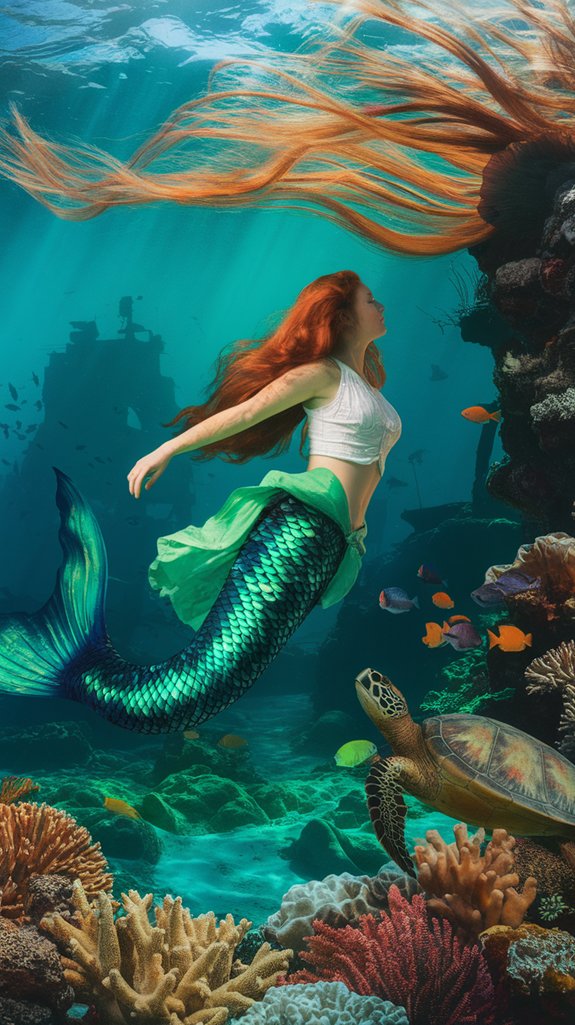
Moving from the rich tapestry of Native American water spirits, today's interpretations of mermaids often reflect a blend of tradition and contemporary culture. In our media-driven age, mermaid movies and fantasy literature have reshaped these mythical beings, making them symbols of mystery and allure. Unlike the folklore of old, modern narratives often present mermaids as complex characters, highlighting themes of freedom and transformation.
In examining modern portrayals, consider:
- Mermaid Movies: Films like “The Little Mermaid” revitalize ancient myths while adding modern dilemmas.
- Fantasy Literature: Books delve deeper into mermaids' inner worlds, exploring identity and belonging.
- Cultural Fusion: Global influences meld, creating a diverse array of mermaid stories that transcend borders.
- Digital Media: Online platforms amplify mermaid tales, reaching wider audiences and inviting reinterpretation.
Through these lenses, you see how today's mermaid legends navigate the waters of tradition and innovation, reflecting society's evolving values.
Frequently Asked Questions
What Are the Earliest Recorded Mermaid Legends in Human History?
You'd explore ancient civilizations like Assyria for folklore origins. In 1000 BCE, Atargatis, a goddess who transformed into a mermaid, offers insights into how human imagination shapes freedom through mythical sea maidens across cultures.
How Do Mermaid Legends Influence Maritime Culture Worldwide?
You'll find mermaid legends shape maritime culture by enriching maritime symbolism and cultural identity. They inspire freedom, fear, and curiosity, influencing sailors' tales and rituals, demonstrating the sea's power and mystery across diverse cultures.
Are There Any Scientific Explanations for Mermaid Sightings?
You wonder if mermaid sightings are real, don't you? Biological phenomena and optical illusions often explain them. Sea creatures, like manatees, and mirages on water create these captivating myths, fueling your imagination and longing for freedom.
What Role Do Mermaids Play in Environmental Conservation Myths?
You'll find mermaid symbolism often highlights ocean preservation. These mythical figures serve as guardians, reminding you of the ocean's fragility. They compare human exploitation and environmental responsibility, urging action to protect our planet's marine ecosystems.
How Do Mermaid Legends Differ Between Coastal and Inland Cultures?
You'll find coastal beliefs often depict mermaids as ocean guardians, emphasizing freedom and mystery. Inland symbolism, however, portrays them as mythical creatures representing elusive desires or warnings, reflecting cultural differences shaped by each region's relationship with water.
Conclusion
You're now standing at the shores of a boundless ocean of mermaid legends, each wave crashing with tales more enchanting than the last. From the mesmerizing Sirens to the enigmatic Mami Wata, these narratives reveal universal truths hidden beneath their cultural veils. As you dive into modern interpretations, remember: these sea maidens are not just stories—they're the heartbeat of human imagination, echoing our deepest dreams and fears like a siren's irresistible call across time and space.