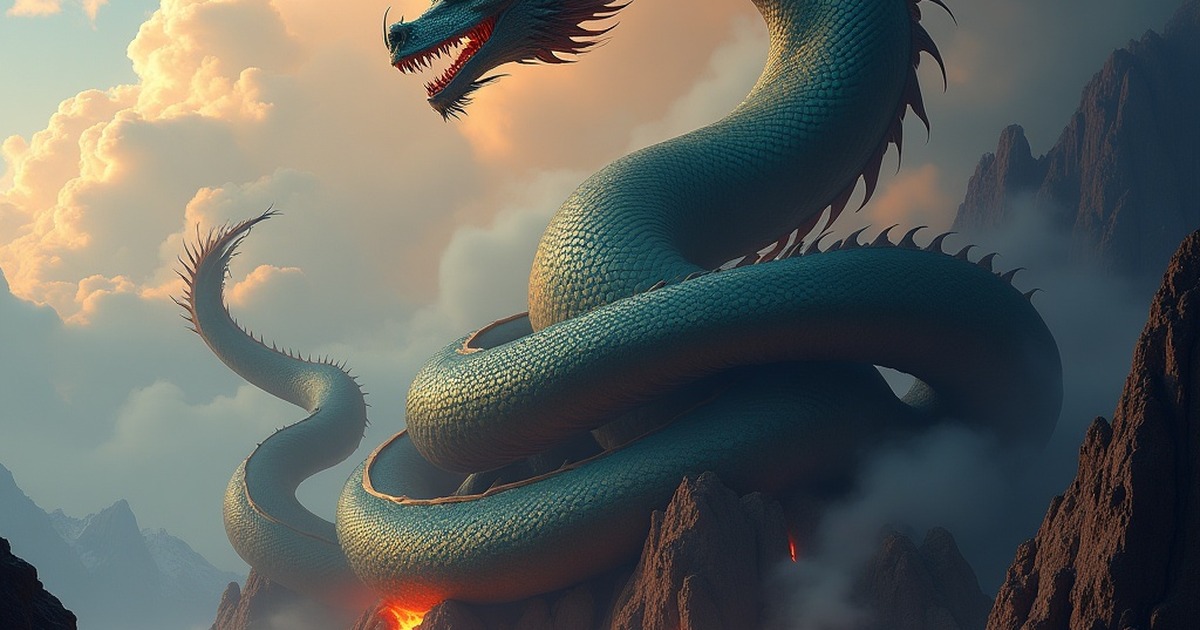
You'll discover thunder gods like Zeus, Thor, and Jupiter wielding cosmic sovereignty through sacred weapons—lightning bolts and Mjölnir—that maintained order against primordial chaos while nurturing agricultural abundance. Their winged extensions manifest as China's Fenghuang, the Arabian Roc, and Native America's Thunderbird, guardians encoding atmospheric dominion since Mesopotamia's temple walls bore draconic protectors in 3500 BCE. These celestial architects persist in contemporary consciousness through Jung's archetypal frameworks and storm imagery symbolizing divine intervention, their ancient authority connecting disparate cultures through shared reverence for beings who convert destruction into renewal across heaven's vault.
Key Takeaways
- Thunder gods like Zeus, Thor, and Jupiter wielded sacred weapons to maintain cosmic order and control atmospheric phenomena across ancient civilizations.
- Winged guardians such as Fenghuang, Garuda, Thunderbird, and Azure Dragon served as divine intermediaries between mortal and celestial realms.
- Mesopotamian winged deities and Anunnaki symbolized divine authority, with creatures like Lamassu combining human intelligence and animal strength for protection.
- Chinese Four Symbols divided heavens into quadrants, with each celestial beast representing specific seasons, elements, and cosmic functions like rainfall.
- Modern media adaptations and Jungian psychology demonstrate thunder deities' enduring cultural relevance as archetypal symbols of power and guardianship.
Divine Beings Rule Ancient Skies

When ancient civilizations gazed upward into tempestuous heavens, they didn't perceive mere meteorological phenomena—they witnessed the raw, eldritch power of divine sovereignty made manifest. Zeus commanded Olympus's thunderbolts. Thor wielded Mjölnir against primordial chaos. Jupiter governed Rome's celestial order. These weren't abstract deities—they embodied divine authority over existence itself.
You'll discover that Indo-European cultures recognized thunder gods as cosmic architects, establishing governance through sacred weapons that split darkness and brought illumination. Perun's axe, Indra's vajra—each implement represented more than destructive capability. They symbolized ordered cosmos emerging from churning void.
Sacred animals accompanied these rulers: eagles soaring beside Zeus, goats drawing Thor's chariot across storm-wracked skies. These weren't mere symbolic associations but essential components of their mythic essence, chimeric extensions of divine will.
Through epic confrontations—Thor battling Jörmungandr, Indra vanquishing Vritra—these beings established cosmic governance. Their dual nature blessed agricultural civilizations with life-giving rains while demonstrating nature's terrifying sovereignty. Pure power, uncontained.
##
You'll discover that thunder gods don't command the skies alone—they're accompanied by sacred beasts whose wings carry divine authority across the expanse of heaven.
These chimeric guardians, from Zeus's storm-bearing eagles to the eldritch creatures that pull Thor's chariot through Asgard's tempests, serve as both symbols and extensions of celestial power.
The relationship between deity and beast reveals how ancient cultures understood the sky itself: a domain where the thunderbolt's flash and the raptor's strike become indistinguishable manifestations of cosmic force.
Winged Guardians Across Cultures
How do civilizations across disparate continents arrive at strikingly similar visions of celestial protectors, these winged sentinels that bridge the mortal domain and the numinous heavens above?
You'll find China's Fenghuang embodying virtue's chimeric splendor, reigning sovereign over avian hierarchies. The Arabian Roc manifests eldritch enormity, seizing elephants within talons vast enough to grasp ships.
Witness Garuda—half-man, half-bird—bearing Vishnu through Hindu cosmology with preternatural velocity. Native America's Thunderbird commands atmospheric forces, lightning crackling from wing-beats that echo protective authority.
Even Greece's Sirens, those dangerous bird-women guardians, merge lethal beauty with maritime dominion.
These mythical birds transcend mere folklore; they're cultural symbolism incarnate, ancestral wisdom recognizing humanity's perpetual need for guardians who soar between earthbound limitations and transcendent possibility.
Freedom dwells in their wings. Like terrestrial monsters that symbolize humanity's biggest fears, these sky-borne entities reflect what cultures most desperately need—protection from above when earthly defenses fail.
Thunder Gods' Divine Powers
Across primordial mythologies spanning from Scandinavia's frost-bound domains to the Mediterranean's sun-scorched peninsulas, thunder gods emerge as archetypal wielders of celestial fury—divine architects who shatter atmospheric equilibrium with calculated violence.
You'll discover their thunderbolt symbolism transcends mere destructive capability; these eldritch weapons manifest cosmic sovereignty itself. Zeus's lightning, Thor's Mjölnir, Raijin's drum-summoned tempests—each articulates dominion over atmospheric chaos while paradoxically nurturing agricultural abundance through life-giving rains.
Their dual nature reveals profound wisdom: destruction births renewal. Through epic confrontations—Thor wrestling Jörmungandr, Zeus obliterating Typhon—they don't merely demonstrate power. They enforce celestial order against chimeric threats.
You're witnessing protectors who maintain reality's delicate framework, their storm-craft ensuring cosmic balance persists against entropic dissolution. In Norse tradition, these divine exploits reflected the Viking worldview that celebrated great deeds as pathways to prestige and power, immortalizing thunder gods as exemplars of achievement through mastery over primal forces. Thunder gods convert violence into guardianship.
Sacred Sky Creature Symbolism
Something primordial stirs when sacred creatures pierce mythology's celestial vault—winged avatars whose very forms encode cosmic hierarchies and atmospheric dominion. Eagles manifest Zeus's sovereignty, their talons gripping celestial authority.
Thor's goats embody resilience, drawing his chariot through storm-wracked heavens. Thunderbird significance resonates deepest across Native American cosmologies—eldritch beings whose wingbeats generate thunder, whose eyes flash lightning across prairie skies.
This sacred animal symbolism transcends mere representation; these creatures function as intermediaries between mortal and divine domains. The Azure Dragon guards Eastern quadrants in Chinese tradition, its serpentine form commanding rainfall.
Each beast carries encoded wisdom: protection, strength, cosmic balance. You're witnessing humanity's attempt to domesticate the untamable sky, translating atmospheric violence into chimeric guardians—protectors whose very existence promises order amid chaos's churning depths.
Celestial Beasts in Mythology
When celestial beasts materialize within mythology's pantheon, they arrive not as decorative flourishes but as architectural pillars supporting entire cosmological frameworks—entities whose dominion over sky territories establishes fundamental order.
You'll find guardian legends woven through cultures: China's Qīnglóng anchors the East, while the Fenghuang embodies imperial virtue, its chimeric grace harmonizing cosmic forces.
Hindu tradition presents Garuda, Vishnu's mount, whose eldritch strength conquers adversity itself. The Thunderbird commands North American skies, wielding lightning as both weapon and benediction.
Persia's Simurgh nurtures with wisdom, phoenix-born yet distinct.
This celestial symbolism transcends mere decoration—these beings constitute living bridges between terrestrial existence and heavenly domain, their wings writing cosmological law across cultural boundaries, their presence validating humanity's eternal skyward yearning.
Sky Dragon Cave Paintings

You'll find the earliest traces of sky dragon iconography not in isolated cave systems but within the sophisticated urban centers of Ancient Mesopotamia, where winged deities—chimeric amalgamations of serpent, bird, and storm—adorned temple walls along the Tigris and Euphrates as early as 3500 BCE.
These Mesopotamian river valley origins established sky dragons as potent symbols of religious authority, their eldritch forms inscribed onto cylinder seals and palace reliefs to legitimize kingship through divine association.
The pattern persists: wherever civilization utilized water and sky, there emerged draconic guardians embodying the terrible, numinous power that separated mortal rulers from common subjects.
Ancient Mesopotamian Winged Deities
Across the wind-scoured plains of ancient Mesopotamia, where the Tigris and Euphrates carved their serpentine paths through sun-baked clay, artisans inscribed visions of winged guardians into stone—beings that transcended mortal flesh to embody the numinous boundary between earth and celestial domain.
You'll encounter the Lamassu, chimeric sentinels fusing human intelligence with animal ferocity, their wings speaking to divine protection unrestricted by earthly bonds. The Anunnaki descended from celestial heights, their winged forms manifesting freedom's ultimate expression—autonomous movement through sky-realms forbidden to mortals.
Notice their horned crowns, their carefully braided beards. These weren't mere decorative flourishes but winged symbolism encoding power hierarchies within Sumerian cosmology. Through ritual offerings, ancient peoples sought their favor, understanding these eldritch guardians as intermediaries traversing the liminal spaces between divine will and human vulnerability.
Mesopotamian River Valley Beginnings
Pigment ground from ochre and hematite still clings to limestone surfaces deep within forgotten grottos where Mesopotamian artists—perhaps shamans, perhaps priest-scribes—rendered their visions of serpentine leviathans coiling through painted firmaments. You'll discover within these sacred chambers an iconography that defied later conventions, depicting eldritch sky dragons as both chaos and cosmos incarnate.
| Symbolic Element | Visual Representation | Cultural Significance |
|---|---|---|
| Celestial beings | Serpentine forms with wings | Divine authority over heavens |
| River currents | Undulating dragon bodies | Fertility and life-giving waters |
| Storm clouds | Scaled atmospheric masses | Agricultural cycles |
| Temple guardians | Coiled protective postures | Sacred boundary markers |
| Cosmic order | Dragons defeated by deities | Triumph over primordial chaos |
These chimeric guardians embodied Mesopotamian mythology's fundamental tension—creatures requiring conquest yet worthy of veneration.
Religious Power and Authority Symbols
Within temple complexes rising above Tigris-fed valleys, priest-kings commissioned increasingly elaborate representations of draconic forms—not merely as mythological subjects, but as visual codifications of their own theocratic legitimacy.
You'll find these chimeric sky serpents coiling through sacred chambers, their scales etched with storm-breath precision. Religious symbolism altered cave walls into cosmic declarations. Authority figures wielded these eldritch images deliberately, binding celestial power to earthly thrones through painted invocation.
Each thunderous wingspan declared dominion.
The dragons intertwined with lightning bolts, with rain-laden clouds, with the vault of heaven itself—visual testimony that those who commanded temple rites also channeled the gods' atmospheric fury.
These weren't decorative flourishes. They were declarations of sovereignty, reminders that spiritual and temporal power flowed through identical vessels, inseparable as storm and sky.
Chinese Four Symbols System

The celestial cartography of ancient China manifests through the Four Symbols System—a cosmological framework wherein four mythical guardians divide the heavens into quadrants aligned with cardinal directions, seasons, and elemental forces. You'll discover Qīnglóng, the Azure Dragon of spring's eastern wood; Zhūquè, the Vermilion Bird commanding southern fire; Báihǔ, the White Tiger governing western metal and autumn's descent; and Xuánwǔ, the chimeric Black Tortoise-serpent hybrid presiding over northern waters and winter's depths. Each guardian claims dominion through specific star houses—Heart, Star, Hairy Head, and Emptiness respectively—establishing astrological influence that shaped geomantic practices and cultural beliefs for millennia.
| Guardian | Direction & Element | Season & Star House |
|---|---|---|
| Qīnglóng (Azure Dragon) | East, Wood | Spring, Heart |
| Zhūquè (Vermilion Bird) | South, Fire | Summer, Star |
| Báihǔ (White Tiger) | West, Metal | Autumn, Hairy Head |
The eldritch Huánglóng—Yellow Dragon—occupies the center, embodying earth itself, transcending zodiac connections entirely.
Celestial Direction and Element Associations
Beyond these zodiacal assignments lies a more fundamental architectural principle—each guardian's dominion rests upon precise cosmological coordinates where direction, element, and chromatic resonance converge into unified symbolic power.
You'll discover that celestial navigation techniques employed by ancient Chinese cosmologists weren't merely practical tools—they manifested profound elemental balance philosophies binding heaven and earth:
- Qīnglóng (Azure Dragon): Eastern quadrant, Wood element, cerulean essence embodying Spring's generative force
- Zhūquè (Vermilion Bird): Southern expanse, Fire element, crimson luminosity channeling Summer's altering heat
- Báihǔ (White Tiger): Western境界, Metal element, pallid ferocity governing Autumn's harvesting blade
- Xuánwǔ (Black Tortoise): Northern terminus, Water element, obsidian depths preserving Winter's dormant wisdom
These eldritch correspondences established geomantic frameworks that transcended superstition.
Each guardian's chromatic signature reinforced directional authority, creating chimeric networks of meaning that informed architectural orientation, agricultural calendars, and strategic military positioning throughout imperial China's millennia-spanning civilization.
Azure Dragon of the East
You'll find the Qīnglóng—that eldritch serpent whose cerulean scales shimmer with primordial authority—standing eternal vigil over the eastern quadrant, where spring's verdant awakening emerges from winter's tomb.
This celestial guardian doesn't merely herald the season; it commands the thunder's roar and summons life-giving rains from storm-laden heavens, its power woven into the very fabric of terrestrial renewal.
The dragon's form itself maps directly onto seven stellar mansions of the eastern sky, a constellation born from Han Dynasty astronomical observations (circa 206 BCE), where ancient stargazers perceived this chimeric protector coiled among the heavens.
Guardian of Spring Season
When winter's grip loosens and the earth trembles with nascent liveliness, Qīnglóng emerges from the eastern horizon—a serpentine embodiment of regeneration whose azure scales shimmer with the promise of rainfall and verdant growth.
You'll find this eldritch guardian woven throughout Spring Festivals, where agrarian communities invoke its Wood essence during Agricultural Rites marking sowing season. The Azure Dragon's connection to the Heart star house establishes its dominion over emotional currents, providing Emotional Guidance as winter's stagnation yields to vernal vitality.
Its chimeric form—undulating, serpentine, impossibly long—represents prosperity's arrival. Ancient astrologers positioned Qīnglóng within the Four Symbols' cosmic architecture, recognizing how spring's guardian maintains celestial equilibrium.
You witness its enduring power each planting season, when farmers seek abundance beneath eastern skies.
Thunder and Rain Powers
Qīnglóng's dominion extends beyond seasonal stewardship into atmospheric command—this celestial wyrm wields tempests as instruments of cosmic will.
Ancient agrarian communities understood this eldritch power intimately, establishing thunder rituals to petition the dragon's favor during critical planting seasons. The beast's scales shimmer with electrical potential, each movement generating the cascading storms that nourish parched earth.
Rain symbolism permeates every depiction—coiling clouds, moisture-laden winds, the life-sustaining deluge that separates abundance from famine. You'll find this chimeric guardian controlling meteorological forces through sheer draconic presence, converting atmospheric pressure into agricultural prosperity.
Chinese communities recognized such power demanded reverence, not supplication. The Azure Dragon's thunderous roar wasn't mere sound but cosmic declaration: spring arrives, waters descend, life renews.
His dominion remained absolute, untamed, gloriously free.
Stellar Constellation Origins
Long before temple architects carved draconic forms into jade and bronze, celestial cartographers mapped seven eastern mansions across the spring sky—Jiǎo (Horn), Kàng (Neck), Dī (Root), Fáng (Room), Xīn (Heart), Wěi (Tail), and Jī (Winnowing Basket)—each asterism forming anatomical segments of a cosmic beast stretching across seventy-five degrees of celestial longitude.
You'll discover that stellar mythology alters scattered points of light into coherent narratives of power. The dragon's significance emerges through astronomical precision: each mansion corresponds to seasonal markers governing agricultural cycles, military campaigns, imperial rites.
This wasn't mere pattern recognition. Ancient observers traced an eldritch guardian whose serpentine form bridged terrestrial and celestial domains, its very anatomy dictating cosmic order. The constellation breathes with spring's Wood element, governing renewal, growth, eastern territories—a chimeric synthesis of observation and mythological imperative.
Video Games and Anime Adaptations
Thunder deities and celestial guardians have transcended their ancient mythological origins to manifest within the digital domains of contemporary interactive media, where pixels and polygons breathe new life into primordial archetypes.
You'll encounter these eldritch entities across diverse video game adaptations and anime characters, each manifestation honoring its cultural wellspring:
- Final Fantasy and The Legend of Zelda summon thunder gods as chimeric guardians, their celestial powers channeled through strategic invocations that determine victory or devastation.
- Smite liberates players to embody Thor's mjölnir-wielding fury or Zeus's lightning sovereignty, each deity's mechanics reflecting authentic mythological attributes.
- Fate/Grand Order weaves anime characters like Indra and Raijin into labyrinthine narratives, their storm-charged essence preserved through meticulous research into Vedic and Shinto traditions.
- Persona's shadow-realm combat systems grant access to thunder deities' primordial energies, while God of War's Norse interpretation positions Thor within apocalyptic contexts.
These adaptations aren't mere entertainment—they're digital grimoires preserving ancient wisdom for liberation-seeking generations.
Jung's Archetypal Sky Symbols
When Carl Gustav Jung excavated the stratified depths of human consciousness between 1912 and 1961, he unearthed sky deities not as mere mythological curiosities but as primordial psychic structures—archetypes dwelling within what he termed the collective unconscious, that vast subterranean repository where humanity's ancestral experiences crystallize into universal symbols.
You encounter Zeus wielding eldritch lightning, Thor commanding thunder's roar—manifestations of the Hero archetype battling chaos itself. These aren't external gods demanding submission. They're internal forces reflecting your own psychological inheritance.
The Four Gods guarding Chinese cosmological quadrants, those chimeric celestial sentinels, embody the Wise Old Man archetype, maintaining elemental equilibrium.
Weather phenomena become mirrors: storms externalize your turbulent emotional landscapes, lightning strikes illuminate unconscious territory. Jung recognized how archetypal symbols of sky-bound power resonate through human psychology, shaping perceptions of authority without external imposition.
Thunder gods represent your capacity for radical destruction and creation, universal themes encoded within collective memory, accessible when you peer beyond cultural particularities into shared psychic bedrock.
Modern Storm Symbolism Persists
Though millennia separate contemporary consciousness from Bronze Age sky worship, storm symbolism refuses burial in antiquity's unmarked graves.
You'll find Thor and Zeus resurrected through cinema's eldritch projections, their hammer-strikes and lightning-bolts transmuted into franchise mythology that commands billion-dollar reverence. Thunder symbolism persists as shorthand for divine intervention, authority's unmistakable voice—courtroom dramas and political narratives deploy storm imagery when justice must descend with atmospheric weight.
Storm narratives in modern environmental discourse invoke this ancestral power deliberately. You witness activists channeling thunder gods' dual essence: destruction and nurturing entwined. The tempest becomes warning. Message from domains beyond human dominion.
Contemporary spirituality hasn't abandoned these chimeric messengers. Thunderstorms remain omens in neo-pagan circles, folk traditions, weather-watchers who sense something numinous in cumulus towers.
You're observing continuity, not nostalgia—living heritage that recognizes nature's sovereign power, demanding your respect, your stewardship, your acknowledgment that some forces transcend civilization's fragile architectures.
Sky Guardians Unite Cultures
Across continental divides and oceanic expanses, humanity's skyward gaze crystallized into remarkably parallel guardian figures—protective sentinels whose wings, claws, and storm-summoning voices transcended linguistic barriers to speak universal truths about cosmic order.
You'll discover these cultural connections most vividly in China's Four Gods, cardinal protectors uniting directional symbolism with elemental forces. Their Eastern sovereignty mirrors Western thunder wielders—Zeus, Thor, Indra—each commanding celestial fury through mythology comparisons that reveal shared ancestral wisdom.
The eldritch Thunderbird guards North American skies while Japan's Raijin drums storm-songs into being. Separate genesis stories. Identical purpose.
These chimeric aviators—China's resplendent Fenghuang, Zeus's messenger eagle—weren't mere decorative symbols but living bridges connecting mortal domain to divine vastness.
Today's comics and video games resurrect these ancient guardians, demonstrating their persistence beyond cultural boundaries. They remain what they've always been: humanity's collective response to nature's overwhelming power, reshaped into protectors you can invoke when freedom requires wings and thunder.
Frequently Asked Questions
How Do Modern Meteorologists View Ancient Thunder God Myths?
You'll find modern meteorologists recognizing thunder mythology as sophisticated meteorological symbolism—ancient observers documenting atmospheric phenomena through sacred narrative.
They view Zeus, Thor, and Raijin not as primitive superstition but as prescient pattern recognition, ancestral wisdom encoded in divine form.
These scientists increasingly acknowledge how thunder gods mapped storm systems, seasonal cycles, electrical discharge.
The eldritch power attributed to celestial deities reflects genuine atmospheric understanding, empirical observation crystallized into chimeric guardians who ruled tempestuous skies with purpose.
Are There Female Celestial Guardians in Mythological Traditions?
You'll discover powerful female deities commanding celestial domains across cultures.
China's Xiwangmu, Queen Mother of the West, presides over immortality from Kunlun Mountain peaks since the Shang Dynasty.
Japan's Amaterasu illuminates existence as supreme sun goddess.
Guardian spirits manifest through Egypt's Nut, whose star-covered body arcs across primordial skies, and Mesopotamia's Ishtar, whose eldritch presence governs both warfare and cosmic order.
These sovereign entities transcend patriarchal limitations, embodying autonomous power.
What Astronomical Events Inspired Early Sky Beast Legends?
Haven't you witnessed how comet sightings fracture night's certainty, trailing fire across your unbound heavens?
Ancient peoples tracked these eldritch wanderers—the Great Comet of 1577, celestial dragons carving doom.
Solar eclipses altered day to chimeric twilight, birthing serpents devouring sun-gods across Mesopotamian tablets, Norse sagas, Chinese chronicles.
You'll find thunder beasts emerging from atmospheric phenomena: lightning strikes manifesting as celestial wolves, meteor showers becoming phoenix falls.
Each astronomical anomaly demanded mythic translation, altering cosmic mechanics into narrative sovereignty.
Do Contemporary Religions Still Worship These Mythical Sky Creatures?
You'll find thunder god reverence thriving today—Shinto practitioners still honor Raijin at sacred shrines, while Hindu devotees maintain elaborate Indra pujas during monsoon festivals.
Sky creature worship persists among indigenous communities: the Garuda remains Indonesia's national emblem, receiving ceremonial offerings.
Contemporary pagans have revived Norse Thor veneration through reconstructionist movements.
These aren't mere folkloric echoes. They're living traditions, unbound by Western secularization, where celestial guardians retain numinous power over devotees seeking cosmic connection.
How Accurate Are Ancient Cave Paintings in Depicting Weather Phenomena?
You'll discover that cave painting accuracy regarding weather phenomena remains remarkably sophisticated—ancient artists captured lightning's jagged trajectories, storm clouds' turbulent morphologies, and celestial events with startling precision.
These Paleolithic observers, unbound by modern scientific frameworks, documented atmospheric disturbances through direct observation spanning millennia. Their depictions, dating from 40,000 BCE onward, reveal keen meteorological awareness: spiraling tempests, radiant auroras, eldritch cloud formations.
You're witnessing humanity's first systematic weather documentation, rendered in ochre and manganese, bridging empirical observation with numinous interpretation.
Conclusion
You've journeyed through celestial hierarchies, where eldritch guardians transcend mere folklore—they're humanity's whispered attempts to comprehend forces beyond mortal ken. These chimeric sentinels, from Azure Dragons to thunder-wielders, unite disparate civilizations through shared reverence for what dwells above. Their persistence in modern consciousness isn't coincidental. You're witnessing archetypal patterns Jung identified, ancient truths encoded in myth. The sky gods haven't departed. They've simply evolved, awaiting those brave enough to perceive their liminal presence.