Oceanic mythical beasts crystallize humanity's terror of uncontainable mysteries lurking beneath consciousness and wave alike. From Mesopotamia's Tiamat—whose violent defeat encoded civilization's triumph over primordial chaos—to Norse Jörmungandr encircling Midgard's boundaries, these chimeric entities articulate the perpetual struggle between order and dissolution. Greek sailors confronted Scylla's impossible choices, while Pacific cultures propitiated Umibōzu with blood sacrifices. Such creatures embodied not mere physical threats but psychological thresholds where terrestrial certainty dissolved into eldritch unknowing. The subsequent exploration reveals how these ancient archetypes persist in contemporary consciousness, altering ecological anxieties into mythological form.
Key Takeaways
- Oceanic beasts symbolize humanity's primal terror of the unknown void and forces beyond human comprehension or control.
- Creatures like Tiamat and Leviathan embody the eternal tension between chaos and order in cosmic creation narratives.
- Maritime monsters serve as moral boundaries, warning against transgression and demanding respect for nature's sovereignty and power.
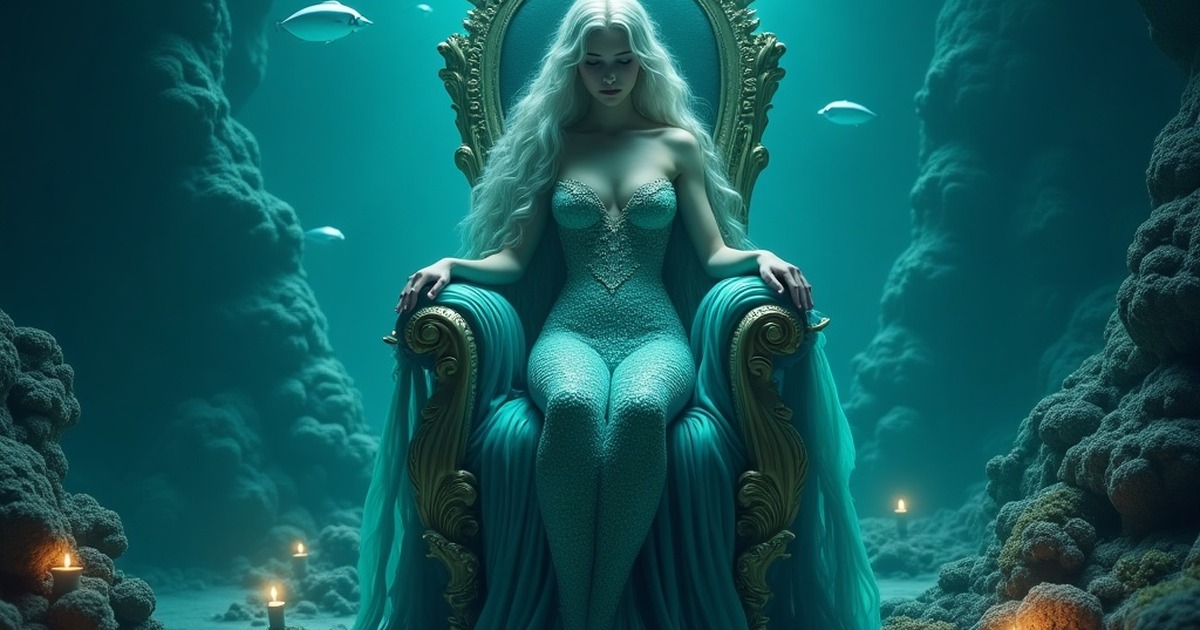
- Transformative beings like mermaids represent crossing thresholds between realms and confronting the shadow self for true freedom.
- Modern interpretations reframe sea monsters as ecological guardians, reflecting anxieties about climate change and industrial environmental destruction.
Ancient Mariners' Terrifying Encounters

When ancient mariners ventured beyond charted waters, they didn't merely fear storms or starvation—they dreaded the eldritch entities lurking beneath turbulent waves. Scandinavian mariner folklore preserved harrowing accounts of the Kraken, that chimeric leviathan whose tentacled enormity could splinter oak hulls and drag entire crews into abyssal darkness.
Greek sailors navigated between Scylla's gnashing heads and Charybdis's swirling maw, twin embodiments of impossible choice. The Hebrew Leviathan represented divine chaos incarnate, its serpentine coils symbolizing forces beyond mortal comprehension.
Sea monster symbolism transcended mere cautionary tales. Japan's Umibōzu demanded blood sacrifice, rising from Pacific depths to conjure tempests that tested human humility.
Cetus served as celestial punishment for hubris, its appearance in Mediterranean waters signaling divine displeasure. These encounters weren't fabrications—they articulated genuine psychological warfare against an unknowable ocean.
The beasts embodied freedom's cost: those who challenged maritime boundaries faced consequences beyond rational understanding, altering navigation into spiritual negotiation with primordial powers. Inuit communities told of the Qalupalik, whose eerie song beneath frozen seas served as both warning and lure, dragging victims under ice with sharp fingernails while distant family voices echoed through dark water.
##
The liminal space between chaos and order manifests most powerfully in oceanic mythical beasts, those eldritch guardians who patrol the boundaries of human comprehension and cosmic disorder.
These chimeric entities—born from Mesopotamian tiamat traditions circa 2000 BCE, Greek theogonic struggles, and Norse cosmological tensions—embody humanity's perpetual negotiation with forces that refuse domestication, their serpentine forms writhing through cultural memory as warnings against transgression.
When mortals encounter such creatures, whether Scylla's six ravening heads or the Kraken's tentacled enormity, they confront not mere predators but archetypal thresholds: metamorphosis awaits those who survive, madness claims those who don't, and the very act of crossing oceanic boundaries becomes a descent into the unknown self.
Modern cryptozoological investigations continue this tradition, as evidenced by the 1966 Deepstar 4000 fish sighting that recorded an unidentified serpentine creature estimated at 30-40 feet in length, demonstrating how contemporary deep-sea exploration perpetuates humanity's ancient confrontation with the ocean's unknowable denizens.
Chaos and Order Archetypes
Across countless maritime cultures spanning millennia, oceanic mythical beasts haven't merely represented random destruction—they've embodied the eternal tension between cosmos and primordial chaos, between human civilization's fragile order and nature's overwhelming, indifferent power.
Ancient beliefs manifested these duality concepts through creatures like Tiamat and Leviathan, eldritch harbingers whose narrative structures revealed profound chaos theory principles long before modern science codified them.
The Chaoskampf tradition established hero archetypes confronting these chimeric entities, imposing temporary order patterns upon forces that refused subjugation.
Scylla and Charybdis exemplified this mythical symbolism perfectly—twin catastrophes demanding impossible choices.
Cultural interpretations across oceanic mythology altered genuine environmental metaphors into sacred warnings: humanity's autonomy exists precariously between forces beyond control, yet refusing engagement guarantees destruction.
These weren't mere monsters. They were freedom's price made flesh.
Fear of the Unknown
Beyond civilization's lantern-light territories, where cartographic certainty surrendered to blank parchment margins inscribed with “Here Be Monsters,” oceanic mythical beasts crystallized humanity's most primal epistemological terror—not death itself, but the unknowable void preceding it.
The Kraken's tentacles and Scylla's gnashing heads didn't merely threaten sailors' mortality; they embodied the eldritch chaos lurking within ocean depths where light dies and comprehension fails.
These chimeric entities emerged from cultures confronting vast aquatic wilderness, their mythic symbolism encoding persistent anxieties about traversing spaces beyond human dominion.
The Leviathan's serpentine immensity reinforced uncomfortable truths: nature's overwhelming power renders humanity perpetually vulnerable.
Such creatures persist in collective imagination because they articulate fundamental freedom's dark corollary—confronting mysteries that refuse domestication, spaces where control dissolves into primordial uncertainty.
Cultural Values and Warnings
Maritime monsters functioned as civilization's moral compass needles, pointing inexorably toward cultural boundaries that couldn't be crossed without consequence. These eldritch guardians weren't mere phantoms—they were cultural allegories manifesting humanity's deepest wisdom about survival and restraint.
The Hindu Makara protected sacred thresholds, its chimeric form warning against transgression. Indigenous Mishipeshu demanded environmental respect, its copper-scaled presence reminding communities that nature's power commanded reverence, not exploitation.
Scylla and Charybdis forced impossible choices between competing perils, teaching sailors that freedom existed only through wise navigation of constraints. The Greek Hydra embodied chaos that multiplied when attacked recklessly.
Mami Wata's dual nature reflected societal tensions regarding feminine power and oceanic unpredictability. Balance. These creatures spoke truths civilizations couldn't afford to ignore—respect boundaries, honor nature's sovereignty, choose carefully between dangers.
Transformation and Boundary Crossing
Where water meets flesh, ancient mythologies recorded humanity's oldest fascination with change—that terrifying ecstasy of becoming something utterly Other.
Oceanic beasts embody this changing identity: mermaids shifting between terrestrial and aquatic domains, the Kraken emerging from abyssal depths to shatter surface-world certainties. These chimeric forms weren't mere monsters but threshold guardians, marking boundaries between civilization's fragile order and the sea's eldritch chaos.
Jung recognized these creatures as manifestations of the shadow self—those repressed hungers and fears demanding confrontation.
Scylla's alteration from maiden to multi-headed horror illustrates this necessity. To cross such boundaries means accepting internal disorder, that primordial wildness civilization tried drowning.
True change requires descending into one's own depths, embracing the chaos writhing beneath consciousness. Freedom emerges only through this perilous crossing.
Tiamat in Mesopotamian Texts

In the Babylonian creation epic Enuma Elish, composed circa 1100 BCE within the ancient Mesopotamian river valleys where the Tigris and Euphrates converged, Tiamat emerges as the primordial mother—a chimeric sea-dragon whose saltwater essence predates civilization itself.
Her cosmic battle against Marduk, the young storm god who'd become patron deity of Babylon, represents humanity's eternal struggle to impose divine order upon the eldritch chaos of untamed nature.
The text alters her defeated body into the architecture of existence: her ribs become the vault of heaven, her tears the great rivers, her monstrous form sacrificed so that cosmos might triumph over void.
Babylonian Creation Epic Enuma Elish
Marduk's violent triumph over her eldritch body established cosmic duality—heaven wrenched from her skull, earth from her belly.
Her death wasn't erasure but metamorphosis. Tiamat's influence persists in every storm-tossed wave, every chimeric monster haunting humanity's collective unconscious.
The Mesopotamians understood what modern civilization often forgets: order emerges *through* chaos, not despite it.
Structure requires sacrifice of the untamed feminine deep.
Ancient Mesopotamian River Valleys
Though scholars typically trace Tiamat's origins to the second millennium BCE, her essence pervades texts far older—cuneiform fragments whisper her name in Sumerian hymns where she appears as *Tamtu*, the undifferentiated waters preceding divine genealogy. The Mesopotamian rivers, Tigris and Euphrates, weren't merely geographical features but theological boundaries containing chaotic waters that threatened agricultural order. Tiamat embodied this eldritch terror.
| Textual Source | Temporal Period | Tiamat's Manifestation |
|---|---|---|
| Sumerian Creation Hymns | 3000-2000 BCE | Primordial *Tamtu* (sea) |
| Enuma Elish | 1800-1600 BCE | Chimeric mother-dragon |
| Akkadian Incantations | 2300-2100 BCE | Saltwater deity |
| Babylonian Prayers | 1500-1000 BCE | Defeated chaos-serpent |
| Assyrian Royal Inscriptions | 900-600 BCE | Conquered primeval force |
Her serpentine form represented civilization's perpetual struggle against nature's unbridled autonomy.
Primordial Chaos Versus Divine Order
When Marduk confronted Tiamat in the cosmic abyss, their clash wasn't merely divine spectacle—it encoded civilization's foundational anxiety about existence itself.
The Enuma Elish presents this primordial sea goddess as embodiment of eldritch chaos, her saltwater domain representing untamed creation before order's establishment. She births gods, then becomes their adversary. A chimeric force.
This mythical symbolism reveals ancient Mesopotamia's understanding: the ocean as dangerous mystery requiring conquest. Tiamat's cosmic duality with Apsu—saltwater against fresh—demonstrates creation's balanced tension.
When Marduk slays her, fashioning heavens and earth from her monstrous corpse, the narrative crystallizes humanity's eternal struggle: imposing structure upon nature's wild forces. The sea must be tamed. Order must triumph.
This wasn't theological abstraction but lived reality for civilizations dependent on unpredictable waters.
Greek Cetus and Scylla

Beneath the wine-dark waters of ancient Greek imagination, two monstrous entities emerged as embodiments of the sea's most terrifying aspects—Cetus, the colossal leviathan dispatched by divine wrath, and Scylla, the chimeric horror lurking in narrow straits.
Cetus symbolism manifests through celestial correspondence, the constellation bearing its name across ancient star charts, marking humanity's eternal confrontation with hubris. Sent against Queen Cassiopeia's arrogance, this whale-serpent hybrid enforced divine retribution through aquatic terror.
Scylla alteration reveals darker metamorphosis—Amphitrite's jealous sorcery twisted nymph-beauty into multi-headed abomination. Paired eternally with Charybdis, she creates impossible choice, forcing Odysseus through narrow passages where every decision demands sacrifice.
| Aspect | Cetus | Scylla |
|---|---|---|
| Origin | Divine punishment instrument | Jealousy-born transformation |
| Form | Whale-serpent leviathan | Multi-headed chimera |
| Symbolism | Hubris consequences | Navigation dilemma |
| Victims | Coastal kingdoms | Passing sailors |
Both creatures incarnate chaos unbound, eldritch reminders that freedom demands confronting primal forces beyond mortal control.
Chaos Versus Order Battles
These individual monsters—Cetus with its divine commission, Scylla with her tragic transformation—existed within broader cosmological warfare. Ancient civilizations recognized that oceanic beasts weren't merely isolated threats but manifestations of primordial chaos locked in eternal combat against cosmic order.
The Chaoskampf tradition pervades cultural representations across continents, where primal forces demanded subjugation through divine intervention:
- Marduk's slaying of Tiamat established Babylonian order symbolism, converting her corpse into structured creation
- Thor's confrontation with Jörmungandr embodied Norse anxiety toward nature's unpredictability
- Leviathan represented Hebrew acknowledgment of divine chaos, untameable except by Yahweh's authority
These chaos narratives affirmed human resilience against eldritch oceanic legends. Mythical interpretations changed ancient fears into storytelling significance.
The sea's chimeric inhabitants weren't villains requiring extermination but necessary opponents demonstrating that order emerges through perpetual struggle. These cosmological battles validated humanity's quest for control, acknowledging that freedom itself exists only when chaos remains acknowledged, respected, bounded—never truly conquered.
Jörmungandr Encircling Midgard's Oceans
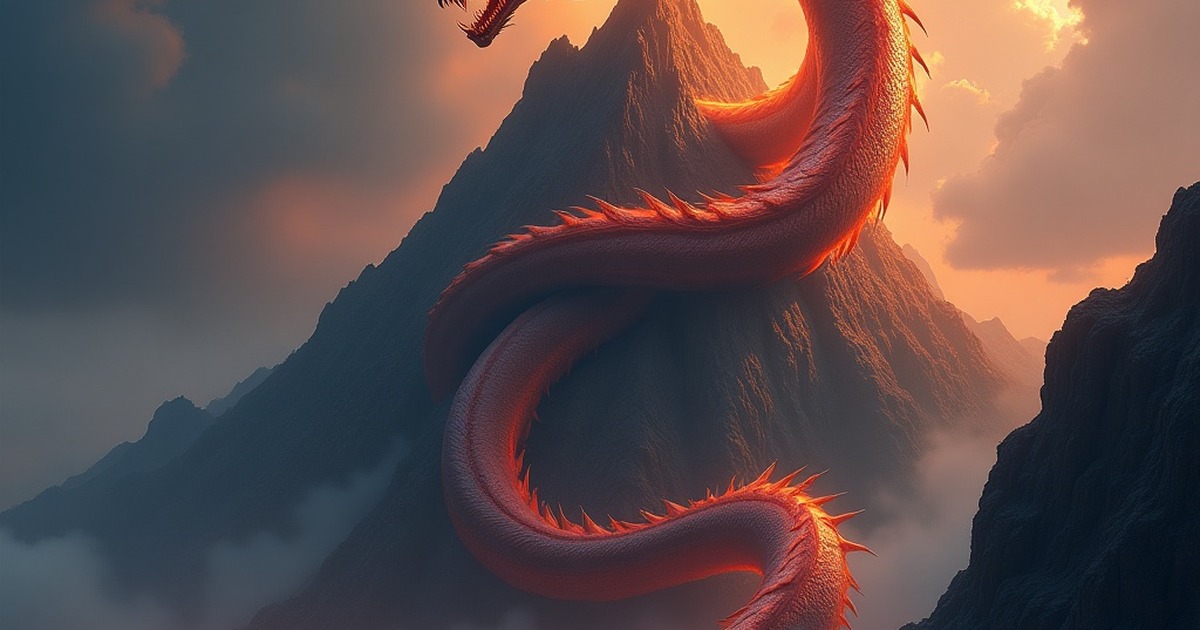
Born from the union of Loki the shapeshifter and Angrboða the giantess, Jörmungandr assumed its ordained position encircling Midgard's waters—an eldritch guardian whose tail-devouring form became the ultimate ouroboros, binding earth to sea in perpetual embrace.
This cosmic serpent, cast into the ocean depths by Odin himself, grew so immense that its body formed a living boundary between mortal domain and churning chaos, each scale reflecting the inevitability of fate's design.
The World Serpent's encirclement wasn't mere containment but prophecy made manifest, for its destined clash with Thor during Ragnarök would release the primordial forces it had long restrained, completing cycles older than the gods themselves.
The World Serpent's Origin
When the gods of Asgard first beheld the serpentine progeny of Loki and the jötunn Angrboða, they witnessed not merely an offspring but an eldritch augury of cosmic dissolution.
The serpent's symbolism emerged from chaos origins—born from trickster blood and primordial giant lineage, Jörmungandr embodied disorder incarnate. Odin, recognizing the threat this chimeric creature posed, cast the serpent into the encircling waters of Midgard, where it grew to incomprehensible proportions.
There, in those frigid depths, it consumed its own tail. An ouroboros of apocalypse. This act of containment paradoxically fulfilled prophecy: the World Serpent became both prison and prisoner, binding Midgard within its coils while simultaneously trapped by its own infinite form, forever symbolizing the inescapable cycle where creation births its own annihilation.
Symbol of Inevitable Fate
Jörmungandr's coils inscribe an inescapable theorem across Midgard's waters—a mathematical proof that fate operates not through divine decree alone but through geometric necessity. The serpent's eldritch form demonstrates fate's inevitability through its very architecture: a creature so vast it must consume itself, altering predator into ouroboros.
This chimeric embodiment of cyclical existence binds humanity within its scales, each coil a constraint upon mortal agency.
The World Serpent doesn't merely surround the known world. It defines it. Where ocean meets horizon, Jörmungandr's flesh marks the boundary between order and chaos, between what mortals control and what controls them.
Its prophesied clash with Thor during Ragnarök reveals destiny's paradox—both gods recognize their fated duel, yet neither can escape it. Freedom dissolves where the serpent's tail meets its fangs.
Ragnarök and Cosmic Cycles
As Ragnarök's first tremors ripple through the cosmic order, the World Serpent releases its tail and rises from the abyssal depths where it has dwelt since Odin cast it into the encircling sea.
This eldritch emergence embodies mythical symbolism's most profound truth: destruction births renewal. The serpent's cyclic form—ouroboros incarnate—represents eternal return, a concept transcending Norse cosmology to permeate countless oceanic legends worldwide.
Thor's confrontation with Jörmungandr isn't merely cataclysm; it's cosmic necessity, the violent dissolution required before rebirth. The primordial chaos contained within ocean depths manifests through this chimeric being, reminding humanity that freedom exists only through acceptance of nature's inexorable cycles.
Ultimate liberation. The World Serpent doesn't symbolize ending alone—it promises alteration, challenging those who'd impose permanent order upon an inherently fluid universe.
Loch Ness Monster Cryptids
Deep within the cold, murky waters of Scotland's Great Glen lies Loch Ness, a profound chasm of peat-stained darkness that has harbored one of cryptozoology's most enduring enigmas since the 6th century. Nessie—this eldritch presence manifesting as a chimeric fusion of plesiosaur anatomy and folkloric imagination—defies empirical verification yet persists in collective consciousness.
The creature's cultural resonance encompasses:
Nessie's enduring mystique synthesizes prehistoric morphology, photographic mythology, sonar ambiguity, centuries of testimony, and economic transformation through cryptid pilgrimage.
- Long-necked morphology suggesting prehistoric survivorship
- The infamous 1934 Surgeon's Photo, later exposed as fabrication
- Countless sonar expeditions yielding ambiguous results
- Descriptions spanning fourteen centuries of recorded testimony
- Cryptid tourism altering local economics into pilgrimage industry
Despite exhaustive investigations penetrating the loch's abyssal depths, no conclusive evidence materializes. Yet Nessie sightings continue, each report reinforcing the legend's gravitational pull.
The monster transcends zoological classification, becoming instead a threshold guardian between empirical rationality and primordial mystery—a symbol of humanity's yearning for untamed wilderness resistant to complete taxonomic domestication. The phenomenon demonstrates how cryptids inhabit spaces where wonder refuses extinction.
Fear of the Unknown Explained
Humanity's primordial terror of the ocean manifests not merely as rational fear of drowning or shipwreck, but as something far more elemental—an ancestral dread of formlessness itself, of boundaries dissolving into liquid chaos where familiar laws surrender to alien geometries.
The Leviathan emerges from Hebrew scripture as divine power incarnate, while the Kraken's tentacles represent subconscious fears of being dragged beneath comprehension's surface.
These chimeric entities—from Japan's vengeful Umibōzu to the Mediterranean's six-headed Scylla—function as cultural reflections of humanity's relationship with the ungovernable. Each civilization projects its uncertainties onto those eldritch depths, altering natural mystery into mythological imperative.
The ocean becomes canvas for our collective shadow, where the unknown doesn't simply threaten physical destruction but ontological dissolution. Maritime exploration required confronting these projected terrors.
Nature's duality persists: beauty masking peril, wonder concealing wrath.
Modern Entertainment Sea Monster Legacy
Where ancient terrors once commanded absolute reverence, contemporary cinema and literature have alchemized primordial dread into something more ambiguous—transforming sea monsters from harbingers of cosmic dissolution into mirrors reflecting humanity's own ecological sins and fractured psyche.
Modern reinterpretations reveal chimeric depths: *Finding Nemo* and *Moana* recast eldritch leviathans as misunderstood guardians, while *Pacific Rim* weaponizes kaiju as nature's violent response to industrial desecration. Environmental themes saturate these narratives—the monsters don't merely destroy; they testify.
Indigenous water beings resurface through films like *Song of the Sea*, reclaiming ancestral knowledge from colonial erasure. Scotland's Loch Ness Monster bridges cryptozoology and mythology, spawning scientific expeditions alongside tourist pilgrimages.
Ogopogo. Mokele-mbembe. These names still spark wonder. The fascination persists because sea monsters remain liminal—neither wholly fiction nor verifiable fact, swimming through that shadowy space where human fear meets ecological conscience, where entertainment becomes cautionary prophecy.
Enduring Maritime Mythology Today
Beyond the domain of entertainment's glittering screens, maritime mythology persists as living practice—whispered among fishing communities off Indonesia's volcanic coasts, woven into Celtic revival movements reclaiming pre-Christian wisdom, encoded in the navigational chants Polynesian wayfinders still teach their children.
Maritime storytelling functions as cultural DNA, transmitting ecological wisdom through chimeric forms. The Kraken's tentacles symbolize contemporary anxieties about climate destabilization and oceanic depths we've scarcely mapped. Merfolk embody humanity's dual relationship with marine environments—attraction and terror intertwined.
Ocean monsters carry ancestral knowledge—their chimeric bodies mapping human fears onto depths that defy our instruments and understanding.
When oarfish strand themselves before earthquakes, ancient prognostication meets modern seismology. These eldritch narratives haven't vanished; they've evolved. Environmental movements now invoke oceanic symbolism to articulate planetary crisis, recognizing what indigenous cultures never forgot: the sea contains mysteries that resist quantification.
Maritime myths endure because they articulate truths empiricism can't fully capture—the ocean's sublime power, humanity's fragility, nature's fundamental wildness.
Frequently Asked Questions
What Psychological Purposes Do Oceanic Monsters Serve in Human Culture?
Oceanic monsters serve as profound fear representation, embodying humanity's primal anxieties about the unknown depths.
These eldritch entities—from Polynesian Taniwha to Norse Jörmungandr—function as cultural reflection, mirroring societies' relationship with untamed nature and psychological shadow.
They're boundary guardians between conscious order and unconscious chaos.
Ancient mariners understood: such chimeric beings don't merely terrorize, they liberate through confrontation, forcing individuals to acknowledge what lurks beneath civilization's surface, converting terror into transformative wisdom through ritualized encounters with the abyss.
How Do Different Cultures' Sea Creatures Compare in Their Symbolic Meanings?
Like mirrors reflecting humanity's deepest currents, oceanic beasts reveal divergent truths across civilizations.
Cultural comparisons illuminate how Japan's ningyo embodied eldritch alteration and immortality, while Polynesian Taniwha represented ancestral guardianship of waterways.
Norse Jörmungandr symbolized apocalyptic chaos.
Symbolic representations varied profoundly—Mediterranean sirens tempted with forbidden knowledge, African Mami Wata promised wealth and spiritual power.
Each chimeric form emerged from specific cosmologies, yet all acknowledged the ocean's liminal nature.
These creatures weren't mere monsters; they were sacred mediators between human consciousness and primordial forces beyond mortal comprehension.
Why Are Sea Monsters More Prevalent Than Land Monsters in Mythology?
Sea monsters dominate mythological landscapes because oceans embody humanity's deepest cultural fears—the uncharted, the unfathomable, the eldritch unknown.
While terrestrial beasts inhabit familiar territories where humans claim dominion, oceanic symbolism represents absolute surrender to forces beyond mortal control. The depths conceal chimeric horrors unseen, unknowable.
Ancient mariners couldn't escape these waters; they'd no choice but to confront the abyss. This forced intimacy with chaos birthed legendary creatures: the kraken, Leviathan, Charybdis.
Survival demanded acknowledging what lurked beneath.
What Role Did Trade Routes Play in Spreading Oceanic Monster Tales?
Trade connections served as veins through which maritime folklore pulsed across civilizations, carrying tales of eldritch leviathans from Phoenician ports to Byzantine harbors.
Sailors who'd survived encounters with unknown creatures became unwitting mythographers, their testimonies merging with indigenous beliefs at each landfall.
The Silk Road's oceanic counterpart altered regional monsters into universal archetypes—the kraken, the sea serpent, the chimeric scylla—each retelling adding layers of cultural sediment to primordial fears dwelling in humanity's collective unconscious.
How Have Scientific Ocean Discoveries Influenced Modern Mythical Beast Interpretations?
Scientific advancements haven't destroyed oceanic mysteries—they've deepened them.
Modern sonar readings of colossal squid, bioluminescent abyssal creatures, and chimeric deep-sea fauna validate what ancient mariners witnessed. These discoveries reshape mythical interpretations, altering krakens from superstition into documented Architeuthis encounters. The eldritch becomes taxonomical.
Yet each bathysphere descent reveals stranger morphologies, proving the abyss guards secrets still.
Today's cryptozoologists walk liminal paths between empiricism and wonder, acknowledging that science liberates myth from dismissal while preserving its numinous power.
Conclusion
These eldritch leviathans—from Tiamat's primordial chaos to Jörmungandr's world-serpent coils—persist because they embody humanity's oldest terror: the fathomless deep. What lurks beneath society's rational veneer? The chimeric forms endure in modern cinema, cryptozoology, maritime folklore. Ancient mariners understood. The boundary between known shores and abyssal darkness remains spiritually resonant, psychologically necessary. These creatures don't simply haunt seas; they inhabit our collective unconscious, mapping the liminal territories where order confronts entropy, civilization meets wilderness, consciousness glimpses its own unfathomable depths. They endure.