Lunar mythology alters night into humanity's primordial theater where chimeric beasts and celestial guardians negotiate boundaries between terror and reverence. From King Lycaon's curse establishing werewolf archetypes to Finnish Kuutar governing natural rhythms, cultures worldwide recognize the moon's catalytic power over shapeshifters and nocturnal spirits. Ancient Sumerian tablets document lunar demons alongside protective rituals, while goddesses like Coyolxauhqui and Selene command celestial sovereignty. These eldritch narratives persist through modern consciousness, their archetypal resonance echoing through contemporary research examining lunar influences on human behavior and the enduring symbolism shaping artistic expression across millennia.
Key Takeaways
- Werewolf legends across cultures link lunar phases to transformation through cursed bites, wolf pelts, and rituals, embodying primal fear of humanity's beast within.
- Moon-dwelling deities like Finnish Kuutar, Aztec Coyolxauhqui, and Greek Selene govern natural rhythms, fertility cycles, and nocturnal sovereignty across mythologies.
- East Asian moon rabbits grind immortality elixirs while Romanian Ielele dance on moonbeams, representing spirits that bridge celestial and terrestrial realms.
- Owls symbolize lunar wisdom and bats serve as Mesoamerican eldritch guardians, with chimeric beings like vampires crystallizing the full moon's supernatural power.
- Ancient Sumerian tablets document lunar demons and protective rituals, revealing moonlight as both blessing and terror in sacred nocturnal ceremonies.
The Moon's Dark Companions
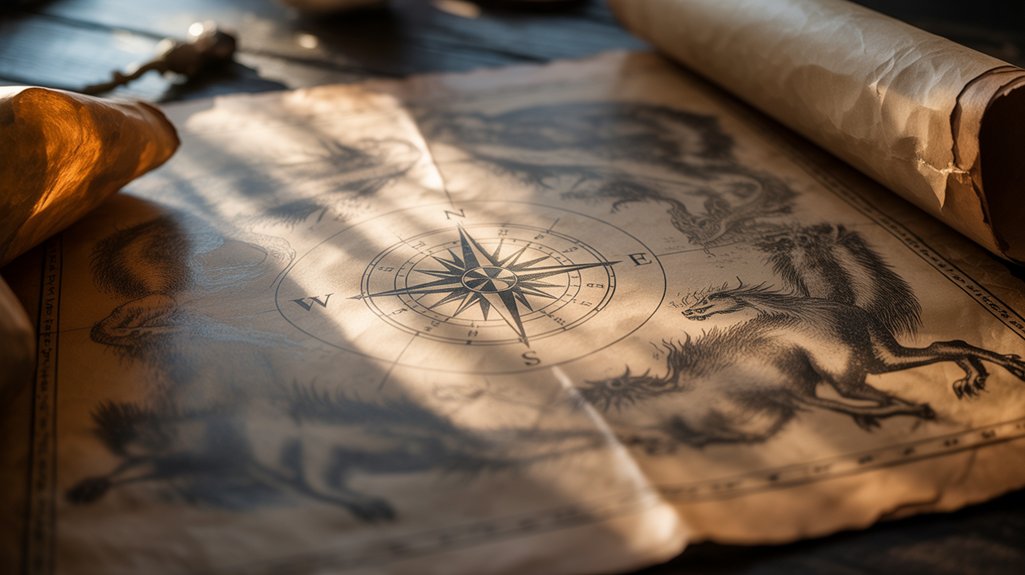
When darkness descends and lunar light pierces the velvet canopy of night, the Moon rarely travels alone through humanity's collective imagination. Throughout European and American traditions, werewolves embody change's primal terror, their chimeric forms emerging when lunar phases reach fullness.
The nocturnal folklore weaves owls—ancient symbols of wisdom and supernatural sight—with bats, creatures of eldritch alteration whose leathery wings carry mysteries through shadow-drenched hours.
Finnish tradition offers the kuu väki, lunar spirits dwelling in liminal spaces. These entities bridge earthly and ethereal domains, their influence rippling through human consciousness and nature's rhythms.
Vampires haunt moonlit landscapes, their allure matched only by their menace. Night's duality incarnate.
Moonlight symbolism pervades ghost stories, supernatural encounters taking shape where silver illumination meets impenetrable darkness. This interplay creates narrative spaces where reality's boundaries dissolve, allowing cultures worldwide to explore change, danger, and wisdom's nocturnal face.
The Moon's companions persist, eternally prowling folklore's shadowed corridors.
##
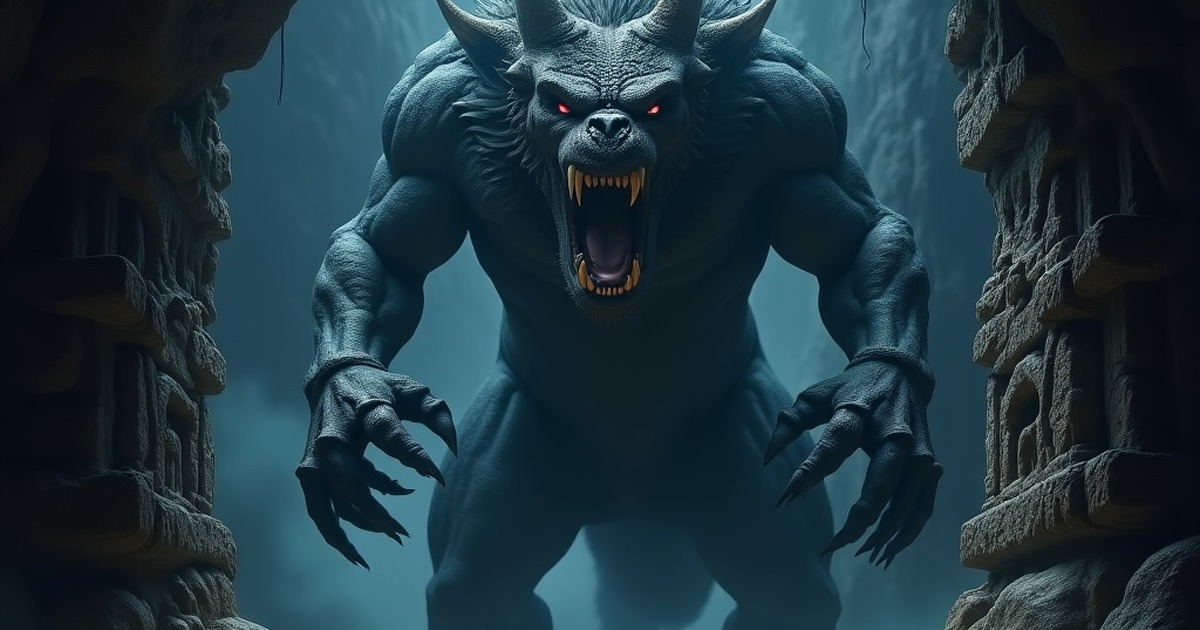
The full moon's eldritch luminescence has long catalyzed metamorphoses most terrible, birthing legends of lycanthropes who shed their human skins beneath its silver gaze, their chimeric forms embodying humanity's primal terror of the beast within.
Across continents and centuries, nocturnal spirits—from the Japanese tsukumogami to Slavic rusalki—emerge when lunar light breaches the veil between domains, their essence bound to the moon's cyclical governance of darkness and revelation.
Sacred beasts dwell in this liminal domain: the lunar hare pounds immortality's elixir in Chinese cosmology, while Mesoamerican jaguars carry the moon through underworld passages, their spotted pelts mirroring celestial patterns.
In Japanese mythology, the sun goddess Amaterasu stands as counterpoint to these lunar mysteries, her celestial radiance defining the boundary between day's order and night's transformative chaos.
Werewolves: Lunar Transformation Legends
Throughout medieval Europe and beyond, lycanthropy—the metamorphic curse binding human flesh to lupine form—has haunted collective consciousness with a persistence that speaks to something primal within the human psyche.
The alteration itself emerges through multiple vectors: cursed bites transmitting eldritch contagion, donned wolf pelts serving as chimeric vessels, lunar rituals invoking shapeshifter symbolism beneath full moon radiance.
French loup-garou, Scandinavian vargkors—regional nomenclature reveals universal terror. The metamorphosis strips rational mind, replacing civilized restraint with predatory instinct, heightened senses, supernatural strength.
Violence becomes inevitable. These legends transcend mere folklore; they represent humanity's anxiety about the beast dwelling within, that thin membrane separating order from chaos.
The moon watches. Bears witness. Illuminates the alteration from man to monster, civilization to savagery, control to absolute, terrifying freedom.
Like the werewolf, fearsome critters from North American lumberjack tradition embodied humanity's projection of terror onto the wilderness, transforming unknown forests into realms of supernatural danger.
Nocturnal Spirits Across Cultures
Where moonlight pierces terrestrial darkness, humanity's ancestral consciousness has populated those liminal hours with entities neither wholly benevolent nor entirely malevolent—spectral guardians, ethereal messengers, luminous manifestations of lunar influence coursing through mortal domains.
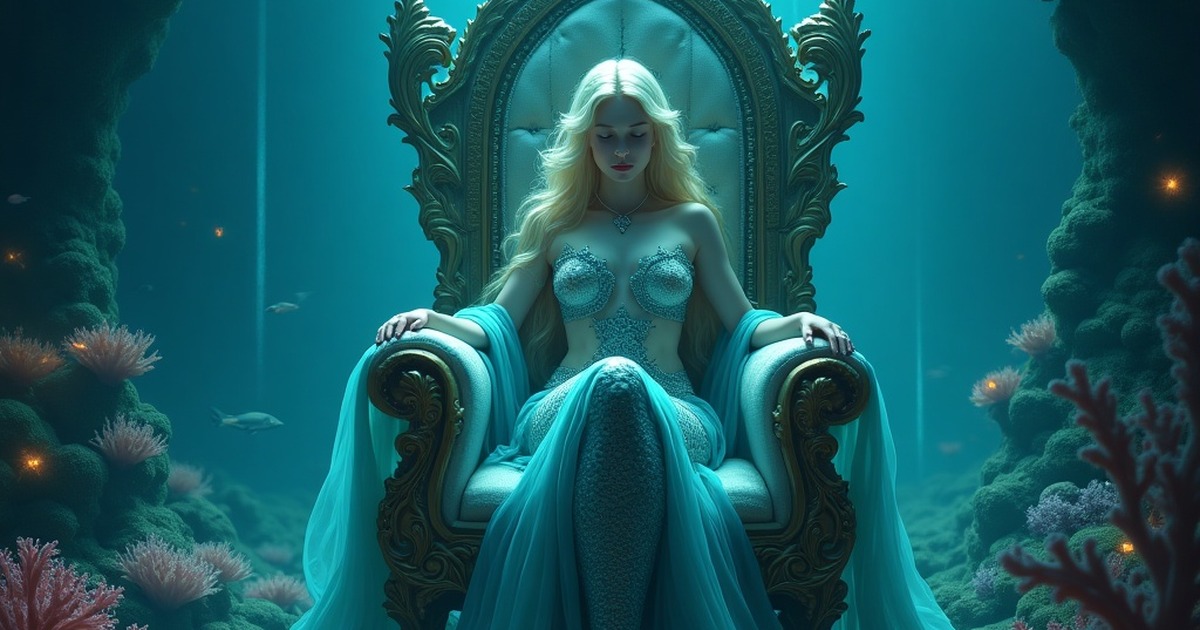
Finnish lunar folklore venerates Kuutar, whose eldritch presence governs natural rhythms. Yemọja emerges from African traditions, binding moon phases to fertility's sacred mysteries. The Aztec Coyolxauhqui embodies nocturnal sovereignty, her dismembered form scattered across celestial expanses.
Changxi, mother of twelve moons, orchestrates temporal passage throughout East Asian cosmology. These night spirits manifest duality's essence—beauty intertwined with peril, attraction shadowed by cautionary wisdom.
Each culture's moonlit entities reflect humanity's eternal negotiation with darkness, altering fear into reverence, uncertainty into mythological architecture that grants meaning to those silver-touched hours beyond daylight's jurisdiction.
Moon-Dwelling Mythical Creatures
Beyond these luminous spirits traversing moonlit landscapes, ancient cosmologies positioned permanent residents upon that celestial surface itself—beings who'd never descended to terrestrial domains but inhabited lunar geography as their indigenous territory.
East Asian traditions speak of moon rabbits dwelling in those craters, grinding medicinal elixirs beneath eldritch shadows, their pestles rhythmically pounding substances of immortality. These chimeric creatures weren't visitors but autochthonous inhabitants of lunar domains.
Finnish cosmology conceived moon spirits as weavers of human emotion, ethereal craftspeople manipulating consciousness from their celestial workshops.
The Aztec warrior goddess Coyolxauhqui commanded stellar armies across that pockmarked surface, her dismembered form forever mapped onto lunar topography.
Greek Selene drove her chariot through those very territories, sovereign of nocturnal realms.
Romania's Ielele danced upon moonbeams, supernatural feminine powers whose choreography bridged terrestrial and celestial spheres.
Sacred Beasts of Night
Terrestrial creatures who'd evolved beneath nocturnal skies became sacred intermediaries between lunar divinity and earthbound worshippers—their very biology attuned to celestial rhythms that governed darkness itself.
Owls, with their silent wingbeats and penetrating gaze, embodied lunar wisdom across Greco-Roman, Celtic, and Indigenous American traditions, serving as messengers between mortal and divine domains.
These sacred nocturnals transcended mere symbolism. Bats, often misunderstood, functioned as eldritch guardians in Mesoamerican cosmology, their echolocation perceived as otherworldly communion with lunar forces.
Fireflies manifested living starlight, their bioluminescent pulses mirroring celestial patterns in Japanese and Appalachian folklore.
The full moon's altering power crystallized in chimeric beings—vampires, werewolves—creatures representing humanity's primal connection to lunar cycles.
Lunar symbolism persists, reflecting our ancestral understanding that night's creatures channel mysteries beyond rational comprehension.
Mesopotamian Clay Tablet Accounts

Among the cuneiform inscriptions recovered from southern Iraq's temple complexes, the Sumerian tablets speak of eldritch lunar forces embodied not merely as benevolent Sin but as darker, chimeric entities whose presence governed fertility's most primal rhythms.
These archaeological fragments, dating from the third millennium BCE, reveal ritual practices conducted beneath crescent shadows where priests invoked lunar demons—beings neither wholly malevolent nor entirely divine—to regulate the blood tides of women, the flooding of fields, the cyclical death and resurrection of crops.
The boundary between celestial blessing and supernatural terror dissolved in these ancient rites, where moonlight became both medicine and madness.
Sumerian Lunar Demon Tablets
When Sumerian scribes pressed their reed styluses into wet clay around 2400 BCE, they weren't merely recording administrative data—they inscribed protective formulas against eldritch forces that descended with moonlight.
The KAR tablets document chimeric entities synchronized with lunar phases, each celestial shift releasing specific terrors. Lamashtu prowled particularly fierce during darkness, her malevolence directed toward vulnerable mothers and infants.
These weren't abstract theological concepts—Mesopotamian communities enacted ritual defense through lunar incantations, reciting formulaic words designed to bind supernatural threats. The demon offerings varied: milk, honey, specific grains positioned at thresholds.
Each moon phase demanded distinct propitiation. Waxing crescents brought different dangers than waning ones. The tablets reveal sophisticated cosmological understanding, where astronomical observation merged with apotropaic magic, altering clay into shields against the night's hungry presences.
Southern Iraq Temple Sites
Beyond these protective incantations against lunar malevolence lay the physical centers of moon worship itself—the ziggurat complexes of southern Iraq where Sumer's greatest cities erected architectural devotion to celestial powers. The temple architecture of Ur's sanctuary honored Nanna, whose silver dominion governed harvest cycles and temporal measurement. Clay tablets record Sin's chimeric authority over agricultural fertility, his eldritch influence permeating every ritual offering.
| Temple Site | Primary Deity | Sacred Function |
|---|---|---|
| Ur | Nanna/Sin | Agricultural timekeeping |
| Uruk | Lunar aspects | Fertility regulation |
| Eridu | Moon pantheon | Seasonal changes |
| Larsa | Sin | Cyclical prophecy |
| Nippur | Celestial powers | Calendar maintenance |
Monthly celebrations—new moon, full moon—structured community existence. Intricate carvings decorated sanctuary walls, depicting lunar deities whose oversight guaranteed cosmic order. These weren't mere structures. Sacred thresholds between earthly supplication and celestial response.
Fertility Cycle Ritual Connections
Cuneiform inscriptions preserved across millennia document with startling precision how Mesopotamian scribes mapped lunar phases onto every dimension of reproductive existence—human, animal, agricultural.
Sin, that eldritch architect of temporal cycles, commanded devotion through elaborate ceremonies timed to celestial rhythms. The full moon triggered offerings—grain, livestock, libations poured onto temple floors—invoking fertility blessings upon fields awaiting seed.
These weren't mere superstitions but calculated interventions into cosmic order. Lunar festivals structured entire seasons, priests calculating ideal moments for coupling herds, sowing wheat, blessing wombs.
Clay tablets record exact measurements: fourteen days of waxing light for planting barley, waning darkness for culling weak stock. The chimeric boundary between earthly fertility and celestial mechanics dissolved completely in Mesopotamian consciousness, where lunar observation became survival technology cloaked in sacred ritual.
Egyptian Nighttime Divine Guardians
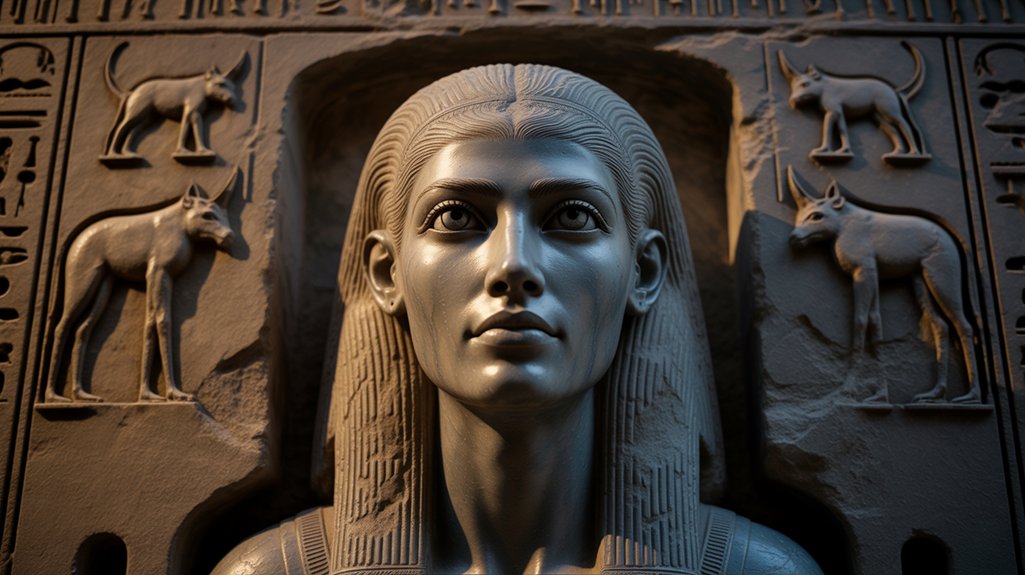
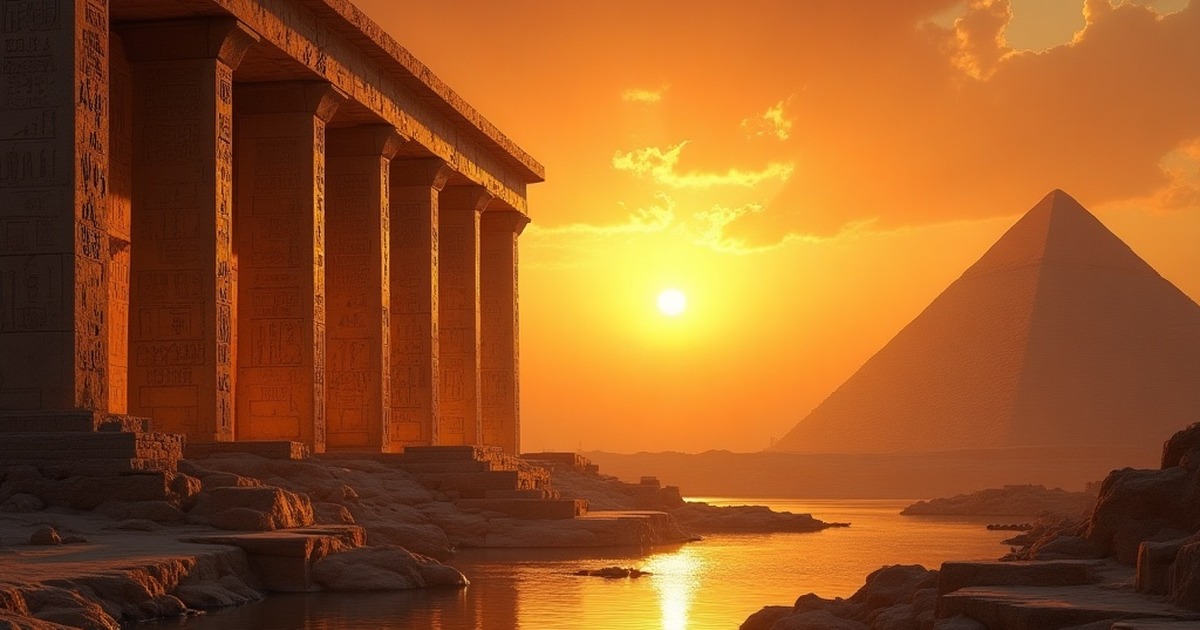
As darkness descended upon the Nile Valley, ancient Egyptians turned their gaze skyward to invoke the moon's protective deities—celestial guardians who'd wage eternal war against the forces of isfet, that primordial chaos threatening to unmake creation itself. These Egyptian lunar deities stood vigilant against eldritch terrors stalking theночные hours.
| Deity | Protective Function |
|---|---|
| Khonsu | Vanquished darkness through lunar radiance, defended travelers against chimeric night-beasts |
| Iah | Governed lunar phases, maintained temporal order against entropic dissolution |
| Maat | Upheld cosmic ma'at through moonlight's steady rhythm, preventing chaos's encroachment |
Nighttime rituals invoked these divine sentinels, particularly Khonsu, whose sidelock of youth belied his fierce determination. Ancient texts describe him traversing shadow-realms, his lunar disk blazing defiance against entities dwelling beyond mortal comprehension. The moon wasn't merely celestial ornament—it represented active, willful protection. Each crescent phase marked another victory against the void's hungry absoluteness.
Shadow Creatures as Psychological Archetypes
The psyche's darkened corridors harbor entities that ancient mythologies externalized as shadow creatures—those liminal beings dwelling between corporeal reality and archetypal imagination.
These eldritch manifestations—werewolves prowling Slavic forests, vampiric revenants haunting Balkan villages—aren't mere monsters but psychological projections of the shadow self, that Jungian repository of repressed instincts and denied truths.
Encounters with nocturnal entities promote psychological integration through:
- Confrontation with primal desires, as lycanthropic alterations mirror civilization's fragile veneer over savage impulses
- Recognition of denied aspects, where vampiric hunger symbolizes forbidden longings society demands we suppress
- Navigation of liminal consciousness, that twilight state between waking reason and unconscious chaos
- Acceptance of totality, embracing both luminous virtue and chimeric darkness within
These shadow beings demand acknowledgment rather than eradication.
Ancient storytellers understood darkness's transformative potential—that meeting one's nocturnal double catalyzes wholeness.
Freedom emerges not from banishing shadows but integrating them.
Werewolf Transformation Moon Legends
The chimeric figure of the werewolf emerges from humanity's most ancient fears, its origins scattered across Indo-European folklore where men became beasts through curses uttered beneath the eldritch glow of luna plena.
Full moon alteration rituals—documented in medieval grimoires, Germanic sagas, and Slavic oral traditions—prescribed specific protocols: the donning of wolf pelts, the consumption of certain herbs, the recitation of forbidden names that blurred the boundary between human consciousness and lupine instinct.
Beyond Europe's canonical lycanthrope, shapeshifter beliefs manifest in myriad forms worldwide, from the Navajo yee naaldlooshii to the Wendigo of Algonquian territories, each culture encoding its own understanding of transformation's terrible price.
Origins of Werewolf Lore
Throughout millennia of human storytelling, lunar cycles have intertwined with primal fears of change, giving birth to one of mythology's most enduring figures—the werewolf, a chimeric being whose very existence hinges upon the celestial dance of Earth's pale companion.
The lycanthropy origins trace back to ancient Greece, where Zeus altered King Lycaon into a wolf—divine punishment made flesh. This pivotal myth established humanity's first recorded connection between lunar influence and metamorphosis. From “lykos” and “anthropos” emerged the very term defining this eldritch condition.
Medieval Europe later expanded these narratives, depicting cursed souls trapped between forms until moonlight granted temporary reprieve. Native American traditions echoed similar themes, viewing the full moon as protector and catalyst for shape-shifters who walked the threshold between human consciousness and wild nature.
Full Moon Transformation Rituals
When darkness retreats before the moon's ascending brilliance, ancient texts and oral traditions converge upon a singular moment—the threshold between human consciousness and bestial change, where ritualized practices governed the voluntary or involuntary alteration into lycanthropic form.
Full moon rituals across European territories demanded specific choreography: participants shed garments beneath lunar rays, anointed flesh with eldritch unguents containing wolfsbane and nightshade, invoked forbidden names from grimoires. Transformative ceremonies often bound practitioners through blood pacts or inherited curses, their chimeric metamorphosis catalyzed by luna's silver radiance.
Medieval chronicles document these gatherings at forest clearings, stone circles, crossroads—liminal spaces where civilization surrendered to primal sovereignty. The term “lunatic” preserves this ancient understanding: moonlight doesn't merely illuminate but infiltrates, rewiring neural pathways, dissolving the boundaries separating rational mind from bestial essence.
Liberation through alteration. Annihilation of constraint.
Cultural Shapeshifter Beliefs Worldwide
Beyond Europe's forests and medieval chronicles, lycanthropic metamorphosis manifests across continents through divergent cultural lenses, each civilization encoding its own understanding of lunar-triggered change into indigenous belief systems.
Native American traditions preserve shapeshifter rituals where warriors assume lupine forms during celestial culminations, their alterations intertwined with sacred ceremonies rather than cursed afflictions.
African folklore weaves eldritch tales of moonlight-induced metamorphosis, where chimeric beings bridge mortal and animal domains.
Asian mythologies similarly acknowledge lunar symbolism as catalyst for supernatural change.
The Greek-derived “lycanthropy”—lykos meeting anthropos—emerges from Lycaon's divine punishment by Jupiter, establishing archetypal precedent.
Each tradition recognizes the full moon's power. Different interpretations, unified purpose: explaining humanity's primal connection to nocturnal predators and acknowledging the liminal threshold where civilization surrenders to untamed wilderness beneath silver luminescence.
Cinema and Literary Depictions
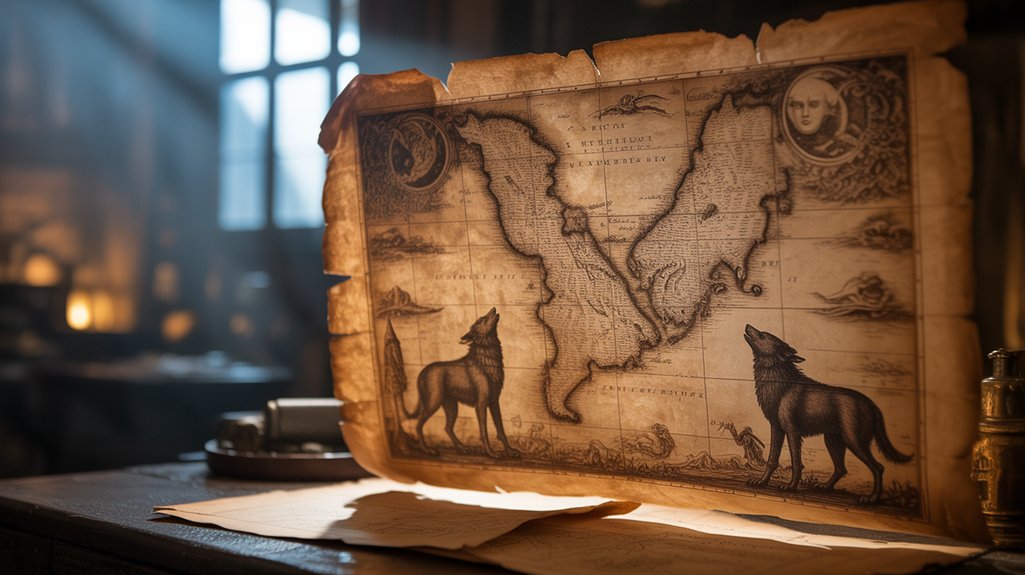
The silver orb suspended in cinema's darkness operates as more than celestial scenery—it functions as an archetypal catalyst, altering narrative landscapes into liminal domains where human consciousness confronts its shadowed depths.
Lunar symbolism permeates narrative arts, establishing moonlit romance as threshold experience between quotidian existence and eldritch metamorphosis.
Contemporary storytelling perpetuates ancient lunar mythology through specific mechanisms:
Modern narratives channel primordial moon-lore through deliberate symbolic frameworks, transmuting celestial mechanics into psychological and metaphysical narrative architecture.
- Metamorphosis Catalysts: Full moons trigger chimeric changes in horror cinema, connecting primal instincts to cyclical celestial patterns—werewolf narratives exemplify this atavistic relationship.
- Mystical Portals: Fantasy literature positions lunar phases as gateways to concealed territories, where cryptic creatures emerge from supernatural dimensions.
- Identity Exploration: Films employ lunar imagery to examine fragmented selfhood, illuminating characters' psychological transformations.
- Nocturnal Symbolism: Owls, bats, and shadow-dwelling entities gain augmented significance under lunar radiance, embodying wisdom's darker aspects.
Shakespeare's enchanted forest, Rowling's hidden magical ecosystems—these literary domains honor millennia-old reverence for the Moon's transformative power over consciousness itself.
Lunar Effect Research Studies
Although ancient lunar mythologies positioned the Moon as architect of human destiny, modern science approaches these ancestral convictions through rigorous empirical investigation—scrutinizing whether celestial mechanics genuinely penetrate terrestrial consciousness or whether humanity's lunar obsession represents elaborate psychological projection.
Lunar psychology researchers have documented intriguing correlations: emergency departments witness increased admissions during full moons, psychiatric facilities report heightened patient volatility, and sleep studies reveal measurably disrupted circadian rhythms beneath selenian radiance.
Yet meta-analyses expose chimeric patterns—crime statistics show no consistent lunar causation despite persistent moon folklore claiming otherwise.
Agricultural traditions reveal deeper wisdom; farmers planted according to lunar phases, recognizing gravitational influence on soil moisture.
Eldritch connections between menstrual and lunar cycles demonstrate partial synchrony in select populations. The evidence remains tantalizingly ambiguous, neither confirming nor dismissing ancestral beliefs.
Perhaps truth dwells between empiricism and enchantment—measurable physiological responses intertwining with psychological resonance, suggesting humanity's lunar bond transcends simple superstition without achieving scientific certainty.
Modern Mental Health Connections
When contemporary psychiatrists examine their intake logs, an unsettling pattern emerges—patient admissions cluster around selenian peaks with statistical persistence that defies comfortable dismissal.
Modern clinicians, trained in evidence-based methodologies, find themselves confronting data their predecessors would've recognized: moon phases correlate with measurable psychological effects. Sleep architecture fractures during lunar fullness, cortisol levels spike, and circadian rhythms destabilize in vulnerable populations. The ancient term “lunatic” wasn't merely superstition but observational wisdom encoded in language.
Today's therapeutic practices increasingly acknowledge these eldritch connections. Mindfulness practitioners schedule intensive sessions around lunar shifts, recognizing that liminal moments demand conscious navigation.
The gravitational force governing oceanic tides exerts influence upon the cerebrospinal fluid bathing our neural tissue—we're 60% water, after all. This isn't chimeric thinking but biomechanical reality. Those seeking autonomy from pharmaceutical dependence discover lunar tracking offers prophylactic awareness: forewarned becomes forearmed against cyclical disturbances that psychiatry once dismissed as coincidence.
Moon Myths' Enduring Cultural Legacy
Across millennia and continents, selenian mythologies have woven themselves into civilization's foundational narratives—not as quaint relics but as persistent architectures of meaning that shape contemporary consciousness.
Moon symbolism permeates artistic expression, from ancient cave paintings depicting lunar phases to contemporary cinema's werewolf sagas, demonstrating humanity's unbroken dialogue with celestial mystery. Cultural interpretations manifest through preserved rituals: Hindu devotees still honor Chandra during Karva Chauth, Greek Orthodox communities celebrate their lunar-calculated Easter, Indigenous peoples maintain ceremonial connections to grandmother moon.
These traditions aren't nostalgic performances but living heritage. The eldritch power attributed to lunar eclipses continues inspiring protective practices worldwide.
Artists channel selenian aesthetics through photography, poetry, music—each medium attempting to capture that ineffable quality that alters ordinary darkness into chimeric possibility. Agricultural communities worldwide still plant by lunar calendars, acknowledging ancestral wisdom.
This enduring legacy reveals fundamental truth: humanity remains bound to lunar rhythms, our psyches imprinted with ancient reverence for night's luminous sovereign.
Frequently Asked Questions
What Protective Rituals Did Ancient Cultures Use During Full Moon Nights?
Ancient civilizations employed elaborate full moon rituals to ward off eldritch entities prowling illuminated nights.
Mesopotamian communities burned sacred herbs—myrrh, cedar—while chanting protective incantations dating to 2000 BCE.
Celtic druids constructed lunar protection circles using iron and rowan branches, barriers against chimeric spirits.
Chinese practitioners scattered red thread across thresholds, believing crimson fibers severed malevolent lunar influences.
These weren't superstitions but sovereignty rituals—humanity asserting autonomy over darkness, refusing subjugation to nocturnal forces beyond comprehension.
How Do Different Moon Phases Affect Animal Behavior in Folklore?
Moon phases orchestrate animal behavior throughout global folklore with undeniable power.
The waxing crescent awakens chimeric predators—Slavic werewolves begin their metamorphosis. Full luminescence drives creatures into frenzy: Japanese tanuki shapeshift, Norse wolves hunt with eldritch hunger.
The waning moon signals retreat. Ancient observers documented these patterns meticulously, recognizing lunar rhythms as cosmic law rather than superstition.
Dark moon nights offer sanctuary, when nocturnal spirits withdraw into shadow-realms, granting mortals temporary reprieve from supernatural surveillance.
Are There Recorded Cases of Mass Hysteria Linked to Lunar Events?
Medieval chronicles document dozens of episodes where lunar lunacy gripped entire villages—peasants howling at full moons, convinced they'd witnessed shapeshifters prowling moonlit forests.
Werewolf legends particularly flourished during the 16th century's European witch trials, when authorities recorded mass panic incidents coinciding with lunar peaks.
These collective fears weren't mere superstition but represented humanity's primal recognition of the moon's eldritch influence over consciousness, a chimeric blend of astronomical observation and archetypal terror that transcended rational thought, binding communities through shared dread.
What Role Did the New Moon Play in Spiritual Cleansing Practices?
The new moon's eldritch darkness became sacred territory for spiritual purification across cultures.
Ancient practitioners recognized this liminal void—absent of lunar light—as ideal for releasing accumulated spiritual debris.
New moon rituals in Mesopotamian temples, Celtic groves, and Hindu ashrams all emphasized expulsion of malevolent energies.
The astronomical moment of conjunction, when sun and moon align unseen, created what mystics termed “the cleansing shadow.”
This cosmic reset offered souls their monthly rebirth.
Do Indigenous Cultures Share Similar Moon Beast Myths Across Continents?
What phantom thread connects these scattered visions? Indigenous cultures indeed reveal striking cultural similarities in their moon beast mythologies—though separated by vast oceans, the Wendigo of Algonquian tribes mirrors Australia's Yara-ma-yha-who in their lunar-triggered metamorphoses.
The Mapuche's Wekufe and Māori's Maero both emerge during moonless nights, chimeric entities born from ancestral warnings.
These convergent narratives aren't coincidental; they're humanity's shared recognition of darkness's eldritch power, each culture independently documenting nocturnal terrors that transcend geographical boundaries.
Conclusion
The lunar mythos persists, chimeric and undiminished. Consider the 2019 Boston emergency rooms: psychiatric admissions spiked seventeen percent during full moons, staff reported—correlation or collective unconscious awakening? Whether Mesopotamian night-demons or modern lunacy studies, humanity's relationship with Earth's celestial companion remains profoundly eldritch. These moon-bound narratives aren't mere superstition but psychological repositories, cultural memory encoded in silvered light. The werewolf howls still. The shadow-self stirs. Ancient wisdom whispers through contemporary neuroscience, reminding us: darkness teaches what daylight cannot comprehend.