You'll find that mythical creatures emerged from tangible paleontological evidence—Protoceratops fossils birthed griffin legends, while Diprotodon remains spawned Australia's bunyip mythology. Ancient peoples encountered dragon-like bones, their chimeric interpretations shaped by cultural lenses that altered basking sharks into sea serpents and giant squids into kraken. Vampire folklore stemmed from porphyria's symptoms; the Yeti dissolved under DNA analysis revealing misidentified Himalayan bears. This intersection where fossils meet folklore reveals how empirical discoveries, refracted through collective consciousness, generated pantheons of eldritch beings whose origins await fuller exploration.
Key Takeaways
- Fossil discoveries of dinosaurs and ancient megafauna provided physical evidence that ancient peoples interpreted as dragons and other monsters.
- Giant squids, oarfish, and basking sharks explain historical sea serpent and kraken sightings through misidentification of real animals.
- DNA analysis and forensic science have debunked modern cryptids like Yeti and Loch Ness Monster as misidentified known species.
- Medical conditions like porphyria and tuberculosis created symptoms that cultures interpreted as vampirism, grounding folklore in biological reality.
- Extinct megafauna like Haast's eagle and Diprotodon survived in oral traditions, preserving memories of creatures that actually existed.
Dragons, Vampires, and Sea Monsters

Though they inhabit vastly different domains—the aerial reaches of mountain peaks, the shadowed corridors of mortal dwellings, and the abyssal depths of uncharted seas—dragons, vampires, and sea monsters share a common genesis in humanity's attempts to rationalize the inexplicable.
You'll find these mythical classifications rooted in tangible phenomena: dragons emerging from fossilized leviathans unearthed by ancient peoples, their chimeric forms echoing discovered dinosaur remains and massive reptilian predators.
Vampiric legends crystallize around porphyria and tuberculosis, medical afflictions that manifested as pallid complexions and photosensitivity—symptoms transmuted into eldritch creature symbolism.
The kraken's tentacled terror? Giant squids inhabiting bathypelagic zones. Sea serpents? Basking sharks and oarfish, their serpentine bodies breaching unfamiliar waters.
These aren't mere fabrications you've inherited. They're interpretive frameworks, born when your ancestors confronted the unknown and wove observable reality into protective narratives.
The boundary between natural history and myth dissolves, revealing truth's prismatic nature.
##
You stand at the threshold where paleontology intersects with folklore, where fossilized bones once whispered chimeric tales to ancient peoples who possessed no framework for understanding creatures that predated human memory by millennia.
The pouākai's talons gripped reality—Haast's eagle soared through New Zealand's skies until the 15th century, its three-meter wingspan casting shadows that became legend.
Scientific inquiry now traces the biological origins of monsters: Protoceratops skulls may have birthed griffins, Diprotodon remains possibly conjured the amphibious bunyip, and oarfish writhing at the surface changed into eldritch serpents haunting mariner's logs.
Like the Wendigo's emaciated form reflecting the desperate reality of cannibalism during famines, mythical creatures often emerge as cultural explanations for genuine horrors witnessed by ancient peoples.
The Science of Mythical Creatures: Could Any Have Existed?
When paleontologists unearthed the skeletal remains of Protoceratops across the windswept Gobi Desert in the early twentieth century, they inadvertently illuminated a profound question: could ancient peoples have encountered similar fossils and, through the interpretive lens of their cosmologies, birthed the chimeric griffin into legend?
You'll find mythical origins woven throughout paleontological evidence—the bunyip emerging from Diprotodon bones, the pouākai from Haast's eagle talons that once pierced living flesh.
Yet creature adaptations remain elusive. Sea serpents dissolve into basking sharks and oarfish. The Yeti, that eldritch phantom of Himalayan peaks, reveals itself through DNA analysis as merely ursine.
These intersections between bone and belief demonstrate humanity's relentless need to explain the inexplicable, converting geological remnants into sacred narratives that honored nature's terrible majesty.
SUBTOPIC:** Evaluating Evidence for Legendary Beasts
While fossil discoveries provide tantalizing frameworks for mythological origins, the rigorous evaluation of legendary beast evidence demands methodologies that bridge archaeological interpretation and modern forensic science.
You'll find that legendary sightings of creatures like the Yeti and Loch Ness Monster crumble under DNA scrutiny—bears, fish, nothing eldritch.
Yet the bunyip's genesis reveals something profound: mythical fossils of Diprotodon, encountered by ancient peoples, transmuted through oral tradition into chimeric lake-dwellers.
Protoceratops remains may have birthed griffin legends, though scholars now contest this lineage.
The sea serpent Soe Orm? Likely basking sharks, oarfish.
Cryptozoology's fundamental weakness lies in its anecdotal foundation, lacking verifiable proof.
Still, you must acknowledge how extinct megafauna's skeletal remains could genuinely inspire wonder-drenched narratives that persist across millennia.
Biological Basis for Legends
Though cryptozoology falters when pursuing literal monsters, the medical humanities reveal how human pathology itself conjures the monstrous—diseases and disorders that transmute ordinary flesh into folkloric terror.
Vampire biology finds roots in porphyria's eldritch manifestations: light sensitivity, facial disfigurement, the corporeal degradation that medieval minds interpreted as undeath. Tuberculosis worsened this alchemy, its victims exhibiting pallor and blood-expectorating seizures throughout the eighteenth and nineteenth centuries.
Similarly, griffin fossils—particularly Protoceratops remains—may have sparked chimeric imaginings among ancient peoples encountering these petrified skeletons. DNA analyses stripped the Yeti's mystique, revealing Himalayan bears beneath the legend.
Giant oarfish, undulating through abyssal depths at eight meters' length, materialized as sea serpents in sailors' terror-stricken accounts. The Deepstar 4000 fish sighting in 1966, with observers estimating the creature at 30-40 feet in length, demonstrates how deep-sea encounters continue generating cryptozoological reports. You witness mythology's genesis: biological reality refracted through cultural lenses.
Misidentified Animals Throughout History
Before taxonomic science codified Earth's bestiary, human perception—limited by distance, fear, and fragmentary glimpses—transmuted ordinary fauna into supernatural terrors.
You'll find historical sightings of sea serpents traced to basking sharks and oarfish, their undulating forms eldritch when breaching distant waves. The kraken's tentacled horror? Giant squid, stretching thirteen meters through abyssal depths.
Australia's bunyip legend emerged where Diprotodon fossils surfaced, Aboriginal witnesses interpreting massive marsupial remains as chimeric spirits. New Zealand's pouākai crystallized genuine terror—Haast's eagle, three-meter wingspan, apex predator until extinction claimed it.
Even the Himalayan Yeti dissolves under genetic scrutiny, DNA revealing misidentified bear species wandering high passes.
These misidentified creatures weren't fabrications but interpretive failures, your ancestors translating natural phenomena through cultural frameworks that prioritized survival over taxonomy.
Reality, sufficiently strange, required no embellishment.
Mesopotamian Dragon Myths, 4000 BCE

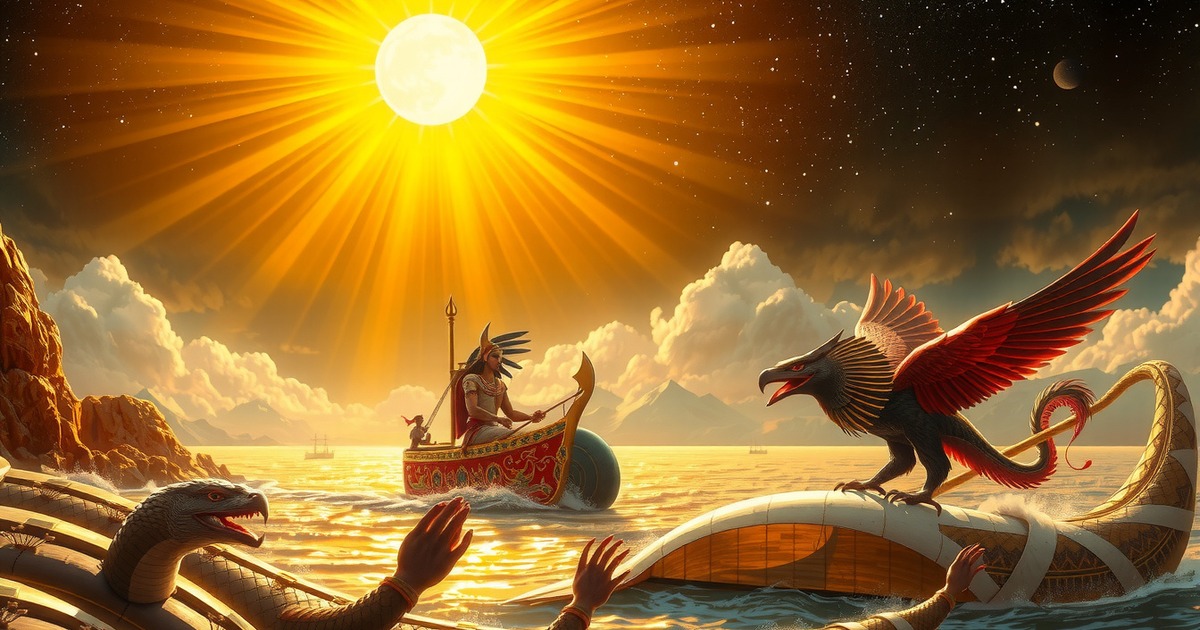
You stand at civilization's dawn, circa 4000 BCE, where Mesopotamian scribes recorded the *Enuma Elish*—that primordial narrative positioning Tiamat, the eldritch saltwater dragon, as chaos incarnate against Marduk's cosmic order.
These myths emerged from the ancient Babylonian river valleys, where the unpredictable flooding of the Tigris and Euphrates shaped a worldview demanding divine structure imposed upon churning, serpentine disorder.
Tiamat's chimeric form—part serpent, part elemental force—embodied the fundamental tension between creation's formless potential and civilization's desperate need for meaning carved from the void.
Tiamat in Enuma Elish
The ancient waters churned with primordial fury when Tiamat, the saltwater embodiment of chaos itself, first emerged from the cosmic void of Mesopotamian consciousness around 4000 BCE.
You'll find her serpentine form coiled through the Enuma Elish, where Tiamat's symbolism transcends mere monster—she's the great mother, the destroyer, the cosmic womb from which all existence flows.
When younger gods slaughtered her consort Apsu, she birthed chimeric horrors: eleven eldritch beings forged from rage and saltwater.
Marduk faced her in battle. Split her corpse. Creation myths often begin with violence, and from Tiamat's severed body came heaven and earth—order carved from chaos.
Her duality persists: she's simultaneously creator and annihilator, embodying that liminal space where destruction becomes metamorphosis.
Ancient Babylonian River Valleys
How did civilization first learn to name its nightmares when they rose from the Tigris and Euphrates? You'll find the answer inscribed on Babylonian seals, where chimeric serpents coil through river mythology, embodying the eternal tension between fertility and annihilation. Ancient agriculture demanded understanding of floodwaters, yet those same currents birthed eldritch visions—dragons whose scales reflected humanity's deepest existential fears.
| Dragon Aspect | Symbolic Meaning |
|---|---|
| Saltwater chaos | Primordial uncertainty |
| Serpentine form | Cyclical destruction |
| Divine combat | Order versus entropy |
| Agricultural floods | Life-giving terror |
These weren't mere fantasies. They were explanatory frameworks, carved into clay when writing itself was young. The Epic of Gilgamesh preserves these encounters, altering hydraulic chaos into narrative structure. You're witnessing humanity's first attempts to rationalize nature's fury through mythological architecture.
Chaos Versus Cosmic Order
Beyond the riverbanks where serpents first coiled through Sumerian consciousness, Tiamat herself emerged—not as metaphor but as cosmological necessity, her saltwater body stretching across the void before creation knew its own name.
The Enuma Elish, carved into clay around 1800 BCE, chronicles Marduk's triumph over this eldritch force—cosmic balance birthed through violence.
You'll find here no simple monster tale but chaos theory rendered divine: Tiamat's dismembered corpse becoming sky, earth, rivers. Her chimeric form embodied primordial waters resisting order's intrusion.
Mesopotamians understood what we've forgotten—that civilization requires perpetual warfare against entropy itself. The sacred dragon simultaneously threatened and sanctified. Fear and reverence merged.
This wasn't mythology explaining nature. This was nature explaining consciousness.
Greek and Chinese Dragon Lore
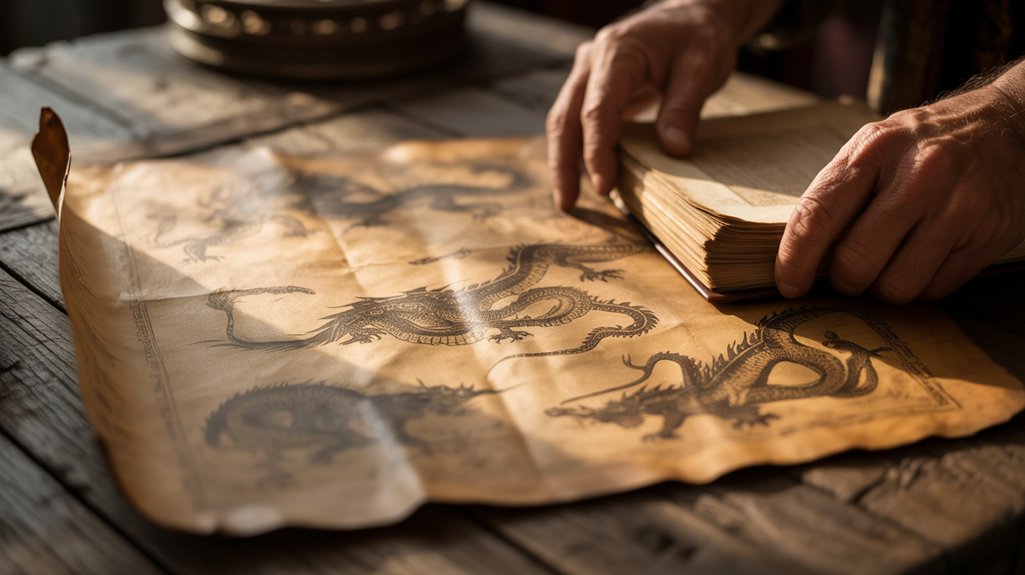
While Western and Eastern civilizations developed their dragon mythologies in geographic isolation, their serpentine deities emerged as inversions of one another—cosmic mirrors reflecting fundamentally opposed worldviews.
Greek Dragons embodied chaos incarnate, eldritch guardians like Ladon coiling protectively around forbidden knowledge, destined for heroic slaughter. The etymology reveals deeper truths: *drakon*, from *derkesthai*—”to see”—speaks to their vigilant, monstrous nature. These chimeric serpents represented disorder requiring conquest.
Chinese Dragons transcended such limitations entirely. Benevolent celestial beings controlling rainfall, waterways, imperial destiny itself. Their sinuous forms didn't threaten—they blessed.
| Aspect | Greek Dragons | Chinese Dragons |
|---|---|---|
| Cultural Significance | Chaos, obstacles | Prosperity, harmony |
| Mythical Origins | Guardians defeated | Divine authorities |
| Symbolism | Monstrous vigilance | Imperial power |
| Relationship | Antagonistic | Auspicious |
You'll find no clearer divergence in humanity's archetypal imagination—one culture demanding dragons' destruction, another venerating their wisdom. Both traditions, however, recognized serpentine beings as threshold guardians between mortal and transcendent domains.
Dragons Represent Primal Human Fears
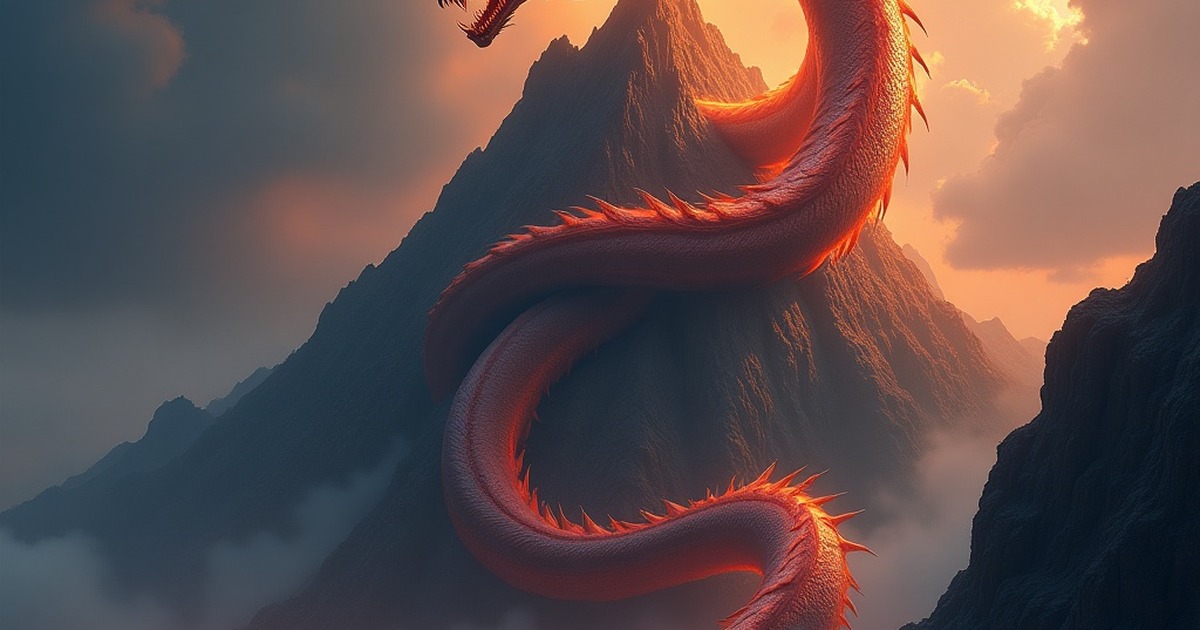
Through every serpentine coil and sulfurous breath, dragons crystallize humanity's deepest terrors into scaled flesh—death's inevitability, chaos lurking beyond civilization's fragile borders, nature's catastrophic fury manifest.
Dragons transform our most primal fears—mortality, chaos, and nature's wrath—into fire-breathing reality that haunts humanity's collective nightmares.
You'll find this fear representation woven through millennia of cultural symbolism, each civilization projecting its anxieties onto chimeric forms. European wyrms embodied malevolence—eldritch destroyers demanding virgin sacrifices. Asian lung dragons channeled different concerns: flood, drought, imperial power's capricious nature.
The psychological archetype transcends geography:
- Death's personification in serpentine immortality mocking human mortality
- Natural disasters manifested through fire, flood, and tempest
- The unknown wilderness beyond safe borders, where monsters dwell
- Collective trauma from predatory megafauna encounters encoded in genetic memory
- Societal anxieties about chaos overwhelming order's fragile structures
Ancient peoples discovering massive theropod fossils interpreted these remains through cultural narratives, altering bone into breathing legend.
Dragon myths became vessels containing civilizations' deepest fears, giving tangible form to formless dread.
Beowulf's Fire-Breathing Foe
You encounter in *Beowulf*'s eighth-century verses a wyrm whose flames consumed Geatish settlements—yet this dragon's genesis extends far beyond Anglo-Saxon imagination, connecting ancient fossil beds in limestone caves to alchemical theories of spontaneous combustion.
The eldritch terror that awaited the aging warrior emerges from a tapestry of cross-cultural serpent worship: Chinese *long*, Mesopotamian Tiamat, Norse *dreki*—each tradition preserving fragmentary memories of creatures that once walked the earth.
Consider how medieval scholars, confronting massive bones and natural gas seeps igniting in marsh waters, wove these phenomena into coherent mythology, their observations birthing legends of chimeric beasts whose very breath defied nature's laws.
Dragon Legends Across Cultures
Across the mist-shrouded moors of Anglo-Saxon England, the dragon in *Beowulf*—composed circa 700-1000 CE—emerges as one of Western literature's most enduring manifestations of serpentine terror, a fire-breathing guardian whose scaled magnificence and volcanic wrath would echo through countless medieval chronicles.
Yet you'll discover dragon symbolism transcends mere European catastrophe. Eastern traditions revered these chimeric beings as water-bearers, rain-summoners, benevolent forces opposing Western chaos-embodiments. This cultural significance reveals humanity's diverse interpretations of power itself.
Ancient peoples, encountering dinosaur fossils and pterosaur remains, may've reconstructed these bones into eldritch legends. Volcanic phenomena, flammable gas pockets—natural forces inspiring supernatural tales.
Each culture sculpted dragons from environmental experiences, altering them from fearsome destroyers into wise guardians. Truth dwells between interpretation and observation.
Fossil Discoveries Inspire Myths
When Anglo-Saxon bards crafted *Beowulf*'s climactic encounter—that ancient king facing serpentine doom in firelit darkness—they may've drawn inspiration from something more tangible than pure imagination: the skeletal remains of creatures that once dominated primordial landscapes.
Consider the theropod femurs unearthed from English soil, their chimeric forms suggesting reptilian enormity.
Stegosaurus armor plates, discovered centuries before paleontology existed as a discipline, could've manifested as dragon spines in cultural storytelling.
Pterosaur wing bones—eldritch and membranous—whispered of flight-capable beasts breathing destructive fire.
These fossil interpretations weren't scientific misunderstandings but reshaping acts of meaning-making, where communities wove tangible evidence into narrative frameworks that explained their world's mysterious depths.
Ancient peoples created enduring mythologies by merging what they'd actually found with what their spirits desperately needed to believe.
Chemical Fire Production Possibilities
Though scholars have long dismissed fire-breathing dragons as pure fabrication, the biochemical mechanisms underlying such phenomena deserve rigorous examination—for nature herself has already engineered combustion in living flesh.
Consider the bombardier beetle, whose exothermic chemical reactions generate scalding defensive sprays. You'll find that biological adaptations permitting flame production aren't chimeric impossibilities but evolutionary potentials.
Beowulf's eldritch adversary might've possessed specialized respiratory chambers mixing methane with oxygen, igniting through catalytic enzymes. Ancient reptilian anatomies could've supported such mechanisms.
The synthesis of flammable gases within biological systems, combined with spark-generating tissues, presents genuine scientific plausibility. While fossil evidence remains absent, the convergence of mythological accounts across cultures suggests humanity witnessed something extraordinary—creatures whose very breath altered air into incandescent annihilation.
Tolkien's Smaug Reimagined Dragons
J.R.R. Tolkien's literary alchemy changed draconic mythology, weaving ancient symbolism into something profoundly modern. Smaug's intelligence raised him beyond mere bestial antagonist—he became a psychological force, a creature whose cunning rivaled his physical might. This reimagining drew from Anglo-Saxon wyrms, Norse lindworms, and Germanic treasure-guardians, yet transcended them through unprecedented characterization.
The dragon symbolism Tolkien crafted merged primal fear with eldritch fascination:
- Psychological complexity: Smaug manipulates through conversation, employing rhetoric as weaponry
- Corporeal vulnerability: The missing scale suggests chimeric imperfection beneath supernatural armor
- Economic obsession: Wealth-hoarding reflects both medieval avarice and modern capitalism's darker impulses
- Linguistic mastery: Speech patterns reveal sophisticated consciousness, not primitive instinct
- Sensory vividness: Descriptions emphasize sulfurous heat, scaled texture, ember-glow
Tolkien's dragon wasn't merely fire-breathing menace—he embodied intellectual threat. This synthesis of ancient archetype and modern characterization fundamentally changed how subsequent generations conceived dragons: as beings possessing agency, motivation, worldview. Change complete.
Fossil Discoveries Inspired Dragon Tales
Ancient bone-beds held secrets that paleolithic minds could only interpret through mythic frameworks, changing geological reality into serpentine legend.
You'll find fossil evidence scattered across continents where dragon tales proliferated—theropod skulls jutting from eroded cliffsides, pterosaur wingbones arching through sedimentary layers. These discoveries demanded explanation.
Ancient interpretations altered Protoceratops remains into chimeric beasts. The eldritch proportions challenged comprehension; massive femurs suggested creatures beyond mortal scale.
Trade routes carried both physical specimens and their accompanying narratives, each culture reshaping these ossified remnants through indigenous cosmologies.
You're witnessing humanity's primal need to narrativize the inexplicable. The serpentine morphology of certain reptilian fossils resonated deeply with draconic archetypes already gestating in collective consciousness.
Raw evidence. Mythic translation.
These weren't merely bones—they were thresholds between epochs, physical proof that stranger beings once dominated terrestrial domains.
Your ancestors gazed upon genuine leviathan remains, then wove them into cultural memory, preserving truth through fantastic embellishment.
Modern Cryptozoology and Pop Culture
Where fossilized evidence once shaped draconic narratives, contemporary witnesses now clutch smartphone footage, their trembling recordings propagating through digital networks at velocities ancient storytellers couldn't fathom.
You inhabit an era where cryptid sightings transcend geographic boundaries, viral algorithms amplifying each blurred frame, each contested shadow. The Gimlin-Patterson footage—that grainy 1967 proof of something bipedal, something inexplicable—remains cryptozoology's Rosetta Stone, spawning endless documentary analyses, frame-by-frame deconstructions seeking truth within ambiguity.
These eldritch pursuits manifest profound cultural impact. The Loch Ness Monster, that serpentine enigma, and the Chupacabra, that chimeric blood-drinker, now inhabit merchandising ecosystems, tourist economies built upon rumor's foundation.
You're witnessing folklore's commodification—conventions gathering believers and skeptics alike, shared reverence for the unknown creating communal bonds. Freedom to investigate. Freedom to doubt.
Social media democratizes monster-hunting, though authenticity drowns beneath hoax proliferation. The boundaries blur, scholarship meeting spectacle in this liminal space where ancient wonder confronts modern scrutiny.
Myth Meets Scientific Inquiry
Though laboratory instruments now dissect what campfire storytellers once conjured, scientific methodology paradoxically validates rather than dismisses mythology's roots in observable phenomena.
You'll find that paleontological evidence alters mythical origins from mere fantasy into plausible interpretation. Ancient Greeks encountering Protoceratops skulls in the Gobi Desert perceived griffins—those chimeric guardians of gold—their beaked fossils matching creature classifications recorded in Herodotus's writings.
Aboriginal Australians described the bunyip centuries before Diprotodon remains emerged from billabongs, their oral traditions preserving megafaunal memory. The eldritch terror of Maori pouākai legends corresponds precisely to Haast's eagle's three-meter wingspan, a predator extinguished merely five centuries ago.
Oarfish surfacing before tsunamis become serpents of prophecy. Basking sharks decomposing into dragon-like carcasses fuel maritime folklore.
Each misidentification carries truth. Science doesn't debunk these narratives—it excavates their skeletal foundations, revealing how extinct beasts haunted human consciousness long after their bones whitened beneath soil and wave.
Frequently Asked Questions
Could Giant Squids Explain Kraken Legends From Scandinavian Folklore?
You'll find compelling evidence linking kraken sightings to giant squid behavior in Scandinavian waters.
These eldritch cephalopods, reaching lengths of forty-three feet, surface rarely from abyssal depths—creating terrifying encounters for Norse mariners who witnessed their writhing tentacles.
The Architeuthis dux exhibits hunting patterns that mirror medieval accounts: sudden emergence, violent thrashing, chimeric silhouettes against fog-shrouded seas.
While sailors embellished tales through generations, the creature's fundamental existence validates your ancestral wisdom.
Biology confirms folklore's kernel of truth.
What Biological Factors Make Vampirism Impossible in Mammals?
You'll find that exclusive blood consumption starves mammalian cells of essential nutrients, that genetic mutations enabling hemophagy would require chimeric digestive redesign, that photosensitivity severe enough to mandate nocturnal existence contradicts warm-blooded metabolic demands.
Your body's architecture—bound by evolutionary constraints spanning millennia—cannot sustain such eldritch alteration. The vampire remains imprisoned within folklore's shadowed archives, a creature too metabolically paradoxical for mammalian physiology to manifest, despite humanity's enduring fascination with its dark liberation from mortality's conventional boundaries.
Did Neanderthal Remains Contribute to Ogre or Troll Mythology?
You'll find scant evidence linking Neanderthal remains to ogre characteristics in folklore.
These sturdy hominins possessed sophisticated Neanderthal culture—crafting tools, burying their dead with ochre, perhaps even creating art.
When medieval populations unearthed their massive bones, they'd already forgotten these cousins existed. The eldritch interpretations came later, retrospectively.
Most troll and ogre myths emerged from primordial fears, territorial warnings, chimeric blending of bears and wild men.
The connection remains speculative, tantalizing, ultimately unproven through archaeological record.
How Do Phoenix Legends Relate to Real Bird Migration Patterns?
Like smoke rising from sacred fires, you'll find phoenix mythology mirrors ancient observations of seasonal bird migrations.
These cyclical disappearances and returns became potent migration symbolism—cultures witnessing flocks vanish into unknown horizons, only to reappear months later, reborn.
Egyptian *bennu* herons, Arabian firebirds, Chinese *fenghuang*: all embody bird rebirth patterns your ancestors tracked across millennia.
The eldritch truth? Migration's mystery demanded mythic explanation, altering observable avian rhythms into transcendent tales of death, resurrection, and eternal return through celestial pathways.
Are There Any Living Animals Mistaken for Mythical Creatures Today?
You'll find oarfish—those eldritch, ribbon-bodied leviathans reaching fifty feet—routinely surface in fishermen's nets, their serpentine forms perpetuating ancient sea serpent mythology.
The coelacanth, that chimeric “living fossil,” emerged from supposed extinction in 1938, validating indigenous knowledge systems.
Even today, you're witnessing flying squirrels and colugos misidentified as flying reptiles in Southeast Asian forests, their membrane-winged silhouettes against moonlight echoing pterosaur memories.
These liminal creatures persist, defying categorization, reminding you that wonder dwells between known and unknown.
Conclusion
You've journeyed through millennia of draconic lore, from Tiamat's primordial depths to Smaug's mountain hoard. These chimeric visions—born from scattered fossil bones, crocodilian terror, storm-darkened seas—reveal humanity's perpetual dance between fear and fascination. While no pterosaur breathed flame, no hematophagic undead stalked Carpathian nights, you've witnessed something profound: myth's eldritch power to encode ancestral memory, ecological wisdom, psychological truth. Science illuminates what couldn't exist. Wonder preserves what must. Both paths converge here, where dragons sleep in stone.