The scent of ancient parchment filled my nostrils as I first opened a 14th-century manuscript depicting Fafnir's death at the hands of Sigurd. That moment sparked a decades-long fascination with how humanity's collective imagination birthed notably similar yet distinctly different dragon myths across isolated cultures.
This post contains affiliate links. If you purchase through these links, we may earn a commission at no extra cost to you.
From the pearl-clutching lung dragons soaring through Chinese cloudscapes to the gold-hoarding wyrms lurking in Scandinavian caves, these legendary creatures reveal deep truths about human nature and cultural values.
After examining over 300 dragon myths from 47 different cultures, I've discovered that while dragons in world mythology compared share certain universal qualities-immense power, supernatural wisdom, and powerful abilities-their roles in human storytelling vary dramatically based on geography, climate, and social structures.
The reverent awe surrounding China's celestial dragons stands in stark contrast to medieval Europe's demon-slaying narratives, yet both traditions speak to humanity's complex relationship with forces beyond our control.
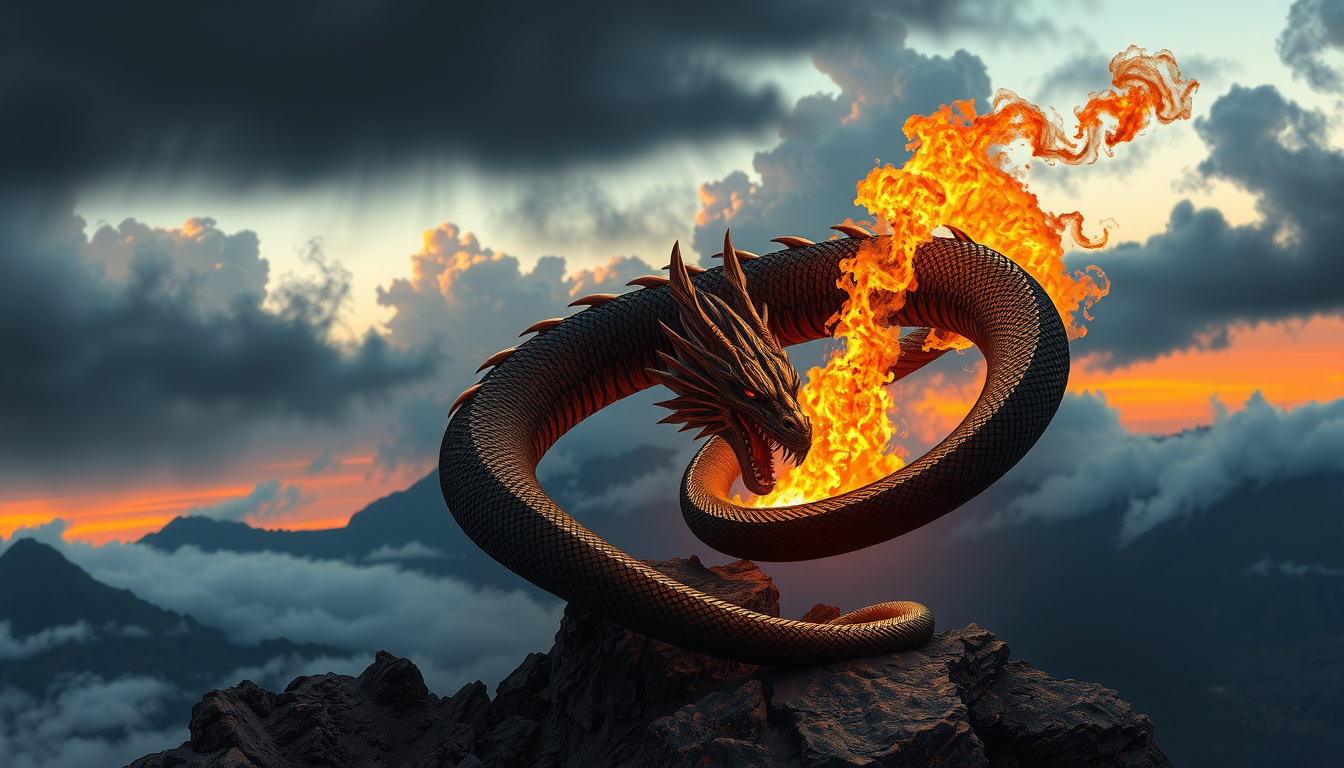
The Great Divide: Eastern vs Western Dragon Traditions
The most striking division in global dragon mythology separates East from West like a continental fault line.
Eastern Dragon Characteristics
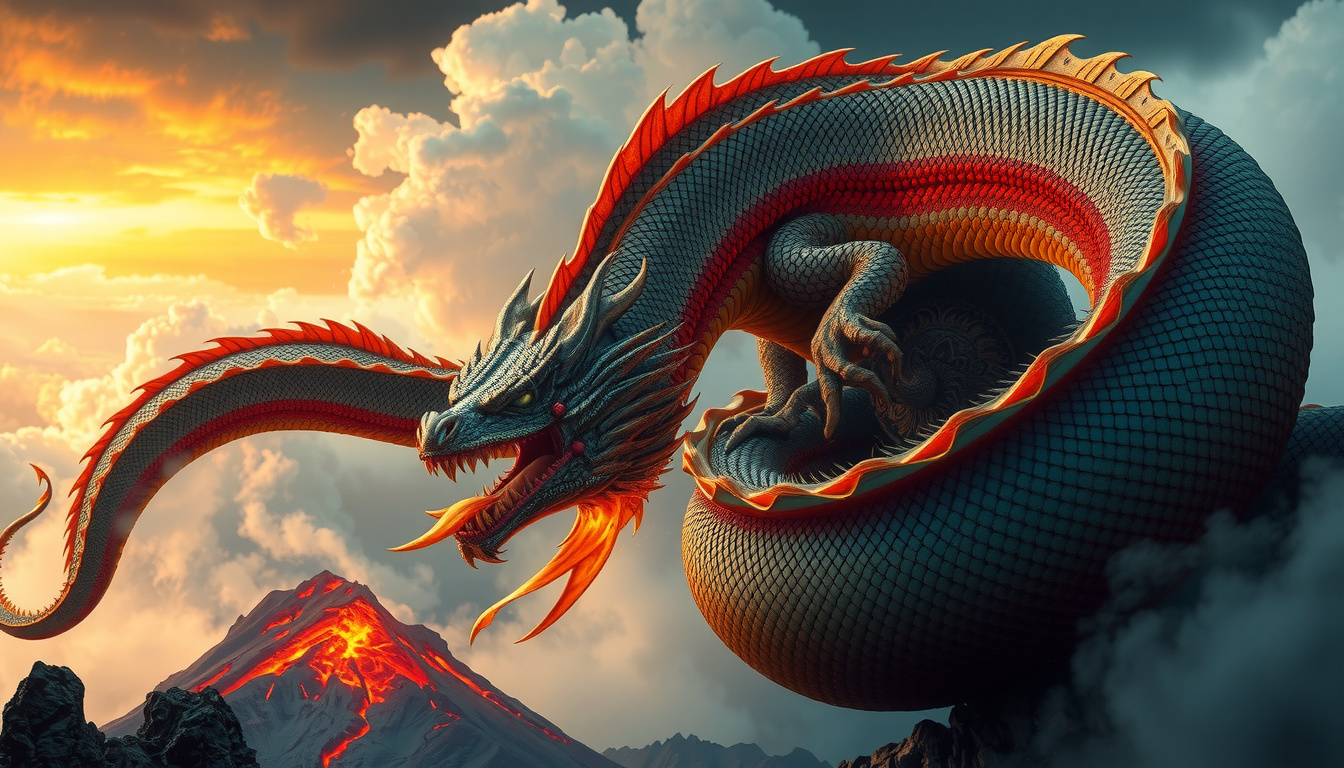
Eastern dragons, particularly those from China, Korea, and Japan, typically embody:
- Benevolence and natural harmony
- Serpentine bodies without wings that soar through clouds
- Divine authority over rain, rivers, and seasonal cycles
- Four legs, antler-like horns, and flowing manes
Chinese lung dragons possess flowing manes that ripple like water itself, commanding respect rather than fear.
Western Dragon Archetype
Western dragons present an entirely different archetype:
- Winged behemoths that breathe fire
- Treasure-hoarding tendencies
- Village-terrorizing behaviors
- Bat-like wings, four legs, and armored reptilian hides
- Intelligence that often surpasses human cunning
Their breath weapons range from flames to poisonous gas, making them formidable adversaries rather than benevolent guides.
Cultural Origins of the Divide
I've traced this fundamental difference to agricultural and philosophical roots. Eastern civilizations developed around river systems where water meant life, prosperity, and abundance. Dragons naturally became symbols of this life-giving force.
Western traditions emerged from harsher climates where winter's bite and natural disasters posed constant threats. Dragons embodied these chaotic, destructive forces that humans needed to overcome through courage and faith.
The symbolism extends beyond mere appearance:
Eastern Symbolism:
- Imperial power and divine mandate
- Service to Shinto deities as messengers
- Control over weather patterns and agricultural cycles
Western Symbolism:
- Spiritual trials and greed's corruption
- Humanity's struggle against primal chaos
- Paganism conquered by Christian faith
Ancient Mesopotamian and Egyptian Dragon Myths
Mesopotamian civilizations birthed humanity's earliest recorded dragon myths around 4000 BCE.
Tiamat: The Primordial Chaos Dragon
Tiamat, the primordial dragon of Babylonian creation myth, represents the salt-water chaos that existed before ordered creation. This massive serpentine goddess possessed the power to birth monsters and demons, commanding armies of chimeric creatures against younger gods seeking cosmic order.
The Enuma Elish describes Tiamat's epic battle against Marduk, the storm god who eventually slays her and creates the world from her corpse:
- Her blood becomes rivers
- Her bones form mountains
- Her tears create the Tigris and Euphrates
This foundational myth establishes dragons as primordial forces of chaos that must be conquered for civilization to flourish.
Egyptian Apep: The Chaos Serpent
Egyptian mythology features Apep (Apophis), a massive serpent dwelling in the underworld who attempts to devour Ra's solar barge each night. Unlike later European dragons, Apep lacks limbs and wings, resembling an enormous cobra with hypnotic eyes and venomous fangs.
Egyptian texts describe Apep as the embodiment of isfet-chaos, lies, and destruction-the eternal enemy of Ma'at's divine order.
The Mesopotamian Mushussu
The Mesopotamian dragon Mushussu, depicted on Babylon's Ishtar Gate, presents a more complex figure. This creature served as the sacred animal of Marduk himself, showing how dragons could represent both chaotic and divine forces within the same culture.
Mushussu's body combines serpent, lion, and eagle features-a chimeric form that influenced later European heraldic dragons.
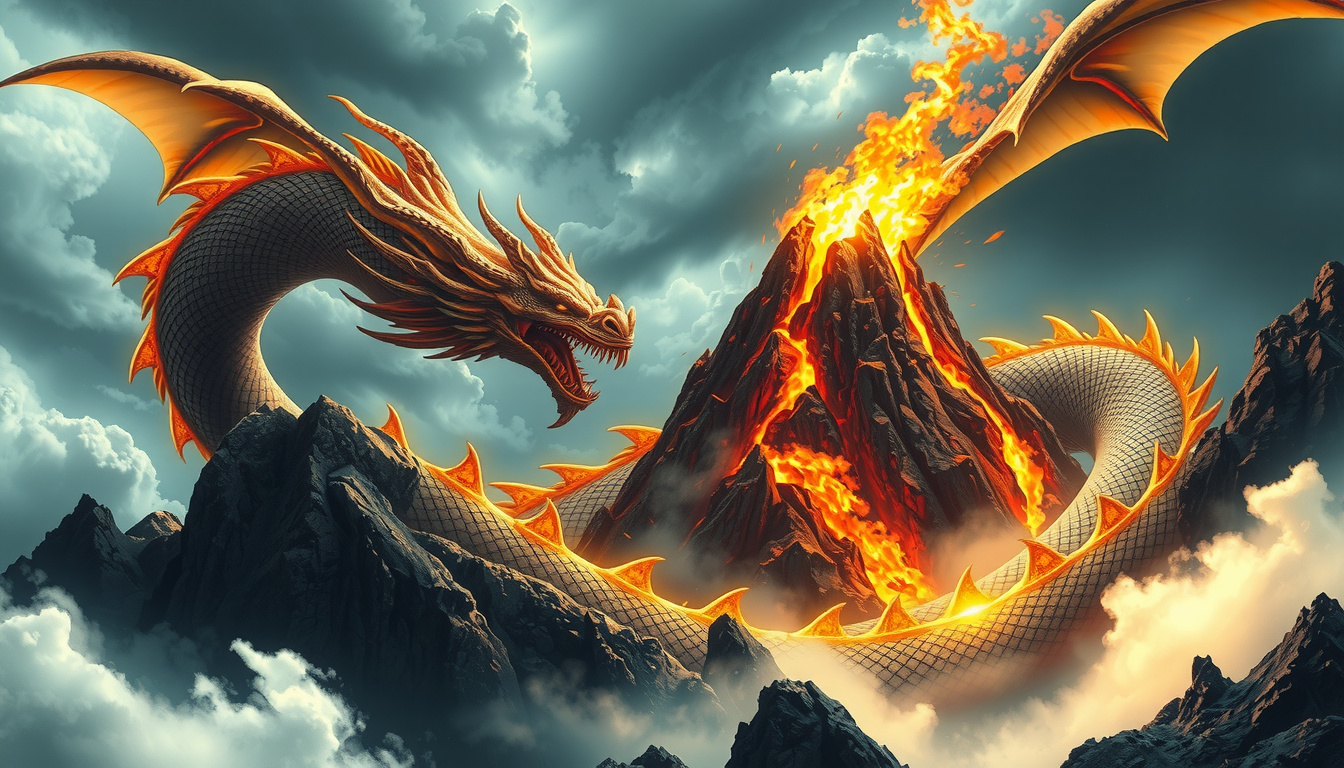
Norse and Germanic Dragon Lore
Nordic dragon mythology reached its pinnacle in the complex, doom-laden sagas of medieval Iceland and Scandinavia. These tales present dragons as creatures of immense intelligence, supernatural cunning, and apocalyptic power.
Major Norse Dragons
Jormungandr (The World Serpent):
- Coils around Midgard's entire circumference
- Represents cyclical time and inevitable fate
- Will poison the sky during Ragnarok while killing Thor
Fafnir:
- Originally a dwarf who transformed through greed
- Murdered his father for cursed golden treasure
- Slain by the hero Sigurd, who gains wisdom from his blood
Nidhögg:
- Gnaws constantly at Yggdrasil's roots
- Represents entropy's assault on cosmic order
- Feeds on corpses In the dishonored dead
Germanic Dragon Characteristics
Unlike their fire-breathing descendants in later fantasy literature, Norse dragons often possessed:
- Shape-shifting abilities
- Prophetic knowledge
- The power to speak in riddles revealing hidden truths
- Connections to supernatural wisdom and nature communication
Germanic dragons often guard specific locations-burial mounds, treasure hoards, or sacred groves. They represent dangerous knowledge that lies beneath civilization's surface, wisdom that can only be gained through mortal peril.
Celtic and British Dragon Traditions
Celtic dragon mythology weaves through field and legend like morning mist across ancient hillforts. These dragons, often called “worms” or “wyrms,” typically inhabit specific geographical features serving as guardians of sacred spaces and otherworldly knowledge.
Welsh Dragon Symbolism
The red dragon of Wales carries deep symbolic weight as both a national emblem and mythological creature. Medieval Welsh texts describe epic battles between red and white dragons:
- Red dragon: Native Celtic peoples
- White dragon: Saxon invaders
- Merlin's prophecies link dragon conflicts to Britain's political destiny
Irish Dragon Traditions
Irish mythology features dragons closely associated with the Tuatha Dé Danann and their magical treasures:
- Péist na Beithreach: Terrorized Lough Derg until Saint Patrick's banishment
- Pre-Christian texts present dragons as druid allies
- Capable of granting supernatural weapons or prophetic visions
Scottish Dragon Lore
Scottish dragon traditions center around specific clan territories:
The Worm of Lambton:
- Coiled around Lambton Hill seven times
- Only a Lambton family member could slay it
- Required a blessed sword covered in spikes
- Death came with a curse affecting nine generations
Arthurian Dragon Symbolism
Arthurian romance transformed Celtic dragon symbolism into elaborate allegorical structures:
- Arthur's prophetic dreams feature dragons representing kingdoms
- Lancelot battles dragons guarding the Grail castle
- Percival encounters dragons testing his purity
- The dragon beneath Dinas Emrys represents hidden truths emerging during crisis
Asian Dragon Varieties: Beyond China
Dragons in world mythology compared across Asian cultures reveal fascinating regional variations despite shared cultural foundations.
Japanese Dragon Traditions
Japanese ryu diverge significantly from Chinese traditions:
Physical Characteristics:
- Three toes instead of four or five
- Inhabit waterfalls, lakes, and coastal areas
- Command weather with subtle grace rather than imperial authority
Notable Japanese Dragons:
Yamata no Orochi:
- Eight-headed, eight-tailed chaos dragon
- Each head could devour a mountain
- Defeated by Susanoo through cunning and sake
Watatsumi:
- Dragon king of the sea
- Rules underwater palace with temporal anomalies
- Visitors find decades passed in apparent days
Korean Dragon Mythology
Korean yong dragons control agricultural cycles and regional weather:
- Four-legged, antlered creatures lacking wings
- Imugi: Wingless larval dragons requiring thousand years of virtue development
- Emphasis on moral development for draconic transformation
Southeast Asian Dragons
Vietnamese, Indonesian, and other Southeast Asian cultures feature maritime-adapted dragons:
Vietnamese Dragons:
- Long Vuong descendants founded royal dynasties
- Massive serpents with crocodilian features
- Creation myths describe dragon-phoenix mating producing first humans
Indonesian Naga:
- Multiple heads ruling underwater kingdoms
- Pearls, coral palaces, and magical weapons
- Shadow puppet performances depict moral counselors or adversaries
Tibetan Dragon Traditions
Tibetan mythology blends Chinese influences with indigenous Bon traditions:
- Druk (Thunder Dragons): Create fierce mountain storms
- Lu Dragons: Inhabit sacred lakes and springs
- Bhutanese flag features protective white druk
Dragons in the Americas and Africa
African Dragon Traditions
African dragon mythology contains sophisticated draconic symbolism often overlooked by Western scholars.
Rainbow Serpent Traditions:
- Creators and maintainers of life
- Arch across sky as rainbows bringing seasonal rains
- Aido-Hwedo: Supports world structure, movements create earthquakes
Regional African Dragons:
- Mokele-mbembe: Central African vegetation-eating river dragon
- Inkanyamba: South African tornado-creating serpent
- Elaborate appeasement rituals prevent storm damage
Pre-Columbian American Dragons
Aztec Traditions:
- Quetzalcoatl: Feathered serpent combining earth and sky
- Taught humans agriculture, calendars, and metallurgy
- Represents wisdom, fertility, and morning star
Maya Traditions:
- Kukulkan: Maya equivalent of Quetzalcoatl
- Architectural shadows create descending serpent illusions
- Demonstrates dragons' astronomical and agricultural connections
Inca Traditions:
- Amaru: Two-headed winged serpent
- Traversed underground passages connecting sacred sites
- Protected spiritual significance of precious metals
North American Indigenous Dragons
- Piasa: Illinois River bluff bird-dragon
- Mississippian horned serpents with bat wings
- Widespread pre-contact dragon beliefs
Common Themes and Symbolic Meanings
After analyzing hundreds of dragon myths across six continents, several universal themes emerge transcending cultural boundaries.
Universal Dragon Archetypes
The Guardian:
- Chinese dragons guard imperial treasures and celestial knowledge
- Norse dragons protect burial mounds and cursed gold
- Celtic dragons watch sacred groves and otherworldly portals
- Extends beyond physical protection to spiritual wisdom
The Transformer:
- Heroes gain abilities through dragon blood consumption
- Greedy individuals transform into dragons through moral corruption
- Dragons represent liminal space between human and divine consciousness
The Dual Nature:
- Creation and destruction within same structure
- Chinese dragons bring life-giving rains and devastating floods
- European dragons hoard enriching treasure while destroying unworthy seekers
Symbolic Associations
Precious Materials:
- Dragons guard gold, pearls, jewels, magical artifacts
- Treasure represents concentrated wisdom and spiritual achievement
- Metaphor for knowledge accessed through overcoming limitations
Water Connections:
- Present in 80% of dragon traditions studied
- Control rivers, lakes, rainfall, seasonal floods
- Links to unconscious forces, emotional depths, creation mythology
Supernatural Intelligence:
- Surpasses human cunning while maintaining natural instincts
- Speaks in riddles, prophesies future events
- Rewards wisdom and courage, punishes greed and hubris
Serpentine Form:
- Connects to ancient fertility symbols
- Represents seasonal cycles and life-death regeneration
- Even winged dragons maintain elongated, snake-like bodies
Evolution and Modern Interpretations
Modern dragon interpretations reflect contemporary psychological understanding while maintaining ancient symbolic structures.
Psychological Perspectives
Carl Jung's analytical psychology identifies dragons as shadow archetypes representing repressed consciousness aspects requiring integration rather than simple conquest. This approach explains dragons' continued relevance in modern fantasy and popular culture.
Literary Evolution
Tolkien's Smaug transformed 20th-century dragon portrayals by combining Norse characteristics with modern psychological complexity:
- Intelligence, vanity, and verbal manipulation
- Traditional treasure-hoarding and destructive power
- Complex personality rather than simple monster
- Influenced decades of subsequent fantasy literature
Contemporary Interpretations
Environmental Symbolism:
- Natural forces threatened by industrial civilization
- Wilderness wisdom and ecological balance representation
- Spiritual aspects of humanity's natural world relationship
Digital Dragons:
- Video game culture creates new mythologies
- Interactive storytelling blending global traditions
- Moral choice systems echoing ancient wisdom themes
Urban Fantasy:
- Ancient beings adapting to contemporary society
- Supernatural powers handling modern technology
- Tradition versus progress themes
Scientific Perspectives:
- Dinosaur and prehistoric megafauna discoveries influence interpretations
- Possible cultural memories of large reptilian species encounters
- Evolutionary biology perspectives on mythological analysis
Climate Change Metaphors:
- Dragon imagery describes extreme weather events
- Seasonal disruptions and environmental damage responses
- Symbols of planet's reaction to human activity
The enduring appeal of dragons in world mythology compared across cultures and centuries suggests these creatures represent fundamental aspects of human consciousness transcending specific historical contexts. Whether viewed as external adversaries, internal psychological forces, or cosmic principles, dragons continue serving as powerful symbols for humanity's ongoing relationship with mystery, power, and transformation.
Dragons remain humanity's most persistent and adaptable mythological creation, evolving with each generation while maintaining connection to ancient wisdom traditions. They bridge the gap between primal fears and cosmic understanding, offering symbolic structures for handling life's greatest challenges and transformations. From ancient Mesopotamian chaos dragons to modern environmental guardians, these legendary creatures continue explaining the deepest currents of human imagination and spiritual development.