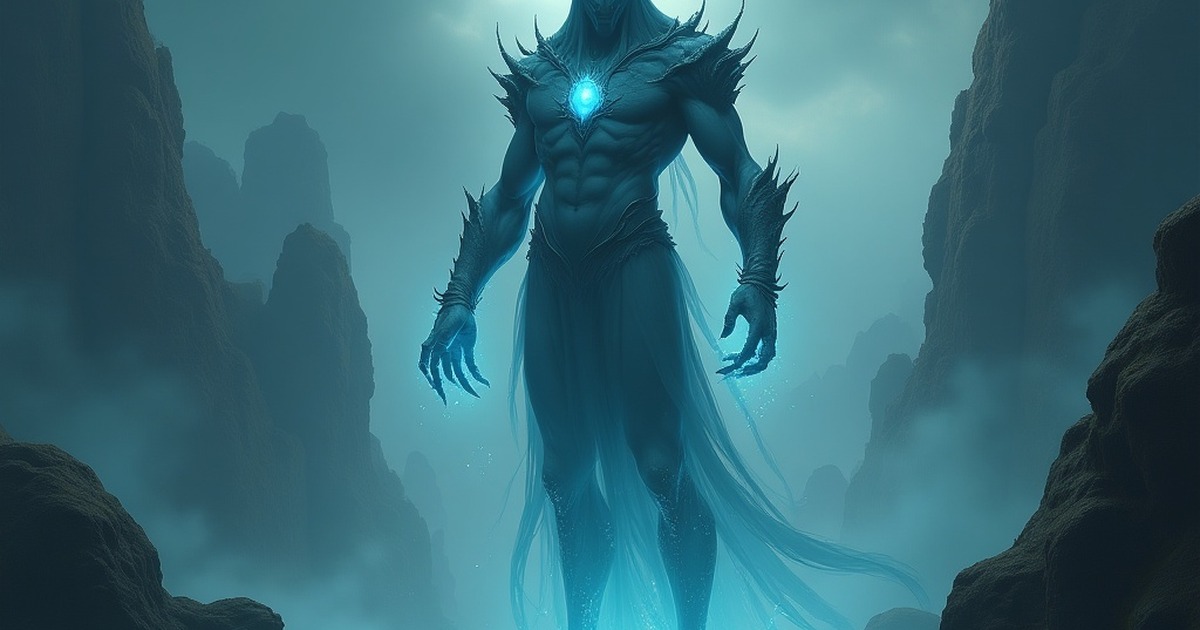
In Norse mythology, Ragnarok represents far more than a simple apocalypse-it's a complex cycle of destruction and renewal that reshapes the entire cosmos. This prophetic event, literally meaning ‘fate of the gods,' encompasses betrayal, epic battles, and ultimately, hope for a new world.
This post contains affiliate links. If you purchase through these links, we may earn a commission at no extra cost to you.
The complex mixes of world mythologies reveal how Norse mythology Ragnarok explained differs fundamentally from other apocalyptic narratives. While many cultures envision an ending, the Norse tradition embraces both destruction and rebirth as necessary partners in cosmic evolution. The surviving texts, primarily the Poetic Edda and Prose Edda, paint a vivid picture of gods who know their fate yet march toward it with stoic determination.
What is Ragnarok in Norse Mythology?
Ragnarok (pronounced “RAHG-nah-rock”) literally translates to “fate of the gods” or “twilight of the gods” in Old Norse. The term combines:
- “Ragna” (genitive plural of “regin”) – gods or ruling powers
- “Rǫk” – fate, judgment, or twilight
This linguistic precision reveals something deep: the Norse didn't view this as random catastrophe, but as inevitable destiny woven into the fabric of existence.
The concept encompasses three distinct but interconnected phases:
What sets Ragnarok apart from other mythological endings is its cyclical nature. The Norse cosmos operates on principles of eternal return-destruction enables rebirth, death feeds new life, and endings become beginnings. This perspective proves uniquely sophisticated in comparative mythology, acknowledging that creation requires destruction of what came before.
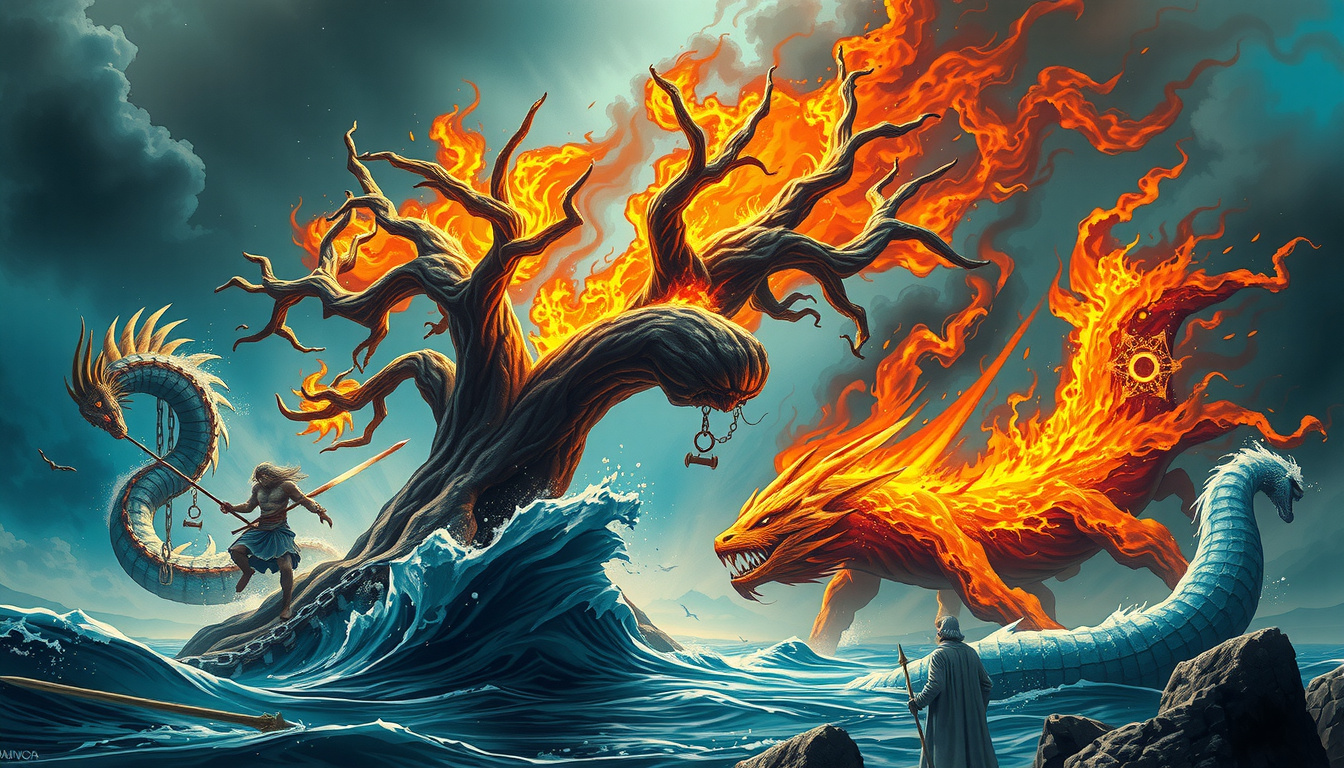
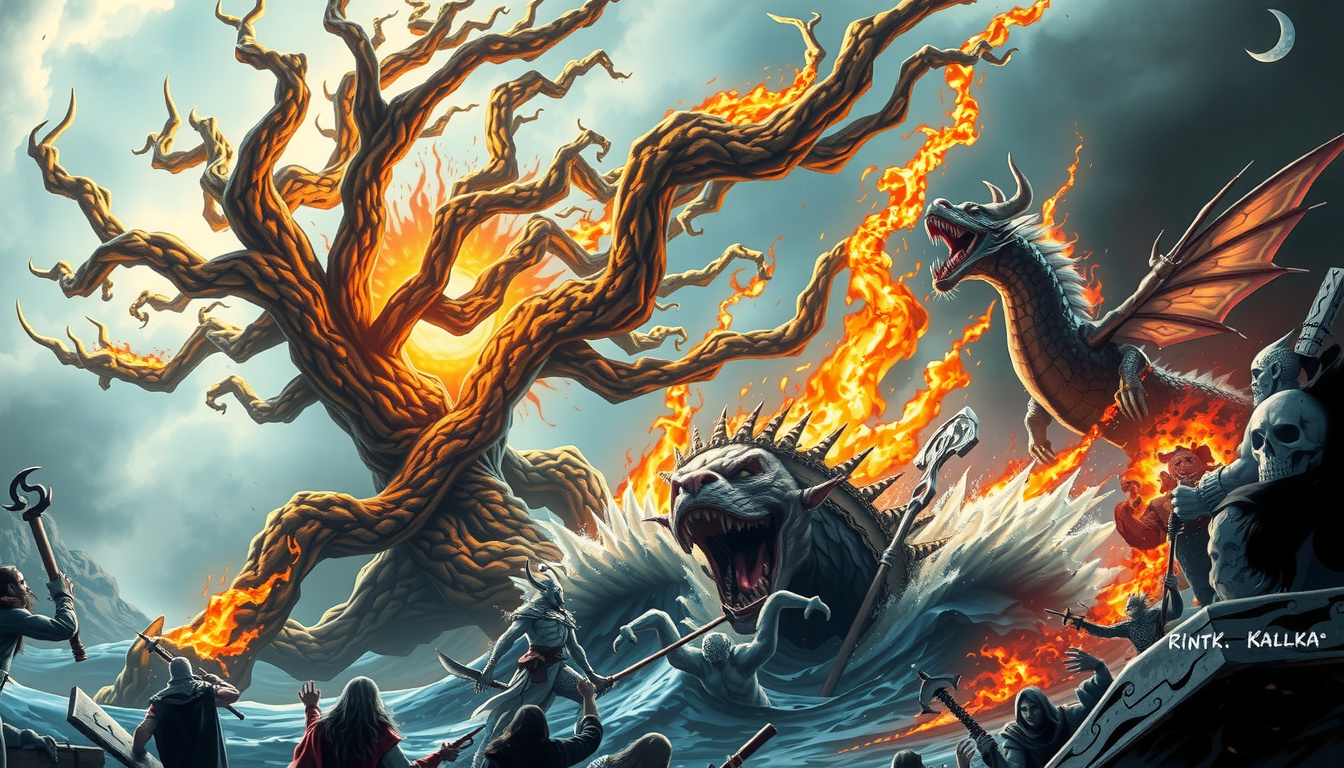
The prophecy touches every aspect of Norse cosmology. The nine areas connected by Yggdrasil, the World Tree, each face their own versions of catastrophe. Asgard burns, Midgard floods, and even the roots of Yggdrasil tremble. Yet the tree itself survives, sheltering the seeds of the new world.
The Prophecies and Sources of Ragnarok
The most detailed account of Ragnarok appears in the Völuspá (Prophecy of the Seeress), the opening poem of the Poetic Edda. This haunting text presents the vision of a völva (seeress) who recounts the creation of the world and foretells its destruction. Snorri Sturluson later expanded these prophetic fragments in his Prose Edda, particularly in the section called Gylfaginning.
The Warning Signs
The völva's prophecy follows a specific sequence of warning signs:
Fimbulwinter: A harsh winter lasting three full years without summer's relief. This detail reflects genuine climatic fears of medieval Scandinavians, who understood how quickly harsh weather could bring starvation and social collapse.
Cosmic Darkness: The wolves Skoll and Hati, who perpetually chase the sun and moon, finally catch and devour their prey, plunging the world into darkness.
Moral Decay: Brothers fighting and killing each other, families destroying themselves through betrayal, and sacred bonds crumbling. The Völuspá describes this as “axe-time, sword-time, shields are cloven” and “wind-time, wolf-time, before the world goes headlong.”
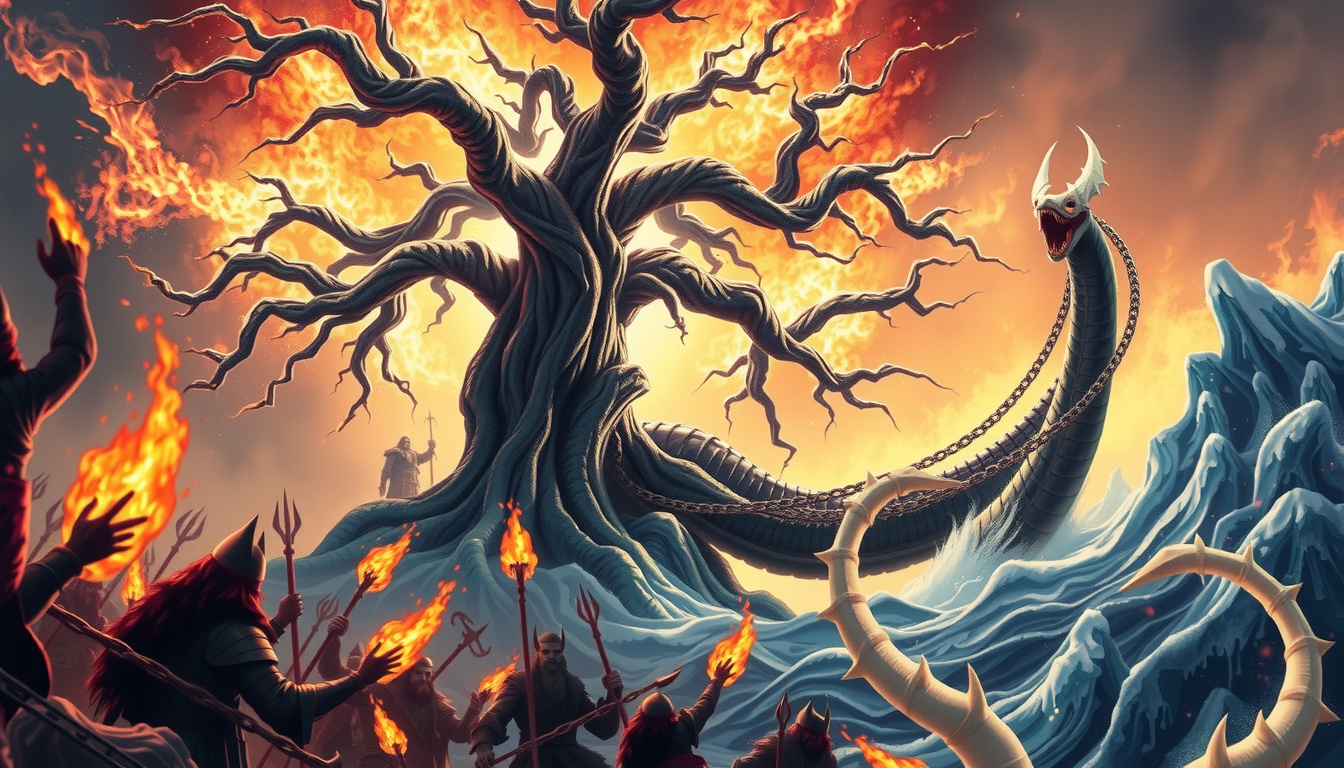
Breaking of Bonds: Loki escapes his torturous imprisonment beneath the earth, and the monstrous wolf Fenrir breaks free from the magical chain Gleipnir.
Archaeological Evidence
Archaeological evidence suggests these stories carried deep cultural resonance:
- The 10th-century Gosforth Cross in Cumbria, England, depicts scenes from Ragnarok alongside Christian imagery
- Runestones across Scandinavia reference prophetic elements, indicating widespread familiarity
- Norse burial customs included careful nail-trimming of the dead to prevent contributing materials to Naglfar, the doomsday ship made from fingernails and toenails
The sources describe cosmic earthquakes that shake the foundations of all areas. Mountains crumble, trees uproot, and the sea surges onto dry land. This grotesque detail about Naglfar served practical purposes, reinforcing cultural practices through mythological consequence.
The Events Leading to Ragnarok
The chain of events precipitating Ragnarok begins generations before the final battle, rooted in divine choices and broken oaths. The gods themselves set these forces in motion through decisions that prioritize short-term safety over long-term wisdom.
The Binding of Fenrir
The binding of Fenrir represents a crucial turning point. The wolf had been raised in Asgard, but as he grew larger and stronger, the gods became frightened. They commissioned the dwarfs to create Gleipnir, a magical chain disguised as a silken ribbon but stronger than any iron.
To convince Fenrir to accept the binding, the gods claimed it was merely a test of his strength. However, Fenrir sensed deception and agreed only if one of the gods placed their hand in his mouth as surety. Only Tyr, god of war and justice, possessed the courage to make this sacrifice.
When Fenrir discovered he couldn't break free, he bit off Tyr's hand. The gods had gained temporary security but lost honor through their deception. This act of treachery demonstrates how fear corrupts divine wisdom, creating the very enemies the gods sought to prevent.
Loki's Punishment
Loki's punishment following Baldr's death provides another catalyst for Ragnarok. After organizing the death of the beloved god of light and purity, Loki was captured and bound beneath the earth with chains made from his son Váli's entrails, after transforming Váli into a wolf who tore apart his brother Narfi.
A serpent was positioned above Loki's face to drip burning venom. His wife Sigyn catches most of the venom in a bowl, but when she must empty it, the poison burns Loki's face, causing him to writhe in agony. These convulsions create earthquakes throughout the nine areas.
The Death of Baldr
The death of Baldr itself requires understanding as a precursor to the end times. Baldr suffered prophetic dreams of his own death, prompting his mother Frigg to extract oaths from all things not to harm him. She overlooked only mistletoe, considering it too young and harmless to pose a threat.
Loki discovered this oversight and crafted a dart from mistletoe, which he gave to the blind god Höðr during a game where the gods threw objects at the now-invulnerable Baldr. The mistletoe dart killed Baldr instantly.
Baldr's death represents more than personal loss-it signals the beginning of cosmic darkness. His name connects to words meaning “light” and “day,” and his death foreshadows the eventual consumption of the sun and moon.
The Great Battles of Ragnarok
The climactic confrontations of Ragnarok unfold across the plain called Vígríðr, which stretches one hundred leagues in each direction. This vast battlefield accommodates the converging armies of gods, giants, monsters, and the honored dead.
The Divine Army
Odin leads the Einherjar, the chosen slain warriors who have feasted and fought in Valhalla since their earthly deaths. These elite fighters number 432,000, having spent centuries preparing for this moment through daily combat and nightly feasting, their wounds healing completely for the next day's battle.
Key Battles
Thor vs. Jormungandr: The ultimate clash between order and chaos. Thor succeeds in killing the World Serpent with his hammer Mjolnir, but the creature's dying breath releases clouds of poison so toxic that Thor can only take nine steps before collapsing dead.
Odin vs. Fenrir: Both recognize their fates yet cannot avoid them. Their battle ends with Fenrir devouring the All-Father, but Odin's son Víðarr immediately avenges his father's death by tearing the wolf's jaws apart.
Freyr vs. Surtr: Freyr faces the fire giant in a battle he's doomed to lose. Having traded away his magical sword for love, he cannot defeat Surtr's flaming blade capable of burning entire worlds.
Loki vs. Heimdall: The trickster god and divine watchman destroy each other in single combat, symbolizing the complete breakdown of cosmic structure necessary before renewal.
The battles extend beyond individual duels to encompass entire armies. Giants pour forth from Jotunheim under Surtr's leadership, while the gods' forces include the Einherjar and remaining divine allies. The casualties mount until few remain standing on either side.
The Fate of the Gods and Cosmos
The destruction of Ragnarok extends far beyond battlefield casualties to encompass the complete dissolution of cosmic order. Surtr's flames consume not only Asgard but all inhabited areas, reducing the elaborate structure of Norse cosmology to burning ash.
The Sequence of Destruction
The cosmic destruction follows a specific sequence that mirrors the creation process in reverse:
Water plays an equally destructive role alongside fire. The sea rises to flood the land while the serpent's poison breath creates toxic clouds that kill vegetation and animals even before Surtr's flames arrive.
Yggdrasil's Survival
Even mighty Yggdrasil trembles during these upheavals, though the World Tree itself survives. The tree's endurance through cosmic destruction reflects its fundamental nature as the backbone of existence itself. Its roots extend to the wells of wisdom, fate, and memory, connecting all potential realities across time and space.
The gods face their deaths with characteristic Norse stoicism, knowing their fates yet refusing to flee. This models the heroic ideal of facing inevitable death with courage rather than futile resistance. The concept of fate operates as an inexorable force that even gods cannot escape-their knowledge of approaching doom grants only the opportunity to choose how they'll meet their ends.
Renewal and Rebirth After Ragnarok
From the ashes and floods of total destruction, a new world emerges that surpasses the previous creation in beauty and righteousness. The earth rises fresh and green from the sea, waters run clear, and fertile fields spring up without need for development.
The Survivors
Human Survivors: Two humans, Líf and Lífþrasir (Life and Life-yearner), hide within Yggdrasil during the conflagration. The World Tree's protective embrace shields them from both flames and toxic aftermath, providing morning dew for sustenance. These survivors emerge to repopulate the new world, carrying forward human knowledge while leaving behind previous corruption.
Divine Survivors: Several gods survive to inherit the renewed creation:
- Baldr and Höðr return from Hel's area, their ancient conflict resolved
- Víðarr and Váli, Odin's sons, possess the strength to survive Ragnarok's trials
- Thor's sons Móði and Magni inherit Mjolnir, ensuring continued divine protection
The Improved Creation
The renewed creation operates under improved cosmic principles:
- Moral advancement: Oath-breaking, kinstrife, and other corruptions that precipitated Ragnarok won't plague this new age
- Shared wisdom: Divine knowledge becomes more widely distributed rather than concentrated in single figures
- Enhanced geography: Mountains of gold, rivers of milk, and fields embodying abundance and peace
- Eternal dwellings: Halls like Gimlé provide beautiful homes for the righteous
Archaeological and textual evidence suggests some versions include Christian influences, particularly moral judgment determining afterlife conditions. However, the core Norse elements-cyclical time, heroic acceptance of fate, and renewal through destruction-remain distinctly Scandinavian in character.
Modern Interpretations and Cultural Impact
Contemporary scholarship interprets Norse mythology Ragnarok explained through multiple analytical lenses that reveal its sophisticated treatment of psychological, environmental, and social themes.
Psychological and Environmental Perspectives
Carl Jung identified archetypal patterns in the myth that connect across cultures, particularly the necessary destruction of outdated systems to enable growth. The myth's cyclical structure reflects psychological processes of death and rebirth during major life transitions.
Environmental interpretations gain relevance as climate change creates new apocalyptic anxieties:
- The Fimbulwinter parallels scientific models of nuclear winter or volcanic catastrophe
- Detailed attention to environmental collapse demonstrates sophisticated understanding of ecological interconnectedness
- Norse communities lived close enough to environmental extremes to understand climate vulnerability
Popular Culture Adaptations
Popular culture has embraced Ragnarok imagery while often simplifying its complex theological implications:
- Marvel films present Ragnarok as a singular event to prevent rather than inevitable renewal cycle
- Wagner's Ring Cycle transforms cosmic recycling into romantic tragedy
- Video games like God of War and Assassin's Creed Valhalla allow interactive exploration of themes
The myth's treatment of fate versus free will continues generating philosophical discussion. Norse characters know their destinies yet choose how to meet them, suggesting that dignity and courage matter more than outcomes.
Contemporary Relevance
Modern applications of Ragnarok themes include:
Religious Practice: Norse paganism (Asatru and Heathenry) grapples with literal versus metaphorical interpretations, often emphasizing environmental messages and courage in facing challenges.
Environmental Movements: Climate activists invoke Ragnarok imagery to describe consequences while emphasizing renewal themes to advocate for sustainable transformation.
National Identity: The myth continues influencing Scandinavian literature, art, and political discourse, with figures like Grieg and Bergman drawing on its themes.
Philosophical Structure: Ancient wisdom traditions provide structures for understanding modern challenges, offering both warnings about destructive consequences and hope for regeneration through fundamental change.
In cross-cultural apocalyptic literature, Ragnarok offers unique psychological resources for processing collective anxiety. Unlike purely destructive endings, it promises that catastrophe serves constructive purposes, clearing away corruption to enable better futures. This perspective provides hope without denying the reality of loss and suffering, creating a mature structure for understanding how communities survive existential challenges.
The enduring power of Norse mythology Ragnarok explained lies in its sophisticated balance of destruction and renewal, offering both realistic assessment of inevitable change and optimistic vision of what can emerge from apparent endings.