Amidst the fiery chaos of Ragnarök, the sky splits open, unleashing the monstrous serpent Jörmungandr, as gods like Odin and Thor brace for their inevitable fates. But what if this cataclysm isn’t just an end, but a profound exploration of destiny and rebirth? The original Old Norse texts reveal a world where the gods march knowingly toward death, entwined in a fate they can't escape. It gets darker. As monsters break free and the world burns, the Viking warriors’ understanding of honor and renewal emerges in stark clarity, challenging everything we thought we knew about their beliefs.
Key Takeaways
- Prepare for transformational change by recognizing the Fimbulvetr’s three-year winter as a metaphor for enduring tough times before significant shifts occur.
- Anticipate challenges by studying the fates of gods like Odin and Thor—understanding these narratives helps you strategize for overcoming personal obstacles.
- Build resilience using the stories of Víðarr and Váli, who survive and thrive post-catastrophe, illustrating that perseverance leads to renewal after hardship.
- Embrace cyclical patterns of life by drawing inspiration from Líf and Lífþrasir, who symbolize rebirth; this mindset fosters hope and adaptability in your own journey.
What Is Ragnarök in Norse Mythology?
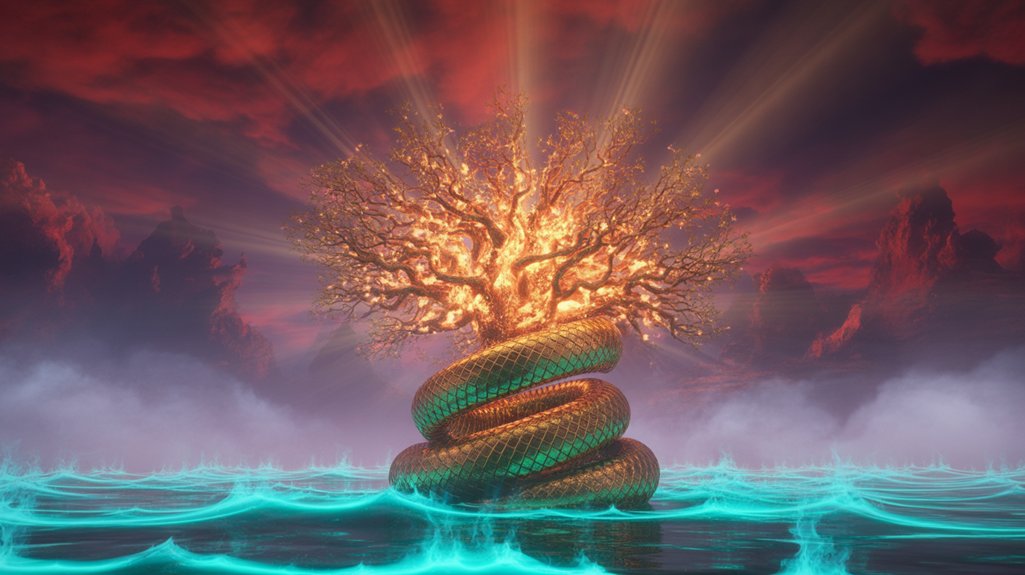
Ragnarök isn’t just an ending; it’s a cosmic upheaval, a cataclysmic showdown that rattles the very foundations of Norse mythology. Imagine a world plunged into darkness, where even the mightiest gods face their doom. That's the essence of Ragnarök, which translates to “Fate of the Gods.” It’s a striking reminder that no one, not even Odin or Thor, can escape the clutches of fate.
Ragnarök: where even the mightiest gods fall, proving that fate spares no one in this cosmic cataclysm.
The chaos kicks off with fimbulvetr (fimbul-vay-tur), a ruthless three-year winter that heralds moral decay and societal collapse. Picture it: a world blanketed in snow, where kindness vanishes, and survival reigns supreme. This sets the stage for epic confrontations.
Odin, the Allfather, faces Fenrir, the monstrous wolf. The detail most people miss? Fenrir's ferocity isn't just a beastly impulse; it symbolizes the inevitable chaos that even the gods can't control. In a tragic twist, Odin meets his end when Fenrir devours him.
And then there’s Thor. He battles Jörmungandr (YOR-mun-gahn-dur), the world serpent. It’s a fierce clash that echoes through the ages. Thor manages to slay the serpent but succumbs to its venom moments later.
Sound familiar? Think of how other myths frame the hero's journey—there’s often a sacrificial element, isn't there? In Greek mythology, for instance, heroes like Achilles face similar fates, showcasing a universal theme of sacrifice and loss.
What’s fascinating here is that Ragnarök isn't merely an end but a beginning. The Prose Edda, compiled by Snorri Sturluson around 1220, along with the Poetic Edda, reveal a cyclical worldview. After destruction comes rebirth. In fact, this cyclical nature of existence is a core tenet of Norse mythology gods and goddesses.
Survivors like Líf (LEEV) and Lífþrasir (LEEV-thra-seer) will emerge to repopulate the earth, embodying the Norse belief in renewal. This mirrors other cultural narratives, like the flood myths seen in Mesopotamian legends, where calamity paves the way for new beginnings.
Now, here’s a twist: scholars disagree on the exact sequence and details of these events. The texts are fragmentary, and multiple versions exist, each offering a different lens on this pivotal moment in Norse cosmology. This uncertainty adds layers to the narrative, inviting us to explore the rich tapestry of interpretations.
So, what most people don’t realize is that Ragnarök reflects a universal struggle against fate and chaos, a theme echoed in many traditions. Just as the Aztec god Quetzalcoatl (ket-sahl-koh-AH-tul) faces challenges that lead to cyclical creation and destruction, so too do the Norse gods.
It’s a reminder that, across cultures, the dance of life and death, chaos and renewal, is a shared narrative—a profound connection that binds us all.
What Signs and Events Herald Ragnarök's Beginning?
Before the final clash between gods and giants ignites, a series of chilling omens herald the onset of Ragnarök. Picture this: Fimbulvetr, a relentless winter lasting three years, descends upon the realms, sowing discord and moral decay. Society crumbles under its icy grip. During this bleak period, three roosters crow in unison—each sound echoing a warning of doom. What a striking image, right?
As the frost tightens its hold, the wolves Skoll and Hati finally fulfill their eternal chase, devouring the sun and moon. Darkness engulfs the world, amplifying the dread already smothering the Nine Realms—a scene reminiscent of the Greek myth of Eclipses, where Persephone (per-SEF-oh-nee) descends into the underworld. Both tales reflect humanity's anxiety about light and order giving way to chaos.
Now, it gets darker. The monstrous hound Garmr breaks free from his bonds, howling a chilling note that shatters the silence. This detail is often overlooked: Garmr's name means “the Grim” in Old Norse, hinting at the terror he embodies. The gods can feel the chaos rising; they know this is just the beginning.
Then comes the moment that makes your heart race. Heimdall, the watchman of the gods, sounds the Gjallarhorn. Its clarion call reverberates through every corner of existence, summoning the gods to Vigrid for the ultimate confrontation. This moment mirrors the biblical shofar, a ram’s horn used to signal important events—both serve as a rallying cry, urging followers to prepare for what lies ahead.
What’s fascinating here is how these prophetic signs reflect a common motif across cultures: the transition from order to chaos. Think of the flood myths in Mesopotamian traditions, where the world is cleansed before rebirth. Ragnarök isn’t just an end; it’s a transformation, a necessary cycle. The concept of cyclical destruction and rebirth resonates deeply across various ancient mythologies.
So, here’s the detail most retellings miss: Ragnarök doesn't just signify destruction; it promises renewal. After the chaos, the world will be reborn, much like the cyclical nature of life and death celebrated in Hindu traditions. When we consider these narratives together, we see a deeper connection to human resilience.
What most people don't know about this myth is how it resonates with our own fears and hopes. The gods, just like us, face an inevitable end. Yet, in that end, there's a whisper of rebirth. Isn’t that a compelling thought?
What Happens During the Final Battle at Vigrid?
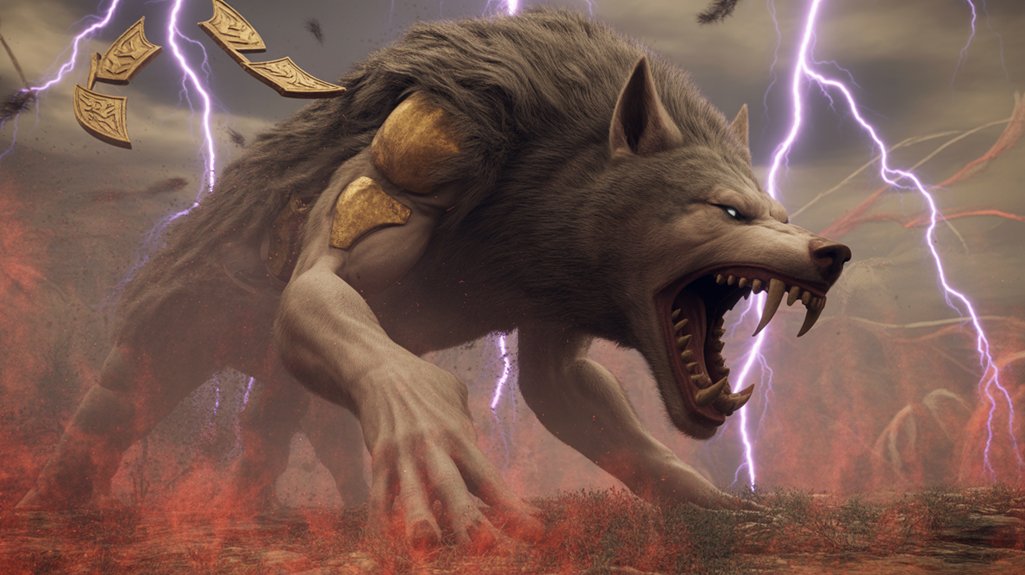
The final battle at Vigrid marks the culmination of all the prophecies and tensions that have been building throughout the saga, where Norse gods face their fated ends against chaos incarnate.
As Odin confronts Fenrir, Thor takes on Jörmungandr, and Heimdall clashes with Loki, these intense matchups not only seal the fates of the deities but also unleash cataclysmic forces that threaten the very structure of the Nine Domains. Fenrir, known as the monstrous wolf, embodies the chaos that the gods must face, symbolizing the ultimate challenge in their struggle against fate.
What unfolds in this epic showdown reshapes existence itself, leading us to explore the aftermath of such monumental conflict.
Gods Face Their Doom
As destiny converges on the vast plain of Vigrid, a cataclysmic clash unfolds. Here, gods and monsters engage in a cosmic ballet of death—an event known as Ragnarök. It’s a scene steeped in Norse mythology, yet it resonates with echoes from myths around the world. Sound familiar?
The gods face their prophesied end against Loki‘s forces, led by his monstrous children: Fenrir (FEN-reer) and Jörmungandr (YOR-moon-gahndur). What’s fascinating here is the inevitability of the key deaths—each one a thread pulled from the fabric of the Norse divine order.
- Odin falls to Fenrir. The All-Father, in a moment of tragic irony, is swallowed whole by the great wolf. Yet, there's a glimmer of hope: Víðarr (VEE-dahr), Odin's son, avenges him. He uses a special shoe—crafted from scraps of leather—to slay the beast. It’s a striking detail that highlights the importance of preparation in myth.
- Thor slays Jörmungandr. The thunder god defeats this Midgard Serpent, but in a cruel twist, he succumbs to its venom moments later. This reversal of fortunes ties back to themes of valor and sacrifice, common in many mythologies. For instance, think of Achilles in Greek lore, who faces a similar fate due to his own hubris.
- Heimdall and Loki perish. The watchman and trickster god engage in a fierce duel, ultimately killing each other. This is where it gets interesting—two figures representing order and chaos meet their end, a cosmic balance struck.
Freyr (FRAYR) also falls during this tumultuous battle, further deepening the pantheon’s losses. This narrative reminds us of the cyclical nature of life and death in mythology, akin to the cycle of creation and destruction in Hindu texts like the Mahabharata.
What most people don’t know about this myth is how it reflects deeper cultural fears. Ragnarök isn't just a battle; it symbolizes the end of an era, a theme that resonates across cultures. Consider the Biblical flood—another narrative of divine judgment and renewal. Or think of the Greek titanomachy, where the old gods fall to make way for the new.
The detail most retellings miss? The emotional weight borne by these gods. They aren't merely figures in a story; they embody the hopes, fears, and beliefs of a people. Scholars disagree on the exact origins of these tales, but their resonance has lived on through centuries, shaping cultural identities.
Visiting sites tied to these myths, like the remnants of ancient Norse settlements, brings the gravity of these narratives to life. You can almost hear their echoes in the winds.
Major Combat Matchups
The clash at Vigrid is a vivid tableau, a cataclysmic scene where gods meet their fates in combat. Here, Odin faces Fenrir, the monstrous wolf, but the outcome is grim. Fenrir swallows Odin whole, sealing the Allfather's fate.
But what's fascinating here? Víðarr, Odin's son, rises to avenge him, wielding a shoe crafted from the scraps of old leather—an intriguing detail that reflects the importance of everyday items in the grand narrative. This act of revenge echoes themes found in other cultures, like avenging heroes in the Mahabharata.
Thor's battle against Jörmungandr, the Midgard Serpent, unfolds with equal tragedy. He defeats the serpent but succumbs to its venom moments later. The dramatic irony! He’s celebrated for his strength, yet it’s his downfall.
Sound familiar? Think of Achilles, who falls not from his combat prowess but from a hidden vulnerability.
Freyr’s confrontation with Surtr, the fire giant, offers another layer. Surtr engulfs the world in flames after defeating Freyr. This scene evokes creation myths from around the globe, where destruction often paves the way for rebirth. The fire that consumes can also cleanse.
The detail most people miss? Freyr willingly faces Surtr without his sword—symbolizing sacrifice and the inevitability of fate.
Now, let’s pause. What about Heimdall and Loki? Their duel leads to mutual destruction. Each kills the other, reflecting deep themes of rivalry and balance. This isn’t mere chaos; it mirrors the cyclic nature of existence found in many traditions.
Consider the Greek myth of the Titanomachy, where the gods battle their predecessors in an equally destructive cycle.
Scholars often grapple with these narratives. The texts, primarily from the *Prose Edda* and the *Poetic Edda* (Snorri Sturluson, c. 1220; various poets), contain layers of meaning that can shift with interpretation.
The fragmentary nature of these sources leaves room for debate. For instance, some argue that Loki’s role as a trickster is more nuanced than mere villainy. What do you think?
As we explore these matchups, it becomes evident that Ragnarok's conclusion leaves neither side truly triumphant. The gods fall, but so do their adversaries, creating a landscape marked by loss.
This cycle of death and rebirth resonates through numerous cultures—Hindu texts, like the *Bhagavad Gita*, also grapple with the themes of duty and sacrifice in battle.
What most people don’t know about this myth is how it reflects the human condition—the struggle between fate and free will, the inevitability of loss, and the hope for renewal.
Each duel at Vigrid, while monumental, is also deeply personal. It reminds us that in our own struggles, victory often comes at a steep price, resonating through the ages and across cultures.
Widespread Cosmic Destruction
As the gods and giants unleash their final fury, Vigrid's plain transforms into a surreal tableau of cosmic destruction. Picture this: a reality unraveling before our eyes, as if the very fabric of existence is being torn apart. The ancient texts—especially the *Prose Edda* by Snorri Sturluson (c. 1220)—paint a vivid picture of Ragnarok, the cataclysmic event that echoes through cultures globally.
- Solar and Stellar Collapse: Imagine the sun extinguishing, leaving a chilling void. Stars fade from existence, plunging the cosmos into a primordial darkness reminiscent of the Greek myth of Nyx, the goddess of night. Sound familiar? It’s a shared motif across cultures—light and darkness engaged in a cosmic dance.
- Elemental Destruction: This is where it gets interesting. Surt’s flames engulf the world in an inferno, reminiscent of the Hindu god Shiva’s destruction during *Pralaya*—the cosmic dissolution. Just as flames consume, waters rise, creating a chaotic cycle of creation and destruction.
- Universal Submersion: The oceans then reclaim the land, echoing the flood myths found in the *Epic of Gilgamesh* and the Biblical narrative of Noah. The structure of ordered creation collapses into primordial chaos, a cosmic reset.
What’s fascinating here is that this isn't just battlefield carnage. Instead, it represents a systematic dismantling of the universe itself. Each event is a layer of destruction, reminiscent of the mythic cycles that scholars like Joseph Campbell have explored.
As I wandered through the remnants of ancient Norse sites, the weight of these narratives truly sank in. They’re not just stories; they reflect a deep-seated fascination with cycles of life, death, and rebirth.
What most people don’t know about this myth is the subtle yet profound implications it has for understanding not just Norse cosmology but the human condition itself. Each culture grapples with themes of destruction and renewal, whether through the Norse, the Hindu, or even the Aztec tales of Quetzalcoatl (ket-sahl-koh-AH-tul), who also faced trials of chaos.
Which Gods Die at Ragnarök and How Do They Fall?
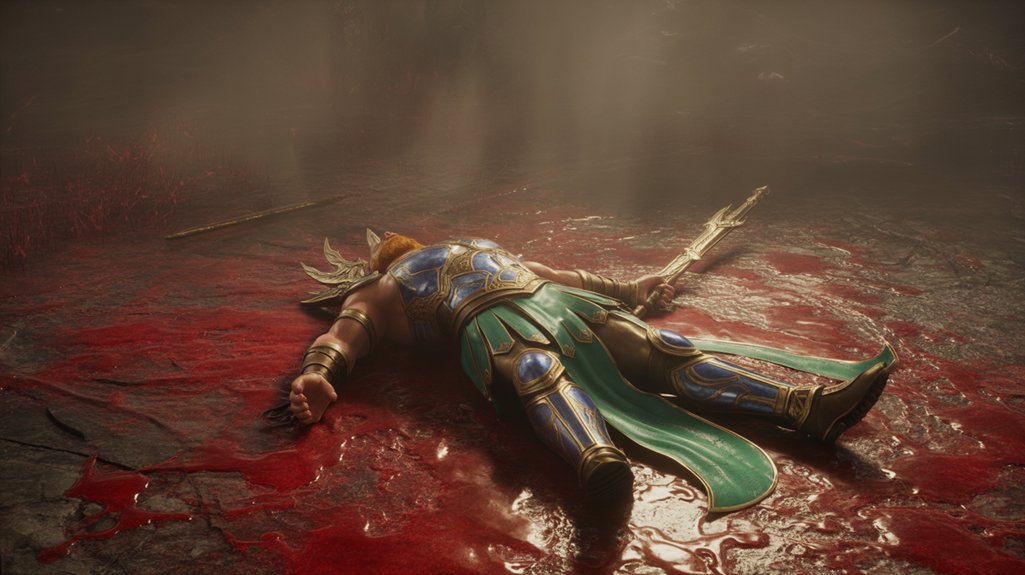
The cataclysmic battle of Ragnarök doesn’t just signify the end of an era; it’s a vivid tapestry of fate, woven with threads of prophecy and blood. Imagine a world where the gods, once untouchable, meet their doom in dramatic fashion.
Odin, the Allfather, meets his end at the jaws of Fenrir, the monstrous wolf. It’s a chilling fulfillment of prophecy echoing in the *Völuspá* (Poetic Edda, c. 1220), where the fate of the mighty Odin is foretold. Swallowed whole—what a striking image! It invites us to ponder: can even the greatest among us escape their destiny?
Thor faces his own tragic fate after defeating Jörmungandr, the world serpent. He delivers a fatal blow, but moments later, succumbs to the serpent's venom. This duality of victory and defeat is something we see in myths worldwide—think of Hercules battling the Hydra, only to face his own downfall later. Sound familiar?
Then there's the fierce clash between Loki and Heimdall. Their final encounter results in mutual destruction, both gods falling in an epic standoff. In the *Gylfaginning* (Prose Edda, Snorri Sturluson, c. 1220), their enmity has been building for ages, culminating in this moment. It’s fascinating how these personal rivalries can lead to cosmic ramifications.
Freyr's death at the hands of Surtr, the fire giant, is equally tragic. The blending of fire and ice during Ragnarök reflects a chaos reminiscent of other mythic tales, like the Hindu battle of gods and demons in the *Mahabharata* (c. 400 BCE). The elemental clash resonates across cultures, drawing parallels between divine conflict and human struggle.
And let’s not forget Tyr, the god of war, who meets his end at the jaws of Garmr, the fearsome hound guarding Hel's domain. The imagery here—death lurking at the gate—feels deeply resonant. In many traditions, guardians of the underworld often embody the finality of death. Think of Cerberus in Greek mythology, standing sentinel at the gates of Hades.
What's captivating here is how Ragnarök, despite its darkness, serves as a transformative moment. The gods’ deaths aren’t just endings; they’re beginnings, reshaping the cosmos. It gets darker. Not quite—there’s a hint of rebirth.
Here’s a detail most retellings leave out: the *Völuspá* suggests that from the ashes of this destruction, new life will emerge. The cycle of creation and destruction is a recurring theme across cultures. It echoes in the cycles of the seasons, the flood myths of Mesopotamia, and even the rebirth of Persephone (per-SEF-oh-nee) in Greek lore.
In the end, what most people don’t know about Ragnarök is that it’s not merely a story of doom; it invites reflection on the nature of fate and renewal, a theme that resonates through countless mythologies.
Who Survives Ragnarök to Inherit the New World?
Ragnarök unleashes chaos across the Norse cosmos, yet from this destruction, new beginnings emerge.
As we explore the survivors destined to reshape civilization, we see that Víðarr and Váli stand resilient, alongside Baldr and Höðr, who return from death to thrive on the rejuvenated Earth.
But what of humanity amidst the ruins? Here, only two souls—Líf and Lífþrasir—emerge from their sanctuary within Yggdrasill, ready to repopulate the world.
Gods Who Return Alive
After the cataclysm of Ragnarök, the world lies in ruins, but from the ashes rise a select few divine beings, destined to reshape existence itself. Imagine the dramatic scene: charred remnants of the old world flickering with the first hints of a new dawn. Who are these gods? What roles will they play in the rebirth of divine order?
The Divine Survivors:
- Víðarr (VEE-thar) and Váli (VAH-lee) – Sons of Odin, they're fated to inherit this post-apocalyptic world. Their mission? To establish a new order amidst the chaos. Isn’t it intriguing how sibling dynamics often play a crucial role in myth? Think of the Greek gods like Hades and Zeus—similar themes of rivalry and unity abound.
- Baldr (BAHL-dur) and Höðr (HUR-thur) – Both brothers emerge from Hel, the realm of the dead, their resurrection a powerful testament to the continuity of divine lineage. This motif of rebirth echoes across cultures; consider Persephone (per-SEF-oh-nee) in Greek mythology, who returns from the underworld to bring life back to the earth. Sound familiar?
- Móði (MO-thee) and Magni (MAH-nee) – These sons of Thor wield their father's hammer, Mjölnir, not just as a weapon but as a symbol of protection and order in this new era. What’s fascinating is the emphasis on inheritance—how divine powers are passed down, shaping future generations.
These gods convene at Iðavöllr, a sacred meeting place set against a backdrop of renewal. Here, they’ll collaborate with humanity’s survivors, Líf (LEEF) and Lífþrasir (LEEF-thra-sheer), who are destined to repopulate the earth. The detail most people miss? Iðavöllr itself is a symbol. It represents not just a physical space, but a bridging of divine and mortal realms.
Take a moment to reflect on the parallels across mythologies. The themes of destruction followed by rebirth are universal. In Hinduism, you see this with the cycle of creation and destruction in the stories of Shiva. In each case, there's a sense that the old must perish for the new to thrive.
Yet, scholars often find themselves in disagreement about the interpretations of these narratives. The text of the *Prose Edda* (Snorri Sturluson, c. 1220) offers one perspective, but oral traditions may color these tales in ways we can only guess at. Fragmentary texts can lead to diverse interpretations, leaving us with tantalizing mysteries.
As these divine figures gather, it’s not just about survival; it’s about the very foundation of a new society. What most people don’t know about this myth is how it reflects ancient societal values—order, kinship, and the balance between chaos and harmony.
This narrative invites us to consider our own cycles of destruction and renewal. In a world that often feels tumultuous, these ancient stories remind us that from ashes, new life can emerge. Can we find meaning in our own rebirths?
Humanity's Two Sole Survivors
As the gods reclaim their thrones at Iðavöllr, a scene unfolds that feels almost otherworldly: two mortals step into the light after enduring the cataclysm of Ragnarök. Líf (LEE-ev) and Lífþrasir (LEE-ev-thra-seer), whose names mean “Life” and “Eager for Life,” emerge from their sanctuary within Yggdrasil, the World Tree. They’ve survived not just the chaos but the fiery destruction that engulfed their world. Sustained by morning dew, they symbolize hope reborn amid devastation.
What's fascinating here is how their emergence signifies a fresh start for humanity. Unlike typical survivors who stumble from wreckage, Líf and Lífþrasir inherit an earth transformed. Fields yield crops without cultivation—nature's generous gift to a new generation. This isn't mere survival; it's renewal. It echoes the cyclical worldview in Norse mythology: destruction isn't the end but a necessary transformation. As seen in the Poetic Edda (c. 1200), the narrative reveals that from ashes, life can flourish anew, much like the phoenix of other traditions.
So, what’s their task? Quite simply, they must repopulate the world alongside returning gods, ensuring humanity's continuation in this rejuvenated cosmos. This motif of rebirth isn't unique to Norse mythology. Consider the tale of Deucalion in Greek myth, who survives a great flood and repopulates the earth with his wife, Pyrrha. Or, think of the Hindu cycles of creation and destruction, where Brahma (BRAH-muh) continually creates anew. Sound familiar?
Engagement break: Why does this theme of rebirth resonate across cultures? Perhaps it speaks to a universal human hope—the belief that even after the darkest times, light and life find a way to return.
Returning to Líf and Lífþrasir, the detail most people miss is the significance of their names. They’re not just survivors; they embody life itself, urging us to consider the vitality inherent in existence. The texts hint at a deep interconnectedness between human fate and divine intention. This resonates with the Zoroastrian myth of the Fravashis, spirits who guide the living towards good, emphasizing that life is a collaborative endeavor with the divine.
As we reflect on this myth, it’s essential to acknowledge that scholars disagree on the exact origins of these stories. The fragmentary nature of sources like the Prose Edda (Snorri Sturluson, c. 1220) leaves room for interpretation. Yet, it’s clear that the themes of survival and rebirth echo across cultures, inviting us to ponder the resilience of life in the face of overwhelming odds.
What most people don’t know about this myth? The very notion that Líf and Lífþrasir might represent the duality of existence—life and the eager pursuit of it—captures a profound truth: that the essence of being isn't just to survive but to thrive. As they step into this new world, we’re reminded that every ending can seed a new beginning.
How Do Líf and Lífþrasir Repopulate the Reborn Earth?
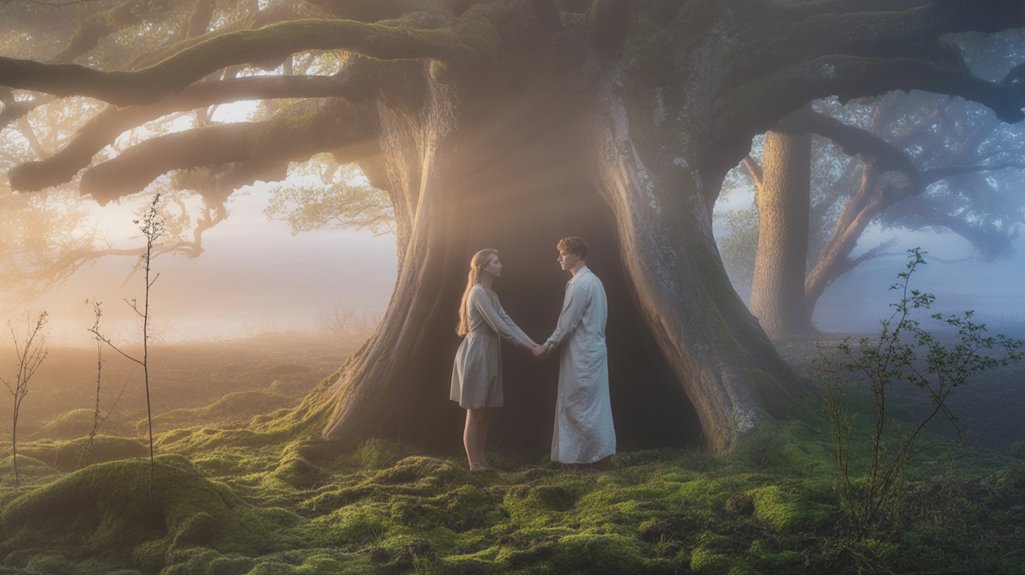
Following the cataclysmic fires of Ragnarök, two humans emerge from their sanctuary within Yggdrasil, the World Tree, to inherit a cleansed Earth. Líf and Lífþrasir—whose names translate to “Life” and “Life's Thirst”—embody a breathtaking renewal of humanity. Isn’t it fascinating how these figures arise from destruction, representing hope and continuity?
They sustain themselves on morning dew, a detail brimming with symbolic significance about rebirth after devastation. This isn't just nourishment; it’s the essence of life itself, distilled from the very cosmos.
Their story evokes three key Norse concepts:
- Cyclical time: This isn’t a permanent end. Instead, it’s a shift into new beginnings, echoing the rhythms of nature. Sound familiar? Think of the cyclical motifs in other cultures, like the Hindu concept of *yugas*, where time spirals through creation and destruction.
- Resilience through preservation: By taking refuge in the World Tree, they’re protected by the universe’s most sacred structure. It suggests that life, in its fundamental essence, is indestructible. What an exhilarating notion!
- Hope amid devastation: Even in total cosmic annihilation, humanity's spark endures. These two survivors carry the torch forward, ensuring the continuation of their kind.
This narrative beautifully illustrates the Norse worldview that life relentlessly renews itself. What appears to be an absolute finality transforms into a dynamic rebirth, with Líf and Lífþrasir at the helm of humanity’s resurgence.
Engagement Break: Here’s a detail most retellings overlook: the significance of dew. It’s not just a source of sustenance; in many cultures, including the Celtic tradition, dew is seen as a mystical substance, tied to the divine and the cycle of life.
When you read the original Old Norse texts, particularly the *Prose Edda* by Snorri Sturluson (c. 1220), you get a richer sense of the depth in these symbols. The text hints at a world where destruction fuels creation, a theme echoed in other mythologies. For example, think of the *Mahabharata*, where the cyclical destruction of kingdoms leads to rebirth and moral renewal.
What's captivating here is the interplay of destruction and renewal across traditions. Líf and Lífþrasir stand as a testament to this universal narrative thread. They reflect not just a Norse perspective but a shared human experience that transcends cultural boundaries—each tradition reshaping the same fundamental truth: life persists.
What most people don’t realize about this myth is that it serves as a reminder of the resilience inherent in all life, a message that resonates deeply in our modern world, where renewal often comes from the ashes of despair.
Did Vikings Believe Ragnarök Meant Rebirth or Total Annihilation?
Picture this: the world shrouded in chaos, the sky darkened by the clash of titans. This is Ragnarök, the cataclysmic event in Norse mythology where gods and monsters collide, leading to an end that’s both terrifying and transformative. But what’s truly fascinating here is how the Vikings themselves didn’t share a single vision of what Ragnarök meant. Their beliefs shifted dramatically across time and geography.
In the early pagan accounts, particularly within the *Poetic Edda* (c. 1250), we see a grim fatalism. The destruction appears absolute, with little hope for renewal. It’s a stark reflection of Viking life, where survival often hinged on fierce battles and harsh realities. The vivid imagery of the *Völuspá*—the prophecy of the seeress—paints a picture of annihilation. The gods fall, the world burns, and darkness reigns.
But then things get interesting. As Christianity began to weave its way into Norse culture, concepts of rebirth emerged. This is where it gets captivating. Later interpretations introduced figures like Vidar and Vali, who survive the chaos, along with human progenitors Líf (LEE-v) and Lífþrasir (LEE-vthrah-seer), tasked with repopulating a rejuvenated world. Sound familiar? The echoes of resurrection from Christian theology are unmistakable.
What’s especially intriguing is the duality of these narratives. Destruction and regeneration aren’t merely opposing forces; they’re intertwined. It reflects a cyclical cosmology, where death paves the way for new life. Scholars have noted this pattern across various cultures. Take the Greek myth of Persephone (per-SEF-oh-nee), who descends into the underworld only to bring forth spring. Or the flood myths found in many traditions, where devastation leads to renewal.
Here’s the detail most retellings leave out: different Viking communities over the centuries might've embraced both visions—some clinging to doom, others to hope. This fluidity suggests beliefs weren’t static; they evolved through cultural contact and existential reflection.
When you read the original Old Norse texts, you can feel this tension. The *Prose Edda* (Snorri Sturluson, c. 1220) presents a more complex picture, blending elements of both annihilation and rebirth. It’s a rich tapestry of thought, revealing how these stories resonate on multiple levels.
What most people don’t know about this myth is that it’s not merely an end; it’s a reflection of human experience. The Vikings’ struggle with fate, loss, and the hope for renewal resonates deeply with us today. It’s a reminder that even in darkness, there’s potential for light. That’s the beauty of these ancient narratives—they challenge us to consider our own beliefs about endings and beginnings.
What Does Ragnarök Reveal About Norse Views on Fate and Honor?
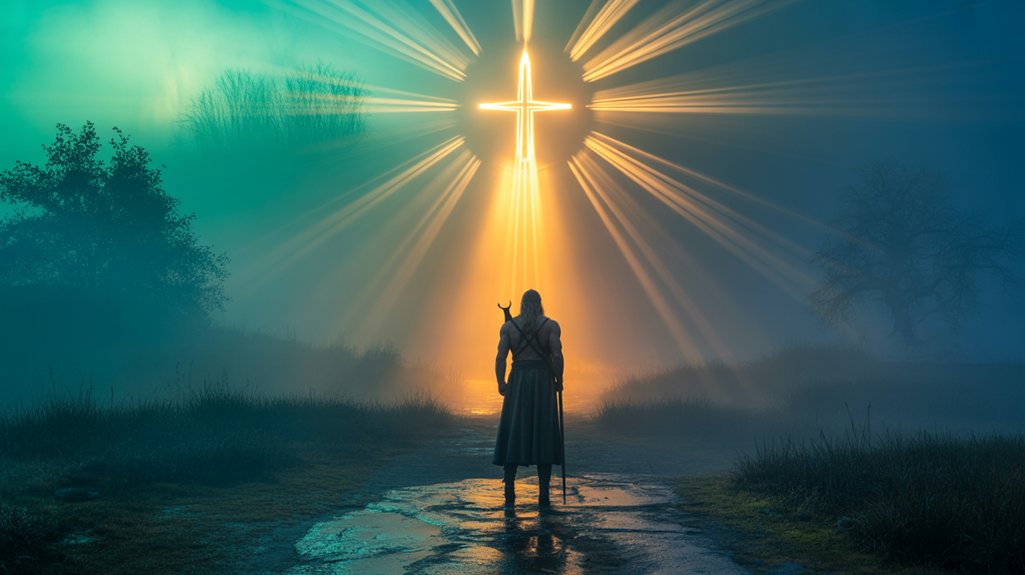
When the echoes of battle drums resonate through the halls of Valhalla, Norse warriors brace themselves not just for the clash of steel but for the undeniable embrace of fate. Ragnarök, the cataclysmic event that signals the end of the world, paints a vivid tableau of a cosmos where destiny is unyielding. Yet, what’s truly mesmerizing is how the Norse grapple with this inevitability. It’s not merely about surviving the storm; it’s about facing it with unyielding honor.
Norse warriors embrace fate's inevitability not through mere survival, but by confronting destiny's storm with unwavering honor and courage.
This myth reveals a trio of profound beliefs about fate and honor:
- Courage trumps survival. Picture Odin, the Allfather, leading his gods into battle, fully aware that doom awaits them. This unwavering bravery isn’t just for show; it reflects a core principle: true honor shines brightest when facing certain death. Think of Achilles in the *Iliad* (Homer, c. 8th century BCE), who also chooses glory over life—do we see a pattern here?
- Wisdom requires sacrifice. Odin’s quest for knowledge is a striking example. In the *Prose Edda* (Snorri Sturluson, c. 1220), he sacrifices his eye at Mimir’s well to gain wisdom. This act illustrates that personal honor transcends mere survival; it’s about contributing to a greater cause. It’s reminiscent of the sacrifices made by figures like Quetzalcoatl (ket-sahl-koh-AH-tul) in Mesoamerican myths, who often embodies the theme of self-sacrifice for the benefit of others.
- Social bonds preserve civilization. Here’s where it gets interesting. The moral decay leading up to Ragnarök, where kin turn against kin, underscores that honor is intricately tied to community. It reflects ancient Greek tragedies too, like those found in the works of Aeschylus, where familial loyalty is paramount. The gods notice this breakdown and it troubles them deeply.
What’s fascinating here is that even in destruction, legacies endure. After Ragnarök, only Líf and Lífþrasir survive to repopulate the earth, hinting that honorable actions echo through time, shaping futures beyond one’s own life. This cyclical renewal suggests a nuanced understanding of fate: it may be predetermined, but our responses to it carve out our eternal worth.
But here’s a detail most retellings leave out: the concept of *wyrd*, often translated as fate, emphasizes that while destiny is fixed, individuals can influence their paths through choices and actions. This mirrors the Hindu idea of *karma*, where one's actions directly influence future circumstances, creating a dynamic interplay between fate and free will.
As we unravel these threads, we see that the Norse worldview, rich in complexity, grapples with universal themes—honor, sacrifice, and the bonds that bind us. Isn’t it remarkable how these ancient narratives still resonate today, inviting us to reflect on our own legacies?
Frequently Asked Questions
What Is the Original Text of Norse Mythology?
Q: Did Odin sacrifice himself to gain wisdom?
Yes, according to the *Prose Edda* (Snorri Sturluson, c. 1220), Odin hung himself on Yggdrasil for nine nights.
The *Poetic Edda* offers a different angle, emphasizing the pain and the quest for knowledge. Scholars debate the significance of this myth, with some seeing it as a metaphor for the pursuit of enlightenment.
Q: Is Ragnarök an inevitable event in Norse mythology?
Yes, the *Poetic Edda* (various authors, c. 13th century) asserts that Ragnarök is destined to occur, leading to the death of many gods.
The *Prose Edda* expands on this, detailing the battles and transformations. However, interpretations differ, with some scholars arguing that the cyclical nature of existence might suggest alternative outcomes.
Q: Are the Norse gods immortal?
No, the gods aren't truly immortal. According to the *Prose Edda* (Snorri Sturluson, c. 1220), they rely on the apples of Idunn for youth.
The *Poetic Edda* hints at their vulnerabilities during Ragnarök. This distinction prompts discussion among scholars about the nature of divinity in Norse culture, contrasting myth with legend.
Q: Does Freyja have a specific domain in Norse mythology?
Yes, Freyja is the goddess of love and fertility, as detailed in the *Prose Edda* (Snorri Sturluson, c. 1220).
The *Poetic Edda* highlights her role in war and death, as she chooses half of the slain to dwell in Fólkvangr. Scholars acknowledge her multifaceted nature, leading to varied interpretations of her significance.
Q: Was Loki considered a god?
Yes and no. The *Prose Edda* (Snorri Sturluson, c. 1220) includes Loki among the gods, yet his actions often put him at odds with them.
The *Poetic Edda* portrays him more as a trickster figure, blurring the lines between god and giant. Scholars recognize this ambiguity, leading to ongoing debates about his role in myth and folklore.
What Is the Original Story of Ragnarok?
FAQ on Ragnarok
Q: Does Ragnarok mark the end of the world according to Norse mythology?
A: According to the Prose Edda (Snorri Sturluson, c. 1220), yes, Ragnarok signifies a cataclysmic end.
However, the Poetic Edda presents a nuanced view where the world is reborn. This cyclical renewal challenges the notion of total finality, highlighting Norse beliefs in regeneration.
Q: What events trigger Ragnarok in Norse myth?
A: The Prose Edda describes Fimbulvetr, a series of harsh winters, as the catalyst for societal collapse.
This is echoed in various sources, demonstrating a shared understanding of this pivotal moment. Scholars debate the exact interpretation, but the theme of winter as a precursor is prevalent in the myth.
Q: Which gods are involved in the final battle of Ragnarok?
A: The Prose Edda asserts that Odin faces Fenrir and Thor confronts Jörmungandr during the battle.
This narrative is consistent across multiple texts, though some variations exist regarding the details of these confrontations. Such differences underscore the rich tapestry of Norse mythology.
Q: Are there survivors after Ragnarok?
A: Yes, the Prose Edda indicates that two humans, Líf and Lífþrasir, survive to repopulate the earth.
This idea of survival and rebirth contrasts with the more destructive interpretations found in other ancient myths. Scholars often discuss these divergent views on renewal in mythological contexts.
Q: Does the concept of Ragnarok appear in other cultures?
A: While Ragnarok is unique to Norse mythology, many cultures have their own apocalyptic narratives.
For instance, the Theogony (Hesiod, c. 700 BCE) describes cosmic struggles but lacks the cyclical renewal aspect. This indicates diverse cultural approaches to endings and new beginnings.
Conclusion
What if the courage displayed in Norse mythology reflects our own struggles with uncertainty? Just as the gods of Ragnarök face their fates head-on, many cultures grapple with the idea that destruction can lead to renewal. Sound familiar? This theme resonates through countless narratives, suggesting a universal truth: facing adversity with honor transcends mere survival.
For those intrigued by these connections, consider reading the Prose Edda's Gylfaginning chapters 34-36 for a vivid depiction of these themes, or check out Carolyne Larrington's translation for an accessible modern take. The pattern repeats.