- In This Article
- Key Takeaways
- The Foundational Rituals: Sealing Prayers in Clay and Papyrus
- The Norse Rune-Staves and Celtic Ogham Missives
- Parallel Systems: Khipu and Divination
- The Psychological Engine: Why Writing Manifests Connection
- Modern Resurgence: 2026 Methodologies and Tools
- A Step-by-Step Guide to Your First Ritual Letter
- Pitfalls and Ethical Considerations
- Archaeology of the Heart: What Remains of These Silent Dialogues
- Frequently Asked Questions
- How long does it take to see “results” from a spiritual letter?
- Can I write a spiritual letter to a concept, like “Justice” or “Healing,” instead of a named deity?
- What should I do if I feel silly or doubt the process while writing?
- Related Posts
Forget Slack channels and email blasts; humanity's oldest and most profound correspondence system operates on a different frequency entirely. These aren't letters sent across wires or satellites, but missives dispatched through sacred space, etched onto materials charged with intent, and entrusted to forces that defy the mundane. From the clay tablets bearing prayers to Mesopotamian gods to the papyrus letters to the dead in ancient Egypt, spiritual correspondence rituals represent a universal human impulse: to reach across the unseen veil and initiate a dialogue with the divine. In 2026, this ancient practice isn't a relic; it's experiencing a vibrant, intentional revival, updated with digital altars and biodegradable inks, yet rooted in a timeless psychological and spiritual principle—the act of externalizing desire, grief, or gratitude into tangible form catalyzes a shift in consciousness. This is about manifesting a connection, not just hoping for one.
11 min read
In This Article
- The Foundational Rituals: Sealing Prayers in Clay and Papyrus
- The Norse Rune-Staves and Celtic Ogham Missives
- The Psychological Engine: Why Writing Manifests Connection
- Modern Resurgence: 2026 Methodologies and Tools
- A Step-by-Step Guide to Your First Ritual Letter
- Pitfalls and Ethical Considerations
- Archaeology of the Heart: What Remains of These Silent Dialogues
- Frequently Asked Questions
Key Takeaways
- The Foundational Rituals: Sealing Prayers in Clay and Papyrus
- The Norse Rune-Staves and Celtic Ogham Missives
- The Psychological Engine: Why Writing Manifests Connection
- Modern Resurgence: 2026 Methodologies and Tools
The Foundational Rituals: Sealing Prayers in Clay and Papyrus
The physicality of early spiritual correspondence was everything. In Mesopotamia around 1750 BCE, a supplicant wouldn't merely whisper a plea to the sun god Shamash; they would inscribe it meticulously into a damp clay tablet. A surviving example, a prayer from a man named Lu-Nanna, details his woes and begs for justice, concluding with a plea for the god's “favorable glance.” The tablet was then fired, making the words eternal and, symbolically, placing them permanently before the deity. This wasn't passive hope; it was an active deposition of a case file in the divine court. Similarly, in New Kingdom Egypt (c. 1550–1070 BCE), the “Letters to the Dead,” written on papyrus or pottery bowls, were left in tombs. One poignant letter from a widower, Merirtyfy, inscribed on a bowl now in the British Museum, implores his deceased wife to stop haunting him and protect their living son, stating, “What wrong have I done to you?” The bowl, often containing a food offering, served as both a medium for the message and a vessel for the sustenance needed to carry it out in the afterlife.
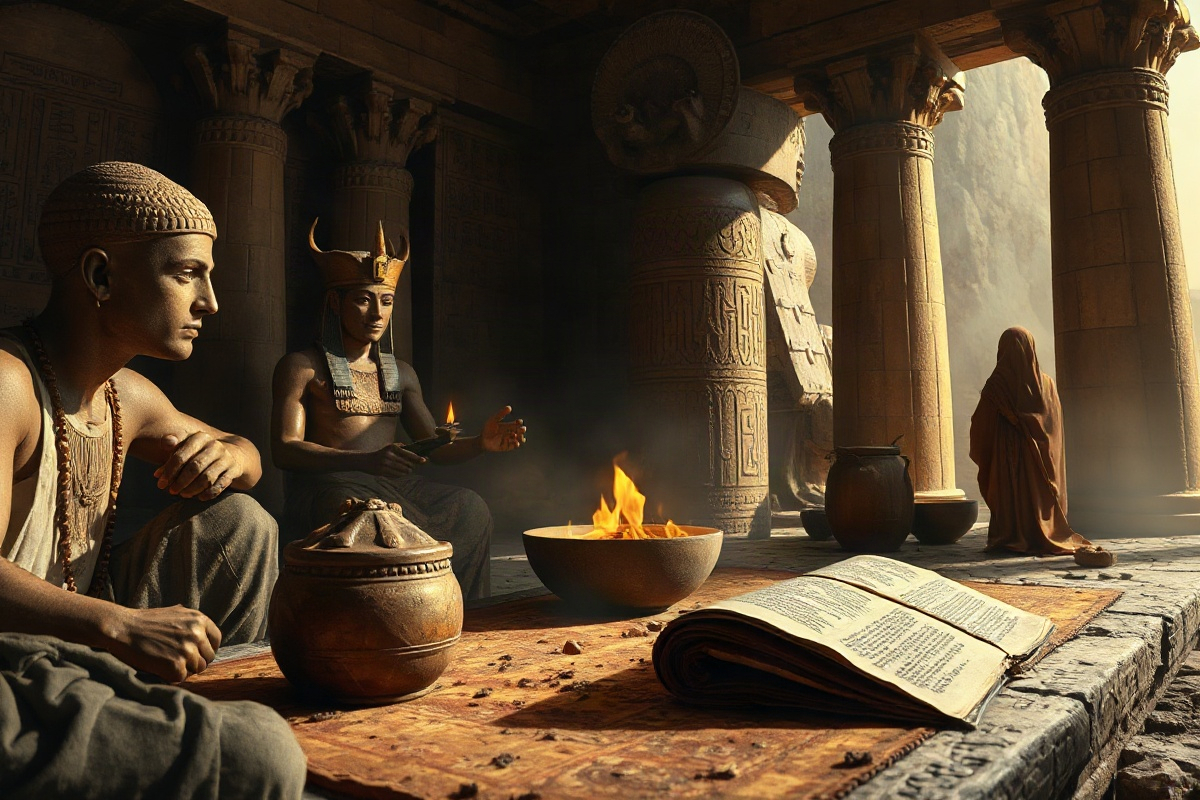
The precision of these rituals mattered. The Mesopotamian cuneiform script itself, composed of wedge-shaped impressions, was considered a sacred technology, a gift from the gods. Choosing the right medium—durable clay for a permanent petition, a consumable papyrus sheet for a more transient request to a deceased ancestor—was the first step in encoding the message's intent. These weren't generalized prayers; they were specific, named, and addressed communications, much like a formal letter to a superior. The ritual of deposition—placing the tablet in a temple niche or the letter in a tomb—was the equivalent of dropping a sealed envelope into a cosmic mailbox, a point of no return that transferred the burden from the writer to the recipient.
These weren't generalized prayers; they were specific, named, and addressed communications, much like a formal letter to a superior.
The Norse Rune-Staves and Celtic Ogham Missives
Moving into Iron Age Europe, the correspondence ritual became more portable and integrated with natural forces. For the Norse, the runic alphabet, or *Futhark*, wasn't just for writing; each rune was believed to hold an inherent power or essence. The “Hávamál” (Sayings of the High One) in the Poetic Edda, stanza 142, cryptically states, “I know a twelfth one if I see, up in a tree, a dangling corpse in a noose: I can so carve and colour the runes that the man walks and talks with me.” This suggests runes carved onto wood (runestaves) could be used for necromantic communication. A practical application might involve carving a bind-rune, a composite symbol, for protection onto a small stave of ash or oak, then carrying it or placing it at a boundary. The act of carving, often with blood or red ochre as pigment, was the ritual; the stave became the enduring letter to the spirits of protection.

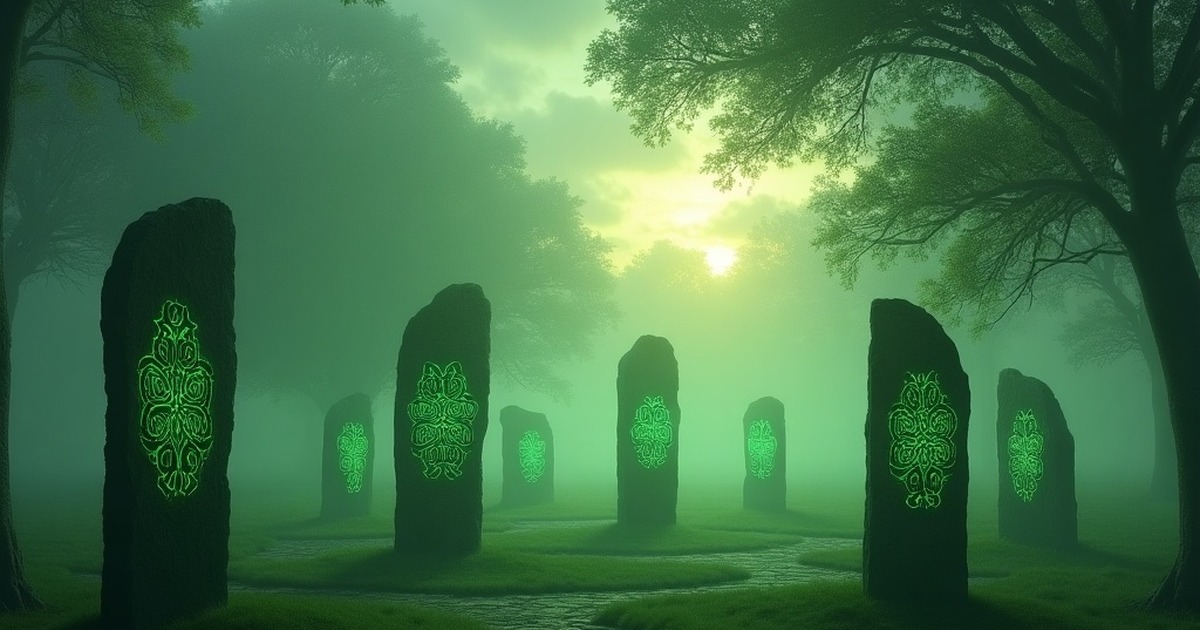
The Celtic Ogham alphabet, used primarily between the 4th and 7th centuries CE, operated on a similar principle but was deeply tied to specific trees. Each of its 20 primary characters is named for a tree or plant (like Beith for Birch or Duir for Oak). To send a message to the forest spirits or to harness a tree's attribute, one might carve the corresponding Ogham character onto a staff made from that very wood. A staff of Ash (*Nion*) carved with its own Ogham mark could be a petition for connection between the worlds, as the Ash, Yggdrasil, was the Norse world tree. These arboreal letters turned the forest itself into a network of spiritual correspondence, where the medium and the message were symbiotically fused.
Parallel Systems: Khipu and Divination
This concept of non-textual correspondence appears globally. The Inka khipu, a complex system of knotted cords, served administrative purposes but likely held narrative and ritual significance as well. A specially constructed khipu, using specific colors and knot patterns, could have been a “letter” to mountain spirits (*Apus*) or Mother Earth (*Pachamama*), recording offerings or vows. Similarly, in ancient Chinese practice, questions for ancestors were inscribed on oracle bones (c. 1600–1046 BCE). The act of inscribing the question, applying heat to create cracks, and then interpreting those cracks was a form of two-way correspondence: a carefully composed query yielded a divine, if cryptic, reply etched directly into the medium by the spiritual force itself.
The Psychological Engine: Why Writing Manifests Connection
The efficacy of these ancient rituals finds a powerful echo in modern cognitive psychology. The act of “expressive writing,” formally studied since the 1980s, demonstrates that translating internal, chaotic emotions into structured, external narrative has profound effects. It reduces stress, improves immune function, and creates cognitive closure. A 1997 study by Pennebaker and Seagal published in the *Journal of Clinical Psychology* found that participants who wrote about traumatic experiences for just 15 minutes a day over four days showed significant long-term health improvements. When you write a spiritual letter, you are performing this same act of externalization and narrative structuring, but you're addressing it to a conscious entity in your worldview.
This process does three key things. First, it forces clarity. Vague anxiety becomes a specific request; amorphous gratitude finds detailed expression. Second, it enacts a symbolic release. Placing the letter in a fire, burying it, or setting it adrift on water is a physical metaphor for letting go of the emotional payload, trusting the process. Finally, it creates a “ritual marker” in time. The date the letter was written becomes a reference point, shifting your mindset from passive waiting to active expectation, making you more attuned to potential “replies” in the form of synchronicities, insights, or changed circumstances. The divine connection is manifested, in part, through the change in your own perceptual framework.
The divine connection is manifested, in part, through the change in your own perceptual framework.
Modern Resurgence: 2026 Methodologies and Tools
Today's practitioners aren't simply mimicking the past; they're adapting its core principles with contemporary tools and ecological awareness. The ritual has democratized. You don't need a priestly scribe; you need intentionality. Popular methodologies include:
- Lunar Cycle Letters: Writing petitions during the New Moon (for new beginnings) and letters of release or gratitude during the Full Moon, then burning or composting them.
- Deity-Specific Email Drafts: A surprisingly common practice involves composing a heartfelt, detailed email to a deity (e.g., Athena for wisdom, Lakshmi for abundance) in a dedicated draft folder. The act of writing is the ritual; the “send” button is never pressed, but the draft serves as a digital altar space.
- Biodegradable Vessel Rituals: Writing with natural inks on seed paper or leaves and placing them in flowing water or burying them to decompose, literally planting the intention.
The tools have evolved, too. While you can use any journal, specific products are designed for this niche. The “Ritual Reverie” subscription box, for instance, provides monthly themed parchment, sealing wax with botanical inclusions, and guidance prompts for $34.95 per month. “Solstice Script” sells a $48.00 ritual writing kit featuring a hemp-bound journal, a set of iron gall ink made from traditional recipes, and a feather quill. For the digitally inclined, apps like “Sanctuary Space” offer encrypted, ad-free digital journals with template prompts for different types of spiritual correspondence, creating a secure, focused container for the practice at a $4.99 monthly subscription.
A Step-by-Step Guide to Your First Ritual Letter
Ready to transcribe your own silent prayer? Here's a concrete, actionable framework. First, define your recipient and intent. Is this a letter to a beloved ancestor, a Hellenic god, your own higher self, or the abstract spirit of creativity? Be as specific as possible. “To Apollo, bringer of light and patron of the arts” is more potent than “to the universe.”
Second, gather your tools mindfully. Don't just grab a ballpoint and a Post-it. Choose paper that feels significant—handmade cotton, black paper for a nocturnal ritual, or even a large leaf. Select a writing instrument with intention: a fountain pen with sepia ink for an ancestral message, a vibrant gel pen for a joy-filled gratitude note to Aphrodite. Light a dedicated candle or some Incense to mark the space as sacred. This preparation period, which might take 10-15 minutes, begins the shift in your consciousness.
Third, compose with brutal honesty and structure. Start with a formal salutation. Then, move into the body: state your current situation without sugar-coating, express your emotional truth (fear, hope, confusion), and then clearly articulate your request or thanks. Avoid vagueness. Instead of “help me find love,” try “guide me to recognize a partner who values kindness, shares a love of quiet evenings, and challenges me to grow.” Conclude with a closing, like “With unwavering trust,” or “In sacred service.” The entire letter might be 300-500 words; the power is in the specificity, not the length.
Finally, conclude the ritual with decisive action. This is the “sending” phase. Your options include:
- Sacred Fire: Safely burn the paper in a fireproof bowl, visualizing the smoke carrying your words upward.
- Earth Burial: Bury the letter near a significant tree or plant, letting the earth compost and process your intention.
- Water Release: Use a leaf or biodegradable paper, set it on moving water, and let it go.
- Temple Placement: Tuck the letter into a dedicated space on your home altar, under a specific Crystals, or between the pages of a relevant book.
The key is to perform this final act with the conviction that the message has been received. Then, release your attachment to the outcome.
Then, release your attachment to the outcome.
Pitfalls and Ethical Considerations
This practice isn't a spiritual vending machine, and treating it as such leads to disappointment. The primary pitfall is a transactional mindset—the belief that a perfectly executed letter “forces” a specific, desired outcome. Ancient petitions were often pleas, not demands, acknowledging the deity's ultimate will. Modern manifestation culture sometimes loses this humility. Another error is inconsistency in form; repeatedly switching your “address” for the same entity (e.g., writing to “Spirit” one week, “Brigid” the next, and “the Goddess” the week after on the same topic) creates psychic static, like sending mail with constantly changing, vague recipient names.
Ethically, respect the cultural provenance of your chosen framework. If you're writing to a deity from a living, closed tradition (e.g., certain Indigenous or African Diasporic spirits), understand that access is earned through community and lineage, not just personal fascination. Appropriating closed practices as a solo aesthetic is unethical correspondence. It's far more authentic to connect with the spiritual current of your own ancestry or to work with archetypal, open concepts like “the Spirit of the Forest” or “the Wisdom of the Well.” The connection you manifest must be rooted in respect, not just desire.
Archaeology of the Heart: What Remains of These Silent Dialogues
The tangible legacy of these rituals fills our museums, offering direct evidence of this intimate human need. The Mesopotamian clay tablets, the Egyptian papyrus letters, and even the rare surviving runestave (like the 6th-century Vadstena bracteate) are the hardened fossils of once-fluid spiritual conversations. Archaeologists at sites like Deir el-Medina in Egypt have found dozens of “Letters to the Dead,” indicating this was a common, household practice, not an elite one. Each find is a snapshot of a human crisis, a hope, a fear, frozen in time. They prove that across millennia and continents, when faced with the unbearable, the inexplicable, or the profoundly hopeful, humans have reached for the same tool: a stylus, a surface, and the faith that words could bridge the greatest divide of all.
In 2026, we may use seed paper instead of shards of pottery, but the impulse is identical. We are creating our own future archaeological record of the heart, one intentional letter at a time. The practice endures because it works on a fundamental level—not necessarily by compelling external forces, but by compelling internal reorganization, clarity, and the opening of a channel within the self that is primed to recognize the subtle language of the divine in everyday life.
Small changes, real momentum
Get practical guides and templates you'll actually use — a few thoughtful emails a month.
Frequently Asked Questions
How long does it take to see “results” from a spiritual letter?
Frame this as cultivating a relationship, not ordering a package. Immediate, dramatic “results” are rare. More commonly, you'll notice a shift in your own perception within days or weeks—a sense of calm, a sudden insight, or an unexpected opportunity that aligns with your request. The “reply” is often internal first. For more complex intentions, like deep healing or career transitions, the process might unfold over several lunar cycles. Consistency is more important than immediacy; writing regularly, even monthly, builds a stronger “signal” than a single, desperate missive. Track subtle changes in a journal separate from your ritual letters.
Can I write a spiritual letter to a concept, like “Justice” or “Healing,” instead of a named deity?
Absolutely. This is a powerful and accessible approach for many. Personifying an abstract force as a conscious entity you can correspond with is a classic mystical technique. Address your letter to “Dear Spirit of Healing” or “To the Universal Principle of Justice.” The key is to imbue that concept with a sense of receptive consciousness in your mind. This method avoids cultural appropriation concerns and allows you to build a personal relationship with the archetypal energy you most need to engage. Historical parallels include ancient Greek prayers to abstract deities like Nike (Victory) or Tyche (Fortune).
What should I do if I feel silly or doubt the process while writing?
That feeling is normal and almost universal for beginners. It's the rational, modern mind bumping against an intuitive, symbolic act. Don't fight the feeling; acknowledge it and write it into the letter itself. A phrase like, “Even as part of me feels uncertain in this act, I choose to place my trust here…” is profoundly honest and strengthens the ritual. The doubt is part of the payload you're releasing. Remember, the psychological benefits of expressive writing are clinically proven, so even if you're skeptical of the spiritual “transmission,” the act itself is still psychologically valuable. The sincerity of your emotion matters far more than perfect, unwavering faith.
The most important takeaway is this: spiritual correspondence turns passive yearning into active diplomacy with the unseen. It provides a structured, tangible method to transform internal chaos into externalized, sacred request. Start by choosing one clear intention and one recipient—an ancestor, a deity, or a personified virtue. Invest in simple, meaningful tools that elevate the act from mundane writing to ritual. Finally, conclude with a definitive physical act of release, whether burning, burying, or placing on an altar. This ancient practice, refined for 2026, offers not a guarantee of specific outcomes, but something perhaps more valuable: a clarified mind, a lighter heart, and the profound sense that you are participating in a conversation as old as human longing itself.
Keep reading
Related Posts




Your Weekly Dose of Inspiration
Journaling ideas, family tips, and gentle inspiration.