- The Sovereignty of the Land: Goddesses as Earthly Power
- Heroes, Druids, and the Otherworld: Navigating the Divine
- The Problem of Interpretation: Fragments and Syncretism
- A Pantheon of Transformation and Eternal Themes
- Frequently Asked Questions
- Who was the “king” of the Celtic gods?
- Are Celtic and norse mythology the same?
- How do we know about Celtic gods if they didn't write them down?
- Related Posts
- Related Posts
- Related Posts
- Related Posts
- Related Posts
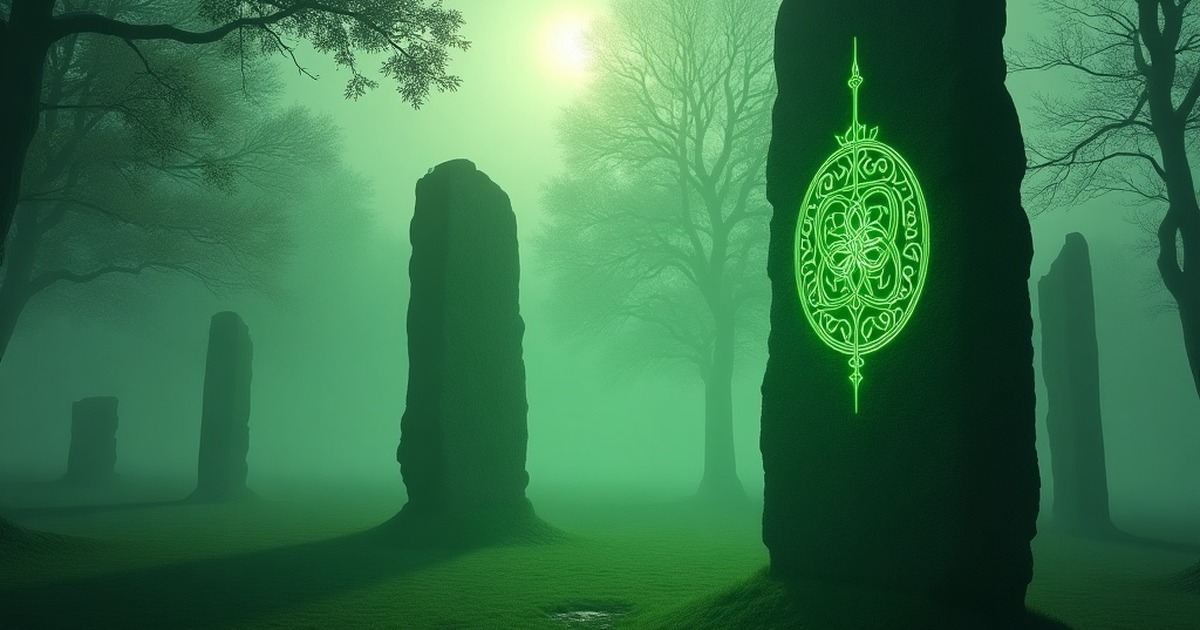
While the classical pantheons of Greek and Roman gods feel enshrined in the marble halls of Homer and Ovid, the divine figures of Celtic mythology move through a mist-shrouded landscape of ancient oak and crashing sea. This is a world not of distant, personified ideals, but of immanent, shapeshifting powers deeply woven into the land itself. Reconstructing this vibrant, fragmented pantheon requires a scholarly pilgrimage through medieval Irish epics and Welsh folklore, where goddesses are rivers and heroes bargain with sovereign deities. Unlike the codified genealogies of Norse or Egyptian myth, the Celtic divine realm is fluid, awe-inspiring, and profoundly local, revealing a cosmology where the boundary between the mortal and the magical is tantalizingly thin.
Disclosure: This post contains affiliate links. If you click through and make a purchase, we may earn a small commission at no extra cost to you. Thank you for supporting this site!
The Sovereignty of the Land: Goddesses as Earthly Power
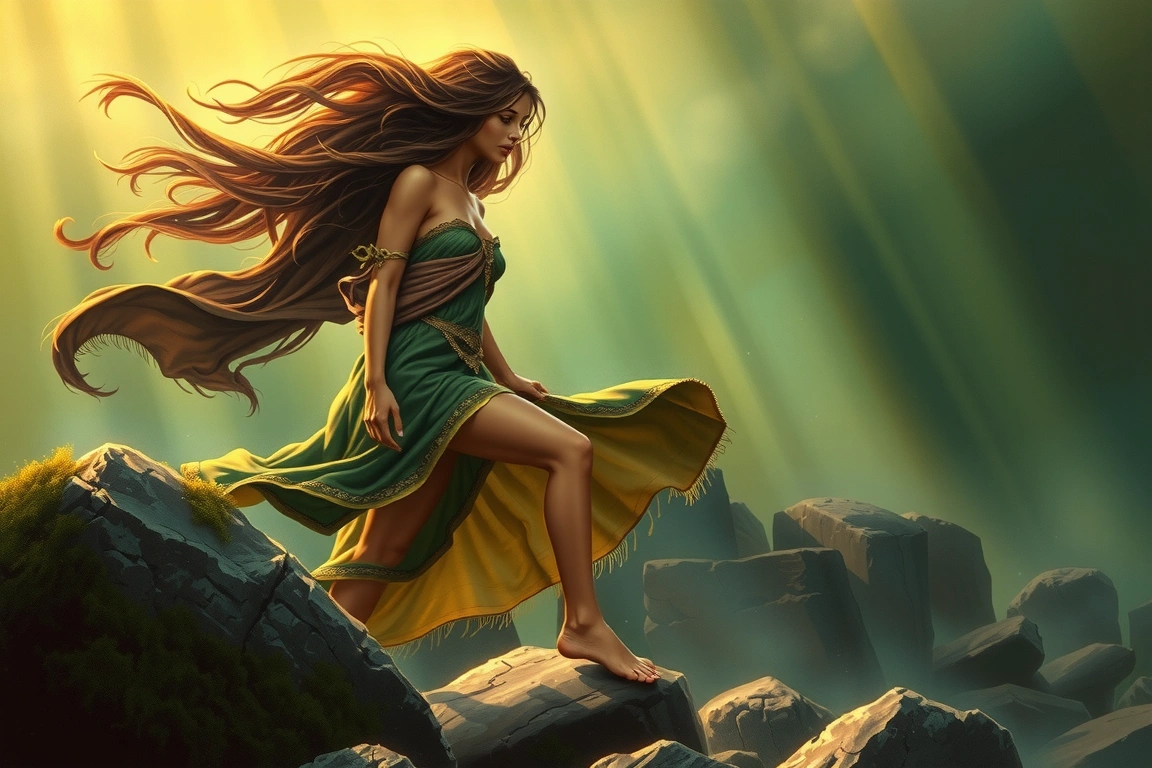
At the heart of the Celtic mythic worldview is the concept of sovereignty—the goddess who is the land itself. She is not merely a symbol; she is the incarnate spirit of territory, who must be ritually wed by a rightful king to ensure prosperity and order. In the Irish saga “The Cath Maige Tuired” (The Battle of Mag Tuired), the mighty Morrígan—a terrifying triad of war, fate, and fertility—declares the sovereignty of Ireland with potent, corporeal poetry. She is often seen as a trio of sisters: Badb (the crow), Macha (the land), and the Morrígan herself (the phantom queen), blurring the lines between individual deity and collective force. Similarly, the goddess Boann, through her defiant act of cosmic creation, gives birth to the River Boyne, her body becoming the sacred waterway. This tangible, earthly presence distinguishes Celtic goddesses from many of their Olympian counterparts, grounding their power in the very soil and springs worshipped by the ancient Celts.
Heroes, Druids, and the Otherworld: Navigating the Divine
Interaction with the Celtic gods and goddesses is the core engine of its legendary cycles. Heroes like Cú Chulainn or Finn mac Cumhaill do not simply pray to distant gods; they are descended from them, trained by them, and cursed or aided by their direct interventions. The epic “Táin Bó Cúailnge” (The Cattle Raid of Cooley) is propelled by a conflict sparked by the rivalry between the divine figures Morrígan and Medb, the formidable queen of Connacht. The gods here are deeply entangled in human affairs, their motives as complex and tumultuous as any mortal's. Central to this navigation is the druid, the intermediary who understands the sacred language of the land and can interpret the will of the often-inscrutable deities. This relationship echoes, yet feels more intimate than, the oracular consultations of the Greek world, emphasizing a cosmology where the Otherworld—the realm of the gods—is just a hidden mound or a sudden mist away.
The Problem of Interpretation: Fragments and Syncretism
Our understanding of the Celtic pantheon is inherently fragmented, filtered through the lens of Christian monks who recorded the old stories centuries after pagan worship had faded. Figures like the Dagda, the “Good God” and fatherly protector, or Brigid, the goddess of poetry, healing, and smithcraft later sanctified as a Christian saint, survive in these texts but their full ritual significance is often lost. Furthermore, the Romans, as they did with so many cultures, engaged in interpretatio Romana, syncretizing Celtic deities with their own. This is how we get inscriptions to “Apollo Belenus” or “Mars Camulus,” giving us Latinized names but obscuring unique Celtic attributes. Piecing together the original essence requires reading between the lines of these later texts, much like scholars comparing regional Germanic creature folklore to reconstruct older proto-myths.
A Pantheon of Transformation and Eternal Themes
What emerges most powerfully from the study of Celtic mythology gods and goddesses is a pantheon defined by transformation and raw natural power. The deities frequently shapeshift—into stags, ravens, eels, or waves—demonstrating a fundamental unity with all creation. This fluidity stands in stark contrast to the more fixed, anthropomorphic forms of the classical pantheons. Their stories, from the tragic love of Diarmuid and Gráinne, overseen by the love god Aengus Óg, to the catastrophic battles foretold by the Morrígan, explore eternal themes of love, loss, valor, and fate with a uniquely Celtic sensibility. They share the cosmic scale of Norse sagas but are rooted in a specific, revered topography. Their resilience in folklore, from the Scottish bean sídhe (banshee) to Irish tales of the Aos Sí (people of the mounds), speaks to a deep, enduring mythic consciousness that, like the immortal creatures of world myth, refuses to die.
Frequently Asked Questions
Who was the “king” of the Celtic gods?
Unlike the clear hierarchy of Zeus or Odin, Celtic mythology lacks a single, consistent “king.” The Dagda often holds a paternal, chieftain-like role in Irish myth, known for his immense strength, magic cauldron, and club. However, figures like the Morrígan or Lugh (a master of all arts) wield power that sometimes rivals or supersedes his, reflecting a more decentralized, tribal concept of divine authority.
Are Celtic and norse mythology the same?
No, they are distinct traditions from different cultural and linguistic branches (Celtic vs. Germanic). While they share a broad Northern European context and some thematic parallels—like a strong warrior ethos and a vibrant Otherworld—their pantheons, core stories, and cosmological structures are unique. The Norse gods, for instance, face a definitive doom in Ragnarök, a concept less pronounced in Celtic cycles.
How do we know about Celtic gods if they didn't write them down?
Our primary sources are medieval manuscripts written by Christian scribes in Ireland and Wales, preserving an earlier oral tradition. These include the Irish Lebor Gabála Érenn (The Book of Invasions) and the Welsh Mabinogion. Archaeological finds like inscriptions, statues, and votive offerings also provide crucial, if cryptic, evidence of Gaulish and Brythonic deities, often interpreted through a Roman lens.
Related Posts
}.lwrp .lwrp-description{
\n
" } } ] }
Related Posts
Related Posts
Related Posts
The Mythical Chronicle
Gods, heroes and monsters, drawn from the primary sources.