- Tiamat: The Primordial Ocean of Chaos and Divine Rebellion
- Pazuzu: The Wind Demon with a Scorpion's Tail and Predatory Genius
- Lamashtu: The Child-Stealing Demoness Who Haunted Every Nursery
- Namtar: The Plague Messenger and Herald of Death
- Aqqu: The Water Demon of Deception and Moral Corruption
- The Ganzir: The Gatekeeper with No Mercy and Seven Sacred Guardians
- Ereshkigal: The Queen of the Dead Who Judges Without Appeal
- Nergal: The God-Demon of Plague, War, and Solar Wrath
- The Anzu: The Cosmic Thief Who Stole Heaven's Blueprint
- Resheph: The Arrow-Bearing Plague God Whose Victims Burned
- The Udug: The Household Demons Who Judge and Record Every Transgression
- Related from our network
Most people know Medusa, Cerberus, and the Minotaur—the greatest hits of ancient monster lore. But while Greece hogged the spotlight, Mesopotamia, the cradle of civilization itself, was quietly breeding terrors that make Greek mythology look quaint. The Sumerians, Akkadians, and Babylonians didn't just imagine monsters; they encoded them into religious practice, architectural protection, and cosmological warfare. These weren't ornamental creatures in fanciful tales—they were living theological problems that demanded explanation, ritual, and sometimes appeasement. When you dig into cuneiform tablets and archaeological records, you find that Mesopotamian monsters weren't born from a storyteller's dream but from genuine cultural anxieties about chaos, divine punishment, and the fragile boundary between order and annihilation. This article pulls back the veil on ten creatures that terrified the ancient world and shaped how we understand the relationship between monsters, divinity, and morality itself.
Tiamat: The Primordial Ocean of Chaos and Divine Rebellion
Tiamat appears in the Babylonian Enuma Elish (composed around 1200 BCE), one of the oldest creation myths ever recorded, as a gargantuan sea dragon whose very existence predates order itself. She wasn't born; she simply was, an eternal force of saltwater chaos that gave birth to the first gods through reproduction with Apsu, the freshwater deep. What makes Tiamat genuinely unsettling is that she didn't start as a villain—the younger gods murdered her husband, and only then did she transform into a weapon of vengeance. Ancient Babylonian priesthood understood something about trauma and rage that modern storytelling often misses: Tiamat became monstrous through injustice, not inherent evil.
The god Marduk eventually defeats her in cosmic battle, slicing her corpse in half to construct the heavens and earth from her body—a visceral image of creation through dismemberment. This wasn't a quick sword thrust; the Enuma Elish describes Marduk filling her belly with wind until she bloats and bursts, then splitting her “like a fish” before using her ribs as the sky's foundation. Clay tablets recovered from Babylon's temple libraries show that during the New Year festival (Akitu), priests would ritually reenact this battle, physically processing through the city while reciting the god's victory—a public assertion that chaos could be defeated, at least temporarily. The Babylonians were brutally honest: creation requires destruction, and the natural world emerges from violence, not benevolence.
Pazuzu: The Wind Demon with a Scorpion's Tail and Predatory Genius
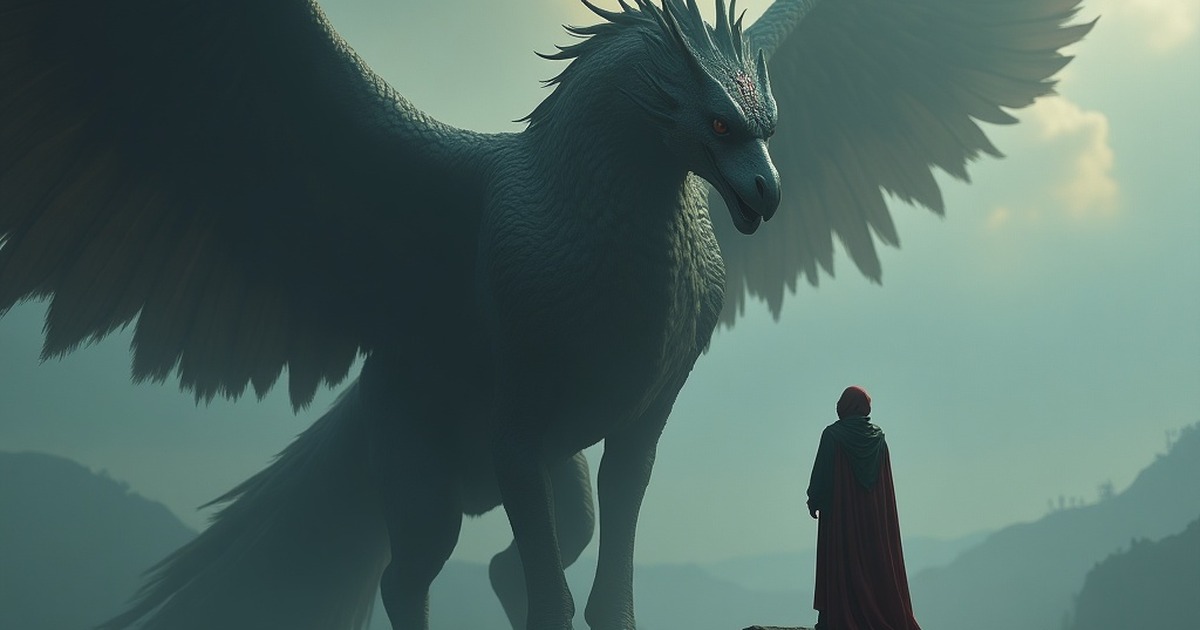
If Tiamat represents primal chaos, Pazuzu embodies chaos's cunning underling. This creature—a hybrid of lion, human, and scorpion—stalks through Mesopotamian demonology as a bearer of plague winds and the masculine counterpart to Lamashtu, the child-murdering demoness. Pazuzu's name itself appears in hundreds of amulets and protective incantations, which reveals something paradoxical: the Mesopotamians invoked the very demon they feared to ward off worse demons. Archaeological digs at Nippur and Babylon have uncovered bronze figurines of Pazuzu with his characteristic leering grin, wings folded back, and that notorious scorpion tail coiled up his spine—these weren't museum pieces but talismans worn as protection during childbirth and illness.
The creature's domain spans disease, wind, and the boundary between waking and dreaming. Clay tablets describe him as “the king of the demons of wind” who rides the storm fronts bringing locusts and fever. What's particularly refined about Pazuzu's mythology is that he wasn't purely destructive—texts from the Library of Ashurbanipal (discovered in Nineveh, dating to the 7th century BCE) portray him as someone who could be bargained with. Exorcists would address him directly: “I invoke you, Pazuzu, to turn your terror against the sickness that stalks this house.” In other words, the Mesopotamians weaponized evil against greater evil, treating demons as forces to be negotiated with rather than unconditionally fought. This reflects a spiritual sophistication often overlooked in modern retellings.
Lamashtu: The Child-Stealing Demoness Who Haunted Every Nursery
Lamashtu stands as one of the most systematically feared entities in Mesopotamian religion, with evidence of protective measures against her dating back to the Old Babylonian period (roughly 1900–1600 BCE). She's depicted in cylinder seals and amulets as a winged woman with the head of a lioness, breasts dripping milk poisoned by her nature, and a hunger that specifically targeted infants. The reason she dominates protective amulets and ritual prescriptions more than almost any other demon is simple: child mortality rates in ancient Mesopotamia were catastrophic. Lamashtu didn't represent an abstract evil; she represented the very real terror every parent faced. Cuneiform tablets record mothers consulting priests about protective rituals before pregnancy, asking how to secure their children against her touch.
The Lamashtu Texts, preserved on clay tablets from Assur, describe her nocturnal attacks in nauseating detail: she enters homes through windows and keyholes, steals children from their mothers' arms, and sometimes replaces them with her own monstrous offspring. What's remarkable is how the Mesopotamians responded—they developed a comprehensive magical defensive system. Terracotta figurines of guardian demons (particularly Pazuzu, her rival) were buried beneath doorways. Incantations were whispered over infants at sunset. Amulets inscribed with banishment spells were worn as jewelry. This wasn't superstition in a derogatory sense; it was a community's systematic effort to impose symbolic control over an uncontrollable threat. The presence of hundreds of Lamashtu amulets in archaeological contexts proves that entire generations lived under the weight of her feared presence.
Namtar: The Plague Messenger and Herald of Death
Namtar translates roughly as “fate” or “destiny,” but in Mesopotamian demonology he's far more sinister—a creature who carries pestilence before him like a heralding wind. Unlike Pazuzu's associative chaos, Namtar represents death as bureaucratic inevitability, the courier arriving with a message you cannot refuse. He appears in the Descent of Inanna, one of the most harrowing myths in the Sumerian corpus, where Inanna (the goddess of love and war) descends into the underworld and is stripped of her divine authority, piece by piece, until she stands naked and powerless before the throne of Ereshkigal. Namtar serves as Ereshkigal's vizier, the administrator of punishment, the one who transforms divine transgression into divine consequence.
What makes Namtar particularly potent in Mesopotamian spiritual practice is that he's not a character in a story—he's a force that enters the historical record. During documented plague outbreaks in Babylon and Assyria, temple records show priests making specific offerings to Namtar, attempting to buy off his attention with livestock and grain. An inscription from the reign of Esarhaddon (681–669 BCE) describes a massive plague sweeping Nineveh and explicitly names Namtar as its cause—not metaphorically, but as the actual agent of the god Erra's wrath. The boundary between mythic creature and real calamity blurred entirely. When Mesopotamians invoked Namtar's name in texts, they were addressing an entity whose effect they had literally witnessed.
Aqqu: The Water Demon of Deception and Moral Corruption
Aqqu occupies a murkier corner of Mesopotamian demonology than the more famous plague-bearers, but his influence on later magical traditions is profound. He's described in Akkadian incantation texts as a water spirit who corrupts, taints, and misdirects—a creature of stagnant pools, contaminated wells, and deceived oaths. Where Pazuzu brings fever and Lamashtu steals children, Aqqu slowly poisons the moral fiber of a household through whispered lies, fractured relationships, and the creeping conviction that you cannot trust even those closest to you. His power lies in perversion rather than direct violence.
Cuneiform descriptions present Aqqu as fundamentally shapeless, taking the form of whoever he encounters—he arrives as a trusted friend, a family member, or a creditor, and only reveals his true nature after the damage is done. This makes him uniquely dangerous compared to demons whose intentions are obvious and visible. Mesopotamian protective rituals against Aqqu involved cleansing of both body and threshold; salt, honey, and ritual washing were prescribed specifically to “restore clarity of perception” and to “purify the words spoken within this house.” The magical thinking here is sophisticated: the Mesopotamians recognized that demonic influence could be internal and psychological, not merely external and violent. Aqqu's presence in the magical corpus shows that ancient spirituality encompassed what we might now call psychological or relational harm.
The Ganzir: The Gatekeeper with No Mercy and Seven Sacred Guardians
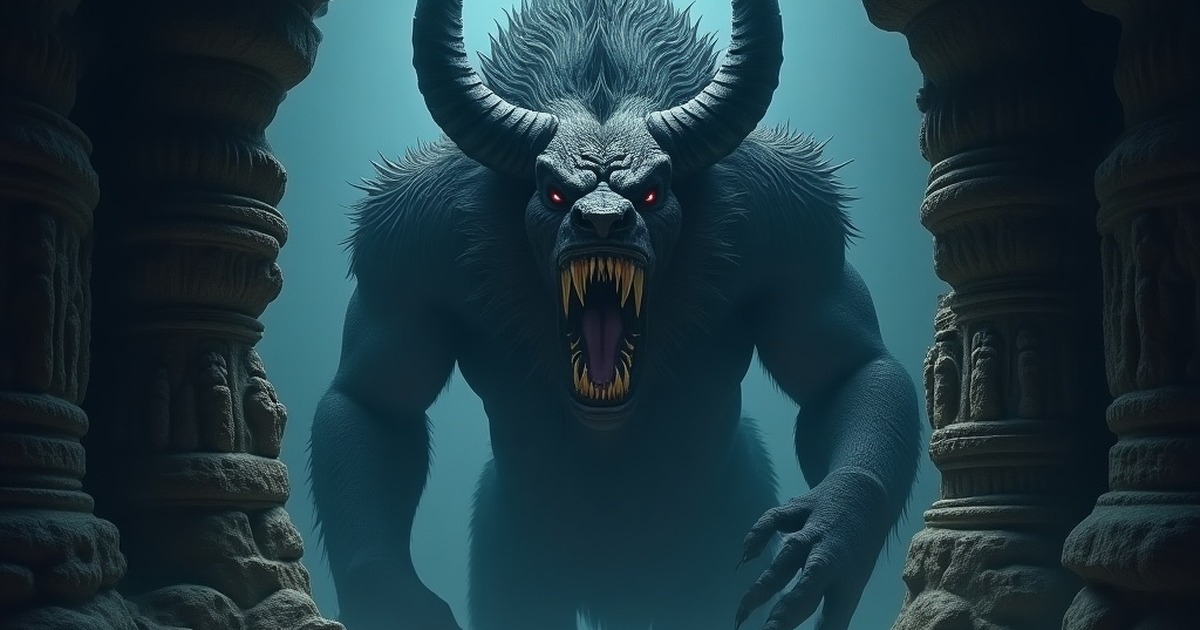
The Ganzir (literally “the great place,” though often translated as “the land of no return”) isn't a creature in the traditional sense—it's an entity, a threshold, and the region itself given terrible consciousness. The seven gates of Ganzir, each guarded by a sepulchral keeper, form one of Mesopotamia's most psychologically disturbing mythological structures. As described in the Descent of Inanna, these gates systematically strip the descending soul of authority, protection, and identity. At each threshold, a guardian demands something: your crown, your scepter, your clothing, your dignity. By the seventh gate, even goddesses are reduced to corpses.
What's chilling about the Ganzir mythology is its complete lack of mercy or redemption clause. Unlike the Greek Hades, who occasionally allows escape (Orpheus nearly succeeds with Eurydice), the Ganzir offers no negotiation, no loopholes, no clever tricks. Death in Mesopotamian thought was absolute and irreversible. The Ganzir's guardians aren't demons with motivation; they're mechanisms of a system designed to ensure that no one ascends twice. Archaeological evidence from Sumerian and Akkadian burial practices shows these beliefs had teeth—the grave goods, the careful positioning, the inscriptions protecting the dead all reflect a genuine conviction that the journey below was one-way and perilous. Understanding the Ganzir requires accepting that Mesopotamian spirituality was far more existentially bleak than modern spiritual practices typically acknowledge.
Ereshkigal: The Queen of the Dead Who Judges Without Appeal
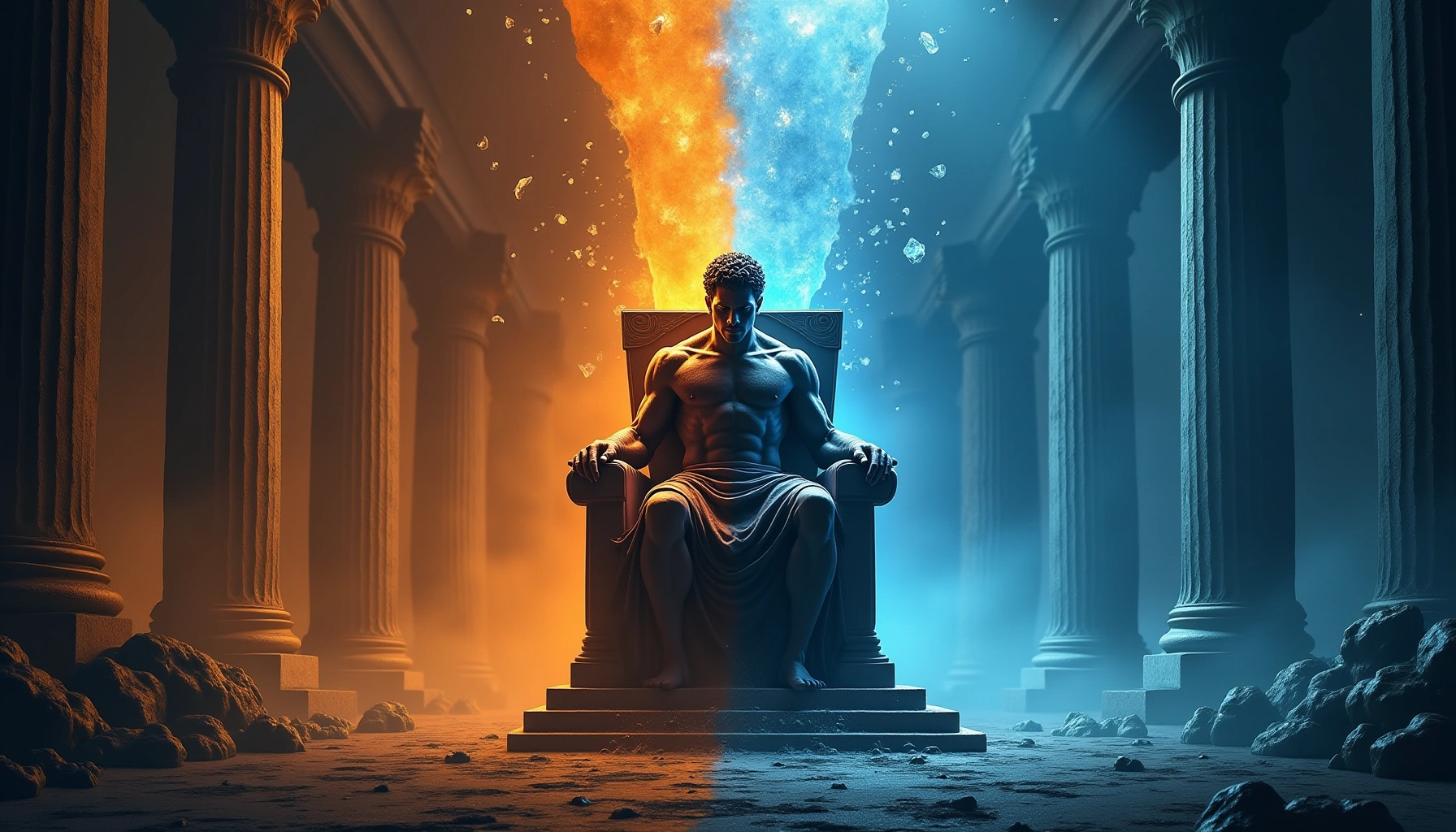
Ereshkigal differs from the creatures we've examined so far because she's not merely a demon—she's a goddess, the sovereign of the underworld, and her authority is absolute. She's described in texts as being “furious like a roused serpent,” with a gaze that “turns the living to stone,” though her true weapon isn't physical power but bureaucratic inevitability. Unlike Hades, who is sometimes sympathetic or can be outmaneuvered, Ereshkigal holds her position through law, not sentiment. She rules alone in darkness, presiding over a council of judges, and her decisions cannot be appealed.
The mythology surrounding Ereshkigal reveals something crucial about how Mesopotamian cultures understood power and gender. She's not a secondary figure or a lesser ruler; she's the only woman in Mesopotamian mythology given complete, uncontested authority over her domain. No male god challenges her rulership of the underworld. No hero tricks her. No escape clause applies to her judgments. This isn't portrayed as unjust—it's portrayed as simply how reality works. In magical and spiritual texts from ancient Mesopotamia, Ereshkigal is sometimes invoked not to change an outcome but to ensure a swift judgment, to end suffering quickly rather than prolong it. The logic is grimly practical: if you must go below, go with her approval rather than her wrath. She represents a form of divine authority that bypasses emotion entirely.
Nergal: The God-Demon of Plague, War, and Solar Wrath
Nergal presents a fascinating overlap between divinity and monstrosity. He's a full god in the Mesopotamian pantheon—the son of Enlil in some texts, the judge of the dead in others—yet he functions simultaneously as a plague demon and a herald of warfare. What makes this duality work is that the Mesopotamians didn't view gods and demons as opposing categories; they viewed them as different expressions of divine power. Nergal is the god you pray to for victory in battle, and he's also the entity whose favor brings fever and death. He contains both potentials.
The Nergal and Ereshkigal myth (preserved in multiple versions across Babylonian texts) describes how Nergal becomes consort to the underworld queen—a transformation from solar warrior to chthonic ruler. His shift in identity is absolute; once he consents to remain below, his nature changes entirely. This mythological narrative was used to explain why divine power could manifest so differently in different contexts: the same god could burn the living with plague-fever and simultaneously maintain just order among the dead. Mesopotamian healers would invoke Nergal to drive out illness, essentially asking the plague-bearer to reclaim what belonged to him. This wasn't the contradiction it might seem; it was sophisticated spiritual taxonomy that recognized divine forces as amoral and context-dependent.
The Anzu: The Cosmic Thief Who Stole Heaven's Blueprint
The Anzu (also called Zu in some texts) isn't typically classified as a “monster” in modern scholarship, but ancient Mesopotamians clearly experienced this creature as a threat to cosmic order. Described as a combination of eagle and lion, with attributes of storm and intellect, Anzu commits what might be the gravest crime in Mesopotamian mythology: he steals the Tablets of Destiny—the cosmic blueprint that determines what will come to pass. Without these tablets, the gods lose their authority to govern reality itself.
The Anzu myth, preserved most completely in the poem Anzu, describes a cosmic war where multiple gods attempt to defeat the thief, each failing in turn, until Ninurta (god of war and hunting) succeeds through a combination of strategy and overwhelming force. What's intellectually interesting about Anzu is that he's not motivated by malice but by a desire for status and authority—he takes the tablets to elevate himself among the gods. This makes him morally complex in ways that pure demons aren't. He represents ambition and the violation of hierarchy, themes that resonated across Mesopotamian cultures. Rulers used Anzu imagery in propaganda to justify their military campaigns: just as Ninurta must defeat Anzu to restore order, so too must the king suppress rebellions and maintain proper sovereignty.
Resheph: The Arrow-Bearing Plague God Whose Victims Burned
Resheph (Resh in some texts) is a god-demon hybrid who appears consistently across Levantine and Mesopotamian religious texts as a figure carrying plague arrows—literal arrows that cause fever, hemorrhage, and death. Unlike the diffuse, wind-borne plague of Pazuzu, Resheph's attacks are personal and precise; his arrows seek specific targets. Archaeological evidence from Ugarit (modern-day Syria) shows that Resheph was invoked in warfare contexts as a god who could be directed toward enemies, but only with proper ritual precaution. To invoke Resheph without complete deference was to invite him to turn his arrows on the invoker instead.
What distinguishes Resheph from other plague entities is the specificity of his weaponry and the precision of his authority. Texts describe him as carrying a quiver of arrows, each tipped with plague, and his aim is never accidental. This mythological framework allowed Mesopotamian and Levantine peoples to process targeted disease outbreaks—if plague struck one household but spared the neighbors, Resheph's arrows had a purpose. This wasn't fatalism in a passive sense; it implied accountability. If Resheph's arrows found you, your community's moral order had been disrupted. Healing rituals against Resheph involved both medicinal practice and spiritual reconciliation, because you couldn't drive out his plague while remaining in breach with the community's sacred laws.
The Udug: The Household Demons Who Judge and Record Every Transgression
The Udug (plural Uduggi) represents a shift in scale from cosmos
Related from our network
- Ring vs Nest Doorbell: Which Video Doorbell Is Best in 2025? (theconnectedhaven)
- Best Webcam For Remote Work: Complete Guide (2026) (deskgearreviews)
- I Tested the Best Dash cam — Here's What Stood Out (partpickerauto)
Your Weekly Dose of Inspiration
Journaling ideas, family tips, and gentle inspiration.