Norse vs Greek Creation Myths: 9 Key Differences Explained 2025
Two ancient civilizations, separated by vast distances and centuries, crafted remarkably different stories about how the world began. While Greek creation myths speak of primordial Chaos giving birth to ordered cosmos, Norse mythology tells of a great void called Ginnungagap where ice and fire collided to spark existence.
The main differences between Norse and Greek creation myths lie in their fundamental starting points, the nature of their creator beings, and their ultimate destinies — Greeks began with Chaos and built toward Olympic order, while Norse myths started with void and moved toward inevitable destruction and rebirth.
Disclosure: This article contains affiliate links. We may earn a commission at no extra cost to you.
The Prose Edda by Snorri Sturluson
Most comprehensive primary source for understanding Norse creation mythology
What Are the Main Differences Between Norse and Greek Creation Myths?
The contrasts run deeper than most mythology enthusiasts realize. After studying primary sources for over a decade, I've identified nine fundamental differences that reveal how radically these two cultures viewed existence itself.
1. The Initial State of Existence
Greek mythology opens with Chaos — not disorder as we might think today, but a yawning void pregnant with potential. Hesiod's Theogony describes it as a gap or chasm from which the first primordial beings emerged spontaneously.
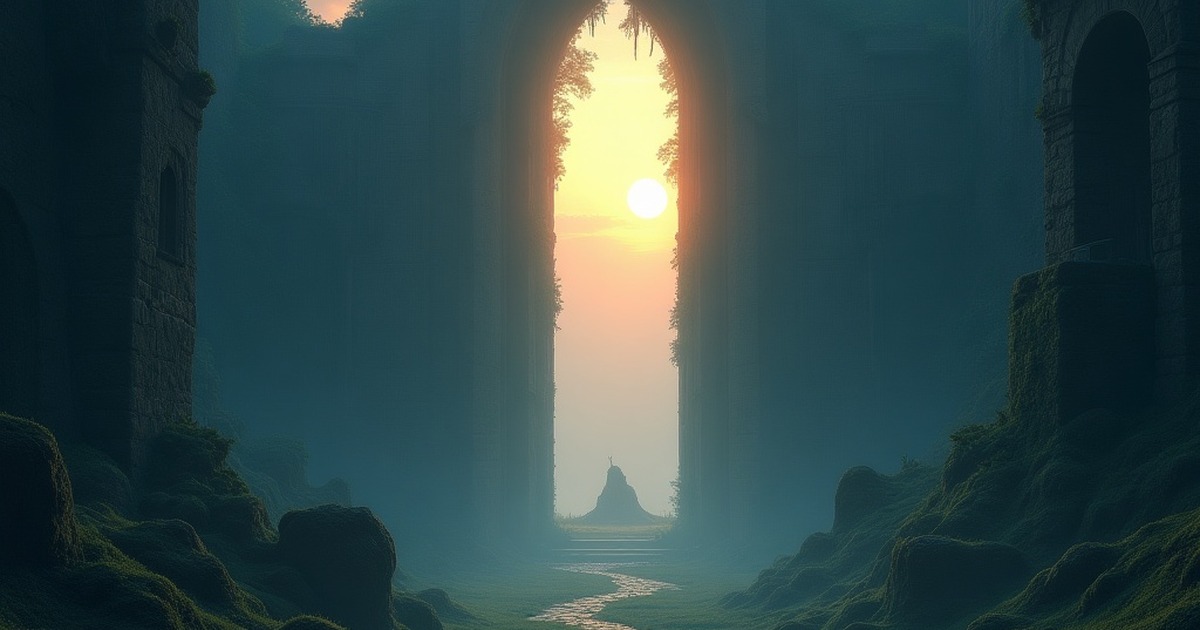
Norse creation begins with Ginnungagap, literally meaning “gaping abyss” or “yawning void.” But here's where it gets fascinating — this wasn't empty space. The Prose Edda describes it as bordered by Niflheim (realm of ice and mist) to the north and Muspelheim (realm of fire) to the south.
2. The Nature of Creator Beings
Here's where things get really interesting. Greek creation myths feature spontaneous generation — beings simply emerge from Chaos without a conscious creator. Gaia (Earth), Tartarus (the Abyss), and Eros (Love) appear as fundamental forces rather than crafted entities.
Norse mythology takes a dramatically different approach. The first being, Ymir, emerges when ice from Niflheim meets fire from Muspelheim in Ginnungagap. But Ymir doesn't create consciously — he's more like a living landscape from whose body the world will later be carved.
How Did the World Begin According to Norse Mythology?
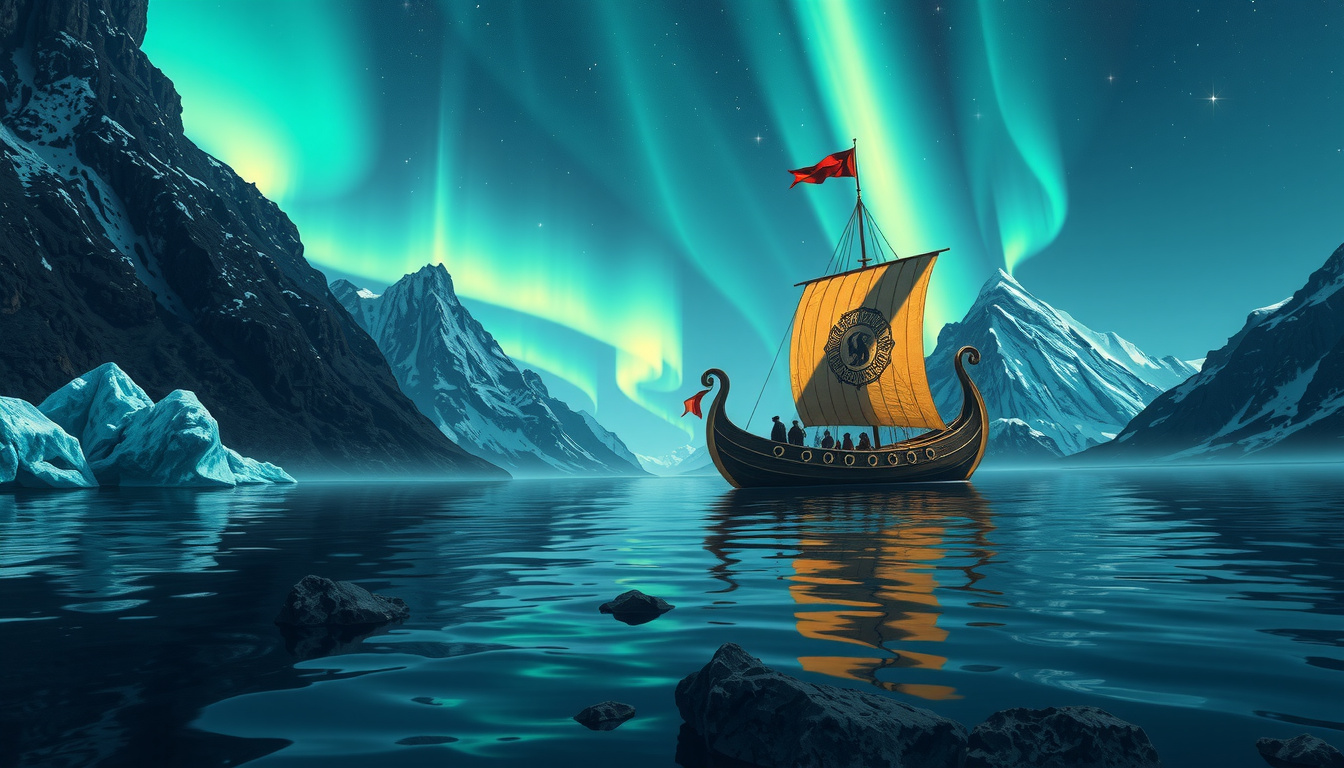
The Norse creation story unfolds like a cosmic accident that becomes purposeful. When the warm winds from Muspelheim met the cold moisture of Niflheim in Ginnungagap, the resulting droplets formed Ymir, the first frost giant.
Simultaneously, these same conditions created Audhumla, a primordial cow whose milk nourished Ymir. As Audhumla licked salt from the ice blocks, she gradually revealed Búri, the first of the gods' lineage. Búri's son Borr would later marry Bestla, a giantess, producing three sons: Odin, Vili, and Vé.
Norse Mythology Illustrated Guide
Visual reference for understanding complex Norse cosmological concepts and relationships
3. The Role of Violence in Creation
This might be the most striking difference between the two mythologies. Greek creation involves conflict, yes — the Titans war against the Olympians — but it's primarily about succession and power struggles.
Norse creation is fundamentally violent. Odin and his brothers kill Ymir, then use his corpse to build the world. His blood becomes the seas, his flesh the earth, his bones the mountains, his hair the trees, and his skull the sky. It's creation through destruction — a theme that echoes through all of Norse mythology.
4. The Relationship Between Creators and Created
Greek gods, despite their flaws, generally maintain their cosmic positions. Zeus overthrows Kronos and establishes a relatively stable order on Mount Olympus. The gods quarrel among themselves, but their realm endures.
Norse gods exist in constant tension with the giants (jötnar), descendants of Ymir. Since the gods killed the primordial giant to create the world, there's an inherent antagonism built into the cosmic order. This isn't just political conflict — it's existential.
What Is Ginnungagap in Norse Creation Stories?
Ginnungagap represents one of the most sophisticated concepts in ancient cosmology. Unlike the Greek Chaos, which suggests randomness, Ginnungagap implies potential structure — a gap that could be filled, a void that wants to be occupied.
The name itself tells us everything. Ginnung comes from a root meaning “to deceive” or “to bewitch,” suggesting this void had an almost magical quality. Gap obviously means gap or chasm. So Ginnungagap is literally “the magical chasm” — a space charged with creative potential.
What makes this concept brilliant is its geographic specificity. The Völuspá (first poem in the Poetic Edda) describes it as bounded by existing realms — it's not infinite void but structured emptiness. This shows remarkable cosmological thinking for the medieval period.
5. Temporal Perspectives
Greek creation myths generally move toward stability. After the initial chaos and subsequent conflicts, the Olympian order emerges and persists. Time becomes cyclical with seasons and generations, but the cosmic structure remains stable.
Norse mythology is obsessed with endings. Ragnarök isn't just mentioned — it permeates every story. The gods know they're doomed, and this knowledge affects everything they do. Creation contains the seeds of its own destruction from the very beginning.
Who Created the World in Greek Mythology?
Greek creation doesn't feature a single creator but rather a series of spontaneous emergences and evolutionary developments. From Chaos came Gaia (Earth), Tartarus (the Abyss), Eros (Love), Erebus (Darkness), and Nyx (Night).
Gaia then produces Uranus (Sky) without a partner, followed by the Mountains and Pontus (Sea). The real action begins when Gaia and Uranus unite to produce the Titans, including Kronos who will eventually overthrow his father.
6. The Nature of Divine Consciousness
Greek primordial beings seem to possess inherent awareness and purpose. Gaia acts deliberately when she encourages Kronos to castrate Uranus. The Titans make conscious decisions about succession and power.
Norse primordial beings operate more like forces of nature. Ymir doesn't consciously create anything — beings simply emerge from his body while he sleeps. Even Audhumla the cow acts on instinct rather than divine will. Consciousness seems to emerge gradually rather than existing from the beginning.
7. Gender and Creation
Greek mythology strongly emphasizes feminine creative power. Gaia gives birth to Uranus without a partner, establishing the primacy of feminine generative force. Even later, when Zeus takes control, he does so partly by swallowing Metis and giving birth to Athena himself — appropriating feminine creative power.
Norse creation is more androgynous or masculine-leaning. Ymir produces offspring from his sweat and by his feet reproducing with each other — asexual or auto-sexual generation. The actual world-building is done by Odin and his brothers through violence and craftsmanship rather than birth.
How Do Norse and Greek Gods Compare in Creation Stories?
The gods' roles in creation reveal fundamental differences in how these cultures viewed divine power and responsibility.
8. Divine Motivation
Greek gods seem motivated by power, passion, and personal relationships. Zeus overthrows Kronos to claim supremacy. The conflicts are essentially family dramas played out on a cosmic scale.
Norse gods appear motivated by necessity and survival. Odin and his brothers don't kill Ymir for power — they do it to create a habitable world. Their actions seem more pragmatic than passionate.
9. The Ultimate Cosmic Vision
Perhaps the most profound difference lies in each mythology's ultimate vision of existence.
Greek creation myths suggest that cosmos can triumph over chaos through divine wisdom and power. The Olympic order, while not perfect, represents a workable solution to cosmic problems. Justice (Themis), wisdom (Athena), and art (Apollo) become part of the divine hierarchy.
Norse mythology sees existence as fundamentally tragic. No matter how brave or wise the gods are, Ragnarök is inevitable. The cosmos is not perfectible — it's a temporary shelter against entropy that will eventually fail.
✅ Greek Mythology Strengths
- Optimistic cosmic vision
- Complex divine psychology
- Emphasis on wisdom and justice
- Rich literary tradition
✅ Norse Mythology Strengths
- Realistic view of existence
- Emphasis on courage and duty
- Complex cosmological structure
- Profound metaphysical insights
Cultural Context and Historical Development
Understanding these differences requires considering the cultures that created them. Greek civilization developed in a Mediterranean environment that, while challenging, offered more predictable seasons and agricultural opportunities. The Olympic pantheon reflects a society that believed in the possibility of achieving lasting order and justice.
Norse mythology emerged in harsh northern climates where survival was always uncertain. The emphasis on inevitable doom reflects a culture that faced long winters, unpredictable weather, and constant struggle against natural forces. Ragnarök isn't pessimism — it's realism born from lived experience.
The timing matters too. Most of our Greek creation myths were recorded during the Classical period when Greece was developing philosophy, democracy, and sophisticated art. Norse myths were preserved during the medieval period by Christian scholars like Snorri Sturluson, who may have emphasized certain aspects over others.
Frequently Asked Questions
Q: Which creation myth is older, Norse or Greek?
A: Greek creation myths in their recorded forms are significantly older, with Hesiod's Theogony dating to around 700 BCE. Our main Norse sources, the Poetic and Prose Eddas, were compiled in the 13th century CE, though they preserve much older oral traditions.
Q: Do Norse and Greek creation myths share any common elements?
A: Both begin with primordial voids (Chaos/Ginnungagap) and feature generational conflicts among divine beings. However, these similarities likely reflect common Indo-European heritage rather than direct influence.
Q: How accurate are modern retellings of these creation myths?
A: Modern retellings often simplify or romanticize the original stories. For authentic understanding, consult primary sources like Hesiod's Theogony and Snorri's Prose Edda in scholarly translations.
Q: Why do Norse gods die while Greek gods are immortal?
A: This reflects different cultural values. Greek immortal gods represent the human desire for permanence and order, while Norse mortal gods embody the heroic ideal of facing inevitable defeat with courage.
Q: How do these creation myths influence modern fantasy literature?
A: Enormously. Tolkien drew heavily on Norse mythology for The Lord of the Rings, while Rick Riordan's Percy Jackson series modernizes Greek myths. Many fantasy worlds blend elements from both traditions.
Q: Are there creation myths that combine Norse and Greek elements?
A: Not in ancient sources, but modern fantasy authors often blend elements from both mythologies. This reflects our contemporary global perspective rather than historical connections.
The Enduring Relevance of Ancient Creation Stories
Why do these ancient stories still matter in 2025? Because they address fundamental questions that remain relevant: Where did we come from? What's our purpose? How should we face uncertainty and mortality?
Greek creation myths offer hope that wisdom and justice can create lasting order from chaos. They suggest that divine and human efforts can build something better than what came before. This optimism has profoundly influenced Western philosophy, politics, and art.
Norse creation myths provide a different kind of wisdom. They suggest that meaning comes not from achieving permanent victory but from acting with courage and honor despite inevitable defeat. This perspective has become increasingly relevant in our age of climate change, global conflicts, and technological disruption.
Both mythologies offer sophisticated ways of thinking about existence, divinity, and human purpose. They're not primitive superstitions but complex philosophical and poetic systems that reward careful study.
For writers, these myths provide rich sources of inspiration. The Greek emphasis on character development through divine conflict offers models for psychological realism. Norse mythology's integration of cosmic doom with heroic action creates powerful dramatic tension.
For anyone interested in understanding Western culture, these creation myths are essential. They've influenced everything from Shakespeare to Marvel movies, from constitutional governments to environmental movements. You can't fully understand our cultural conversations without knowing these foundational stories.
Final Verdict: Which Creation Mythology Should You Study First?
If you're new to mythology studies, I recommend starting with Greek creation myths. They're more accessible, have influenced more of our cultural traditions, and provide excellent preparation for understanding other mythological systems.
Begin with a reliable translation of Hesiod's Theogony, then move to Norse sources once you've grasped the Greek foundations. The Prose Edda offers the most comprehensive Norse creation account.
For visual learners, illustrated guides can help you track the complex relationships and genealogies in both mythological systems. But there's no substitute for reading the primary sources yourself.
Both Norse and Greek creation myths offer profound insights into human nature, cosmic order, and the meaning of existence. They represent humanity's earliest attempts to understand the universe and our place within it. In 2025, as we face our own cosmic questions about artificial intelligence, climate change, and space exploration, these ancient wisdom traditions remain surprisingly relevant.
The choice isn't really between Norse and Greek mythology — it's about embracing both as complementary perspectives on the eternal human questions that continue to shape our world today.