In 1755, the Lutheran bishop Erik Pontoppidan published a natural history of Norway that included a detailed entry on a sea monster so enormous that sailors who mistook it for an island and stepped ashore were never seen again. Pontoppidan was not writing mythology—he was writing natural science, and his Kraken was classified alongside whales and cod in the era's taxonomic literature. Across the same centuries, theologians and scholars debated a different beast: the Leviathan, described in the Book of Job with thirty-four verses of such precise anatomical terror that medieval commentators argued over whether it was a literal animal or an allegory for Satan himself. The Kraken and the Leviathan represent two distinct branches of human fear—one born of the ocean's cold, unknowable depths, the other of cosmic chaos and divine judgment. For centuries, both were treated as real. The question of which was more terrifying is not merely a matter of monster size; it is a question of what, exactly, we mean by terror, and whether the threat of being dragged into the abyss is worse than facing a beast that breathes fire and laughs at iron.
The Kraken: From Norse Waters to Natural History
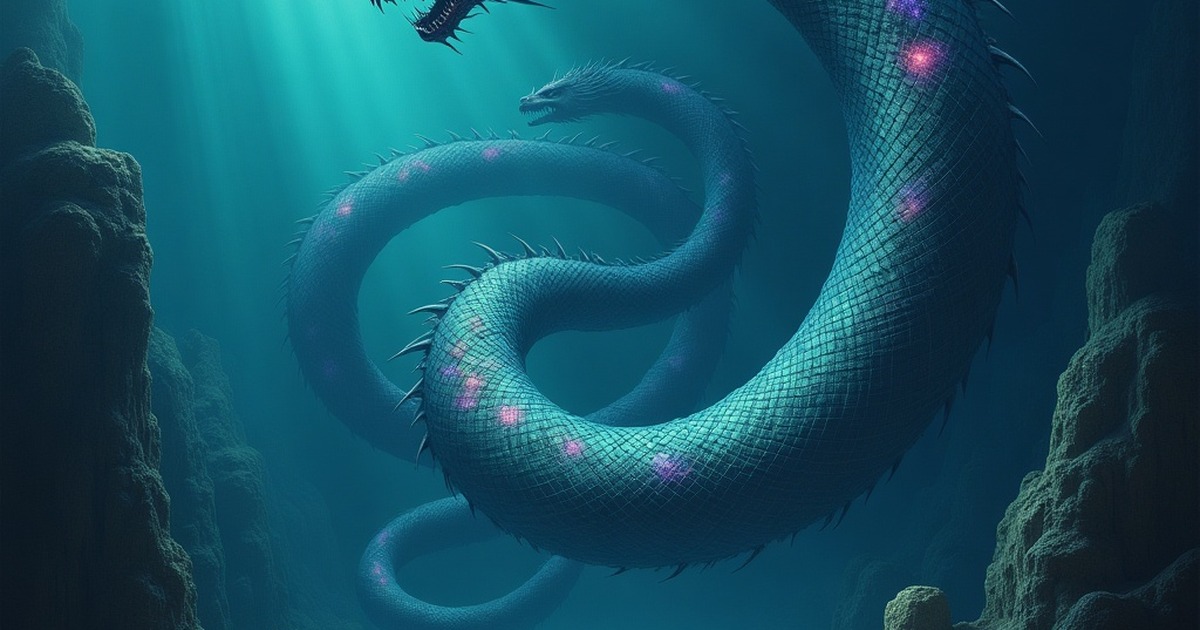
The Kraken's earliest identifiable ancestor appears in the thirteenth-century Norwegian Örvar-Odds saga, which describes the Hafgufa (“sea mist”)—a creature so vast that it could be mistaken for an island. But the Kraken as we know it crystallized in Pontoppidan's 1755 The Natural History of Norway, where he devoted an entire chapter to what he called “the largest sea monster in the world.” Pontoppidan claimed the creature measured roughly 1.5 miles in circumference when floating at the surface, and that its rising from the depths created whirlpools capable of dragging down the largest ships. He was careful to distinguish his account from mere folklore, insisting that multiple credible witnesses—fishermen, sailors, and clergymen—had corroborated the creature's existence.
The Kraken's scientific credibility peaked in 1735, when Carl Linnaeus included it in the first edition of Systema Naturae under the name Microcosmus marinus, classifying it as a cephalopod. Linnaeus later removed the entry from subsequent editions, but the damage was done: the Kraken had entered European natural philosophy as a legitimate subject of inquiry. Alfred Tennyson's 1830 poem “The Kraken” cemented its literary immortality, describing a beast that “sleepeth under the grey-green sea” until the end of the world. Tennyson's Kraken is not aggressive—it is primordial, dormant, and patient. This distinction matters: the Kraken of folklore does not hunt humans with malice; it destroys them incidentally, through sheer scale and the physics of its movement.
The Leviathan: Scripture's Primeval Serpent
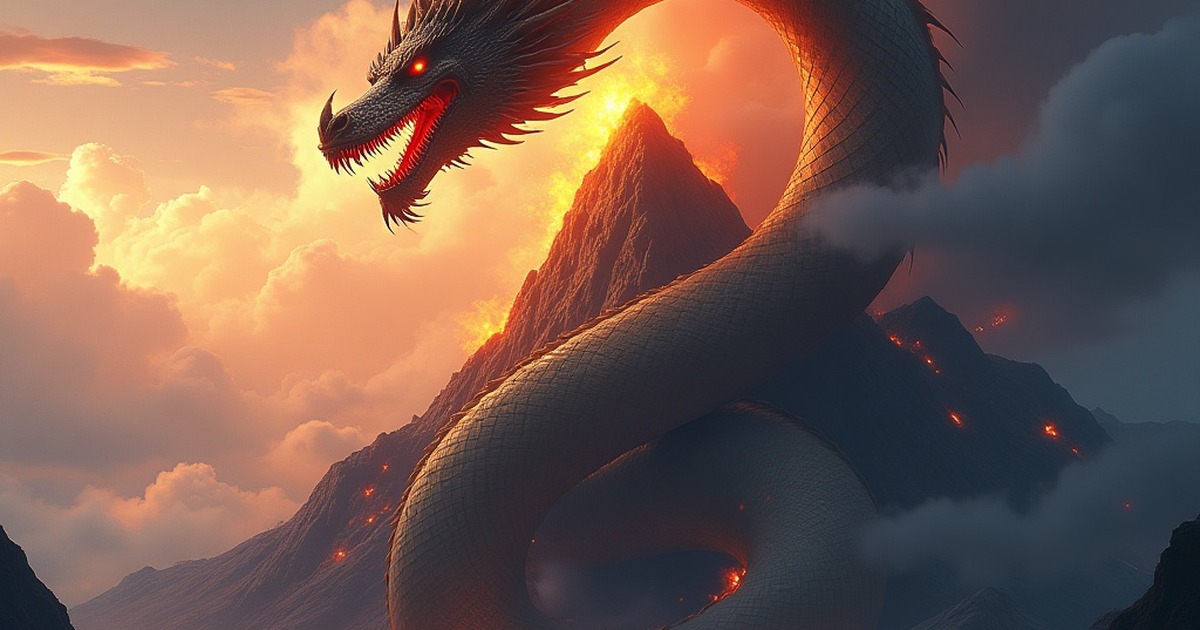
The Leviathan appears in the Hebrew Bible with a specificity that no other sea monster receives. In Job 41, God devotes thirty-four verses to describing a creature that “makes the depths churn like a boiling cauldron” and “laughs at the rattling of the javelin.” The passage is a rhetorical tour de force: God is telling Job that if he cannot even subdue the Leviathan, how can he presume to question divine justice? The beast's scales are “tightly sealed,” its breath “kindles coals,” and its heart is “hard as a millstone.” The text is unambiguous: no human weapon can harm it. “The sword that reaches it has no effect,” Job 41:26 states, “nor does the spear or the dart or the javelin.”
The Leviathan's origins stretch deeper than the Hebrew Bible. In the Ugaritic Baal Cycle, dating to roughly 1400 BCE, the god Baal defeats a seven-headed sea serpent named Lotan—a direct linguistic and mythological precursor to the Hebrew Leviathan. Isaiah 27:1 preserves this cosmic battle language, describing how “the Lord will punish with his sword—Leviathan the gliding serpent, Leviathan the coiling serpent, and he will slay the monster of the sea.” The Leviathan is not merely a large animal; it is a symbol of primordial chaos, the embodiment of everything that resists divine order. John Milton, in Paradise Lost (1667), describes Satan himself as “that sea-beast Leviathan, which God of all his works created hugest that swim the ocean stream” (Book 1, lines 200–201). The monster had become synonymous with evil incarnate.
Physical Terror: Size, Strength, and Apocalyptic Power
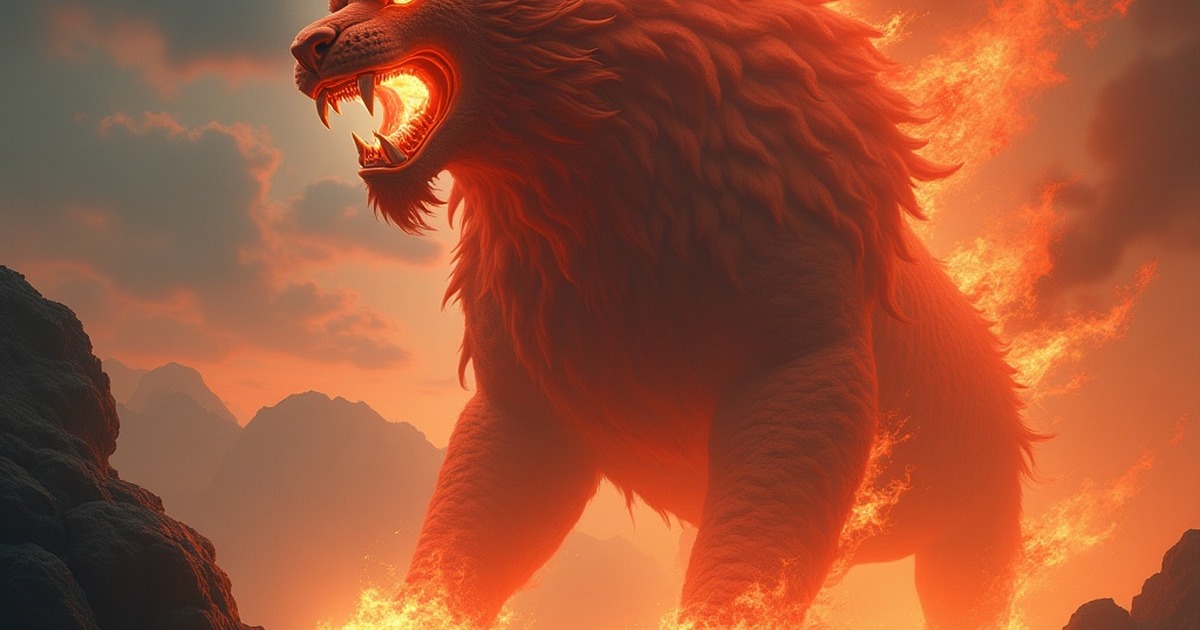
Comparing the physical descriptions of the Kraken and Leviathan reveals two very different kinds of threat. The Kraken's terror is one of scale and environment. Pontoppidan wrote that when the creature surfaced, “the water around it becomes shallow and dangerous for ships,” and that its sinking created “a whirlpool that draws everything down.” The Kraken does not need to attack; it simply exists, and its existence reshapes the ocean around it. By contrast, the Leviathan's terror is active and deliberate. Job 41:19–21 describes a creature that breathes fire: “Flames stream from its mouth; sparks of fire shoot out. Smoke pours from its nostrils as from a boiling pot over burning reeds.” This is not a passive island-monster; this is a dragon of the deep, armed with weapons that belong to mythology's most aggressive beasts.
The Kraken's size, by most accounts, exceeded the Leviathan's in raw dimensions. Pontoppidan's estimate of 1.5 miles in circumference would make the creature roughly 0.5 miles in diameter—larger than any known animal in Earth's history. The Leviathan, while described as “the hugest” of God's creations in Milton's telling, is not given specific measurements in the biblical text. What the Leviathan lacks in size, however, it compensates for in durability. Job 41:7 asks rhetorically, “Can you fill its hide with harpoons or its head with fishing spears?” The answer is no. The Kraken, by contrast, could theoretically be wounded—Pontoppidan noted that the creature was sometimes seen surrounded by schools of fish, suggesting it was a biological organism with vulnerabilities.
Real-World Inspirations: Giant Squid, Whales, and the Deep Sea
The Kraken's most likely biological inspiration is the giant squid (Architeuthis dux), which reaches lengths of up to 43 feet (13 meters) and possesses eyes the size of dinner plates—roughly 10 inches (25 centimeters) in diameter. For centuries, giant squid were known only from carcasses washed ashore or found in the stomachs of sperm whales. The first photograph of a live giant squid in its natural habitat was not captured until 2004, off the coast of Japan's Ogasawara Islands, by researchers Tsunemi Kubodera and Kyoichi Mori. The colossal squid (Mesonychoteuthis hamiltoni) is even larger, reaching an estimated 46 feet (14 meters) and bearing swiveling hooks on its tentacle clubs that leave circular scars on sperm whale skin. Sperm whales themselves—which dive to depths of 3,280 feet (1,000 meters) in search of squid—display scars from battles with these deep-sea giants, lending credence to the Kraken legend as a record of real predator-prey conflict observed at the surface.
The Leviathan's biological roots are more complex. Some scholars point to the sperm whale as a candidate: the whale's enormous head, ability to dive to extreme depths, and the mistaken belief that it could swallow ships whole made it a plausible source for Leviathan stories. Others suggest the Nile crocodile, which can reach 20 feet (6 meters) and was known to ancient Israelites through Egyptian trade routes. Job 41 describes a creature with “rows of shields” along its back—a detail that matches crocodile scutes—and a mouth ringed with “terrible teeth.” But the fire-breathing attribute has no clear biological parallel, suggesting that the Leviathan was always more than a natural animal. It was a composite, built from observed predators and theological imagination, designed to represent chaos rather than to be cataloged.
Cultural Legacy: From Ancient Fears to Modern Screens
The Kraken has enjoyed a remarkable cultural resurgence in the twenty-first century. It appears as a set-piece antagonist in Disney's Pirates of the Caribbean: Dead Man's Chest (2006), where it is depicted as a tentacled levi
Your Weekly Dose of Inspiration
Journaling ideas, family tips, and gentle inspiration.