The Ultimate Guide to Egyptian Mythology Gods in 2025
When Howard Carter peered into King Tutankhamun's tomb in 1922, his candle flickering against golden treasures, he wasn't just discovering artifacts—he was revealing a world where Egyptian mythology gods walked among mortals for over three millennia. The intricate depictions of falcon-headed deities, jackal-faced guardians, and cow-horned goddesses that adorned every surface told stories that had shaped one of history's greatest civilizations.
This post contains affiliate links. If you purchase through these links, we may earn a commission at no extra cost to you.
Egyptian mythology isn't just ancient history collecting dust in museum cases. These gods were the invisible architects of Egyptian society, influencing everything from the pharaoh's divine authority to a farmer's daily prayers for a good harvest. For more than 3,000 years, from around 3100 BCE to the Roman conquest, these deities provided answers to life's biggest questions: Who created the world? What happens after death? How do we maintain order in chaos?
In This Article
- Understanding Egyptian Mythology and Divine Hierarchy
- The Great Creator Gods and Cosmological Deities
- The Osiris Myth: Death, Resurrection, and the Afterlife
- Solar Deities and Sky Gods
- Guardians of Death and the Afterlife
- Goddesses of Protection, Fertility, and Warfare
- Wisdom, Magic, and Knowledge Deities
- The Pharaoh as Divine Intermediary
- Evolution and Legacy of Egyptian Mythology
What makes Egyptian mythology particularly fascinating is its sheer complexity. We're talking about over 2,000 documented deities, each with their own personalities, powers, and pet peeves. Some ruled the cosmos while others guarded your front door. Some had animal heads, others appeared entirely human, and a few could shape-shift at will.
In my experience studying mythological systems across cultures, Egyptian mythology stands out for its remarkable consistency despite spanning millennia and multiple political upheavals. These weren't just stories—they were operating instructions for civilization itself.
Understanding Egyptian Mythology Gods and Divine Hierarchy
The Nature of Egyptian Deities
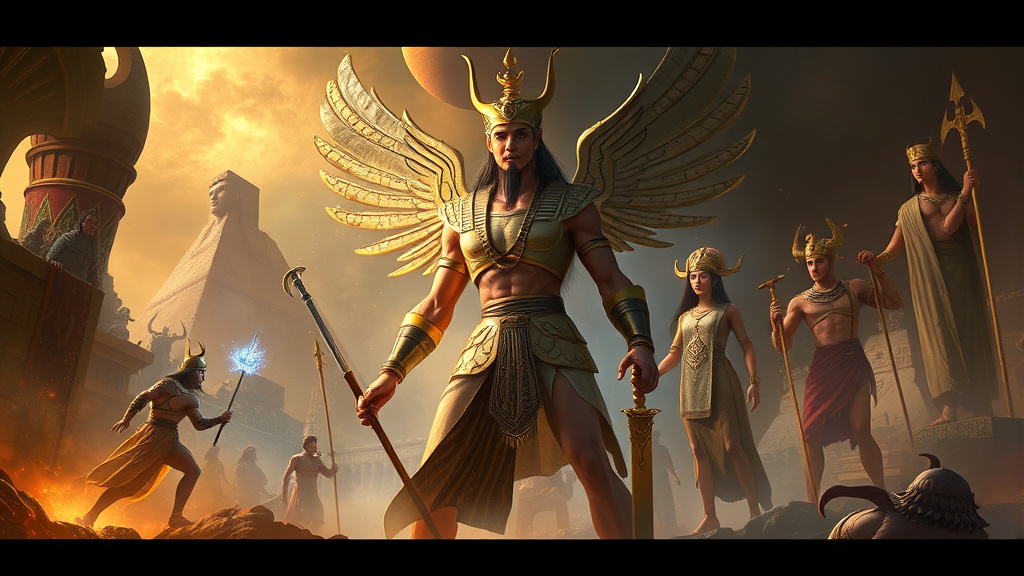
Egyptian gods weren't distant, untouchable beings residing on some mythical mountaintop. They were active participants in daily life, and their nature reflects this intimacy. Unlike the Greek gods who often appeared fully human, Egyptian deities embraced a more fluid concept of divine form.
Here's the thing: The Egyptians believed their gods possessed both ka (life force) and ba (soul), similar to humans but infinitely more powerful. This divine life force could inhabit statues during temple rituals, making the gods literally present for worship. I've found this concept remarkably sophisticated—it's essentially ancient virtual reality, where divine consciousness could download into physical objects.
Many deities appeared with animal heads on human bodies, a combination called anthropomorphic representation. This wasn't just artistic choice; it was theological statement. The falcon head of Horus represented divine sight and kingship. Anubis's jackal head connected him to desert scavengers who frequented cemeteries. Thoth's ibis head linked him to birds that probed the Nile's muddy banks, symbolizing his role in uncovering hidden knowledge.
Divine Hierarchy and Pantheon Structure
Think of Egyptian divine hierarchy like a cosmic corporation with multiple departments and regional branches. At the top sat creator gods like Atum, Ra, and Ptah—the cosmic CEOs who established reality itself. Below them came major deities governing fundamental aspects of existence: death, fertility, war, wisdom.
Want to know the secret? The middle management included regional patron gods. Every nome (administrative district) had its favorite deity. Sobek ruled the Fayyum with its crocodile-infested waters. Khnum presided over the First Cataract where the Nile's flood began. These weren't minor gods—they were major players in their territories.
At the bottom were household deities like Bes, the dwarf god who protected children and pregnant women. Don't let his lower status fool you; for ordinary Egyptians, these personal protectors were often more important than distant cosmic rulers.
Regional Variations and Local Cults
Here's where it gets interesting. Political changes directly affected divine prominence. When Thebes rose to power during the Middle Kingdom, their local god Amun suddenly became “King of the Gods.” When the capital moved to Memphis, Ptah gained national significance.
This theological flexibility wasn't confusion—it was brilliant political theology. New rulers couldn't simply dismiss existing gods without risking rebellion. Instead, they practiced syncretism, merging deities to create new composite gods. Amun-Ra combined the hidden power of Amun with Ra's solar authority. Ptah-Sokar-Osiris fused creation, death, and resurrection into one powerful deity.
The ancient texts tell us that regional variations also reflected local conditions. River communities emphasized crocodile and hippopotamus gods. Desert regions favored jackal and lion deities. You'll notice the mythology literally grew from the landscape.
The Great Creator Gods and Cosmological Deities
Atum and the Heliopolitan Creation Myth
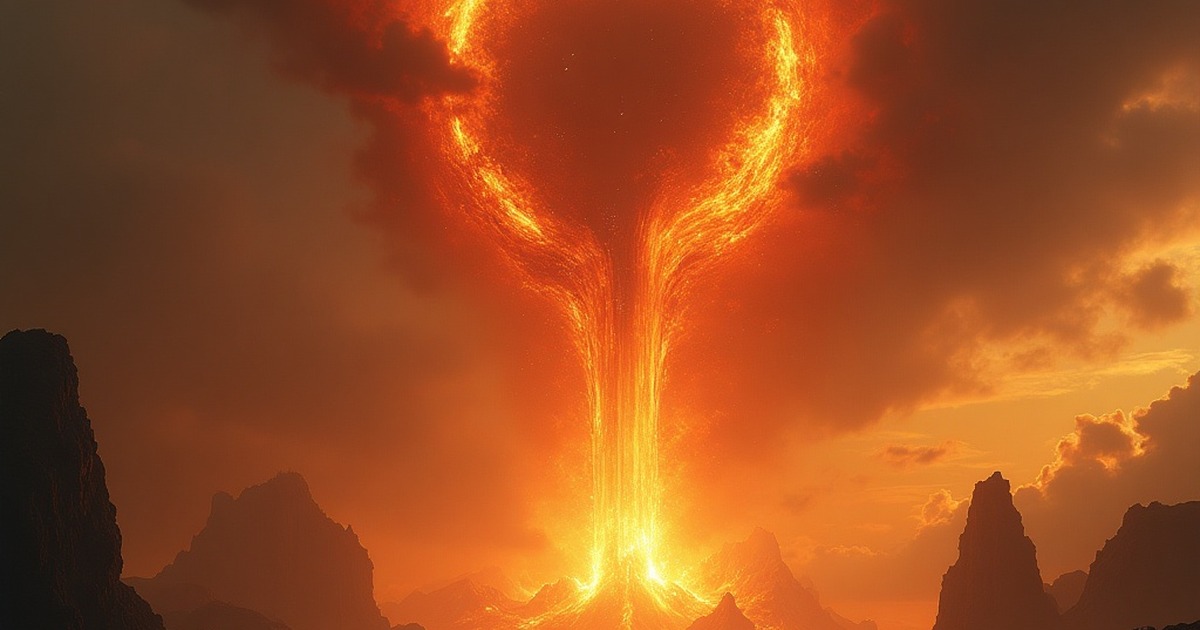
Picture this: before anything existed, there was only Nun—infinite, dark waters of potential. No light, no land, no life. Just endless possibility waiting to become real. From this primordial ocean, Atum emerged through sheer will, creating the first mound of earth by speaking it into existence.
But here's the catch: Atum faced a problem—he was completely alone. His solution was both creative and oddly relatable: he masturbated, creating the first divine couple, Shu (air) and Tefnut (moisture). I know it sounds crude, but this creation myth addresses a fundamental theological question: how does one become many?
Shu and Tefnut continued the creative process, producing Geb (earth) and Nut (sky). Their children included Osiris, Isis, Set, and Nephthys—the gods who would dominate Egyptian mythology for millennia. This family tree, called the Ennead (nine gods), provided the basic structure of Egyptian cosmology.
What I discovered was remarkable about this creation myth—its scientific intuition. Modern cosmology talks about universe emerging from quantum fluctuations in primordial void. Atum emerging from Nun isn't that different conceptually—order arising spontaneously from chaos through natural forces.
Ptah: The Memphite Creator
Memphis had a different take on creation. Their god Ptah created the world through speech and thought—logos theology that would later influence both Jewish and Christian creation accounts. Ptah conceived the world in his heart (the seat of intelligence for Egyptians) and spoke it into existence through his tongue.
This creation method appealed to Egypt's intellectual classes. Instead of messy physical creation, Ptah used pure mental power. The Memphite creation myth influenced later philosophical traditions and demonstrates how Egyptian theology could be remarkably abstract and sophisticated.
Amun-Ra: The King of Gods
During the New Kingdom (1550-1070 BCE), political necessity created Egyptian mythology's greatest composite deity. Amun, originally a Theban wind god whose name means “hidden one,” merged with Ra, the ancient solar creator, forming Amun-Ra.
Let me explain. This wasn't just theological innovation—it was political genius. Theban pharaohs needed to unite Upper and Lower Egypt under their rule. By combining Thebes's patron god with Egypt's ancient solar deity, they created a supreme god acceptable to both regions.
Amun-Ra became the ultimate creator, the hidden power behind Ra's visible solar journey. His cult accumulated enormous wealth and political influence, eventually challenging pharaonic authority itself. This tension would later explode during Akhenaten's religious revolution.
The Osiris Myth: Death, Resurrection, and the Afterlife
No single story shaped Egyptian civilization more than the Osiris myth. It's a tale of sibling rivalry, murder, magical resurrection, and divine justice that provided the template for Egyptian concepts of kingship, death, and afterlife.
Osiris: Lord of the Underworld
Osiris ruled Egypt as a wise and benevolent king, teaching agriculture and civilization to his subjects. His brother Set, god of chaos and the desert, grew jealous of Osiris's popularity and devised a murderous plot. During a banquet, Set presented a beautiful chest, claiming it would fit whoever could lie inside it perfectly.
When Osiris tried the chest, it fit perfectly—because Set had secretly measured his brother beforehand. Set's conspirators slammed the lid shut, sealed it with lead, and threw it into the Nile. Osiris drowned, becoming the first mummy.
And the best part? Death wasn't the end. Isis, Osiris's wife and sister (divine royal marriage was different from human customs), searched desperately for her husband's body. She found the chest in Byblos, where a tree had grown around it, and brought Osiris back to Egypt. Using her powerful magic, she temporarily resurrected him long enough to conceive their son Horus.
But wait, there's more. Set wasn't finished. He discovered the body, dismembered it into fourteen pieces, and scattered them across Egypt. Isis and her sister Nephthys collected every piece except the penis, which a fish had eaten. Isis fashioned a replacement from gold and performed the first mummification, permanently resurrecting Osiris as lord of the underworld.
Isis: The Great Mother and Magician
Isis emerges from this myth as Egyptian mythology gods' most powerful female deity. Her magical abilities surpassed even those of Ra—in one story, she tricks the sun god into revealing his secret name, gaining power over him. Her devotion to Osiris became the model for ideal wifehood, while her protection of baby Horus established her as the ultimate mother goddess.
What made Isis special was her accessibility. While many Egyptian gods remained distant and fearsome, Isis understood human suffering because she'd experienced loss herself. Mothers prayed to her during childbirth. Wives sought her help with marital problems. Her cult eventually spread throughout the Roman Empire, making her one of antiquity's most popular deities.
Set: God of Chaos and Disorder
Here's the truth: Set often gets painted as pure evil, but that's oversimplification. Yes, he murdered his brother and represented chaos, storms, and the hostile desert. But chaos isn't always destructive—it's also necessary change and renewal. Set protected Ra's solar barque during its nightly journey through the underworld, spearing the chaos serpent Apep to ensure sunrise.
Set embodied Egypt's harsh realities: drought, sandstorms, political upheaval, and foreign invasion. These weren't evil forces to be eliminated but natural challenges to be managed and survived. Set's worship was particularly strong in Upper Egypt, where desert conditions made his protection essential.
Horus: The Divine Pharaoh
Horus, son of Osiris and Isis, spent his youth hidden in the Nile Delta marshes while his mother protected him from Set's attempts at murder. When he reached maturity, Horus challenged his uncle for the throne of Egypt, beginning a conflict that lasted eighty years.
This divine lawsuit, judged by the Ennead, established legal precedents that would influence Egyptian jurisprudence for millennia. Should legitimate inheritance (Horus) triumph over raw power (Set)? The gods eventually ruled in Horus's favor, making him king of the living while Osiris ruled the dead.
You'll find that every pharaoh became the living Horus, legitimizing their divine authority through this mythological precedent. The Horus-Set conflict also represented the eternal struggle between order and chaos, civilization and wilderness, the fertile Nile Valley and the barren desert.
Solar Deities and Sky Gods
Ra: The Sun God's Daily Journey
Ra's daily journey across the sky and through the underworld was ancient Egypt's most important religious narrative. Each dawn, Ra appeared as Khepri, the scarab beetle who pushed the sun disk above the horizon. At noon, he reached full power as Ra, the falcon-headed solar god. By evening, he became Atum, the aged creator descending into the western mountains.
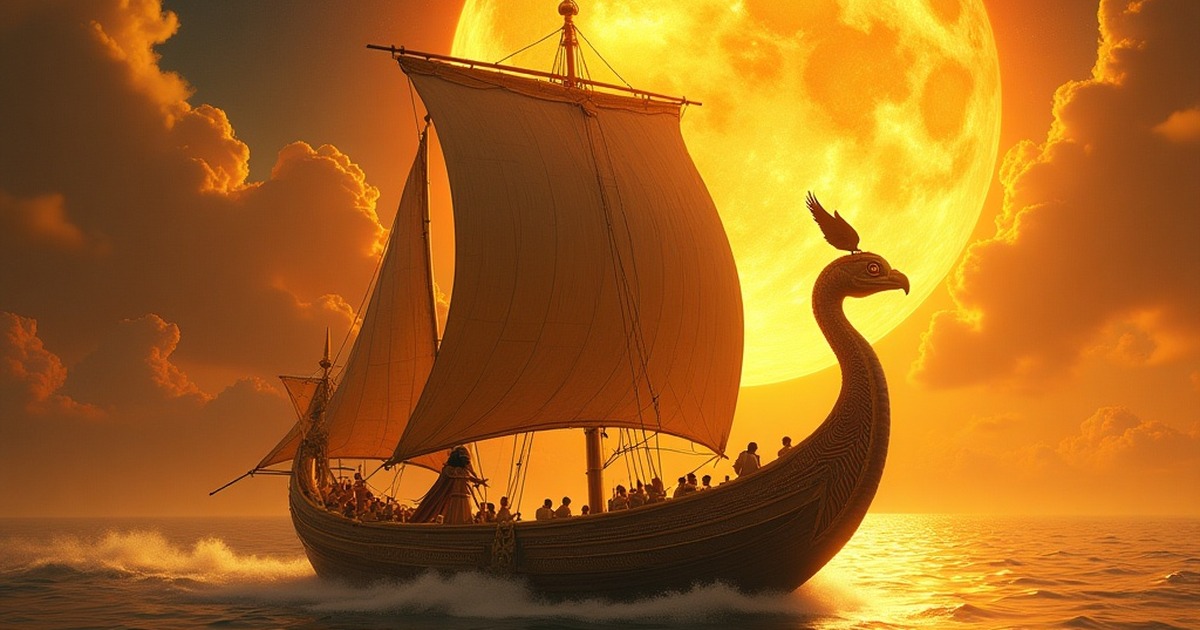
But here's where it gets interesting. Ra's journey didn't end at sunset. During the night, he sailed through the Duat (underworld) in his solar barque, battling demons and providing light to the dead. The most dangerous moment came at midnight when Apep, the chaos serpent, attacked the barque trying to prevent sunrise.
This daily cycle provided Egyptians with cosmic reassurance. No matter how dark the night, Ra would return. Death wasn't permanent extinction but temporary passage through the underworld. The sun's reliability became a metaphor for divine faithfulness and cosmic order.
Nut: The Sky Goddess
Nut arched her star-spangled body across the heavens, her fingertips touching the eastern horizon while her toes reached the west. Each evening, she swallowed Ra, and each morning she gave birth to him anew. This image of the sky goddess consuming and regenerating the sun appeared on countless tomb ceilings, promising deceased souls their own daily rebirth.
Nut's relationship with her husband Geb (earth) was literally groundbreaking mythology. Originally, they lay in constant embrace until their father Shu (air) separated them, creating space between earth and sky where life could flourish. Their separation was necessary but tragic—Nut weeps for her distant husband, and her tears fall as rain.
Khnum: The Divine Potter
Think about it: At Elephantine Island, where the Nile's flood began its journey north, Khnum shaped human beings on his potter's wheel. Each person was individually crafted, explaining human diversity and uniqueness. But Khnum didn't just create physical bodies—he also shaped the ka, the life force that animated each being.
This creation method appealed to Egypt's craftsman classes. Unlike cosmic creators who worked through speech or thought, Khnum created through skilled manual labor. His workshop was the source of the Nile flood, which carried the fertile silt that renewed Egypt annually.
Guardians of Death and the Afterlife
Anubis: The Jackal-Headed Psychopomp
Long before Osiris ruled the underworld, Anubis was Egypt's primary death god. His jackal head wasn't arbitrary—jackals frequented Egyptian cemeteries, and their black coloration symbolized the fertile soil of rebirth. When Osiris assumed lordship of the dead, Anubis became his chief assistant, the divine embalmer who perfected mummification techniques.
Want to know the secret? Anubis's most crucial role came during the weighing of the heart ceremony. After death, you'd find your heart was weighed against Ma'at's feather of truth. Anubis operated the scales while Thoth recorded the results. If your heart balanced with the feather, you achieved eternal life. If not, the monster Ammit devoured your heart, causing permanent death.
This wasn't arbitrary judgment but moral accounting. The heart, which Egyptians considered the seat of intelligence and morality, literally carried the weight of your deeds. Heavy hearts, burdened with sin, tipped the scales toward destruction. Light hearts, unburdened by evil, achieved balance and eternal life.
Thoth: Scribe of the Gods
Thoth, with his ibis head and moon disk crown, served as divine accountant, recording the deeds of gods and mortals. His role in the judgment of the dead was crucial—his records determined each soul's fate. But Thoth's influence extended far beyond death.
As inventor of writing, mathematics, and astronomy, Thoth made civilization possible. His gift of hieroglyphs allowed Egyptians to record laws, literature, and religious texts. His mathematical knowledge enabled pyramid construction and calendar calculation. His astronomical observations predicted the Nile's flood and guided agricultural planning.
Most people don't realize that Thoth's wisdom was so renowned that later Greek and Arab authors attributed magical texts to him, calling him Hermes Trismegistus (Thrice-Great Hermes). These Hermetic writings influenced medieval alchemy and Renaissance magic, making Thoth among the top Egyptian gods whose influence extended into early modern Europe.
The Four Sons of Horus
Imsety, Duamutef, Hapi, and Qebehsenuef—these four gods protected the internal organs removed during mummification. Each governed a specific organ and cardinal direction, creating a protective matrix around the deceased.
Let me explain. Imsety, human-headed, guarded the liver and faced south. Duamutef, jackal-headed, protected the stomach and faced east. Hapi, baboon-headed, watched over the lungs and faced north. Qebehsenuef, falcon-headed, defended the intestines and faced west.
Their canopic jars weren't just storage containers but religious technology, ensuring your organs remained intact for resurrection. This attention to anatomical detail reveals sophisticated understanding of bodily preservation and the connection between physical and spiritual survival.
Goddesses of Protection, Fertility, and Warfare
Hathor: The Divine Cow and Mother Goddess
Hathor defies simple categorization. As the divine cow, she nourished gods and mortals with her milk. As mother goddess, she protected women during childbirth and children during infancy. As goddess of love and beauty, she blessed marriages and romantic relationships. As mistress of music and dance, she brought joy to festivals and celebrations.
But here's the catch: Hathor had a darker side as the Eye of Ra, sent to punish humanity for their rebellion against the sun god. In this aspect, she became Sekhmet, the bloodthirsty lioness who nearly exterminated the human race. Only Ra's trick—flooding the land with red beer that Sekhmet mistook for blood—saved humanity from total destruction.
This dual nature reflected Egyptian understanding of feminine power as both nurturing and terrifying. Mothers protected their children fiercely. Lovers could become vengeful enemies. Natural forces that sustained life could also destroy it.
Sekhmet: The Lioness of War
Sekhmet embodied the destructive power of the sun's heat and the fury of protective motherhood. Her breath created the desert winds, and her arrows were the sun's scorching rays. Pharaohs invoked her before battle, seeking her ferocious protection against enemies.
Yet Sekhmet was also a goddess of healing. Egyptian medicine recognized that the same forces causing disease could cure it—poison becomes medicine in proper doses, fever burns away infection, surgical cuts enable healing. Sekhmet's priests were often physicians who understood this paradox.
However, keep in mind that her festivals required careful management. Celebrating Sekhmet meant controlled release of destructive forces through ritual drinking, dancing, and mock combat. These festivals channeled potentially dangerous energies into socially beneficial activities, preventing the real violence that unchecked aggression could cause.
Bastet: The Cat Goddess of Protection
Originally depicted as a lioness like Sekhmet, Bastet gradually evolved into the domestic cat goddess we recognize today. This transformation reflected changing Egyptian society—from the warrior culture of early pharaonic times to the more peaceful, prosperous periods when household protection became more important than military conquest.
Cats were sacred to Bastet because they protected Egyptian grain stores from mice and rats, making them essential to economic survival. Killing a cat, even accidentally, carried the death penalty. When household cats died, families mourned them like relatives and mummified them for proper burial.
The bottom line? Bastet's city, Bubastis, hosted Egypt's most popular festival. Herodotus described hundreds of thousands of pilgrims arriving by boat, drinking wine, making music, and celebrating with uninhibited joy. These festivals provided necessary emotional release in otherwise highly structured Egyptian society.
Wisdom, Magic, and Knowledge Deities
Thoth's Complex Divine Roles
Beyond his role as divine scribe, Thoth governed lunar cycles, making him essential for calendar calculations. His lunar associations connected him to magic—moon phases influenced spell casting, and Thoth's wisdom guided magical practitioners. His wife Seshat assisted in library management and architectural planning.
In my experience, Thoth's wisdom encompassed both practical knowledge and mystical insight. He invented the 365-day calendar, enabling accurate agricultural planning. He developed mathematical principles used in pyramid construction. But he also understood the secret names of gods, the formulas for resurrection spells, and the hidden connections between earthly and celestial spheres.
Seshat: The Goddess of Writing and Libraries
Seshat, “She Who Writes,” assisted Thoth in recording divine and royal deeds. Her leopard skin garment and seven-pointed star crown identified her as mistress of the House of Life—temple libraries where scribes copied religious texts, medical treatises, and magical formulas.
Seshat participated in the pharaoh's sed festival, recording his regnal years and ensuring proper ceremonial procedures. Her presence at foundation ceremonies for temples and pyramids guaranteed accurate measurements and auspicious timing. She literally wrote Egypt's official history, making her a leading politically important deity.
Ptah: Craftsman and Creator
Ptah's workshop in Memphis produced the tools and techniques that built Egyptian civilization. As patron of craftsmen, architects, and artists, he inspired the skilled workers who constructed pyramids, carved statues, and created the material culture we admire.
But Ptah's creativity wasn't limited to physical objects. His creation through divine speech influenced Egyptian understanding of language as creative force. Words had power to bring things into existence, destroy enemies, and transform reality. This theological insight made Egyptian magical practice particularly sophisticated.
The Pharaoh as Divine Intermediary
Divine Kingship Concept
The pharaoh wasn't just a political ruler but a living god, the earthly incarnation of Horus and son of Ra. This divine status carried enormous responsibilities—maintaining ma'at (cosmic order), ensuring the Nile's flood, protecting Egypt from enemies, and serving as intermediary between gods and mortals.
Here's the thing: Divine kingship solved practical political problems. How do you legitimize absolute authority over millions of subjects? Make the ruler divine. How do you ensure political stability across vast territories? Make rebellion against the king equivalent to rebellion against the gods. How do you unify diverse regions with different traditions? Make the king the earthly representative of all major deities.
Horus and Royal Legitimacy
Every pharaoh became Horus upon coronation, inheriting the divine throne that Horus had won from Set. Royal names included Horus names written inside serekh (palace facade) symbols, identifying the king with the falcon god. Your pharaoh's eyes became Horus's eyes, seeing all of Egypt and protecting it from harm.
This identification wasn't merely ceremonial. Egyptian political theory held that Horus actually inhabited the pharaoh's body during important rituals. The king's ka merged temporarily with Horus's divine ka, making royal decrees literally divine commands.
Temple Rituals and Royal Duties
Theoretically, every temple ritual in Egypt required the pharaoh's personal performance. Since this was physically impossible, high priests substituted for the king while maintaining the fiction of royal participation. Temple wall reliefs always showed the pharaoh making offerings to the gods, regardless of who actually performed the ceremony.
The pharaoh's daily ritual duties included awakening the gods at dawn, feeding them elaborate meals, clothing their statues in fine garments, and ensuring their temples remained pure and well-maintained. These weren't symbolic gestures but essential maintenance of cosmic order. If the gods weren't properly cared for, they might abandon Egypt to chaos and foreign conquest.
Evolution and Legacy of Egyptian Mythology
Changes Through Egyptian Periods
Egyptian mythology gods weren't static but evolved continuously throughout pharaonic history. The Old Kingdom emphasized solar theology and pharaonic divinity. The Middle Kingdom democratized afterlife access, allowing non-royal Egyptians to become Osiris after death. The New Kingdom created imperial theology suitable for governing a multi-ethnic empire.
The most dramatic change came during Akhenaten's reign (1353-1336 BCE), when he attempted to replace traditional polytheism with worship of Aten, the solar disk. This revolutionary experiment temporarily eliminated thousands of years of religious tradition, closing temples, dismissing priests, and forbidding mention of traditional gods' names.
To be fair, Akhenaten's experiment failed because it ignored Egyptian mythology's deep cultural roots. After his death, Tutankhamun restored traditional religion, but the damage to theological certainty was permanent. Later periods showed increasing foreign influence as Libyans, Nubians, Persians, Greeks, and Romans ruled Egypt.
Influence on Other Cultures
Egyptian mythology profoundly influenced neighboring civilizations. Hebrew scriptures borrowed Egyptian wisdom literature and creation motifs. Greek philosophers studied in Egyptian temples, learning mathematical and astronomical knowledge attributed to Thoth. Roman emperors adopted Egyptian royal ideology and imported Egyptian mystery cults.
Early Christianity showed particular Egyptian influence. The image of Isis nursing baby Horus provided the iconographic template for Madonna and Child paintings. Osiris's death and resurrection paralleled Christ's passion story. Egyptian monasticism became the foundation for Christian monastic traditions.
Across cultures, we find that Islamic civilization preserved Egyptian wisdom through Arabic translations of Hermetic texts attributed to Thoth. Medieval European scholars rediscovered these texts during the Renaissance, sparking renewed interest in Egyptian magic and philosophy.
Modern Interpretations and Misconceptions
Popular culture has created numerous misconceptions about Egyptian mythology gods. Hollywood mummies bear little resemblance to Egyptian beliefs about resurrection and afterlife. New Age spirituality often misinterprets Egyptian symbols and concepts, divorcing them from their original cultural context.
Recent archaeological discoveries continue to refine our understanding. Texts found at sites like Tanis and Tuna el-Gebel reveal regional variations in mythological traditions. Computer analysis of temple reliefs shows how political changes affected divine representations. DNA studies of mummified animals clarify which species were considered sacred to particular deities.
The most persistent misconception is that Egyptian mythology was primitive or superstitious. In reality, it represented one of humanity's most sophisticated attempts to create coherent explanations for natural phenomena, social organization, and existential questions. Egyptian theological concepts influenced major world religions and continue to inspire spiritual seekers worldwide.
Frequently Asked Questions
Who were the most powerful Egyptian mythology gods?
Ra (sun god), Amun-Ra (king of gods), and Osiris (lord of the underworld) were among the most powerful deities. Their influence shaped Egyptian religious beliefs, political authority, and afterlife concepts throughout pharaonic history.
What's the difference between Egyptian gods and other mythologies?
Egyptian gods were deeply integrated into daily life and government, often depicted with animal heads representing specific powers. They maintained consistent worship for over 3,000 years, longer than most other mythological systems.
Did all Egyptians worship the same gods?
No, different regions favored local deities alongside national gods. Political changes influenced divine prominence, and various periods emphasized different theological approaches while maintaining core mythological structures.
How did Egyptian mythology gods influence modern religions?
Many concepts like resurrection (Osiris), divine mother and child imagery (Isis and Horus), and final judgment influenced later religious traditions. Christian, Islamic, and Jewish texts show clear Egyptian mythological influences.
Were Egyptian gods actually worshipped as real beings?
Yes, Egyptians believed these gods actively influenced their world through natural phenomena, political events, and personal experiences. Temple rituals, daily prayers, and massive religious festivals demonstrated genuine devotional belief in divine presence.
Final Thoughts
Egyptian mythology gods represent humanity's longest-running theological experiment—a 3,000-year attempt to understand the relationship between human beings and divine forces. What emerged wasn't a single coherent system but a rich, complex, sometimes contradictory collection of insights about power, death, creativity, and meaning.
These ancient gods weren't just religious concepts but practical solutions to the challenges of living in a harsh but fertile land where the difference between abundance and starvation depended on forces beyond human control. They provided psychological frameworks for dealing with death, political structures for governing diverse populations, and spiritual technologies for connecting with transcendent reality.
What makes this myth enduring is that the fundamental questions Egyptian mythology gods addressed—How do we create order from chaos? How do we face death with dignity? How do we balance individual desires with social needs?—are still our questions today.
Whether you're drawn to Isis's compassionate magic, Thoth's infinite wisdom, or Horus's triumph over chaos, Egyptian mythology offers insights that remain relevant. The deeper symbolism reveals eternal human struggles with mortality, justice, and our place in the cosmic order.
Ready to explore these ancient mysteries further? Visit your local museum's Egyptian collection, read primary sources like the Pyramid Texts or Book of the Dead, and remember that every artifact tells a story about people who, like us, sought divine guidance for life's greatest challenges. You'll discover that these gods continue to inspire anyone curious enough to look beyond the golden masks and uncover the profound spiritual insights they conceal.