Fire held deep sacred meaning in ancient Greek culture, serving as a bridge between mortals and gods. From the eternal flame of Hestia to elaborate purification ceremonies, Greek fire rituals shaped religious practice and daily life for centuries.
This post contains affiliate links. If you purchase through these links, we may earn a commission at no extra cost to you.
The Greeks understood fire as more than a mere physical phenomenon-it represented divine essence itself. When Prometheus stole fire from Mount Olympus, he didn't just give humanity warmth and light. He granted them a piece of the divine area, transforming mortals into participants in cosmic order.
These ancient practices reveal how fire served as the ultimate medium of communication with the divine. Every flame carried prayers upward, every ember held potential for transformation.
Origins and Significance of Fire in Greek Religion
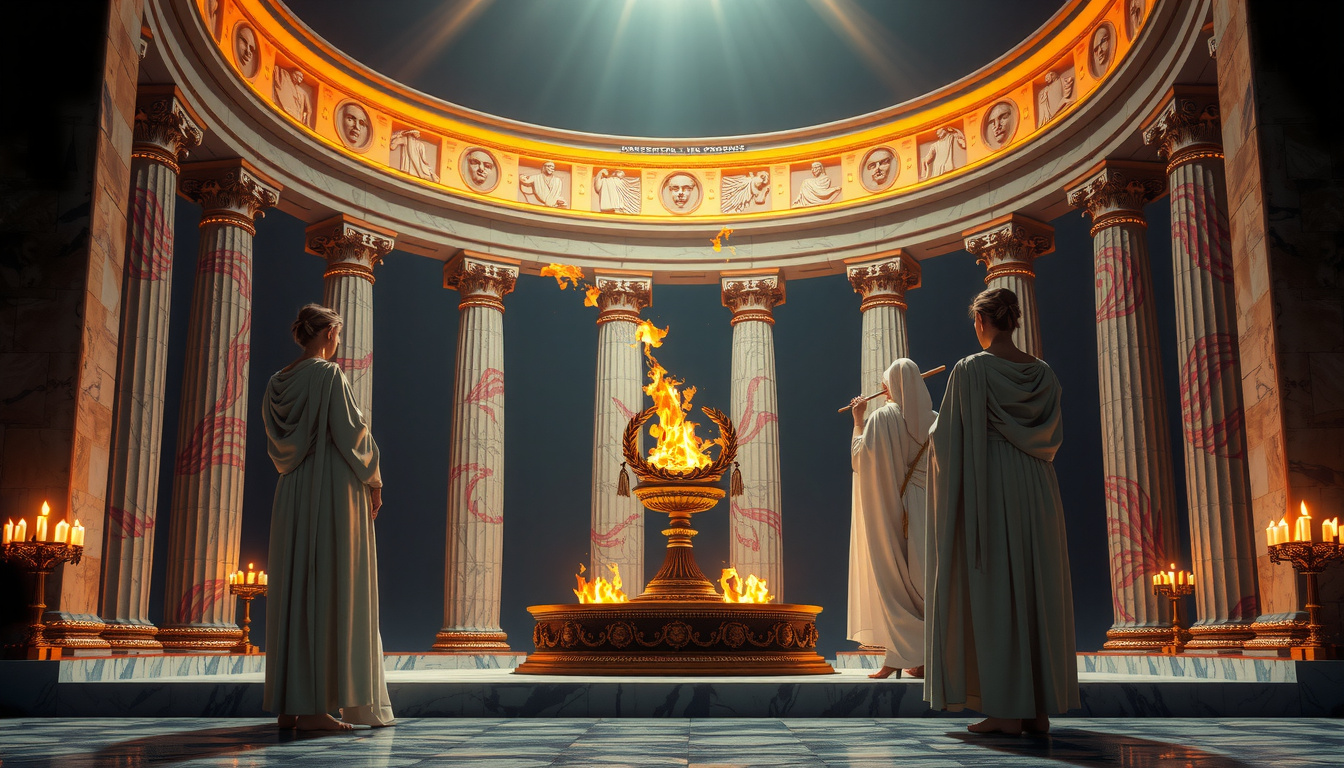
Greek religious cosmology placed fire at the very center of existence. The philosopher Heraclitus declared fire the fundamental element from which all things emerged and to which they returned. This wasn't merely philosophical speculation-it reflected deep-seated religious beliefs that permeated every aspect of Greek society.
The earliest evidence of organized fire worship in Greece dates to the Bronze Age, around 1600 BCE. Archaeological excavations at Minoan and Mycenaean sites reveal:
- Elaborate fire altars with specialized construction
- Ceramic vessels designed for burning aromatic substances
- Sacred hearth areas within palace complexes
- Bronze tools specifically crafted for fire rituals
These proto-Greek civilizations already recognized fire's sacred properties and developed sophisticated ceremonial practices around flame worship.
Divine Fire in Greek Mythology
The pantheon itself demonstrated fire's dual nature: creative and destructive, purifying and consuming.
Zeus wielded thunderbolts-celestial fire-as his primary weapon. Hephaestus commanded the forge fires that shaped divine weapons. Apollo's arrows carried solar fire that could heal or destroy.
Ancient texts categorized sacred fires into distinct types:
Olympian Fire: Descended from the heavens, representing divine will
- Required white animals and sweet-smelling woods like cedar or olive
- Used in ceremonies honoring sky gods
Chthonic Fire: Rose from the earth, connecting worshippers to underworld deities
- Accepted black animals and resinous materials producing thick smoke
- Essential for honoring Hades, Persephone, and earth spirits
Hearth Fire: Burned continuously with common woods
- Maintained sacred presence in daily life
- Connected families to Hestia's protection

Hestia and the Sacred Hearth Rituals
Hestia, goddess of the hearth, governed the most fundamental Greek fire rituals. Every home contained her sacred fire, never allowed to die completely. This eternal flame represented family continuity, divine protection, and social order.
Daily Hearth Practices
The daily hearth ritual began at dawn when the eldest woman of the household stirred the embers and added fresh fuel. She spoke traditional prayers while performing this task, invoking Hestia's protection for the day ahead. The fire received the first portion of every meal-a practice called “first fruits” offering.
Cities maintained public hearth fires in buildings called prytaneums. These municipal flames burned continuously, tended by specially appointed priests who underwent purification rites every new moon.
Establishing New Sacred Fires
The ritual for establishing a new hearth required seven days of preparation:
Days 1-3: The designated fire-keeper fasted and underwent purification
Day 4: Wood gathering from seven sacred trees-oak, olive, pine, cedar, myrtle, laurel, and fig
Day 5-6: Final preparations and community notifications
Day 7: Fire lighting ceremony with community participation
Fire-making itself followed strict protocols. The flame emerged from friction using oak and olive wood, never from iron tools. The first spark had to catch immediately-any delay suggested divine displeasure.
Regional variations reflected local cultural values:
- Spartan hearths: Burned exclusively oak, reflecting their martial culture's connection to Zeus
- Athenian hearths: Preferred olive wood, honoring Athena's gift to their city
- Delphic hearths: Combined seven woods in proportions determined by Pythian priestesses

Olympic and Athletic Fire Ceremonies
The Olympic flame tradition traced its origins to ancient Elis, where sacred fires burned throughout the Olympic festivals. These weren't mere ceremonial decorations-they represented divine presence sanctifying athletic competition.
Sacred Fire Lighting
Three months before each Olympic Games, priests kindled the sacred fire using polished bronze mirrors to focus Apollo's solar rays. This “pure” fire burned without contamination from earthly flame sources. The lighting ceremony took place at noon on the summer solstice, when Apollo's power reached its zenith.
Daily Competition Rituals
Each morning of competition began with fire ceremonies:
Victory Fire Traditions
Victory celebrations centered around Greek fire rituals. Winning athletes received sacred flames to carry back to their home cities. These Olympic fires kindled new hearths in the victors' honor, creating permanent connections between local communities and the Olympic sanctuary.
The original Olympic torch relay differed significantly from modern versions. Instead of carrying flame from Olympia to host cities, ancient Greeks transported sacred embers from Olympia back to their homelands after the games concluded.
Sacrificial Fire Rituals and Burnt Offerings
Greek sacrifice centered entirely around fire's powerful power. The act of burning offerings created a bridge between human and divine areas, converting physical substances into smoke that gods could consume.
Hecatomb Ceremonies
The most elaborate fire sacrifices occurred during hecatombs-ceremonies involving one hundred animals. These massive rituals required specialized fire management:
- Enormous pyres: Constructed using specific wood combinations
- High-temperature burning: Hot enough to consume large quantities of flesh and bone
- Continuous maintenance: Teams of priests managing multiple fires simultaneously
- Precise timing: Coordinated burning sequences lasting entire days
Deity-Specific Fire Requirements
Different deities demanded different burning methods:
Zeus: Whole animals consumed completely by flame
Athena: Specific cuts burned while worshippers consumed remainder in sacred feasts
Demeter: Grain offerings mixed with animal blood, creating sweet-smelling agricultural smoke
Poseidon: Marine offerings including fish, seaweed, and salt water
Sacrificial Fire Specialists
Specialized roles within sacrificial fire ceremonies included:
- Pyrophoros: Carried sacred fire from altar to altar
- Hiereus: Directed the actual burning process
- Mageiros: Prepared animal offerings for optimal burning
- Mantis: Interpreted smoke patterns for omens
The quality of sacrificial smoke carried divinatory significance. Thick, white smoke rising straight upward indicated divine acceptance. Thin, dark smoke that scattered suggested rejection or divine displeasure.
Mystery Religions and Fire Initiation Rites
Mystery religions employed fire in their most sacred and secretive rituals. The Eleusinian Mysteries, Dionysiac rites, and Orphic ceremonies all featured dramatic fire elements designed to transform initiates spiritually.
Eleusinian Fire Revelations
Eleusinian initiation culminated in the vision of sacred fire within the inner sanctuary. The ritual sequence built toward this fire revelation through careful stages:
The fire appeared supernatural, emerging without visible ignition sources and creating overwhelming sensory impact that generated spiritual rebirth central to mystery religion.
Dionysiac Fire Dancing
Dionysiac mysteries featured different but equally dramatic Greek fire rituals:
- Initiates danced around blazing bonfires
- Wine consumption mixed with psychoactive herbs
- Combination of firelight, intoxication, and movement induced altered consciousness
- Experiences interpreted as divine possession by Dionysus
Orphic Purification Fires
Orphic fire ceremonies focused on purification rather than ecstatic experience:
- Initiates passed through symbolic fire gates
- Represented journey through death into spiritual rebirth
- Fires burned sulfur, aromatic woods, and precious metals
- Created unique sensory environments for transformation
Purification and Cleansing Fire Rituals
Fire's purifying properties made it essential for ritual cleansing throughout Greek religious practice. Communities, individuals, and sacred spaces all required periodic purification through carefully controlled fire ceremonies.
Community Lustration Rituals
Lustration rituals cleansed entire cities after pollution events-plagues, murders, or divine displeasure:
- Fires lit at strategic points throughout urban areas
- Continuous burning for three days
- Materials burned to symbolically absorb communal contamination
- Priests performed coordinated purification rites
Personal Purification Fires
Individual fire rituals addressed specific purification needs:
Post-Childbirth: Women passed seven times around purifying fires while priestesses chanted protective spells
Battle Return: Warriors burned their weapons' blood-contamination in sacred flames before reentering peaceful society
Seasonal Cleansing: Families underwent quarterly purification using household fire altars
Sacred Space Purification
Sacred buildings underwent regular fire purification, especially temples handling numerous daily sacrifices:
- Aromatic substances burned throughout temple chambers
- Special attention to altar areas with organic contamination
- Purifications followed lunar calendars, occurring every new moon
- Different materials used for different temple deities
Funeral Fire Rituals
Funeral purification involved wide Greek fire rituals for both deceased and mourning survivors:
- Funeral pyres consumed bodies with personal possessions
- Physical remains transformed into smoke reaching the underworld
- Mourners purified themselves through cleansing fire smoke
- Seven-day purification period for close family members
Regional Variations and Local Fire Traditions
Greek fire rituals adapted to local conditions and cultural influences across the Mediterranean world. Each region developed distinctive practices while maintaining core religious principles.
Spartan Military Fire Ceremonies
Spartan fire rituals emphasized military themes reflecting their warrior culture:
Carneia Festival: Featured elaborate fire ceremonies where young men competed in flame-jumping contests testing courage and agility
Campaign Fires: Spartan kings maintained personal sacred fires throughout military campaigns using portable hearths that traveled with army units
Victory Celebrations: Returning warriors kindled celebration fires using enemy weapons as fuel
Athenian Commercial Fire Practices
Athenian fire practices reflected their commercial and intellectual culture:
Panathenaea: Fire processions displayed the city's wealth and artistic achievements through elaborate torchbearer costumes and colored flames
Torch Race: Honored Prometheus with competitive fire-carrying through city streets in relay races covering sacred routes
Market Purification: Monthly fire ceremonies cleansed the agora of commercial contamination
Delphic Oracular Fire Traditions
Delphic fire rituals centered around the oracle's prophetic activities:
- Pythian priestess inhaled vapors from sacred chasm
- Perpetual flames burned beneath Apollo's temple
- Oracular fires consumed laurel leaves and Apollo-sacred materials
- Aromatic smoke induced prophetic trance states
Island Maritime Fire Customs
Island communities developed maritime fire traditions adapted to seafaring life:
- Lighthouse fires served handling and religious functions
- Coastal fires received offerings from ship crews
- Continuous burning as votive offerings for safe voyages
- Storm-season fire ceremonies for Poseidon's protection
Legacy and Modern Connections
Ancient Greek fire rituals continue influencing modern religious and cultural practices across multiple traditions and contexts.
Olympic Revival
The Olympic torch relay, revived for modern Olympic Games, deliberately evokes ancient sacred fire ceremonies while adapting them for contemporary international celebration. The flame still originates from Olympia using focused sunlight, maintaining connection to Apollo's solar power.
Greek Orthodox Continuity
Greek Orthodox Christianity preserved many fire ritual elements from ancient paganism:
- Holy Fire ceremony at Jerusalem's Church of the Holy Sepulchre
- Orthodox Easter services featuring elaborate fire ceremonies
- Emphasis on purification and renewal themes from ancient traditions
Living Folk Traditions
The Anastenaria fire-walking tradition in northern Greece maintains direct connections to ancient Dionysiac fire rituals. Participants dance on burning coals while carrying sacred icons, combining Christian symbolism with pre-Christian fire-walking practices.
Contemporary Neo-Pagan Reconstruction
Modern neo-pagan movements actively reconstruct ancient Greek fire rituals based on archaeological evidence and surviving texts. These practitioners adapt ancient ceremonies for current spiritual needs while maintaining historical authenticity.
Cultural Identity Preservation
Fire remains central to Greek cultural identity through traditional celebrations:
- Family customs maintaining symbolic hearths
- Community festivals featuring fire ceremonies
- Wedding, baptism, and funeral rites incorporating ancient fire elements
- Seasonal celebrations connecting modern Greeks to ancient heritage
Archaeological Insights
Scientific study of ancient fire rituals continues revealing new understanding:
- Advanced techniques identify specific materials burned in ceremonies
- Detailed reconstruction of ritual procedures and symbolic meanings
- Carbon dating of altar remains provides chronological structures
- Chemical analysis reveals trade routes for exotic burning materials
Conclusion
Greek fire rituals demonstrate humanity's enduring relationship with elemental forces. Fire's capacity to transform, purify, and connect earth to sky made it the perfect medium for communicating with divine powers. These ancient ceremonies created structures for understanding sacred experience that remain relevant to contemporary spiritual practice.
The flames that burned in ancient Greek sanctuaries carried prayers, hopes, and offerings heavenward. They transformed ordinary materials into sacred smoke, ordinary people into ritual participants, ordinary time into sacred time. That powerful power continues burning in traditions that remember fire's ancient lessons.
From the eternal hearth of Hestia to the Olympic flame that still burns today, Greek fire traditions preserve essential human connections to the sacred. These rituals remind us that some experiences transcend time-the warmth of community gathering, the awe of witnessing divine power, and the hope that our prayers might rise like smoke toward something greater than ourselves.