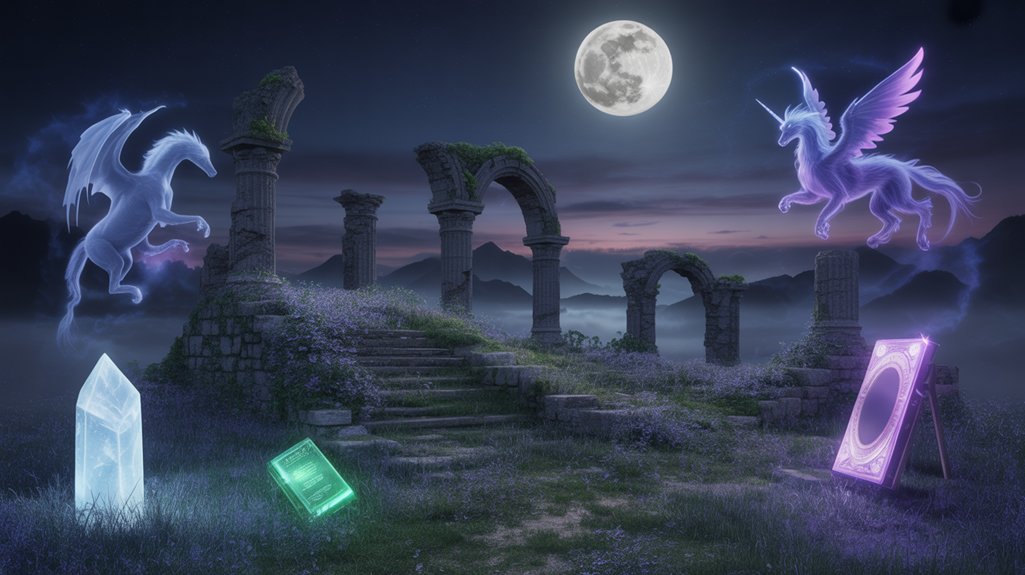
Mythical creatures serve as humanity's primordial psychological mirrors, externalizing turbulent emotions and moral complexities into tangible forms. Dragons embody avarice's self-destructive spirals, while phoenixes convert mortality's dread into resurrection's promise. The Minotaur's labyrinth reflects fragmented identity and shameful impulses; sirens personify temptation's struggle against rationality. From Mesopotamian temple rituals to contemporary Jungian therapy, these chimeric entities have calibrated civilization's moral compass, articulating what language cannot capture. Ancient narratives continue revealing how these archetypal forms illuminate the shadowed corridors of human consciousness.
Key Takeaways
- Mythical creatures embody complex emotions: dragons represent primal fears, phoenixes symbolize hope, and sirens personify temptation versus rationality.
- Monsters externalize internal conflicts, with the Minotaur's labyrinth mirroring psychological confusion and humanity's shameful impulses.
- Creatures deliver moral lessons: dragons warn against greed, griffins represent wisdom guarding vice, and wendigos caution about desperation.
- Ancient rituals used mythical beings to process emotions collectively, transforming abstract feelings into tangible narratives for understanding.
- Modern psychology employs mythical symbolism therapeutically, helping individuals confront unconscious fears and achieve emotional integration.
Emotions Embodied in Myth

Since the earliest civilizations carved their fears into cave walls and whispered their longings to the stars, mythical creatures have served as vessels for humanity's most profound emotional truths.
Dragons, those eldritch guardians of ancient hoards, embody primal anxieties that lurk within collective consciousness—the terror of consumption, of annihilation.
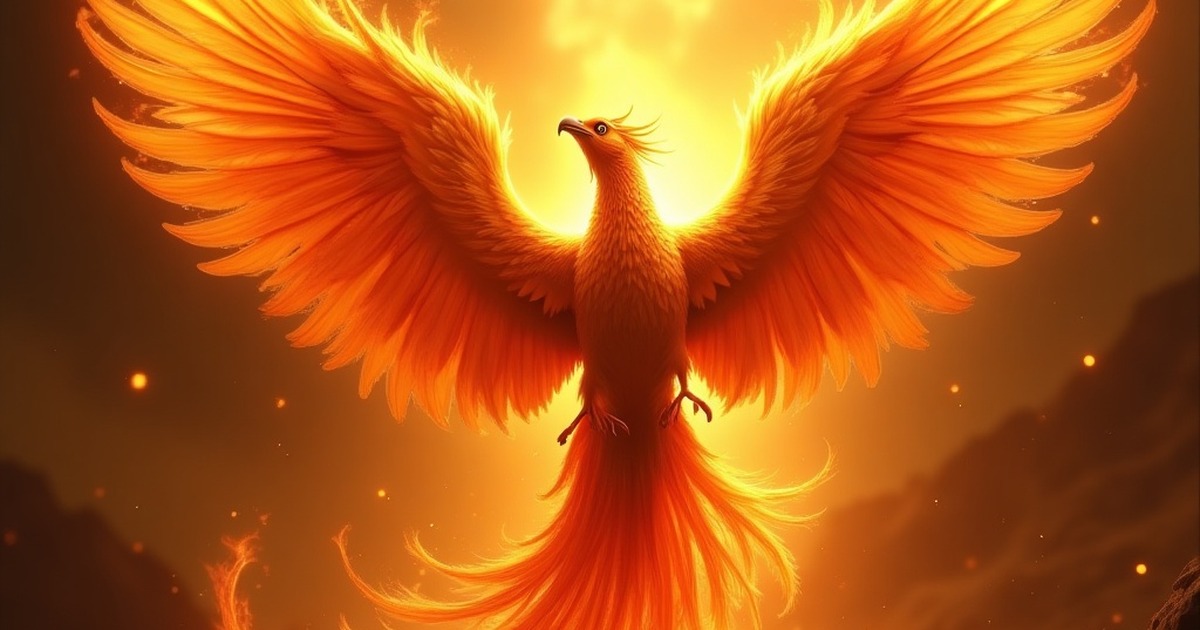
Phoenixes rise from ash, their chimeric resurrection cycles mapping humanity's desperate hope against mortality's finality.
The mythical symbolism penetrates deeper still: the Minotaur, trapped within Knossos's labyrinth circa 1400 BCE, manifests moral dilemmas that shred rational thought.
These creatures inhabit emotional landscapes where desire wars against duty.
Sirens perch on rocky shores, their songs crystallizing the eternal struggle between rationality's stern voice and temptation's honey-sweet call.
Through Jungian lenses, these beings emerge as archetypal mirrors, reflecting repressed shadows that civilization demands we suppress.
They offer liberation through recognition.
The Wendigo's emaciated form, forever growing with each victim consumed, transforms cannibalism during famines into a supernatural warning about what desperation can unleash within the human soul.
The phoenix's flames burn.
The dragon's scales glisten.
Ancient truths persist, waiting for those bold enough to witness their revelations.
##
Throughout millennia of human storytelling, mythical creatures have served as chimeric vessels through which civilizations articulate the ineffable—those eldritch emotional states that resist conventional expression, from the shadow-drenched terror embodied in the Minotaur's labyrinthine prison to the luminous yearning captured within tales of phoenixes ascending from ash.
These archetypal beings function as emotional hieroglyphs. They convert abstract psychological experiences into tangible narrative forms, rendering the internal landscape of fear, desire, and moral conflict visible through scales, wings, and monstrous hybridity. The basilisk exemplifies this principle, transforming humanity's primal fear of contamination and mortality into a rooster-serpent hybrid whose very breath renders water deadly for ages and whose venom corrupts the natural world itself.
Mythical Creatures and the Expression of Human Emotions Through Storytelling
When ancient peoples sought vessels for their most turbulent passions—rage, longing, terror, hope—they didn't turn to clinical vocabulary or philosophical abstraction. They conjured dragons from volcanic depths, phoenixes from funeral pyres, sirens from treacherous shoals.
These chimeric forms became mythical narratives that transcended mere entertainment, functioning as sophisticated psychological instruments for communities maneuvering existence's eldritch complexities. The Minotaur, imprisoned within Cretan labyrinths circa 1400 BCE, externalized humanity's most shameful impulses—our capacity for savagery, our vulnerability to base instinct.
Such beings possessed profound emotional resonance precisely because they personified what couldn't be articulated otherwise. Through storytelling's transformative magic, the ineffable became tangible. Fear manifested scales and fangs. Rebirth sprouted flame-colored wings.
Desire sang from salt-sprayed rocks, luring sailors toward destruction while simultaneously revealing truth about temptation's seductive architecture.
Emotions Embodied in Creatures
Dragons coiled in mountain caves don't simply terrorize—they crystallize humanity's primordial dread into serpentine form, modifying amorphous anxiety into something possessing claws, scales, and sulfurous breath. This creature symbolism alters internal chaos into confrontable adversaries.
Phoenixes emerge from ash, their cyclical immolation embodying resilience against despair's crushing weight.
Sirens manifest desire's dangerous allure, their haunting melodies representing the eternal struggle between rationality and seductive destruction.
Griffins—leonine bodies merged with aquiline majesty—stand sentinel over virtue, their chimeric forms illustrating the constant warfare between moral integrity and base temptation.
The Minotaur, imprisoned within Knossos's labyrinth, personifies those eldritch fears spawned from humanity's own folly.
Through such emotion representation, these beings become psychological mirrors, allowing individuals to externalize, examine, and ultimately comprehend their shadowed inner landscapes.
Fear and Monster Archetypes
While contemporary culture sanitizes terror into entertainment, monster archetypes persist as psychological repositories for humanity's most visceral dreads—those fears that predate language itself and writhe beneath consciousness's fragile surface.
Dragons embody chaos, their serpentine forms coiling through Sumerian hymns and Norse sagas alike. The Minotaur's labyrinthine prison mirrors internal confusion, identity fragmented. Fear representation through these eldritch beings offers cathartic release, altering nameless anxiety into confrontable narrative.
Vampires and zombies—chimeric reflections of mortality's approach—evolve with societal shifts, their monster symbolism adapting to address contemporary existential crises. Each archetype contains duality: threat and vulnerability intertwined.
They compel self-examination, forcing audiences to acknowledge their own capacity for darkness. These ancient forms persist because they articulate what rational discourse cannot, giving shape to the shapeless terrors dwelling within humanity's collective unconscious.
Love in Mythic Tales
Love's manifestation in mythological narrative operates not as simple romance but as primordial force capable of shattering cosmic order—a power so dangerous that gods themselves fear its implications.
Orpheus descends through eldritch depths, his lyre's resonance compelling even Hades to negotiate. Psyche endures love's trials orchestrated by Venus herself, each ordeal revealing change's necessity. The mermaid's mythical sacrifices—voice surrendered, identity dissolved—expose desire's terrible arithmetic.
Tristan and Isolde's fatal draught binds them beyond moral governance, their passion rendering societal bonds chimeric. These narratives transcend cultural boundaries, appearing in Hellenic amphitheaters and Nordic sagas alike.
The phoenix's cyclical immolation mirrors love's paradox: destruction births renewal. Each myth acknowledges what civilization often denies—that authentic connection demands evolution, that genuine devotion threatens established hierarchies, that love's ultimate freedom requires relinquishing everything.
Early Mesopotamian Emotion Myths

In the shadow-haunted valleys of ancient Uruk, where temple ziggurats pierced the Mesopotamian sky circa 2100 BCE, priests inscribed clay tablets with narratives of eldritch torment—the Epic of Gilgamesh chronicling humanity's first literary confrontation with mortality's crushing weight through encounters with chimeric guardians like the cedar-dwelling Humbaba.
These Sumerian ritual practices, conducted within lamp-lit sanctuaries thick with myrrh and cedar smoke, acknowledged that certain emotions possessed monstrous agency, altering abstract terror and grief into tangible adversaries that heroes must physically conquer.
The emotional demons of Gilgamesh's journey—his paralyzing fear of death following Enkidu's dissolution, his desperate rage against time's inexorable march—manifested as literal beasts inhabiting liminal spaces between civilization and wilderness.
Gilgamesh Epic's Emotional Demons
Grief carved its ancient marks into humanity's first great literary monument, the Epic of Gilgamesh, where emotional demons stalked through cuneiform tablets pressed into clay circa 2100 BCE.
Gilgamesh's grief altered him from tyrant-king into mortality's reluctant student when Enkidu's death shattered his chimeric illusions of divine permanence. Enkidu's legacy wasn't merely companionship—it became the eldritch mirror reflecting humanity's most primal terror: oblivion's inevitability.
The gods themselves fashioned Enkidu as counterbalance to unchecked power, demonstrating cosmic justice through flesh and breath. Yet this divine intervention birthed something unexpected: authentic friendship, vulnerability, change.
When death claimed Enkidu, Gilgamesh's desperate quest for immortality revealed humanity's eternal paradox—our mortality defines us, shapes us, liberates us from divine stagnation.
Ancient Mesopotamia understood: emotional demons aren't conquered through avoidance but through confrontation's transformative fire.
Ancient Uruk and Mesopotamian Valleys
Seven thousand years before our modern conception of psychology emerged, Uruk's mudbrick ziggurats pierced the Mesopotamian sky, housing humanity's first systematic explorations of emotional consciousness. Ancient urbanization demanded new frameworks for understanding internal chaos—mythic storytelling became the vessel. The Anzu bird's eldritch presence symbolized disorder threatening cosmic balance, while Inanna's chimeric nature embodied desire's altering violence.
| Mythic Entity | Emotional Domain | Societal Function |
|---|---|---|
| Inanna | Love/War duality | Steering passion's dangers |
| Anzu Bird | Chaos/Fear | Confronting disorder |
| Gilgamesh | Mortality/Friendship | Accepting impermanence |
| Enkidu | Civilization/Wildness | Balancing primal urges |
These narratives weren't mere entertainment—they were survival mechanisms, teaching urban inhabitants to recognize, name, and regulate emotions within increasingly complex social hierarchies.
Sumerian Temple Ritual Practices
While urbanization reshaped Mesopotamian consciousness, temple complexes emerged as humanity's first laboratories for emotional change—architectural thresholds where mortals didn't merely worship distant deities but underwent systematic psychological alteration.
Within ziggurats dedicated to Inanna, priestesses enacted sacred marriage ceremonies, their bodies becoming vessels through which divine morality materialized into human experience. These weren't symbolic gestures but eldritch transformations—moments when desire, justice, and war converged within consecrated flesh.
The rituals generated chimeric emotional states. Congregants witnessed myth made manifest, their collective witnessing forging new neural pathways for processing guilt, longing, retribution.
Temple walls absorbed centuries of chanted consequences, each story calibrating the community's moral compass. Through these practices, Sumerians discovered what modern psychology confirms: emotion and ethics aren't separate domains but intertwined forces requiring constant negotiation between individual impulse and societal necessity.
Greek vs. Egyptian Moral Codes
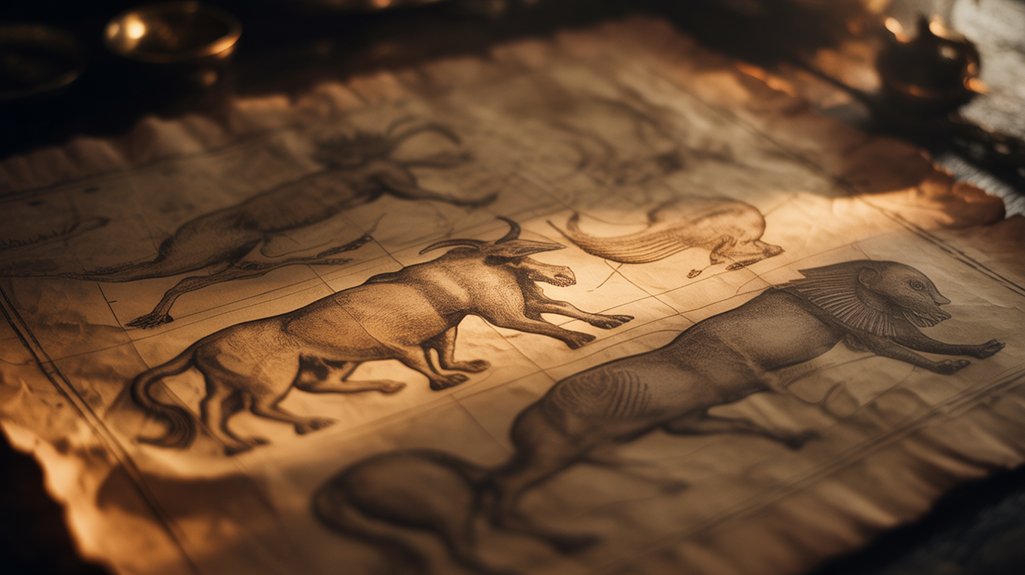
The ancient Greek cosmos thrived on agon—the eternal contest between mortals and fate, where heroes like Heracles wrestled with both chimeric beasts and their own daemon-haunted psyches, forging moral codes through individual triumph and catastrophic hubris. These heroic virtues emerged through struggle, through the passionate defiance exemplified by Icarus's melted wings. Egypt's cosmic order demanded something entirely different: Ma'at, the equilibrium-goddess whose feather determined souls' eternal destinations.
| Aspect | Greek Morality | Egyptian Morality |
|---|---|---|
| Core Principle | Individual honor, agon against fate | Ma'at: cosmic balance, truth |
| Judgment Method | Divine punishment for hubris | Heart weighed against feather |
| Symbolic Creatures | Chimera (internal chaos) | Sphinx (moral threshold) |
Where Greeks celebrated autonomous glory-seekers who dared challenge Olympian authority, Egyptians revered Osiris and Anubis as stern guardians evaluating earthly conduct. Both civilizations employed eldritch creatures as moral mirrors—the Chimera reflecting humanity's fractured passions, the Sphinx embodying enigmatic wisdom. Freedom meant different things: Greek liberation through heroic agency, Egyptian liberation through righteous living.
Creatures as Moral Compass
Beyond establishing foundational principles of conduct, these ancient civilizations embedded their moral philosophies into the very sinews and scales of their legendary beasts—each creature functioning as a living parable, a breathing ethical axiom that confronted mortals at civilization's threshold.
Dragons manifested avarice's corrosive power, their hoarded gold reflecting humanity's capacity for self-destruction through unchecked greed. The Minotaur embodied chaos born from surrendering to primal instincts, presenting moral dilemmas about desire's dangerous sovereignty. Sirens demonstrated temptation's fatal allure, their eldritch songs testing sailors' commitment to reason over passion.
Consider these chimeric guardians as waypoints on humanity's ethical journey:
- The griffin's leonine strength merged with aquiline wisdom—standing sentinel against vice's encroachment
- The phoenix rising from ash-strewn pyres—redemption made manifest through altering flame
- The Minotaur stalking labyrinthine darkness—primal hunger given terrible form
These creatures delivered ethical lessons without philosophical abstraction, providing visceral encounters where consequences materialized immediately, definitively.
They granted mortals no escape from accountability.
Medusa's Gaze and Shame
Medusa's petrifying gaze operates as an eldritch manifestation of shame's paralyzing grip upon the psyche, wherein the Gorgon's victims—frozen mid-gesture, suspended between breath and stillness—embody the psychological stasis that afflicts those who internalize society's condemning scrutiny.
The act of looking, that most fundamental of human connections, becomes weaponized through her monstrous alteration, turning what should enable recognition into an instrument of judgment that renders the beholder immobile, stripped of agency.
This chimeric power transcends mere physical metamorphosis; it reveals shame's alchemical capacity to petrify the self from within, altering living flesh into cold stone as surely as external condemnation calcifies one's capacity for authentic presence in the world.
Petrification as Emotional Paralysis
When ancient Greeks sought to articulate the profound stasis that shame inflicts upon the human psyche, they conjured Medusa—a creature whose very gaze alters living flesh into cold stone. This petrification metaphor transcends mere physical alteration; it captures how trauma crystallizes within us, rendering movement impossible. The victim becomes monument.
Those who can't process their violation, who bear society's misplaced culpability, find themselves frozen in temporal loops of self-recrimination. Medusa herself, altered after assault, embodies this eldritch paralysis—punished for victimhood, trapped within monstrous form.
Her story reveals repression's consequences: unexpressed shame calcifies, changes living tissue into inert matter. Yet modern reclamations suggest possibility. Confronting the Gorgon, naming what petrifies us, initiates emotional healing.
Freedom demands we face what turns us stone, reclaim our narrative from society's chimeric judgments.
The Gaze of Judgment
The paralytic power residing within Medusa's ophidian visage operates through mechanisms more complex than simple mythological decree—it manifests as externalized judgment made tangible, corporeal, devastating.
This gaze symbolism alters abstract social condemnation into lithic permanence, freezing victims mid-confrontation with their perceived inadequacies. The judgment consequences extend beyond physical petrification; they mirror humanity's terror of exposure, that eldritch moment when one's authentic self faces society's unforgiving scrutiny.
Medusa herself embodies this paradox—originally punished for violation not committed willfully, her alteration from maiden to chimeric horror illustrates shame's metamorphic violence. Her serpentine crown writhes with accumulated rage, each scale reflecting centuries of feminine power demonized, controlled, weaponized against itself.
Those who meet her gaze don't simply die. They crystallize mid-recognition, eternally confronting truths too heavy for mortal frames to bear.
Shame's Transformative Power
Through shame's alchemical violence, mortals discover their capacity for profound metamorphosis—not merely superficial alteration but fundamental restructuring of identity's architecture.
Medusa's conversion from maiden to gorgon exemplifies this eldritch process: her serpentine crown and petrifying gaze manifested shame's corporeal reality. Society's judgment crystallized into monstrous form, creating barriers between self and community.
Yet contemporary reclamations reveal deeper truths. Her chimeric nature speaks to emotional resilience—the phoenix-like rebirth from victimization's ashes.
When shame evolves, it doesn't simply destroy; it reconstructs, forging new identities from fractured originals. Her story illuminates how confronting internalized judgment catalyzes genuine growth, transmuting paralysis into power.
The gorgon's legacy endures precisely because shame conversion remains humanity's most harrowing, necessary journey—one requiring descent into darkness before ascending toward authentic selfhood.
Contemporary Film and Gaming Symbolism

As cinema's luminous screens and gaming's interactive domains have emerged as dominant cultural forces in the twenty-first century, mythical creatures haven't simply migrated into these new media—they've experienced profound changes that reveal humanity's evolving relationship with its own emotional landscape.
Contemporary narratives in “Harry Potter” and “The Lord of the Rings” resurrect folkloric beings as vessels for courage, sacrifice, and transformation. Dragons shift from eldritch terrors to chimeric mirrors of human greed and moral fragility.
“The Witcher 3” weaves mythical symbolism into interactive odysseys where ethical decisions resonate with profound consequence.
Modern mythical creatures embody liberation through:
- Kaiju as collective anxieties in “Pacific Rim,” forcing audiences to confront fears about planetary-scale threats and communal responsibility
- Dragons representing internal warfare, exposing humanity's struggles with power and avarice
- Environmental metaphors that challenge audiences toward ecological consciousness and identity exploration
These reimagined entities transcend entertainment, becoming conduits for empathy, moral introspection, and societal critique.
Jungian Archetypes in Mythical Forms
When Carl Jung revealed his cartography of the psyche during the early twentieth century, he didn't invent archetypes—he excavated them from humanity's collective unconscious, where mythical creatures had already dwelled for millennia as embodied psychological truths.
Dragons manifest shadow integration, their eldritch forms representing fear representation and those repressed aspects we desperately avoid confronting. The Hero's journey unfolds through Perseus and Heracles, warriors whose battles against chimeric beasts externalize internal metamorphosis themes—each victory marking emotional archetypes conquered within.
Mermaids and centaurs embody anima balance, their hybrid bodies reflecting the essential duality requiring reconciliation between masculine and feminine energies. The phoenix rises. Burns. Rises again. Pure metamorphosis themes incarnate, demonstrating renewal's necessity after devastation.
This Jungian symbolism transcends mere mythic storytelling; these creatures persist across cultures because they illuminate universal moral lessons, connecting disparate peoples through shared psychological struggles. They're maps to freedom, teaching shadow integration and self-realization through ancient wisdom.
Modern Therapy Uses Mythical Symbolism
These archetypal patterns, once confined to ancient texts and oral traditions, have found extraordinary resurrection in contemporary therapeutic practice. Modern clinicians employ mythical symbolism therapy to release chambers of the psyche previously sealed by conventional discourse.
Narrative therapists invite patients to personify their terrors—the devouring dragon becomes workplace anxiety, the chimeric beast embodies fragmented identity. Through emotional archetypes exploration, individuals navigate their interior landscapes with ancient cartography.
Jungian practitioners recognize these creatures as manifestations of the collective unconscious, eldritch symbols rising from depths beyond rational articulation. Art therapy utilizes this power directly. Clients sketch minotaurs haunting their labyrinths, phoenixes representing change from trauma's ashes.
Through ancient symbols emerging from psychological depths, clients transform their inner struggles into mythic forms that can finally be confronted and understood.
The technique frees. By externalizing internal chaos through mythic forms, patients achieve critical distance from overwhelming affect, converting nameless dread into conquerable adversaries.
These sessions become hero's journeys—personal odysseys where confronting symbolic monsters yields genuine catharsis, moral clarity, and psychic integration previously unattainable through clinical language alone.
Mythology's Enduring Emotional Legacy
Through millennia of human civilization, mythical creatures haven't merely survived as cultural artifacts—they've thrived because they crystallize emotions too vast, too contradictory, too primordial for ordinary language to contain. The phoenix's cyclical resurrection offers emotional resonance beyond mere metaphor, embodying humanity's desperate need to believe trauma doesn't define destiny.
Dragons, those eldritch guardians of psychological thresholds, externalize the chimeric anxieties lurking in consciousness's shadowed corridors. Their scales gleam with our projected fears.
This mythical symbolism endures precisely because it permits what rational discourse prohibits: simultaneous acknowledgment of darkness and light, destruction and creation, monster and hero dwelling within singular souls. Ancient peoples understood what modern culture often forgets—that moral complexity demands narrative vessels capable of holding paradox. Myths provide that sacred container.
They modify abstract emotional turmoil into tangible forms, granting individuals permission to explore forbidden psychological territories through the protective distance of allegory, thereby preserving humanity's capacity for profound self-examination across generations.
Frequently Asked Questions
How Do Asian Mythical Creatures Differ in Their Emotional Symbolism From Western Ones?
Eastern symbolism weaves mythical creatures into harmonious balance—dragons embody wisdom and celestial benevolence, phoenixes represent rebirth through cyclical alteration.
Western symbolism, conversely, casts dragons as eldritch antagonists symbolizing greed's corruption, unicorns as purity's fragile vessels.
The Asian *qilin* heralds peace, treading softly upon grass.
Europe's chimeric beasts—griffins, manticores—guard treasures, embodying territorial dominion.
Eastern creatures dance between yin and yang, moral complexity embraced.
Western mythology draws starker lines. Good versus evil. Light confronting shadow's absolute darkness.
Are There Mythical Creatures That Represent Positive Emotions Like Joy or Love?
Numerous creatures embody transcendent positive emotions across mythological traditions.
The phoenix rebirth symbolizes hope's eternal renewal, its crimson plumage rising from ash to herald change and redemption.
Unicorn symbolism channels purity and divine love throughout medieval European bestiaries, its spiraled horn representing grace unbound.
Chinese qilin manifest benevolence and prosperity, appearing only during peaceful reigns.
These chimeric beings don't merely represent joy—they're vessels through which ancient cultures channeled humanity's deepest yearnings for beauty, connection, and spiritual liberation.
Why Do Dragons Symbolize Different Morals Across Various Cultures?
Dragon symbolism shifts dramatically across cultural variations because these chimeric beings emerged from distinct historical contexts, each civilization projecting its deepest values onto serpentine forms.
Eastern traditions, particularly Chinese dynasties since 2000 BCE, revered dragons as benevolent harbingers of wisdom and prosperity—celestial guardians of cosmic balance.
Western medieval Christendom, conversely, cast them as eldritch manifestations of avarice and chaos, obstacles demanding heroic conquest.
Geography, spiritual philosophy, and socio-political structures shaped whether dragons embodied liberation or tyranny, enlightenment or destruction.
Which Mythical Creature Best Represents Anxiety in Modern Interpretations?
The Nightmare—that eldritch mare-spirit who crushes sleepers' chests—embodies anxiety representation most powerfully in modern interpretations.
Germanic traditions from the 13th century onwards chronicled this liminal entity's suffocating presence, its weight pressing down, paralyzing victims between waking and sleep.
Contemporary psychology recognizes this creature's visceral truth: the racing heart, shallow breath, crushing dread.
She doesn't destroy outright. She lingers, spectral and relentless, manifesting that distinctly modern affliction—the constant, gnawing fear that won't release its grip.
Do Children's Books Accurately Portray the Original Moral Meanings of Mythical Creatures?
While some dismiss children's literature as mere simplification, it's revealed that moral accuracy varies greatly across texts.
Contemporary adaptations often reshape creature evolution—the banshee changes from death herald to misunderstood soul, the chimeric dragon shifts from chaos-bringer to noble guardian. This alteration liberates young readers from rigid medieval interpretations, yet simultaneously severs connections to eldritch wisdom embedded within original folklore.
Ancient meanings persist in select scholarly retellings, though mainstream publications favor sanitized, individualistic morality over collective cultural truths.
Conclusion
These eldritch beings, chimeric amalgamations of humanity's deepest anxieties and aspirations, haven't disappeared—they've merely migrated into our collective streaming consciousness. From Mesopotamian lamassu to Jungian shadow-work, mythical creatures remain our most profound emotional cartographers. They map shame's paralyzing weight, virtue's luminous path, rage's consuming fire. Ancient yet contemporary. Scholarly analysis reveals what mystics knew: these liminal entities embody our moral architecture. Therapeutic practices now reclaim this ancestral wisdom. The creatures endure, eternal mirrors reflecting our evolving souls.