It's a fascinating coincidence that both the Hydra and Chimera, two formidable creatures of Greek mythology, symbolize chaos and unpredictability, yet manifest these traits in distinct ways. As you explore their legendary rivalry, you'll notice how each embodies unique aspects of life's challenges through their mythical encounters. By examining their origins, abilities, and storied battles with heroes, you'll uncover the deeper connections that captivate our enduring interest in these mythological titans.
Key Takeaways
- Both Hydra and Chimera embody chaos and unpredictability, symbolizing life's relentless challenges and nature's disorder.
- Hydra's regenerative ability contrasts Chimera's lethal adaptability, highlighting different mythological manifestations of resilience.
- Heracles' strategic battle with Hydra and Bellerophon's confrontation with Chimera showcase human ingenuity against mythic beasts.
- Artistic representations of Hydra and Chimera captivate audiences, inspiring creativity and challenging societal norms.
- Both creatures' symbolism influences modern culture, reflecting themes of hybridity, resilience, and the quest for control.
Origins of the Hydra
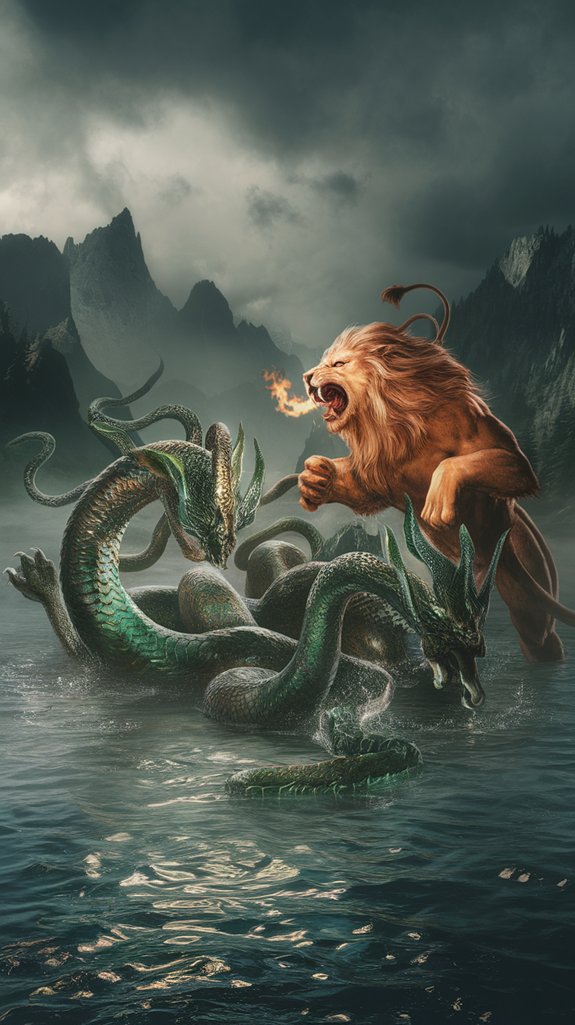
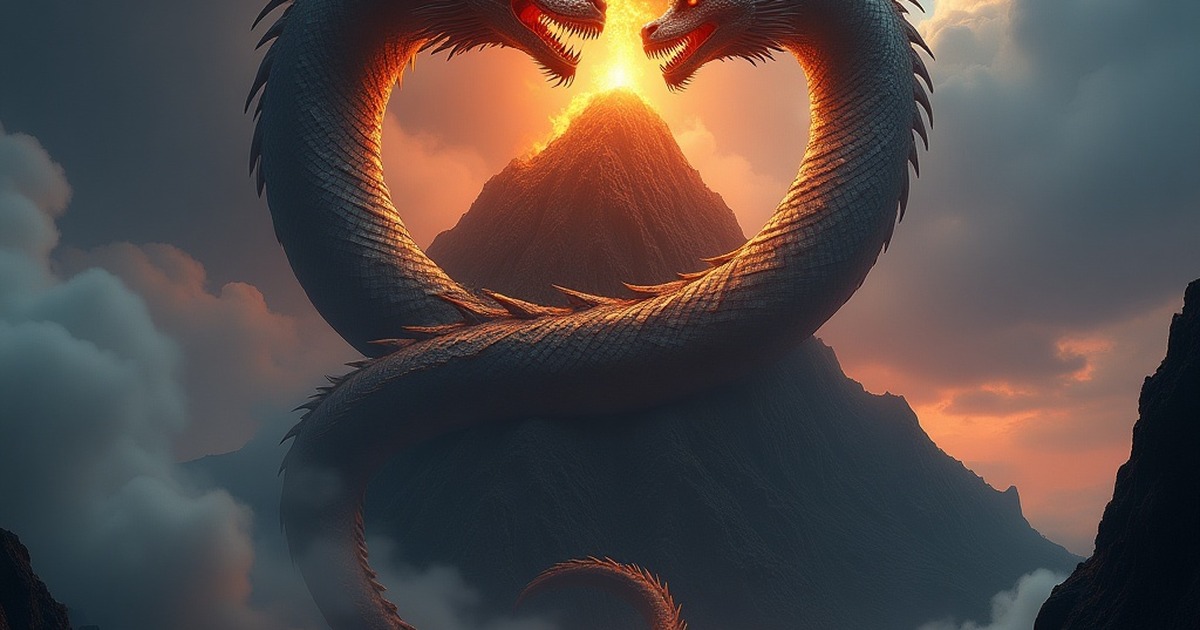
While exploring the mythological tapestry of ancient Greece, you encounter the formidable Hydra, a creature whose origins are as intriguing as its legendary battles. Born from the union of Typhon and Echidna, the Hydra's roots intertwine with chaos and primordial forces. This multi-headed serpent embodies mythical symbolism, representing the perpetual struggle against overwhelming odds. In ancient narratives, the Hydra is more than a mere beast; it is a metaphor for life's relentless challenges and the human spirit's resilience.
As you delve deeper, you discover that the Hydra's birthplace, the swamps of Lerna, adds a layer of mystique. Lerna itself was considered a gateway to the underworld, reinforcing the Hydra's connection to death and rebirth themes. Each tale of the Hydra reflects not just a monstrous adversary but a profound commentary on the dual nature of existence, where destruction and regeneration coexist in an eternal cycle.
The Many Heads of the Hydra
Although the Hydra's very existence is shrouded in myth, its defining trait—its many heads—captures the imagination and symbolizes deeper truths. Each head of the Hydra represents the multifaceted challenges one faces, a testament to complexity and resilience. Hydra symbolism is rich, offering a metaphor for life's persistent struggles. In mythology, every severed head gives rise to another, illustrating the idea that obstacles don't simply vanish; they transform and multiply, demanding innovative solutions.
The Hydra's representation extends beyond mythology, resonating with the human spirit's quest for freedom. The creature embodies the perpetual tension between oppression and liberty, as each head signifies a new challenge yet to be conquered. You're reminded that enduring adversities require courage and tenacity. By confronting these metaphorical Hydra heads, you engage in a profound dance of liberation, aligning with the timeless human desire to overcome and ascend beyond constraints.
The Regenerative Abilities of the Hydra
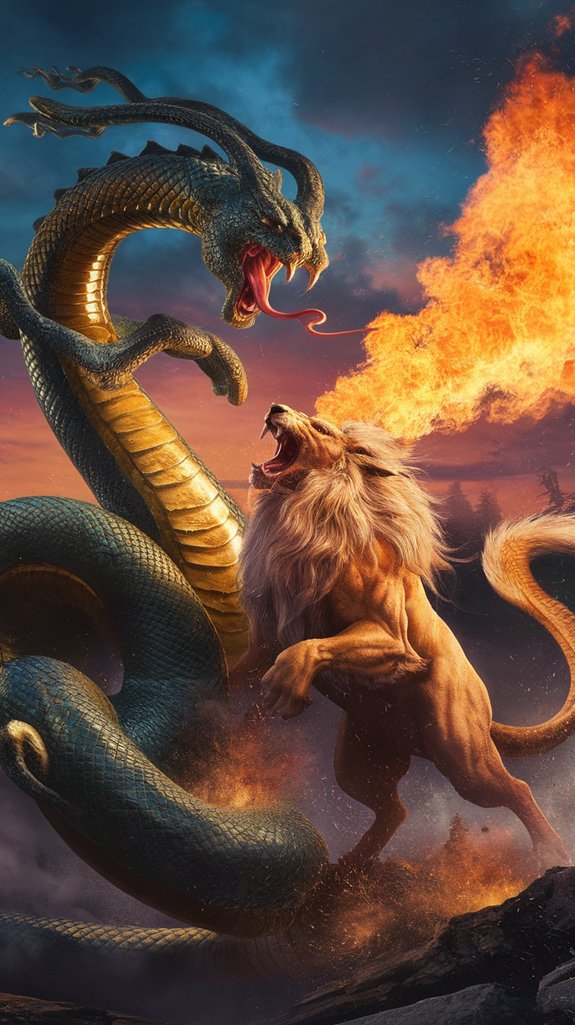
You'll find the Hydra's regenerative abilities are not just intriguing but also central to its mythical status, as it can regrow multiple heads whenever one is severed. This extraordinary capability suggests a form of resilience and adaptation far beyond ordinary creatures, highlighting its legendary healing powers. Such abilities compel you to consider how myth and biology intertwine, offering insights into ancient narratives and their possible interpretations of natural phenomena.
Multiple Heads Regrowth
The Hydra's legendary regenerative abilities, particularly its capacity for multiple heads regrowth, have fascinated scholars and mythologists alike. You might wonder how such mythical regeneration works with this multi-headed monster. When one head is severed, two more emerge in its place, making it a formidable opponent. This regenerative cycle symbolizes resilience and adaptability, traits that captivate those who yearn for freedom from constraints. Analyzing this phenomenon reveals insights into mythological interpretations of immortality and perpetual growth.
| Feature | Description |
|---|---|
| Regeneration Trigger | Severing of a head |
| Outcome | Two new heads for each one removed |
| Symbolism | Resilience, adaptability, defiance |
Understanding these dynamics allows you to appreciate the depth of ancient narratives and their reflection of human aspirations for unrestrained evolution.
Mythical Healing Powers
As you delve into the mythical healing powers of the Hydra, its regenerative abilities reveal themselves as a fascinating blend of magic and metaphor. This creature's capacity to regrow multiple heads when one is severed isn't merely a tale of terror but a symbol of resilience and renewal. The Hydra's regenerative prowess stands as an ancient healing allegory, suggesting pathways to mythical remedies that transcend human limitations. In exploring this, consider:
- Regrowth Mechanism: Each head represents a possibility of transformation and rebirth.
- Symbolic Resilience: Inspires freedom from constraints and fear of loss.
- Mythical Remedies: Suggests solutions beyond conventional boundaries.
- Ancient Healing: Connects to timeless wisdom in overcoming adversity.
The Hydra's story invites you to embrace change as a liberating force.
Origins of the Chimera
While the Chimera stands as a symbol of mythological terror, its origins trace back to ancient Greek tales that intertwine with cultural and historical contexts. You'll find that the Chimera's symbolism and interpretations reflect a complex tapestry of Greek beliefs. Emerging from Homeric epics, the Chimera encapsulates the unpredictability of nature, a creature embodying chaos and danger. It symbolizes the struggle between order and disorder, a theme recurrent in Greek mythology and philosophy.
As you dive deeper, you'll uncover interpretations that link the Chimera to the natural world's volatility—volcanic eruptions and unpredictable weather phenomena. This mythological beast, therefore, represents both a physical and metaphysical threat, challenging humanity's desire for control and understanding. By examining these origins, you'll appreciate how the Greeks used mythical narratives to convey profound truths about their environment and psyche, a testament to their quest for freedom amidst life's uncertainties.
The Anatomy of the Chimera
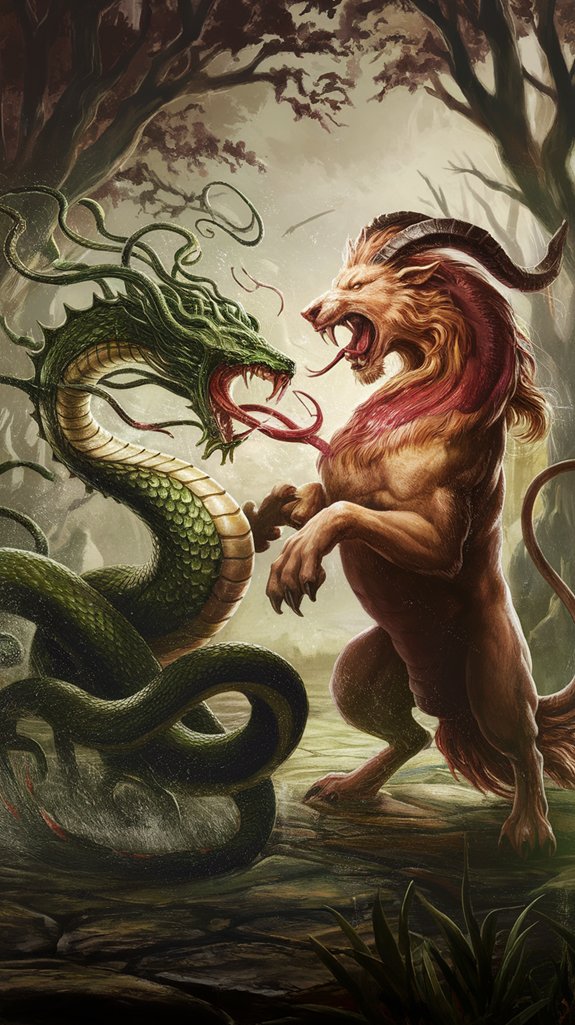
Chimera's anatomy presents a fascinating study of mythological hybridity, blending distinct animal features into a single, formidable entity. As you explore this mythical creature, you'll uncover a complex fusion that defies natural categorization. The Chimera's anatomy is a testament to creative storytelling, embodying a lion's head and body, a goat's head emerging from its back, and a serpentine tail, each part symbolizing different aspects of its power.
- Lion's Head and Body: The lion's components signify strength and regality, setting the Chimera as a dominant force.
- Goat's Head: This feature introduces an element of unpredictability and resilience, enhancing its mythic allure.
- Serpentine Tail: A snake tail adds a layer of cunning and danger, emphasizing its lethal potential.
- Hybrid Integration: The seamless amalgamation of these parts illustrates the Chimera's anatomy as a symbol of chaos and harmony in mythological narratives.
Your understanding of the Chimera elevates as you examine these hybrid features, revealing a creature of boundless imagination and symbolic depth.
The Fire-Breathing Power of the Chimera
Delving into the fire-breathing power of the Chimera reveals a crucial aspect of its mythological menace. This formidable creature, a fusion of lion, goat, and serpent, symbolizes chaos and unpredictability. Its fire breathing abilities aren't just for show; they represent the destructive force of nature itself. Imagine the Chimera's fiery breath scorching the earth, a vivid reminder of its untamed power.
In Greek mythology, the Chimera's flames serve as a potent symbol of both fear and fascination. They embody the primal energy that defies human control, a theme that resonates with those who seek freedom from constraints. The creature's blazing breath warns of the dangers lurking in unchecked ambition and the unpredictable forces that can disrupt order. As you explore the Chimera's fiery aspect, consider how its symbolism challenges the boundaries between the civilized world and the wild, echoing humanity's perpetual quest for autonomy.
Legendary Battles With the Hydra

As you delve into the legendary battles with the Hydra, you'll uncover a rich tapestry of mythological intrigue and strategic warfare. Legendary warriors, driven by the allure of heroic feats, faced the Hydra's regenerative menace with courage and cunning. The Hydra, with its multiple heads and lethal breath, presented a formidable challenge that required not just brute strength but also strategic ingenuity.
- Heracles' labor: His legendary battle with the Hydra stands as a testament to human ingenuity, using fire to prevent the monster's heads from regrowing.
- Strategic alliances: Many warriors sought divine assistance or forged alliances, understanding the value of wisdom over sheer might.
- Tactical retreats: Knowing when to regroup demonstrated the importance of patience and strategy in combat.
- Innovative weaponry: Warriors often crafted weapons specifically designed to counteract the Hydra's formidable defenses.
These battles highlight the timeless struggle between humanity's quest for freedom and the monstrous embodiments of chaos.
Iconic Encounters With the Chimera
While the Hydra's battles showcased the brilliance of strategic warfare, encounters with the Chimera reveal a different facet of mythological conflict. The Chimera, a creature of hybrid form, embodies the chaos and unpredictability of nature itself. When you delve into these iconic encounters, you're not just witnessing a battle against a beast, but an engagement with the Chimera's symbolism. This monstrous entity represents the challenges posed by life's unforeseen complexities and the need to adapt swiftly.
Consider Bellerophon's legendary encounter with the Chimera. Mounted on Pegasus, he had to confront not just the beast's physical might but also its fiery breath and serpentine tail, each representing distinct threats. The Chimera's adaptations to its environment make it a formidable opponent, forcing heroes to think beyond conventional strategies. These encounters illustrate a timeless struggle: the human desire for autonomy against forces that resist control and demand resilience.
Influence on Art and Modern Pop Culture

When you examine the influence of mythological creatures in art, you'll notice how the Hydra and Chimera have both captivated and inspired countless artists throughout history. The Chimera's legacy in pop culture is particularly robust, with its complex symbolism and formidable presence permeating films, literature, and video games. By exploring these creatures' artistic representations, you can gain insight into how their mythologies have been adapted to reflect contemporary themes and societal challenges.
Mythological Creatures in Art
Though often overshadowed by other mythological figures, creatures like the Hydra and Chimera have significantly influenced art and modern pop culture. These beings embody complex mythological symbolism that artists have explored through centuries. By engaging with these tales, you find artistic interpretations that challenge your imagination and inspire freedom in creativity. The Hydra, with its regenerative ability, often symbolizes the idea of resilience and overcoming adversity. Meanwhile, the Chimera's hybrid nature encourages you to contemplate the blending of diverse elements into a cohesive whole.
- Sculptures: Ancient and modern sculptures often depict these creatures in dynamic, menacing poses.
- Literature: Writers weave them into narratives, exploring themes of duality and transformation.
- Visual Arts: Paintings capture their fierce nature, emphasizing vivid colors and intricate details.
- Cinema: Films often reinterpret these myths, showcasing their timeless appeal.
Chimera's Pop Culture Legacy
As you explore the Chimera's enduring impact on modern pop culture, its multifaceted symbolism becomes evident across various artistic mediums. This mythical creature, a fusion of disparate elements, embodies the complexity and unpredictability of creativity. Artists and writers harness Chimera symbolism to challenge conventions, creating works that defy categorization. You'll find Chimera adaptations in diverse forms, from literature to cinema, where its hybrid nature mirrors societal complexities and questions identity.
In visual arts, the Chimera's form is reimagined to symbolize conflict and harmony. Its presence in video games and graphic novels reflects a fascination with hybridity, inviting audiences to question boundaries. By embracing the Chimera, contemporary creators celebrate the fluidity and freedom of imagination, inviting you to see beyond the ordinary.
Frequently Asked Questions
How Did the Hydra and Chimera Become Rivals in Mythology?
You explore mythical origins where legendary creatures like Hydra and Chimera emerge. They become rivals through heroic battles, symbolizing chaos and order. Their clashes challenge heroes, igniting your curiosity about ancient narratives and the quest for freedom.
What Are the Main Differences Between Hydra and Chimera's Habitats?
Picture the Hydra's realm, a watery maze of mystery, contrasting sharply with Chimera's fiery dominion, where flames dance wildly. You see the Hydra thrives in water environments, while Chimera dominates harsh, blazing fire regions.
Are There Any Myths Where Hydra and Chimera Encounter Each Other?
You won't find myths featuring Hydra and Chimera in legendary encounters or mythical battles against each other. Greek mythology typically kept their stories separate, focusing on their individual battles with heroes rather than inter-creature rivalries.
Which Greek Heroes Are Associated With Both Hydra and Chimera?
You'll find Greek heroes like Heracles, known for his feats against the Hydra, and Bellerophon, celebrated for his battles with the Chimera, both embodying resilience and courage, inspiring those who seek freedom through heroic narratives.
How Do Hydra and Chimera Symbolize Different Themes in Greek Mythology?
You explore mythical symbolism as Hydra represents chaos and regeneration, while Chimera symbolizes duality and unpredictability. These creatures' thematic representation challenges you to confront fear and embrace transformation, inviting a deeper understanding of Greek mythology's complexity.
Conclusion
You've journeyed through the fascinating clash between Hydra and Chimera, exploring their unique origins and formidable traits. Did you know that in over 200 ancient Greek vase paintings, these mythic creatures appear frequently, symbolizing humanity's enduring struggle with chaos and unpredictability? This rich legacy continues to inspire art and modern storytelling, proving that these legendary battles resonate deeply with our intrinsic quest for resilience and control in a world often governed by tumultuous forces.