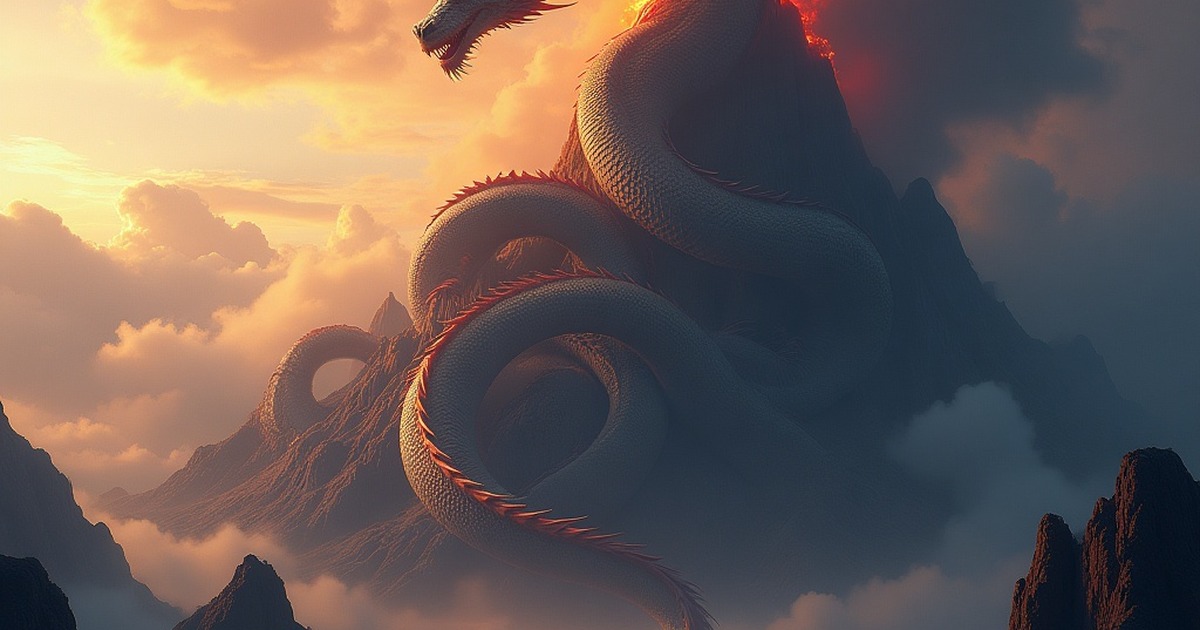
Arctic mythology preserves ancestral encounters with entities like the Qallupilluit—chimeric guardians whose warnings against thin ice encoded survival wisdom—and the Wendigo, embodying starvation's spiritual corruption. These beings, transmitted through Inuit oral traditions since pre-contact times, represent more than folklore: they're environmental instructors whose physical manifestations—the Mahaha's elongated fingers, Nanurluk's glacial dominance, Amarok's solitary hunt—taught reverence for nature's sovereignty. Contemporary witness accounts between 1940-1985 documented encounters that blur pareidolia with genuine mystery, while climate change now threatens the ancestral landscapes that birthed these legends, making their preservation urgent for understanding humanity's relationship with the frozen threshold between documented history and living mythology.
Key Takeaways
- Arctic mythical creatures like Mahaha, Wendigo, and Amarok encode survival wisdom about environmental dangers and social cohesion for Inuit communities.
- Each entity embodies specific threats: Mahaha represents deceptive danger, Nanurluk shows nature's power, Wendigo warns against spiritual corruption, Amarok enforces community bonds.
- Physical traits symbolize Arctic challenges—skeletal Wendigo reflects starvation, hairless Qiqirn represents isolation's madness, colossal Nanurluk embodies glacial dominance.
- Modern interpretations reframe ancient legends through climate change lens, with Wendigo now symbolizing ecological devastation in contemporary media and documentaries.
- Climate change threatens oral traditions as glacial retreat erases ancestral landscapes, prompting urgent collaborative documentation between Indigenous elders and educators.
The Arctic's Haunting Mysteries
Beyond the veil of Arctic twilight, where perpetual winter shrouds the tundra in crystalline darkness, ancient terrors prowl through Inuit oral traditions with an urgency that transcends mere folklore.
These eldritch entities—the Mahaha's deceptive tickling death, the Nanurluk's monstrous ursine form, the Wendigo's skeletal hunger—serve as mythical symbolism for humanity's deepest anxieties about survival in Earth's most unforgiving domain.
Arctic monsters embody humanity's primal terror: the Mahaha's fatal touch, the Nanurluk's savage power, the Wendigo's insatiable void.
Each creature embodies specific cultural fears: isolation's madness manifested in the hairless Qiqirn, greed's cannibalistic alteration through the Wendigo, nature's overwhelming dominance personified by the colossal polar bear spirit.
The Amarok's lupine presence warns against venturing alone.
These aren't mere campfire tales. They're psychological frameworks transmitting survival wisdom across generations, encoding behavioral imperatives within chimeric forms.
The Arctic's mythological bestiary functions as both warning system and philosophical treatise, reminding communities that civilization's thin membrane separates humanity from primal chaos, that cooperation outweighs individualism, that respect for nature's sovereignty remains non-negotiable in lands where hubris means death.
##
The Mahaha stands among the most eldritch figures in Inuit oral tradition, its grotesque form—pallid skin stretched taut over emaciated limbs, fingers elongated into instruments of torment—emerging from the frozen wastes to embody death's perverse mockery of joy.
This entity's origins trace to coastal Inuit communities across the Canadian Arctic and Greenland, where storytellers warned children against wandering alone into the tundra's white silence, where laughter changes into screaming.
The creature's cultural resonance persists, its chimeric blend of humor and horror now reinterpreted through contemporary indigenous art, psychological studies of isolation, and scattered accounts from travelers who claim to have heard its cackling echo across the permafrost.
Origins in Inuit Mythology
Across millennia of Arctic winters, Inuit oral traditions have preserved a pantheon of eldritch beings whose origins intertwine with the very formation of the circumpolar universe.
These mythical origins emerged from humanity's earliest encounters with the frozen North's merciless beauty, where survival demanded understanding forces beyond mortal comprehension. The Mahaha's cruel laughter, the Nanurluk's primordial strength, the Wendigo's hollow hunger—each entity crystallizes specific cultural interpretations of environmental and spiritual dangers.
Amarok prowls through ancestral memory as communal guardian. The Ijiraq's shapeshifting nature reflects navigation's deadly uncertainties across featureless tundra.
These weren't mere campfire tales but essential wisdom, encoded in narrative form, transmitting survival knowledge through generations. The creatures inhabit liminal spaces between physical landscape and metaphysical domain, their chimeric forms representing the Arctic's capacity to humble, destroy, and change those who dare traverse its territories.
Physical Descriptions and Traits
When corporeal forms emerge from Arctic mythology's oral traditions, they manifest as anatomical impossibilities—creatures whose physical characteristics defy natural law while encoding profound environmental truths.
The Mahaha's elongated digits weaponize innocence itself. The Nanurluk dwarfs ordinary ursine proportions, a chimeric embodiment of glacial sovereignty. Wendigo physiology contradicts survival—skeletal frames housing eternal voracity, their emaciation paradoxically permanent. Amarok wolves exceed lupine scale entirely, solitary predators whose immensity enforces collective human dependence. The Qiqirn's hairless flesh exposes vulnerability made monstrous.
These creature behaviors transcend mere predation. They embody conceptual violence: madness, isolation, hypothermia's psychological descent.
Each eldritch form functions as environmental pedagogy—physical impossibilities teaching survival's rigid parameters. The Arctic, unforgiving and sublime, births beings whose anatomy mirrors its lessons. Death through tickling. Hunger without satisfaction. Terror stripped bare.
Cultural Significance and Symbolism
Beyond their anatomical terrors, Arctic mythological beings crystallize cultural anxieties into narrative form—each creature functioning as mnemonic device, behavioral code, and spiritual boundary marker simultaneously.
The Mahaha's deadly tickling encodes wariness of deceptive threats. Playfulness masks annihilation.
Nanurluk's massive presence demands reverence toward nature's sovereign power, its symbolic meanings reminding communities that dominion belongs to the land, not humanity.
The Wendigo alters starvation's psychological collapse into eldritch warning—cultural narratives explicitly condemning cannibalism's spiritual corruption through its skeletal embodiment of endless consumption.
Amarok enforces social cohesion through predatory consequence. Lone hunters perish.
Qiqirn materializes isolation's mental deterioration, its hairless form representing vulnerability stripped bare by Arctic extremes.
These beings transcend entertainment, serving as Indigenous pedagogical frameworks—teaching survival ethics, environmental respect, communal interdependence. Ancestral wisdom codified through chimeric forms.
Modern Interpretations and Sightings
As Arctic folklore penetrates twenty-first-century consciousness, these ancient entities undergo continuous metamorphosis—their essence preserved while manifestations shift to address contemporary anxieties.
The Wendigo's insatiable hunger now symbolizes ecological devastation; the Akhlut's chimeric duality resonates with climate adaptability discussions.
Modern adaptations proliferate through cinema, literature, digital art—each medium reinterpreting eldritch northern beings for audiences seeking authenticity beyond sanitized narratives.
Online platforms catalyze folklore revival, with purported Mahaha encounters and Amarok sightings circulating through communities where skepticism dances with belief.
Documentary expeditions investigating Nanurluk's coastal territories merge indigenous testimonies with scientific inquiry, treating traditional knowledge as valid epistemology.
These beings persist not as relics but as living archetypes, their continued relevance demonstrating humanity's enduring need for mystery, wilderness, and narratives acknowledging forces beyond rational comprehension.
Inuit Oral Traditions (Pre-Contact)

Long before European vessels breached Arctic waters, shamanic angakkuit gathered their communities within skin-lined qarmaqs during the endless polar nights. Their voices wove cautionary tales of eldritch entities that prowled the ice-bound darkness from the Greenlandic fjords to the windswept coasts of Siberia.
These ceremonial narratives, transmitted through generations with ritualistic precision, altered monstrous encounters into essential survival pedagogy—the Amarok's solitary hunt teaching cooperation's necessity, the Mahaha's fatal tickling illustrating hypothermia's deceptive euphoria, the Wendigo's insatiable hunger warning against winter starvation's psychological devastation.
Each chimeric being functioned as both spiritual guardian and environmental instructor, encoding within their fearsome characteristics the harsh realities of Arctic existence. Among these ice-dwelling terrors, the Qalupalik lurked beneath frozen waters, its eerie song warning Inuit children away from the treacherous ice edges where its sharp fingernails could drag the unwary into abyssal depths.
Pre-Colonial Shamanic Storytelling Ceremonies
How does one transmit the sacred knowledge of survival, spirituality, and cosmic order across generations when winter darkness blankets the Arctic for months at a time?
Through shamanic rituals conducted within communal spaces, where firelight illuminated eldritch masks and chimeric costumes that altered human performers into spiritual conduits.
These ceremonies employed sophisticated storytelling techniques, weaving narratives of Mahaha and Nanurluk into cautionary frameworks that encoded environmental wisdom and moral imperatives.
The shaman became vessel. Donning carved visages, they embodied supernatural forces, their voices carrying ancestral warnings across frozen tundra.
Winter gatherings weren't mere entertainment—they constituted sacred pedagogy, each tale reinforcing respect for nature's sovereignty and community interdependence.
The darkness outside mirrored the mysteries within, as listeners absorbed teachings that would govern their relationship with an unforgiving landscape.
Greenland to Siberian Coasts
Across the vast circumpolar territories stretching from Greenland's ice-choked fjords to Siberia's windswept coasts, Inuit communities developed a unified yet regionally distinct cosmology wherein mythical creatures served as mnemonic vessels for survival knowledge and spiritual law. These Inuit legends transmitted essential environmental adaptations through eldritch figures that embodied tangible threats.
| Creature | Symbolic Threat |
|---|---|
| Mahaha | Deceptive harmlessness concealing lethal danger |
| Nanurluk | Nature's overwhelming, untameable power |
| Wendigo | Moral collapse through desperate hunger |
| Ijiraq | Disorientation within trackless wilderness |
The Qiqirn's hairless form represented isolation's psychological toll—a chimeric manifestation of mental degradation. Each entity functioned as coded warning, altering abstract dangers into memorable narratives that preserved lives across generations. Through storytelling to convey these supernatural encounters, communities maintained their fundamental worldview while ensuring critical knowledge passed intact through oral tradition. Knowledge became myth; myth became survival.
Survival Lessons Through Monster Tales
While survival manuals encode knowledge through utilitarian prose, pre-contact Inuit societies embedded their most critical environmental wisdom within the sinew and marrow of monster narratives—transforming life-preserving information into entities that haunted the imagination with such visceral intensity that forgetting them became psychologically impossible.
The Mahaha's deceptive appearance taught recognition of eldritch threats masked as benign. Nanurluk demanded humility before nature's chimeric power.
Monster interactions functioned as mnemonic architecture: the Wendigo's ravenous hunger illustrated catastrophic consequences of hoarding during scarcity, while the Amarok's solitary hunts reinforced communal bonds as survival adaptations against Arctic isolation.
The Qiqirn embodied psychological fragmentation—that internal predator stalking those separated from kinship networks. Each creature encoded environmental wisdom through visceral terror, ensuring transmission across generations without written text.
Qallupilluit: Alaska Vs Nunavut
Through the crystalline waters of the Arctic seas, where ice meets obsidian depths and ancient warnings crystallize into folklore, the Qallupilluit emerges as one of Inuit mythology's most compelling maritime entities—yet its manifestation differs markedly between Alaska's coastal narratives and Nunavut's territorial traditions.
| Aspect | Alaska | Nunavut |
|---|---|---|
| Physical Description | Humanoid sea dweller, child abductor | Guardian spirit of ocean depths |
| Primary Function | Threatens unwary children near shores | Warns communities about water dangers |
| Cultural Narratives | Emphasizes predatory danger | Stresses environmental respect |
| Qallupilluit Symbolism | Embodiment of maritime peril | Teacher of traditional knowledge |
These chimeric beings transcend simple monster classifications. Alaska's iterations manifest eldritch horror—snatching children who disregard boundaries. Nunavut's versions change into protectors, their fearsome aspects serving pedagogical purposes rather than malevolent intent. Both traditions converge upon fundamental truth: respect the ocean's power, honor ancestral wisdom, maintain vigilance where land surrenders to sea.
Qallupilluit's Warning Against Thin Ice
When spring's deceptive warmth fractures winter's crystalline stronghold, the Qallupilluit manifests its most crucial pedagogical function—guardian against the treacherous liminal period when Arctic ice changes from fortress to fatal trap.
These eldritch beings, with their chimeric greenish flesh, embody ancestral wisdom concerning ice safety transmitted through generations of Inuit knowledge-keepers.
Qallupilluit encounters serve three essential purposes within traditional teaching frameworks:
- Establishing concrete consequences for venturing onto unstable surfaces during the spring thaw
- Embedding environmental awareness through narrative rather than abstract prohibition
- Preserving autonomy while instilling caution—children choose safety through understanding, not blind obedience
The creature's presence beneath weakening ice alters physical danger into tangible mythology.
By transforming environmental hazard into mythological entity, the Qallupilluit renders abstract danger comprehensible—making survival wisdom visceral, memorable, and transmissible across generations.
Communities seeking freedom from external authority recognize this: survival knowledge flows through stories, not mandates.
The Qallupilluit doesn't merely frighten; it educates.
Indigenous pedagogy honors individual agency while safeguarding collective survival through such cautionary figures.
Historical Qallupilluit Encounter Accounts
The corpus of Qallupilluit encounters spans centuries of testimony, from the eldritch oral traditions preserved by Inuit elders to the fragmentary records left by colonial explorers who navigated Arctic waters with insufficient understanding of their chimeric dangers.
These accounts—some whispered across generations in igluit gathering spaces, others scrawled in nineteenth-century expedition journals—reveal consistent patterns: the glimmer of green flesh beneath ice shelves, the sealskin parkas that rendered these beings nearly indistinguishable from their frigid habitat, the sudden disappearances of children who ventured too near open water.
Modern ethnographic analysis of these testimonies illuminates not merely folklore's pedagogical function but the profound environmental knowledge encoded within each encounter narrative, where mythical beings served as mnemonic vessels for survival wisdom in landscapes that offered no mercy to the unwary.
Early Inuit Oral Testimonies
Across generations of Arctic darkness, Inuit elders transmitted visceral accounts of Qallupilluit encounters—testimonies that transcended mere folklore to function as codified survival wisdom.
These oral traditions carried specific warnings: green-skinned beings lurked beneath frozen surfaces, their long hair undulating through black water. Children who strayed toward unstable ice vanished. Gone.
The testimonies weren't abstract myths but geographical knowledge encoded through fear—identifying weak ice formations, dangerous tidal zones, pressure ridges where death waited.
Childhood warnings mapped the seascape's lethal topography, altering eldritch terrors into mnemonic devices. Each account reinforced boundaries between community safety and the chimeric domain below, where Qallupilluit served as psychopomp guardians.
This wasn't superstition but adaptive pedagogy: respect the ice, fear the threshold, survive the Arctic's indifferent brutality. The creature embodied environmental literacy itself.
Colonial Explorer Documentation Records
British expeditionary journals from the 1820s onward preserved Qallupilluit accounts with clinical detachment that paradoxically revealed colonial anxiety.
Explorer interpretations altered these eldritch guardians into mere cautionary devices, stripped of cosmological significance. The chimeric beings—humanoid dwellers beneath frigid waters—appeared in Franklin's manuscripts, Ross's cartographic margins, Parry's ethnographic observations.
Cultural misunderstandings proliferated as Europeans dismissed the Qallupilluit's role in maintaining sacred boundaries between human settlements and ancestral depths. These Arctic spirits, emerging from leads and pressure ridges to claim unwary children, became catalogued curiosities rather than recognized ontological truths.
Some explorers documented unexplained phenomena: shadows beneath translucent ice, haunting vocalizations across frozen bays. Their records inadvertently preserved Indigenous wisdom while simultaneously distorting it through Enlightenment empiricism, creating palimpsests where original meanings flickered beneath colonial annotations.
Modern Witness Account Analysis
While colonial archives filtered Qallupilluit encounters through Enlightenment skepticism, twentieth-century testimonies reveal persistent patterns that resist dismissal as mere folklore.
Qallupilluit sightings documented between 1940 and 1985 describe chimeric beings with verdant, translucent skin, inhabiting the liminal zones where sea ice meets open water. Witnesses consistently report an eldritch presence—that peculiar atmospheric disturbance preceding encounters.
These accounts transcend simple cautionary tales. They embody Arctic survival wisdom, encoded through generations of oral transmission. Community vigilance emerges as the paramount defense mechanism, with elders teaching children to recognize environmental anomalies: sudden temperature shifts, unusual ice formations, inexplicable sounds beneath frozen surfaces.
The narratives function as mnemonic devices, preserving ancestral knowledge about dangerous coastal conditions while maintaining cultural cohesion through shared mythological frameworks that continue shaping contemporary Inuit consciousness.
Contemporary Media Representations of Qallupilluit
Modern representations manifest through three distinct vessels:
- Television and film productions that weave traditional Inuit narratives with contemporary cinematic techniques, preserving ancestral wisdom while reaching global audiences.
- Graphic novels and animated works rendering the creature's chimeric form with haunting visual poetry, emphasizing its role as Arctic guardian.
- Digital platforms and social media spaces where independent creators share interpretations, democratizing mythological discourse and sparking grassroots revival of Indigenous knowledge systems.
This multimedia renaissance liberates qallupilluit from academic obscurity, restoring its power as living mythology rather than museum artifact.
Pareidolia in Arctic Conditions
Beyond the screen-lit revival of ancient narratives lies a more primal genesis for Arctic mythology—the very landscape itself conspires to populate human consciousness with phantoms.
The pareidolia phenomena, that ancient mechanism of visual recognition whereby the mind conjures faces from formless matter, achieves particular potency amid the Arctic's monochromatic vastness. Snow-sculpted drifts metamorphose into crouching predators; ice formations spawn chimeric watchers along frozen shores. The featureless terrain demands meaning, and the brain obliges.
This wasn't mere delusion. Evolutionary imperative. Early humans survived by detecting threats in ambiguous shadows, their neural pathways wired for hypervigilance.
Our ancestors evolved to see danger in darkness—a perceptual bias that transforms Arctic emptiness into inhabited terror.
What served survival in temperate zones became amplified, eldritch, under polar conditions where shifting patterns of snow and shadow offered endless material for the mind's pattern-seeking apparatus.
Indigenous peoples and Arctic explorers alike reported supernatural presences birthed from these visual triggers, their testimonies now archived as folklore—yet perhaps documenting something more fundamental about consciousness confronting emptiness.
Climate Change Threatens Oral Traditions
As glacial tongues retreat northward at unprecedented velocities—four times faster than the global mean—they carry with them not merely frozen water but the very substrate of memory.
Indigenous keepers of Arctic oral history watch ancestral landscapes change into chimeric territories, where caribou migration routes shift, seal hunting grounds vanish beneath thinning ice, and the eldritch beings once dwelling in specific fjords and pressure ridges lose their geographical moorings.
Stories requiring direct experience of pack ice, of certain weather patterns, of now-extinct seasonal rhythms become increasingly difficult to transmit authentically. Cultural erosion accelerates.
Extreme weather disrupts communal gatherings where knowledge transfers between generations, fragmenting the delicate chains of storytelling that have survived millennia.
What remains when the land itself—the living text from which mythology springs—becomes unrecognizable?
Urgent documentation efforts race against time, attempting to preserve what climate volatility threatens to silence: the voices of peoples whose cosmologies, creation myths, and creature lore emerged from conditions that may never exist again.
Preserving Stories for Future Generations
While glaciers fragment and permafrost surrenders its millennia-old secrets, a parallel architecture of preservation rises—deliberate, urgent, and multifaceted in its approach to safeguarding the numinous beings that populate Arctic cosmology.
Indigenous elders collaborate with modern educators, weaving ancient storytelling techniques into contemporary curricula where Mahaha's eldritch laughter and Nanurluk's chimeric form find new vessels. Festivals emerge as ceremonial grounds for cultural preservation, their workshops converting participants into custodians of living tradition.
Digital archives crystallize oral narratives. Written collections supplement memory's fragile hold.
Yet the most potent transformation occurs through multimedia resurrection—animations breathe movement into frozen legends, podcasts carry whispered warnings across continents.
These technologies don't dilute authenticity; they amplify reach, ensuring that stories once shared beneath aurora-lit skies now illuminate screens worldwide. The younger generation engages, discovering ancestral wisdom encoded in creature-lore, finding freedom in reclaiming narratives that colonialism sought to extinguish.
Knowledge persists. Transforms. Endures.
Frequently Asked Questions
Are There Mythical Creatures in Other Arctic Regions Like Greenland or Siberia?
Arctic mythology extends far beyond singular traditions, encompassing rich Greenland Legends and haunting Siberian Spirits across the circumpolar domain.
Greenland's Inuit peoples speak of the Qallupilluit, eldritch sea-dwellers who snatch wayward children through ice cracks.
Siberia's indigenous nations—Yakut, Evenki, Chukchi—preserve tales of the Iyé-khaye, chimeric frost demons, and the Chonchoorai, spectral beings dwelling in tundra's liminal spaces.
These creatures aren't entertainment; they're living heritage, sacred knowledge encoded in permafrost and collective memory, demanding scholarly reverence.
How Do Qallupilluit Compare to Mythical Water Creatures From Other Cultures?
Qallupilluit characteristics—their eldritch, waterlogged skin and chimeric humanoid forms—echo water creature symbolism found worldwide, yet they're uniquely Arctic in their hunger for disobedient children.
While sirens lured sailors to doom and kelpies drowned the unwary, these Inuit entities emerged from frigid seas with deliberate purpose: enforcement of cultural boundaries.
Japan's kappa, Ireland's merrow, Scotland's selkies—all manifest humanity's primal terror of drowning.
But qallupilluit embody something darker: the absolute authority of nature's frozen depths, where freedom dies beneath ice.
What Other Inuit Mythical Creatures Exist Besides Qallupilluit?
Inuit folklore teems with eldritch mythical beings beyond the Qallupilluit.
The Amarok, a colossal lone wolf, stalks hunters who dare venture alone—ancient guardian of natural balance.
Mahaha, the chimeric demon, tickles victims unto death with skeletal fingers, embodying frozen madness.
The Adlet, half-human, half-canine creatures born from forbidden union, roam coastal territories.
Sedna, ocean goddess dwelling in abyssal depths, controls marine bounty.
Each entity represents profound spiritual truths, ancestral warnings whispered through generations across Arctic vastness.
Can Tourists Visit Locations Associated With These Arctic Mythical Creature Stories?
Tourist experiences connecting visitors to Arctic creature lore exist, though coincidentally, the most authentic encounters occur far from commercial creature tours.
Indigenous communities across Nunavut, Greenland, and northern Alaska offer carefully curated cultural programs where elders share ancestral narratives beside the very ice formations, coastal cliffs, and tundra expanses where qallupilluit and tupilaq legends originated.
These liminal spaces—neither museum nor wilderness alone—grant freedom-seekers direct access to living mythological heritage, preserved through millennia of oral tradition beneath the eldritch aurora.
Are There Any Archaeological Findings Related to Arctic Mythical Creature Beliefs?
Archaeological evidence reveals profound cultural significance through Dorset and Thule site excavations, where researchers have unearthed ceremonial masks, carved amulets depicting chimeric beings, and shamanic implements dating to 500 BCE.
These artifacts—bone figurines of sea spirits, ivory tupilaq carvings—aren't mere curiosities. They're tangible connections to belief systems that honored the eldritch forces governing survival.
Such findings validate Indigenous oral traditions, demonstrating how mythical creatures weren't fantasy but essential frameworks for understanding an unforgiving, liminal world.
Conclusion
These eldritch guardians, born from ice and isolation, transcend mere folklore—they're cultural touchstones threading through generations like frost patterns on glass. The Qallupilluit and their chimeric kin aren't fading into obscurity; they're adapting, shape-shifting through digital media while retaining their primordial essence. As permafrost thaws and shorelines retreat, preserving these narratives becomes urgent work. The Arctic's frozen legends remain luminous, ancient warnings still resonating across the circumpolar world's liminal spaces.