You're likely unaware that sirens, often mistaken for mermaids, were originally depicted as bird-women in ancient Greek mythology. These mythical water creatures, including sirens, mermaids, and sea serpents, have long captured the human imagination with their enigmatic presence. As you explore their tales, you'll uncover the profound symbolism and cultural significance they hold, revealing humanity's enduring fascination with the mysterious depths of the ocean. What secrets do these aquatic beings hold?
Key Takeaways
- Sirens and mermaids symbolize allure and danger, captivating and luring sailors with their irresistible voices.
- Sea serpents represent the mysterious and untamed depths of the ocean, often seen as guardians or explorers' challenges.
- Global variations of mermaids include Mami Wata and Rusalkas, highlighting cultural interpretations and ecological symbolism.
- Historical sightings of sea serpents have fueled maritime folklore, emphasizing humanity's fascination with the unknown.
- Modern adaptations of these mythical creatures reflect evolving cultural values, including gender roles and environmental awareness.
The Enigmatic Sirens of Greek Mythology
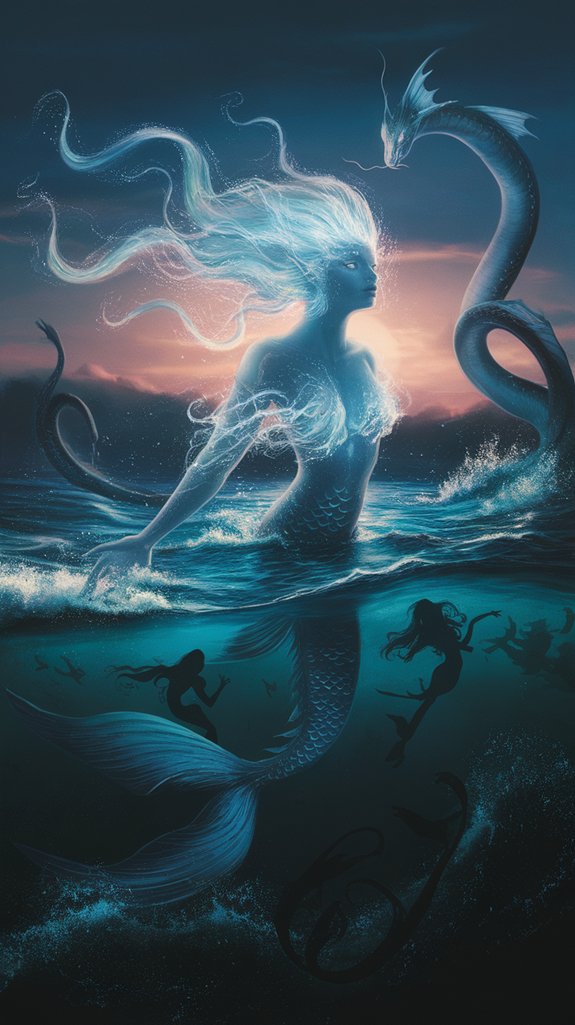
Although their enchanting songs have lured countless sailors to their doom, the sirens of Greek mythology remain one of the most enigmatic figures in ancient lore. You might find that siren symbolism often represents temptation and the perilous allure of the unknown. Deeply rooted in siren myths, these figures are portrayed as half-bird, half-woman creatures whose irresistible voices lead seafarers to shipwreck. In your exploration of siren encounters, you'll notice how ancient texts like Homer's “Odyssey” describe them as both a warning and a challenge to human curiosity and ambition. Siren interpretations vary, highlighting themes of seduction and the struggle between desire and reason. Sirens invite you to ponder the balance between freedom and entrapment, urging you to question how far you're willing to venture into uncharted waters in your quest for discovery. Their stories continue to captivate those who seek the mysteries of the deep.
Legends of the Alluring Mermaids
You can trace the origins of mermaids back to ancient civilizations, where these enigmatic figures often symbolized both allure and danger. Their depiction in folklore has evolved, reflecting societal values and fears, with each culture adding unique nuances to their mythos. Today, mermaids captivate modern imagination through literature, film, and art, serving as a testament to their enduring cultural significance.
Origins and Folklore
Throughout the annals of human history, mermaids have captured the imagination of cultures across the globe, serving as both enchanting figures and cautionary tales. Their mythical origins stem from ancient aquatic folklore, where they embodied the mysterious allure and danger of the sea. As you delve into these legends, consider the following:
- Ancient Texts: The earliest known mermaid tales appear in Assyrian mythology, where the goddess Atargatis transformed into a mermaid, symbolizing both seduction and peril.
- Global Variations: From the Mami Wata of African lore to the Rusalkas of Slavic tales, each culture adapts the mermaid myth to reflect local beliefs and fears.
- Symbolism: Mermaids often represent the duality of freedom and entrapment, luring sailors with promises of freedom yet leading to their doom.
Cultural Representations Today
In modern times, mermaids continue to captivate the cultural imagination, evolving from folklore into symbols of beauty, mystery, and environmental consciousness. Their cultural significance persists as you encounter them in contemporary adaptations like films, literature, and art. These representations often highlight the duality of allure and peril, mirroring humanity's complex relationship with nature.
Mermaids in popular media, such as movies and commercials, serve not only as enchanting figures but also as reminders of the ocean's fragility and the need for its preservation. You'll notice that their narrative has shifted to emphasize themes of independence and ecological awareness. By embodying freedom and mystery, mermaids resonate with audiences seeking liberation from societal constraints, blending ancient myth with modern values.
Sea Serpents: Guardians of the Deep

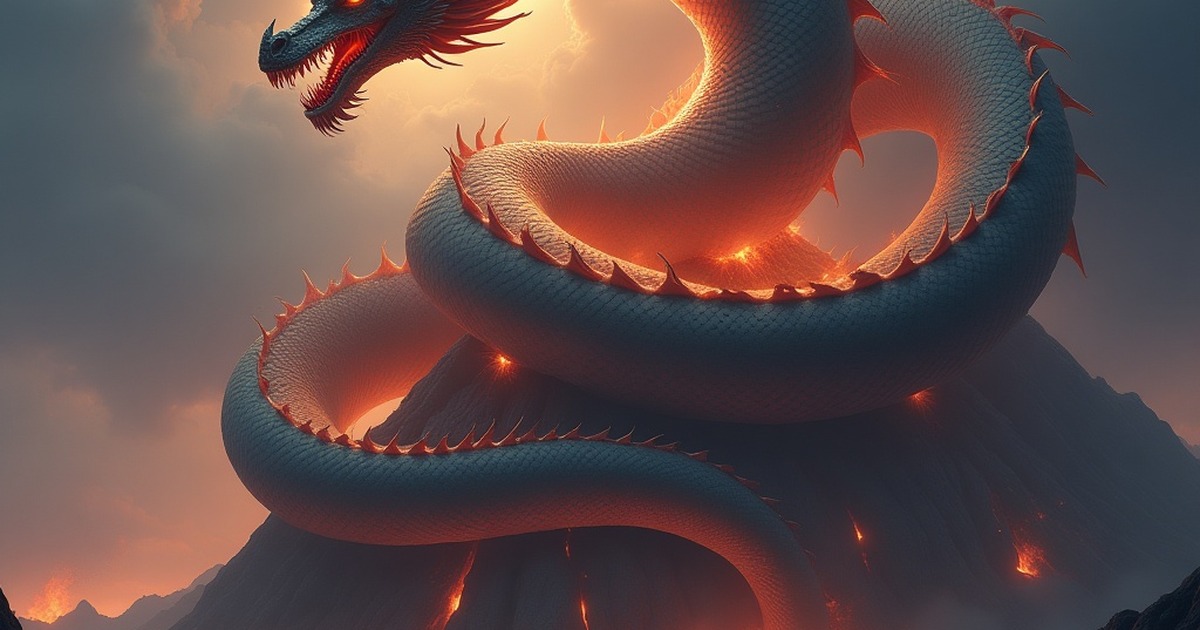
Although often relegated to the realm of legend, sea serpents have captivated human imagination for centuries, emerging as formidable guardians of the deep. These mythical creatures are often thought to protect the ocean's mysteries, playing crucial guardians' roles that transcend mere tales. Historically, serpent sightings have been documented by explorers and mariners, suggesting a deep-seated human fascination with these elusive entities.
You might wonder why sea serpents hold such sway over our collective imagination. Here's a concise exploration:
- Guardians of Mystery: They symbolize the unknown depths of the ocean, a realm that defies control and invites curiosity.
- Historical Accounts: Numerous serpent sightings, from the Norse Jörmungandr to the Loch Ness Monster, have been recorded, urging you to challenge conventional understanding.
- Cultural Archetypes: They embody the freedom of the seas, resonating with those who yearn for exploration unbound by terrestrial constraints.
In essence, sea serpents serve as enduring symbols of mystery and liberation.
Cross-Cultural Tales of Water Deities
As sea serpents captivate with their mysterious allure, water deities across cultures enrich our understanding of humanity's connection with aquatic realms. These deities, woven into the fabric of aquatic myths, reflect humanity's reverence for water's life-giving and destructive powers. In examining these myths, you uncover a rich tapestry of beliefs that illuminate cultures' relationships with the sea.
| Cultural Origin | Water Deity |
|---|---|
| Greek | Poseidon |
| Hindu | Varuna |
| Norse | Ægir |
| African | Mami Wata |
Each of these figures embodies different aspects of water's duality. Poseidon, the tempestuous ruler of seas, contrasts with Varuna's cosmic order. Ægir's feasts depict the sea's bounty, while Mami Wata represents balance and healing. By exploring these tales, you gain insight into how diverse societies perceive water's essential nature, celebrating it as a source of life, mystery, and transformation. Engage with these myths to embrace the freedom they symbolize.
Sirens and Their Songs: The Power of Seduction

Enchantment lures you into the world of sirens, mythical beings whose songs captivate seafarers with irresistible allure. Throughout ancient lore, sirens wielded seductive melodies, ensnaring sailors' wills and steering them toward treacherous shores. These enchanting voices were believed to emanate from the rocky coasts of Greece, where sailors faced both peril and promise. The sirens' songs symbolized the tension between desire and danger, reflecting the human longing for adventure tempered by the risk of ruin.
To fully appreciate the sirens' enduring enigma, consider:
- Historical Context: Sirens first appeared in Homer's “Odyssey”, embodying the seductive peril that awaited Odysseus on his journey home.
- Symbolic Resonance: Their melodies illustrate humankind's timeless struggle between curiosity and caution.
- Cultural Impact: Sirens' allure extends through centuries, influencing artistic and literary portrayals that capture the essence of temptation.
Understanding sirens invites reflection on freedom's allure intertwined with inherent risk.
Mermaids in Art and Literature
Mermaids, enchanting figures of mythology, have captivated artists and writers for centuries, weaving intricate narratives into the tapestry of art and literature. In exploring mermaid symbolism, you discover a duality that reflects human desires and fears. From the allure of freedom and the unknown depths of the sea to the danger of being lured into the abyss, mermaids embody both enchantment and peril.
Artistic representations of mermaids reveal this complexity, as seen in works ranging from John William Waterhouse's ethereal paintings to Hans Christian Andersen's poignant tales. Waterhouse's brush captures the ethereal beauty and mystery, while Andersen's “The Little Mermaid” presents a narrative of sacrifice and longing. These depictions invite you to contemplate the human condition, the yearning for transformation, and the cost of freedom. As you engage with these artistic expressions, you unravel the timeless fascination and profound impact of mermaids upon cultural consciousness.
Sea Serpents in Maritime Folklore
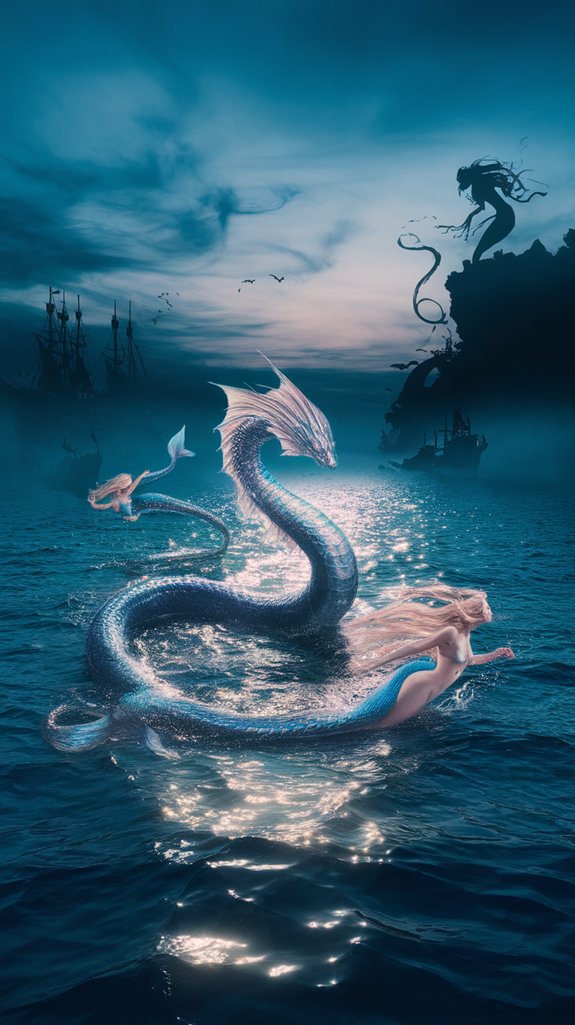
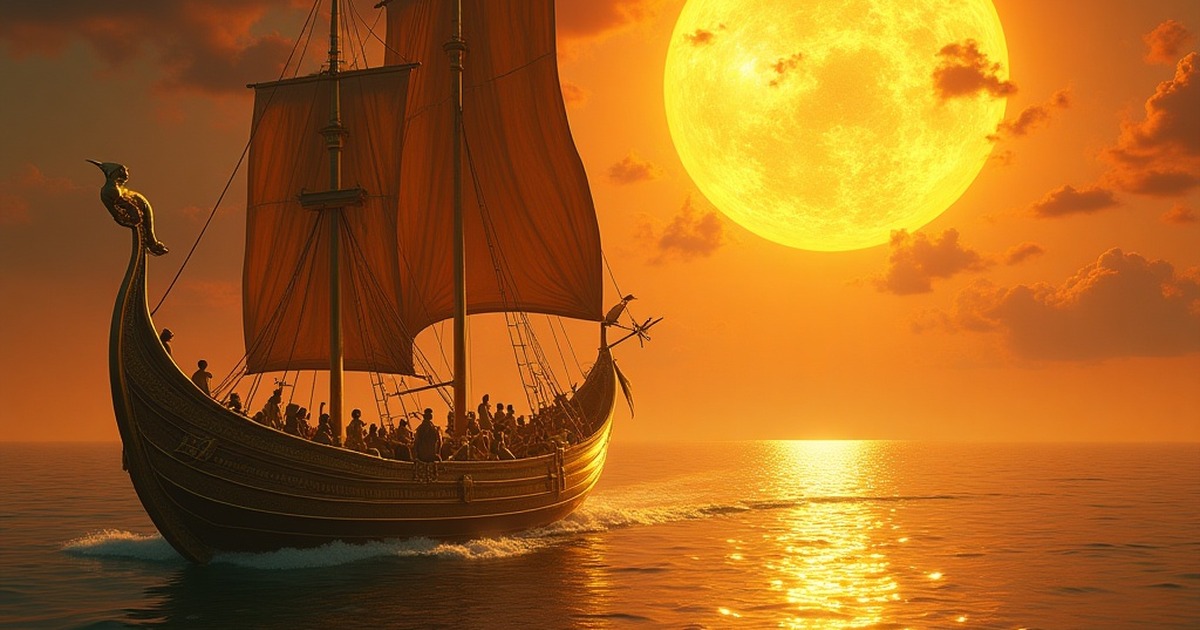
While tales of the mermaid captivate with their allure, sea serpents in maritime folklore evoke a different kind of fascination rooted in fear and awe. You'll find that sea serpent sightings have peppered the annals of history, often recounted by ancient mariners whose lives depended on the unpredictable ocean. These elusive creatures, often described as massive and serpentine, stirred imaginations and fueled stories that transcended generations.
In exploring these tales, consider the following:
- Historical Accounts: Ancient mariner tales often document sea serpent encounters, suggesting these creatures were as feared as they were revered.
- Cultural Impact: Such sightings influenced maritime folklore, contributing to the mystique of uncharted waters and the unknown lurking within.
- Symbol of the Sea: Sea serpents represented the ocean's untamed nature, embodying both its beauty and peril.
The Symbolism of Water Creatures
When you examine the symbolism of mythical water creatures, you uncover themes of transformation and rebirth, often reflecting humanity's fascination with the cyclical nature of life. These creatures embody mystery and intrigue, capturing imaginations with their elusiveness and the unknown depths they inhabit. Furthermore, they represent both danger and allure, illustrating the dual nature of water as a source of life and a force of destruction throughout history.
Transformation and Rebirth
Throughout history, mythical water creatures have embodied the themes of transformation and rebirth, often reflecting humanity's deep connection with water as a symbol of life's cyclical nature. Water, fluid and ever-changing, inspires transformation stories that captivate the imagination. For instance, mermaids are often depicted in tales where they transform from sea to land, symbolizing adaptability and change. Rebirth myths, like those involving sea serpents, suggest renewal and the possibility of new beginnings. These creatures invite you to embrace freedom and the potential for metamorphosis. Consider the following:
- Mermaids' dual existence: Symbolizes the balance between two worlds.
- Sirens' call: Represents allure and the transformative power of the unknown.
- Sea serpents: Embody the eternal cycle of destruction and creation.
Mystery and Intrigue
The allure of mythical water creatures extends beyond transformation and rebirth, drawing you into the realm of mystery and intrigue that these enigmatic beings embody. Their mythical origins, steeped in centuries-old folktales, captivate the imagination. Sirens, mermaids, and sea serpents symbolize the unknown depths of the ocean and the mysteries that lie beneath. You find yourself questioning what truths may be hidden within these aquatic mysteries. Scholarly investigations reveal that these creatures often represent nature's untamed and unpredictable elements. Such symbolism reflects humanity's perpetual quest for freedom, urging you to explore the uncharted waters of the mind and spirit. As you delve deeper, you uncover layers of historical narratives that intertwine with the timeless allure of the sea's enigmatic inhabitants.
Danger and Allure
Though they enchant with their beauty and mystery, mythical water creatures also embody a profound symbolism of danger and allure. These beings, often depicted in folklore as captivating yet lethal, serve as metaphors for the seductive peril that lurks beneath the surface of the unknown. Their dangerous beauty tempts you to explore uncharted waters, promising both freedom and potential demise. Historically, tales of sirens luring sailors to their doom or mermaids with enchanting songs highlight this duality.
Consider these points:
- Historical Context: Ancient myths often associate water creatures with the unpredictability of the sea, reflecting humanity's awe and fear.
- Symbolism: They symbolize the duality of beauty and danger, mirroring your own internal struggles.
- Cultural Influence: These creatures continue to inspire art and literature, showcasing their timeless allure.
Modern Interpretations of Mythical Aquatic Beings
While myths of water creatures have been told for centuries, their modern interpretations often reflect contemporary cultural values and concerns. In popular media, these beings transform into aquatic villains that challenge protagonists, embodying modern adaptations of classic tales. Environmental symbolism surfaces as water creatures mirror humanity's struggles with nature's delicate balance. Gender roles evolve, with mermaids and sirens often portrayed as empowered figures in narratives promoting equality.
| Aspect | Interpretation |
|---|---|
| Aquatic Villains | Reflect societal fears |
| Environmental Symbolism | Connects nature and humanity |
| Gender Roles | Promotes equality and empowerment |
These creatures undergo cultural fusion, blending various mythologies to resonate globally. Such transformations reveal a collective yearning for liberation from traditional confines. You see how these interpretations, deeply rooted in historical myths, adapt to modern sensibilities, offering insights into our ever-changing world. Embracing these mythical beings, you explore the freedom they symbolize, an enduring testament to human creativity.
Frequently Asked Questions
Are Sirens and Mermaids Considered the Same Type of Creature?
You might wonder if sirens and mermaids are the same. Siren characteristics, rooted in danger and allure, differ from mermaid symbolism, which often represents beauty and freedom. Historically, they're distinct creatures, each with unique cultural roles.
Do Sea Serpents Exist in Any Scientific Records or Evidence?
Like shadows in the mist, sea serpents appear elusive in scientific records. You've got cryptozoological evidence and historical sightings that intrigue but don't confirm their existence, inviting your imagination to roam freely beyond the bounds of conventional science.
What Are the Origins of Siren and Mermaid Myths Across Different Cultures?
You explore ancient mythology to uncover siren and mermaid origins. Cultures worldwide imbued these figures with cultural significance, reflecting societal fears and desires, symbolizing freedom or danger, and evolving through storytelling, art, and historical interpretations.
How Have Mythical Water Creatures Influenced Modern Cinema and Television?
Did you know 60% of aquatic-themed movies feature mythical symbolism? Cinematic portrayals often explore freedom through these creatures, captivating audiences with their mysterious allure, while directors draw from historical myths to craft compelling narratives that resonate with viewers' innate desires.
Are There Any Real-Life Animals That Inspired Sea Serpent Legends?
You might find that giant squids and prehistoric marine reptiles inspired sea serpent legends. Historical accounts often describe mysterious sea creatures, and these real-life animals likely fueled imaginations, blending nature with myth in a quest for understanding.
Conclusion
As you dive into the depths of mythical tales, remember that sirens, mermaids, and sea serpents aren't just relics of the past; they echo humanity's eternal dance with wonder and fear. These enigmatic beings, like shadows on the waves, guide you through the intricate tapestry of our cultural psyche. By embracing their stories, you unravel the mysteries of the ocean and, in turn, the mysteries within yourself. Aren't we all, in some way, captivated by the unknown?