- Key Takeaways
- Dragons: Protectors or Destroyers?
- Eastern Dragons as Protectors
- Western Dragons as Threats
- Cultural Context Shapes Perception
- Dual Nature in Folklore
- Tiamat in Enuma Elish
- Ancient Babylonian Tigris-Euphrates Valley
- Chaos Versus Cosmic Order
- Chinese Dragons Bring Fortune
- Duality in Human Psychology
- Beowulf's Deadly Dragon Encounter
- The Dragon's Treasure Hoard
- Beowulf's Final Battle
- Heroic Sacrifice and Death
- Tolkien's Smaug Reimagined Dragons
- Jungian Archetypes Explain Dragon Duality
- Modern Media Perpetuates Dragon Duality
- Duality Reflects Human Nature
- Frequently Asked Questions
- What Is the Earliest Known Dragon Myth in Recorded History?
- How Do Japanese Dragon Myths Differ From Chinese Dragon Traditions?
- Are There Cultures Where Dragons Are Exclusively Good or Evil?
- What Role Do Dragons Play in Norse Mythology Beyond Beowulf?
- How Have Dragon Depictions Changed in Video Games and Films?
- Conclusion
- Related Posts
- Related Reading

Dragons embody humanity's fundamental duality because you've projected your own contradictions onto their chimeric forms—Eastern Lóng command life-giving monsoons while Western wyrms like Fafnir hoard corrupting treasure, yet both represent untamable power shaped by cultural context. In agrarian China, dragons legitimized imperial authority and agricultural prosperity; in feudal Europe, they symbolized primordial chaos threatening civilization's order. This psychological split reflects Jungian archetypes where confronting the dragon means reconciling your internal struggles between creation and destruction, revealing why these serpentine deities persist across millennia as mirrors of your deepest anxieties and aspirations.
Key Takeaways
- Dragons symbolize untamable power without inherent morality, shaped entirely by the wielder's intent and cultural context.
- Eastern dragons serve as benevolent protectors governing rain and harvests, legitimizing divine authority and ensuring community prosperity.
- Western dragons embody primordial chaos and greed, threatening civilization's order while guarding treasures representing wealth's corrupting nature.
- Geographic and economic conditions shape dragon perception: agricultural societies revere them; feudal economies fear their destructive competition.
- Dragons represent psychological duality, forcing heroes to confront inner chaos and unresolved conflicts for personal transformation.
Dragons: Protectors or Destroyers?

Consider the mušḫuššu of Mesopotamian tradition, chimeric guardian aligned with deities yet simultaneously threatening chaos incarnate. Such duality persists.
Chinese dragons harmonize cosmic energies; Norse Fafnir evolves through greed's corruption, human becoming monster. The same creature archetype serves opposing narrative functions because you're witnessing different societies projecting their anxieties, aspirations onto eldritch reptilian forms.
This paradox reveals dragon mythology's true power: these beings mirror your civilization's relationship with forces beyond mortal control—whether revering nature's generative capacity or fearing its annihilative potential.
Protection. Destruction. Often simultaneously. Like other mythical creatures serving as metaphors for human struggles, dragons embody the dual nature of power itself—both the capacity to create order and the potential to unleash devastation.
##
When you trace the serpentine paths of dragon mythology across continents, you encounter a stark chimeric divide: the celestial, rain-bearing lóng of Chinese cosmology—benevolent guardians who emerged from the mists of the Shang Dynasty (c. 1600-1046 BCE)—stand in opposition to the sulfurous, gold-hoarding wyrms of medieval European chronicles, creatures whose very breath embodied apocalyptic destruction.
This geographic polarity reveals not merely artistic variation but fundamental philosophical schisms between civilizations. Cultural context becomes the crucible wherein these eldritch beings evolve from catastrophic threat to sacred protector, their dual nature reflecting humanity's eternal negotiation with the forces that both nurture and annihilate.
Eastern Dragons as Protectors
The dragon coils through Eastern cosmology not as a harbinger of devastation but as a guardian of life itself, its serpentine form inextricably bound to the rhythms of water, weather, and the agricultural cycles that sustained entire civilizations.
You'll find these benevolent guardians threading through Chinese and Japanese traditions—the Lóng and Ryū—commanding rain clouds, governing rivers, blessing harvests with their eldritch presence.
The Dragon Kings stand as divine intermediaries between celestial domains and earthbound mortals, their chimeric bodies embodying nature's protective forces rather than its fury.
Agricultural symbols pervade their mythology: dragon boat festivals invoke their blessing, ritual dances petition their beneficence.
They don't hoard gold in mountain lairs. They guard the cosmic order itself, ensuring water flows, crops flourish, communities thrive.
These myths deal with supernatural beings who serve as ancestors and heroes, explaining the origins of natural phenomena and the societal ideals that shaped Eastern worldviews.
Freedom through harmony, not conquest.
Western Dragons as Threats
Cross the threshold from East to West and dragon symbolism undergoes a metamorphosis as stark as fire converting flesh to ash.
You'll encounter eldritch beasts embodying primordial chaos—creatures like Fafnir, whose greed-twisted form reveals humanity's darkest impulses magnified through chimeric scales. These wyrms guard hoarded treasures, their very existence threatening civilization's fragile order.
Christian iconography alters them into apocalyptic chaos embodiment: Saint George's serpent represents evil incarnate, demanding heroic intervention to restore cosmic balance. The Red Dragon of Wales demonstrates this duality—simultaneously symbolizing resilience and adversarial force, national pride forged through perpetual struggle.
Medieval Europe feared these creatures as untamable nature personified, requiring champions to venture forth, confronting flame and fang. Their defeat wasn't mere monster-slaying; it represented humanity's triumph over disorder itself, knowledge wrested from scaled guardians through steel and courage.
Cultural Context Shapes Perception
Geography births mythology as surely as rivers carve canyons through stone—each civilization's dragon reflects the fundamental anxieties and aspirations that define its collective psyche.
You'll find cultural symbolism embedded in every scale: Chinese dragons emerge from monsoon-dependent agricultural societies, their serpentine bodies channeling life-giving waters through parched fields.
Western wyrms guard treasure in lands where scarcity bred competition, their hoarding instincts mirroring feudal economies.
This mythological evolution isn't arbitrary. Mesopotamian Tiamat embodies primordial chaos in a culture obsessed with cosmic order, while Iranian Azhi Dahaka personifies drought in arid landscapes.
The chimeric nature of dragons—simultaneously eldritch threats and divine guardians—reveals how you've always projected your deepest fears and greatest hopes onto these liminal creatures, altering them into mirrors of cultural identity itself.
Dual Nature in Folklore
Where mythology fractures into paradox, dragons crystallize humanity's recognition that power itself possesses no inherent morality—only the wielder's intent determines whether scales shimmer with menace or benediction.
You'll discover this duality through dragon symbolism across continents: Chinese guardians who regulate celestial waters while Western wyrms hoard corrupted wealth.
Fafnir's alteration exemplifies this chimeric nature—greed metamorphoses man into monster, yet his defeat births heroic legend.
Folklore analysis reveals how these creatures embody your own moral complexity. Eastern traditions celebrate benevolent water deities; Western narratives demand their eradication.
Saint George confronts eldritch evil, while Japanese dragons nurture rice paddies.
Neither purely malevolent nor wholly virtuous, dragons mirror humanity's capacity for both destruction and protection—power awaiting direction.
Mesopotamian Serpent Deity Records
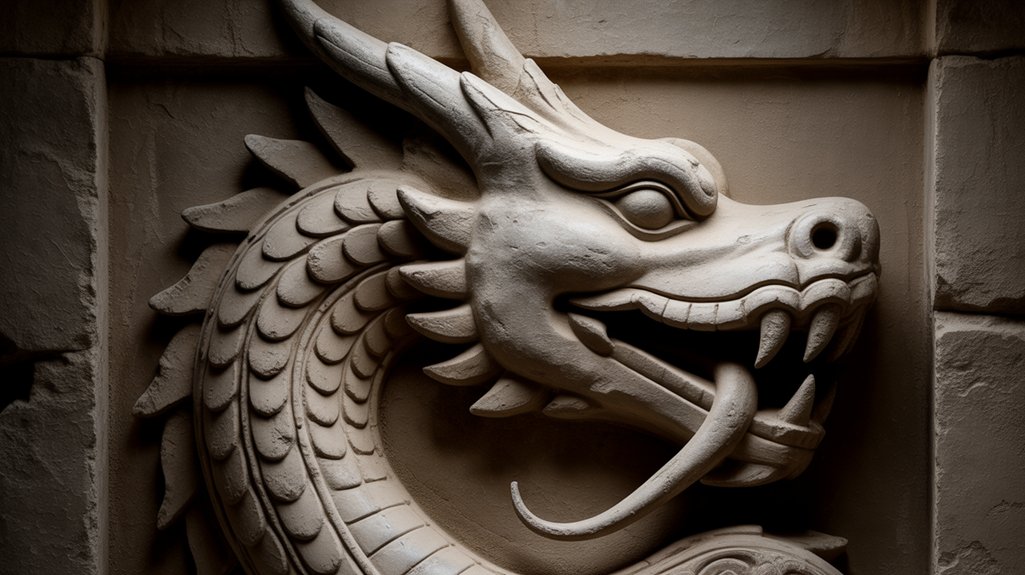
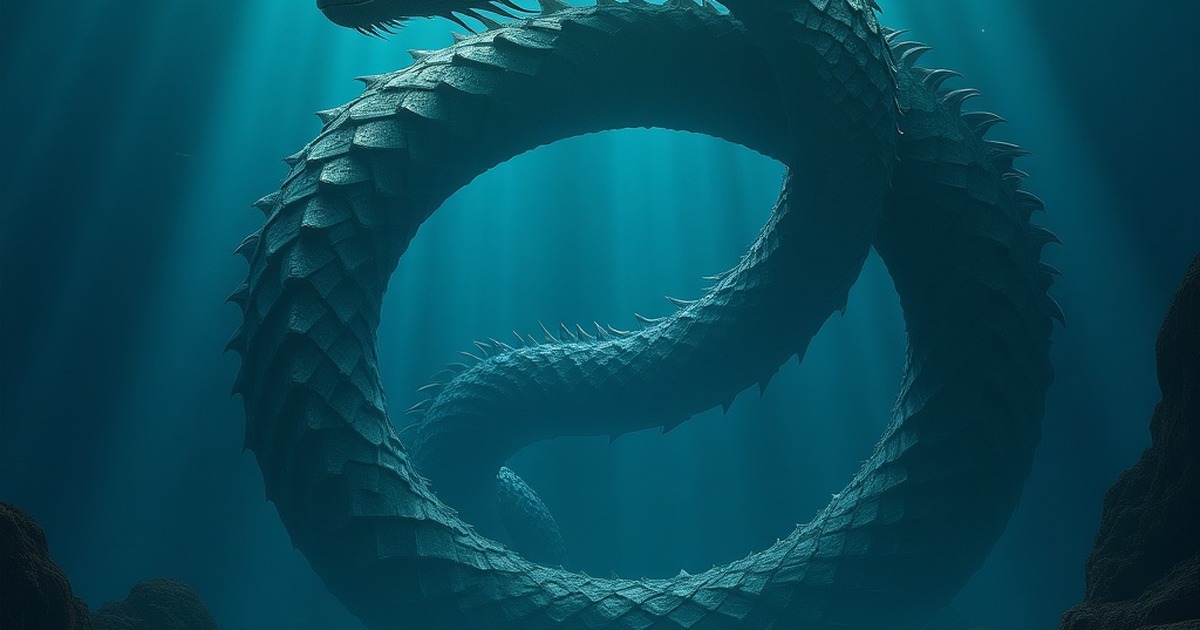
In the primordial waters of the Tigris-Euphrates Valley, where reeds whispered secrets to Sumerian scribes circa 1800 BCE, you'll encounter Tiamat—that eldritch mother-goddess whose chimeric form writhed between salt seas and serpentine chaos.
The Enuma Elish, etched in cuneiform upon clay tablets discovered in Ashurbanipal's library at Nineveh, records her titanic struggle against Marduk, the storm-god who split her corpse to fashion heaven and earth from her ribs and scales.
Here chaos isn't merely conquered but altered, transmuted into cosmic architecture—order forged from dragon-flesh, civilization carved from the body of the abyss.
Tiamat in Enuma Elish
Before civilization carved its first cuneiform wedges into wet clay, the Babylonian scribes of the second millennium BCE preserved a cosmogonic vision wherein Tiamat—the primordial saltwater abyss personified—emerged as both creatrix and antagonist in the Enuma Elish.
You'll find her depicted as an eldritch sea serpent, mother to all deities, embodying nature's ungovernable forces. Tiamat's symbolism reflects the ancient world's recognition that creation demands destruction, that order springs from chaos.
Her cosmic battles against the younger gods—particularly Marduk—weren't merely struggles for dominance but existential confrontations between primal freedom and structured civilization.
When Marduk slays this chimeric goddess, her corpse becomes raw material: heavens above, earth below. She's simultaneously destroyed and eternal, villain and foundation, her death birthing the world you inhabit today.
Ancient Babylonian Tigris-Euphrates Valley
Though Tiamat dominates scholarly discourse on Mesopotamian dragon-lore, she represents merely one constellation in a vast cosmological taxonomy of serpentine divinity that proliferated across the alluvial plains where the Tigris and Euphrates converged. You'll discover the mušḫuššu, that chimeric fusion of serpent, lion, and avian essence. Ancient myths positioned these creatures at civilization's threshold.
| Draconic Entity | Symbolic Function |
|---|---|
| Mušḫuššu | Guardian amalgamating strength with cunning |
| Ušumgal | Royal power incarnate |
| Tiamat | Primordial chaos embodied |
The ušumgal served as metaphor for sovereignty itself, while chaotic forces embodied by these eldritch beings demanded perpetual heroic confrontation. You're witnessing dual archetypal expression: dragons simultaneously threatened cosmic order and defended divine thresholds. Protection and destruction intertwined.
Chaos Versus Cosmic Order
Where primordial waters churned before creation itself took form, Mesopotamian cosmogony positioned serpentine deities as fundamental antagonists to divine architecture—yet these same beings paradoxically reinforced the very boundaries they threatened to dissolve.
You'll discover this duality through Tiamat's eldritch form: chaos symbolism incarnate as she embodied primordial dissolution against Marduk's ordered pantheon.
The mušḫuššu exemplifies this contradiction perfectly, shifting from chaos-bearer to guardian when divine authority claimed its chimeric body.
The ušumgal serpents threatened cosmic balance while simultaneously defining it—disorder couldn't exist without order's framework.
Through violence and subjugation, these creatures evolved from antagonists into protectors, their destructive potential utilized to maintain universal boundaries.
Freedom itself emerged from this tension: divine order requiring chaos's perpetual threat to justify its sovereignty.
Chinese Dragons Bring Fortune

While Western imagination conjures serpentine terrors guarding hoards in mountain caves, the Chinese dragon—the *Lóng*—emerges from an entirely different cosmological framework, one where these celestial beings embody benevolence rather than malice. You'll find dragon symbolism woven through agricultural prosperity rituals, where Dragon Kings command waters and weather with paternal concern for mortal sustenance. These chimeric deities don't hoard—they distribute.
| Dragon Role | Cultural Function | Manifestation |
|---|---|---|
| Weather Control | Invoking rainfall during droughts | Clay figurines crafted as supplication |
| Imperial Authority | Legitimizing divine rulership | Emperor as Son of Heaven |
| Agricultural Blessing | Ensuring bountiful harvests | Spring Festival dragon dances |
During droughts, communities fashioned clay dragon effigies, eldritch conduits through which they'd petition celestial intervention. The dragon dance itself becomes participatory prayer—serpentine movements through village streets summoning rain's benediction. Here, you're witnessing dragons not as antagonists but as cosmic shepherds, their power channeled toward communal flourishing rather than individual destruction.
Duality in Human Psychology
The dragon's metamorphosis from beneficent rainmaker to treasure-hoarding beast reveals less about reptilian archetypes than about humanity's fractured self-perception.
You're witnessing psychological projection in its most primordial form—your ancestors casting their internal warfare onto scales and flames. These eldritch serpents embody the moral ambiguity you've always carried: protector and destroyer, benevolent guardian and chaos incarnate.
Consider how dragons mirror your own chimeric nature:
- They represent untamable power you simultaneously fear and desire
- Their hoarded treasures symbolize your struggle between security and destruction
- They shift between obstacle and ally, reflecting your moral complexities
- Their duality manifests your tension between vulnerability and strength
- They externalize the order-versus-chaos battle within your psyche
When you confront dragons in myth, you're encountering yourself.
These creatures don't exist to terrify or inspire—they exist because you need vessels for contradictions you can't reconcile. The dragon becomes your mirror, reflecting every paradox you refuse to acknowledge.
Beowulf's Deadly Dragon Encounter
You'll find in Beowulf's final confrontation with the wyrm a crystallization of heroic mortality—the aged king facing an eldritch guardian whose treasure hoard becomes both catalyst and curse.
After fifty winters of peace, a slave's theft of a single cup awakens the drake's primordial wrath, compelling Beowulf to meet this chimeric embodiment of greed alone, his aging sinews matched against scaled fury.
The ensuing battle alters hero into sacrifice, revealing how even legendary warriors can't transcend the inexorable pull of fate's thread.
The Dragon's Treasure Hoard
Glittering gold and ancient treasures lie beneath stone and earth, jealously guarded by a wyrm whose wrath will consume kingdoms—this is the fatal scenario that draws aged King Beowulf toward his doom in the epic's final act.
The hoard itself becomes a character, embodying treasure symbolism that transcends mere material wealth. You witness how accumulated power corrupts, how eldritch gold alters from symbol of heroic achievement into catalyst for destruction.
The greed consequences ripple outward: a slave's desperate theft awakens three centuries of draconic fury, and Beowulf's final quest for glory becomes his funeral pyre.
This Germanic tradition reveals wealth's chimeric nature—simultaneously representing legacy and doom, freedom and bondage, triumph and tragedy in one cursed, glimmering mass.
Beowulf's Final Battle
When half a century has altered the vigorous warrior-king into an aged ruler whose crown weighs heavier than his sword once did, Beowulf faces the inexorable summons of his final wyrd.
A slave's theft from the eldritch hoard awakens primal wrath, dragon-fire consuming Geatish halls, changing prosperity into ash. The serpent embodies chaos incarnate, its flame-breath destroying the ordered world Beowulf had forged through decades of rule.
Dragon symbolism here transcends simple antagonism, manifesting as temporal judgment itself, the inevitable reckoning that awaits all mortals who grasp for immortal glory. Beowulf's legacy culminates in fatal wounds sustained during this chimeric confrontation.
His death signals civilization's vulnerability without heroes. The dragon's treasure remains unclaimed, cursed. An era dies with him, heroism's twilight descending upon the land.
Heroic Sacrifice and Death
The dragon's awakening modifies Beowulf's twilight years from peaceful sovereignty into a final test of valor, one that demands the ultimate price.
You witness how this eldritch wyrm, roused by theft, becomes the instrument through which Beowulf's heroic legacy achieves its apotheosis—and its ending.
The fatal confrontation strips away youth's invincibility, revealing mortality's inexorable claim even upon legendary warriors.
After five decades of kingship, he confronts not merely scaled flesh and fire, but the chimeric nature of his own identity: protector and mortal, hero and aging man.
His deliberate choice to face the dragon alone, despite failing strength, reshapes death from defeat into consecration.
The venom coursing through his veins becomes paradoxically life-affirming, his sacrifice purchasing his people's survival while cementing his immortality.
Tolkien's Smaug Reimagined Dragons
Through Tolkien's masterful reimagining, Smaug emerges as a synthesis of ancient wyrm-lore and modern psychological complexity—a creature whose very essence elevates the binary of hero and villain to inhabit something far more eldritch.
Smaug's Defining Characteristics:
- Smaug's intelligence manifests through eloquent speech, manipulative dialogue, and cunning psychological warfare against his adversaries.
- Armored scales rendered in obsidian-dark prose create an almost invulnerable chimeric form—ancient, terrible, magnificent.
- The dragon's tragic flaw lies in his overwhelming avarice, a hunger that mirrors humanity's own destructive relationship with wealth.
- His enmity with Thorin Oakenshield weaves a tapestry where both hunter and hunted seek the same corrupting gold.
- Fiery breath becomes more than weapon—it symbolizes the consuming nature of unchecked desire itself.
You witness here not mere monster but mirror. Smaug embodies contradictions: destroyer and protector of treasure, beast and philosopher, threat and tragic figure.
Tolkien grants him interiority, altering cold-blooded malevolence into something disturbingly human.
Jungian Archetypes Explain Dragon Duality
Deep within Jung's analytical psychology lies the Shadow—that unintegrated aspect of consciousness where dragons coil as psychic manifestations of our most primordial terrors and altering potentials.
You'll discover that dragon symbolism operates simultaneously across opposing thresholds: the wyrm guards treasure yet hoards corruption, destroys civilizations yet catalyzes renewal. These psychological archetypes reveal humanity's chimeric nature.
Eastern traditions present dragons as the Wise Old Man, benevolent mentors guiding heroes through eldritch alterations.
The West casts them as guardians whose defeat signifies conquering internal obstacles—your personal Shadow materialized in scales and fire.
This duality isn't contradiction. It's integration.
When you face the dragon in myth, you're confronting unresolved conflicts within your own psyche.
The creature embodies chaos and order, villain and hero, destruction and rebirth.
Through this lens, slaying or befriending dragons becomes identical: you're reconciling fragmented aspects of consciousness, achieving that precarious balance between darkness and light that defines authentic human experience.
Modern Media Perpetuates Dragon Duality
Contemporary screens flicker with ancient archetypes reborn—dragons now occupy every narrative domain from prestige television to interactive digital environments, their Jungian duality amplified through technologies Jung himself couldn't fathom.
You witness this dragon symbolism's narrative evolution most vividly in “Game of Thrones,” where Daenerys's chimeric companions simultaneously embody liberation and apocalyptic devastation. The eldritch creatures reduce cities to ash while representing humanity's hope for alteration.
Disney's Mushu subverts millennia of Eastern reverence into comedic relief. Yet this apparent diminishment paradoxically preserves duality—heroism through humor rather than terror.
“How to Train Your Dragon” completes the change: dragons become companions, their ferocity channeled into loyalty. You're invited to transcend ancient fear, embracing interdependence over domination.
Even “The Elder Scrolls” grants you agency in determining dragons' moral alignment, shifting fixed mythological roles into fluid player-driven narratives.
Smaug's tragic greed reminds you that villainy itself contains depth worthy of sympathy. The archetype persists, endlessly reimagined, forever dual.
Duality Reflects Human Nature
When you gaze upon the dragon's bifurcated soul—simultaneously sage and serpent, guardian and destroyer—you're confronting not merely mythological constructs but externalized projections of your own fractured psyche.
The dragon's split nature mirrors your own divided self—wisdom intertwined with darkness, protector fused with predator.
These eldritch beings embody the chimeric nature of consciousness itself, where benevolence coexists with malevolence, wisdom dances with destruction. Your capacity for heroic sacrifices mirrors the Eastern dragon's protective wisdom, while your shadow impulses reflect the Western wyrm's hoarding darkness.
Ancient cultures recognized this truth. They encoded it within serpentine scales and forked tongues, understanding that mythical alterations weren't fantastical escapism but profound psychological roadmaps.
The dragon you fear represents everything you've suppressed—greed, rage, primal hunger. The dragon you revere? Your untapped potential for change.
Through confronting these scaled mirrors, you undergo your own metamorphosis. Order and chaos cease their eternal warfare within you.
The dragon's duality becomes liberation's key, releasing self-knowledge through acknowledging both light and shadow dwelling in your mortal frame.
Frequently Asked Questions
What Is the Earliest Known Dragon Myth in Recorded History?
You'll find the earliest dragon myth in Mesopotamian myths, circa 2500 BCE, where Tiamat—primordial serpent of chaos—surges through ancient texts like the Enūma Eliš.
This chimeric goddess embodies the eldritch deep, her saline body birthing gods and monsters alike. She's your first recorded draconic ancestor, a creature of salt-water fury and creative destruction.
The cuneiform tablets reveal her serpentine form coiling through cosmic warfare, establishing dragons as forces transcending simple morality—untamed, sovereign, absolute.
How Do Japanese Dragon Myths Differ From Chinese Dragon Traditions?
You'll find that roughly 90% of Chinese dragons symbolize benevolence and imperial authority, while Japanese dragons embody localized water deities with ambiguous moral alignments.
These cultural interpretations diverge greatly—Chinese traditions position their serpentine ryū as celestial benefactors descended from mythological origins in Shang Dynasty oracle bones, whereas Japanese symbolism alters these chimeric beings into territorial kami dwelling in specific rivers, lakes, oceans.
Both traditions honor draconic power, yet their mythological frameworks reflect distinct philosophical approaches to divine intervention and natural forces.
Are There Cultures Where Dragons Are Exclusively Good or Evil?
You'll find few cultures maintain purely binary dragon symbolism.
Good dragon cultures like traditional China and Japan revere these serpentine beings as benevolent celestial forces, though even here, individual dragons occasionally transgress.
Medieval European evil dragon legends primarily cast them as eldritch antagonists—yet Germanic traditions preserve Fáfnir's tragic complexity.
The absolutism you're seeking dissolves upon examination.
Most mythologies acknowledge dragons' chimeric moral nature, reflecting humanity's understanding that power itself transcends simple categorization.
What Role Do Dragons Play in Norse Mythology Beyond Beowulf?
You'll find five major dragons prowling Norse cosmology beyond Beowulf's antagonist.
Níðhöggr gnaws Yggdrasil's roots in eldritch hunger, embodying cosmic decay.
Fáfnir, corrupted by gold-lust, changes from dwarf to serpent—prime Norse dragon symbolism of greed's metamorphic power.
Dragon slayers like Sigurd claimed freedom through Fáfnir's blood, gaining wisdom and curse simultaneously.
Jörmungandr, the World Serpent, coils round Midgard's edges, destined to battle Thor at Ragnarök, where destruction births renewal.
How Have Dragon Depictions Changed in Video Games and Films?
You'll witness how game mechanics changed dragons from static bosses into vibrant companions—cultural influences from Eastern traditions reshaped character design, rendering serpentine guardians alongside Western wyverns.
Storytelling techniques evolved; *Shadow of the Colossus* (2005) reimagined draconic entities as eldritch titans evoking sympathy, while *Skyrim* granted you chimeric freedom to choose alliance or annihilation.
Modern cinema's motion-capture technology breathes unprecedented emotional depth into scaled visages, honoring ancient reverence while liberating these creatures from archetypal constraints into nuanced moral complexity.
Conclusion
You stand now at the threshold—recognizing that dragons embody your own chimeric nature. Consider the ouroboros: that ancient serpent devouring its tail, eternally consuming and creating itself. You contain multitudes, wielding both destruction and creation. Like Mesopotamian Tiamat birthing gods before her annihilation, you're simultaneously hero and adversary in your mythology. The dragon's duality isn't paradox—it's mirror. You've always known this eldritch truth.
Related Posts
Your Weekly Dose of Inspiration
Journaling ideas, family tips, and gentle inspiration.