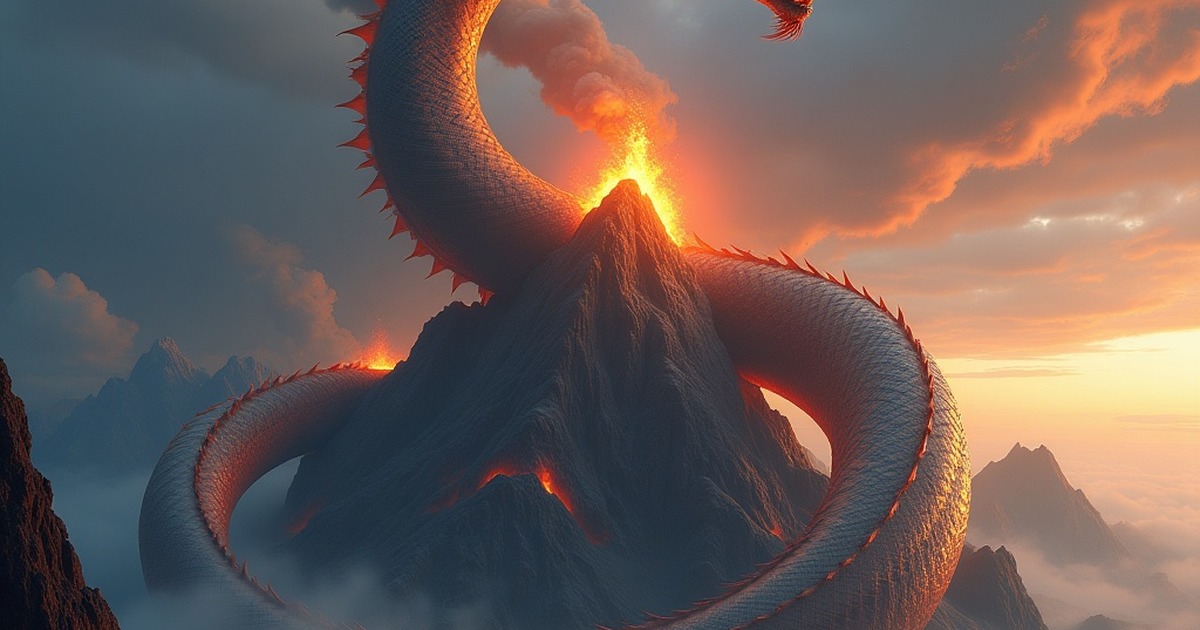
You're witnessing humanity's primordial need to map chaos when you trace Draco's serpentine form across northern skies—ancient astronomers converted eldritch visions into navigational tools, inscribing chimeric beasts like Tiamat and Hydra into celestial frameworks that guided Phoenician ships and structured Babylonian agricultural cycles. Mesopotamian tablets document draconic presences merged with stellar mechanics, while Greek charts positioned Cetus as leviathan guardian, encoding cultural anxieties within constellation narratives. These stellar archives reveal how civilizations processed cosmic vastness through mythological symbolism, their legacy persisting in modern pattern-recognition systems that continue revealing secrets embedded within ancient skies.
Key Takeaways
- Ancient civilizations mapped mythical creatures like dragons, serpents, and chimeras onto constellations to encode cultural narratives and cosmological beliefs.
- Constellations such as Draco, Hydra, and Cetus represented mythological stories while serving practical purposes for navigation and agricultural calendars.
- Hybrid celestial beasts like Centaurus and Capricornus symbolized philosophical concepts, merging human anxieties with observations of the natural world.
- Babylonian and Greek astronomers transformed creation myths, including Tiamat and Ladon, into celestial mechanics linking divine stories to star positions.
- Pattern recognition in human cognition drove civilizations to connect celestial observations with mythical narratives, creating shared cultural memory systems.
Ancient Skies Meet Monster Legends
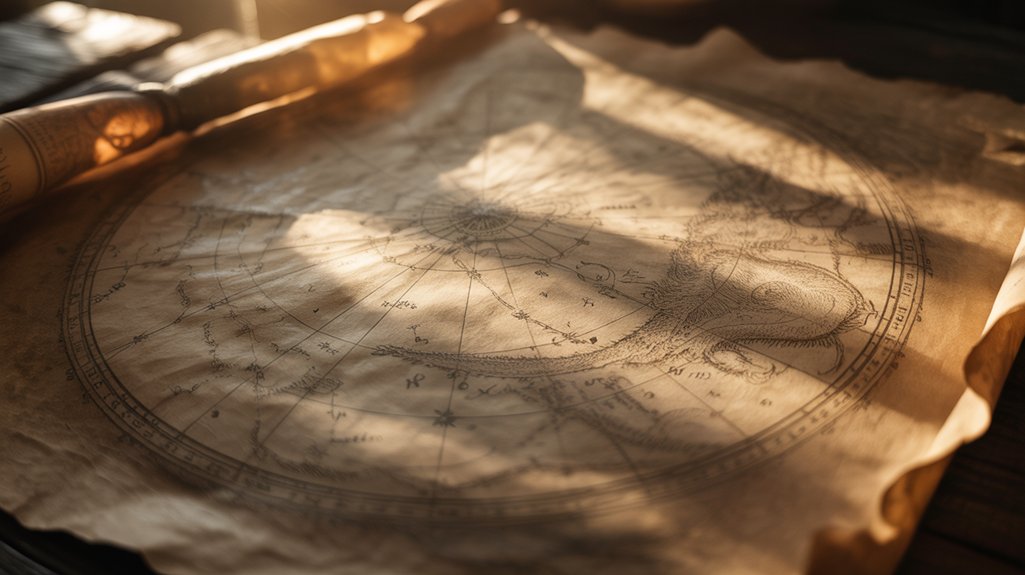
When ancient civilizations gazed upward into the velvet darkness, they didn't merely observe distant points of light—they witnessed a cosmic theater populated by eldritch beasts and chimeric guardians whose movements dictated the rhythms of earthly existence.
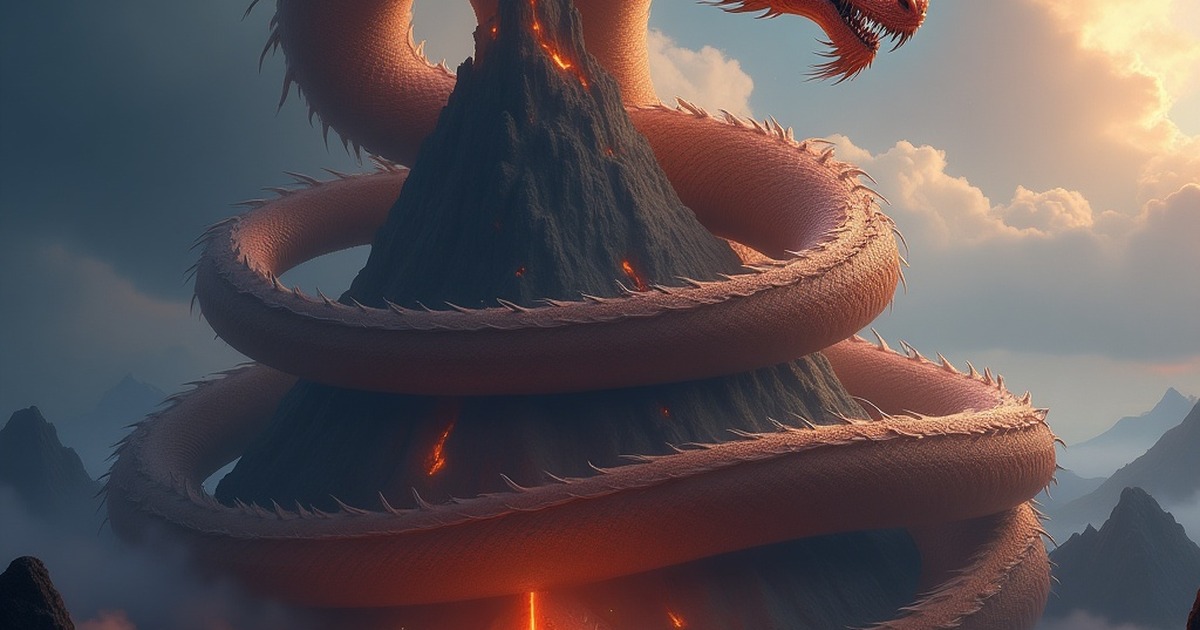
You'll find that Mesopotamian star-watchers identified Tiamat's serpentine form coiled across primordial heavens, her draconic essence woven into creation narratives that explained existence itself. Greek astronomers mapped Cetus, the monstrous leviathan threatening Andromeda, converting celestial coordinates into heroic tableaux.
Draco wound protectively around the celestial pole, embodying Ladon's eternal vigil over divine treasures. This mythical symbolism wasn't mere decoration—it represented sophisticated celestial storytelling that encoded agricultural calendars, navigation routes, and philosophical frameworks.
The Hydra's multi-headed terror stretched across southern skies, symbolizing chaos that demanded perpetual combat. Among these celestial figures, the constellation Capricornus embodied Pan's goat-like features, connecting the Arcadian deity of flocks and shepherds to the zodiacal band that marked seasonal transformations. These weren't passive observations. Ancient peoples actively constructed meaning from stellar patterns, binding cosmic monsters to earthly concerns, creating mythological cartography that served practical and spiritual needs simultaneously.
##
When you trace your gaze across the vault of heaven, you'll discover that humanity's most chimeric imaginings—dragons coiling through polar skies, griffins spreading astral wings, serpents whose scales shimmer with starlight—became permanent fixtures in celestial cartography.
Ancient astronomers altered their eldritch visions into navigational tools, mapping Draco's sinuous form near the North Star, positioning winged Pegasus among autumn's constellations, and stretching Hydra's hundred-headed length across spring's southern horizon.
These weren't mere decorative flourishes but sacred acts of recognition, binding the numinous creatures of myth to the eternal patterns overhead, where they've remained for millennia as evidence to our ancestors' profound need to populate the cosmos with familiar terrors and wonders.
Through this celestial mapping, mythology provided frameworks for understanding existence itself, transforming abstract cosmic movements into narratives that connected generations through the shared language of constellation and creature.
Dragons in Celestial Maps
Celestial cartographers across millennia inscribed dragons upon the dome of night, reshaping serpentine forms into stellar configurations that bridged terrestrial myth and cosmic order.
You'll find Draco coiling through Hellenic star charts, its eldritch form guarding Hesperian treasures eternally.
Dragon mythology permeates Chinese astronomical tradition—the zodiacal beast represents power unbound, cosmic authority incarnate.
Mesopotamian tablets reveal chimeric serpents threading through primordial darkness, while Vedic astronomers mapped nāga-like entities across monsoon skies.
Hydra stretches across southern heavens, immortalizing Hercules' struggle against regeneration itself.
Each culture embedded celestial symbolism within draconic imagery, reforming chaos into protective guardians.
These stellar maps weren't mere decoration. They represented humanity's profound need to domesticate infinity, to sketch meaning across void's terrifying expanse, binding serpentine power to comprehensible patterns you could navigate, worship, fear.
Hybrid Beasts as Constellations
As terrestrial boundaries dissolved beneath starlight's alchemy, ancient astronomers forged composite beings—half-human, half-beast—into permanent celestial residence, encoding civilizational anxieties about liminality itself.
You'll find Centaurus straddling the southern ecliptic, merging rational humanity with untamed equine vigor—hybrid symbolism made manifest. Capricornus rises, goat-fish chimeric, its eldritch form bridging terrestrial ambition and oceanic depths.
The Greeks understood cosmic storytelling demanded such amalgamations; these weren't mere decorative flourishes but philosophical statements about existence's fluid nature. Consider the Sphinx's celestial placement: leonine strength, human intellect, avian transcendence unified.
These constellations functioned as navigational instruments while simultaneously articulating humanity's struggle with its own duality. Ancient seafarers steered by hybrid beasts, their journeys guided by creatures embodying change itself—permanent reminders that boundaries exist only to be transcended.
Serpents Across Night Skies
Beyond these quadrupedal composites, serpentine forms wound their sinuous paths through ancient skies, embodying principles too earthbound zoology to contain.
You'll find serpent symbolism threading through celestial mythology across civilizations—Draco coiling near the cosmic pole, Hydra stretching across southern heavens. The Mesopotamians traced Tiamat's dragon-essence through their star catalogs, chaos personified in eldritch constellation patterns.
Egypt's Wadjet, cobra-crowned protector, merged terrestrial sovereignty with stellar permanence. These weren't mere decorative flourishes.
Serpens itself embodies that fundamental duality: creation, destruction, regeneration spiraling endlessly. Heracles battled the Lernaean Hydra whose many heads sprouted anew—eternal struggle mapped onto night's canvas.
You're witnessing humanity's attempt to comprehend alteration itself, that primal force serpents represented. Shedding skin. Cyclical return. The ouroboros principle written in starlight.
Winged Creatures Among Stars
Where serpents coiled horizontally across celestial meridians, winged beings ascended—vertical ambition carved into constellation geometry.
You'll find Pegasus galloping through stellar depths, his immortal wings tracing pathways your ancestors used for celestial navigation. Aquila soars eternal, Zeus's eagle clutching divine authority in talons of light.
The chimeric Griffin merged leonine power with avian grace, inspiring star patterns across Mediterranean cultures seeking symbols of transcendence. Cygnus glides through galactic currents, embodying metamorphosis's eldritch beauty.
This winged symbolism wasn't mere decoration—it mapped freedom itself onto cosmic architecture. Each constellation became a portal where earthbound consciousness could touch the infinite, where mythology and astronomy fused into navigational scripture.
Ancient observers understood: wings represent humanity's refusal to accept limitation, our perpetual reaching toward liberation's luminous threshold.
Mesopotamian Star Catalogs and Dragons

When you examine the MUL.APIN tablets—those cuneiform records etched circa 1000 BCE along the Tigris-Euphrates river valleys—you encounter humanity's earliest systematic attempts to map the eldritch patterns wheeling overhead, celestial serpents coiling through Babylonian skies with chimeric precision.
The astronomers working in those ancient Mesopotamian observatories didn't merely catalog stars; they encoded Tiamat's cosmic annihilation into their asterisms, preserving within their clay tablets the memory of primordial waters defeated, chaos subdued beneath Marduk's blade.
These catalogs convert astronomical observation into sacred text, where dragon constellations mark both agricultural seasons and the eternal struggle between formless void and ordered creation.
Babylonian MUL.Apin Tablet Records
As the Mesopotamian scribes pressed their reed styluses into damp clay around 1000 BCE, they weren't merely cataloging stars—they were documenting a cosmos alive with draconic presence.
The MUL.Apin tablets reveal how Babylonian astronomy intertwined serpentine forms with celestial mechanics, particularly through constellations like Draco.
You'll discover within these cuneiform inscriptions a sophisticated system categorizing stellar groups, each aligned with agricultural cycles and seasonal changes.
The dragons weren't decorative flourishes but essential components of celestial mythology, bridging observable phenomena with cosmological meaning.
These chimeric entities inhabited the boundary between empirical observation and sacred narrative, their eldritch forms mapping both sky and psyche.
Through these records, ancient Babylonians transmitted knowledge that would ripple through Greek and Roman traditions, proving that dragons once navigated not fantasy but the very architecture of heaven itself.
Ancient Mesopotamian River Valley Locations
Between the Tigris and Euphrates, where silt-rich waters deposited millennia of astronomical wisdom alongside alluvial soil, Mesopotamian astronomers established observation posts that would become humanity's first systematic celestial archives. You'll discover how Sumerian geography enabled unprecedented stargazing—flat horizons, minimal light pollution, clear desert skies. The Akkadian rivers provided more than irrigation; they oriented temples toward celestial events.
| Location | Astronomical Significance | Dragon Associations |
|---|---|---|
| Uruk | Tiamat observations recorded | Chaos serpent mapping |
| Babylon | MUL.APIN tablet origin | Draco constellation roots |
| Nippur | Stellar calendar development | Chimeric beast catalogs |
| Akkad | Planetary movement tracking | Eldritch sky mythology |
These riverside sanctuaries preserved dragon-infused star catalogs, converting primal chaos into navigable cosmos. Liberation through celestial knowledge—that was their gift.
Tiamat's Cosmic Creation Battle
Though modern astronomy strips mythology from celestial mechanics, ancient Mesopotamian star catalogs refused such separation—they embedded dragon cosmology directly into their astronomical observations, treating Tiamat not as metaphor but as primordial astronomical fact.
You'll find Tiamat's symbolism woven through constellation charts, her serpentine form mapping celestial pathways across the ecliptic. The Enuma Elish records how Marduk shattered this eldritch entity, altering cosmic chaos into ordered heavens—her ribs became the vault of stars, her eyes the sources of the Tigris and Euphrates.
Babylonian astronomers tracked planetary movements through these dragon-traced coordinates, their tablets preserving both mathematical precision and mythic truth. Here, chimeric creatures weren't decorative flourishes but essential frameworks for understanding celestial mechanics, astronomical observation inseparable from sacred narrative.
Greek Versus Egyptian Dragon-Stars

When ancient civilizations gazed upward into the star-scattered vault of night, they inscribed their deepest fears and cosmic philosophies across the celestial sphere—yet the Greeks and Egyptians crafted fundamentally divergent narratives from similar draconic forms.
You'll discover Draco coiling protectively around Polaris, embodying heroic triumph over chaos—a guardian constellation linked to mythical symbolism of eternal vigilance. The Hellenic mind altered serpentine guardians into navigational beacons, celestial protectors encoding cosmic narratives of order.
Conversely, Egypt's eldritch Apep lurked beneath observable reality, a chimeric antagonist threatening Ra's solar barque through underworld domains. This wasn't stellar protection but existential warfare.
| Aspect | Greek Draco | Egyptian Apep |
|---|---|---|
| Location | Circumpolar sky, embracing Polaris | Subterranean darkness, celestial underworld |
| Function | Navigation guide, protective guardian | Entropy incarnate, cosmic destroyer |
| Philosophy | Order through heroic achievement | Perpetual struggle against dissolution |
Both cultures weaponized dragon-stars differently—Greeks claimed mastery through mythological conquest, Egyptians acknowledged unending cosmic tension.
Dragons Embodied Primordial Chaos
Across the primordial depths of human consciousness, dragons materialized not as mere monsters but as cosmic embodiments of unformed reality—the churning void preceding creation itself.
You'll discover that chaos symbolism permeated dragon mythology throughout Mesopotamia, where Tiamat's eldritch form personified the salt sea's untamed waters, demanding Marduk's divine intervention to forge cosmic order from her chimeric essence.
These ancient peoples understood what you've perhaps forgotten: dragons represented something far more profound than simple beasts.
- Mesopotamian tablets depicting Tiamat's serpentine coils writhing through primordial darkness, her scales reflecting nascent starlight
- Norse sagas describing dragons as boundary-guardians between ordered cosmos and infinite chaos
- Greek heroes confronting draconic forces to establish civilization's fragile order
- Celestial dragons traced through Draco's constellation, mapping chaos onto heaven's vault
Yet China diverged.
There, you'd find dragons embodying nature's balance rather than destruction—benevolent forces harmonizing water, weather, and agricultural cycles, revealing humanity's varied interpretations of these cosmic symbols.
Draco Guards Hesperides' Apples
You encounter Ladon, the hundred-headed serpent dragon whose eldritch coils encircled the sacred apple tree at the world's western edge, where the Hesperides—those twilight nymphs of evening—tended golden fruit that bestowed immortality upon the gods.
This chimeric guardian, born of primordial Typhon and Echidna, maintained eternal vigilance over divine property, his multiple consciousness ensuring no gap in perception, no blind moment where mortal ambition might penetrate the garden's sanctified boundaries.
When Heracles arrived to complete his eleventh labor, the hero confronted not merely a beast but a living constellation, for Zeus would later immortalize Ladon's serpentine form as Draco—that stellar dragon coiling perpetually around the celestial pole.
Ladon the Serpent Dragon
Though the celestial serpent winds its coiled form around the northern axis of the heavens, Draco's mythological counterpart—Ladon, the hundred-headed dragon—served as the ultimate guardian of divine immortality itself.
You'll find Ladon symbolism embedded throughout Hellenic cosmology, where Gaia's gift of golden apples represented eternal life reserved for the Olympians. This chimeric sentinel, possessing countless speaking heads, embodied mythical guardianship at its most eldritch extreme.
Each cranium surveyed separate approaches simultaneously, creating an impenetrable vigil around Hera's sacred grove. When Heracles approached the Hesperides' garden during his eleventh labor, he confronted not merely a beast but a living barrier between mortal ambition and divine privilege.
The Greeks projected this tale skyward, altering Ladon into constellation Draco, ensuring his watchful presence would endure eternally above the northern pole.
Garden of Golden Apples
Where twilight eternally cloaks the westernmost edge of the known world, the Garden of the Hesperides flourished as mythology's most coveted sanctuary—a liminal grove where divine botany evolved beyond mere cultivation to become cosmological architecture.
You'll discover the golden apples hanging from Hera's sacred tree, their luminous skins containing the essence of immortality itself, guarded by Ladon's hundred-headed coils and the nymphs who sang at creation's boundary.
When Heracles breached this eldritch threshold for his eleventh labor, he initiated a metamorphosis of heroic symbolism—the constellation Draco emerged as celestial memorial, its serpentine form winding eternally through northern skies.
Each apple represented divine favor crystallized. The garden existed nowhere. Everywhere. A chimeric space where physical geography dissolved into astronomical metaphor, teaching ancient navigators that sacred stories inscribe themselves across darkness itself.
Heracles' Eleventh Labor
Heracles arrived at this threshold between worlds bearing the weight of ten impossible tasks already completed, his body scarred by hydra venom and lion claws, his reputation altered from mad kinslayer to civilization's champion—yet the eleventh labor demanded something previous trials hadn't: negotiation with the architecture of cosmos itself.
Heracles' journey westward traced the sun's descending path toward where Gaia's wedding gift flourished under eldritch starlight, protected by the serpentine Draco whose coils mirrored celestial patterns overhead.
You'll recognize here the Greeks' sophisticated astronomical consciousness—myth encoding stellar observation.
Atlas, that titanic pillar condemned to support the heavens' weight, became Heracles' unwitting collaborator. The golden apples themselves represented immortality's promise, yet retrieving them required the hero to temporarily assume Atlas's cosmic burden, altering physical strength into metaphysical endurance.
Heaven pressed down. The dragon watched.
Dragons in Contemporary Media
As the flickering glow of television screens and cinema projectors replaced the campfires where ancient storytellers once wove their draconic tales, these serpentine beings underwent a change as profound as any found in the mythologies themselves.
Dragon symbolism persists through cinematic representations that honor ancestral cosmologies—Draco's celestial coils still echo through contemporary narratives.
You'll witness this duality manifest across modern media:
- Fire-breathing leviathans decimating kingdoms in “Game of Thrones,” embodying primordial chaos
- Benevolent guardians in “How to Train Your Dragon,” reflecting Asian traditions of wisdom
- Chimeric beasts hoarding treasures in video games, preserving their ancient role as threshold guardians
- Eldritch serpents in literature, maintaining connections to cosmic forces beyond mortal comprehension
European ferocity collides with Eastern sagacity in these adaptations, creating hybrid mythologies for liberation-seeking audiences.
The resurgence reveals humanity's unquenchable thirst for celestial mysteries, altering ancient astronomical symbolism into digital constellations that still orbit our collective consciousness, unbound by temporal constraints.
Neuroscience Explains Pattern Recognition
Deep within the neural architecture of your cerebral cortex, the fusiform gyrus orchestrates an ancient alchemy—altering scattered photons of starlight into dragons, heroes, and celestial beasts that have haunted human consciousness since the Paleolithic era.
Your brain's neural pathways evolved for survival, detecting predators in shadows, threats in darkness. This same mechanism now perceives chimeric forms constellation-written across heaven's vault.
Visual stimuli trigger cascading recognition sequences. Disparate points coalesce. The eldritch machinery of cognitive perception demands narrative, refuses randomness. Your ancestors' brains, confronting the star-scattered void, couldn't resist pattern-making—that primal impulse encoded deep within visual processing centers.
Memory networks reinforce these connections, binding celestial observation to cultural meaning. This neurological imperative drove myth creation across civilizations.
From Mesopotamian star-catalogues to Aboriginal Dreamtime astronomy, humanity's pattern-recognition apparatus altered cosmic chaos into ordered pantheons. You're experiencing the same ancient drive, the same neural firing that birthed Draco, Hydra, Pegasus—freedom to create meaning where none inherently exists.
Modern Navigation Systems Rely
Though separated by millennia and technological revolutions, the GPS receiver in your pocket executes calculations fundamentally identical to those performed by Phoenician navigators who steered by Draco's coiled form across Mediterranean darkness.
Your navigation innovations descend directly from these eldritch practices, where Cetus the whale-beast and Ursa Major's celestial coordinates guided autonomous voyages across uncharted waters. Modern triangulation algorithms simply digitize what ancient astronomers understood viscerally: position emerges from angular relationships between fixed points in space.
The chimeric constellations that maritime cultures revered weren't mere mythology—they constituted functional astronomical databases.
When you calculate latitude through satellite signals, you're replicating methodologies that Polynesian wayfinders perfected using Orion's belt, that Arab sailors refined through careful observation of stellar declinations.
Liberation from terrestrial constraints requires these cosmic reference points. Whether etched in silicon circuitry or memorized as mythological narratives, celestial coordinates remain humanity's essential infrastructure for autonomous movement through boundless space.
Mythical Legacy Endures Today
When Perseus still battles Cetus across your winter skies, when Draco's serpentine form continues its eternal circumnavigation of Polaris, these chimeric geometries perform double duty—they function simultaneously as navigational infrastructure and as cultural memory encoded in stellar positions.
You inherit this mythical symbolism whether you acknowledge it or not, each constellation a palimpsest where ancient Greek narratives overlay Babylonian wisdom, overlay indigenous cosmologies.
The centaur Chiron still teaches his lessons of duality through Centaurus, wisdom emerging from the synthesis of opposing natures. Pegasus gallops through your cinema, your literature, your collective unconscious.
The cultural relevance persists because these eldritch patterns offer something beyond mere wayfinding—they provide archetypal frameworks for understanding change, heroism, monstrosity.
Andromeda's chains. Cetus rising from primordial depths. These aren't relics but living mythologies that continuously reshape how you interpret existence itself, proving ancient astronomers encoded truths that transcend their original celestial canvas.
Frequently Asked Questions
Did Ancient Chinese Astronomers Also Link Dragons to Specific Constellations?
You'll discover that ancient Chinese astronomers wove dragon symbolism throughout their star charts, identifying the Azure Dragon of the East—Qinglong—as a massive constellation spanning seven lunar mansions.
This celestial significance wasn't mere decoration; it marked spring's arrival, governed rainfall, embodied yang energy.
The eldritch serpent's cosmic form stretched across Virgo, Libra, Scorpius—a chimeric guardian whose movements dictated agricultural cycles, imperial legitimacy.
You're witnessing astronomy as sacred cartography, where dragons map heaven's architecture.
How Did Norse Mythology Connect Creatures to Celestial Navigation Patterns?
You'll find Norse navigators traced Yggdrasil's branches across night skies, mapping the World Serpent Jörmungandr's coils through stellar patterns that guided longships.
These Norse constellations weren't mere wayfinding tools—they embodied eldritch celestial symbolism, where Fenrir's jaws devoured moon and sun during eclipses.
The Valkyries' flight paths merged with aurora borealis, creating chimeric star-roads.
Each creature existed simultaneously as physical navigation marker and mythic threshold, liberating seafarers through sacred cosmological knowledge that transcended ordinary charts.
Were Phoenix Legends Tied to Observable Astronomical Phenomena Like Comets?
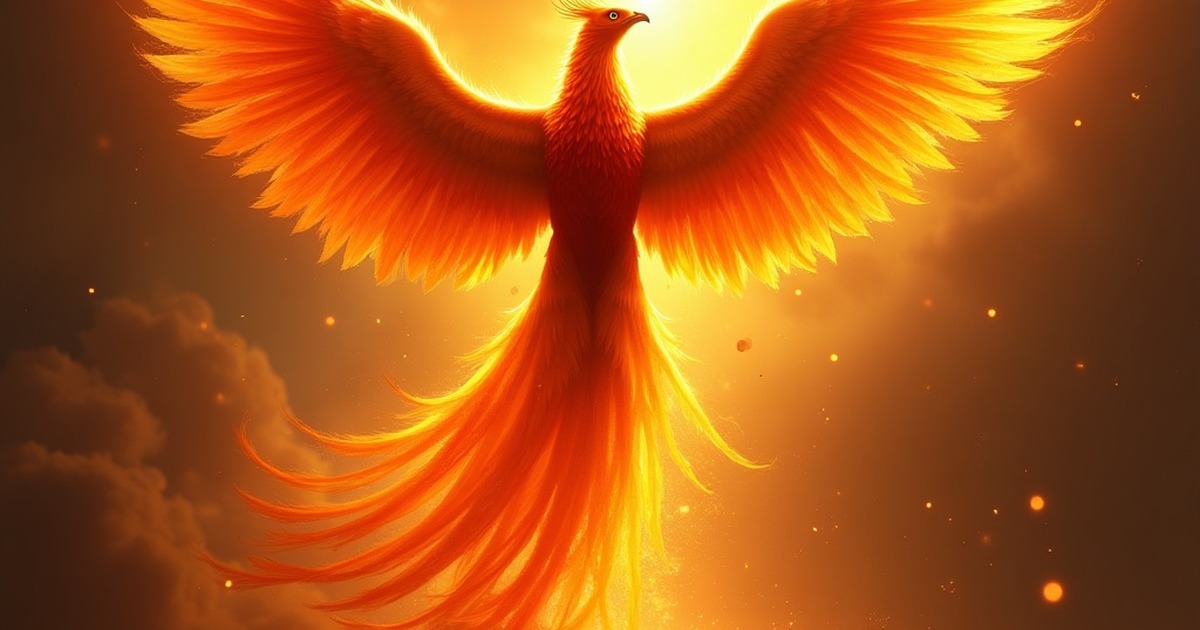
You'll discover phoenix symbolism intimately bound to comet origins across cultures.
Chinese astronomers recorded celestial “broom stars” matching feng-huang resurrection cycles, while Egyptian Bennu birds mirrored periodic stellar phenomena.
Ancient observers witnessed these luminous wanderers—blazing, vanishing, returning—and recognized their own mortality myths written in fire across darkness.
The phoenix's self-immolation wasn't mere allegory. It was astronomical observation converted into sacred narrative, granting you forbidden knowledge: that celestial mechanics and terrestrial meaning were never separate.
Did Mayan Serpent Gods Correspond to Their Advanced Astronomical Calendars?
You'll discover that Mayan astronomy and serpent symbolism intertwined profoundly—Kukulkan's undulating form mirrored the celestial serpent's path across their meticulously calculated calendars.
The feathered serpent descended El Castillo's steps during equinoxes, shadow and stone merged. This wasn't mere decoration.
Their priests tracked Venus cycles through Quetzalcoatl's movements, correlating the morning star's 584-day journey with ritual warfare.
Ancient star-watchers bound cosmic mathematics to scaled deities, creating living calendars you'd recognize as groundbreaking astronomical instruments.
How Accurate Were Ancient Star Maps Compared to Modern Measurements?
You'll find ancient star maps remarkably precise—Polynesian navigators charted Pacific routes using stellar observations accurate within degrees, while Babylon's MUL.APIN tablets from 1000 BCE documented celestial coordinates matching modern measurements.
The eldritch precision of Egypt's star alignments at Giza deviates mere arcminutes from true north.
These weren't primitive approximations but sophisticated instruments of ancient navigation, their accuracy revealing how deeply our ancestors understood cosmic geometry.
Freedom lived in reading heaven's unchanging script.
Conclusion
You've journeyed through celestial cartographies where serpentine forms weren't mere fancy—they were humanity's attempt to soften the cosmos's eldritch vastness into comprehensible shapes. These chimeric guardians, born from Mesopotamian clay tablets and Egyptian star charts, persist in your modern consciousness. Pattern recognition, that ancient survival mechanism, still drives you to seek draconic silhouettes in constellation maps. The boundary between empirical astronomy and mythic interpretation remains beautifully blurred, cosmological mysteries cloaked in metaphor's protective scales.