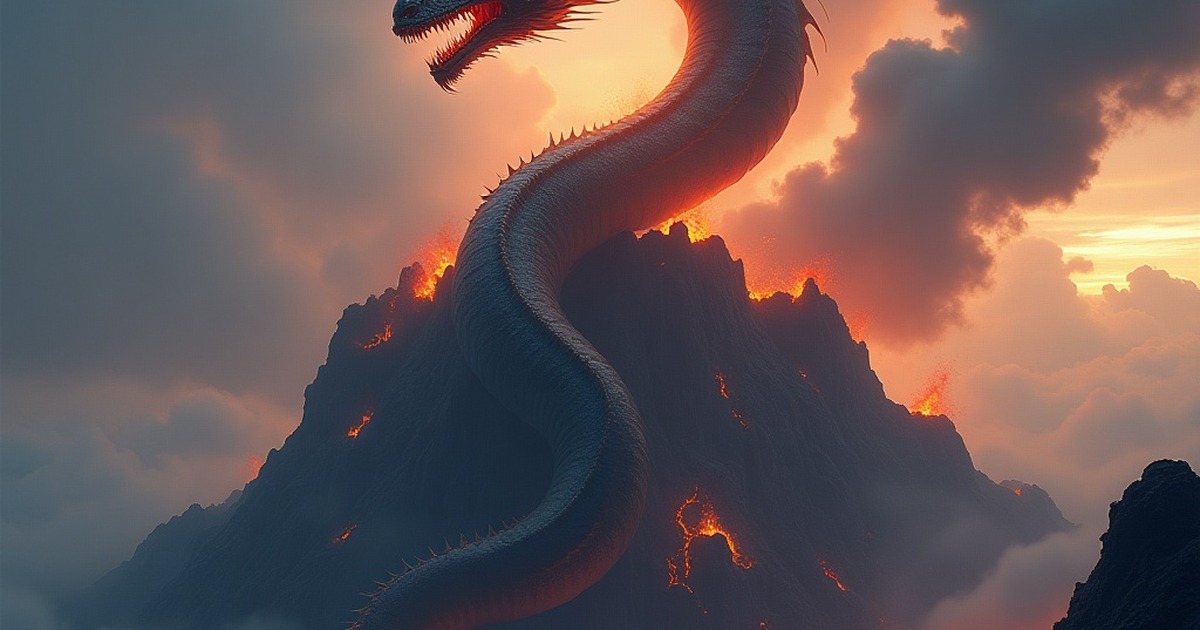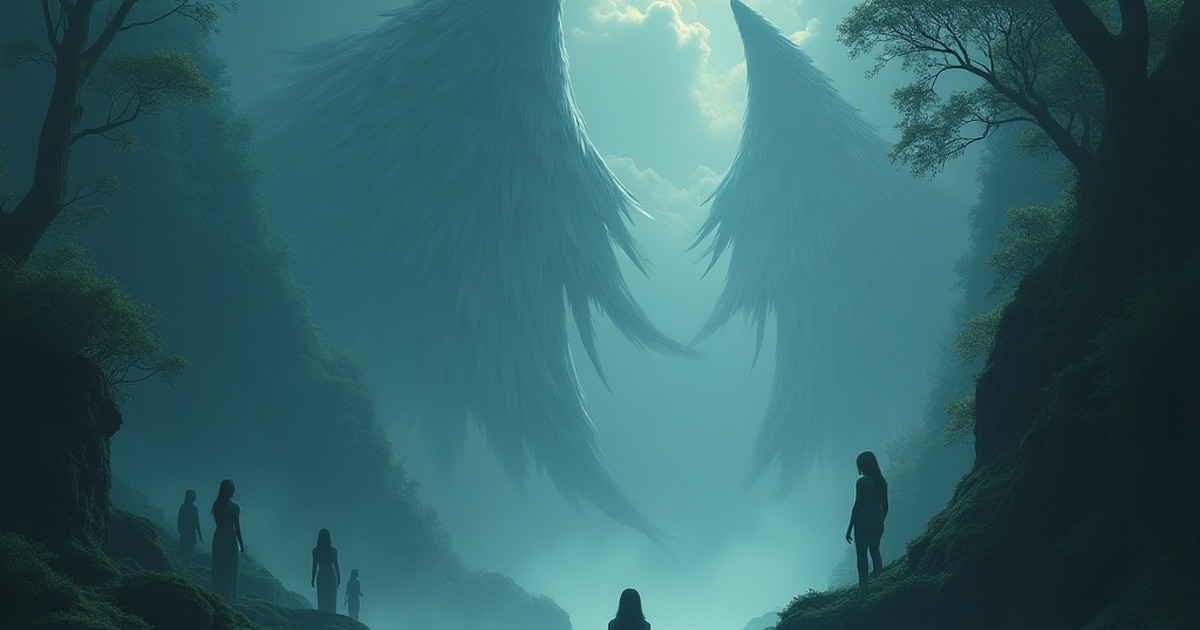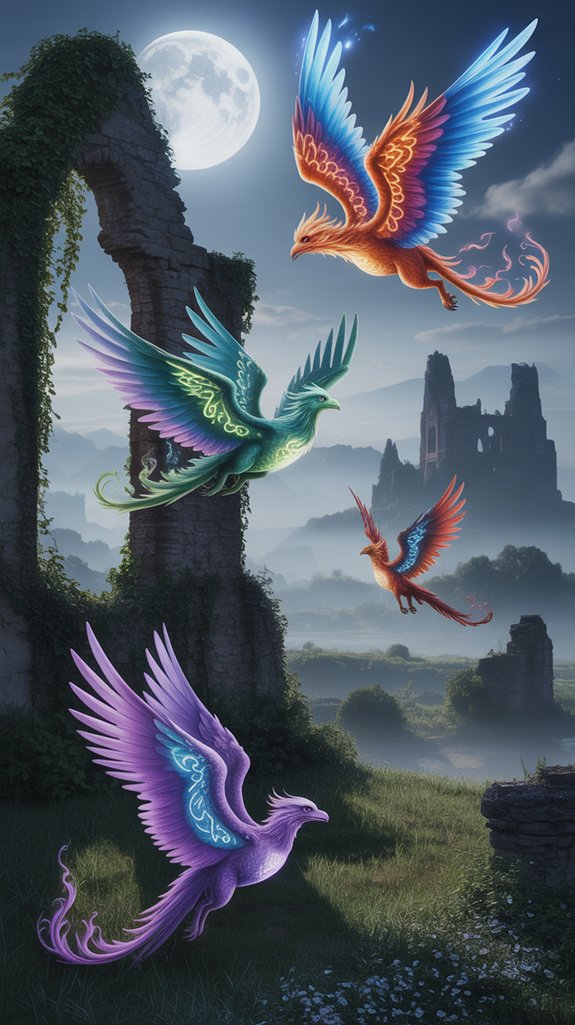
You've inherited a 30,000-year obsession—winged chimeras etched in Lascaux's depths reveal humanity's primordial hunger for transcendence. From Egyptian Horus (3000 BCE) to Norse Valkyries selecting honored dead, wings mark the vertical axis between earthbound mortality and celestial possibility. Your REM sleep still rehearses this liberation: neural pathways activating flight dreams that correlate with heightened creativity. Whether Icarus's hubris or Garuda's fierce protection, these feathered symbols excavate your deepest yearnings—and their mysteries extend far beyond these initial revelations.
Key Takeaways
- Wings symbolize humanity's ancient desire for transcendence, freedom, and escape from mortality across global mythologies and cultures.
- Winged creatures like Pegasus, Garuda, and Thunderbirds represent divine power, protection, transformation, and connection between earthly and celestial realms.
- Angels, Valkyries, and Hermes serve as divine messengers and guardians, navigating boundaries between mortal limitations and spiritual possibilities.
- The Icarus myth illustrates wings' duality: symbols of liberation and aspiration, yet warnings against hubris and overreaching mortal boundaries.
- Flight dreams and shamanic practices reveal wings as psychological metaphors for creativity, problem-solving, and spiritual elevation beyond physical constraints.
Wings: Humanity's Ancient Obsession

Since the first proto-humans lifted their eyes skyward and witnessed the flawless arc of birds through azure depths, wings have possessed humanity's collective imagination with an intensity bordering on the numinous.
You'll find this mythical aviation embedded within Egyptian papyri circa 3000 BCE, where falcon-winged Horus commanded celestial territories. The Greeks birthed Pegasus, that chimeric stallion whose pinions cleaved storm clouds. Pure transcendence.
Wings carved into ancient stone weren't decorative flourishes—they were humanity's first blueprints for escaping mortality's cage.
Winged symbolism permeates your ancestral consciousness—these appendages weren't mere biological curiosities but portals to eldritch dimensions beyond terrestrial constraint.
You see change codified in butterfly metamorphosis, that gossamer-winged embodiment of psyche's journey through death into resurrection. Ancient Mesopotamians carved lamassu guardians, bull-bodied sentinels whose feathered spans protected sacred thresholds.
This obsession persists because wings promise what you fundamentally crave: liberation from gravity's prison, communion with divine heights, change beyond current limitations.
Flight represents humanity's refusal to accept earthbound existence as final destiny. Every culture manifests this yearning through mythological creatures that embody their deepest fears and aspirations, transforming abstract longings into winged messengers between mortal and divine realms.
##
You'll discover that wings manifest across every ancient civilization—from the seraphim of Abrahamic tradition to the feathered serpent Quetzalcoatl—as humanity's most persistent symbol of transcendence. Their presence marks the threshold between terrestrial limitation and celestial possibility.
These appendages carry psychological weight beyond mere physical flight, representing your species' eternal yearning to escape mortality's constraints, to touch something numinous and otherworldly.
Whether examining the chimeric guardians of Mesopotamian palaces or the swan-maidens of Celtic lore, you'll find that winged beings consistently embody cultural anxieties about power, divine intervention, and the soul's metamorphosis across temporal and geographical boundaries. Scholarly resources like the Myth and Folklore Wiki continue to catalog these winged entities across diverse mythological traditions, from Greek and Norse to Egyptian and Asian mythologies.
Ancient Wings Across Cultures
Across the ancient world's sprawling civilizations, winged beings emerged as universal symbols of transcendence, their feathered or scaled appendages marking the liminal boundary between terrestrial existence and celestial spheres.
You'll discover Greece's Pegasus—that chimeric stallion carrying inspiration skyward. Norse Valkyries descended with eldritch purpose, selecting warriors destined for Valhalla's halls.
In Hindu cosmology, Garuda's raptor form served Vishnu as divine mount, embodying protection's fierce essence. Egyptian winged deities like Horus bridged mortal and immortal domains, their falcon-headed forms watching over pharaohs.
Native American Thunderbirds commanded storms themselves, their wingbeats splitting clouds. These mythical symbolisms weren't mere decoration—they represented humanity's yearning to transcend physical limitations, to touch something greater.
Each culture crafted its own winged messengers, yet all pointed toward identical truths: freedom, power, alteration.
Psychological Meaning of Flight
When consciousness surrenders to sleep's embrace, winged creatures emerge from the psyche's depths—not as mere phantasms, but as cartographers of your interior landscape.
These eldritch messengers illuminate your freedom aspirations, revealing constraints you've internalized, boundaries you've accepted as immutable. Flight transcends physical limitation.
Your subconscious architects chimeric forms—butterflies, phoenixes, dragons—each embodying change's imperative.
When you soar through dreamscapes, you're not escaping reality but confronting your creative potential, that raw creativity expression society often suppresses. The wings themselves become instruments of self-discovery, excavating buried desires from consciousness's sedimentary layers.
Neuroscientific research validates what ancient mystics intuited: frequent flight dreams correlate with improved problem-solving capabilities, groundbreaking thinking.
Your sleeping mind doesn't merely wander—it liberates, testing trajectories denied by waking life's gravitational pull. Wings grant passage through limitation's veil.
Divine Messengers and Guardians
Throughout humanity's mythological codex, winged entities materialize at civilization's thresholds—those tremulous boundaries where mortal comprehension confronts the numinous.
You'll discover messenger symbolism embodied in Hermes's talaria, those eldritch sandals carrying divine edicts between Olympian heights and earthbound suppliants. Angels manifest this function within Judeo-Christian cosmology, their luminous pinions signifying protection, purity, communication across celestial veils.
The guardian roles prove equally profound: Norse Valkyries descend upon gore-soaked battlefields, selecting fallen warriors for Valhalla's eternal feast—chimeric arbiters of honorable death.
Hindu tradition presents Garuda, that magnificent eagle-being serving as Vishnu's vehicle, his wingspan casting shadows that repel malevolent forces.
These winged intermediaries don't merely traverse physical space—they navigate ontological distances between human limitation and divine infinitude, guiding souls through metamorphosis's liminal passage.
Modern Interpretations of Wings
As cinema's flickering light first captured winged silhouettes in 1933's *King Kong*, modern storytellers inherited millennia-old symbology—yet they've transmuted these archetypal forms through technology's alchemical lens.
You'll witness how CGI breathes unprecedented life into dragons and angels, their chimeric bodies rendered with photorealistic musculature, each feather mathematically precise.
Fantasy symbolism persists: wings still signify your yearning for transcendence, freedom from earthly constraints.
Modern mythology reimagines Pegasus as creative liberation incarnate, while contemporary narratives position winged entities within moral ambiguities—neither wholly celestial nor infernal.
These digital manifestations preserve ancient wisdom: flight remains humanity's eldritch dream.
Through streaming platforms and theatrical spectacles, you're experiencing the same archetypal resonance that captivated Bronze Age observers gazing skyward, though mediated through silicon processors rather than firelit cave walls.
Cave Art and Early Carvings
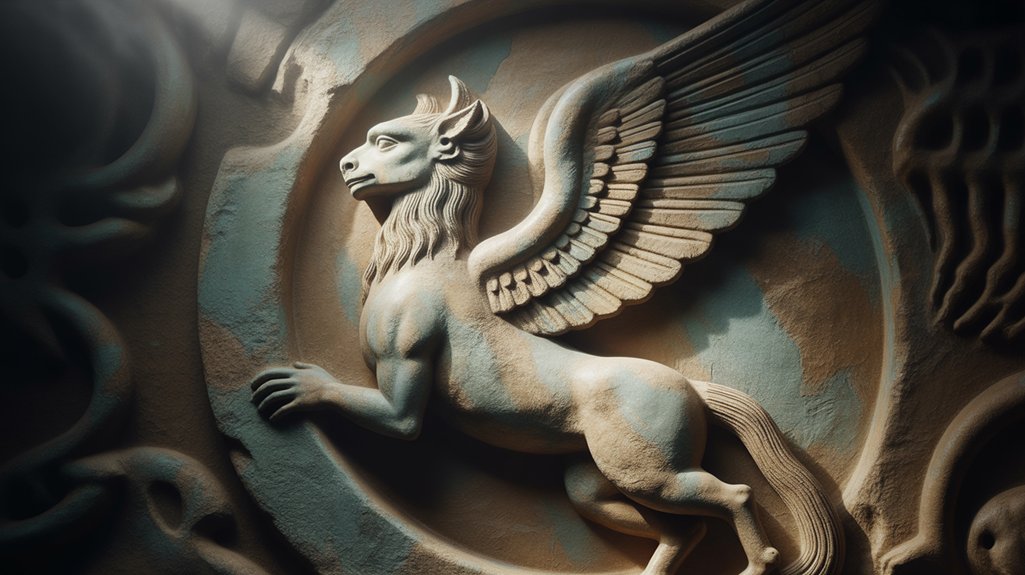
You'll find humanity's earliest attempts to capture the numinous power of flight etched into limestone galleries at Lascaux, where ochre-stained birds and chimeric winged forms hover across subterranean walls like frozen prayers.
These sacred spaces, scattered throughout Southwest France and Spain's cave systems, weren't mere galleries but liminal chambers where shamanic practitioners sought metamorphosis—their art documenting ecstatic journeys between earthly flesh and celestial domains.
The wings themselves served as hieroglyphs of transcendence, mapping the eldritch pathways through which ancient seers believed consciousness could slip free from corporeal bounds.
Lascaux Winged Figure Depictions
Deep within the subterranean galleries of Lascaux, where ochre and manganese oxide merge into images that've endured seventeen millennia, the so-called “Bird-Man” stands as humanity's earliest known attempt to render the chimeric fusion of earthbound flesh and celestial wing.
This eldritch figure embodies Lascaux symbolism at its most potent—a shamanic practitioner caught mid-transformation, limbs extending toward transcendence.
You're witnessing prehistoric shamanism frozen in pigment: the ritualist who'd commune with forces beyond terrestrial constraint, whose wings promised liberation from corporeal limits.
These vibrant poses weren't mere decoration. They mapped pathways to the divine, encoded freedom's oldest grammar.
Power. Metamorphosis. The eternal human hunger for ascension.
Here, in torchlit darkness, your ancestors first conceived wings as vehicles of spiritual autonomy, bridging mortal and infinite.
Southwest France and Spain
The shamanic visions preserved at Lascaux represent merely one node in a vast network of Paleolithic sanctuaries that sprawl across the limestone bedrock of Southwest France and Spain—a sacred geography where Homo sapiens first systematically encoded the language of wings. Between 36,000 and 15,000 years ago, your ancestors wielded ochre and manganese to inscribe chimeric forms across subterranean vaults.
| Site | Winged Imagery |
|---|---|
| Lascaux | Bird-headed shamanic figures |
| Altamira | Avian-featured entities |
| Les Trois-Frères | Composite beings with feathered appendages |
The prehistoric symbolism remains unmistakable: wings granted liberation from earthbound existence. These weren't mere galleries but ceremonial thresholds where ritual significance transcended decoration. The eldritch power of flight represented spiritual ascension, divine communion. Freedom itself, painted in earth's blood.
Shamanic Flight and Transformation
When consciousness ruptures from corporeal constraint, when the shaman's soul detaches from flesh and bone through rhythmic drumming, hallucinogenic compounds, or exhaustive dance—this is the moment wings first became necessary.
Within Lascaux's limestone chambers, circa 15,000 BCE, winged anthropomorphs soar across ochre-stained walls, documenting humanity's earliest shamanic practices. These aren't mere decorations. They're cartographies of spiritual journeys, maps etched by those who'd already flown.
Siberian petroglyphs reveal similar chimeric forms—human torsos sprouting feathered appendages, bodies suspended between terrestrial limitation and celestial possibility.
You're witnessing metamorphosis codified, the eldritch mechanics of soul-flight rendered permanent through pigment and percussion against stone. Wings became the visual lexicon for what words couldn't capture: that ecstatic rupture when shamans transcended flesh, ascending to domains where healing knowledge dwells, where ancestors whisper secrets the waking world forgot.
Geographic Spread Across Five Continents
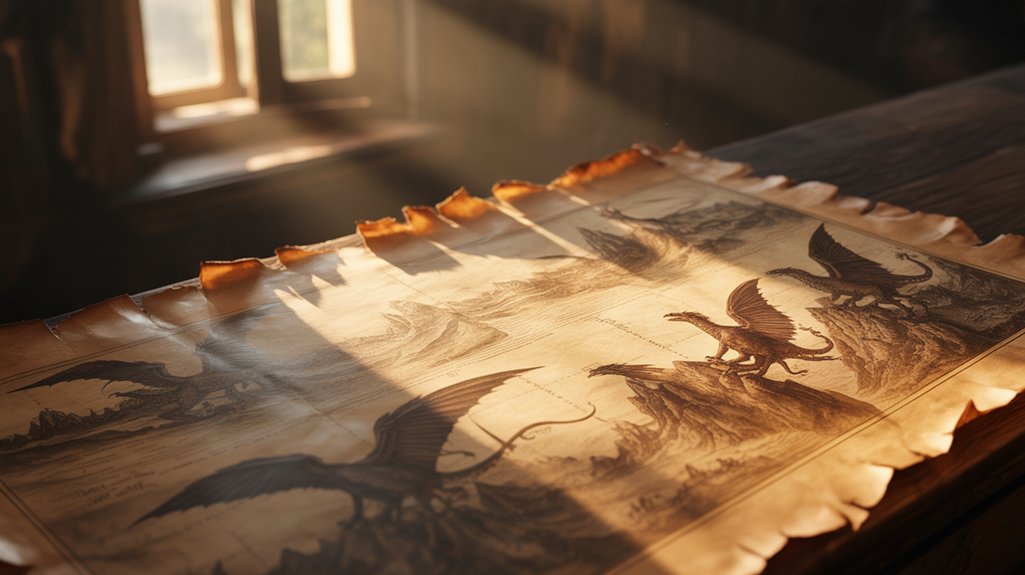
Across five continents, winged entities emerge from humanity's collective unconscious, each culture etching its unique understanding of transcendence into feathered, scaled, or eldritch forms that pierce the boundary between terrestrial existence and celestial domains. You'll discover Europe's Valkyries selecting warriors through death's veil, their wings bearing souls to Valhalla's golden halls. Asia presents Garuda—Vishnu's divine mount—whose chimeric form transcends earthly limitations through sheer celestial power. The Americas thunder with Native prophecies embodied in the Thunderbird, whose wings crack lightning across storm-dark skies.
| Continent | Mythical Creatures | Core Symbolism |
|---|---|---|
| Africa | Simurgh | Wisdom, interconnected existence |
| Oceania | Tūī (Maori) | Divine messages, spiritual communion |
Through avian symbolism, you witness humanity's universal yearning: liberation from gravity's chains, ascension beyond mortal constraints. Each winged being reflects cultural values—Norse honor, Hindu transcendence, indigenous protection—yet all share wings as freedom's ultimate metaphor.
Transcendence and Divine Connection
Beyond geography's boundaries lies a more profound mapping—wings mark the vertical axis of cosmic architecture, plotting pathways between mundane earth and transcendent spheres where divinity dwells.
You'll find this divine ascent manifested across traditions:
- Angels serve as eldritch messengers, their feathered appendages enabling spiritual elevation between human supplicants and celestial powers.
- Garuda, the chimeric eagle-deity of Hindu cosmology, bears Vishnu across dimensional thresholds, embodying sacred transportation.
- Valkyries navigate death's liminal boundary, their wings granting authority to select warriors worthy of Valhalla's halls.
- Icarus demonstrates forbidden ascent's peril—wax melting beneath solar heat, hubris punished through catastrophic descent.
These winged beings don't merely fly; they traverse ontological borders separating mortal from immortal domains.
Wings become visible metaphors for consciousness expanding beyond corporeal limitations, reaching toward numinous understanding.
Each culture encoded identical wisdom through distinct imagery: transcendence requires alteration. Flight itself becomes sacrament, physical manifestation of spiritual yearning for liberation from earthbound constraints.
Icarus and Daedalus Myth
You encounter in the Icarus myth perhaps mythology's most poignant meditation on wings as instruments of both liberation and doom, where Daedalus's ingenious construction—feathers bound with linen thread and beeswax—becomes the eldritch vehicle through which his son reaches for godhood itself.
The fateful flight from Cretan imprisonment alters these artificial pinions into symbols of hubris crystallized, their melting wax representing the precise threshold where mortal aspiration collides with cosmic boundary.
Within this ancient Hellenic narrative, crafted sometime between the eighth and seventh centuries BCE, you witness how wings paradoxically embody humanity's transcendent yearnings while simultaneously inscribing the immutable limits that separate the terrestrial from the divine.
The Fateful Flight Attempt
When Daedalus bound feather to feather with thread and fastened the assemblage with melted beeswax—constructing those fateful pinions in the labyrinthine chambers of King Minos's Cretan palace circa 1400 BCE—he couldn't have foreseen how profoundly his invention would crystallize humanity's most perilous aspirations.
You witness in Icarus the embodiment of flying ambitions untempered by wisdom. His father's warnings echoed through salt-laden air: maintain equilibrium between sea-spray and solar fire.
Yet the youth, intoxicated by unprecedented liberation, ascended beyond prudent boundaries. The sun's eldritch heat liquefied his waxen bonds; feathers scattered like autumn leaves across cerulean depths.
This becomes among history's most enduring cautionary tales—a chimeric reminder that freedom demands reverence. The Aegean waters still whisper his name, marking where unfettered desire met gravitational truth.
Wax Wings: Hubris Symbolized
Hubris—that particular species of arrogance the ancient Greeks termed *hybris*—finds its most crystalline representation in those wax-bound feathers fashioned by desperate hands.
You witness in Daedalus's creation both liberation's promise and mortality's inevitable claim. The craftsman's genius births wings from beeswax and feathers, yet this chimeric construction carries its own hubris warning: soar too high, and Apollo's chariot melts your ambition.
Icarus, drunk on freedom's eldritch intoxication, ignores his father's measured counsel. The ambition consequences manifest swiftly—wax liquefies, feathers scatter, flesh plummets.
Here lies mythology's perpetual instruction: your reach toward the infinite must acknowledge human boundaries. The Aegean receives another hubris-struck body while you inherit wisdom purchased through his fall, understanding that wings granted aren't wings earned through wisdom's patient cultivation.
Lessons in Mortal Limits
Mortality's instruction arrives not through Icarus's ascent but through his descent—that particular trajectory where ambition meets gravity's inexorable truth.
You'll find wisdom balance etched into every feather that spiraled downward, each fragment a demonstration to boundaries you're meant to acknowledge, not transcend recklessly.
Daedalus's construction—feathers bound by wax, an eldritch technology born of desperation—wasn't designed for solar proximity. Your mortal aspirations demand temperance, that chimeric blend of daring and restraint.
The Cretan sky witnessed what happens when you confuse capability with invincibility. Liberation requires understanding your limits aren't chains but frameworks.
The myth doesn't discourage flight; it demands you respect the medium through which you soar. True freedom exists within recognized boundaries, not beyond them.
Superheroes and Angelic Cinema
Although modern cinema emerged centuries after the ancient mythologies that first conceived winged beings, contemporary superhero narratives and angelic films perpetuate the archetypal symbolism of wings with striking fidelity to their primordial meanings.
You witness this cinematic symbolism manifesting through:
- Superman and Wonder Woman: Wings signifying transcendence beyond earthly constraints, embodying liberation and justice
- “City of Angels” and “The Crow”: Winged messengers bridging divine and mortal domains, channeling redemption
- “Birds of Prey”: Winged suits amplifying enabling narratives against oppression
- Angelic protectors: Reinforcing humanity's yearning for celestial guidance
These heroic narratives resurrect ancient wing-symbolism within eldritch visual metaphors. The chimeric fusion of superhuman prowess with avian imagery reflects your collective aspirations toward change, sacrifice, and purpose beyond mortality's confines.
Wings eternally symbolize humanity's defiant reach beyond mortal limits, fusing ancient mythic power with contemporary dreams of transcendence.
Modern filmmakers, whether consciously or through cultural osmosis, channel primordial understanding: wings represent freedom's ultimate expression. They signal your species' eternal struggle against limitation, your hunger for transcendence, your refusal to remain earthbound.
Neuroscience of Flight Dreams
When your consciousness descends into REM sleep's labyrinthine depths—that peculiar neurological threshold where motor cortex paralysis liberates the mind from corporeal constraints—the ancient dream of flight manifests through precise electrochemical cascades.
Your amygdala and prefrontal cortex ignite simultaneously, weaving chimeric narratives of soaring. These flight experiences aren't mere nocturnal hallucinations; they're neurological rebellions against earthbound existence, disclosing your psyche's yearning for emancipation from waking stressors.
Dream interpretation through contemporary neuroscience reveals fascinating correlations. Your brain's reward pathways pulse with activity during these aerial visions, flooding synapses with exhilaration.
Studies document that frequent flight dreamers demonstrate heightened creativity and problem-solving capacities—cognitive traits that transcend conventional boundaries. The eldritch sensation of weightlessness emerges from specific neural activation patterns, converting abstract freedom into visceral experience.
Your sleeping mind, unshackled from physical limitations, rehearses liberation itself, each winged journey mapping the territory between constraint and boundless possibility.
Virtual Reality Flight Simulations
The virtual domain's technological apotheosis now resurrects humanity's primordial flight aspirations through silicon and photon manipulation—VR flight simulations modify ancient yearning into programmable reality.
You don't merely observe chimeric beings soaring; you inhabit their eldritch essence, experiencing acceleration's visceral pull, turbulence's chaotic dance, altitude's euphoric ascension. Motion tracking alters your corporeal form into winged liberation, while haptic feedback channels the ancient tremors of Icarus, the thunderous power of Garuda's wings, the serpentine undulation of Quetzalcoatl's feathered flight.
Virtual reality dissolves the boundaries between mythic aspiration and empirical experience. Commercial airliners, fighter jets—each vessel becomes a modern interpretation of humanity's flight-obsessed ancestors who carved wings onto temple walls, inscribed aerial deities into sacred texts.
Aerodynamic principles mirror the instinctive wisdom embedded in phoenix legends, dragon lore. Flight simulation serves not as escape but as reclamation: your birthright to transcend terrestrial constraints, to master the freedom symbolized by every winged creature humanity has ever imagined.
Wings' Eternal Hold on Humanity
Beyond silicon's synthetic cosmos lies the profound question: why do wings maintain their gravitational pull on human consciousness across millennia, civilizations, technological epochs?
You're drawn to winged symbolism because it transcends mere aesthetic fascination, embodying your deepest yearning for liberation from terrestrial constraints. Angels, dragons, chimeric messengers—each culture manifests this same eldritch aspiration through feathered or scaled appendages that bridge mortal and divine domains.
The cultural significance persists. You see Icarus plummeting, ambition scorched by hubris, yet still you dream of flight. Wings remain humanity's most potent emblem of transcendence, their dual nature reflecting both ascension and peril.
These mythological guardians, protectors facilitating communication between worlds, mirror your own hunger for exploration beyond prescribed boundaries.
Art and literature perpetually resurrect this imagery. You can't escape wings' gravitational force because they represent freedom itself—that fundamental human drive toward spiritual elevation, adventure, wisdom.
They're your immortal inheritance, whispering ancient truths across time's vast expanse.
Frequently Asked Questions
What Are the Most Common Colors Associated With Wings in Mythology?
You'll find white dominates winged creature symbolism across cultures—representing divine purity in Judeo-Christian seraphim, Greek Pegasus, and Persian simurghs.
Gold signifies celestial authority; witness Ra's solar barque guardians.
Black wings, though misunderstood, carry profound mythical color significance: they're metamorphosis's herald in Celtic ravens, wisdom's mark on Odin's Huginn.
Red blazes through phoenix plumage, crimson embodying resurrection's eldritch power.
These chromatic choices aren't arbitrary—they're ancient humanity's visual language, encoding freedom's deepest yearnings within feathered forms.
How Do Different Cultures Interpret Feathered Versus Bat-Like Wings Symbolically?
You'll find feather symbolism slides into your DMs with divine purity—angels, Egyptian Ba-souls, Mesoamerican Quetzalcoatl embodying celestial transcendence, solar ascension.
Feathered wings whisper liberation through sanctified light.
Bat symbolism, conversely, dwells in eldritch shadow-realms: Chinese folklore reveres them as fortune-bearers, yet Western traditions branded them chimeric darkness, rebellion against heavenly order.
Mediterranean cultures saw bat-winged demons as liminal guardians between worlds.
These opposing interpretations reveal humanity's dual nature—you're eternally caught between aspiring toward illuminated freedom and embracing the nocturnal unknown.
Which Winged Creatures Appear in Multiple Mythologies Across Different Cultures?
You'll find dragons transcending boundaries—appearing in Chinese, Norse, Greek, and Mesopotamian dragon mythology as serpentine guardians of wisdom.
Angelic beings manifest across Zoroastrian, Judaic, Christian, and Islamic traditions, their luminous wings bridging mortal and divine domains.
The phoenix rises from Egyptian Bennu birds and Greek pyres alike.
Thunderbirds. Garuda spanning Hindu and Buddhist cosmologies.
These chimeric forms aren't coincidental—they're humanity's shared vocabulary for transcendence, each culture inscribing its yearning for liberation upon primordial wings.
Do Wings Always Symbolize Freedom or Do Some Represent Captivity?
You'd be barking up the wrong tree assuming wings always mean liberation. While you'll find freedom symbolism in creatures like Greek Psyche's butterfly wings, captivity interpretation emerges through beings like harpies—those eldritch tormentors chaining souls to Tartarus.
Consider the fallen angel motif: wings become prisons, marking your divine banishment. Icarus's wax feathers? They promised escape yet delivered doom.
Wings simultaneously represent your transcendence and your eternal reminder of boundaries you can't cross.
How Have Wing Symbols Evolved in Modern Corporate Logos and Branding?
You'll find corporate symbolism has altered ancient wing motifs into brand identity tools—yet something eldritch remains.
Modern companies utilize wings' primordial promise of transcendence, liberation from earthly constraints. Airlines, automotive giants, energy corporations all deploy these chimeric emblems, consciously tapping millennia-old archetypes.
They're selling you freedom's illusion, packaged in sleek vectors. The wing's metamorphosis from sacred icon to commercial asset reveals capitalism's hunger to commodify your deepest yearnings for escape, change, unbounded possibility.
Conclusion
You might dismiss these winged chimeras as mere escapist fantasy, yet their persistence across millennia reveals something deeper within your psyche. From Paleolithic caves to neurological studies, from eldritch Mesopotamian lamassu to contemporary VR simulations, you've traced humanity's unwavering obsession with flight. These symbols transcend mere decoration. They represent your species' eternal yearning for transcendence, that liminal space between earth and cosmos. Wings remain humanity's most enduring metaphor for metamorphosis itself.