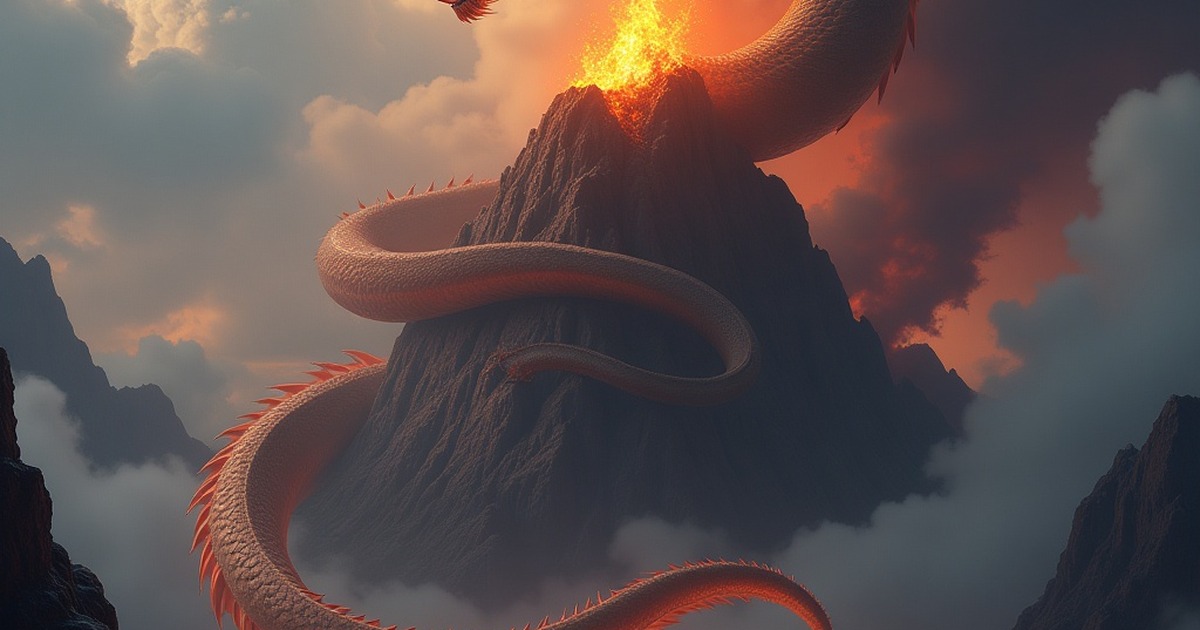
Volcanic eruptions spawned over 200 distinct deities across civilizations separated by oceans and millennia—from Hawaii's Pele embodying creation through destruction to Japan's guardian spirits sanctifying scorched earth. These parallel cosmologies altered pyroclastic fury into divine communication, with ancient rituals serving as negotiations acknowledging human vulnerability before the earth's chimeric temperament. Modern volcanology now validates these myths as sophisticated disaster records, revealing how oral traditions encoded essential environmental memory. The intersection of seismographic data and ancestral wisdom continues illuminating humanity's oldest sacred narratives.
Key Takeaways
- Ancient civilizations worldwide personified volcanoes as living deities like Pele, Pillan, and Inti, explaining eruptions through divine temperament.
- Volcanic myths encoded environmental memory and survival knowledge, preserving ancestral understanding of geological patterns across generations.
- Rituals involving offerings and prayers served as negotiations with volcanic spirits, maintaining equilibrium between human communities and earth's forces.
- Eruption legends depicted mountains as sentient guardians, with destruction interpreted as divine communication responding to human transgressions.
- Modern volcanology validates ancient narratives as sophisticated disaster records, while indigenous communities preserve sacred frameworks alongside scientific monitoring.
Ancient Fire Deities Across Continents
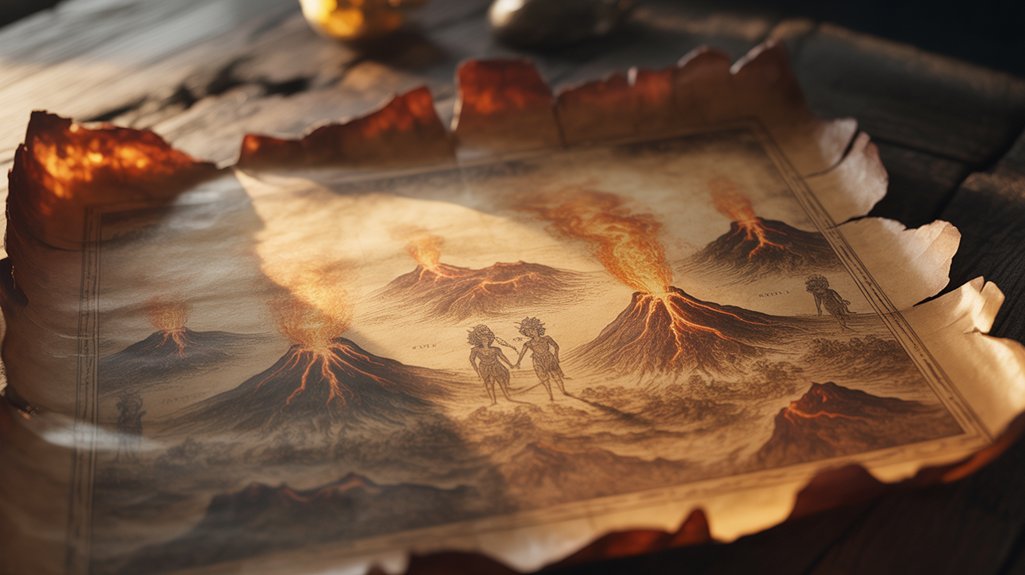
Across the volcanic belts encircling ancient continents, civilizations separated by vast oceans developed strikingly parallel cosmologies—each interpreting the earth's molten fury through deities whose temperaments mirrored the capricious nature of fire itself.
Hawaii's Pele commanded reverence as destroyer and creator, her volcanic breath forging islands from submarine darkness. The Inca raised Inti, whose solar essence penetrated deep into Andean geology, binding fire symbolism to agricultural cycles and mountain tremors. Japan's guardian spirits changed devastation into renewal, their eldritch presence sanctifying scorched earth. Native American fire spirits inhabited peaks as chimeric intermediaries between mortal and mineral domains.
These weren't mere superstitions. They were sophisticated frameworks acknowledging humanity's vulnerable position before geological forces beyond control—volcanic rituals emerging as necessary negotiations with powers that granted both fertility and annihilation.
Ancient volcanic rituals were sophisticated negotiations with geological forces, acknowledging humanity's fragile position before powers granting both creation and destruction.
Ancient peoples understood what modern civilization often forgets: mountains breathe, earth bleeds fire, and reverence remains humanity's wisest response.
##
Across disparate continents and millennia, humanity has recognized volcanic peaks as corporeal manifestations of sacred fire spirits—entities neither wholly benevolent nor malevolent, but rather chimeric forces dwelling in that eldritch threshold between creation and annihilation.
Indigenous peoples from Hawai'i's Pele worship to the Andean reverence for Mama Qota have encoded profound geological truths within their deity systems, understanding what modern science only recently confirmed: mountains breathe, bleed molten stone, and reshape themselves according to rhythms that transcend human temporality.
These eruption legends aren't primitive explanations for natural phenomena but rather sophisticated theological frameworks acknowledging volcanoes as living beings—conscious, temperamental, and fundamentally intertwined with the survival and alteration of the communities dwelling upon their slopes.
Like the Wendigo of Algonquin tradition or the Qalupalik of Inuit folklore, volcano spirits serve as mythological creatures symbolizing humanity's deepest fears—in this case, the awesome power of earth's molten interior and the fragility of civilizations built upon unstable ground.
Sacred Fire Spirits Worldwide
Throughout millennia, humanity's earliest civilizations recognized within volcanic mountains the dwelling places of numinous beings—entities that commanded fire, earth, and the volatile energies emanating from the planet's molten core.
Hawaii's Pele emerges as creation's architect and annihilation's harbinger, her sacred fire consuming and birthing landscapes simultaneously. The Mapuche's Pillan transcend mere spirits; they're ancestral kin dwelling within geological wombs, demanding negotiation rather than subjugation.
Volcanic rituals across continents reveal patterns: offerings appease, prayers acknowledge sovereignty, ceremonies maintain equilibrium between terrestrial and eldritch domains. These aren't primitive superstitions but sophisticated cosmologies recognizing Earth's chimeric nature—beautiful yet catastrophic, nurturing yet devastating.
Fire spirits function as guardians, adjudicators of cosmic justice, their temperaments mirroring magma's unpredictability. Indigenous communities understood what modernity often forgets: mountains breathe, remember, judge.
Indigenous Volcano Deity Beliefs
When volcanic peaks pierce cloud-wreathed horizons, Indigenous cosmologies recognize them not as inert geological formations but as animate presences—deities whose temperaments dictate survival, prosperity, and catastrophe.
The Mapuche venerate Pillan, volcanic spirits embodying ancestral connections through eruptions that carry generational memory. Hawaii's Pele commands fire and lava, her divine family encompassing thunder, rain, and oceanic forces.
These aren't metaphorical constructs. They're living relationships demanding reciprocity through offerings and ritual observance. Eruptions speak—answering human transgressions, forgotten ceremonies, abandoned traditions.
Communities interpret geological violence through spiritual frameworks where magma becomes divine communication. This worldview fosters profound ecological responsibility, binding people to territories through sacred obligation rather than extractive ownership.
The eldritch power of volcanic spirits alters mountains into liminal sanctuaries where ancestral wisdom persists, demanding remembrance, respect, and perpetual engagement with forces that shaped both landscape and cultural identity across millennia. These volcano deities function as supernatural beings that explain natural phenomena while preserving cultural traditions through generations of oral storytelling.
Eruption Legends and Folklore
The volcanic narratives of the Pacific Northwest crystallize this spiritual geology into specific origin accounts, battlefield cosmologies, and cautionary chronicles that encode both environmental memory and cultural instruction.
Eruptive narratives alter mountains into sentient mountain guardians—Mount St. Helens and Mount Rainier embody eldritch forces capable of annihilation. The Klamath recount how Skell and Llao waged chimeric warfare, their supernatural combat triggering Mount Mazama's catastrophic collapse around 5677 BCE, birthing Crater Lake from devastation.
Mount Baker threatens landslides and conflagration when provoked. Mount Hood harbors vengeful spirits in oral traditions that function as survival imperatives.
Ethnologists recorded giant encounters throughout these territories, suggesting these beings represent geological memory—ancient eruptions personified through folkloric interpretation. Each legend serves dual purpose: honoring mountain sovereignty while preserving ancestral knowledge of volcanic temperament.
Mountains as Living Beings
Geological formations transcend mere minerological composition when indigenous cosmologies recognize them as ossified titans, their stone flesh preserving ancient consciousness within sedimentary memory.
Mountain spirits inhabit peaks perceived as ribcages, shoulders, vertebrae—anatomical remnants of primordial beings whose petrifaction created the world's topography.
These geological guardians maintain vigilant presence, their watchful essence palpable to communities dwelling beneath volcanic slopes.
When lava breaches caldera walls, it manifests not as random geothermal activity but as deliberate communication—rage, sorrow, warning encoded in pyroclastic flows.
The eldritch relationship demands reciprocity: offerings placed at fumaroles, ceremonies conducted at dawn when mist obscures chimeric boundaries between stone and spirit.
Tribes understand what modern geology dismisses—these sentient mountains remember their giant origins, their consciousness permeating basalt and obsidian, demanding humans honor ancestral contracts inscribed in the landscape itself.
Mesopotamian Clay Tablets, 3000 BCE

The cuneiform-inscribed tablets of ancient Sumer preserve eldritch testimonies of fire-gods whose volcanic temperaments threatened the fragile networks connecting Uruk, Ur, and Lagash—city-states that etched their terror into wet clay with reed styluses.
Within the Epic of Gilgamesh itself, scholars discern oblique references to mountain-dwelling deities whose furnace-breath could alter prosperous trade corridors into ash-choked wastelands, forcing merchants to abandon caravan routes that once carried lapis lazuli and obsidian across the Fertile Crescent.
These third-millennium records reveal how Mesopotamian scribes understood eruptions not as geological events but as deliberate acts of divine wrath, capable of severing the economic arteries upon which their civilization depended.
Gilgamesh Epic Mentions Fire-Gods
Within the fragmentary cuneiform inscriptions etched upon Mesopotamian clay tablets circa 3000 BCE, the Epic of Gilgamesh preserves humanity's earliest written testimony of divine fire-beings—entities whose essence merged the eldritch terror of volcanic fury with the sacred power of creation itself.
Gilgamesh's fire gods embodied chimeric duality: they forged worlds, yet released divine destruction without mercy. The hero-king's immortality quest forced confrontation with these elemental deities, whose dominion over flame revealed the inextricable bond between mortal destiny and supernatural will.
Ancient Mesopotamians witnessed in volcanic phenomena the tangible evidence of divine judgment—mountains that breathed, stone that bled fire, ash that darkened heavens. These accounts weren't mere mythology; they represented sophisticated theological frameworks explaining catastrophic geological events.
The tablets chronicle how Gilgamesh recognized fire's sacred ambivalence: life-giver and annihilator, tool and tyrant, blessing and curse intertwined.
Sumerian City-States' Volcanic Fears
Across the alluvial plains where Tigris and Euphrates carved civilization from primordial mud, Sumerian scribes pressed reed styluses into wet clay, immortalizing their communities' profound terror of mountains that consumed themselves in flame. These clay tablet inscriptions revealed eldritch narratives—fire chaos personified as wrathful deities demanding propitiation.
| Divine Manifestation | Associated Element | Ritual Response |
|---|---|---|
| Girra (Fire Incarnate) | Molten stone, ash clouds | Blood offerings, grain sacrifice |
| Nergal (Subterranean Fury) | Sulfurous vapors | Temple processions |
| Chimeric mountain-spirits | Trembling earth | Incantation tablets buried at city gates |
| Nameless destroyers | Pyroclastic devastation | Communal fasting, ritual purification |
Sumerian mythology converted geological violence into comprehensible theology. Volcanic rituals became societal architecture. Agricultural adaptation emerged from apocalyptic dread. Survival demanded understanding—even reverence—for mountains breathing destruction.
Trade Routes Disrupted by Eruptions
When caravans laden with lapis lazuli and cedar timber approached the mountain passes connecting Sumerian territories to Anatolian highlands, merchants couldn't predict whether sulfurous haze would alter familiar pathways into impassable wastelands.
Clay tablets from 3000 BCE preserve stark testimony: volcanic eruptions forced immediate trade route adaptations, reshaping commerce into chimeric gambles against earth's fury.
Settlements relocated. Crops withered beneath ash-darkened skies. Yet Mesopotamian economic resilience emerged through necessity—traders mapped alternative passages, establishing networks that honored both profit and survival.
These inscribed records reveal more than disrupted commerce; they document humanity's dance with eldritch geological forces, where mountains breathing fire demanded constant negotiation between ambition and wisdom.
Ancient merchants understood what modern societies forget: freedom requires adaptation when nature speaks.
Pacific Rim Vs Mediterranean Beliefs
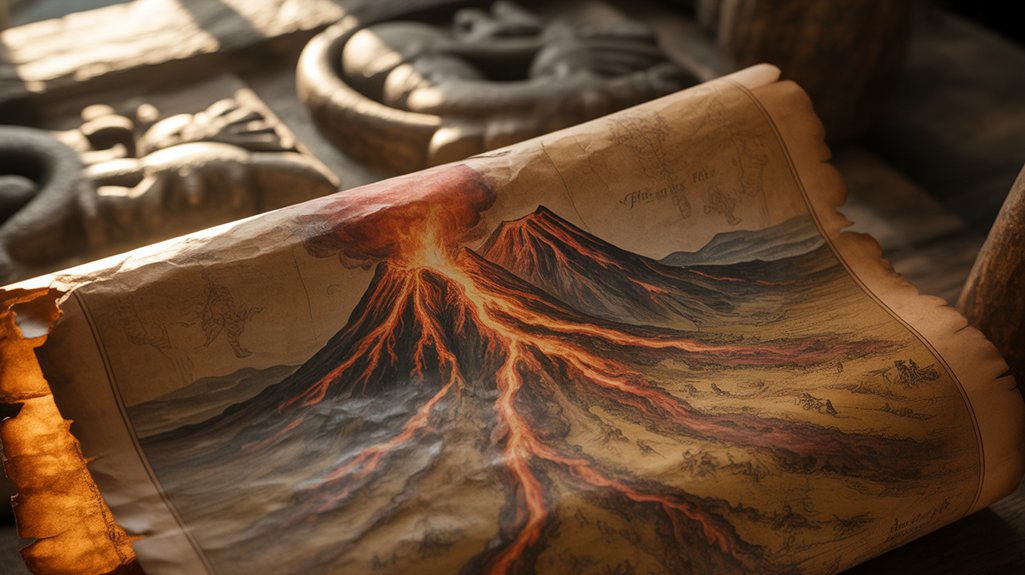
Though separated by the vast expanse of the Pacific Ocean, the volcanic mythologies of the Ring of Fire and the Mediterranean basin reveal fundamentally divergent cosmologies—one rooted in kinship and ancestral communion, the other in hierarchical divine dominion.
Pacific Rim cultures embrace volcanic reverence through familial bonds. The Mapuche recognize Pillan as ancestral spirits dwelling within volcanic hearts, demanding respect rather than subjugation. Klamath legends preserve Mount Mazama's eldritch alteration into Crater Lake, embedding catastrophe within genealogical memory.
Mediterranean traditions invoke anthropomorphic deities—Vulcan commanding fire's chimeric essence beneath Roman consciousness, Mount Etna housing giants in divine retribution narratives. These represent power structures, not relatives.
| Aspect | Pacific Rim | Mediterranean |
|---|---|---|
| Volcanic Entity | Ancestral spirit (Pillan) | Divine ruler (Vulcan) |
| Relationship | Kinship, appeasement | Fear, worship |
| Narrative Focus | Land's living history | Heroic divine drama |
| Cultural Perception | Respected relative | Powerful domain |
One worldview seeks liberation through honoring volcanic ancestors. The other bends before hierarchical celestial authority.
Sacred Fire as Divine Anger
Beyond these divergent cosmological frameworks lies a more primal interpretation—volcanic fire as the universe's reprimand made manifest. Divine retribution flows through molten channels, altering mountains into instruments of celestial judgment. Indigenous traditions worldwide recognize this eldritch power, where neglected rituals and broken covenants provoke catastrophic response.
Hawaiian mythology crystallizes this volcanic symbolism through Pele, whose chimeric nature encompasses both annihilation and genesis. Her eruptions speak a language older than words—pure emotional discharge rendered in lava and ash.
The relationship demands constant negotiation:
- Ritualistic acknowledgment prevents accumulated divine wrath
- Respectful offerings maintain precarious equilibrium with mountain spirits
- Transgression against sacred lands triggers immediate volcanic response
- Reciprocity between humans and fire deities guarantees communal survival
This isn't mere superstition. It's recognition of humanity's subordinate position within nature's hierarchy. Sacred fire doesn't negotiate—it commands. Respect becomes survival. The mountain remembers every slight, every abandoned ceremony. When it breathes, civilizations listen.
Pele's Revenge on Hawaii
Born from the churning chaos of primordial magma, Pele's essence embodies both creation's promise and destruction's eldritch certainty—her volcanic sovereignty over Hawaii's landscape demanding absolute reverence from those who traverse her sacred domain.
When mortals transgress upon kapu lands or pilfer her volcanic offerings, whether through ignorance or hubris, the goddess's retribution manifests in crimson torrents of molten stone that reshape coastlines and consume villages.
Contemporary volcanologists note eerie correlations between documented cultural violations and subsequent eruptions at Kīlauea, suggesting that ancient warnings persist as geological truth, their prophetic resonance undiminished across centuries.
Pele's Fiery Origin Story
When Pele fled Tahiti's shores around the 13th century—her exodus marked by familial strife and supernatural fury—she carried within her breast the eldritch flames that would reshape the Hawaiian archipelago's volcanic spine.
Pele's journey northward wasn't mere migration but cosmic necessity, driven by Namaka's relentless oceanic wrath. Each island where she attempted sanctuary became battleground. Volcanic battles erupted as Namaka's waters pursued the fire goddess, extinguishing her subterranean hearths one by one.
From Kauai through Oahu, Molokai, and Maui, Pele dug sacred fire pits—only to flee again. Finally, at Kilauea on Hawaii Island, she discovered magma chambers too deep for Namaka's reach.
There, her chimeric essence fused permanently with stone and lava, establishing sovereignty. Her volcanic throne remains active today, breathing fire across black basalt fields.
Sacred Land Violations
Though Pele granted sovereignty over her volcanic domain through millennia of fiery guardianship, the twentieth century witnessed unprecedented desecrations—bulldozers carving through sacred ahu, resort complexes sprawling across ancient heiau grounds, geothermal drills puncturing her molten veins.
Native Hawaiians perceive these violations as tangible affronts to a living deity, each illegal construction and deforested slope intensifying her eldritch fury. The goddess responds. Lava flows consume developments with chimeric precision, selecting targets that echo patterns of disrespect.
Historical eruptions align disturbingly with cultural transgressions, suggesting something beyond geological coincidence. Traditional practitioners maintain offerings and rituals, desperate attempts at restoring balance between sacred land and modern exploitation.
Cultural respect becomes survival imperative. When harmony fractures, mountains breathe retribution—molten blood reclaiming what developers presumed conquered, reminding humanity that sovereignty here belongs eternally to fire.
Modern Eruption Warnings
As seismographs register tremors beneath Kilauea's fractured caldera, Hawaiian communities don't merely consult geological bulletins—they read Pele's mood through trembling earth.
Modern monitoring systems track magma chambers with precision instruments, yet locals understand these measurements as translations of the goddess's eldritch temperament.
Eruption preparedness protocols merge scientific data with ancestral wisdom—evacuation routes follow ancient pathways, emergency shelters honor kapu boundaries.
When volcanologists detect rising sulfur dioxide levels and ground deformation, elders simultaneously interpret increased volcanic activity as spiritual unrest requiring ho'okupu offerings.
This chimeric approach to disaster management acknowledges dual realities: infrared satellites map thermal anomalies while ti leaf bundles appease divine fury.
The synthesis proves effective—respecting both empirical measurement and cosmological tradition creates resilient communities steering through their volatile landscape.
Volcano Gods in Cinema
Cinema's luminous screen has become an unexpected temple where volcano gods persist, their eldritch presence flickering through digital flames and molten CGI landscapes that honor—yet modify—ancient cosmologies.
These cinematic portrayals convert volcano symbolism into visceral spectacle, bridging mythic reverence with modern storytelling.
Contemporary films manifest these deities through distinct approaches:
- Te Kā in “Moana” embodies volcanic destruction as converting goddess-force, her molten form channeling Polynesian cosmological understanding.
- “Dante's Peak” personifies the volcano itself as sentient threat, modern humanity confronting nature's inscrutable will.
- “The Last Volcano” excavates cultural memory, documenting how communities interpret eruptive violence through ancestral narrative frameworks.
- “Ponyo” weaves geological phenomenon with goddess mythology, revealing Japan's chimeric blending of natural disaster and spiritual resonance.
Documentaries extend this sacred cinematic portrayal further, incorporating indigenous testimony and legend.
These volcanic narratives don't merely entertain—they preserve, transmute, and democratize ancient wisdom for audiences seeking connection beyond rational materialism.
Liberation through understanding nature's terrible beauty.
Modern Volcanology Explains Ancient Myths
Scientific inquiry now illuminates what ancient peoples understood through metaphor and sacred narrative—volcanic phenomena that once demanded spiritual explanation yield to tectonic mechanics, magmatic chemistry, and geophysical measurement.
Geomythology reveals profound geological connections between eruption chronicles and oral traditions, demonstrating how cultures encoded catastrophic events within their cosmologies. Those eldritch ash clouds darkening midday skies, those rivers of incandescent stone remaking coastlines—these weren't chimeric visions but tangible disasters requiring explanation.
Ancient observers possessed neither seismographs nor plate tectonic theory, yet their volcanic mythology captured essential truths: mountains could awaken, earth could split, fire could pour from stone. Modern volcanology validates these narratives as sophisticated disaster records rather than primitive superstition.
The spirits weren't metaphysical delusions but compelling frameworks for comprehending subduction zones, magma chambers, pyroclastic flows. Communities witnessing such changes naturally attributed agency to forces beyond human scale. Their myths became cautionary wisdom, survival knowledge encoded in sacred story—scientific observation wrapped in numinous language.
Cultural Heritage Preservation Efforts
While modern volcanology decodes the mechanics of eruption, indigenous communities wage a different battle—preserving the sacred frameworks through which their ancestors understood these fire-mountains as kin, as teachers, as Pillan.
These powerful spirits, dwelling in volcanic throats, embody ancestral memories crystallized in stone and flame. Mapuche communities maintain this eldritch covenant through cultural rituals—songs that harmonize human breath with volcanic exhalation, ceremonies timed to celestial rhythms that once prevented catastrophe.
Yet mining operations and infrastructure projects carve through sacred geographies, severing bonds that sustained equilibrium for millennia. The Pillan grow restless, their grievances manifest in tremors and ash-falls.
Resistance takes form through documentation: GPS-mapped cairns recording chimeric pathways between worlds, ceremonial calendars integrated into hazard protocols. These aren't nostalgic gestures but pragmatic acts of environmental stewardship rooted in profound geological intimacy.
Memory becomes medicine. Each revived narrative repairs fractured relationships between communities and their volcanic kin, acknowledging that survival demands respecting protocols forged in fire.
Reconciling Science and Mythology
When ash-laden plumes meet seismographic needles, two epistemologies converge—not as adversaries but as complementary languages describing the same catastrophic sublime. The Mapuche's Pillan, dwelling within Andean calderas, doesn't contradict magma chamber activity—it contextualizes them within ancestral memory, altering geological phenomena into relational ontology.
Ethnologists documenting eruption chronologies discover mythical narratives encoding precise environmental sequences: pyroclastic flows become dragon's breath, lahars change into giant's tears. These aren't primitive misunderstandings but sophisticated frameworks interpreting seismic volatility through cultural continuity.
When indigenous communities integrate volcano spirits into risk management protocols, they're reconciling eldritch forces with contemporary vulcanology. Mount St. Helens' eruption wasn't merely tectonic—it vindicated Cowlitz legends generations dismissed as chimeric folklore.
Ancient warnings encoded as spirit-lore became validated prophecy when the mountain erupted, dissolving centuries of epistemic dismissal.
Science measures magma viscosity; mythology measures human relationship with catastrophe. Both archives preserve truth. The convergence offers liberation from false binaries, revealing how societies encode geological literacy within sacred narratives, creating resilient worldviews where mountains breathe fire and ancestors speak through trembling earth.
Frequently Asked Questions
What Specific Rituals Did Ancient Cultures Perform to Appease Volcano Spirits?
Ancient cultures enacted elaborate fire offerings and earth sacrifices to placate volcanic deities dwelling in eldritch depths.
Hawaiian kahunas cast pork, fish, and sacred ‘ohelo berries into Halema'uma'u crater for Pele's favor.
Javanese communities delivered livestock, flowers, and rice to Mount Bromo's smoking maw during Yadnya Kasada ceremonies—traditions persisting since the fifteenth-century Majapahit era.
Mesoamerican priests conducted bloodletting rites atop smoldering peaks, believing volcanic tremors signaled divine hunger demanding immediate propitiation through sacrificial sustenance.
Are There Any Active Volcano Worship Practices Still Happening Today?
Over 300 million people worldwide still inhabit volcanic regions where ancient reverence persists.
Modern rituals endure across Indonesia's archipelago, where communities offer elaborate ceremonies to Nyai Loro Kidul, the eldritch queen of Java's Merapi.
Hawaiian practitioners maintain sacred protocols at Kilauea, honoring Pele through oli chants and ceremonial ho'okupu.
These practices retain profound cultural significance, unbound by colonial disruption—living traditions that acknowledge the chimeric nature of mountains that breathe both creation and annihilation, demanding respect rather than conquest.
How Did Volcano Myths Influence Ancient Settlement Patterns and Migration Routes?
Volcanic myths profoundly shaped ancient settlement patterns and migration routes through sacred prohibitions and eldritch warnings.
Communities established boundaries around peaks deemed inhabited by primordial deities, creating buffer zones that paradoxically saved lives.
The Polynesian navigator-priests charted migration routes across the Pacific by reading volcanic smoke as divine signposts, while Andean peoples interpreted eruptions as celestial mandates to relocate.
These chimeric beliefs weren't superstition—they encoded geological wisdom into cultural DNA, ensuring survival through reverence.
What Archaeological Evidence Exists of Volcano Deity Temples and Shrines?
Ancient volcano architecture reveals humanity's primal covenant with fire—stone temples rise beside molten calderas while humble shrines cling to ash-laden slopes.
Archaeological excavations at Pompeii's Temple of Jupiter, Mount Fuji's sengen-jinja sanctuaries, and Hawaii's heiau platforms expose deity offerings: obsidian blades, jade figurines, sacrificial remains.
These eldritch structures, dating from 3000 BCE onward, demonstrate how communities embraced volcanic landscapes rather than fled them, converting geological terror into sacred communion through architectural devotion.
Did Different Cultures Independently Develop Similar Volcano Spirit Myths or Share Them?
Both cultural exchange and independent genesis shaped volcano mythologies across continents.
Myth similarities—fire deities demanding appeasement, mountain spirits birthing land—emerged spontaneously where volcanic landscapes dominated.
Yet Polynesian navigators carried Pele's flames across Pacific waters. Trade routes threaded Indonesian and Philippine eruption tales together.
The eldritch truth? Parallel human psychology confronting apocalyptic fire births identical archetypes, while maritime peoples, unbound by geography, wove their thunderous cosmologies into shared tapestries of smoke and sacred terror.
Conclusion
The chthonic fire that haunts seventy-eight percent of the Pacific Ring's active volcanoes continues to inspire reverence, fear, metamorphosis. These eldritch peaks—Vesuvius, Krakatoa, Kilauea—remain liminal thresholds where empirical science encounters ancestral wisdom. While seismographs measure magmatic tremors, indigenous cosmologies preserve deeper truths: mountains do breathe, gods do rage, and humanity's relationship with geological fury transcends mere data. The mythic and the measurable coexist, neither diminishing the other's profound reality within our collective consciousness.