Beneath the moonlit waves, a siren’s haunting song lures sailors to their doom, echoing through time and across cultures. What drives civilizations to conjure these enchanting yet perilous beings? When you compare the Greek sirens to Mesopotamian fish-gods, it’s clear that mermaids embody our deepest fears and desires about the sea's hidden depths. They reflect society's views on femininity, danger, and the untamed waters that both nourish and threaten us. It gets darker. As we explore these aquatic myths, we uncover not just stories of seduction, but the complex relationship humanity has with the ocean’s vast mysteries.
Key Takeaways
- Explore the story of Oannes to understand ancient wisdom — it highlights how early civilizations viewed the interplay of knowledge and nature.
- Integrate Asian mermaid tales like Ningyo into cultural studies — they emphasize respect for ocean resources and the importance of conserving marine environments.
- Study Mami Wata's duality to grasp humanity's complex relationship with water — it reveals insights into nurturing and destructive forces in nature.
- Learn from Sedna and Iara's narratives to promote sustainable marine practices — these stories encourage ethical treatment of the ocean and its inhabitants.
- Recognize the duality of mermaids as both alluring and perilous — this reflection can help address modern fears surrounding the unknown and environmental challenges.
Mesopotamian and Greek Origins: Where Mermaid Myths Began
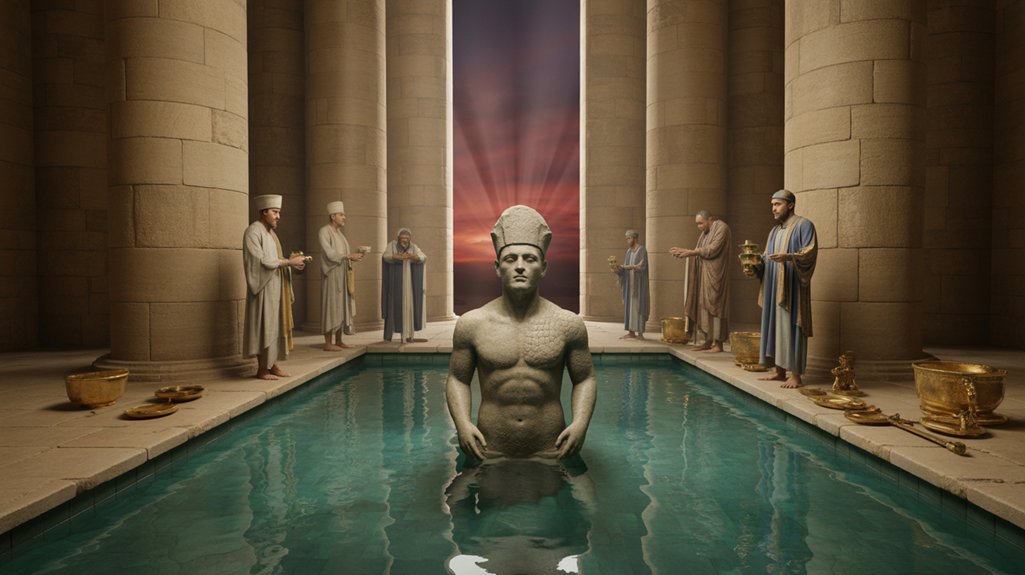
Imagine a time long before the shimmering images of mermaids danced across our screens, when the rivers and seas were home to powerful deities. Ancient Mesopotamia, with its rich tapestry of myths, introduced figures like Oannes, a fish-sage who emerged from the depths to share wisdom with humanity. Although Oannes (oh-AHN-es) isn't quite the mermaid we envision today, his essence laid a foundation for the allure of aquatic beings. The Hebrew word “dag” (דג), meaning fish, connects to the god Dagan, but there's a curious absence of direct links to mermaid-like figures in the ancient texts.
Now, let’s dive into Greek mythology. Here, we encounter sirens, initially depicted as bird-women who lured sailors with their enchanting songs, leading to perilous fates. The transformation of these creatures into fish-tailed beauties didn’t occur until the medieval period, when reinterpretation shifted their symbolism. What’s fascinating here is how this metamorphosis mirrored societal views on femininity: allure mixed with danger in maritime folklore.
The siren's shift from bird to fish-tail reveals how cultures reimagine feminine danger through the lens of the sea.
Medieval bestiaries, like those compiled by Isidore of Seville in the 7th century, portrayed sirens with both fish tails and wings, solidifying their connection to mermaids in European folklore. This evolution raises intriguing questions about cultural exchanges. Sound familiar? Think of other mythological figures that shift forms—like the Egyptian goddess Hathor (HAH-thor), who traverses realms as a cow, a woman, or even a star.
Here's where it gets interesting: the details most retellings leave out often include the sirens’ backstory. In Homer’s *Odyssey* (c. 8th century BCE), Odysseus (oh-DIS-ee-us) encounters these enchanting figures, but their perilous nature doesn’t stem solely from their appearance; it’s their haunting songs that ensnare sailors. Scholars debate this original portrayal, with multiple interpretations existing about whether they were once protectors or harbingers of doom.
As we explore these ancient narratives, we see a fascinating interplay between myth, legend, and folklore. While myths often serve as sacred stories revealing truths about the divine, legends embellish historical events with cultural significance. Folklore, on the other hand, reflects the everyday lives of people, passed down through generations.
What most people don't know about this myth is that the sirens’ transition to mermaids reflects broader cultural shifts—not just in gender roles but in how societies perceive the ocean itself. The sea, once a source of life and mystery, became a symbol of danger and seduction. Notably, the incorporation of Celtic mythology creatures into maritime legends further enriched the tapestry of aquatic lore across cultures.
Visiting archaeological sites like the ruins of ancient Ur or the coastal cliffs of Greece, you can almost hear the echoes of these stories. They remind us that our fascination with aquatic beings transcends cultures and epochs, weaving together a shared human experience.
Asian Mermaid Legends: Ningyo, Isonade, and Water Spirits
Imagine standing on the shores of a moonlit beach, the waves whispering secrets. Here, in the depths of Chinese mythology, we encounter the Di (dee), enchanting mermaids whose tears crystallize into pearls. These pearls symbolize a duality—beauty intertwined with profound sorrow. Isn’t that striking? Water, often seen as a source of life, carries a weight of grief in this tale.
Across Southeast Asia, water spirits dance between benevolence and danger, embodying nature's unpredictable power. They serve as guardians, warning us against disrespecting the ocean. These myths serve a vital purpose, connecting humanity to the sea’s mysteries. They enchant and caution in equal measure—a delicate balance, don’t you think?
What’s fascinating here is how these legends echo the sentiments found in other cultures. For example, the Greek sea goddess Amphitrite also embodies the dual nature of the sea, reflecting both nurturing and destructive aspects. Sound familiar?
Delving deeper, the Japanese Ningyo (neen-goh) shares similar traits with the Di. Both figures are connected to the ocean's treasures and tragedies. In the text *Nihon Shoki* (Chronicles of Japan, c. 720 CE), Ningyos are described as fish-like beings with human features, revealing their link to both beauty and peril. The detail most people miss? Their stories often warn of the consequences of human greed, reminding us that the ocean demands reverence, not conquest.
As we explore these narratives, it’s crucial to recognize that they aren't mere folklore but active cultural expressions. In living traditions, such as Shinto (the indigenous spirituality of Japan), the reverence for water spirits remains a vital aspect of worship and respect for nature. Scholars often note this ongoing relationship; it’s a living dialogue rather than a closed chapter in history.
This connection to water can also be seen in the ancient Egyptian Nile goddess, Hapi (HAH-pee). Both Hapi and the Asian mermaids highlight the significance of water as a life-giving force, yet they also remind us of its destructive potential.
Here’s where it gets interesting: these legends collectively urge us to reflect on our relationship with nature. What most people don’t know is that the warnings embedded in these tales are as relevant today as they were centuries ago. They remind us that the sea, in its beauty and ferocity, is a force to be respected, not dominated.
As we ponder these stories, consider how they resonate across cultures. From the mermaids of China to the water spirits of Southeast Asia, each tale invites us to engage with the mysteries of the ocean, urging respect and reverence. Isn’t it remarkable how these narratives continue to shape our understanding of the world?
African Mermaid Guardians: Mami Wata's Shape-Shifting Power
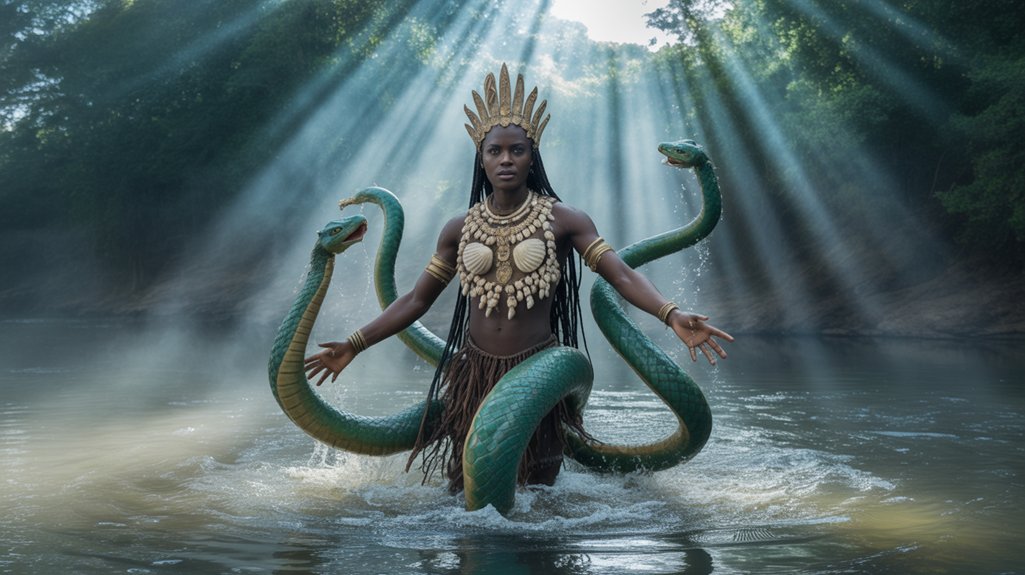
Mami Wata, the enchanting guardian of African waters, embodies the sea's unpredictability and raw power. Picture her: a figure who can be both nurturing and vengeful, rewarding those who honor the depths while swiftly punishing transgressors. This duality mirrors the ocean's own nature—sustaining yet perilous. What’s captivating here is her role as both protector and avenger, a balance that echoes ancient narratives across cultures. Think of the Greek Poseidon (po-SYE-don), who, too, commands respect through his tempestuous demeanor.
Mami Wata's shape-shifting abilities are a marvel. She can transition seamlessly between human and aquatic forms—sometimes appearing as a beautiful woman, other times as a serpent or mermaid. This fluidity isn’t just for show; it symbolizes the intimate relationship between humanity and the aquatic realm. Shells, often seen as royal insignia in her worship, serve as powerful symbols of life’s connection to water. These motifs remind us of the Oceanids from Greek mythology, who also embody the beauty and danger of the sea.
Today, Mami Wata’s spirit thrives in the vibrant rhythms of African music and art. Communities engage in rituals honoring her, echoing practices found in Hindu traditions where water is revered as sacred. It’s fascinating how both traditions highlight water’s life-giving force. What do you think drives this universal reverence for water?
Here’s where it gets interesting: Mami Wata's influence isn’t just a relic of the past. Her presence can be felt in contemporary ceremonies that emphasize respect for the ocean's depths—a reminder that these stories remain alive. Scholars have traced her roots back to the 19th century, but her origins may reach even further into the rich tapestry of African spiritual beliefs. In many ways, she reflects the complexity of Native American mythology, where water spirits also play a crucial role in cultural narratives.
But there’s a detail most people miss. While Mami Wata is often celebrated as a benevolent figure, her wrath is fearsome. This ambivalence recalls the actions of Kali (KAH-lee), the fierce goddess in Hindu mythology, who embodies destruction and renewal. Both figures invite us to reflect on the complexities of nature—how beauty and danger coexist in the world.
What most people don’t know about Mami Wata is that she serves as a bridge between local communities and their environments. In many regions, her followers engage in dialogues about conservation and respect for marine ecosystems. Scholars disagree on the exact interpretations of her myths; some view her simply as a spirit of water, while others see her as a guardian of cultural heritage.
Ultimately, Mami Wata’s story doesn’t just linger in the past; it resonates with modern themes of ecological awareness and cultural identity. As we navigate our relationship with nature, her tale reminds us of the delicate balance we must maintain with the world around us.
Scandinavian Mermaids: Haffrue and Doomed Romances
Scandinavian havfrue embody the sea's capriciousness through their unpredictable nature—they rescue drowning sailors one day and drag them beneath the waves the next.
These mermaids frequently abduct young women from coastal villages, spiriting them away to underwater domains where desperate family members must negotiate or trick the havfrue into releasing their loved ones.
Such encounters, whether benevolent or malicious, demand respect for the sea's power and the creatures who rule its depths.
But what happens when the stakes are high, and the line between love and danger blurs?
As we explore the doomed romances entwined with these enchanting beings, the true complexity of their allure unfolds, revealing stories that resonate with longing and peril.
Havfrue: Benevolent or Malicious
Picture this: a storm-tossed ship on the turbulent seas of Scandinavia, waves crashing like thunder, and amidst the chaos, a haunting melody echoes over the water. That’s the presence of the havfrue (HAHV-froo), or sea woman, a figure that embodies the duality of the ocean—both nurturing and perilous. Unlike the simplistic mermaids of contemporary fairy tales, these beings are complex and multifaceted, capable of bestowing blessings or luring sailors to their doom.
What’s fascinating here is how tales of the havfrue reflect the unpredictable nature of maritime life. In the *Poetic Edda*, specifically in the “Hárbarðsljóð,” we see hints of their enchanting allure intertwined with danger. They can foretell storms, acting as both guides and warnings. This duality serves as a cultural lesson, urging respect for the aquatic realms.
Here's the detail most retellings leave out: the havfrue's enchanting powers aren't merely about beauty; they can deceive even the most seasoned sailors. This makes them formidable rather than passive figures in folklore.
Consider the tragic love stories that often emerge from these narratives. Many legends explore the tension between human emotion and supernatural desire, echoing themes found in the Greek myth of *Persephone* (per-SEF-oh-nee) and *Hades*, where love intertwines with darkness. The longing, loss, and sacrifice inherent in these relationships show how the havfrue aren't just symbols of temptation—they’re embodiments of the ocean's mysterious power.
As we dive deeper, it gets darker. Some tales depict the havfrue abducting maidens from the shore, reflecting societal fears about the unknown and the dangers lurking beneath the waves. When we consider similar myths, like those of the *Naiads* in Greek mythology, we uncover a common thread: water as both a life-giver and a perilous domain.
What most people don’t know about this myth is how it resonates across cultures. The trickster figures of *Cuchulainn* (koo-HULL-in) in Irish mythology and *Loki* in Norse tales also embody this duality of creation and destruction, showing how different cultures grapple with the whims of nature and the supernatural.
So, what do we take away from the havfrue? They’re not merely characters in folklore; they’re reflections of our relationship with the sea—both reverent and wary. Scholars disagree on the origins of these tales, but they universally point to a deep cultural understanding of the ocean's power and unpredictability.
The havfrue remind us that the waters hold both beauty and danger, a lesson that resonates across time and cultures. Isn’t it intriguing how these stories persist, shaping our understanding of the natural world?
Abductions and Familial Rescues
The ocean roils with ancient power, drawing in unsuspecting souls. Picture this: a coastal village, the sun dipping below the horizon, and a chilling legend of havfrue (HAV-froo), the malevolent sea-maid, who lures young women into the depths. These abduction tales aren’t mere stories; they pulse with the heartbeats of families torn apart by the sea's cruel embrace. Brothers, fathers, and lovers embark on perilous rescues, diving into treacherous waters to reclaim what the ocean has stolen.
What's fascinating here is how these narratives mirror the Selkie myths of the North Sea, where seal-women transform into humans by shedding their skins. Both traditions explore profound emotional bonds and the yearning for home, illustrating the fierce love and loyalty that drives these rescuers. Sound familiar?
The detail most people miss is the seductive enchantment of these merfolk—an alluring call that tests not just bravery but also the very essence of familial duty. The sea isn’t just a backdrop; it’s a living entity, echoing the sentiments found in the *Poetic Edda* (c. 1220), where the waters are both life-giving and deadly.
Here's where it gets interesting: these abduction tales reflect genuine fears. Coastal communities grappled with the sea's unpredictable nature, transforming their anxieties into cautionary narratives about enchanting yet perilous creatures. The gods noticed. They were intrigued by humanity’s struggles against the tides and against the allure of the unknown.
As we explore these themes, consider the striking parallels with other cultures. The Greek myth of Persephone (per-SEF-oh-nee) speaks to a similar longing, her descent into Hades sparking the seasonal cycle and embodying the duality of life and death. Both myths reveal the deep-seated human fears and desires that resonate across cultures, reflecting our eternal struggle with love, loss, and the mysteries of existence.
What most people don’t know about these tales is their enduring relevance. While they’re rooted in specific cultural contexts, the motifs of abduction and rescue resonate universally. They tap into our collective consciousness, reflecting the timeless human experience of grappling with forces beyond our control.
Caribbean and Indigenous Mermaids: Iara, Sedna, and Water Protectors

Caribbean and Indigenous mermaid traditions offer a fascinating contrast to the doomed romances of Scandinavian lore, showcasing powerful female spirits who demand respect.
As we explore these captivating figures, Iara from Brazil‘s Amazon rivers emerges as a mesmerizing guardian with a dual nature, while the Inuit honor Sedna, their supreme ocean goddess, who governs marine life and the ethical treatment of the sea's resources.
This rich tapestry of beliefs raises an intriguing question: how do these diverse cultures view the relationship between water and humanity?
Iara: Amazon's Enchanting Guardian
Deep in Brazil’s serpentine rivers and shadowy lagoons, Iara (ee-AH-rah) rises as a mesmerizing figure from Amazonian folklore. Picture this: a stunning mermaid whose allure hides a darker truth. She embodies the duality of water—both nurturing and lethal—captivating unsuspecting fishermen while fiercely defending the fragile ecosystem of the Amazon. Iara's tale warns us of the consequences of disrespecting the waterways she guards, punishing those who transgress her domain.
What's fascinating here is her origin story, born from tragedy and love. Transformed into a mermaid after a doomed romance, Iara's narrative resonates with universal themes of love and betrayal. This transformation isn’t just a personal tragedy; it reflects broader indigenous perspectives on mermaids as symbols of nature’s enigmatic power. The detail most people miss? Her role as a guardian isn't merely protective; it’s a reminder of the balance humans must maintain with nature.
In many cultures, we find similar figures. Consider the Greek myth of Sirens—seductive beings that lure sailors to their doom. Yet, unlike Iara, the Sirens don’t protect their environment. Instead, they revel in destruction. This contrast reveals how different cultures interpret the relationship between beauty and danger.
Iara ensures that river creatures thrive. She embodies both guardian and cautionary tale, reminding us that beauty often masks peril. This duality is echoed in the tale of Yemanja (yeh-mahn-JAH), the Afro-Brazilian goddess of the sea, who, like Iara, embodies both nurturing and ferocity. These connections across cultures illustrate a shared understanding of nature's complexity.
When you read the original texts and stories, you can feel the weight of their cultural significance. The Amazon isn't just a backdrop; it’s a living entity, and Iara is its heartbeat. The river’s currents reflect her moods, shifting from serene to tempestuous, embodying the unpredictable nature of water itself.
Now, here’s the kicker: Iara’s stories have evolved. Some modern interpretations emphasize her as a symbol of environmental activism, showcasing how folklore can adapt to contemporary issues. Scholars disagree on the nuances of her legend, especially concerning regional variations. Some versions depict her as a tragic figure yearning for love, while others reveal a more vengeful spirit.
What most people don’t know is that Iara’s story holds a mirror to our own relationship with nature. It urges us to respect and preserve rather than exploit. The connection to other traditions—like the Japanese river goddess, Kawa-no-kami (kah-wah-noh-kah-mee)—further underscores this theme. Both figures remind us of the delicate balance we must maintain with the natural world.
As we navigate our modern existence, Iara’s tale serves as a poignant reminder: beauty, while captivating, can also conceal profound dangers. And in that duality lies the essence of her enduring legend.
Sedna: Inuit Ocean Goddess
Far north of the Amazon's humid embrace, where Arctic waters churn beneath endless ice, Sedna reigns as the Inuit ocean goddess. This isn't just a story about a deity; it's about survival itself. In her origin tale, Sedna starts as a beautiful woman, cast into the ocean by her father. This act transforms her into a being with a fish-like lower body, granting her dominion over all sea creatures. This narrative resonates deeply with the Inuit, who rely on the ocean for sustenance.
What's fascinating here? Sedna's power isn't merely a whimsical control over marine life. She embodies the delicate balance of nature, holding the fate of hunters and fishermen in her grasp. Her favor is essential—without it, Arctic communities face starvation. This dynamic mirrors other cultures, such as the Greek goddess Amphitrite (am-fi-TRI-tee), who also symbolizes the ocean's nurturing yet dangerous aspects. Sound familiar?
Inuit communities perform sacred rituals to appease Sedna, understanding that disrespect leads to scarcity, while reverence ensures abundance. The detail most people miss is how Sedna's narrative highlights humanity's dependence on ocean resources. It’s a theme echoed in mermaid mythology worldwide, where enchanting beings often embody both allure and peril. The consequences of ecological disruption become stark. Sedna’s tale urges us to reflect on our relationship with nature—what happens when we take too much?
Visiting Inuit communities, I’ve witnessed their rituals firsthand. The reverence for Sedna is palpable—a living tradition, not just a relic. Scholars debate the details of her myth; some versions describe how Sedna, in her anger, creates sea animals from the tips of her fingers. Others focus on her transformation, yet the core remains: she's the guardian of the ocean's bounty.
This is where it gets interesting. The Inuit understand that Sedna's moods can bring abundance or famine. Hunter rituals aren't just about offering; they're about connection. This echoes the practices of other cultures, like the Polynesian reverence for Kanaloa (kah-nah-LOH-ah), the god of the ocean, where fishermen also seek favor through ritual.
What most people don't know about Sedna? Her story isn’t just a myth; it reflects a profound understanding of ecological balance, showing how intertwined humanity and nature truly are. It challenges us to consider our own narratives and how they shape our relationship with the environment.
In the end, Sedna invites us to think about the oceans—sacred, powerful, and deserving of respect. The allure of the sea is a universal theme, found in stories from the Inuit to the Greeks, reminding us that the dance between humanity and nature is as old as time.
What Mermaids Symbolize: Desire, Danger, and the Deep Unknown
Enchantment and terror dance together in the figure of the mermaid, creating a captivating paradox that echoes through the ages. These aquatic beings symbolize humanity’s intricate relationship with the sea—beautiful yet deadly, alluring yet shrouded in mystery.
Mermaids often embody the treacherous nature of desire. In tales from various cultures, they emerge as seductive figures, luring sailors to their doom. Think of the sirens in Homer’s *Odyssey* (c. 8th century BCE), whose enchanting songs lead men to shipwreck. Yet, this isn’t just a cautionary tale against temptation; it reflects deeper cultural attitudes toward femininity and the unpredictable nature of the ocean. Could it be that mermaids serve as both a fascination and a warning?
Mermaids embody desire's duality—seductive yet deadly, they fascinate and warn us about femininity's power and the ocean's unpredictable nature.
What’s fascinating here is how these figures fluctuate between benevolence and malevolence. In the *Poetic Edda* (c. 1220 CE), mermaids can grant wishes, but they also bring ruin—much like the stormy seas they inhabit. Scholars have noted how this duality mirrors the tumultuous human experience.
It gets darker. The mermaid’s mirror, often seen as a symbol of vanity, signifies much more. It represents reflection—between life and death, the known and the unknown. This threshold reinforces their supernatural essence.
Across cultures, mermaids take on various forms: Japan's ningyo (nin-GYOH), who can grant longevity, and Africa’s Mami Wata (MAH-mee WAH-tah), often depicted as a protector of water. Each variation encapsulates distinct cultural values surrounding oceanic power, illustrating a universal longing for beauty while demanding respect for the sea's might. Sound familiar? It’s a reminder that what draws us in can also ensnare us.
Here’s the detail most retellings leave out: the mermaid’s connection to the divine. In many traditions, these beings serve as intermediaries between humanity and the gods. They remind us of the sacredness of water, life’s source, and its potential for destruction.
Scholars disagree on the origins of these myths. Some trace them back to ancient Near Eastern legends, while others point to local traditions and oral histories. The text is fragmentary here, and multiple versions exist across time and space.
What most people don’t know about this myth is how mermaids also reflect societal fears—of the unknown, of female power, and of the vast, uncharted waters that lie beyond the horizon. They remind us that the sea, like desire, holds both allure and danger. Additionally, the mermaids of legend serve as a reminder of humanity's ongoing fascination with the mysteries of the ocean.
Frequently Asked Questions
Why Do so Many Cultures Have Mermaids?
Q: Do mermaids appear in multiple cultures?
Yes, they do—this is a fascinating reflection of shared human experiences with the sea. For example, the Prose Edda (Snorri Sturluson, c. 1220) describes mermaids in Norse mythology, while the Babylonian Epic of Gilgamesh (c. 2100 BCE) features similar aquatic beings.
Scholars often debate the origins and variations of these myths, suggesting that coastal societies universally grapple with the sea's allure and dangers.
Q: Are mermaids purely fictional, or do they've historical roots?
Mermaids are largely rooted in folklore rather than historical fact. The Theogony (Hesiod, c. 700 BCE) doesn't mention mermaids specifically, but it includes sea nymphs, which share traits with later mermaid myths.
Scholars disagree on whether these aquatic figures evolved from historical encounters with women in maritime communities or purely from sailors' imaginations.
Q: What do mermaids symbolize in different cultures?
Mermaids often symbolize the sea's beauty and peril. In the Metamorphoses (Ovid, 8 CE), they embody both allure and danger, reflecting societal fears about the unknown.
Variations exist—some cultures depict them as benevolent, while others see them as malevolent. This divergence underscores the multifaceted nature of myths and their adaptation to specific cultural contexts.
Q: Did mermaids serve practical purposes in ancient societies?
Yes, mermaids often acted as cautionary figures in folklore. Sailors would recount tales of mermaid encounters to explain maritime dangers, as seen in various seafaring cultures.
Scholars note that these stories functioned as moral lessons, warning against the perils of the sea, but interpretations vary widely across regions, illustrating the diversity of folklore's role in society.
Why Are Mermaids Portrayed Differently in Various Cultures?
Q: Are mermaids portrayed as benevolent or malevolent beings in mythology?
According to the Prose Edda (Snorri Sturluson, c. 1220), mermaids often embody both benevolence and malevolence, depending on the region.
In contrast, the Poetic Edda presents them primarily as omens of danger. This duality reflects societal fears and values, with some cultures celebrating mermaids as protectors, while others view them as seductive threats.
Variations exist across folklore, revealing competing narratives about their nature.
Q: Do mermaids symbolize femininity in different cultures?
Yes, they often symbolize femininity, but interpretations vary widely.
In some cultures, mermaids represent beauty and nurturing, while in others, they're seen as embodiments of danger and seduction. This contrast is evident in texts like “The Little Mermaid” (Hans Christian Andersen, 1837) versus earlier depictions in folklore.
Scholars debate the implications of these portrayals on societal views of women and femininity across cultures.
Q: Are mermaids linked to environmental aspects of the sea?
Absolutely! Mermaids often reflect cultural relationships with the sea.
Coastal communities, as seen in various folklore, project their maritime experiences onto these beings, whether as protectors of sailors or harbingers of storms.
For example, the “Selkie” legends in Scottish folklore emphasize the connection to the ocean's unpredictable nature.
Different cultures interpret these environmental influences in diverse ways, resulting in rich variations of mermaid lore.
Q: Is the concept of mermaids universal across cultures?
No, while many cultures have water spirits, the specific image of the mermaid isn't universal.
Myths from the Theogony (Hesiod, c. 700 BCE) describe various aquatic beings, but they don’t always align with the mermaid archetype.
Each culture crafts its own narrative, leading to unique interpretations that reflect local beliefs and experiences.
Scholars often discuss these distinctions, highlighting how environment shapes myth.
Conclusion
What is it about the siren's call that beckons us across oceans and epochs? Mermaids, from Mesopotamian lore to Caribbean legends, embody our complex relationship with the unknown—reflecting both our desires and our fears. As guardians of the liminal spaces between land and sea, they remind us of the mysteries that still elude our grasp. Sound familiar? This archetype transcends cultures, urging us to confront what lies beneath the surface. For a deeper understanding, read Hans Christian Andersen’s “The Little Mermaid” for a poignant exploration of longing and sacrifice, or dip into the Prose Edda's Gylfaginning chapters 34-36 for a gripping insight into Norse mythology's take on these enigmatic figures. The pattern repeats.