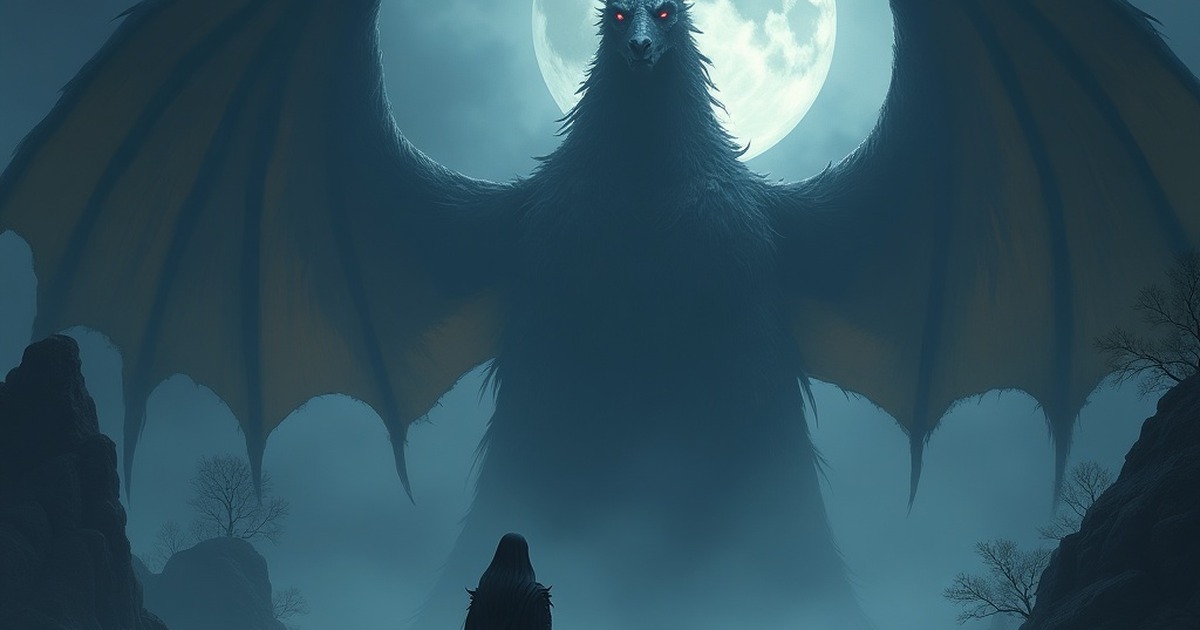
When storms darken the skies and thunder shakes the earth, the Thunderbird rides the winds. This colossal supernatural bird appears throughout Native American mythology, from the Pacific Northwest to the Great Plains, embodying the awe-inspiring power of the storm. Its wingbeats create thunder, and lightning flashes from its eyes.
Cultural Variations
The Thunderbird appears across numerous tribal traditions:
- Pacific Northwest: Giant eagles who hunt whales
- Great Plains: Storm spirits, often multiple beings
- Ojibwe: Animikii, servants of the Great Spirit
- Lakota: Wakinyan, sacred and dangerous
Appearance
Common descriptions include:
- Enormous size—large enough to carry whales
- Wingspan covering the sky
- Feathers often depicted as colorful or brilliant
- Sharp talons capable of grasping enormous prey
- Eyes that flash with lightning
Powers
The Thunderbird commands atmospheric phenomena:
- Thunder: Created by wingbeats
- Lightning: Flashes from eyes or carried in talons
- Rain: Brought by the storms they create
- Wind: Stirred by their flight
The Eternal Battle
Many traditions describe a cosmic conflict between Thunderbirds and underwater serpents or horned creatures. This battle between sky and water powers explains storms over lakes and oceans, with the Thunderbird swooping down to attack its serpentine enemies.
Related Creatures
Compare to the Persian Simurgh, Slavic Firebird, and Polynesian storm deities. The Thunderbird vs. serpent motif parallels the Hindu Garuda-Naga conflict.