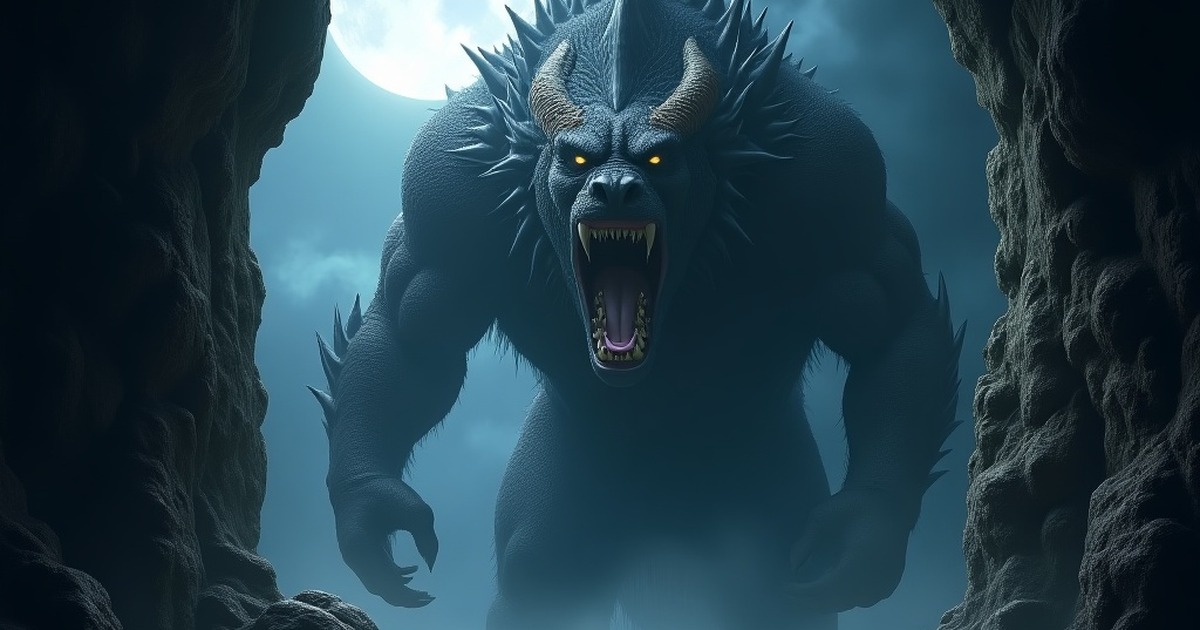
Picture this: a serpent so massive it wraps around the entire world, holding its own tail in its mouth beneath the ocean's depths. This is Jörmungandr, the World Serpent, and just one inhabitant of the rich, terrifying, and magnificent bestiary that populated the Viking imagination.
This post contains affiliate links. If you purchase through these links, we may earn a commission at no extra cost to you.
In This Article
- The Nine Realms and Their Inhabitants
- Dragons and Serpents: The Great Wyrms
- Wolves and Canine Beasts
- Shape-shifters and Supernatural Beings
- Giants and Elemental Creatures
- Horses and Mystical Steeds
- Birds and Aerial Creatures
- Lesser-Known Creatures and Spirits
- Creatures of Ragnarök
- Cultural Impact and Modern Legacy
When I first explored Norse mythology decades ago, I was struck by how these weren't just scary stories told around fires. These creatures formed the backbone of an entire worldview—one where gods, giants, monsters, and humans existed in constant tension, shaping the very fabric of reality.
Here's the thing: The Vikings didn't see these beings as mere fantasy. They were explanations for natural phenomena, embodiments of human fears and desires, and essential parts of a cosmic order that would one day end in spectacular destruction at Ragnarök.
From the eight-legged horse that carried Odin across the sky to the undead warriors guarding their burial mounds, each creature served a purpose in Norse society's understanding of life, death, and everything in between.
What makes Viking mythology creatures so enduringly fascinating? They're simultaneously alien and familiar, representing primal forces we still grapple with—the chaos of natural disasters, the mystery of death, the thin line between civilization and wildness.
The Nine Realms and Their Inhabitants {#section-0}
Understanding Norse Cosmology
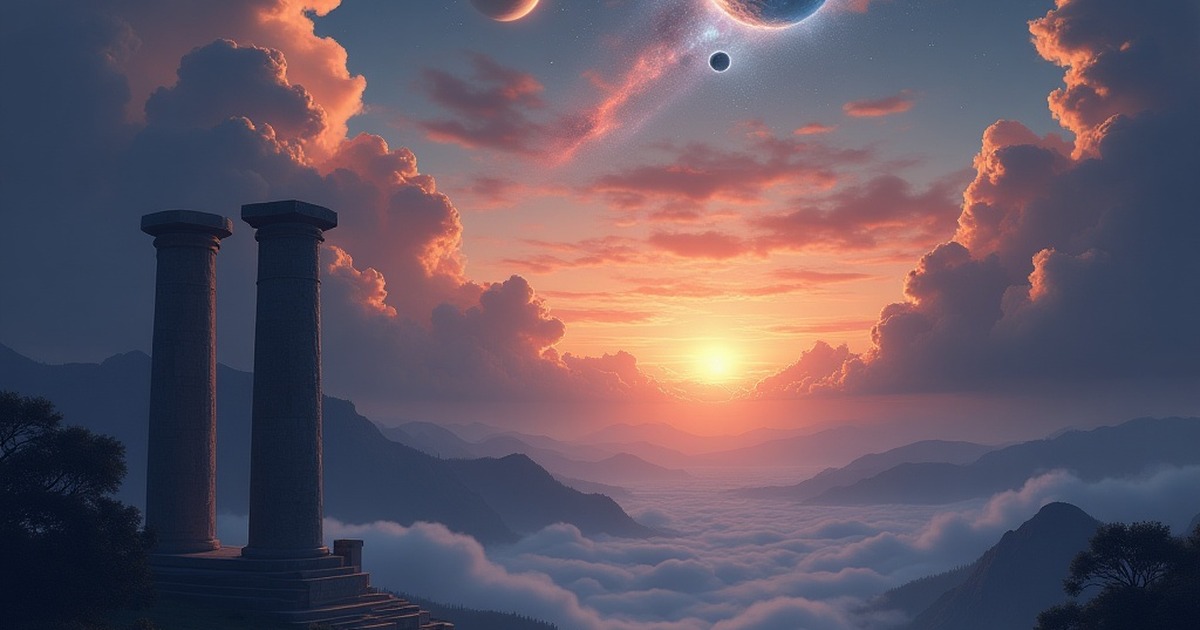
Before we meet these legendary beasts, we need to understand their neighborhood. The Norse cosmos consisted of nine interconnected realms, each housing different types of beings.
Think of it as a massive apartment complex with some very unusual tenants.
At the center of everything stood Yggdrasil, the World Tree—an ash tree so enormous its branches extended over all the worlds and its roots reached into the deepest wells of wisdom and fate. The ancient texts tell us this wasn't just a tree; it was the axis around which all existence revolved.
Creatures Across Different Realms
Each realm had its characteristic inhabitants. Asgard housed the Æsir gods and their supernatural animals. Midgard contained humans—and the various creatures that wandered into their world. Jötunheim was the domain of giants, while Alfheim belonged to the light elves.
But here's what's really interesting: these realms weren't sealed off from each other.
Creatures moved between them, gods visited giants, and monsters threatened multiple worlds. It's this interconnectedness that makes Norse mythology feel so dynamic and alive.
The Role of Yggdrasil
Yggdrasil itself hosted several important creatures. An unnamed eagle perched in its crown, surveying all the worlds below. The dragon Níðhöggr gnawed constantly at its roots, slowly working to bring about the tree's eventual destruction.
Between them scurried Ratatoskr, a squirrel whose job was to carry insults back and forth—essentially serving as the world's first internet troll.
Four stags also grazed among Yggdrasil's branches: Dáinn, Dvalinn, Duneyrr, and Duraþrór. Their nibbling kept the tree's growth in check, maintaining cosmic balance through their simple act of eating.
Want to know the secret? This ecosystem of creatures around the World Tree shows how Norse mythology viewed conflict as essential for maintaining balance.
Dragons and Serpents: The Great Wyrms {#section-1}
Jörmungandr – The World Serpent
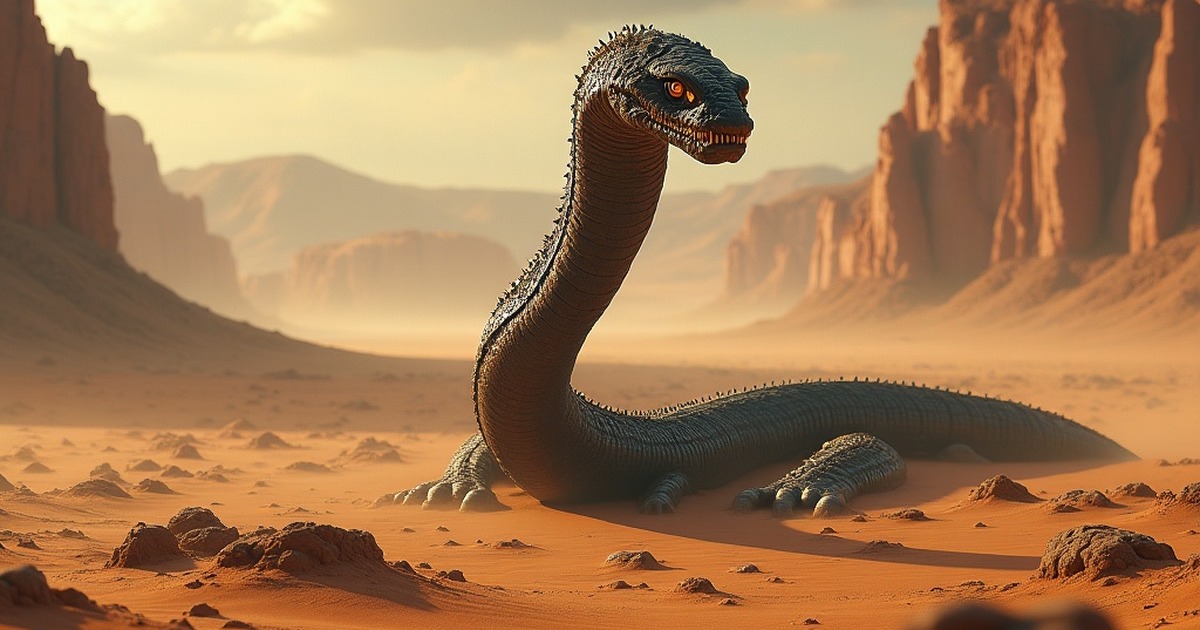
Let's start with the big one—literally. Jörmungandr, also called the Midgard Serpent, is one of Loki's three monstrous children. When the gods saw this serpent growing larger each day, they made what seemed like a reasonable decision: they threw it into the ocean surrounding Midgard.
Bad move.
The serpent grew so massive it could encircle the entire world and grasp its own tail. Vikings believed that when Jörmungandr thrashed in the ocean depths, earthquakes would shake the land above. The creature became a living symbol of the chaotic forces that surrounded and threatened human civilization.
Here's where it gets interesting: The serpent's destiny was to emerge from the ocean during Ragnarök and engage in mutual destruction with Thor. The thunder god would kill the beast but die from its poison shortly after—a perfectly Norse ending where victory and defeat intertwine.
Níðhöggr – The Corpse Devourer
While Jörmungandr threatened the world from below, Níðhöggr attacked it from beneath. This dragon lived among the roots of Yggdrasil, constantly gnawing at the World Tree's foundation.
Between meals of root and bark, Níðhöggr would feast on the corpses of the dishonored dead in Náströnd, the shore of corpses.
What strikes me about Níðhöggr is how it represents inevitable decay. No matter how mighty Yggdrasil appeared, this dragon worked tirelessly to bring it down. It's a powerful metaphor for how even the strongest foundations can be undermined by persistent, patient destruction.
The dragon would survive Ragnarök, flying over the reborn world carrying corpses on its wings—a reminder that even in renewal, some dark forces endure.
Fáfnir – The Cursed Dragon
Not all dragons started as dragons. Fáfnir began as a dwarf, son of Hreidmar, but greed transformed him into something monstrous.
When Loki killed Fáfnir's brother Ótr (who was in otter form at the time—shape-shifting complications again), the gods paid compensation in the form of cursed gold.
Fáfnir murdered his father for the treasure, then transformed into a dragon to guard it. He spent years on a heath, breathing poison and growing more monstrous, until the hero Sigurd came to claim the gold and the glory of dragon-slaying.
Here's what most people miss: Fáfnir's story isn't just about a monster—it's about how greed can literally transform someone into something inhuman. The Vikings understood that some hungers were dangerous enough to change your very nature.
Wolves and Canine Beasts {#section-2}
Fenrir – The Wolf of Prophecy
If Jörmungandr was the threat from below, Fenrir was the danger that grew up right among the gods. Another of Loki's children, this wolf pup seemed harmless enough when the Æsir brought it to Asgard.
Only Tyr, the god of war and justice, was brave enough to feed it.
But prophecy said this wolf would devour Odin at Ragnarök. As Fenrir grew larger and stronger, the gods realized they had a problem. They couldn't kill him without breaking the peace of Asgard, but they couldn't let him roam free.
Their solution? Trick him into wearing an unbreakable chain called Gleipnir, made from impossible things: the sound of a cat's footfall, a woman's beard, a mountain's roots, a bear's sinews, a fish's breath, and a bird's spittle.
But here's the catch: Fenrir agreed to be bound only if one of the gods placed their hand in his mouth as a pledge of good faith. Tyr volunteered, knowing what would happen. When Fenrir realized he'd been tricked, he bit off Tyr's hand.
The binding of Fenrir represents one of Norse mythology's most complex moral moments. The gods broke faith to prevent a greater evil, but their betrayal guaranteed that evil would come to pass. It's a perfect example of how fate works in Norse thought—inescapable but often self-fulfilling.
Geri and Freki – Odin's Companions
Not all wolves were threats. Odin kept two wolves, Geri and Freki (both names meaning “greedy”), who accompanied him everywhere.
While the All-Father himself ate nothing, surviving on wine alone, his wolves devoured all the food set before them.
These wolves represented Odin's role as a war god. Battlefields fed wolves, and ravens—and Odin presided over both. They were symbols of the hunger for battle and the inevitable feast that followed victory.
Sköll and Hati – The Sky Chasers
Two wolves chase the sun and moon across the sky: Sköll pursues the sun while Hati runs after the moon. Eventually, at Ragnarök, they'll catch and devour their prey, plunging the world into darkness.
This isn't just poetic imagery—it explained solar and lunar eclipses to the Vikings. When the sun or moon seemed to disappear, people would make noise to scare the wolves away.
It worked every time, proving the power of collective action against cosmic threats.
These wolves are the offspring of a giantess in Ironwood, part of a whole pack of wolf-monsters that will participate in the final battle. They represent time itself as a predatory force, always hunting, never resting.
Shape-shifters and Supernatural Beings {#section-3}
Loki – The Ultimate Shape-shifter
Loki deserves special mention here because he's responsible for so many Viking mythology creatures we're discussing—and because his shape-shifting abilities were legendary even among gods.
He transformed into a mare and gave birth to Sleipnir (awkward), became a salmon when trying to escape justice, and took the form of a seal, a fly, and an old woman at various times.
Loki's transformations weren't just physical—they represented his fundamental nature as a boundary-crosser, someone who existed between categories. He was a god but not of the Æsir, a trickster who helped and hindered in equal measure.
The kicker? His ability to become anything made him invaluable to the gods when they needed someone to slip into giant territory or steal treasures. But it also made him fundamentally untrustworthy—if you can become anything, what are you really?
Berserkers and Bear Warriors
Some humans gained the ability to take on animal characteristics through spiritual practices or divine favor. Berserkers (“bear-shirts”) were warriors who fought with the fury and strength of bears, sometimes believed to actually transform into bears during battle.
These weren't just metaphors.
Norse sources describe berserkers foaming at the mouth, biting their shields, and becoming immune to fire and iron. Whether through psychological techniques, religious ecstasy, or substances we don't understand, they achieved a state where the line between human and animal disappeared.
The concept of hamr—the ability to send one's spirit out in animal form—was recognized throughout Scandinavian culture. Skilled practitioners could project themselves as wolves, bears, or birds, scouting enemy territory or gathering information.
Selkies and Sea Spirits
The sea held its own shape-shifters. Selkies appeared as seals in the water but could shed their seal-skins to become human on land.
Stories tell of fishermen stealing selkie-wives by hiding their seal-skins, trapping them in human form.
These tales reflect the Vikings' complex relationship with the sea. It provided life through fishing and trade, but it could also take life without warning. Selkies embodied the sea's dual nature—beautiful and nurturing one moment, wild and unreachable the next.
Giants and Elemental Creatures {#section-4}
Jötnar – The Ancient Giants
Giants (jötnar or jǫtnar) weren't just oversized humans. They were primal forces of nature, chaos, and untamed wilderness. Some were monstrous, others were wise, and many were both beautiful and terrible.
What's fascinating is that the gods and giants weren't simply enemies. They intermarried regularly—Odin's mother was a giantess, and Thor's sons were half-giants.
The relationship was complicated, like family feuds that span generations.
Giants represented everything wild and uncontrolled that existed beyond human civilization. They were the forces that could destroy settlements with avalanches, storms, or earthquakes, but they also possessed ancient wisdom that even the gods sought.
Frost Giants and Fire Giants
Different types of giants controlled different elemental forces. The frost giants of Jötunheim brought winter storms and bitter cold. Útgarða-Loki, whose very name means “Loki of the Outlands,” challenged Thor to contests that revealed the thunder god's limitations.
The fire giants lived in Muspelheim, led by Surtr with his flaming sword. These beings would march from their realm at Ragnarök to burn the world clean.
Fire giants represented the destructive power of volcanic activity and wildfires that could consume entire landscapes.
Mountain and Sea Giants
Some giants were so large they were mistaken for geographical features. Mountain giants could be confused with actual mountains when they slept. Sea giants like Ægir and his wife Rán controlled the ocean's depths.
Ægir hosted feasts for the gods in his underwater hall, brewing ale in massive cauldrons. But Rán collected drowned sailors in her net, taking them to serve in her hall.
Even hospitality among giants came with an edge of danger.
Horses and Mystical Steeds {#section-5}
Sleipnir – Odin's Eight-legged Horse
Sleipnir might be the most famous horse in mythology, and his origin story is… complicated. When the gods needed Asgard's wall built quickly, a giant mason offered to do the job in exchange for the sun, moon, and the goddess Freyja.
The gods agreed, thinking it impossible.
The giant's horse proved supernaturally strong and fast, making the impossible deadline achievable. Desperate, the gods sent Loki to sabotage the work. Loki transformed into a mare, seduced the giant's stallion, and later gave birth to eight-legged Sleipnir.
Sleipnir could travel between the nine realms faster than any other creature, galloping across sky and sea as easily as solid ground. His eight legs may represent the pallbearers who carry the dead to their final rest—fitting for Odin's role as collector of the slain.
The horse became Odin's primary mount for his journeys to the underworld and across the cosmos. When the god rode Sleipnir into battle, warriors knew the All-Father was personally involved in determining the outcome.
The Horses of Day and Night
Two horses pull the sun's chariot across the sky: Arvak (“Early Awake”) and Alsvid (“All Swift”). They're driven by the goddess Sól, who constantly flees the wolf Sköll's pursuit.
These horses wear bellows under their shoulders to keep them cool—without this protection, their heat would burn all of Midgard.
It's a lovely detail that shows how Norse mythology tried to work out the practical problems of cosmic mechanics.
Similarly, Hrímfaxi (“Frost Mane”) pulls the chariot of night, and foam from his bit creates the dew that appears each morning. These horses made celestial movements understandable by connecting them to familiar agricultural imagery.
Supernatural Horses in Norse Culture
Horses held special significance in Viking culture beyond mythology. Archaeological evidence shows horses were sacrificed and buried with their owners, providing transportation in the afterlife.
The connection between horses and death appears throughout Germanic traditions.
Some horses served as psychopomps—guides between the world of the living and the dead. Others were prophetic, capable of sensing supernatural dangers or finding paths through hostile territory. The line between ordinary horses and magical ones wasn't always clear.
Birds and Aerial Creatures {#section-6}
Huginn and Muninn – Odin's Ravens
Every morning, Odin sends out his two ravens, Huginn (“Thought”) and Muninn (“Memory”), to fly over all the nine realms and gather information. They return at evening to perch on the All-Father's shoulders and whisper everything they've observed.
This daily reconnaissance mission made Odin the best-informed of all beings, but it also created anxiety.
He worried each day that the ravens might not return—particularly Muninn. The fear of losing memory proved more pressing than the fear of losing thought.
Ravens were perfect choices for divine messengers. They're intelligent, capable of mimicking human speech, and naturally associated with battlefields where they feast on the dead. For a war god like Odin, they provided an ideal connection to his primary concerns.
The Eagle of Yggdrasil
Atop Yggdrasil sits a great eagle, never named in the sources but clearly important to the cosmic order. This eagle has a hawk called Veðrfölnir (“Storm Pale”) perched between its eyes, adding another layer to the World Tree's aerial surveillance system.
The eagle and Níðhöggr share a mutual hatred, constantly exchanging insults carried by Ratatoskr the squirrel.
This eternal conflict between the heights and depths of Yggdrasil represents the constant tension between opposing forces that keeps the cosmos in dynamic balance.
Valkyries and Their Supernatural Nature
Valkyries exist in a fascinating space between divine women and ravens. Their name means “choosers of the slain,” and they determine which warriors die in battle and which live to fight another day.
The chosen dead accompany them to Valhalla to feast and train for Ragnarök.
But valkyries could also appear as ravens on the battlefield, picking over the corpses. This dual nature—beautiful maiden and carrion bird—reflects the Norse understanding that death in battle was both glorious and gruesome.
Some valkyries fell in love with mortal heroes and chose to live human lives. Others remained aloof, serving only Odin's will. They represent the complexity of fate itself—sometimes merciful, sometimes cruel, but always purposeful.
Lesser-Known Creatures and Spirits {#section-7}
Draugr – The Undead Warriors
Not everyone rested peacefully after death. Some warriors returned as draugr—undead beings with superhuman strength, the ability to change size at will, and a distinctly antisocial attitude toward the living.
They guarded their burial mounds and treasure with violent enthusiasm.
Draugr weren't mindless zombies. They retained their intelligence and fighting skills, making them formidable opponents. Some could shape-shift into animals, others could control the weather around their burial sites. A few gained prophetic abilities, though they rarely shared good news.
The most famous draugr was Glámr, a shepherd whose death and subsequent haunting forms one of the most terrifying episodes in Grettir's Saga. His curse followed the hero who finally destroyed him, showing that even victory over the undead came with a price.
Trolls and Mountain Dwellers
Trolls varied enormously in Norse tradition. Some were giant-sized and monstrous, others were roughly human-sized but with supernatural strength and longevity.
They lived in mountains, forests, and wild places, generally avoiding human contact.
What united different types of trolls was their connection to pre-Christian beliefs and wild spaces. They represented the old ways that persisted in remote areas, sometimes helpful but often dangerous to humans who encountered them unprepared.
Many trolls turned to stone when exposed to sunlight, which explains various rock formations throughout Scandinavia. This weakness made them manageable threats—dangerous at night or in dark places, but vulnerable to the light of day.
Elves and Light Spirits
Norse elves differed significantly from later fairy tale versions. Light elves (ljósálfar) lived in Alfheim and were associated with fertility, prosperity, and the blessing of crops.
They were beautiful, long-lived, and generally benevolent toward humans who treated them respectfully.
Dark elves (dokkalfar) were often confused with dwarfs and lived underground. They were master craftsmen, creating magical weapons and treasures for gods and heroes. The line between dark elves and dwarfs was never clearly drawn in the sources.
Household spirits and land wights (landvættir) protected specific places and families. They required regular offerings and respectful treatment but provided prosperity and protection in return.
Pro tip: Iceland's early settlers were required to remove dragon heads from their ships before landing to avoid frightening the land spirits.
Creatures of Ragnarök {#section-8}
The Final Battle Participants
Ragnarök wasn't just a battle between gods and giants—it was a cosmic free-for-all involving every type of creature we've discussed.
Fenrir would finally break free to devour Odin. Jörmungandr would emerge from the ocean to poison the sky with his breath. Surtr's fire giants would burn everything that remained.
The wolf-sons Sköll and Hati would finally catch and devour the sun and moon. Loki would arrive leading a ship made from dead men's nails, crewed by dishonored dead from Hel's domain.
Even Níðhöggr would participate, flying overhead with corpses in his claws.
Monsters Released at World's End
All the careful bindings and banishments that kept dangerous creatures in check would fail at once. Fenrir's chain Gleipnir would snap. The barriers between realms would collapse, allowing every monster to roam freely.
This wasn't random chaos—it was the inevitable result of the gods' earlier choices.
By breaking faith with Fenrir, they guaranteed his vengeance. By throwing Jörmungandr into the ocean, they ensured he'd be large enough to threaten all of Midgard when he returned.
The Cycle of Destruction and Renewal
But Ragnarök wasn't an ending—it was a transformation. Some gods would survive, some would be reborn, and some creatures would persist into the new world.
Níðhöggr would continue existing, as would the dragon that gnawed Yggdrasil's roots.
The new world would need its own balance of order and chaos, creation and destruction. The creatures that survived weren't necessarily evil—they were necessary parts of a cosmic system that required both light and darkness to function.
Cultural Impact and Modern Legacy {#section-9}
Influence on Modern Fantasy
Walk into any bookstore or gaming shop, and you'll see the influence of Norse creatures everywhere. Dragons guard treasure (thanks, Fáfnir). Wolves appear as both companions and threats (hello, Fenrir and friends). Eight-legged horses carry heroes between worlds.
But modern interpretations often miss the nuanced relationships these creatures had with gods and humans in original sources.
Loki isn't simply evil—he's complicated. Giants aren't just enemies—they're often relatives. Wolves aren't mere monsters—they're symbols of loyalty and inevitable destruction.
Archaeological Evidence
We're finding more evidence that these mythological creatures reflected real Viking Age beliefs. Burial sites contain wolf and raven imagery. Ship burials include horses and dogs for the afterlife journey. Art depicts recognizable mythological scenes with specific creatures.
Runestones tell stories that mirror mythological narratives.
The Sigurd stones show scenes from the dragon-slaying story, complete with runic text that helps us understand how these tales were remembered and retold.
Contemporary Interpretations
Modern pagans and Norse practitioners often work with these creatures as spiritual allies or symbolic representations. The psychological insights embedded in these ancient stories remain relevant.
Fenrir as betrayed trust. Jörmungandr as encircling anxiety. Sleipnir as the journey between different states of consciousness.
Popular media continues finding new ways to interpret these beings. Marvel's versions differ significantly from Norse originals, but they've introduced millions to names like Fenrir and Sleipnir.
Video games explore the moral complexity of binding dangerous creatures or the consequences of unleashing them.
The academic study of Norse mythology has also evolved. We now understand these creatures as part of complex symbolic systems rather than simple monster stories. They encoded environmental knowledge, social values, and psychological insights in memorable narrative form.
Frequently Asked Questions
Which Viking mythology creatures were considered most dangerous?
Fenrir, Jörmungandr, and the fire giant Surtr posed the greatest threats to the cosmic order. These three would play key roles in Ragnarök's destruction. Fenrir would devour Odin, Jörmungandr would poison the sky and battle Thor to mutual death, while Surtr would burn the world clean with his flaming sword.
Did Vikings actually believe these creatures existed?
Yes, these beings were integral to Viking worldview and religious practice. Archaeological evidence shows mythological creatures in art, burial goods, and religious ceremonies. They weren't seen as fictional characters but as real forces that shaped natural events and human destiny.
What's the difference between giants and trolls in Norse mythology?
Giants (jötnar) were primal elemental forces often related to the gods, while trolls were typically smaller supernatural beings associated with specific locations. Giants could be wise or monstrous, but trolls were generally more primitive and turned to stone in sunlight. The distinction wasn't always clear in original sources.
Why do so many Viking mythology creatures have family connections to Loki?
Loki's monstrous children—Fenrir, Jörmungandr, and Hel—represent his role as a boundary-crosser who brings chaos into the ordered world of the gods. His shape-shifting nature and relationships with giants made him the natural parent for creatures that existed between categories and threatened divine authority.
How did Viking mythology creatures influence modern fantasy?
Modern fantasy borrowed extensively from Norse sources: dragons guarding treasure, eight-legged horses, wolves as both companions and threats, and the concept of different realms connected by a world tree. However, contemporary versions often simplify the complex moral relationships these creatures had in original Norse stories.
Final Thoughts
Standing back from this menagerie of monsters, what strikes me most is how relevant these ancient creatures remain. They embody primal fears and desires that haven't changed much in a thousand years—the terror of being devoured, the longing for loyal companions, the fascination with beings that can transform their very nature.
These weren't just scary stories or primitive explanations for natural phenomena. They were sophisticated explorations of fundamental questions: What happens when we break faith with dangerous allies? How do we balance the wild forces that can both sustain and destroy us? What's our relationship with the inevitable changes that await us all?
The deeper symbolism reveals that Viking mythology creatures succeeded because they made abstract concepts tangible. Death becomes an eight-legged horse that carries you between worlds. Betrayal transforms into a wolf that bites the hand that fed it. The passage of time becomes wolves that chase the sun and moon across an endless sky.
Perhaps that's why we keep returning to these ancient beasts in our contemporary stories and games and spiritual practices. They offer something our modern world sometimes lacks—a sense that the universe is alive with purpose and meaning, even when that purpose leads to destruction and renewal.
In our age of climate change and social upheaval, maybe we need reminders that previous civilizations found ways to live with the knowledge that their world would end. The Vikings understood that Ragnarök was inevitable but worth fighting against anyway. Their creatures taught them—and can teach us—that destruction and creation are part of the same cosmic process.
The next time you see a wolf in the wilderness or hear ravens calling from ancient trees, remember that you're encountering descendants of creatures that once helped humans understand their place in a vast, dangerous, magnificent cosmos. That's a legacy worth preserving, don't you think?