In the shadowed halls of the Egyptian underworld, where the scales of Ma'at determined the fate of every soul, there lurked a creature so fearsome that even the dead trembled at her presence. Ammit, whose name translates to “Devourer of the Dead” or “Eater of Hearts,” stood as the ultimate consequence for those who lived unworthy lives. Part crocodile, part lion, and part hippopotamus, this chimeric entity represented the three most dangerous animals known to ancient Egyptians—and the absolute end of existence itself.
Quick Facts About Ammit
| Origin | Ancient Egyptian mythology |
| Also Known As | Ammut, Ahemait, Ammemet, “Devourer of the Dead,” “Eater of Hearts,” “Great of Death |
| Type | Underworld demon / Chimeric beast |
| Domain | Duat (Egyptian underworld), Hall of Two Truths |
| First Appearance | Book of the Dead (c. 1550 BCE) |
| Associated Deities | Osiris, Anubis, Thoth, Ma'at |
Origins and History of Ammit
Ammit's origins trace back to the New Kingdom period of ancient Egypt (1550-1077 BCE), where she first appears in funerary texts known collectively as the Book of the Dead. Unlike many Egyptian deities who evolved from earlier local gods or nature spirits, Ammit seems to have emerged fully formed as a personification of the ultimate punishment—the complete annihilation of the soul.
The ancient Egyptians held complex beliefs about the afterlife, centered on the preservation of the body and soul for eternal existence. To them, there was no fate more terrifying than the second death—the permanent destruction of one's essence. Ammit embodied this fear. She was not worshipped, for she represented not divine power but divine consequence. No temples were built in her honor, no prayers offered to her name. She existed solely as a warning.
Her role crystallized during the development of the Weighing of the Heart ceremony, one of the most significant theological concepts in Egyptian religion. This ritual, depicted in countless papyri and tomb paintings, showed the deceased's heart being weighed against the feather of Ma'at, goddess of truth and justice. Ammit waited beside the scales, ever patient, ever hungry.
Physical Description: A Nightmare Made Flesh
Ammit's appearance was deliberately designed to inspire maximum terror. The ancient Egyptians combined the three animals they feared most into a single horrifying form:
- Head of a Crocodile: The Nile crocodile was the most feared predator in Egypt, responsible for countless deaths along the river. Ammit's crocodilian head, with its rows of crushing teeth, represented sudden, violent death.
- Forequarters of a Lion (or Leopard): The great cats of Africa symbolized raw, unstoppable power. Some depictions show a lion's mane, others a sleeker leopard form, but all convey predatory strength.
- Hindquarters of a Hippopotamus: Despite their seemingly placid appearance, hippos were responsible for more human deaths in ancient Egypt than crocodiles. Their massive bulk represented immovable, crushing force.
In artistic representations, Ammit typically crouches beside the scales of judgment, her posture tense with anticipation. Her eyes gleam with hunger, and her crocodile jaws often hang slightly open, ready to receive her grim meal. Some depictions show her seated on a shrine or platform, emphasizing her role as an instrument of divine justice rather than a mere beast.
The Weighing of the Heart Ceremony
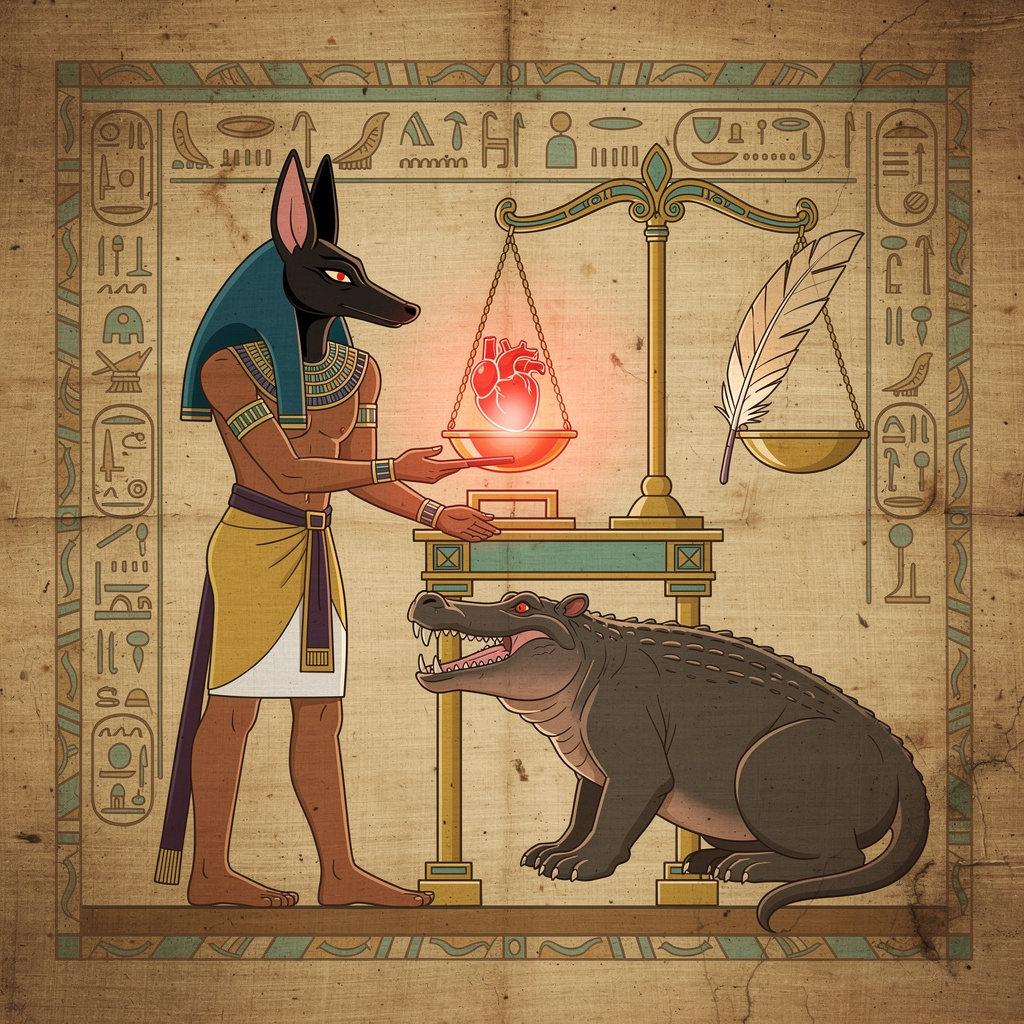
To understand Ammit's role, one must understand the Egyptian concept of the afterlife. When a person died, their soul (comprising multiple parts, including the ka, ba, and akh) journeyed to the Duat, the underworld realm ruled by Osiris. There, in the Hall of Two Truths (Maaty), the deceased faced judgment.
The ceremony proceeded as follows:
- The Negative Confession: The deceased recited a list of 42 sins they had not committed, declaring their purity before 42 divine judges.
- The Weighing: Anubis, the jackal-headed god of mummification, placed the deceased's heart on one side of a great scale. On the other side sat the feather of Ma'at, representing truth, justice, and cosmic order.
- The Recording: Thoth, the ibis-headed god of wisdom, recorded the results of the weighing.
- The Judgment: If the heart balanced with or was lighter than the feather, the soul was declared ma'a kheru (“true of voice”) and could proceed to paradise. If the heart was heavy with sin…
Ammit waited for those who failed. She would devour the heart—and with it, any chance of eternal life. The soul would cease to exist entirely, denied both the paradise of the Field of Reeds and even the lesser fate of becoming a restless spirit. This was obliteration, the truest death.
Powers and Abilities
Ammit possessed several supernatural attributes that made her uniquely suited to her grim purpose:
- Soul Consumption: Her primary and most terrifying ability was the complete destruction of the spiritual essence. When Ammit devoured a heart, she didn't merely kill—she erased existence itself.
- Eternal Patience: Ammit was bound to the Hall of Two Truths, waiting through eternity for those souls deemed unworthy. She never tired, never slept, never lost her hunger.
- Incorruptibility: Unlike many supernatural beings, Ammit could not be bribed, reasoned with, or deceived. She served Ma'at absolutely, functioning as an extension of cosmic justice.
- Hybrid Strength: Her composite form granted her the deadliest attributes of three apex predators—the crushing jaws of the crocodile, the predatory speed of the lion, and the unstoppable mass of the hippo.
Cultural Significance in Ancient Egypt
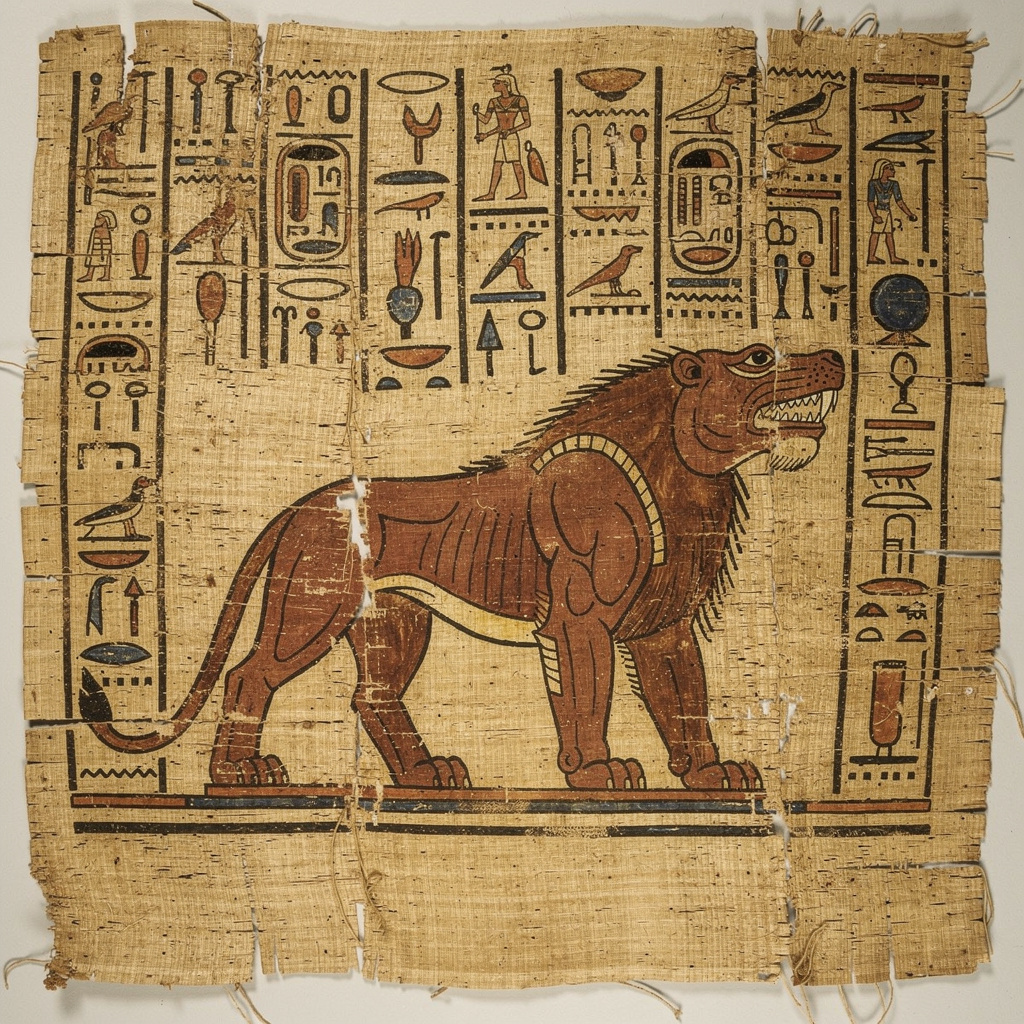
Ammit served a crucial function in Egyptian society that extended far beyond mere mythology. She was, in essence, the ultimate deterrent—the threat that enforced moral behavior in a civilization that lasted over three thousand years.
The Book of the Dead was not merely a religious text but a practical guide. Wealthy Egyptians commissioned personalized copies to be buried with them, containing spells and declarations they believed would help them pass the weighing ceremony. The presence of Ammit in these texts served as a constant reminder: live justly, or face annihilation.
Interestingly, Ammit was never considered evil in the way Western cultures might interpret a demon. She was a necessary force, part of the cosmic order (Ma'at) that kept the universe functioning. Just as a scale needs both sides to function, the afterlife needed both reward and consequence. Ammit was consequence incarnate.
Ammit Compared to Other Underworld Creatures
Ammit shares certain characteristics with underworld guardians and devourers from other mythologies, though her specific role remains unique:
- Cerberus (Greek): While Cerberus guards the underworld's entrance, Ammit waits at judgment. Cerberus prevents escape; Ammit delivers final punishment.
- Fenrir (Norse): Both are fearsome devourers, but Fenrir is destined to consume Odin at Ragnarök, while Ammit perpetually consumes the unworthy.
- Hellhounds (Various): Many cultures feature underworld beasts, but Ammit's chimeric nature and soul-destroying ability set her apart.
Ammit in Modern Media
Ammit has experienced a resurgence in popular culture, appearing in various forms across modern media:
- Marvel's Moon Knight (2022): The Disney+ series featured Ammit as a major antagonist, reimagined as a goddess seeking to judge humanity before they commit sins—a fascinating inversion of her traditional role.
- Video Games: Ammit appears in titles like Assassin's Creed Origins and Smite, often as a boss creature or referenced in Egyptian-themed content.
- Literature: Rick Riordan's Kane Chronicles features Ammit, introducing her to younger readers through the lens of modern fantasy.
- Tabletop Gaming: Various RPG systems and board games incorporate Ammit as an underworld threat or divine punishment mechanism.
Frequently Asked Questions About Ammit
Was Ammit a goddess or a demon?
Ammit occupied a unique position in Egyptian mythology—she was neither truly a goddess nor a demon in the traditional sense. She received no worship, had no cult following, and was not considered divine. Instead, she functioned as a supernatural instrument of cosmic justice, more akin to a force of nature than a deity. Some scholars classify her as a “funerary demon,” though this term doesn't fully capture her significance.
Could Ammit be defeated or appeased?
No. Unlike many mythological creatures, Ammit could not be fought, bribed, or persuaded. The only way to avoid her was to live a life in accordance with Ma'at—truth, justice, and cosmic order. The Book of the Dead provided spells and declarations that might help the deceased pass judgment, but these were aids to prove existing virtue, not ways to cheat the system.
What happened to souls that Ammit devoured?
Complete annihilation. This was the aspect that made Ammit so terrifying to ancient Egyptians, who valued eternal existence above almost everything else. A soul consumed by Ammit didn't go to a realm of punishment—it simply ceased to exist. There was no hell, no torment, just… nothing. To a culture that built pyramids and mummified bodies to ensure eternal life, this was the ultimate horror.
Why was Ammit made of three different animals?
The crocodile, lion, and hippopotamus were the three most dangerous animals in ancient Egypt, collectively responsible for numerous human deaths. By combining them into one being, the Egyptians created a creature that embodied maximum danger—a visual representation of inescapable doom. Each component also carried symbolic weight: the crocodile's association with the Nile and sudden death, the lion's royal power and predatory nature, and the hippo's connection to chaos and unstoppable force.
The Enduring Legacy of the Devourer
Ammit represents something profound about ancient Egyptian civilization—a culture so concerned with eternal life that they created the ultimate threat to enforce moral behavior. She is fear made manifest, consequence given form, the final word in cosmic justice. While other cultures threatened sinners with torment, the Egyptians threatened something worse: the end of existence itself.
Today, Ammit continues to fascinate scholars and storytellers alike. Her image appears in museums around the world, crouching beside the scales of judgment on papyri thousands of years old. And in her patient, hungry waiting, she reminds us of a truth the ancient Egyptians understood well: our actions in life echo into eternity—or silence us forever.
Recommended Egyptian Mythology Books
Want to explore more about Egyptian mythology and the fascinating world of gods like Ammit? These highly-rated books offer excellent introductions to ancient Egyptian beliefs and traditions:
Top Egyptian Mythology Books
Sources and Further Reading
- Faulkner, R.O. The Ancient Egyptian Book of the Dead. British Museum Press, 1985.
- Pinch, Geraldine. Egyptian Mythology: A Guide to the Gods, Goddesses, and Traditions of Ancient Egypt. Oxford University Press, 2004.
- Taylor, John H. Journey Through the Afterlife: Ancient Egyptian Book of the Dead. Harvard University Press, 2010.
- Wilkinson, Richard H. The Complete Gods and Goddesses of Ancient Egypt. Thames & Hudson, 2003.