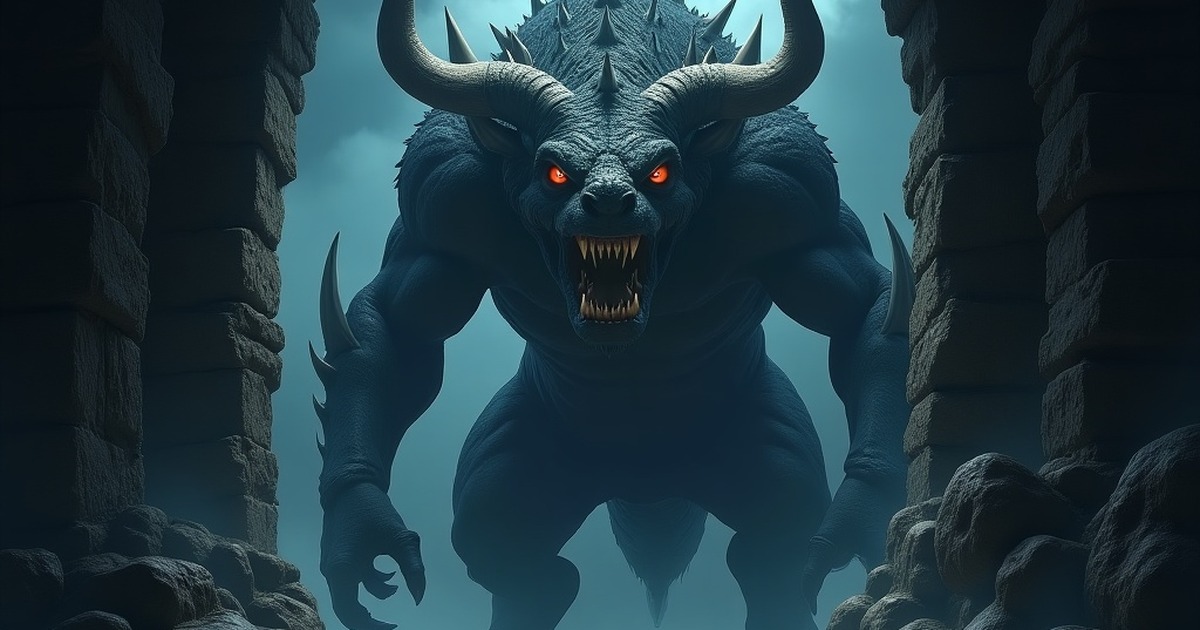
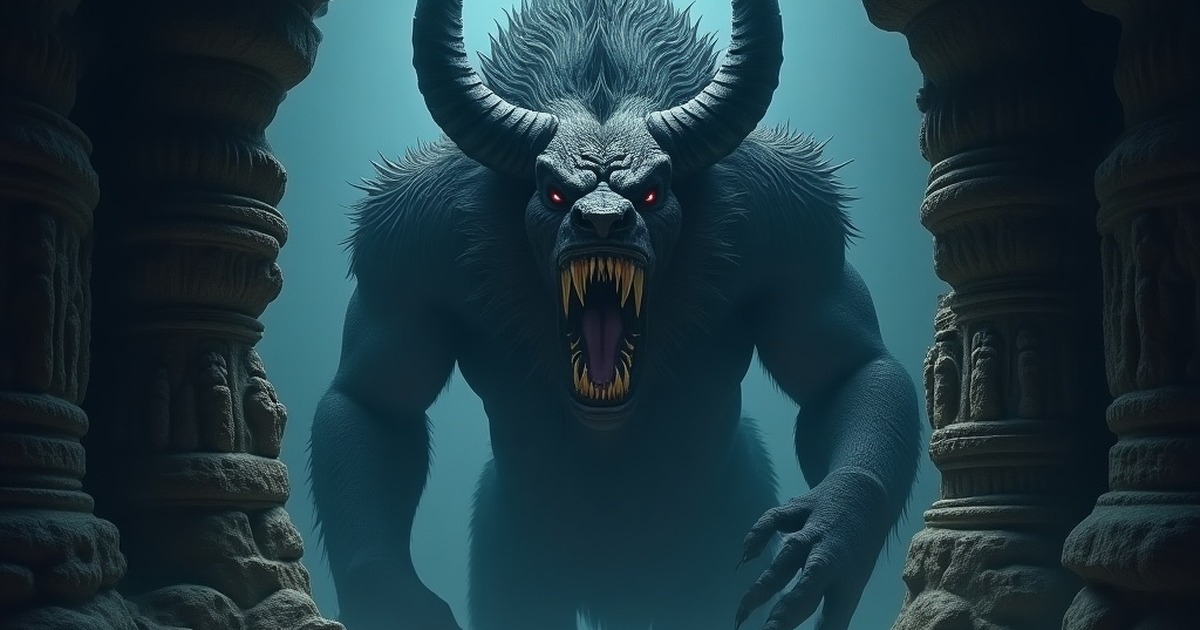
Rising from the ancient sands of Mesopotamia comes one of history's most paradoxical demons—a creature so terrifying that people wore his image for protection. Pazuzu, the demon king of the southwestern wind, stands as a complex figure in Assyrian and Babylonian mythology: bringer of drought and locusts, yet protector of pregnant women and newborns. His name became immortalized in modern horror through The Exorcist, but his true mythology reveals something far more nuanced than simple evil.
Quick Facts About Pazuzu
| Origin | Assyrian and Babylonian mythology |
| Also Known As | Fazuzu, Pazuza |
| Type | Demon king / Wind spirit |
| Domain | Southwestern wind, storms, drought, locusts |
| First Recorded | First millennium BCE |
| Associated With | Protection against Lamashtu, childbirth, plague winds |
| Parentage | Son of Hanbi, king of the wind demons |
Origins in Ancient Mesopotamia
Pazuzu emerged in Mesopotamian religious texts during the first millennium BCE, primarily in Assyrian and Babylonian sources. His name derives from the Akkadian verb “pazazu,” meaning “to silence” or “to still”—fitting for a being whose primary function was to drive away other demons.
According to mythology, Pazuzu was the son of Hanbi (also called Hanbu or Hanpa), the king of all wind demons. This lineage placed Pazuzu among the highest ranks of demonic hierarchy. The southwestern wind he commanded was feared throughout Mesopotamia—it brought scorching heat from the Arabian desert, carried locusts that destroyed crops, and spread disease through the dust-laden air.
Yet the ancient Mesopotamians understood that power, even demonic power, could be directed. The logic was elegantly simple: if Pazuzu was fearsome enough to bring plague winds, he was fearsome enough to drive away other demons. This made him invaluable as a protective figure, particularly against the demoness Lamashtu.
Physical Description: A Form Designed to Terrify
Pazuzu's appearance combined the most frightening elements of multiple creatures into a single nightmarish form:
- Head: A grotesque humanoid face with bulging eyes, a pronounced brow, and a snarling expression. His mouth opens to reveal sharp teeth, and his expression conveys eternal rage.
- Body: A humanoid torso covered in scales, emaciated yet powerful, suggesting both death and supernatural strength.
- Wings: Four great wings—two pointing upward, two pointing downward—representing his dominion over the winds and his ability to traverse all realms.
- Hands and Feet: His hands end in talons like those of a bird of prey, while his feet are the talons of an eagle, gripping whatever surface he stands upon.
- Tail: A scorpion's tail curves behind him, adding the threat of venomous strike to his already formidable arsenal.
- Phallus: Often depicted with an erect serpentine phallus, representing both his demonic nature and his association with fertility and childbirth protection.
This composite form was not random but carefully constructed. Each element represented a different aspect of Pazuzu's power and the threats he could combat. The eagle features connected him to the sky and wind, the scorpion tail to desert dangers, and the humanoid elements allowed him to stand against human-threatening demons.
Pazuzu and Lamashtu: The Eternal Rivalry
To understand Pazuzu's role in Mesopotamian religion, one must understand his nemesis: Lamashtu (also called Lamastu or Dimme). This demoness was considered the most terrible threat to pregnant women and newborn children. Daughter of the sky god Anu, Lamashtu was no mere spirit but a goddess-level threat who:
- Caused miscarriages and stillbirths
- Killed infants in their cribs
- Spread disease to nursing mothers
- Poisoned water and food
- Brought nightmares and fever
Against such a powerful threat, ordinary protections were insufficient. The Mesopotamians needed a demon powerful enough to drive Lamashtu away—and Pazuzu fit that role perfectly. His ferocity exceeded even hers, and more importantly, he could be bargained with. While Lamashtu attacked humans out of pure malice, Pazuzu's destruction was impersonal, the natural consequence of desert winds. He could be appeased, directed, and even allied with.
Protective amulets depicted Pazuzu on one side and Lamashtu on the other, the demon king's presence forcing the demoness to retreat. Pregnant women wore Pazuzu pendants around their necks. His image was placed at doorways and windows to prevent Lamashtu's entry. In this context, Pazuzu served as a kind of supernatural bodyguard—terrifying, but aimed at something worse.
Powers and Domains
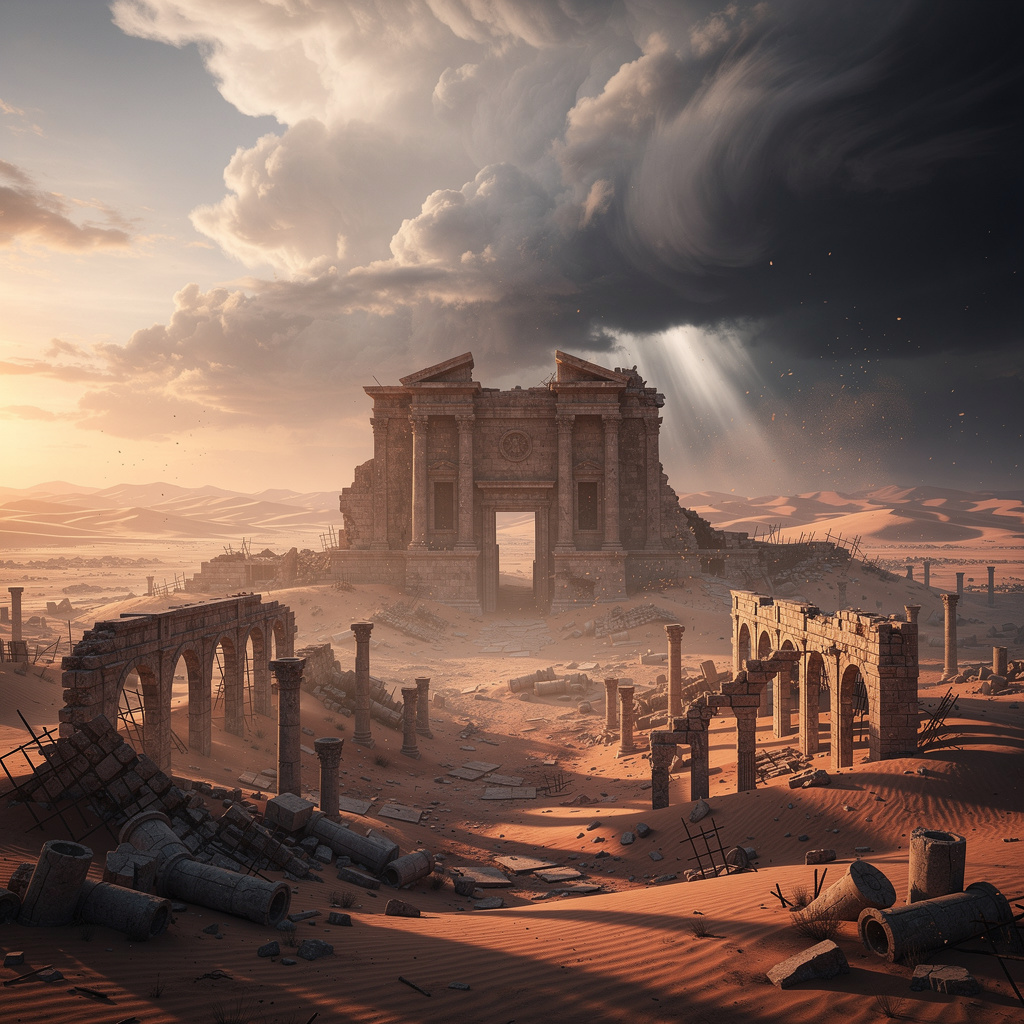
As king of the southwestern wind, Pazuzu commanded formidable supernatural abilities:
Wind Mastery: Pazuzu controlled the scorching southwestern wind that blew from the Arabian desert. This wind brought drought, sandstorms, and suffocating heat. He could summon or still these winds at will.
Plague Carrier: The winds Pazuzu commanded spread disease through the dust they carried. Fevers, respiratory illnesses, and epidemics were attributed to his influence.
Locust Lord: Pazuzu was associated with locust swarms, those devastating clouds of insects that could destroy an entire region's crops in days. The connection made sense—locusts often arrived on the same winds he commanded.
Demon Banisher: His most valuable power from a human perspective was his ability to drive away other demons, particularly Lamashtu. His very presence was considered intolerable to lesser evil spirits.
Flight: His four wings granted him the ability to travel swiftly across any distance, appearing wherever the winds blew.
Protective Amulets and Rituals
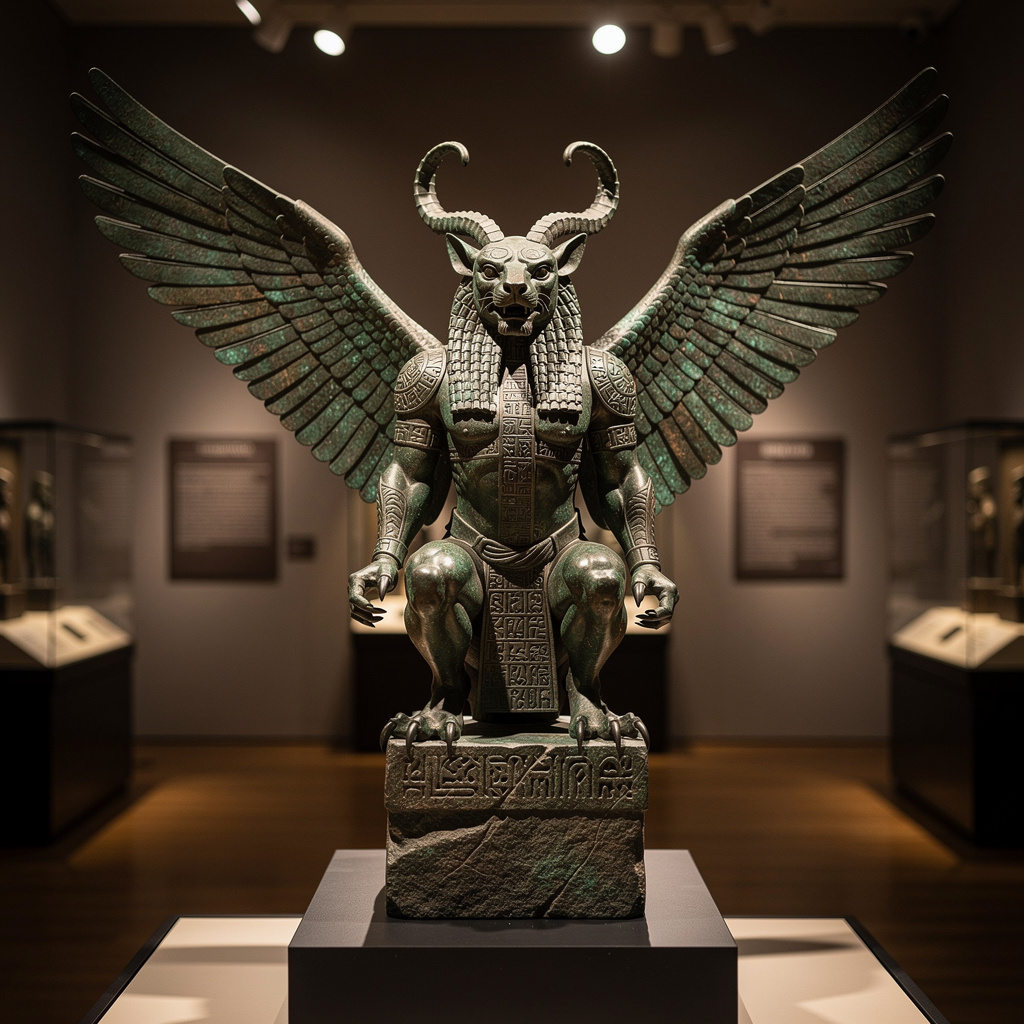
The archaeological record provides extensive evidence of Pazuzu's protective role. Thousands of Pazuzu amulets have been discovered throughout the ancient Near East, ranging from simple clay pendants to elaborate bronze statuettes. These artifacts reveal several key features:
Pazuzu Head Amulets: The most common type featured just Pazuzu's distinctive head, designed to be worn as a pendant. The back often displayed an inscription invoking his protection.
Full Figure Statuettes: Wealthier households owned complete bronze statuettes of Pazuzu, placed at vulnerable entry points in the home.
Lamashtu Plaques: These rectangular amulets showed Lamashtu on one side (being driven away) and Pazuzu on the other (pursuing her). Some depicted Pazuzu forcing Lamashtu back to the underworld on a boat.
Ritual texts describe specific invocations used with these amulets. The supplicant would call upon Pazuzu by name, acknowledging his terrible power while requesting his protection against Lamashtu and other malevolent spirits. The relationship was transactional rather than devotional—Pazuzu was not worshipped as a god but employed as a supernatural mercenary.
Cultural Significance
Pazuzu represents a sophisticated understanding of supernatural forces in Mesopotamian thought:
The Useful Monster: Unlike purely evil entities meant only to be avoided, Pazuzu demonstrates that even demonic powers could serve protective functions when properly approached. This reflects a pragmatic worldview where supernatural forces were tools to be managed rather than absolute moral categories.
Environmental Personification: Pazuzu embodied the very real dangers of desert winds—drought, sandstorms, and the diseases they carried. By giving these natural forces a face and a name, Mesopotamians created a framework for understanding and psychologically coping with environmental threats.
Protective Inversion: The logic of using a demon to fight a demon appears throughout world mythology, but Pazuzu is one of the most fully developed examples. His cult of protection influenced later practices of invoking frightening imagery to ward off evil.
Pazuzu in Modern Media
Pazuzu's modern fame stems almost entirely from one source: William Peter Blatty's 1971 novel The Exorcist and its 1973 film adaptation. In this story, Pazuzu is the demon possessing young Regan MacNeil, a portrayal that dramatically simplified his mythological role.
The film's opening sequence, set at an archaeological dig in Iraq, acknowledges Pazuzu's Mesopotamian origins. The famous Pazuzu statue that Father Merrin discovers is based on actual archaeological artifacts. However, the film transforms Pazuzu from a complex protective-destructive figure into a purely malevolent possessing entity.
Other modern appearances include:
- Futurama: The animated series features a character named Pazuzu, a gargoyle who serves as Professor Farnsworth's pet.
- Dungeons & Dragons: Pazuzu appears as a demon lord in the game's cosmology.
- Shin Megami Tensei: The video game series includes Pazuzu as a recruitable demon.
- Constantine (2005): The film references Pazuzu as part of its demonic mythology.
- The Exorcist: Believer (2023): The sequel film continues the mythology established in the original.
Pazuzu Compared to Other Mesopotamian Demons
| Entity | Role | Relationship to Humans |
|---|---|---|
| Pazuzu | Wind demon king | Dangerous but useful as protector |
| Lamashtu | Child-killing demoness | Purely malevolent, must be repelled |
| Lamassu | Protective guardian | Benevolent, guards important places |
| Ugallu | Storm demon | Generally destructive |
| Asag | Disease demon | Purely harmful |
| Humbaba | Forest guardian | Territorial, defeated by Gilgamesh |
Frequently Asked Questions About Pazuzu
Was Pazuzu worshipped as a god?
Pazuzu was not worshipped in the traditional sense. He had no temples, no priesthood, and no regular cult practices. Instead, he was invoked for specific protective purposes, particularly against Lamashtu. The relationship was transactional—his image and name were used to frighten away other demons, not to honor him.
Why would people seek protection from a demon?
Mesopotamian supernatural thought was pragmatic. If a powerful demon could be persuaded or compelled to fight against other demons, that power could be harnessed for human benefit. Pazuzu's ferocity made him effective against Lamashtu, and his impersonal destructiveness (through wind and plague) was seen as more manageable than Lamashtu's targeted attacks on mothers and children.
Is the Pazuzu in The Exorcist accurate to mythology?
The film uses Pazuzu's name and Mesopotamian origins but transforms him significantly. The mythological Pazuzu was never associated with possession—his domain was wind, plague, and protection against other demons. The possessing demon concept came from Christian demonology rather than Mesopotamian tradition.
What did Pazuzu amulets look like?
Most Pazuzu amulets featured his distinctive head with bulging eyes and snarling expression. Some showed his full form with four wings, taloned hands and feet, and scorpion tail. Many were designed as pendants to be worn by pregnant women or placed near newborns.
Did Pazuzu have any weaknesses?
Mesopotamian texts don't describe specific weaknesses for Pazuzu. As a demon king, he was among the most powerful supernatural entities. However, he could be bound by proper invocations and was subject to the commands of higher divine powers when properly petitioned.
The King of the Killing Wind
Pazuzu remains one of ancient Mesopotamia's most fascinating supernatural figures precisely because he defies simple categorization. He was a demon who protected, a bringer of plague who guarded newborns, a monster whose image brought comfort to terrified mothers. His mythology reveals a sophisticated ancient understanding that the universe contained forces too powerful to defeat—forces that could only be redirected, appeased, or turned against worse threats.
Modern horror has simplified Pazuzu into a straightforward villain, but his true mythological role offers something more interesting: a reminder that our ancestors found ways to live with their fears, to make allies of monsters, and to find protection in the most unexpected places. When the southwestern wind howled across ancient Mesopotamia, carrying dust and disease, people clutched their Pazuzu amulets and found comfort in knowing that something even more terrible was on their side.
Sources and Further Reading
- Heessel, Nils P. “Pazuzu: Archäologische und philologische Studien zu einem altorientalischen Dämon.” Brill, 2002.
- Wiggermann, Frans A. M. “Mesopotamian Protective Spirits: The Ritual Texts.” Brill, 1992.
- Black, Jeremy and Green, Anthony. Gods, Demons and Symbols of Ancient Mesopotamia.” British Museum Press, 1992.
- Farber, Walter. “Lamaštu: An Edition of the Canonical Series of Lamaštu Incantations.” Eisenbrauns, 2014.
- Geller, Markham J. “Evil Demons: Canonical Utukkū Lemnūtu Incantations.” State Archives of Assyria Cuneiform Texts, 2016.