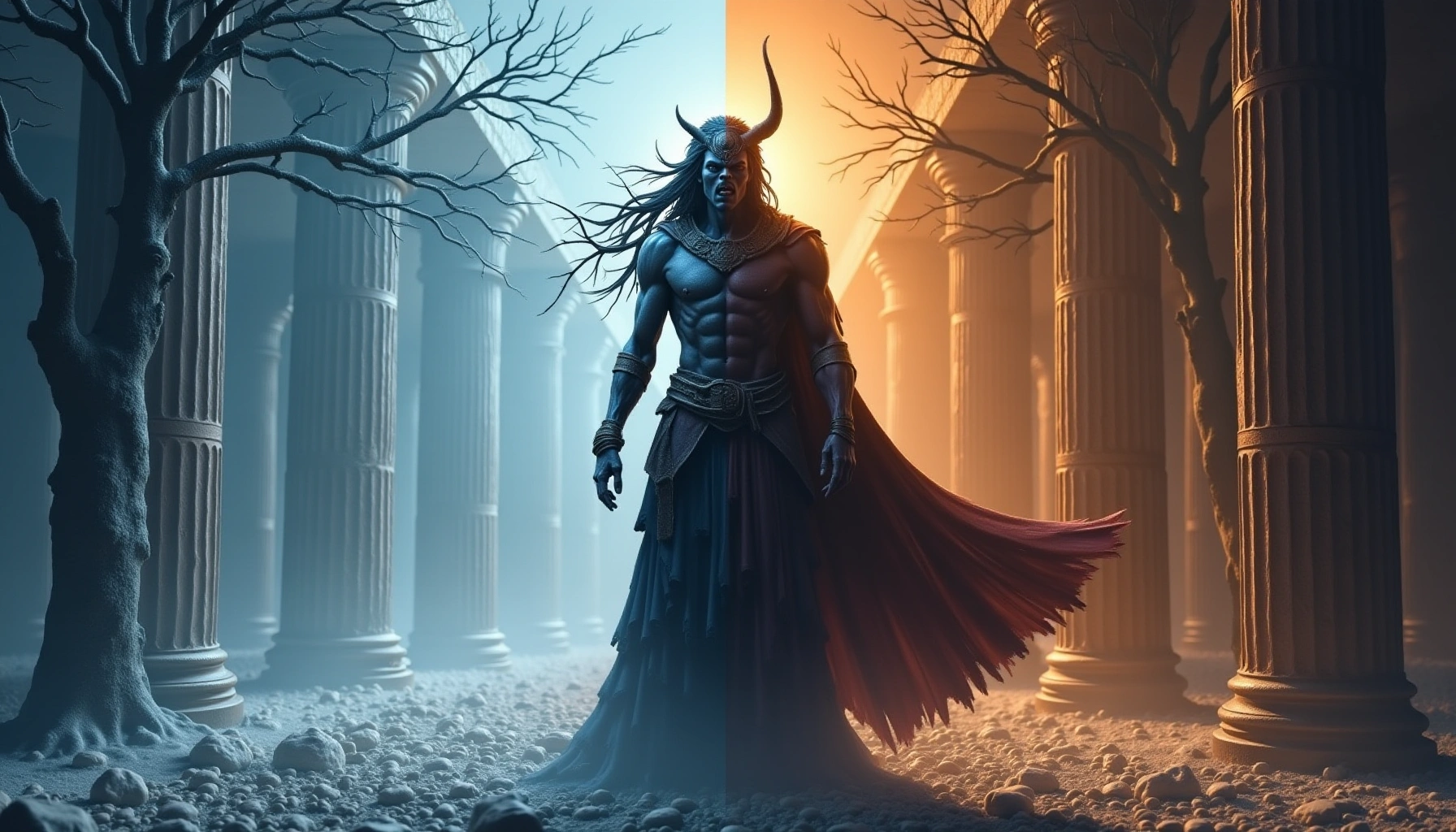
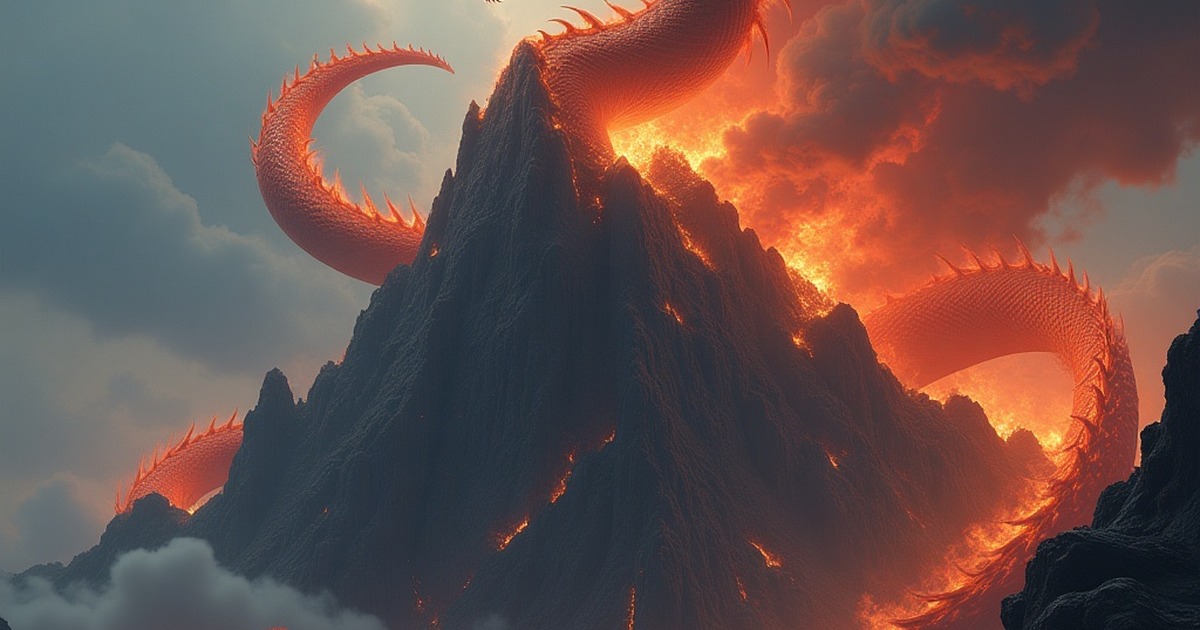
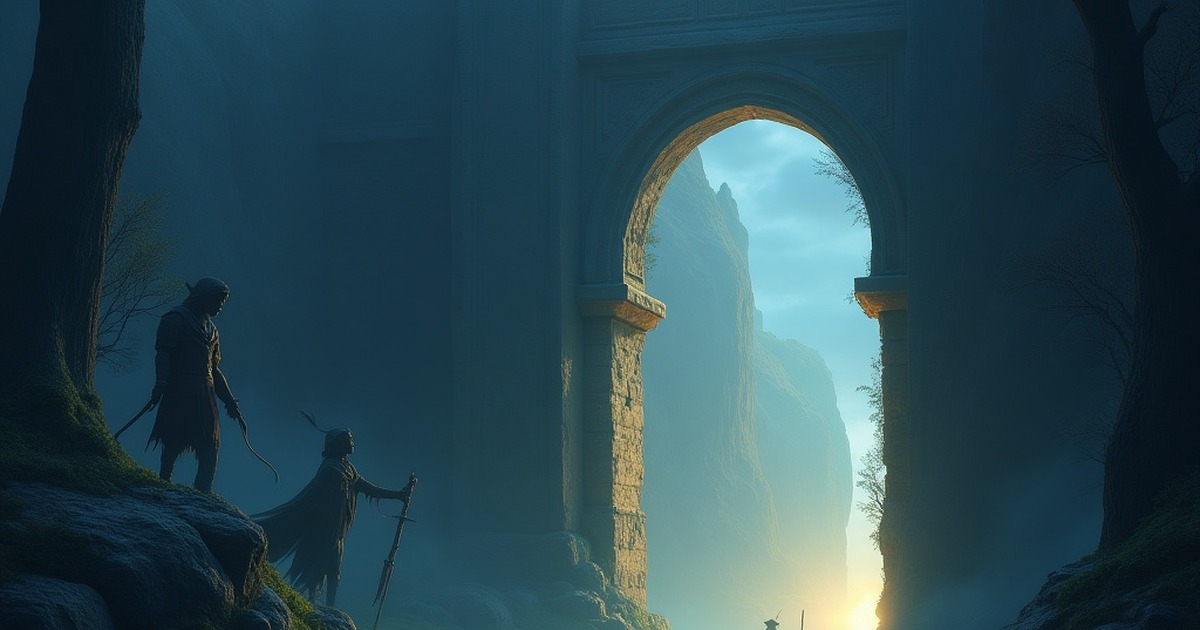
- 1. Ammit the Devourer: Egyptian Judgment and the Crocodile Cult
- 2. The Minotaur: Knossos, Bull-Leaping, and a Misread Palace
- 3. Tiamat: The Saltwater Dragon of Mesopotamian Creation
- 4. Jörmungandr: The World-Serpent and Viking Encounters with the Deep
- 5. Vritra: The Drought Dragon of the Rigveda and Geological Memory
- Related from our network
In 1929, archaeologist Leonard Woolley uncovered a layer of silt nearly twelve feet deep beneath the royal cemetery of Ur, a deposit that aligned precisely with the Mesopotamian flood narrative recorded in the Epic of Gilgamesh—Tablet XI, lines 140–145. That same excavation yielded a curious cylinder seal depicting a serpent-dragon with horned scales and a feline forebody, dated to approximately 2100 BCE. For decades, scholars classified such images as pure mythology: the symbolic language of a pre-scientific people. Yet as comparative archaeology advances, the boundary between myth and memory grows porous. The creatures that haunted ancient imaginations—the Devourer of the Dead in Egypt, the labyrinth-dwelling Minotaur of Crete, the world-serpent of Norse cosmology—may not have existed as described, but neither did they emerge from nothing. Each embodies a tangible encounter: a fossilized giraffe skull mistaken for a cyclops, a Minoan bull-leaping ritual misunderstood by later Greeks, a volcanic eruption encoded as a dragon's wrath. This article examines seven such creatures across as many civilizations, weighing mythological accounts against archaeological and historical evidence. What emerges is not debunking, but something stranger: the recognition that ancient peoples saw real things, and told the truth about them in a language we have only begun to learn to read.
1. Ammit the Devourer: Egyptian Judgment and the Crocodile Cult
In the Hall of Two Truths, as recorded in the Papyrus of Ani (circa 1250 BCE, Chapter 125 of the Book of the Dead), the deceased's heart was weighed against the feather of Ma'at. Should the scales tip toward sin, Ammit waited—a creature with the head of a crocodile, the forequarters of a lion, and the hindquarters of a hippopotamus. Her name means “Devourer” or “Bone-Eater,” and she consumed the unworthy utterly, annihilating their soul from existence. No second chance, no underworld punishment: just obliteration. The psychological weight of this image cannot be overstated; it transformed Egyptian funerary practice for over two millennia, driving the production of thousands of heart scarabs intended to tip the scales favorably.
Archaeologically, each component of Ammit's anatomy corresponds to a creature Egyptians both feared and venerated. Crocodile mummies have been recovered by the hundreds from sites like Kom Ombo, where a temple to Sobek housed live sacred crocodiles adorned with gold and jewels. One specimen, excavated in 1905 and now in the Manchester Museum, measures 3.7 meters—formidable, but not supernatural. Hippopotamus bones at Hierakonpolis show evidence of ritual burial, while lion remains from the tomb of Tutankhamun confirm that big cats were kept and possibly hunted by pharaohs. What Ammit represents is not a single animal but a composite of apex threats, each known intimately to Nile-dwelling communities. The Book of the Dead spells (specifically Spell 30B) instruct the deceased to address their own heart, not the monster—suggesting that Ammit's power was understood as psychological rather than physical. She is the externalized terror of moral failure, clad in the jaws of creatures that killed an estimated 200 people annually along the Nile in the Old Kingdom period.
2. The Minotaur: Knossos, Bull-Leaping, and a Misread Palace
Diodorus Siculus, writing in the first century BCE, describes the Minotaur as “a monster with the head of a bull and the body of a man,” confined within a labyrinth so complex that its architect, Daedalus, could barely escape it (Library of History, 4.77). Plutarch's Life of Theseus adds that the creature devoured fourteen Athenian youths annually until Theseus slew it with a sword hidden in a basket of figs. For centuries, classical scholars treated the story as allegory—until Arthur Evans excavated the Palace of Knossos on Crete between 1900 and 1931, revealing a structure covering 20,000 square meters with over 1,300 interlocking rooms, corridors, and light wells. Evans called it a labyrinth, and the name stuck.
But no Minotaur bones were found. Instead, Evans uncovered frescoes depicting bull-leaping—young men and women vaulting over charging bulls, grasping their horns, somersaulting across their backs. One fresco from the east wing shows a figure in mid-flip above a bull's spine, painted in vivid red and blue against white plaster, dating to approximately 1500 BCE. The ritual appears to have been athletic, possibly acrobatic, and certainly dangerous: bull skeletons from the site show healed fractures consistent with repeated horn impacts. The “monster” of Greek myth may thus be a garbled memory of Minoan bull-leaping, filtered through later Athenian hostility toward Crete. The labyrinth was not a prison but a palace—its complexity exaggerated by Greeks who could not navigate its foreign layout. The Minotaur's horns belong to bulls that actually existed, of a breed (Bos primigenius) that stood 1.8 meters at the shoulder, weighing over 900 kilograms. The terror was real; the monster was invented.
3. Tiamat: The Saltwater Dragon of Mesopotamian Creation
The Enuma Elish, inscribed on seven clay tablets in the seventh century BCE but composed as early as the eighteenth, opens with a cosmic ocean: “When on high the heaven had not been named, / Firm ground below had not been called by name, / Naught but primordial Apsu, their begetter, / And Mummu-Tiamat, she who bore them all” (Tablet I, lines 1–4). Tiamat is saltwater, a dragon-goddess whose body becomes the material of creation after Marduk splits her “like a shellfish into two parts” (Tablet IV, line 137). Her form, described in later Assyrian art, includes a serpentine body, horns, scales, and a tail that lashes the primordial waters into chaos. She is the archetype of the chaoskampf—the battle between order and chaos—that recurs across Indo-European and Near Eastern mythology.
Archaeological evidence for Tiamat is indirect but compelling. Cylinder seals from the Akkadian period (circa 2300 BCE) depict a god battling a multi-headed serpent, often identified as a precursor to the Enuma Elish narrative. One such seal, held in the Louvre (reference AO 22370), shows a figure with a forked weapon striking a horned dragon whose body coils in a spiral pattern—a motif that reappears in Babylonian boundary stones (kudurrus) as a protective symbol. More concretely, the flood layer at Ur, measuring 3.6 meters of silt, suggests that catastrophic inundations were a lived reality for Mesopotamian peoples. Tiamat's saltwater nature may reflect the Persian Gulf's encroachment on Sumerian cities; archaeological surveys indicate that the coastline lay 150 kilometers farther inland during the Ubaid period (6500–3800 BCE), slowly retreating as silt deposits built the delta. The dragon is not imaginary—she is the sea itself, personified because the sea was the most terrifying force these civilizations knew. Marduk's victory over Tiamat encodes the human struggle against rising waters, a battle fought with levees and canals rather than thunderbolts.
4. Jörmungandr: The World-Serpent and Viking Encounters with the Deep
The Prose Edda, compiled by Snorri Sturluson around 1220 CE, describes Jörmungandr as “the serpent that lies in the ocean, encompassing all the lands,” so vast that its body encircles Midgard and its tail meets its own jaws (Gylfaginning, chapter 34). In the Hymiskviða of the Poetic Edda, Thor attempts to fish the serpent from the deep, using an ox head as bait; the line goes taut, the boat shudders, and Thor raises his hammer—only to have the giant Hymir cut the line. The serpent sinks, but their final confrontation is reserved for Ragnarök, where Thor kills it only to die from its venom. The myth operates on a scale that defies measurement, yet it contains a precise ecological observation.
Viking-age rune stones and carvings frequently depict serpentine figures. The Ramsund carving in Sweden (circa 1030 CE) shows Sigurd piercing a dragon, but the motif of the encircling serpent appears on the Gotland picture stones, including the Stora Hammars stone, where a coiled dragon frames the scene. More significantly, Viking explorers who crossed the North Atlantic encountered creatures that could plausibly anchor the myth. The Icelandic Annals record multiple sightings of sea serpents between the fourteenth and seventeenth centuries, and while none were captured, the oarfish—Regalecus glesne—can reach 11 meters in length, with a serpentine body, red crest, and undulating motion. A specimen washed ashore in Norway in 1878 measured 9.6 meters. For Norse sailors navigating the Greenland Sea in open longships, an oarfish surfacing alongside the hull would have appeared unmistakably dragon-like. Jörmungandr's dimensions—encircling the earth, which Norse cosmology placed at roughly 2,000 miles in circumference—are hyperbolic, but the creature that inspired him may have been very real, very large, and very rarely seen.
5. Vritra: The Drought Dragon of the Rigveda and Geological Memory
Rigveda 1.32, attributed to the seer Hiranyastupa, recounts Indra's slaying of Vritra: “I will declare the heroic deeds of Indra, / The first he performed, the wielder of the thunderbolt. / He slew the dragon, pierced a path for the waters, / Split the bellies of the mountains.” Vritra is described as a serpent without feet or hands, possessing ninety-nine fortresses, and holding the seven rivers of the Sapta Sindhu captive in his coils. When Indra strikes him with the vajra—a weapon forged from the bones of the sage Dadhichi—the waters burst forth, ending a drought that had parched the land. The hymn is cosmological, but it may also be climatological.
Geological research in the Ghaggar-Hakra region, often identified with the Sarasvati River of the Rigveda, indicates that a major river system dried up around 1900 BCE due to tectonic shifts and monsoonal weakening. Satellite imagery from the Indian Space Research Organisation (ISRO) has traced a paleochannel 8 kilometers wide in places—larger than the Indus—that carried glacial meltwater from the Himalayas until seismic activity diverted its course. The “dragon
Related from our network
- I Tested the Best Dash cam — Here's What Stood Out (partpickerauto)
- Ring vs Nest Doorbell: Which Video Doorbell Is Best in 2025? (theconnectedhaven)
- Best Webcam For Remote Work: Complete Guide (2026) (deskgearreviews)
Your Weekly Dose of Inspiration
Journaling ideas, family tips, and gentle inspiration.