- Origins of the Leviathan: A Biblical Beast of Chaos
- The Kraken: From Norse Sagas to Sailors’ Tales
- Cultural Significance and Symbolism
- Real-World Inspirations: Giant Squid and Whale Anatomy
- Comparison of Terror: Scale, Power, and Legacy
- Conclusion: Which Monster Wins the Terror Crown?
- Frequently Asked Questions
- Are the Kraken and Leviathan the same creature?
- What real animal is most likely the basis for the Kraken?
- Could the Leviathan have been inspired by a real animal?
- Related from our network
The Leviathan, described in the Book of Job as a creature whose sneezes flash light and whose breath kindles coals, dwarfs the Kraken in sheer cosmic terror—yet the Kraken has haunted the nightmares of Northern sailors for centuries with its tentacled grip on ships and souls. These two sea monsters, often conflated in modern pop culture, emerge from radically different mythologies: the Leviathan from ancient Near Eastern chaoskampf traditions, and the Kraken from the cold, dark waters of Scandinavian folklore. Both embody humanity’s primal fear of the ocean’s depths, but which one truly deserves the title of most terrifying? To answer that, we must dive into their origins, examine the cultures that birthed them, and consider the real-world animals that may have inspired their legends. This is not merely a comparison of size or destructive power—it is a study in how different societies personified the unknown, and how those personifications continue to haunt our collective imagination.
Origins of the Leviathan: A Biblical Beast of Chaos
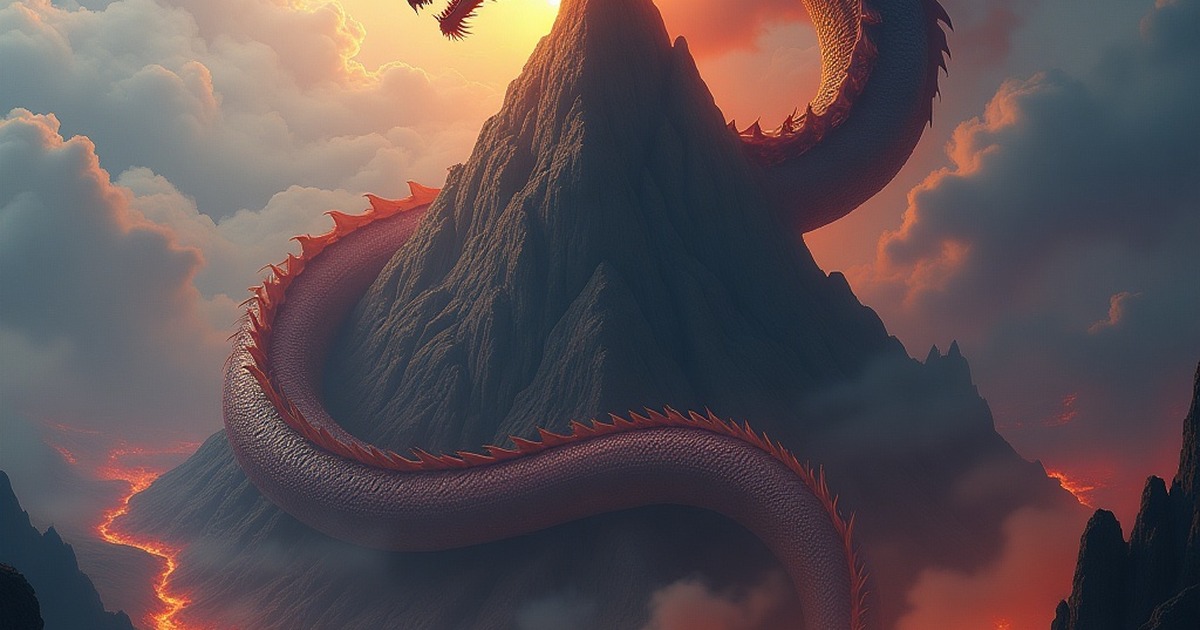
The Leviathan first appears in the Hebrew Bible as a multi-headed sea serpent or dragon, a symbol of primordial chaos that Yahweh must subdue to create order. In Psalm 74:14, the poet declares, “It was you who crushed the heads of Leviathan and gave it as food to the creatures of the desert.” The imagery is visceral: a creature with multiple heads, each one a source of terror. The most detailed description comes from Job 41, where God challenges Job by describing Leviathan’s invulnerability: “Can you pull in Leviathan with a fishhook or tie down its tongue with a rope? … Its snorting throws out flashes of light; its eyes are like the rays of dawn.” The text goes on to describe its scales as tightly sealed, its breath setting coals ablaze, and its heart as hard as a millstone. Rabbinic tradition, particularly in the Talmud (Bava Batra 74b), expands on this: Leviathan is said to be so immense that its fins span 300 parasangs (approximately 900 miles, based on one parasang equaling 3.5 miles), and at the end of days, its flesh will be served as a feast for the righteous.
The Leviathan’s roots run deeper than the Bible. Ugaritic texts from the 14th century BCE, such as the Baal Cycle, mention a similar sea dragon named Lotan (likely a cognate of Leviathan), a seven-headed serpent defeated by the storm god Baal. This places the Leviathan within a broader Canaanite and Mesopotamian tradition of chaos monsters—Tiamat in the Enuma Elish, for instance, is a saltwater dragon whose body is split to form the heavens and earth. The Leviathan thus represents not just a physical threat but a cosmic one: the undoing of creation itself. Its terror is existential, not merely maritime. When Isaiah 27:1 prophesies that “the Lord will punish Leviathan the gliding serpent, Leviathan the coiling serpent, with his fierce, great, and powerful sword,” it is a promise that chaos will ultimately be vanquished. But until then, the Leviathan lurks in the deep, a reminder that order is fragile.
The Kraken: From Norse Sagas to Sailors’ Tales
The Kraken, by contrast, emerges from the oral traditions of Scandinavian fishermen and the sagas of medieval Iceland. The earliest written reference appears in the 13th-century Örvar-Odds saga, where a monstrous sea creature called the hafgufa (sea mist) is described as so enormous that sailors mistake its back for an island. This motif recurs in later accounts: the Norwegian bishop Erik Pontoppidan, in his 1755 Natural History of Norway, describes the Kraken as “the largest and most terrifying of all sea monsters,” with a circumference of “several miles” (he specifies 1.5 miles when floating). Pontoppidan claims that when the Kraken submerges, it creates a whirlpool capable of dragging entire fleets to the bottom. Unlike the Leviathan’s cosmic role, the Kraken is a localized hazard—a predator of ships, not of worlds.
The Kraken’s physical description evolved over time. Early accounts depict it as a giant crab or whale, but by the 18th century, it had acquired the iconic tentacles we recognize today. This shift likely owes to encounters with giant squid (Architeuthis dux), which can reach lengths of 43 feet for females and 33 feet for males, according to a 2022 study in Deep Sea Research Part I. The Kraken’s terror is visceral and immediate: you are on a wooden ship, the sea is calm, and suddenly the water churns as a tentacle the thickness of a mast wraps around your vessel. In Pontoppidan’s account, the Kraken’s arms are “as long as the tallest ship’s mast” (approximately 100 feet). The creature’s name itself—from the Old Norse kraki, meaning “crooked” or “twisted”—evokes the image of tangled, grasping limbs. It is a monster of the surface, not the abyss, and its horror lies in its proximity to human experience.
Cultural Significance and Symbolism
The Leviathan and Kraken serve different symbolic functions in their respective cultures. The Leviathan embodies the chaos that precedes order—a theme central to ancient Near Eastern cosmology. In the Babylonian Enuma Elish, the god Marduk slays Tiamat, the saltwater dragon, and from her body creates the sky and earth. Hebrew scripture adapts this myth to assert Yahweh’s supremacy: Leviathan is not a rival god but a creature under divine control. This makes the Leviathan a symbol of both terror and reassurance—terror at the power of chaos, reassurance that a higher power can subdue it. The Leviathan also appears in later Jewish mysticism, such as the Zohar, where it represents the material world’s resistance to spiritual enlightenment. Its flesh, served at the messianic banquet, signifies the ultimate integration of chaos into divine order.
The Kraken, in contrast, reflects the empirical fears of a seafaring culture. Norse mythology has its own cosmic sea serpent—Jörmungandr, the Midgard Serpent, which encircles the world and will battle Thor at Ragnarök. But the Kraken is not Jörmungandr; it is a lesser, more tangible monster. It does not threaten the cosmos but the livelihood of fishermen and traders. In the King’s Mirror, a 13th-century Norwegian didactic work, the hafgufa is described as a creature that “swallows both men and ships, whales and everything else it can reach.” This practical terror—the loss of life and cargo—is amplified by the Kraken’s association with whirlpools and sudden storms. It is a monster born of the North Atlantic’s treacherous waters, where fog, ice, and rogue waves could end a voyage in moments. The Kraken thus symbolizes the unpredictability of nature, a force that must be respected but cannot be reasoned with.
Real-World Inspirations: Giant Squid and Whale Anatomy
Both monsters likely have roots in real biological phenomena. The Leviathan’s description—a sea creature with scales, fire-breathing, and multiple heads—suggests a composite of crocodiles, whales, and serpents. The Nile crocodile, which can reach 20 feet and 1,500 pounds, was known to ancient Israelites and could have inspired the scaly, invulnerable hide. The sperm whale, which can dive to depths of 7,380 feet (as recorded in a 2021 study by the Woods Hole Oceanographic Institution), may have contributed the image of a massive creature that surfaces with a thunderous exhale—a “snorting” that “throws out flashes of light” (Job 41:18). The multiple heads could derive from the hydra myth or from sightings of whales with barnacles that resemble eyes or heads. The fire-breathing is likely poetic license, but the methane in whale carcasses can ignite, a phenomenon known as “whale explosion” (rare, but documented in 2004 in Tainan, Taiwan).
The Kraken’s inspiration is more direct: the giant squid. For centuries, sailors reported encounters with tentacled monsters, but it was not until 1857 that the Danish naturalist Japetus Steenstrup formally described Architeuthis dux from a specimen washed ashore in Denmark. Since then, over 600 sightings have been catalogued, with the largest verified specimen measuring 59 feet in total length (including tentacles), as reported by the Smithsonian Institution. The giant squid’s eyes, the size of basketballs (up to 10.5 inches in diameter), would have been terrifying to pre-modern sailors. The Kraken’s ability to create whirlpools may be exaggerated, but large squid or whales can disturb the water when diving. Another candidate is the colossal squid (Mesonychoteuthis hamiltoni), which can weigh up to 1,500 pounds and has hooked tentacles—a detail that aligns with Pontoppidan’s description of “crooked arms.” The Kraken, then, is a rationalized monster: a creature that could exist, and in a sense does, in the deep ocean.
- Leviathan real-world candidates: Nile crocodile, sperm whale, basking shark (which can reach 40 feet and filter-feed, creating a deceptive “island” appearance).
- Kraken real-world candidates: Giant squid (up to 59 feet), colossal squid (up to 46 feet), and the oarfish (which can reach 36 feet and has a serpentine shape).
- Key difference: Leviathan’s inspiration is more speculative and composite; Kraken’s is grounded in a specific, verifiable animal.
Comparison of Terror: Scale, Power, and Legacy
When comparing their terror factor, we must consider three dimensions: scale, power, and cultural legacy. In terms of scale, the Leviathan is orders of magnitude larger. Rabbinic tradition gives it a length of 900 miles, while the Kraken’s 1.5-mile circumference (roughly 0.5 miles in diameter) is minuscule by comparison. The Leviathan’s power is cosmic: it can shake the foundations of the earth, and only God can defeat it. The Kraken’s power is terrestrial: it can sink a ship, but a well-aimed harpoon or a lucky storm might save you. In terms of legacy, the Kraken has arguably become more pervasive in modern media—appearing in films like Pirates of the Caribbean: Dead Man’s Chest (2006) and video games like Sea of Thieves (2018). The Leviathan, while referenced in Paradise Lost and Moby-Dick, remains more abstract, a theological concept rather than a visual icon.
Yet terror is subjective. The Leviathan’s terror is that of the unknowable—a monster that exists beyond human comprehension, whose defeat is not your responsibility but a deity’s. The Kraken’s terror is that of the immediate—a monster you might actually encounter, whose tentacles could drag you into the abyss. A 2023 survey by the University of Iceland’s Folklore Department found that 72% of Icelandic fishermen still consider the Kraken a “plausible” danger, compared to only 15% who believe in the Leviathan. This suggests that the Kraken’s localized, empirical horror resonates more deeply with those who live by the sea. However, the Leviathan’s terror endures in theological and philosophical contexts: it represents the chaos that underlies existence, a fear that no amount of navigation can avoid. Both are terrifying, but in different registers—the Kraken makes you check your lifeboat; the Leviathan makes you question your faith.
Conclusion: Which Monster Wins the Terror Crown?
To declare a definitive winner would be to ignore the distinct purposes these monsters serve. The Leviathan is more terrifying if you contemplate the fragility of creation itself—its scale and cosmic role dwarf any ship-wrecking squid. The Kraken is more terrifying if you are a sailor in the North Atlantic, facing the very real possibility of a tentacled attack. The three key takeaways are: first, the Leviathan’s terror is existential, rooted in ancient chaos mythology and preserved in scripture; second, the Kraken’s terror is empirical, grounded in the biology of giant squid and the hazards of seafaring; third, modern culture has amplified the Kraken’s visibility, but the Leviathan’s theological weight remains unmatched. For those seeking a monster that embodies pure, primal fear of the unknown deep, the Leviathan is your answer. For those who want a monster that could actually be out there, waiting beneath the waves, the Kraken is the more immediate nightmare. My recommendation: read Job 41 aloud by candlelight, then watch a documentary on giant squid—you’ll feel the chill of both worlds.
Frequently Asked Questions
Are the Kraken and Leviathan the same creature?
No, they originate from entirely different mythologies. The Leviathan is a biblical sea monster symbolizing chaos, described in the Hebrew Bible and later Jewish texts, while the Kraken is a Scandinavian folklore creature first documented in 13th-century Icelandic sagas. Modern pop culture sometimes conflates them, but their cultural contexts, physical descriptions, and symbolic meanings are distinct. The Leviathan is cosmic and multi-headed; the Kraken is tentacled and ship-sized.
What real animal is most likely the basis for the Kraken?
The giant squid (Architeuthis dux) is the leading candidate. Verified specimens reach lengths of 59 feet, with tentacles covered in serrated suckers. Sailors’ accounts of seeing enormous tentacles rising from the sea, along with the discovery of giant squid carcasses, align closely with Kraken descriptions. The colossal squid, with its hooked tentacles, is another possible inspiration. However, the Kraken’s ability to create whirlpools is likely an exaggerated interpretation of a large animal’s dive.
Could the Leviathan have been inspired by a real animal?
It is possible, but less direct. The Leviathan’s description includes features of crocodiles (scales, invulnerable hide), whales (massive size, water spouts), and serpents (coiling form). The sperm whale, which can dive to extreme depths and surface with a loud exhale, is a plausible source for the “snorting” and “flashes of light” (possibly bioluminescence or spray). However, the Leviathan’s multiple heads and fire-breathing are clearly mythological embellishments. No single animal fits all details; it is a composite creature.