- In This Article
- Key Takeaways
- The Egyptian “Letters to the Dead”: Petitioning Ancestral Favor
- The Greek Katadesmoi: Binding Spells for Financial Security
- Hindu Yantra Inscriptions: Geometric Channels for Wealth
- Norse Runic Carvings: Inscribing Fate with the Futhark
- Chinese Fu Script Talismans: The Bureaucracy of Blessings
- Crafting Your 2026 Abundance Epistle: A Synthesized Ritual
- Beyond the Letter: The Continuous Correspondence of Action
- Frequently Asked Questions
- How often should I perform an abundance letter ritual?
- What if I don't know which ancestral spirit or deity to address?
- Is it unethical to write a letter that might affect others, like in a binding spell?
- Related Posts
- Related Posts
- Related Posts
- Related Posts
In the quiet interstices between the human and the divine, the humble letter has always been more than parchment and ink. For millennia, across cultures separated by oceans and centuries, the act of correspondence has served as a sacred technology, a ritualized bridge for inviting prosperity, healing, and fortune into the material world. Consider the ancient Egyptian “Letters to the Dead,” meticulously inscribed on pottery bowls left in tombs, beseeching ancestral spirits for vindication and abundance from beyond the veil. This practice, documented on shards dating back to 2100 BCE, wasn't mere superstition; it was a sophisticated spiritual protocol acknowledging that the pursuit of wealth is a conversation spanning the cosmos. As we approach 2026, this ancient art of manifestation through script is experiencing a profound renaissance, updated for the digital age but rooted in timeless principles of intentionality and devotion.
9 min read
In This Article
- The Egyptian “Letters to the Dead”: Petitioning Ancestral Favor
- The Greek Katadesmoi: Binding Spells for Financial Security
- Hindu Yantra Inscriptions: Geometric Channels for Wealth
- Norse Runic Carvings: Inscribing Fate with the Futhark
- Chinese Fu Script Talismans: The Bureaucracy of Blessings
- Crafting Your 2026 Abundance Epistle: A Synthesized Ritual
- Beyond the Letter: The Continuous Correspondence of Action
- Frequently Asked Questions
Key Takeaways
- The Egyptian “Letters to the Dead”: Petitioning Ancestral Favor
- The Greek Katadesmoi: Binding Spells for Financial Security
- Hindu Yantra Inscriptions: Geometric Channels for Wealth
- Norse Runic Carvings: Inscribing Fate with the Futhark
The Egyptian “Letters to the Dead”: Petitioning Ancestral Favor
The earliest documented spiritual correspondences emerged from the fertile banks of the Nile, where the boundary between life and death was famously porous. These “Letters to the Dead,” over 20 of which have been archaeologically verified, were typically written on ceramic bowls or linen that would hold food offerings. The most famous example, the “Letter from Irikeptah,” directly implores his deceased wife to intervene in a property dispute, arguing that her silence would cause him to “starve in the land of the living.” The ritual was transactional and specific: a tangible offering of bread and beer was exchanged for a clearly stated request for material prosperity or justice. The petitioner’s belief was absolute; failure to receive a response was seen not as a failure of the ritual, but as a failure of the deceased spirit to fulfill its duty.
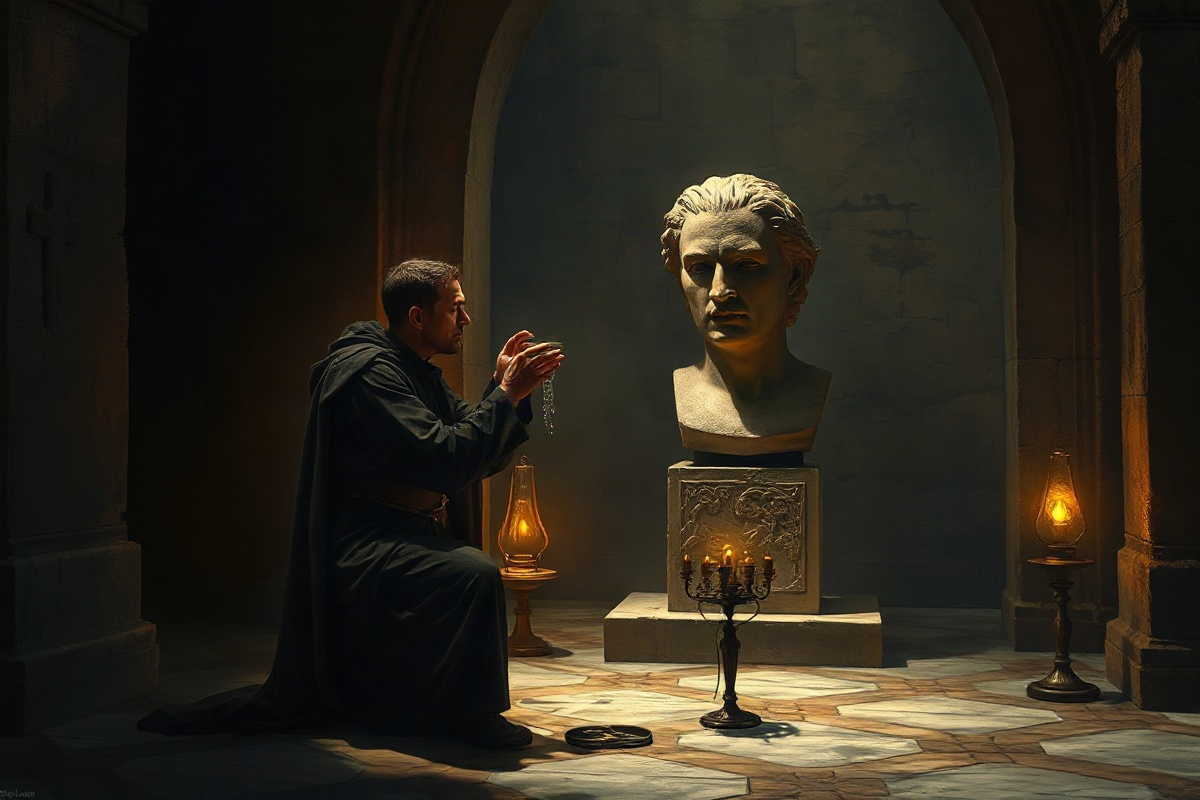
This framework translates powerfully to modern abundance work. Instead of appealing to a vague “universe,” practitioners can adopt the Egyptian specificity, writing letters to specific benevolent ancestors or guiding spirits. The key is the same duality of action: a physical offering—perhaps lighting a specific Candles for 30 minutes or placing a personal object on an altar—paired with a letter detailing the exact nature of the desired abundance, whether it's a specific income increase of 15% or the acquisition of a particular property. The ancient Egyptians understood that spiritual correspondence required a contract of mutual respect, a principle as relevant in 2026 as it was four thousand years ago.
This framework translates powerfully to modern abundance work.
The Greek Katadesmoi: Binding Spells for Financial Security
In ancient Greece, the practice of writing binding spells, or katadesmoi, evolved into a complex system for manipulating fate, including one's financial destiny. Over 1,600 of these lead tablets, often pierced with nails, have been excavated from graves and wells, dating from the 5th century BCE onward. A compelling example from a 4th-century BCE Athenian court case reveals a merchant who inscribed a spell against his business rivals, binding their “tongues, souls, and feet” to prevent them from outbidding him on a lucrative shipping contract. The methodology was precise: the name of the target was written, often backwards, the desire was stated, and the tablet was “killed” by nailing or submerging it, transferring the intention to the chthonic powers.

The underlying psychology of the katadesmoi is not about malevolence but about creating an unbreachable energetic container for one's own prosperity. A modern adaptation involves writing a letter that “binds” limiting beliefs or financial anxieties. For instance, one might write a detailed account of a fear of poverty on a piece of paper, then safely burn it in a fireproof bowl over a period of 7 minutes, visualizing the release of that energy. The act of physically destroying the text, mirroring the ancient nailing of the lead tablet, serves as a potent psychological release, clearing the path for new abundance to manifest, freeing the practitioner from the very constraints the ancients sought to impose on others.
Hindu Yantra Inscriptions: Geometric Channels for Wealth
Within the vast tradition of Hindu Tantra, the creation of a yantra—a geometric diagram—for the goddess Lakshmi is a highly refined form of spiritual correspondence. The Shri Yantra, composed of nine interlocking triangles surrounding a central point (bindu), is considered the ultimate matrix of cosmic abundance. The creation ritual, described in texts like the Yantra Chudamani, is a meticulous process. A practitioner might spend 40 days consecutively inscribing the diagram on a copper plate using a gold stylus, all while chanting the 15-syllable Shri Vidya mantra exactly 125,000 times. The completed yantra is not a mere symbol; it is believed to be a living, breathing conduit for the goddess's energy.

The modern application lies in understanding the yantra as a structured letter to the divine. One can inscribe or print the Sri Yantra and use it as the “stationery” for a prosperity letter. Writing one's financial goals and gratitude within the sacred geometry, perhaps placing it at the bindu point, aligns personal desire with the fundamental structure of cosmic prosperity. The key is the ordered, repetitive, and focused nature of the practice. Even spending just 10 minutes a day for a lunar cycle (29.5 days) focusing on a yantra while stating intentions can create a powerful, structured energetic pattern far more potent than a hastily scribbled note.
The key is the ordered, repetitive, and focused nature of the practice.
Norse Runic Carvings: Inscribing Fate with the Futhark
The Norse peoples understood that writing itself was a magical act, a gift from the god Odin who famously sacrificed himself on the World Tree Yggdrasil to obtain the runes. The Poetic Edda, in the Hávamál (stanzas 138-139), recounts this ordeal, stating Odin hung for “nine long nights” to gain the power to carve and color the symbols that could “calm the sea, quench flames, and turn away sorrow.” Runestones like the 10th-century Rök stone in Sweden, standing over 3.8 meters tall, demonstrate how runes were used to memorialize wealth, honor the dead, and secure a family's legacy—a direct correspondence with fate itself.

A powerful ritual for 2026 involves using runes to “write” a financial future into being. The most relevant runes for abundance are Fehu (cattle, movable wealth), Odal (inheritance, inherited property), and Jera (harvest, cyclical prosperity). A simple ritual involves selecting a small, smooth stone. Over three consecutive days, carve one rune per day (Fehu, then Odal, then Jera) into the stone with a focused intention for each. On the fourth day, anoint the stone with a drop of honey or sunflower oil and place it in a wallet or near one's computer. This act of carving, a direct echo of Odin's sacrifice, transforms a simple letter of intent into a talismanic object that actively works with the forces of fortune.
Chinese Fu Script Talismans: The Bureaucracy of Blessings
Daoist ritual magic developed one of the most complex systems of spiritual correspondence: the Fu talisman. These intricate symbols, drawn by ordained priests on yellow paper with cinnabar ink, function as official petitions to the celestial bureaucracy. A wealth-attracting Fu from the Wen Chang (God of Literature and Status) tradition, for instance, might contain 36 distinct characters and sigils, each representing a different celestial ministry that must approve the request for promotion or exam success. The efficacy of the talisman depends entirely on the priest's ability to accurately replicate the esoteric script and their own spiritual attainment, a process that can take over a decade to master.
While the full complexity of Fu is inaccessible to most, the underlying principle is invaluable: abundance often follows a bureaucratic path. A modern practitioner can design a “personal Fu” by creating a seal or unique signature that represents their desired outcome. This symbol is then “stamped” onto all financial documents, invoices, or even digital communications related to business. The act is a declaration of authority and intent, a way of “filing” one's request with the universe in an orderly, official manner. It turns mundane paperwork into a ritual act, infusing the often-frustrating processes of the material world with spiritual significance and purpose.
It turns mundane paperwork into a ritual act, infusing the often-frustrating processes of the material world with spiritual significance and purpose.
Crafting Your 2026 Abundance Epistle: A Synthesized Ritual
Drawing from these diverse traditions, a potent ritual for the coming year can be constructed. This is not a passive wish but an active, multi-sensory engagement with the forces of creation.
- The Substrate (The Papyrus/Lead/Paper): Choose your material with intention. High-quality, linen-content paper connects to Egyptian practices, while a small, smooth stone honors the Norse tradition. The substrate itself is the first layer of the spell.
- The Script (The Hieroglyphs/Runes/Sigils): Write your request with specificity. State the exact amount of money, the specific opportunity, or the tangible asset you seek in 2026. Then, create a simple sigil by combining the first letters of your goal into a unique symbol, drawing it at the bottom of the letter. This integrates the symbolic power of the Yantra and the Fu.
- The Consecration (The Offering/Activation): This is the crucial step that “sends” the letter. Pass the paper through the smoke of cinnamon or bay leaf incense (a 5-minute smudging is sufficient), an offering to the air element. Then, place a single drop of water on the sigil, and finally, set the letter atop a small citrine or pyrite Crystals for 24 hours to ground the intention in earth energy.
The ritual's power is cumulative. Revisiting the letter on each new moon throughout 2026—a total of 13 times—to read it aloud and recharge the crystal, creates a rhythmic, evolving dialogue with abundance, ensuring the intention remains alive and dynamic as the year progresses.
Beyond the Letter: The Continuous Correspondence of Action
The most critical aspect these ancient traditions share is that the letter or inscription was never the end of the work; it was the beginning. A Greek binding spell was useless if the merchant didn't then go to the agora and bid on contracts. The Egyptian letter was futile if the petitioner didn't tend to their fields. The spiritual correspondence is the seed, but action is the water and sunlight. In 2026, your ritual must be followed by tangible, aligned action. After composing your abundance letter, commit to one concrete, proactive step per week that moves you toward the goal stated in the letter. This creates a feedback loop where the spiritual and material worlds inform and reinforce each other, turning a hopeful request into an inevitable manifestation.
The art of the spiritual letter is a forgotten key to conscious creation. By weaving together the Egyptian clarity of petition, the Greek focus on containment, the Hindu structural precision, the Norse embrace of fate, and the Daoist sense of cosmic order, we can craft correspondences for 2026 that are far more than mere wishes. They become binding contracts with destiny, written not just in ink, but in intention, action, and the accumulated wisdom of the ages. The ancients knew that to speak to the gods was to shape reality. It is a power we are only now remembering how to use.
Small changes, real momentum
Get practical guides and templates you'll actually use — a few thoughtful emails a month.
Frequently Asked Questions
How often should I perform an abundance letter ritual?
The frequency depends on the tradition you’re drawing from. A major, year-defining ritual, like the synthesized one described, is most powerful when performed at a key astrological moment, such as the New Year or your solar return, and then revisited periodically (e.g., each new moon). Smaller, more targeted rituals, like the Norse rune carving for a specific opportunity, can be done as needed. The key is consistency and sincerity over sheer volume; one deeply felt ritual is more effective than a dozen performed hastily. Many practitioners find a quarterly review and renewal—around the solstices and equinoxes—creates a strong, sustainable rhythm.
What if I don't know which ancestral spirit or deity to address?
This is a common concern, and the beauty of a synthesized approach is its flexibility. You are not limited to a pantheon you weren't raised in. You can address the letter to a universal, non-denominational concept like “The Benevolent Source of Abundance” or “My Highest Guiding Spirits.” The power resides less in the specific name and more in the clarity of your intention and the sincerity of your ritual actions. Alternatively, you can research a deity associated with wealth from a culture you feel a genuine connection to, ensuring you approach them with respect and an understanding of their mythology, such as the Roman Abundantia or the Celtic Dagda.
Is it unethical to write a letter that might affect others, like in a binding spell?
This touches on a crucial ethical distinction. The modern adaptation advised here focuses on binding one's own limiting beliefs, not the actions of others. The core ethical principle across most spiritual traditions is that magic or prayer should not be used to manipulate another's free will. A prosperity ritual should aim to create opportunities and open pathways, not to forcibly take from a specific person. Framing your goal in a way that benefits all involved—”I seek a promotion that allows me to contribute my highest skills,” rather than “I want my coworker to fail”—ensures your work is aligned with positive, sustainable abundance that doesn't create negative karmic repercussions.
Keep reading
Related Posts





Related Posts
Related Posts
Related Posts
Your Weekly Dose of Inspiration
Journaling ideas, family tips, and gentle inspiration.