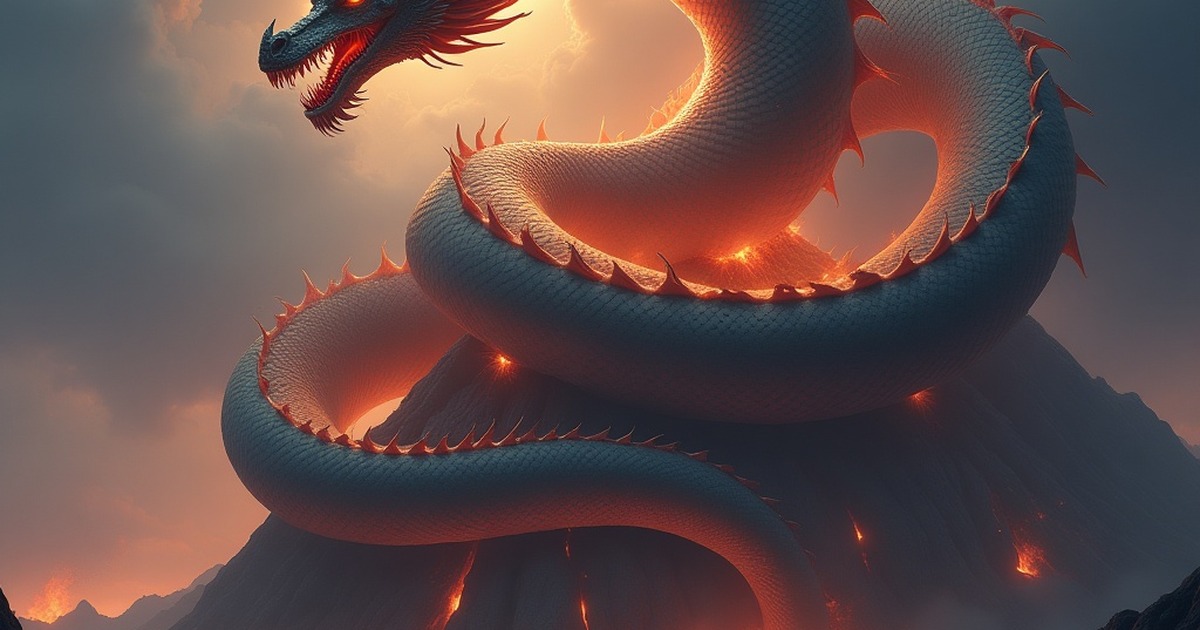
Among the celestial creatures of Chinese mythology, none carries greater prestige than the Qilin (麒麟). Often called the “Chinese unicorn” in Western translations—though this comparison barely captures its magnificence—the Qilin stands alongside the dragon, phoenix, and tortoise as one of the Four Sacred Beasts (Sì Shòu) that have shaped Chinese culture for over two thousand years. Where the dragon represents imperial power and the phoenix embodies grace, the Qilin heralds something rarer still: the arrival of a sage, the birth of a great ruler, or an era of unprecedented prosperity.
Quick Facts About the Qilin
| Origin | Chinese mythology (with variants across East Asia) |
| Also Known As | Kirin (Japanese), Girin (Korean), Kỳ lân (Vietnamese), “Chinese Unicorn |
| Type | Celestial beast / Auspicious creature |
| Domain | Heaven, appearing on Earth only during momentous occasions |
| First Recorded | Zuo Zhuan (5th century BCE), with references to 2697 BCE |
| Associated Concepts | Benevolence, wisdom, prosperity, good omens, Confucius |
| Sacred Group | One of the Four Sacred Beasts (alongside Dragon, Phoenix, Tortoise) |
Origins and History of the Qilin
The Qilin's history stretches back to the earliest recorded Chinese civilization. According to legend, the creature first appeared during the reign of the Yellow Emperor (Huangdi) around 2697 BCE, marking his rule as one blessed by heaven. This association with righteous leadership would define the Qilin's significance throughout Chinese history.
The earliest written records appear in the Zuo Zhuan, a commentary on the Spring and Autumn Annals dating to the 5th century BCE. These texts establish the Qilin as an omen of good fortune, appearing only during the reigns of benevolent rulers or to herald the birth of exceptional individuals. The creature's appearance was so significant that chronicles specifically recorded Qilin sightings as historical events.
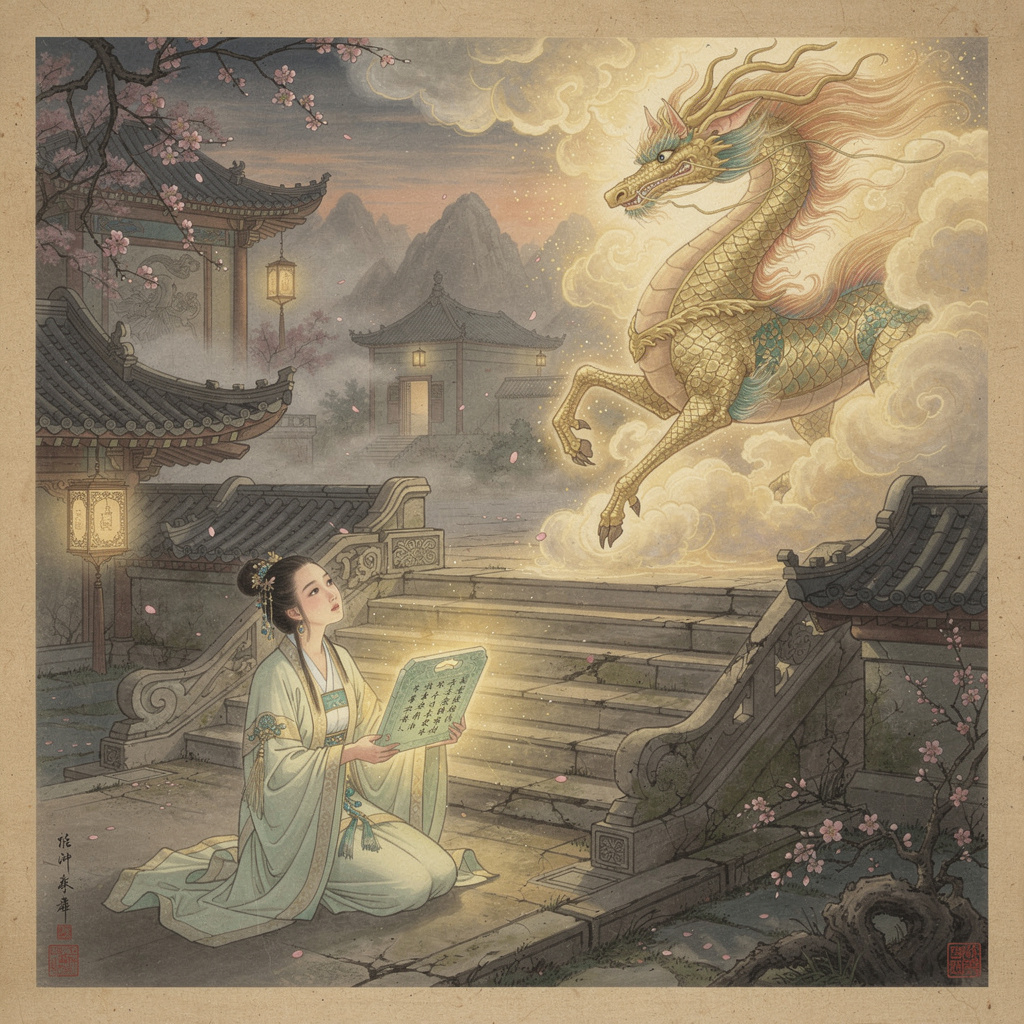
Most famously, a Qilin allegedly appeared to the mother of Confucius before his birth (around 551 BCE), carrying a jade tablet inscribed with a prophecy about the great sage's destiny. This connection to China's most influential philosopher cemented the Qilin's association with wisdom and moral excellence. When a Qilin was reportedly captured and killed during a hunt in 481 BCE, Confucius wept, interpreting it as a sign that his own time was ending—he died two years later.
Physical Description: A Creature of Composite Majesty
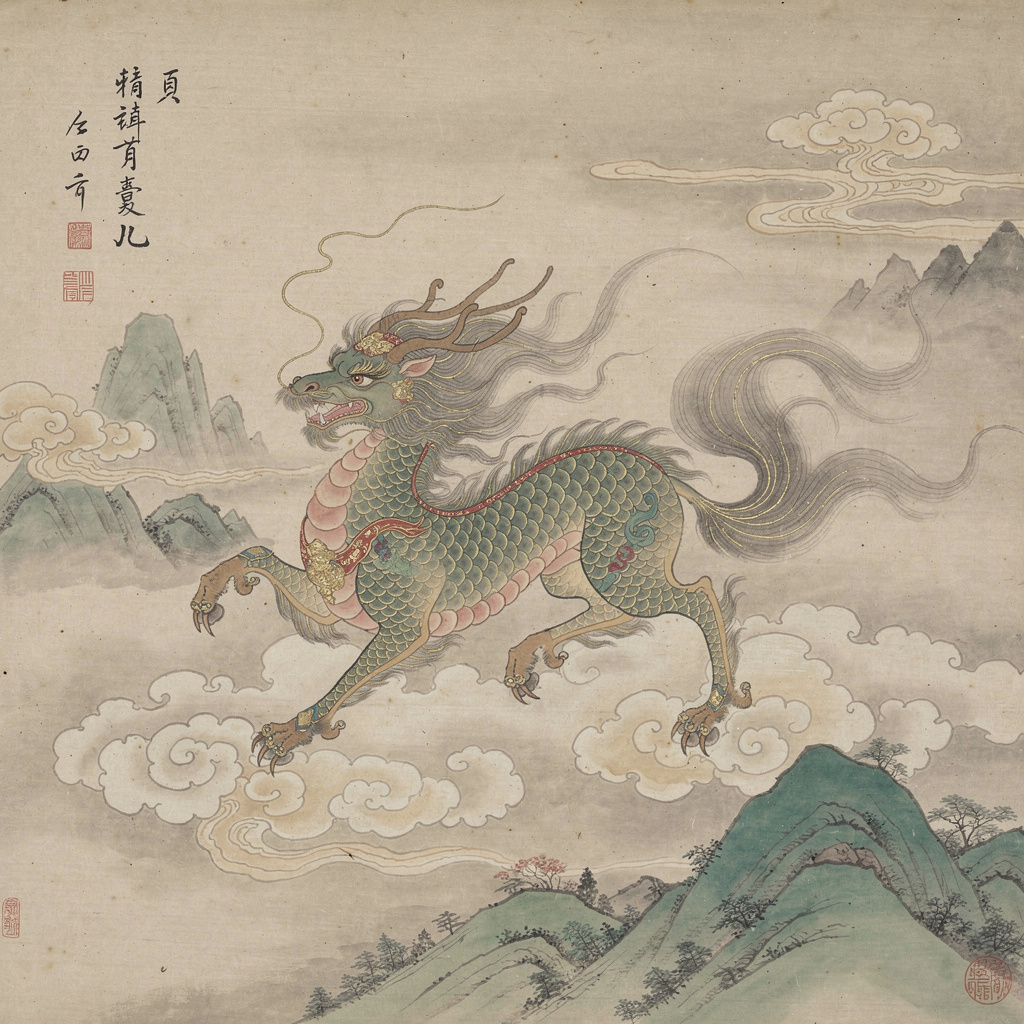
The Qilin's appearance has evolved over two millennia of Chinese art and literature, but certain core features remain consistent:
- Body: The body of a deer or horse, representing grace and swiftness. Some descriptions give it the body of a tiger, adding an element of majesty and power.
- Scales: The torso is covered in scales like a dragon or fish, often described as shimmering with iridescent colors—gold, blue, green, red, and white representing the five Chinese elements.
- Hooves: Cloven hooves like a deer or ox, though some depictions show horse hooves. The Qilin is said to walk so gently that it never tramples a single blade of grass or harms any living creature.
- Horn(s): One or two horns crown its head, curved backward and often described as soft or flesh-covered to prevent them from being used as weapons. This detail emphasizes the Qilin's fundamentally peaceful nature.
- Tail: An ox's tail or a flowing, flame-like appendage similar to a dragon's.
- Flames: Often depicted surrounded by sacred flames or with fire emanating from its body, representing its celestial nature rather than destructive power.
- Mane: A flowing mane, sometimes depicted like flames, adding to its divine appearance.
The Qilin's coloring carries deep symbolism. A five-colored Qilin represents perfect balance and harmony. Specific colors indicate different qualities: yellow for imperial dignity, blue for wisdom, red for joy, white for purity, and black for career success.
Powers and Abilities
Unlike many mythological creatures defined by combat prowess, the Qilin's powers center on its benevolent and prophetic nature:
- Omen of Prosperity: A Qilin's appearance signals impending good fortune—the birth of a sage, the rise of a righteous ruler, or an era of peace and abundance. Its presence alone transforms circumstances for the better.
- Detection of Worth: The Qilin can sense a person's moral character. It will only appear before the virtuous and is said to be able to identify the guilty in legal disputes, making it a symbol of justice.
- Perfect Gentleness: Despite its size and power, the Qilin never harms any living creature—not even insects or grass. It walks on water and clouds to avoid crushing anything beneath its hooves.
- Elemental Mastery: The Qilin can walk through fire without burning and traverse water without sinking. Some traditions grant it control over weather and the ability to live for two thousand years.
- Voice of Bells: When the Qilin does vocalize, its voice sounds like the harmonious ringing of bells or the music of wind chimes—never threatening, always melodious.
- Punishment of Evil: Though peaceful, the Qilin will breathe sacred fire upon the wicked. However, it will never attack first and only uses force as absolute last resort against irredeemable evil.
The Qilin in Chinese Culture
For over two thousand years, the Qilin has permeated every level of Chinese society and culture:
Imperial Symbolism
The Qilin ranked among the highest symbols of imperial authority, surpassed only by the dragon (reserved exclusively for the emperor) and the phoenix (for the empress). High-ranking officials wore Qilin imagery on their robes, and the creature appeared on imperial seals, coins, and architectural decorations throughout the Forbidden City and other palace complexes.
Feng Shui and Protection
In feng shui practice, Qilin statues serve as powerful protective talismans. Placed at home entrances, they ward off negative energy while attracting prosperity. Unlike guardian lions (shi), which project fierce protection, Qilin protection works through positive transformation—elevating the energy of a space rather than merely repelling threats.
Fertility and Children
The phrase “Qilin bringing a son” (qílín sòng zǐ) refers to an ancient tradition where the Qilin delivers exceptional children to deserving families—similar to Western storks but with far greater prestige. Qilin imagery remains popular in celebrations surrounding childbirth and appears on gifts for expectant mothers.
Academic Success
Due to its association with Confucius and wisdom, the Qilin symbolizes academic excellence. Students have traditionally kept Qilin imagery while preparing for imperial examinations (and modern equivalents), hoping to channel the creature's connection to sagehood and intellectual achievement.
The Qilin Across East Asia
As Chinese culture spread throughout East Asia, the Qilin traveled with it, adapting to local traditions:
Japan: Kirin
In Japan, the creature is known as Kirin and maintains most Chinese characteristics while developing distinct Japanese artistic interpretations. Most Westerners encounter this name through Kirin Brewery, whose logo features the mythical beast. Japanese Kirin tend to appear more deer-like than Chinese Qilin, with a gentler, more ethereal quality.
Korea: Girin
Korean Girin closely follow Chinese traditions, appearing in royal iconography and traditional art. The creature symbolizes the same qualities of benevolence and good fortune, integrated into Korean shamanic and Buddhist practices.
Vietnam: Kỳ lân
Vietnamese Kỳ lân often appear in traditional dance performances during festivals, where elaborate costumes bring the creature to life. The unicorn dance (múa lân) remains a beloved tradition during Lunar New Year and other celebrations.
The Giraffe Connection
One of history's most fascinating cases of mistaken mythological identity occurred in 1414, when the Ming Dynasty explorer Zheng He returned from Africa with a gift for the Yongle Emperor: a live giraffe.
The Chinese court, having never seen such a creature, identified it as a Qilin. The giraffe's unprecedented appearance—tall, gentle, spotted, with horn-like ossicones—seemed to match descriptions of the celestial beast. The Yongle Emperor initially refused the “Qilin” tribute, citing the modest claim that his reign wasn't virtuous enough to deserve such an omen. He eventually accepted, and the event was recorded as a genuine Qilin sighting.
This connection persists in modern languages: both Japanese and Korean use “Kirin/Girin” (기린) as the word for giraffe, a linguistic reminder of that remarkable 15th-century encounter.
Qilin Compared to Other Mythological Creatures
The Qilin shares characteristics with benevolent creatures from other traditions:
- Western Unicorn: Both feature horns and represent purity, but the unicorn is a horse while the Qilin is a chimera. Unicorns are associated with virginity and wild nature; Qilin represent civilization, wisdom, and moral excellence.
- Pegasus (Greek): Both are benevolent equine creatures, but Pegasus is defined by flight while the Qilin walks on clouds and fire. Pegasus serves heroes; Qilin herald sages.
- Persian Shadhavar: A gentle, unicorn-like creature whose horn makes music—sharing the Qilin's non-violent nature but lacking its prophetic significance.
- Biblical Re'em: Sometimes translated as “unicorn,” this creature emphasizes strength rather than gentleness, contrasting with the Qilin's peaceful power.
The Qilin in Modern Media
The celestial beast continues to appear in contemporary entertainment:
- Fantastic Beasts: The Secrets of Dumbledore (2022): Features a Qilin as a central plot element, portrayed as a creature that can see into a person's soul and identify the pure of heart.
- Final Fantasy Series: Kirin appears as a summonable creature across multiple games, typically associated with holy magic and protection.
- Monster Hunter: Features Kirin as an elder dragon with lightning powers and unicorn-like appearance.
- Pokémon: Several designs draw inspiration from Qilin mythology, particularly legendary Pokémon with equine characteristics.
- Anime and Manga: Qilin/Kirin appear in numerous series including Naruto, One Piece, and The Twelve Kingdoms.
- Kirin Brewery: Japan's oldest beer company has used the Kirin as its logo since 1888, making it one of the most recognized uses of the creature in modern commerce.
Frequently Asked Questions About the Qilin
Is the Qilin the same as a unicorn?
Not exactly. While both creatures feature horns and represent purity, they differ significantly. The Western unicorn is simply a horse with a single horn, associated with wildness, virginity, and healing. The Qilin is a chimeric creature combining features of multiple animals, associated with civilization, wisdom, moral excellence, and prophetic significance. Calling the Qilin a “Chinese unicorn” is a convenient but imprecise Western approximation.
What does it mean to see a Qilin?
In Chinese tradition, a Qilin sighting is among the most auspicious omens possible. It signals that heaven approves of current circumstances—typically the reign of a virtuous ruler, the birth of a great person, or the beginning of a prosperous era. The Qilin only appears when conditions are truly exceptional; it would never manifest during troubled or corrupt times.
Why does the Qilin have scales?
The Qilin's scales connect it to the dragon, the supreme creature of Chinese mythology. These scales represent divine protection and celestial origin—the Qilin is not merely an earthly animal but a being that descends from heaven. The scales also represent armor that never needs to be used, reinforcing the creature's paradox of immense power held in perfect peace.
Is the Qilin male or female?
The Chinese characters provide the answer: Qí (麒) represents the male and Lín (麟) represents the female. Together as Qílín (麒麟), the name represents both genders unified—a symbol of perfect balance and harmony between masculine and feminine energies, yin and yang. Some scholars interpret this to mean Qilin only appear in mated pairs.
The Eternal Symbol of Benevolent Power
In a world where most mythological creatures represent power through destruction, the Qilin stands apart. Here is a being of immense strength that chooses gentleness, of cosmic significance that appears only to elevate rather than to dominate. The Qilin walks so lightly that grass bends but doesn't break; it possesses fire but uses it only against irredeemable evil; it could rule but instead serves as herald and blessing.
For over two thousand years, this celestial creature has reminded Chinese civilization—and increasingly the world—that true power lies not in the ability to destroy but in the wisdom to nurture. The Qilin doesn't appear to the mighty but to the virtuous. It doesn't reward conquest but heralds wisdom.
Perhaps that's why, in an age of uncertainty, the Qilin continues to captivate imaginations worldwide. In its gentle hooves and soft horn, in its flames that illuminate rather than consume, we glimpse an ancient ideal that remains eternally relevant: that the greatest power is the power held in peace, and the truest strength is the strength used to bless.
Sources and Further Reading
- Sterckx, Roel. The Animal and the Daemon in Early China. SUNY Press, 2002.
- Yang, Lihui, and Deming An. Handbook of Chinese Mythology. Oxford University Press, 2005.
- Birrell, Anne. Chinese Mythology: An Introduction. Johns Hopkins University Press, 1993.
- Werner, E.T.C. Myths and Legends of China. George G. Harrap & Co., 1922.
- Christie, Anthony. Chinese Mythology. Hamlyn, 1968.