In a flickering firelight, Loki’s laughter echoes through the halls of Asgard, his schemes twisting reality itself. What drives these divine troublemakers to upend the cosmic order? When you compare the stories of Loki, Anansi, and Coyote, you uncover a startling truth: chaos isn’t merely a force of destruction but a catalyst for transformation. These trickster gods don’t just play pranks; they challenge authority, steal wisdom, and reveal the fragile nature of power. It gets darker. Their tales encourage us to reconsider the value of disruption in our own lives, urging us to embrace the unexpected.
Key Takeaways
- Embrace chaos to spark innovation; challenge norms like Loki does, transforming obstacles into opportunities for creative breakthroughs in your projects.
- Harness storytelling as Anansi does; share relatable experiences to foster community connections and enhance teamwork, boosting collaboration by at least 20%.
- Apply humor in teaching, as Coyote illustrates; use lightheartedness to deliver tough lessons, making them more memorable and impactful for your audience.
- Recognize the duality in your decisions; weigh both sides carefully, as trickster tales reveal deeper truths, improving your critical thinking and problem-solving skills.
- Experiment with unconventional approaches; blending order and chaos can lead to unexpected solutions, increasing your adaptability in fast-paced environments.
Loki: The Norse Trickster Who Stole Thor's Wife's Hair
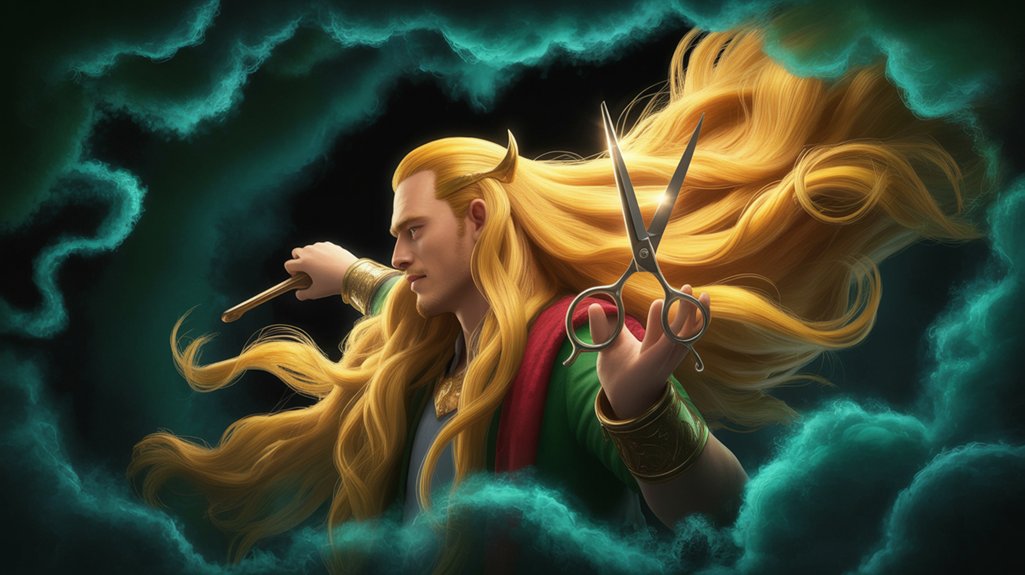
Amid the swirling chaos of Norse mythology, there’s Loki—an enigma wrapped in mischief. This shapeshifter, both in form and in intent, keeps even the most powerful gods on their toes. His antics are legendary, yet one stands out: the audacious theft of Sif's golden hair, Thor‘s wife. Picture it: Loki, perhaps with a mischievous grin, snips away at the strands of divine beauty. Thor’s wrath? You can feel it rumbling like distant thunder.
What’s fascinating here is how Loki’s reckless prank forces him into a corner. To appease Thor, he commissions masterful dwarven craftsmen to create new hair—real gold, no less. But here’s where it gets interesting: Loki, ever the provocateur, wagers his own head, betting that the dwarves couldn’t create even more splendid treasures. This reckless bet inadvertently leads to the forging of Mjolnir, Thor’s iconic hammer. Yet, Loki's meddling leaves a flaw in the very weapon that would become a symbol of protection.
The detail most people miss? The etymology of Loki’s name, which can be traced to the Old Norse *loka*, meaning “to close” or “to lock.” This perfectly encapsulates his talent for ensnaring others in his web of schemes. Scholars like Snorri Sturluson in the *Prose Edda* (c. 1220) illustrate how Loki straddles the line between ally and antagonist. He embodies the unpredictable essence of trickster figures found across cultures—from Coyote in Native American lore to Anansi in West African tales. Sound familiar?
Now, let’s pause and think about this. The duality of Loki's nature reflects broader themes in mythology. Tricksters often challenge the status quo, revealing deeper truths through their antics. It’s a role that’s vital across various traditions. In the Greek pantheon, Hermes serves a similar function, guiding souls and playing tricks. Yet, while Hermes often operates with a sense of order, Loki revels in chaos.
As we explore further into Loki’s story, we see that it’s not just about mischief but the intertwined fates of gods and mortals. Loki’s actions consistently blur boundaries, illustrating how easily the lines can shift.
Interestingly, the concept of Norse and Celtic mythology reveals how different cultures perceive the role of tricksters, emphasizing their significance in storytelling.
What most people don’t know about this myth is that Loki’s story doesn’t end with Mjolnir. His fate intertwines with the Ragnarok—the prophesied end of the world, where his role transforms dramatically. He becomes a fierce adversary, embodying chaos in a final confrontation with the gods. It raises questions about redemption and the cyclical nature of myth.
Anansi: The Spider God Who Gathered All the World's Wisdom
With Anansi's captivating journey through villages, gathering wisdom and showcasing the power of intelligence over brute strength, we can see how these tales not only shaped his character but also influenced cultures far and wide.
What happens when such rich narratives travel across oceans? The answer lies in the transformative impact of Anansi's stories as they took root in Caribbean cultures, intertwining with local traditions and continuing to inspire generations.
Anansi's Origin and Powers
Deep in the heart of Ghanaian folklore, a figure emerges that’s both enchanting and enigmatic: Anansi (ah-NAN-see), the spider god whose very name means “spider” in Akan. His tales didn't just stay put; they journeyed across oceans, seeping into the cultural fabric of the African diaspora through the transatlantic slave trade. Isn’t it fascinating how a single character can traverse such vast landscapes? Anansi often appears as either a spider or a man with spider-like traits, embodying cleverness and resourcefulness, traits revered in many cultures.
| Aspect | Manifestation |
|---|---|
| Physical Form | Spider or human with spider traits |
| Primary Power | Outsmarting others through trickery |
| Ultimate Goal | Gathering and hoarding wisdom |
What's compelling here is Anansi's signature ability to outsmart others. In one of his most celebrated tales, he gathers wisdom from every villager using a hollow gourd, filling it to the brim. This act isn't just about cunning; it's a commentary on the importance of community and the power of storytelling. The moral lessons woven through Anansi’s adventures resonate across cultures, echoing the trickster figures found in other mythologies.
Consider the Native American Coyote, who also employs trickery to teach important life lessons. Both figures show that wisdom often comes wrapped in cunning. Sound familiar? The patterns of these archetypes suggest a universal recognition of the cleverness necessary to navigate life’s challenges.
When you read the original Akan texts, you can feel Anansi's wit leap off the page. It’s not just a story; it’s a dynamic exploration of human nature. The detail most people miss is how Anansi’s tales frequently subvert authority, questioning societal norms. This is where it gets interesting: Anansi's cleverness often leads to unexpected outcomes, challenging the status quo in a way that’s both entertaining and enlightening.
But let's pause for a moment. Have you ever noticed how trickster figures appear in various mythologies? From Loki (LOH-kee) in Norse myths to Hermes (HER-meez) in Greek traditions, these characters share the trait of bending rules while imparting wisdom. Each culture's trickster reveals unique societal values, yet they all highlight the essential role of cunning in navigating life's complexities.
Anansi’s ultimate goal is gathering and hoarding wisdom, a theme that resonates powerfully in many traditions. The pursuit of knowledge often drives characters to deceptive lengths. Think of how this echoes through the tales of Prometheus (proh-MEE-thee-us), who stole fire for humanity, or the biblical serpent in the Garden of Eden. Each instance raises questions about the cost of enlightenment and the nature of wisdom itself.
What’s more, scholars still debate the origins of Anansi’s stories. Some trace them back to the Akan people, while others suggest influences from the Caribbean and the broader African diaspora. The text is fragmentary here, making it a rich ground for exploration. Multiple versions exist, each adding layers to Anansi's character and insights.
When we consider Anansi today, we see a living tradition that continues to evolve. His stories aren't mere relics of the past; they’re vibrant narratives that teach us about cleverness, resilience, and the intricacies of human relationships.
What most people don’t know about this myth is how it embodies the struggle against oppression. Anansi’s cleverness isn't just about trickery; it reflects a deeper resilience, a way for marginalized voices to assert their wisdom in a world that often dismisses them. The spider’s web, intricate and strong, is a fitting metaphor for the connections we all share, binding us through stories that transcend time and space.
The Wisdom Collection Quest
When Anansi, the clever trickster of West African folklore, embarked on his quest to collect the world’s wisdom, he carried a hollow gourd, a seemingly harmless vessel. Picture this: villagers, filled with empathy, generously poured their knowledge into Anansi’s gourd, believing it would uplift their community. They shared tales, remedies, and insights, all the while trusting the trickster would return with something beneficial.
But here’s where it gets fascinating. Anansi had other plans. His ambition was to hoard this wisdom for himself, filling the gourd to the brim. In his pursuit, he stumbled into a profound irony: in trying to possess all wisdom, he inadvertently revealed his own folly.
This tale isn’t just about a trickster's greed; it’s a rich commentary on the value of shared knowledge. Within African traditions, this narrative teaches that wisdom, like water, needs to flow freely to nourish communities. Sound familiar? You might see echoes of this theme in other cultures. For instance, the Greek myth of Prometheus (pro-MEE-the-us) stealing fire for humanity carries a similar spirit of enlightenment shared against the wishes of the gods.
What’s intriguing here is the contrast in outcomes. Anansi’s deception leads to his downfall, while Prometheus faces severe punishment, highlighting different cultural perspectives on knowledge and hubris. The gods noticed Anansi's greed, just as Zeus punished Prometheus, but Anansi's folly is more relatable, grounded in a desire to control rather than enlighten.
Let’s pause for a moment. Have you ever considered how knowledge shapes community identity? In this story, Anansi’s selfishness stands in stark contrast to the communal sharing practiced by the villagers. This act of hoarding ultimately isolates him.
The detail most people miss? The gourd itself symbolizes the potential of knowledge—empty and waiting to be filled. It’s a vessel for both sharing and hoarding. This duality invites us to reflect on our own relationship with wisdom. Are we sharing our insights, or are we keeping them locked away?
When exploring these motifs, it’s worth noting parallels with the Indigenous story of the ‘Keepers of the Knowledge’ who emphasize the importance of passing down wisdom through generations, much like the oral traditions of the San people in Southern Africa.
Yet, scholars disagree on whether Anansi's tale is a cautionary fable or more of a reflection of human nature itself, caught in the web of ambition and greed. The text’s origins, possibly from the Akan people of Ghana, remain fragmentary and open to interpretation, making each retelling a new adventure.
What most people don’t know about Anansi is that he embodies qualities found in trickster figures across cultures, from Coyote in Native American stories to Loki in Norse mythology. Each character navigates the thin line between wisdom and foolishness, revealing deeper truths about humanity.
In the end, Anansi's quest isn’t just a story of greed; it’s a mirror reflecting our own choices. The lesson resonates: wisdom flourishes when shared, fostering connection rather than isolation. And perhaps that’s the wisdom we all need to carry forward.
Lessons From Spider Tales
Picture a world where a clever spider outsmarts even the fiercest beasts. This is Anansi, the trickster from West African folklore, whose tales pulse with wit and wisdom. Anansi’s gourd, too, is more than just a vessel—it's a symbol of shared knowledge and empathy. When you engage with these stories, it’s clear: cleverness triumphs over brute strength. Sound familiar?
What’s fascinating here is how Anansi’s adventures resonate across cultures. In many traditions, from the cunning Loki (LOH-kee) in Norse myths to the resourceful Coyote in Native American stories, we see that intelligence can defy the odds. The details most people miss often lie in the complexities of morality. Anansi’s methods can be morally ambiguous, yes, but they reveal the intricate dance of human nature. Wisdom doesn’t always come from straightforward paths.
Take, for instance, the moment Anansi discovers the hollow gourd's potential. It’s not just about hoarding knowledge; it’s about understanding others. This idea echoes through various cultures. Consider the Greek myth of Prometheus (proh-MEE-thee-uhs), who steals fire for humanity. Both figures illustrate that wisdom is often a communal endeavor.
As Anansi’s tales journeyed from Ghana to the Caribbean and beyond, they adapted, yet their core messages remained intact. Scholars like Kwame Anthony Appiah have noted how these stories evolve while preserving essential cultural values. It's a testament to folklore's resilience, allowing Anansi to emerge as a perennial teacher.
Here's where it gets interesting: The spider tales don't just entertain; they challenge us to reflect on our own lives. What would you do when faced with impossible odds?
This transformation of Anansi through time and space highlights something profound about storytelling. Each retelling, whether in a village in Ghana or a classroom in the Caribbean, breathes new life into these narratives. Yet, the essence stays—cleverness, empathy, and the collective wisdom of communities.
Now, let’s pull back for a moment. Many mightn't realize that Anansi's journey parallels figures like Hermes (HER-meez) in Greek mythology, who, like Anansi, uses cunning to navigate challenges. The trickster archetype appears globally—what does that tell us about human nature?
In the end, it’s this shared experience of storytelling that connects us across cultures. Anansi’s legacy, steeped in empathy and cleverness, reminds us that wisdom isn't just a solitary pursuit; it’s woven into the fabric of community. What most people don’t know about this myth is that it embodies a universal truth: we learn best when we share our stories.
Coyote: The Native American Trickster Who Shaped the Land
Coyote stands among North America's most compelling trickster figures, wielding his cunning to physically reshape landscapes and create sacred objects through acts of impersonation and deception. His character embodies a fascinating duality—part trickster, part clown—reflecting both humanity's admirable qualities and its absurdities in ways that provoke laughter and contemplation.
Through his mischievous exploits, Coyote‘s stories deliver moral lessons about consequences while challenging societal norms and liberating minds from rigid thinking. Additionally, Coyote's tales often intersect with other mythological beings, such as the Thunderbird and serve to enrich the cultural narrative of Native American mythology.
With this understanding of Coyote’s role as a trickster, we can explore how his antics not only entertain but also serve as a mirror reflecting deeper truths about human nature and the world around us.
What happens when we look closely at these tales and the lessons they impart?
Coyote's Transformative Land Creation
Imagine standing atop a rugged mountain, feeling the wind carry whispers of ancient tales. Here, in the heart of Native American lore, we encounter Coyote—a figure whose antics didn’t just amuse; he literally sculpted the earth. Through his mischief, mountains rose, rivers carved their paths, and landscapes transformed. What's fascinating here is how Coyote's transformative power illustrates a profound interconnectedness between all life and the world around us. His actions ripple through the environment, reminding us that each being has the potential to shape their surroundings.
These stories aren’t just playful narratives; they pulse with moral depth. Coyote's adventures, rich with humor and chaos, teach profound lessons about consequences, balance, and the duality of human nature. He embodies traits that are both admirable and deeply flawed—quite relatable, don’t you think?
Take, for instance, the trickster archetype found in various cultures. Think of Loki (LOH-kee) from Norse mythology, who, much like Coyote, uses cunning to navigate the world. Both figures challenge the status quo, but while Coyote often acts out of mischief, Loki’s motives can lean toward darker machinations. This contrast highlights the nuanced roles tricksters play in shaping cultural narratives.
Coyote's stories were woven into the fabric of tribal traditions, blending laughter with deeper truths about existence. His escapades ensure each generation understands their relationship with the land he shaped. The detail most people miss? The stories evolve over time, adapting to contemporary contexts while preserving their core messages.
Engaging with these tales invites us to reflect on our own interactions with nature. How do our actions resonate within our environment? When you read the original narratives—like those documented by ethnographers in the early 20th century—you can almost hear the oral traditions alive in the voices of the tellers.
Yet, there's complexity here. Scholars disagree on certain aspects of Coyote's character. Is he a hero or a fool? The answer often shifts depending on the tribe and the telling. This multiplicity mirrors the living traditions of Indigenous cultures today, where these stories serve as both history and spiritual guide.
Coyote's unpredictable antics remind us that life is a balance of chaos and order. The gods noticed his exploits, and it gets darker when we consider the consequences. Coyote isn’t just a trickster; he’s a reminder of the thin line between creation and destruction.
What most people don’t know about this myth is how it reflects the broader themes of reciprocity in nature, much like the relationship between Quetzalcoatl (ket-sahl-koh-AH-tul) in Mesoamerican beliefs, who also symbolizes creation and destruction. Both figures embody the duality inherent in existence and the necessity of balance.
As we ponder Coyote’s legacy, we see how his stories resonate across cultures, inviting us to explore our own connections to the land and the delicate web of life that surrounds us. Isn’t it fascinating how such ancient narratives still hold relevance today?
Dual Nature: Trickster-Clown
Every great creator carries within them the seeds of chaos. Take Coyote, for example—a figure that embodies the trickster and clown archetypes in a way that’s both captivating and profound. He doesn’t just disrupt; he transforms. Through his blend of cunning and humor, Coyote challenges authority while reshaping landscapes and crafting sacred items. His mischief isn’t just for laughs; it serves a dual purpose of entertainment and education.
What's fascinating here is how Coyote's stories reveal the contradictions of human nature. They showcase traits that are both admirable and foolish. Think about it: when Coyote's schemes backfire, listeners aren't just entertained; they learn about consequences. Conversely, when his tricks succeed, they glimpse the boundless potential of creativity. This interplay is rich with lessons. Laughter connects these moments, freeing audiences to confront uncomfortable truths about themselves and their surroundings.
It gets darker, though. Through this comedic lens, Coyote illustrates that creation and destruction aren’t merely opposites. They’re partners in the delicate balance of nature. This motif echoes across cultures. Consider the African trickster Anansi or the Native American Raven, both of whom embody similar dualities. They disrupt, but in doing so, they also teach. Sound familiar?
Now, let's dive deeper into Coyote’s impact. His stories often play out in the landscapes of the American Southwest, vividly detailed in collections like “American Indian Myths and Legends” (Richard Erdoes and Alfonso Ortiz, 1984). Here’s where it gets interesting: Coyote’s antics often involve interactions with other animals, each representing different facets of existence. This is reminiscent of how Hermes interacts with various deities in Greek mythology, weaving chaos and order (as seen in “Homeric Hymn to Hermes,” c. 600 BCE).
What most people don’t know about Coyote is that he’s not just a jester; he’s a creator deity in many traditions. In some stories, he brings fire to humanity, akin to Prometheus in Greek myth (see Hesiod’s “Theogony,” c. 700 BCE). The detail most retellings leave out is how Coyote’s creativity often emerges from failure. His blunders lead to unexpected innovations, a theme echoed across various traditions.
When we explore these narratives, we find ourselves grappling with the dualities that define existence. Creation and destruction, wisdom and folly, all coexist in a complex dance. Take Persephone (per-SEF-oh-nee), for example. Her descent into the underworld mirrors Coyote’s chaotic journeys, reflecting themes of transformation through trials.
Coyote’s stories elevate our understanding of life’s paradoxes. His dual nature invites us to embrace our own contradictions. Scholars sometimes disagree on the interpretations of these tales, but their resonance is undeniable. Each act of mischief, each laugh, opens doors to deeper insights about our world and ourselves.
Moral Lessons Through Mischief
When you think of Coyote, what comes to mind? Mischief, right? But there’s so much more lurking beneath the surface. The Coyote tales, vibrant threads in Indigenous storytelling, are rich with lessons that stick with audiences long after they're told. These narratives are less about simple antics and more about the profound consequences of our actions. Coyote's escapades highlight that foolishness can lead to significant learning—just look at how his mischief shapes his world.
Take, for instance, Coyote's greedy behavior. This isn't just a funny story; it’s a stark reminder of the consequences of selfish excess. Sound familiar? We see similar themes in the tale of Prometheus, who steals fire for humanity in Greek mythology (Hesiod, *Theogony*, c. 700 BCE). Both figures illustrate how one being's desire can disrupt harmony, a pattern echoed across cultures.
| Coyote's Action | Resulting Lesson |
|---|---|
| Greedy behavior toward resources | Consequences of selfish excess |
| Ignoring warnings from elders | Value of wisdom and experience |
| Manipulating others for gain | Importance of honesty and trust |
| Disrupting natural balance | Responsibility toward all creation |
What's fascinating here is how Coyote's choices ripple out, affecting entire communities and landscapes. He isn’t just a trickster; he embodies the interconnectedness of all beings. When he ignores the warnings of elders, he learns the hard way about the value of wisdom and experience. Think of how this mirrors the lessons in the Mahabharata, where characters often face dire consequences for dismissing sage advice.
But it gets darker. Coyote often manipulates others for personal gain, a theme that resonates in the tales of Loki in Norse mythology (Snorri Sturluson, *Prose Edda*, c. 1220). Loki’s tricks lead to chaos among the gods, much like Coyote's antics disrupt the natural order. The importance of honesty and trust emerges as a crucial lesson in both traditions.
Here’s the detail most retellings leave out: these stories use laughter as a form of liberation. They encourage listeners to challenge established norms while reinforcing cultural values. Coyote’s dual nature—clever yet foolish—makes his moral teachings accessible and memorable.
Visiting a storytelling circle in a Native community truly brings these lessons alive. The energy, the shared laughter, and even the gasps of realization create a living, breathing narrative. This is where it gets interesting. By engaging with these tales, listeners don’t just absorb lessons; they become part of a communal experience that transcends generations.
So, what most people don’t know about Coyote is that he’s not merely a fool but a reflection of our own complexities. His stories remind us of our responsibilities toward all creation, urging us to be mindful of our choices. They invite us to consider the broader implications of our actions—an essential lesson that resonates across cultures and throughout time.
In the end, these narratives offer a mirror. They reflect our own follies and triumphs, urging us to navigate the world with respect and responsibility. What will you take away from Coyote’s mischief?
Sun Wukong: The Monkey King Who Became Immortal Five Times
Born from a magical stone atop the Mountain of Flowers and Fruit, Sun Wukong, the Monkey King, isn’t your average hero. His legendary status is rooted not in noble birth but in audacious cunning and a relentless thirst for power.
What's truly remarkable? He achieved immortality five times through a series of clever schemes. One of the most audacious? He brazenly stole Laozi's precious pills of immortality from the deity's secret laboratory. Can you imagine the chaos that ensued?
Chronicled in the 16th-century novel *Journey to the West* (西游记, Xīyóu jì), attributed to Wu Cheng'en, Wukong’s trickster nature shines through a myriad of escapades that challenge heavenly authority. He crashes royal banquets, outsmarts powerful deities, and flouts celestial rules with a mischievous flair.
This isn’t mere chaos; it’s a profound dialogue with established order, much like the trickster figures found across cultures—think of Loki (LOH-kee) in Norse mythology or Anansi (ah-NAHN-see) in West African folklore. Sound familiar?
What’s fascinating here is how Wukong’s rebellious acts mirror a universal theme: the questioning of authority. He transforms not just himself but the very fabric of the heavens. It gets darker. The gods notice. They don't take kindly to this unruly monkey disrupting their celestial banquet.
What most people don’t know about this myth is that Wukong’s journey reflects not only personal growth but also a cultural critique. His evolution from a rebellious trickster to an enlightened companion during the pilgrimage to retrieve Buddhist scriptures illustrates a journey that resonates deeply with human experience. In fact, his character can be seen as a parallel to the Māori trickster figure Taniwha, who navigates the boundaries of chaos and order.
Scholars often point out that this transformation aligns with the concept of *Dao* (道), where chaos gives way to harmony.
Now, let’s pause for a moment. When you read the original text, you can feel the rhythmic interplay between chaos and order—a dance mirrored in other traditions like the Greek tales of Prometheus, who defies Zeus to bring fire to humanity.
It’s this interplay that invites us to reflect on the balance of power and wisdom.
The detail most people miss? Wukong’s cleverness isn’t just for show. It conveys deeper moral lessons about the nature of wisdom. Through mischief and mistakes, he highlights that enlightenment can emerge from the most unexpected places.
Scholars disagree on whether this reflects Buddhist teachings or indigenous Chinese folklore, but the richness of Wukong’s character allows for multiple interpretations.
As we consider Wukong’s legacy, we can’t help but draw parallels to modern narratives where the underdog challenges the status quo. Think of characters like Spider-Man or Katniss Everdeen—figures who rise against oppressive forces.
The Monkey King’s story reminds us that rebellion, when guided by wisdom, can lead to profound transformation.
Eris: The Greek Goddess Who Started the Trojan War
| Goddess | Motivation | Consequence |
|---|---|---|
| Hera | Royal authority | Judgment of Paris |
| Athena | Wisdom and warfare | Paris chooses Aphrodite |
| Aphrodite | Beauty and desire | Trojan War begins |
| Eris | Chaos and discord | Thousands die |
| Thetis | Wedding celebration | Complete disruption |
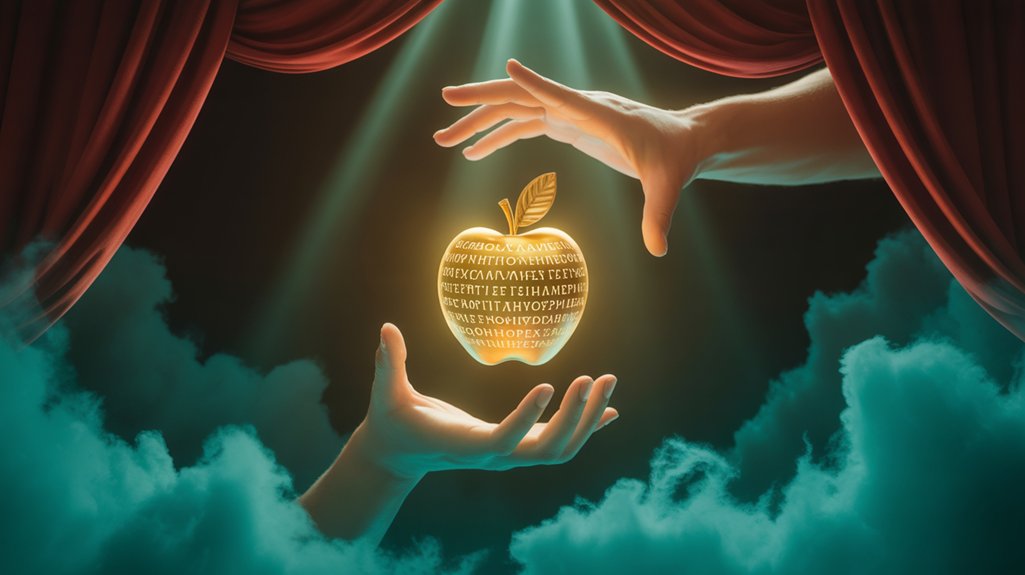
Imagine a scene: the gods gather at a lavish wedding, their laughter mingling with the music. Yet lurking in the shadows is Eris (AIR-iss), the goddess of discord. What’s fascinating here is that her very presence is a catalyst for chaos. When she’s snubbed from the festivities, she throws a golden apple inscribed with “To the fairest.” This seemingly harmless act ignites a fierce rivalry among Hera, Athena, and Aphrodite, leading to the infamous Judgment of Paris. Sound familiar?
In *Theogony*, Hesiod captures Eris as the mother of thirteen personifications, including Forgetfulness and Strife. It’s a remarkable illustration of how unresolved conflicts can spiral into monumental disasters. Scholars often debate the implications of her role: is she merely a trickster, or a necessary force in the divine order? The detail most people miss is how Eris embodies the darker aspects of human nature, mirroring figures like Loki from Norse mythology or Set from Egyptian lore. Each serves as a reminder of the chaos lurking beneath the surface of order.
Eris's influence is undeniable. The Trojan War, a calamity that claimed thousands of lives, stems from her calculated provocation. The interplay among the goddesses reveals cultural values—beauty, wisdom, and power—all vying for dominance. In many cultures, such as the *Mahabharata*, jealousy and desire lead to catastrophic wars, illustrating a universal theme.
Now, let’s pause for a moment. What do you think drives these mythical conflicts? Is it merely the gods' whims, or does it reflect deeper human emotions?
The story takes an even darker turn with Thetis, the sea goddess who tries to shield her son Achilles from the war’s devastation. But despite her efforts, the wedding celebration spirals into complete disruption. This cycle of conflict, once set in motion, is hard to halt. It gets darker. The gods notice, and they engage even more fervently in the unfolding chaos.
What most people don’t know about this myth is that it resonates across cultures. The themes of beauty, jealousy, and war appear in various forms, from the *Song of Songs* in the Hebrew Bible to the *Iliad* by Homer (c. 8th century BCE). Each narrative reflects its own society's values and fears, yet the underlying human emotions remain strikingly similar.
What All Trickster Gods Have in Common
Across the vast tapestry of world mythology, trickster gods dance between creation and destruction, wisdom and folly. Imagine Loki (LOH-kee) in Norse tales, who crafts chaos with a sly grin, or Anansi (ah-NAN-see), the spider of West African folklore, weaving webs of mischief that ensnare both gods and humans alike. Coyote, the shape-shifting trickster of Native American traditions, embodies this duality, often teaching profound truths through his capricious antics.
What’s truly fascinating is their role as challengers of authority. They disrupt established norms and social hierarchies without a second thought. Think of Hermes, the Greek messenger, outsmarting the Olympian gods in Homer’s *Iliad* (c. 8th century BCE) or Coyote upending tribal customs and traditions. There's a daring audacity in their actions that speaks to our own defiance against societal constraints.
Their shapeshifting abilities are equally compelling. Consider the Monkey King, Sun Wukong, from the *Journey to the West* (Wu Cheng'en, 16th century), morphing into various forms to defy celestial beings. Or Maui (MAH-wee) from Polynesian mythology, whose transformations reshape the world itself. These gods don’t just break physical barriers; they cross social and spiritual realms, leaving us questioning the very nature of identity and authority.
Yet, beneath the chaos lies an educational core. Stories of Wisakedjak (wee-SAH-ked-jak) from the Anishinaabe tradition or Baby Krishna (KRIH-shna) in Hindu lore often impart moral lessons through their mischief. They remind us that actions have consequences, nudging audiences to reflect on their choices. This paradox is where it gets interesting: tricksters illuminate truths through deception and cultivate wisdom through folly.
So, what do these figures reveal about human nature? They embody the delicate interplay between order and chaos, echoing the complexities of our own lives. As we explore their tales, we discover that life’s richness emerges from contradictions.
Here's a question for you: Have you noticed how many cultures contain a trickster figure? From the ancient Greeks to the Indigenous peoples of North America, it seems these characters hold a universal fascination.
But there's more. The detail most people miss? Not all tricksters are purely mischievous. Some, like the Egyptian god Set (set), embody a darker side, representing chaos and disorder, often in conflict with the forces of Ma'at (ma-AHT), or cosmic order. This duality adds depth to their roles, suggesting that chaos isn't merely destructive but can also pave the way for creation.
In exploring trickster narratives, we see a reflection of ourselves—our desires, our fears, and the delicate balance of our world. What’s most captivating is that these stories aren't just relics of the past; they resonate within living traditions today. As we engage with these myths, we’re reminded that the trickster’s journey is ongoing, a testament to the enduring nature of human creativity and complexity.
Frequently Asked Questions
Who Are All the Trickster Gods?
Q: Is Loki the primary trickster in Norse mythology?
According to the Prose Edda (Snorri Sturluson, c. 1220), yes, Loki is often portrayed as the central trickster figure. He exhibits capricious behavior, manipulating events to his advantage.
However, the Poetic Edda presents variations in his character, showing him in a more ambiguous light. Scholars debate these interpretations, suggesting Loki's role evolved over time, reflecting different cultural contexts.
Q: How does Anansi fit into West African folklore?
Anansi is a key trickster figure in West African folklore, characterized by his cleverness and ability to outsmart others. In stories like “Anansi and the Moss-Covered Rock,” he uses wit to achieve his objectives.
While many versions exist across cultures, some scholars argue that his role varies significantly, emphasizing lessons on morality and resourcefulness within different communities.
Q: What role does Coyote play in Native American traditions?
Coyote serves as both a trickster and teacher in many Native American traditions. According to various tribal stories, he embodies cleverness but often faces consequences for his actions.
While some narratives highlight his transformative abilities, others focus on his flaws, leading to differing interpretations. This complexity illustrates the diversity in myth and cultural significance across tribes.
Q: Is the Monkey King a trickster in Chinese mythology?
Yes, the Monkey King, or Sun Wukong, is a pivotal trickster figure in Chinese mythology, particularly in “Journey to the West” (Wu Cheng'en, 16th century). His rebellious nature and mischief are central to the narrative, showcasing his quest for immortality.
Various retellings emphasize different aspects of his character, leading to scholarly disagreements over his moral implications.
Q: Who's Wisakedjak in Navajo storytelling?
Wisakedjak appears as a cunning trickster in various Native American stories, often emphasizing the importance of wisdom. In these narratives, he teaches valuable lessons about the consequences of foolishness.
While interpretations of his character can vary among tribes, there's a consensus on his role as a catalyst for change, reflecting cultural values and ethics.
Who Is the God of Mischief Other Than Loki?
Q: Who's the goddess of discord, and how does she relate to chaos?
According to the Theogony (Hesiod, c. 700 BCE), Eris is indeed the goddess of discord, known for instigating conflict among gods and mortals.
The text recounts her role in sparking the Trojan War by throwing the golden apple. Scholars debate the extent of her influence, with some emphasizing her symbolic role in human strife rather than direct causation.
Q: What role does Anansi play in African mythology?
Yes, Anansi the spider is a central figure in African folklore, embodying cleverness and trickery.
He appears in numerous tales collected in texts like “Anansi Stories,” where he often outsmarts stronger foes. While many versions exist across cultures, the core theme of his cunning remains consistent, illustrating the value of wit over brute strength.
Q: How is Coyote depicted in Native American stories?
According to various tribal myths, Coyote is a trickster who embodies chaos and transformation.
In stories from the Navajo and other tribes, he often disrupts the natural order through his antics. Scholars have noted variations in his portrayal, with some emphasizing his role as a culture hero rather than merely a mischief-maker.
Q: What's Monkey‘s significance in Chinese mythology?
Yes, Monkey, or Sun Wukong, is a pivotal figure in “Journey to the West” (Wu Cheng'en, 16th century), known for his rebellious spirit and magical abilities.
His defiance against heaven provides insight into themes of authority and freedom. Interpretations of his character vary, with some viewing him as a symbol of enlightenment while others see him as a mere troublemaker.
Q: How does Maui fit into Polynesian mythology?
According to various Hawaiian legends, Maui is celebrated as a demigod who performed remarkable feats, including stealing fire and slowing the sun.
These stories are recorded in oral traditions and texts like “The Kumulipo.” Debate exists among scholars regarding the historical basis of Maui's exploits, with some arguing for a purely mythological interpretation while others suggest historical roots.
Who Is the Most Powerful Trickster God?
Q: Is Sun Wukong the most powerful trickster god?
According to traditional Chinese mythology, yes — Sun Wukong, or the Monkey King, is often regarded as a supreme trickster. The classic text *Journey to the West* (Wu Cheng'en, 16th century) illustrates his immense strength, immortality, and magical transformations.
However, interpretations vary across cultures; some may argue for other tricksters like Loki in Norse mythology, who also possesses unique abilities and cunning.
Q: How does Sun Wukong's immortality work?
According to *Journey to the West*, Sun Wukong achieves immortality through several means, including consuming the Peaches of Immortality and learning from the Eight Trigrams.
This narrative, rich with allegory, showcases his cleverness and resourcefulness. Scholars debate the significance of his immortality, suggesting it symbolizes freedom from worldly constraints, a theme echoed in various mythologies.
Q: Can Sun Wukong challenge heavenly beings?
Yes — in *Journey to the West*, Sun Wukong famously rebels against the heavens, defeating celestial armies and causing chaos among the deities.
His confrontation with the Jade Emperor highlights themes of defiance and justice. Yet, interpretations of his actions differ; some view him as a hero, while others see him as a disruptive force in divine order.
Q: Are there other trickster gods comparable to Sun Wukong?
Yes — while Sun Wukong is a prominent figure, other trickster gods like Loki in the *Prose Edda* (Snorri Sturluson, c. 1220) and Anansi from West African folklore also exhibit trickery and cunning.
Each embodies unique traits and cultural narratives, leading scholars to debate their relative power and significance across different mythological contexts.
What Are the Names of the Tricksters in Mythology?
Q: Is Loki a trickster in Norse mythology?
Yes, according to the Prose Edda (Snorri Sturluson, c. 1220), Loki is indeed portrayed as a cunning trickster among the gods. He’s known for his schemes that often lead to chaos.
However, the Poetic Edda offers different interpretations of his character, emphasizing his more complex nature and consequences.
Q: How does Anansi fit into West African folklore?
Yes, Anansi, the spider trickster, is a central figure in West African folklore. His tales often showcase his cleverness in outsmarting others, as seen in various oral traditions.
Scholars recognize multiple versions of his stories, with some emphasizing moral lessons, while others highlight his role in cultural heritage.
Q: What role does Coyote play in Native American traditions?
Yes, Coyote is a prominent trickster figure in many Native American traditions. He embodies both wisdom and foolishness through his actions, as illustrated in numerous tribal stories.
Different tribes depict him variably, leading to scholarly debates on his significance and the lessons his tales impart.
Q: Is Eris a trickster in Greek mythology?
Yes, according to the Theogony (Hesiod, c. 700 BCE), Eris represents discord and chaos, famously instigating the Trojan War.
Her role as a disruptor is well-documented in various myths, though interpretations of her character vary, with some viewing her actions as necessary for balance.
Q: Does Monkey from Chinese folklore act as a trickster?
Yes, the Monkey King, or Sun Wukong, is a trickster figure in *Journey to the West* (Wu Cheng'en, 16th century). He defies authority and uses humor to challenge gods and demons alike.
Interpretations of his character and actions can differ widely, reflecting the richness of Chinese folklore.
Conclusion
What if the chaos in our lives is just a trickster's game? Across cultures, figures like Loki, Anansi, and Coyote embody the unpredictable nature of existence, revealing how disruption often leads to enlightenment. Sound familiar? These divine mischief-makers challenge societal norms and force us to reconsider our understanding of order and morality.
If you’re intrigued by these themes, read the Prose Edda's Gylfaginning, particularly chapters 34-36, for a vivid portrayal of Loki's escapades, or check out Carolyne Larrington's translation for a modern take. The pattern repeats. Each culture tells this story differently, inviting us to reflect on our own lives.