The bronze pendant trembled in my hands as I examined it in the museum's dim lighting. Carved deep into its surface was the Algiz rune – the ancient Norse symbol of protection. What struck me wasn't just its age (nearly 1,200 years old), but the story the curator shared. This particular amulet had been found clutched in the skeletal fingers of a Viking warrior, buried far from home in what's now northern England.
He died in battle,” she whispered, “but somehow, his body made it back to his kinsmen for proper burial. The rune worked – just not how he expected.”
That moment sparked a decade-long fascination with Norse protection runes that's taken me from dusty archives in Oslo to modern practitioners in Portland. Here's what I've learned about these powerful symbols and why they still matter today.
The Tale: Björn's Last Stand
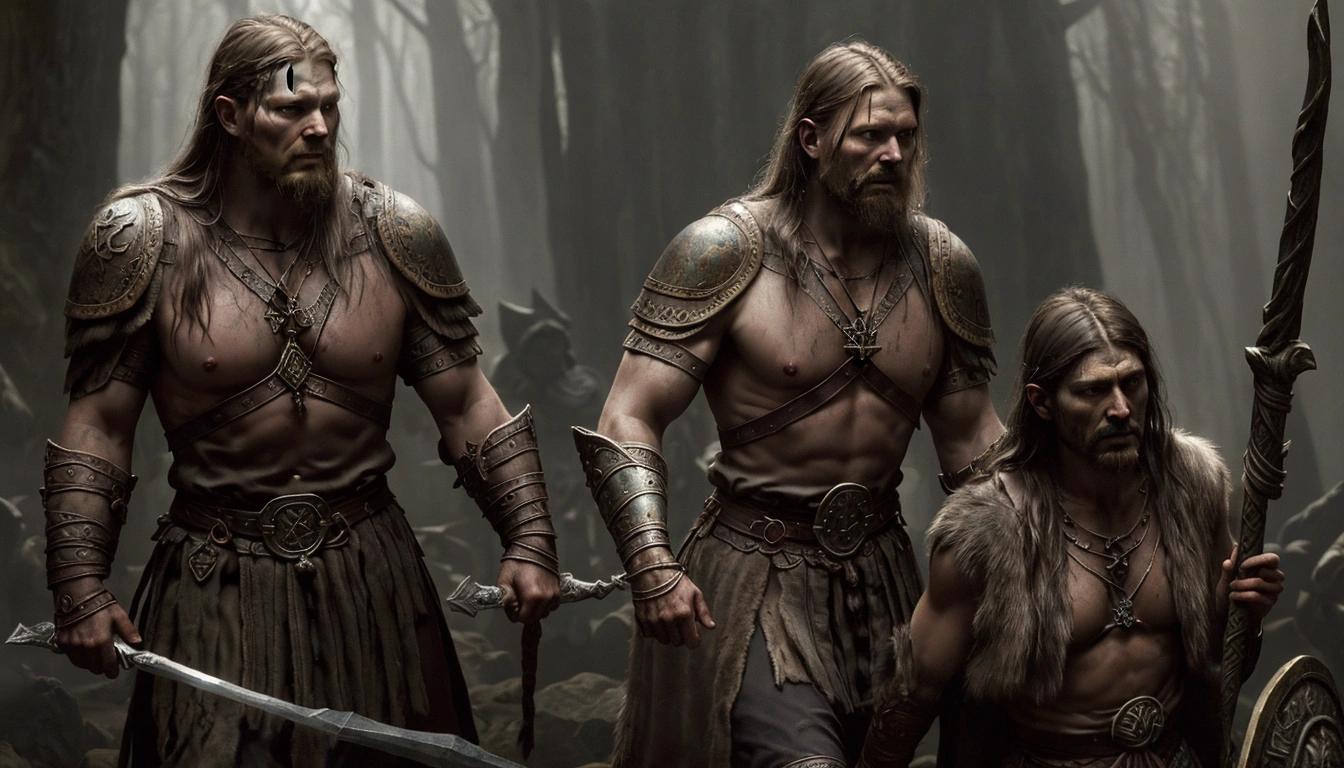
The year was 947 CE. Björn Ironside (not the famous one, but a warrior who'd earned his own reputation) knelt beside the sacred ash tree outside his village in what we now call Norway. His calloused fingers worked methodically, carving the Algiz rune deep into a piece of yew wood.
Each cut was deliberate. Purposeful.
Tomorrow, he'd sail with his jarl to raid the English coast. The dreams had been bad lately – ravens circling, blood on snow, his mother's voice calling from across the veil. But Björn wasn't just any warrior. He'd learned the rune-craft from his grandmother, a völva whose reputation for protective magic stretched across three kingdoms.
Algiz,” he whispered, feeling the word's power roll off his tongue. In the old language, it meant elk – that massive creature whose antlers could turn aside any predator. But deeper than that, it meant divine protection, a connection to the gods themselves.
He pricked his thumb with his seax and let three drops of blood fall onto the carved symbol. The ritual was older than memory. Blood carried intention. Blood sealed the compact between mortal and divine.
“Hear me, Odin All-Father,” Björn intoned, his voice carrying across the pre-dawn stillness. “Let this symbol be my shield when steel fails me. Let it guide my spirit home when flesh cannot follow.”
The raid went exactly as his dreams foretold. English arrows darkened the sky like storm clouds. Björn's shield-brothers fell around him, their own protection charms apparently insufficient against Norman steel. But something strange happened as the battle raged.
Every arrow aimed at Björn's heart seemed to veer just slightly off course. A Saxon sword thrust that should've opened his throat instead glanced off his mail shirt. When an English spearman charged him from behind, Björn somehow sensed the attack and spun away at the last possible moment.
The Algiz rune, now warm against his chest, pulsed with each heartbeat.
But protection, as Björn learned, doesn't always mean what we think it means. As the tide of battle turned against the raiders, he found himself cut off from his ship. Wounded but alive, he made a choice that would echo through the centuries. Instead of trying to flee, he turned to face the pursuing English warriors.
“If I'm to die today,” he shouted in Old Norse, “let it be with honor, so my spirit finds its way to the hall of heroes!”
The end came swiftly, but not alone. Three English warriors fell to his final stand, and something miraculous happened. The English commander, impressed by Björn's courage, ordered his body treated with respect. They removed his weapons and mail, but left the carved yew pendant around his neck.
“This one fought like a man possessed by gods,” the commander reportedly said. Let him keep his charms for whatever journey comes next.
Months later, Norse traders found Björn's grave and negotiated to bring his remains home. The Algiz rune had protected him after all – not from death, which comes to all warriors, but from dishonor and from dying forgotten in foreign soil.
Symbolism: The Sacred Language of Protection
The Norse understanding of protection went far deeper than simply avoiding harm. When I first started studying runic symbolism, I made the rookie mistake of thinking these were just medieval good luck charms. Boy, was I wrong.
Each protection rune carries layers of meaning that would make a psychology textbook jealous. Take Algiz, for instance. Sure, it represents the elk and its protective antlers, but dig deeper and you'll find it also symbolizes the rainbow bridge connecting Midgard (our world) to Asgard (the realm of the gods). It's not just asking for protection – it's invoking a direct connection to divine power.
The symbolism gets even more interesting when you look at the other major protection runes:
- Thurisaz – Thor's hammer, representing active defense rather than passive protection
- Eihwaz – The yew tree, symbolizing endurance through the harshest trials
- Tiwaz – Named for the god Tyr, representing courage in the face of certain defeat
- Berkano – The birch tree, offering protection through new beginnings and rebirth
What fascinates me most is how these symbols worked on multiple levels simultaneously. A Viking wearing an Algiz pendant wasn't just hoping to avoid sword cuts. They were declaring their connection to the divine order, their willingness to accept whatever form protection might take, and their understanding that true safety comes from spiritual strength rather than physical invulnerability.
The archaeological record backs this up beautifully. Of the 6,000+ runic inscriptions found across Scandinavia, only about 3-5% show clear magical intent. But those that do reveal a sophisticated understanding of psychology and spirituality that we're only beginning to appreciate.
The color symbolism matters too. Vikings preferred certain materials for their protection runes based on their connection to specific energies. Yew wood (like Björn used) was associated with death and rebirth – perfect for warriors who needed protection that transcended mortal concerns. Oak represented endurance and strength. Bone carried the power of ancestral spirits.
Even the act of carving was symbolic. Every stroke of the knife was a prayer, every drop of blood a sacrifice, every spoken word a bridge between worlds. Modern practitioners often miss this crucial element, treating runes like decorative symbols rather than active spiritual technology.
Modern Lessons: What Björn Teaches Us Today
Here's where things get really interesting. I've spent years interviewing modern rune practitioners, and the most successful ones have figured out something crucial: Norse protection runes work best when you understand what they're actually protecting.
It's not about avoiding all difficulty or danger. That's a modern misconception that would've made Björn laugh. Viking culture understood that courage isn't the absence of fear – it's feeling the fear and choosing to act with honor anyway.
Take Sarah, a nurse practitioner I met at a Norse spirituality conference in Seattle. She wears an Algiz pendant during her shifts in the ER, but not because she thinks it'll keep violent patients away. “It reminds me to stay connected to something larger than the chaos,” she explained. “When I'm dealing with trauma and death, the rune helps me remember that I'm part of a bigger story.”
That's exactly how Björn would've understood it.
The modern applications I've seen work best include:
- Emotional resilience – Using Eihwaz during difficult life transitions
- Professional courage – Invoking Tiwaz before difficult conversations or presentations
- Spiritual grounding – Working with Algiz during meditation or prayer
- Creative protection – Using Berkano to safeguard artistic projects from criticism or doubt
But here's the thing that trips up most beginners: these runes require active participation. You can't just wear an Algiz pendant and expect life to suddenly become easy. The protection comes from embodying the qualities the rune represents – connection to divine wisdom, spiritual strength, and acceptance of whatever form safety might take.
The psychology behind this is fascinating. Modern research on resilience shows that people who maintain strong spiritual connections and find meaning in their struggles recover faster from trauma and stress. The Vikings figured this out over a thousand years ago and encoded it into their runic system.
I've also noticed that people who work with Norse protection runes tend to develop what I call “strategic courage” – the ability to pick their battles wisely and act with honor even when the outcome is uncertain. That's pure Viking wisdom, transmitted through ancient symbols into modern hearts.
Working With Norse Protection Energy
Alright, let's get practical. After years of experimentation (and some spectacular failures), I've developed a system for working with Norse protection runes that honors their historical use while adapting to modern needs.
First, forget everything you think you know about “charging” or “activating” runes. The Norse approach was much more direct and personal. They didn't just energize symbols – they formed relationships with the spiritual forces those symbols represented.
Here's my recommended progression for beginners:
Step 1: Choose Your Rune Mindfully
Don't just pick the prettiest symbol or the one with the most appealing description. Spend time researching each protection rune's history and meaning. Which one resonates with your current situation? What kind of protection do you actually need?
For example, if you're facing workplace bullying, Thurisaz (active defense) might serve you better than Algiz (spiritual protection). If you're going through a divorce, Eihwaz (endurance) could be more appropriate than Tiwaz (battle courage).
Step 2: Create or Acquire Your Physical Rune
The material matters. Wood connects you to living energy and growth. Stone offers stability and permanence. Metal provides durability and strength. Bone carries ancestral wisdom and the power of transformation.
If you're carving your own (which I highly recommend for serious practitioners), do it meditatively. Each cut should be intentional. Traditional practitioners would spend days on a single rune, allowing the process itself to build spiritual connection.
Sterling Silver Algiz Protection Pendant
Beautifully crafted pendant featuring the powerful Algiz rune, perfect for daily wear and spiritual practice.
- Genuine sterling silver construction
- Traditional Elder Futhark design
- Comes with adjustable leather cord
Step 3: Learn the Galdr (Runic Chant)
Every rune has its traditional vocal sound or chant. This isn't just pronunciation – it's vibrational magic. When you speak a rune's galdr, you're literally creating the sound frequency associated with its power.
For Algiz, the traditional galdr is “Algiz algiz algiz, elhaz elhaz elhaz” (pronounced AL-geez el-HAHZ). Practice this until it feels natural, then use it during your protection rituals.
Step 4: Establish Regular Practice
Vikings didn't just grab their protection runes when they were scared. They maintained ongoing relationships with these spiritual forces through regular acknowledgment and respect.
I recommend a simple daily practice: Hold your rune, speak its galdr three times, and spend a moment in gratitude for whatever protection you've received, even if it's not the form you expected. This builds the spiritual muscle memory that makes protection runes truly effective.
Step 5: Trust the Process
This is the hardest part for modern practitioners. Norse protection often works in ways we don't immediately recognize or appreciate. That job rejection might've saved you from a toxic workplace. That relationship ending might've opened space for something better. That illness might've forced needed rest.
Björn's story illustrates this perfectly. His protection rune didn't save his life, but it preserved his honor and ensured his story would inspire others across the centuries. Sometimes that's the most important protection of all.
Frequently Asked Questions
What are the most powerful Norse protection runes for beginners?
The most effective protection runes for newcomers are Algiz (divine protection and spiritual connection), Thurisaz (Thor's hammer for active defense), and Eihwaz (yew tree for endurance). These three have clear historical precedent and straightforward energy that's easier for beginners to understand and work with safely.
Can I wear Norse protection runes as jewelry without cultural appropriation concerns?
Wearing Norse runes respectfully is generally acceptable, especially if you take time to learn their historical context and meanings. The key is approaching them as spiritual practice rather than fashion accessories, and acknowledging their cultural origins with proper respect and understanding.
How do I properly activate or charge Norse protection runes?
Traditional activation involves three elements: intentional creation (carving while focusing on your protective need), blood offering (a small prick of your finger), and spoken galdr (the rune's traditional chant). Modern practitioners can adapt this by substituting red ink for blood and adding meditation or prayer to deepen the spiritual connection.
What materials work best for creating protection runes?
Historical evidence shows Vikings preferred natural materials: yew wood for death/rebirth protection, oak for strength and endurance, bone for ancestral connection, and metals like silver or iron for durability. Modern practitioners report good results with these traditional materials, though intention matters more than the specific medium.
Can I combine multiple Norse protection runes together?
Yes, Vikings frequently created “bindrunes” by combining multiple symbols for enhanced or specialized protection. Popular combinations include Algiz + Thurisaz for divine and earthly defense, or Eihwaz + Tiwaz for enduring courage. Start simple with single runes before attempting complex combinations.
Do Norse protection runes conflict with other spiritual or religious practices?
Norse runes work as spiritual tools rather than religious doctrine, so they typically complement other practices well. Many practitioners successfully combine runic work with Christianity, Buddhism, or other paths. The key is maintaining respectful intentions and understanding runes as symbols of universal spiritual principles rather than exclusively Norse religious elements.
How long does it take for Norse protection runes to start working?
Protection runes work immediately as psychological and spiritual tools, helping you embody protective qualities like courage and divine connection. Physical or circumstantial changes may take longer and often manifest in unexpected ways. Historical accounts suggest Vikings felt the psychological benefits instantly, while life changes unfolded over months or years.