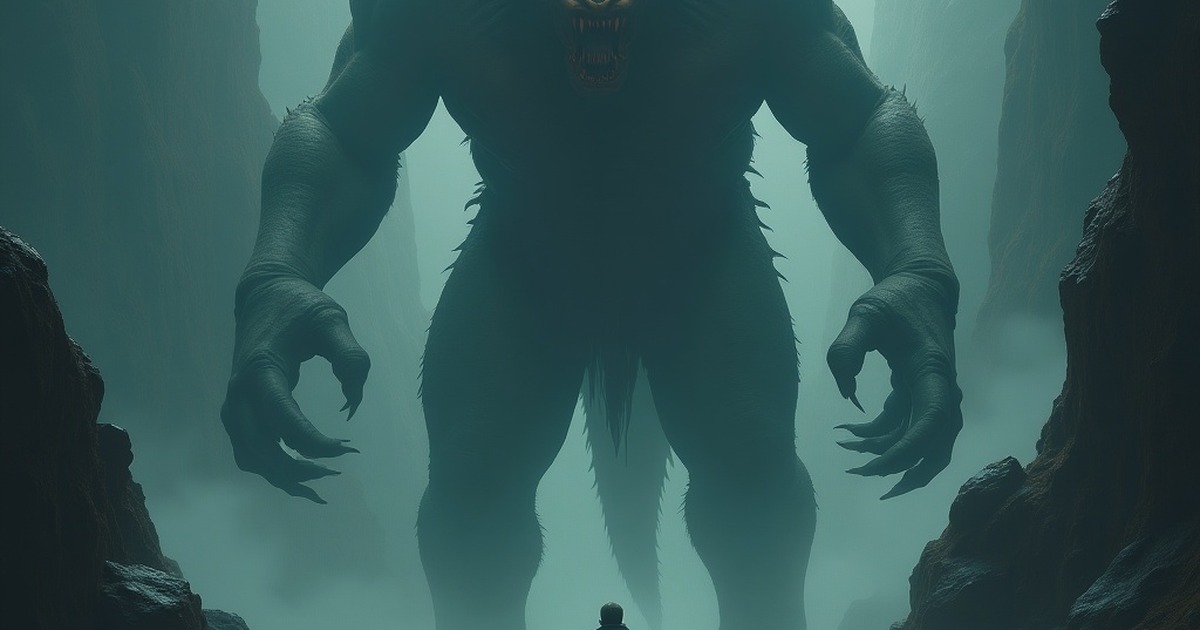
You're encountering creatures that exist in the liminal spaces between documented zoology and ancestral memory, where centuries of indigenous knowledge converge with modern cryptozoological investigation. From Scotland's Loch Ness Monster and North America's towering Bigfoot to the Himalayan Yeti and Africa's serpentine Mokele-mbembe, these eldritch entities challenge conventional scientific classification while persisting in eyewitness accounts, footprint casts, and thermal imaging evidence that suggests our mapped world still harbors chimeric beings awaiting discovery.
Key Takeaways
- Loch Ness Monster continues generating modern sightings with sonar anomalies and photographs in Scotland's 700-foot-deep loch.
- Bigfoot encounters persist across Pacific Northwest forests with footprint casts, thermal imaging, and consistent eyewitness descriptions.
- Chupacabra reports emerged in 1995 Puerto Rico and spread throughout Latin America with livestock attack incidents.
- Lake Champlain's Champ monster maintains a 120-mile presence with indigenous traditions and contemporary serpentine sightings.
- Yeti evidence includes fourteen-inch footprints and eight-foot-tall silhouette glimpses in high-altitude Himalayan regions.
The Loch Ness Monster: Scotland's Enduring Aquatic Mystery
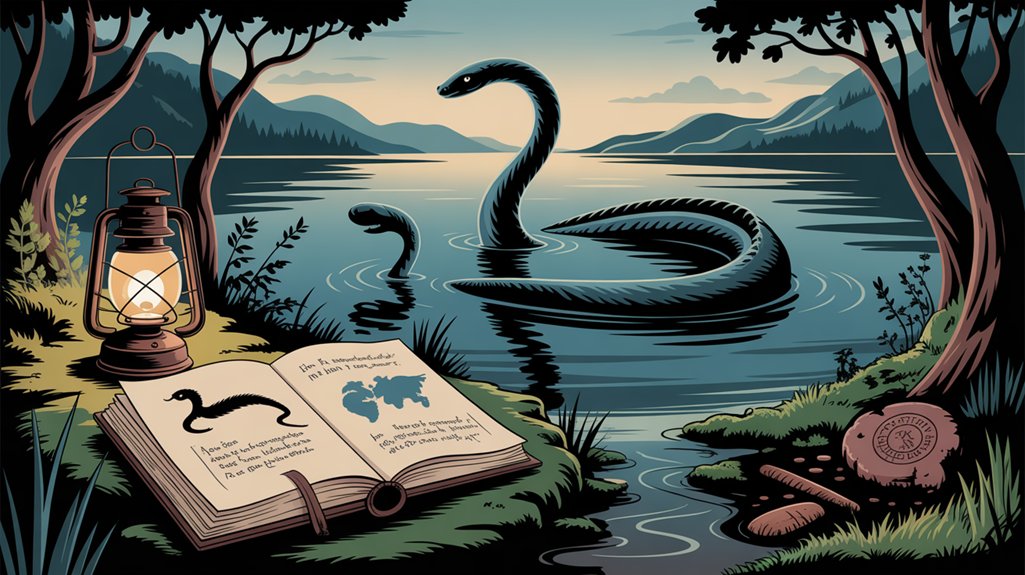
Where does the boundary between ancient memory and modern myth dissolve most completely? You'll find it in Scotland's Loch Ness, where dark waters cradle something eldritch, something that defies rational explanation. Since the sixth century, when Saint Columba allegedly encountered a “water beast,” this chimeric entity has haunted highland folklore with unwavering persistence.
You're witnessing more than mere legend. The creature's documented appearances—from the 1934 “Surgeon's Photograph” to countless sonar anomalies—suggest something primordial lurks beneath those obsidian depths. Cryptozoologists theorize you're observing a surviving plesiosaur, its serpentine neck breaking surface tension like ancestral memory piercing consciousness.
The loch itself conspires with mystery: twenty-four miles long, seven hundred feet deep, containing more water than all English and Welsh lakes combined. Those peat-stained waters obscure everything beyond arm's length. Temperature variations create thermal layers. Sound travels strangely here.
You're standing where ancient Pictish stones bear carved representations of unidentifiable aquatic beasts. Coincidence? The Highland clans knew better. Like countless water spirits documented across global mythologies, Nessie represents humanity's enduring fascination with the mysterious forces that inhabit our planet's hidden depths.
Bigfoot: North America's Forest Giant
You'll find yourself confronting centuries of testimonial evidence when examining Bigfoot encounters—from the Indigenous Sts'ailes people's reverence for Sásq'ets to contemporary sightings documented across the Pacific Northwest's eldritch forests, where witnesses describe towering, bipedal forms moving through ancient cedar groves with otherworldly grace. The creature's chimeric nature has compelled serious scientific inquiry since the 1960s, when researchers like Grover Krantz applied rigorous anthropological methods to footprint casts and film evidence. You're witnessing how modern cryptozoology attempts to bridge empirical investigation with millennia-old oral traditions that speak of forest giants dwelling in the liminal spaces between our world and theirs. These enduring narratives reflect how diverse cultures uniquely express their beliefs and values through stories that address fundamental questions about the unknown creatures sharing our world.
Sighting Evidence and Encounters
How does one reconcile the mounting corpus of eyewitness testimonies, physical impressions, and photographic anomalies that continue to emerge from North America's primordial forests? You'll find yourself confronting an eldritch archive spanning decades—from the infamous Patterson-Gimlin footage of 1967 to contemporary thermal imaging captures that defy conventional explanation. These encounters transcend mere folklore, manifesting as visceral experiences that've left witnesses fundamentally altered.
You can't dismiss the consistency threading through disparate accounts: towering bipedal forms, sulfurous odors permeating ancient cedars, guttural vocalizations echoing through mist-shrouded valleys. Plaster casts reveal anatomical details too sophisticated for hoaxes—dermal ridges, pressure distributions, gait patterns suggesting creatures weighing 800 pounds. Each footprint becomes a chimeric threshold where skepticism meets mystery, challenging your preconceptions about what remains undiscovered in Earth's liminal spaces.
Scientific Investigation Efforts
When rigorous scientific methodology intersects with cryptozoological inquiry, you encounter a fascinating dichotomy between institutional skepticism and emerging interdisciplinary research. Modern investigators deploy thermal imaging, DNA sampling, and acoustic analysis to scrutinize the eldritch mysteries surrounding North America's forest giant. Dr. Jeffrey Meldrum's primate locomotion studies at Idaho State University have legitimized biomechanical analysis of purported Bigfoot tracks, while environmental DNA projects seek chimeric genetic signatures in Pacific Northwest watersheds.
You'll discover that citizen scientists increasingly collaborate with academic researchers, documenting hair samples and footprint casts through standardized protocols. Advanced spectrographic equipment now captures infrasonic vocalizations beyond human auditory thresholds. Hair morphology analysis reveals anomalous follicular structures.
Contemporary cryptozoology transcends folklore collection, embracing peer-reviewed methodologies that honor both indigenous knowledge systems and empirical investigation. Scientific pursuit continues expanding.
The Yeti: Himalayan Snowman of the Mountains

Ancient testimonies describe encounters that chill more than mountain winds:
- Massive bipedal tracks pressed deep into virgin snow, each footprint measuring fourteen inches long
- Bone-chilling vocalizations echoing through ice-carved valleys—neither human nor beast, but something primordially other
- Towering silhouettes glimpsed through swirling snow squalls, standing eight feet tall with rust-colored fur
You're confronting more than folklore here. The Yeti represents humanity's ancestral memory of wilderness sovereignty, a cryptid embodying our species' relationship with untamed frontiers. Tibetan manuscripts from the 15th century document systematic encounters, describing creatures that command respect rather than fear—ancient custodians watching over sacred peaks where earth touches sky.
Chupacabra: Latin America's Bloodsucking Beast
You'll find that the chupacabra's emergence into modern consciousness began in 1995 when Puerto Rican livestock fell victim to an eldritch predator that drained their blood with surgical precision, leaving behind only puncture wounds and desiccated carcasses.
The creature's chimeric nature defies taxonomic classification—witnesses describe variations ranging from a bipedal, grey-skinned reptilian humanoid with protruding spines to a hairless, dog-like quadruped with elongated limbs and luminous red eyes that pierce the veil between worlds.
These morphological disparities suggest either multiple cryptid species or a singular entity capable of shape-shifting across the liminal boundaries of Latin American folklore, adapting its form to the cultural fears embedded within each community it haunts.
Origins and First Sightings
Where does one trace the genesis of a creature that emerged not from ancient folklore but from the stark fluorescent glare of modern media? You'll discover the chupacabra's origins anchored firmly in 1995's Puerto Rico, when Madelyne Tolentino reported witnessing this eldritch predator near her Canóvanas home. Unlike chimeric beasts born from millennia of oral tradition, this bloodsucker materialized through television broadcasts and newspaper headlines.
Consider the foundational elements that shaped its terrifying form:
- Tolentino's description: gray-skinned, reptilian humanoid with pronounced spinal spikes
- Initial livestock killings: goats drained completely of blood through precise puncture wounds
- Media amplification: rapid spread across Latin American communities through sensationalized reporting
You're witnessing mythology's modern birth—a creature spawned not from ancestral campfires but from contemporary anxieties, crystallizing fears through mass communication's unprecedented reach.
Physical Description Variations
Two distinct morphologies have crystallized from decades of chupacabra encounters, each reflecting the cultural landscapes where witnesses glimpsed this enigmatic predator. You'll find the original Puerto Rican variant described as reptilian, standing bipedally with leathery gray-green skin, pronounced spinal ridges, and luminous red eyes that pierce the Caribbean darkness. This eldritch form possesses elongated claws and pronounced fangs designed for blood extraction.
The mainland variant emerges differently. Quadrupedal and canine-like, witnesses describe a hairless, emaciated creature with mottled skin stretched taut over protruding ribs. This chimeric beast exhibits oversized hind legs, enabling supernatural leaping abilities across Mexican deserts and Texan scrublands.
Both manifestations share certain characteristics: the distinctive vampiric feeding patterns, nocturnal hunting behaviors, and an otherworldly presence that transcends conventional zoological classification, existing in that liminal space between folklore and cryptozoological reality.
Mokele-mbembe: Africa's Living Dinosaur

Deep within the primordial swamps of the Congo Basin, where ancient waterways carve through emerald darkness and mist clings to prehistoric ferns, countless generations of local inhabitants have whispered of Mokele-mbembe—literally “one who stops the flow of rivers” in the Lingala tongue.
In Congo's mist-shrouded depths, where emerald shadows dance through primordial waters, ancient whispers speak of the legendary river-stopper.
You'll discover this eldritch sauropod-like entity embodies humanity's deepest fascination with evolutionary mysteries. Pygmy tribes describe encounters with a chimeric behemoth possessing:
- A serpentine neck extending twenty feet above murky waters
- Massive, elephant-like footprints measuring three feet in diameter
- Reddish-brown hide scarred by territorial battles with river hippos
Since explorer Carl Hagenbeck's 1909 expedition first documented these testimonies, you've witnessed cryptozoologists launch seventeen major investigations. The Likouala swamps guard their secrets jealously—satellite imagery reveals unexplored tributaries where time seemingly stopped. Local shamans insist Mokele-mbembe represents ancestral memory made manifest, a living testament to Africa's untamed sovereignty against colonial cartography's rigid boundaries.
The Jersey Devil: New Jersey's Pine Barrens Terror
How does terror manifest when colonial folklore collides with primordial wilderness? You're entering the Pine Barrens' eldritch realm, where New Jersey's most enduring chimeric entity stalks through twisted cedar groves and forgotten bog paths.
Born from Mother Leeds' thirteenth child in 1735, the Jersey Devil emerged as colonial anxieties crystallized into living nightmare. Witnesses describe a creature defying taxonomic classification: leathery wings spanning twelve feet, elongated horse-like skull, serpentine neck crowned with ram's horns. Cloven hooves. Forked tail.
The Pine Barrens themselves amplify this terror—acidic waters reflecting starless skies, carnivorous plants lurking in tea-colored pools, phantom lights dancing through Atlantic white cedar swamps. Here, indigenous Lenape warned of windigo-like spirits long before European settlement.
You'll find fresh reports emerging from these one-million-acre badlands: unexplained livestock deaths, unearthly screams piercing midnight silence, massive wingspan shadows crossing moonlit clearings. The Devil persists because wilderness persists—untamed spaces where ancient fears retain their primal power over human consciousness.
Thunderbirds: Giant Winged Predators of Native American Legend
Across the vast expanse of North American skies, indigenous peoples have tracked the flight patterns of colossal raptors whose wingbeats thunder like approaching storms. These eldritch avians, known as Thunderbirds, embody primal forces that transcend ordinary ornithological understanding. You're witnessing humanity's oldest aerial predator narratives.
Ancient wings carry thunder through continental skies, where indigenous wisdom meets creatures beyond ornithological comprehension—humanity's primordial aerial legends soar still.
From the Ojibwe to the Haida, tribal accounts describe chimeric beings whose shadows eclipse entire villages. Archaeological evidence suggests these legends predate European contact by millennia. You'll find consistent descriptions across disparate cultures:
- Wingspans exceeding forty feet, creating hurricane-force downdrafts
- Lightning emanating from their eyes during territorial displays
- The ability to snatch full-grown elk in their talons
Modern sightings persist throughout the Great Plains and Pacific Northwest. Witnesses describe encounters with creatures defying conventional wingspan limitations. You're confronting testimonies that challenge naturalist boundaries—ancient knowledge intersecting contemporary cryptozoological investigations. These aren't mere folklore fragments but living cultural testimonies demanding serious scholarly consideration.
The Beast of Bodmin Moor: England's Mysterious Big Cat
Where ancient granite tors pierce Cornwall's moorland mists, you'll encounter England's most enduring cryptozoological enigma—a phantom predator whose golden eyes have haunted shepherds and travelers since the 1960s. The Beast of Bodmin Moor represents something far more eldritch than escaped zoo cats or misidentified livestock. You're witnessing cultural metamorphosis itself.
Government investigations in 1995 dismissed physical evidence, yet sightings persist with unsettling consistency. Witnesses describe a chimeric entity: panther-black, muscular haunches rippling beneath midnight fur, amber orbs reflecting primordial hunger. You smell its musky presence on fog-laden winds. Torn sheep carcasses bear distinctive puncture wounds—surgical precision beyond domestic predators.
This creature embodies Britain's wild soul rebelling against industrial constraint. Aboriginal Cornish folklore speaks of shape-shifting guardians protecting sacred landscapes from encroachment. Perhaps you're encountering something deeper than cryptozoology suggests—an archetypal force manifesting through collective unconscious needs for untamed wilderness in an increasingly domesticated domain.
Kraken: The Colossal Sea Monster of Scandinavian Waters
You'll discover that the eldritch Kraken emerges from ancient Norse maritime chronicles as a chimeric leviathan whose tentacled form could engulf entire longships, its origins traced through sagas dating back to the 12th century when Scandinavian seafarers first documented encounters with this colossal cephalopod in the frigid waters off Norway's coast.
Modern marine biology has unveiled giant squid specimens reaching lengths of forty-three feet, their bioluminescent flesh and razor-lined suckers providing tangible evidence for what Norse navigators described as “island beasts” that surfaced beneath unsuspecting vessels.
Contemporary maritime reports from the North Atlantic continue to chronicle sightings of massive tentacled forms breaching the surface, their undulating movements creating whirlpools that echo the terror once reserved for ancient seafaring legends.
Ancient Norse Sea Legends
Beneath the churning waters of the North Atlantic, where Scandinavian sailors first carved their names into maritime legend, dwells perhaps the most formidable creature ever conceived by human imagination—the Kraken.
You'll discover that Norse seafarers didn't merely craft idle tales; they documented encounters with something vast and unknowable.
These eldritch chronicles describe encounters that defy rational explanation:
- Tentacles spanning entire fjords – writhing appendages capable of crushing longships like driftwood
- Eyes burning beneath arctic waves – luminous orbs piercing through maritime darkness
- Whirlpools marking its descent – chimeric disturbances that swallow vessels whole
Ancient sagas position you within humanity's eternal struggle against oceanic mysteries. You're witnessing humanity's primal fear of the abyss made manifest—a creature embodying the sea's ultimate sovereignty over mortal ambition.
Giant Squid Evidence
How does modern marine biology vindicate centuries of Nordic maritime terror? You're witnessing the resurrection of legend through scientific discovery. The colossal squid, measuring sixty feet with rotating hooks embedded in tentacular clubs, emerged from abyssal depths in 2007—tangible proof of kraken mythology. These eldritch cephalopods, dwelling in Antarctic waters exceeding 6,500 feet deep, possess eyes larger than dinner plates, evolved for detecting sperm whale silhouettes in perpetual darkness.
Ancient Scandinavian sailors described island-sized creatures surfacing near their vessels, tentacles capable of dragging entire ships into watery graves. Today's submersible footage reveals chimeric giants attacking whales with prehistoric ferocity. You're confronting the liminal boundary where folklore transforms into zoological reality—where your ancestors' maritime nightmares find vindication through deep-sea exploration, proving that some monsters never required imagination.
Modern Kraken Sightings
Contemporary maritime encounters blur the threshold between validated cephalopod discoveries and unexplained phenomena that exceed known biological parameters. You'll find yourself questioning reality when examining these eldritch testimonies from modern seafarers who've witnessed chimeric titans defying conventional zoological classification.
Recent documented encounters include:
- Norwegian fishing crews reporting tentacled behemoths measuring over 200 feet, dragging vessels backward through Arctic waters with supernatural strength
- Satellite imagery capturing massive underwater shadows off Greenland's coast, exhibiting movement patterns inconsistent with known marine species
- Deep-sea drilling platforms experiencing inexplicable structural damage accompanied by bioluminescent displays resembling ancient kraken descriptions
These accounts transcend mere folklore, suggesting primordial leviathans persist in oceanic trenches beyond human comprehension. The ancient Scandinavian reverence for these creatures wasn't superstition—it was recognition of forces inhabiting liminal spaces where science meets mystery.
Mothman: West Virginia's Winged Harbinger
Where the Ohio River carves its ancient path through West Virginia's brooding landscape, witnesses first glimpsed an entity that would forever alter their understanding of the liminal spaces between terrestrial and supernatural realms. You'll discover that Mothman emerged from Point Pleasant's collective consciousness in November 1966, when Roger and Linda Scarberry encountered a chimeric being with luminous crimson eyes and wingspan exceeding ten feet.
| Date | Witness Account | Eldritch Characteristics |
|---|---|---|
| Nov 12, 1966 | Scarberry Couple | Ten-foot wingspan, glowing red eyes |
| Nov 16, 1966 | Newell Partridge | Electronic interference, dog vanished |
| Dec 15, 1967 | Multiple witnesses | Silver Bridge collapse, 46 deaths |
This harbinger's appearances preceded the tragic Silver Bridge collapse, cementing its reputation as an omen of impending catastrophe. You're witnessing how indigenous Lenape legends of Thunderbirds merge with modern paranormal phenomena, creating a persistent mythos that defies rational explanation while honoring ancestral wisdom.
Skinwalkers: Shapeshifting Entities of Navajo Territory
Why do the Navajo Nation's elders speak in hushed tones when discussing the yee naaldlooshii, those who walk on both two and four legs? You're treading upon sacred ground when you utter their name—skinwalkers, the chimeric beings who've haunted the American Southwest for centuries, defying your conventional understanding of natural law.
These eldritch shapeshifters emerge from Navajo tradition as corrupted medicine practitioners who've forsaken their sacred duties. They've embraced malevolent sorcery, transforming into wolves, coyotes, bears, or other creatures through forbidden rituals.
When you encounter accounts of skinwalker activity, witnesses describe:
- Glowing eyes that pierce darkness with unnatural intelligence
- Impossible speeds across desert terrain, moving faster than any earthly animal
- Voices mimicking loved ones, calling from empty wilderness
The Diné people guard these secrets fiercely. Respectful silence protects both speaker and listener from unwanted attention. You'll find no sensationalism here—only reverence for ancient wisdom warning against humanity's darkest transformations.
Bunyip: Australia's Swamp-Dwelling Cryptid
You encounter Australia's most enigmatic chimeric entity within the billabongs and wetlands where Aboriginal Dreamtime narratives first spoke of the bunyip's eldritch presence, a creature whose origins stretch back through tens of thousands of years of indigenous oral tradition that transforms mere swampland into sacred liminal space. The bunyip's physical manifestation defies singular description—witnesses describe everything from seal-like forms with elongated necks to hippopotamus-bodied beasts bearing canine features, creating a taxonomic puzzle that has confounded European colonists since the 1840s. You'll find that contemporary sighting reports continue to emerge from Victoria's Murray River system and New South Wales wetlands, where the creature's haunting calls still echo across moonlit waters.
Aboriginal Dreamtime Origins
Deep within the primordial consciousness of Australia's Aboriginal peoples, the Bunyip emerges from Dreamtime narratives that predate written history by tens of thousands of years—an eldritch guardian of billabongs, swamps, and sacred waterholes whose chimeric form defies singular description.
You'll discover that Dreamtime stories don't merely recount supernatural encounters; they constitute creation maps encoding territorial boundaries, water rights, and ecological wisdom. These narratives transcend mythology, functioning as legal documents establishing ancestral connections to specific waterways.
The Bunyip's varied descriptions reflect diverse tribal interpretations:
- Seal-like creature with elongated neck and powerful flippers
- Bear-hybrid possessing massive claws and guttural roaring voice
- Serpentine entity with crocodilian features and luminous eyes
Each manifestation serves as protector of sacred sites, punishing those who violate taboos or disturb ancestral waters. Modern sightings continue validating ancient wisdom.
Physical Description Variations
How can one creature manifest in forms so drastically different that witnesses question whether they've encountered the same entity—or multiple species entirely? You'll discover the bunyip's chimeric nature defies singular classification, morphing through countless Aboriginal testimonies across Australia's vast wetlands. Some describe seal-like beings with elongated necks, others report hippopotamus-proportioned beasts bearing crocodilian features. You might encounter descriptions of furry, dog-headed entities or hairless, reptilian nightmares. The creature's eldritch adaptability spans from Tasmania's southern marshes to Queensland's northern billabongs. Colonial settlers documented conflicting accounts: webbed appendages versus clawed limbs, melodious calls versus bone-chilling roars. This protean manifestation suggests you're witnessing not inconsistent folklore, but rather a consciousness that transcends fixed physical boundaries—an ancient shapeshifter whose form reflects the observer's deepest primal fears.
Modern Sighting Reports
Contemporary encounters with Australia's enigmatic bunyip continue to surface across the continent's wetland territories, suggesting this ancient entity hasn't retreated into mere legend. You'll discover that modern witnesses describe encounters with this eldritch presence in remarkably consistent terms, their testimonies echoing Aboriginal accounts spanning millennia.
Recent documented sightings include:
- Murray River, 2019: Fishermen reported a chimeric creature emerging from reed beds, its guttural bellows resonating across moonlit waters
- Kakadu wetlands, 2021: Park rangers documented massive displacement patterns in billabongs, accompanied by otherworldly vocalizations at dawn
- Tasmania's highland lakes, 2022: Hikers witnessed serpentine movement beneath pristine surfaces, followed by an overwhelming sense of ancient watchfulness
These contemporary testimonies maintain the bunyip's liminal existence between physical reality and spiritual guardian, preserving Indigenous wisdom within modern frameworks of understanding.
Lake Champlain Monster: Vermont's Answer to Nessie
Where the glacial waters of Lake Champlain stretch across 120 miles of Vermont and New York borderlands, an eldritch presence has stirred beneath the surface for centuries, earning the reverence and terror of indigenous Abenaki peoples long before European settlers arrived in 1609. You'll discover that “Champ,” as locals affectionately call this chimeric entity, transcends mere folklore—it's become Vermont's defiant answer to Scotland's Loch Ness Monster.
When you examine the historical record, you'll find Samuel de Champlain himself documented serpentine disturbances in these depths. Modern witnesses describe undulating humps, elongated necks emerging from morning mists, and prehistoric silhouettes that challenge conventional zoology.
The creature's legacy endures. You're witnessing more than cryptozoological curiosity; you're encountering ancestral memory preserved in oral traditions that refuse extinction. Whether Champ represents surviving plesiosaurs, misidentified sturgeon, or something beyond scientific classification, its presence reminds you that mysteries still inhabit our mapped world.
The Pope Lick Monster: Kentucky's Railroad Trestle Guardian
Why does a grotesque sentinel guard the rusted railway spans above Pope Lick Creek, where the Norfolk Southern tracks pierce Kentucky's pastoral Jefferson County like iron sutures through ancestral flesh?
Iron rails slice through Kentucky's heartland like surgical scars, awakening something ancient that refuses to yield its sacred ground.
You'll find yourself confronting the Pope Lick Monster, a chimeric entity that's haunted these trestles since the 1940s. This eldritch guardian manifests as a half-man, half-goat abomination, standing nine feet tall with yellowed fangs and hypnotic amber eyes that pierce industrial twilight.
The creature's documented methods of claiming trespassers include:
- Vocal mimicry – calling victims onto tracks using familiar voices
- Hypnotic compulsion – drawing wanderers toward oncoming locomotives
- Physical pursuit – chasing intruders until trains complete the kill
Local folklore suggests the entity emerged from occult railway construction rituals, binding territorial spirits to steel and creosote. You're witnessing humanity's ancestral fear of liminal spaces—those threshold zones where civilization meets wilderness, where progress demands blood sacrifice from guardians who refuse displacement.
Frequently Asked Questions
How Do Governments Handle Reported Cryptid Sightings and Investigations?
You'll find governments typically classify cryptid reports through wildlife agencies or dismiss them entirely. Military installations maintain cryptic files—Project Blue Book's successors catalog eldritch encounters alongside UFO phenomena. Local authorities defer to federal departments when chimeric entities threaten public safety. However, indigenous communities' testimonies often receive bureaucratic indifference despite centuries of documented encounters. You're witnessing institutional skepticism clashing with ancient wisdom, creating liminal spaces where official denial coexists with clandestine investigation protocols.
What Psychological Factors Make People Believe They've Encountered Mythical Creatures?
Like mirrors reflecting hidden truths, your mind transform ambiguous stimuli into familiar forms through pareidolia—perceiving faces in shadows, creatures in rustling leaves. You're experiencing confirmation bias, where expectation shapes perception. Sleep deprivation, isolation, and heightened emotional states trigger chimeric visions. Your brain's pattern-recognition system, evolved for survival, creates eldritch encounters from mundane phenomena. Cultural conditioning primes you for specific manifestations—Sasquatch in Pacific forests, chupacabras in Latin regions. These psychological mechanisms liberate imagination from rational constraints.
How Has Modern Technology Affected Cryptid Hunting and Evidence Gathering?
You've witnessed technology transform cryptid investigations through thermal imaging, trail cameras, and DNA analysis—tools that pierce ancient veils with scientific precision. Digital platforms amplify eyewitness accounts globally, while high-resolution cameras paradoxically yield fewer compelling encounters. GPS tracking maps eldritch territories previously inaccessible. Yet this technological arsenal hasn't delivered definitive proof; instead, it's created new standards for evidence that traditional folklore struggles to meet, rendering chimeric beings more elusive than ever.
Do Any Scientists Take Cryptid Research Seriously in Academic Circles?
You can't judge a book by its cover when evaluating cryptozoology's academic reception. While mainstream scientists remain skeptical, you'll find respected researchers like Dr. Grover Krantz and Dr. Jeffrey Meldrum lending credibility to sasquatch studies through rigorous biomechanical analysis. These eldritch pursuits occupy liminal academic spaces—anthropologists examine cultural significance, primatologists study chimeric possibilities, and marine biologists investigate oceanic mysteries. Freedom-seeking scholars pursue these enigmatic frontiers despite institutional resistance, bridging empirical methodology with ancient wisdom.
What Legal Protections Exist for Areas Where Cryptids Are Reportedly Seen?
You'll find precious few legal safeguards protecting cryptid habitats, though some indigenous reservations maintain ancestral protocols governing encounters with eldritch beings. The Himalayas' yeti territories receive informal protection through Buddhist monastery influence, while certain Pacific Northwest forests benefit from environmental legislation that inadvertently shields Sasquatch ranges. Most cryptid sanctuaries exist through cultural reverence rather than statutory law—communities who've witnessed these chimeric entities often self-regulate access to their liminal domains.
Conclusion
You've journeyed through these eldritch territories where ancient testimonies persist like shadows cast by primordial fires. These chimeric entities—whether dwelling in Scottish lochs, Himalayan crags, or Navajo sacred lands—represent humanity's enduring connection to the numinous unknown. They're living fragments of our collective unconscious, transcending mere folklore to become cultural touchstones. In examining these cryptids, you're not simply cataloguing myths; you're exploring the liminal spaces where wonder intersects with ancestral memory.