Trickster deities—Anansi, Loki, Sun Wukong, Coyote—emerge from humanity's liminal consciousness as shape-shifting agents of cosmic disruption, their cunning intellect encoded in Paleolithic cave art and sustained across millennia. These chimeric figures inhabit ontological boundaries between creation and destruction, wielding transgression as cultural commentary on authority's fragility. From African oral traditions preserving resistance narratives to Norse mythology's chaos-bringers, they embody humanity's disowned shadows—neither hero nor villain, but altering forces exposing power structures' vulnerabilities. Their presence in contemporary media demonstrates enduring resonance, challenging certainty through the weaponization of humor and metamorphosis that continues revealing deeper archetypal significance.
Key Takeaways
- Tricksters embody dual nature: simultaneously destructive and creative, challenging cosmic order while generating unforeseen consequences that reshape reality.
- Global archetypes include Anansi (African spider), Loki (Norse chaos god), Sun Wukong (Chinese Monkey King), and Brer Rabbit (American folklore).
- Shape-shifting abilities allow tricksters to traverse between mortal and divine realms, operating beyond established social and ontological boundaries.
- Ancient cave art depicts therianthropic figures, suggesting trickster symbolism existed 40,000 years ago as survival wisdom through cunning.
- Tricksters serve as cultural antibodies against stagnation, using humor and transgression to expose authority's fragility and provoke adaptive change.
Chaos Makers, Culture Shapers

Though civilizations across epochs have constructed elaborate hierarchies to maintain cosmic order, trickster figures emerge from the liminal spaces between structure and entropy, wielding chaos as their primary instrument of cultural evolution.
Anansi's web-spinning deceptions across West African communities, Loki's shapeshifting provocations within Norse cosmology, and the Monkey King's rebellions against celestial bureaucracy demonstrate how narrative subversion functions as cultural resilience. These beings don't merely disrupt—they catalyze archetypal evolution through calculated transgression.
Trickster psychology operates through strategic destabilization. Eshu stands at Yorùbá crossroads, altering binary certainties into chimeric possibilities.
Coyote reshapes Native American landscapes through cunning miscalculation, each failure encoding survival wisdom. Hermes traverses boundaries mortals can't breach, his eldritch knowledge bridging divine and human domains.
These figures persist because civilizations require agents who'll shatter crystallized power structures. They're cultural antibodies against stagnation, ensuring communities retain adaptive flexibility.
Their stories don't comfort—they provoke. Question authority. Challenge certainty. Embrace change. Within Greek mythology, Hermes embodied this archetype as both messenger of Zeus, king of the gods, and patron of thieves who operated beyond conventional moral boundaries.
##
The trickster archetype emerges across disparate mythological systems as a chimeric entity—neither wholly divine nor entirely mortal, neither purely malevolent nor completely benevolent—existing in the liminal spaces where cosmic order fractures into possibility.
These beings possess an eldritch capacity for change, wielding disguise and deception as sacred tools that dismantle hierarchical structures, challenge immutable laws, and expose the fragile boundaries separating civilization from chaos.
From Loki's shapeshifting machinations in the Norse *Edda* to Anansi's cunning alterations in West African oral traditions, tricksters function as threshold guardians who simultaneously create and destroy, their transgressions serving as catalysts for cultural evolution and moral reckoning.
Godchecker's legendary mythology encyclopedia documents nearly four thousand such deities and spirits, revealing how trickster figures permeate cultures from Japanese mythology to Pacific Islands traditions.
Mythical Tricksters: Mischievous Beings From Global Myths
Across cultures and continents, from the spider-haunted forests of West Africa to the frost-bound halls of Norse cosmology, trickster figures emerge as liminal beings who defy conventional categorization—neither wholly benevolent nor entirely malevolent, neither creator nor destroyer, but something far more enigmatic.
Their trickster symbolism resonates through centuries of narrative functions, revealing profound cultural significance as archetypal roles that challenge hierarchies and expose hypocrisies. Anansi weaves moral lessons through his chimeric alterations, while Loki's eldritch machinations precipitate Ragnarök itself.
Coyote's transformative journeys simultaneously create and unmake worlds. Sun Wukong rebels against celestial tyranny, his psychological impact demonstrating how humor interactions subvert oppressive authority.
These beings serve essential purposes: disrupting stagnation, revealing hidden truths, facilitating necessary chaos. They embody humanity's recognition that wisdom often wears a trickster's mask.
SUBTOPIC:** What Defines a Trickster?
Understanding what constitutes a trickster requires moving beyond surface characterizations of mere pranksters or comic relief—these figures operate according to distinct archetypal parameters that distinguish them from ordinary deceivers or villains.
Trickster qualities manifest through cunning intellect, chimeric alterations, and boundary-transgressing behavior that disrupts cosmic order. These beings possess shape-shifting capabilities, allowing traversal between mortal and divine domains, embodying liminality itself.
Their cultural significance lies in their dual nature—simultaneously destructive and creative, malevolent yet beneficial. Through calculated chaos, they generate unforeseen consequences that reshape reality, offering profound moral instruction.
Loki's eldritch machinations, Anansi's web-spinning wisdom, Coyote's altering antics—each reflects specific cultural values while maintaining universal archetypal resonance. They mirror humanity's complexity: neither wholly virtuous nor irredeemably corrupt.
Pure paradox incarnate.
Shapeshifting and Disguise Masters
How does one comprehend entities that refuse singular embodiment, whose essence defies containment within fixed corporeal boundaries?
These metamorphic beings—Loki manifesting as serpent, salmon, and mare; Sun Wukong multiplying himself through altered hairs; Coyote donning eldritch forms across Western landscapes—embody freedom's most fundamental expression.
The shapeshifting symbolism transcends mere physical alteration, representing consciousness unbound by societal expectation or natural law.
Kitsune emerge as beautiful women, testing human virtue through chimeric allure. Their cultural significance reverberates through millennia: Anansi spinning webs of disguise, Prometheus challenging divine authority through cunning transformation.
These tricksters navigate liminal spaces between forms, refusing civilization's demand for fixed identity. They teach that liberation exists not in singular being but in perpetual becoming, forever eluding capture.
Breaking Rules and Boundaries
Where established order demands conformity, tricksters emerge as cosmic anarchists, wielding transgression as their fundamental weapon against divine decree and mortal convention.
Loki's defiance of Asgardian hierarchy, Anansi's manipulation of celestial authority, and Eshu's deliberate disruption of prescribed pathways demonstrate how these eldritch figures operate beyond established boundaries. Their violations aren't mere chaos—each transgression carries profound cultural implications, exposing the fragility of power structures built upon rigid expectations.
Through chimeric alterations and cunning subterfuge, they navigate forbidden territories between mortal and divine, revealing uncomfortable truths about hierarchical systems. Prometheus's theft exemplifies this perfectly: stealing fire becomes a groundbreaking act, advancing humanity despite wrathful consequences.
These boundary-crossers deliver moral lessons through disruption itself, teaching that wisdom sometimes requires dismantling sacred prohibitions, that progress demands challenging what authorities deem immutable.
Ancient Cave Art Depictions
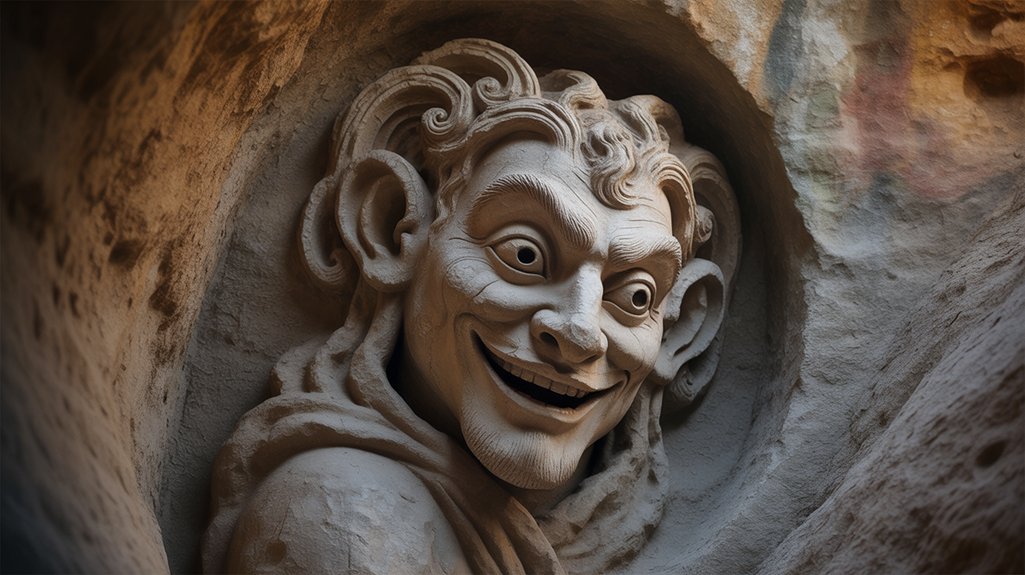
Across the limestone galleries of Lascaux and into the ochre-stained sanctuaries of Africa, Australia, and the Americas, Paleolithic shamanic ritual figures emerge—chimeric forms that dance between human and beast, etched fifteen thousand years before recorded history.
These eldritch images, rendered in spiraling chaos and angular dynamism, weren't mere decoration but survival codified in symbol, where the trickster's subversive wisdom taught communities to navigate scarcity through cunning rather than force.
The fox-headed dancers, the therianthropic beings caught mid-transformation, the clever coyote and raven scratched into stone—all testified to humanity's ancient recognition that survival demanded shape-shifting, adaptation, and the sacred art of knowing when to break the rules.
Paleolithic Shamanic Ritual Figures
Deep within the limestone chambers of Paleolithic Europe, shamanic figures emerge from ochre-stained walls as humanity's earliest preserved witnesses to the trickster archetype.
These eldritch images, dating to 40,000 years ago, capture boundary-crossers between domains—chimeric beings that blur human and animal forms. Lascaux's galleries and Altamira's vaults preserve shamanic practices rendered in mineral pigments, their deliberate application suggesting ceremonial intent.
The figures commune with beasts, embodying change's promise. Paleolithic symbolism reveals societies where mediators navigated chaos and creation's intertwined forces, their painted presence marking ritual spaces where the physical surrendered to spirit.
These ancient artists understood what later cultures would codify: the trickster's essence resides in liminality itself, in passages between states of being, forever frozen mid-transformation upon stone canvases.
Africa, Americas, Asia, Europe
Though separated by continents and millennia, trickster archetypes crystallized into distinct cultural forms as human consciousness diverged from its Paleolithic origins into the textured complexity of regional mythologies. Anansi's chimeric spider-form wove deception through West African oral traditions, teaching wisdom through cunning. Brer Rabbit emerged from Americas' painful histories, embodying resistance through wit. Sun Wukong's eldritch powers challenged celestial hierarchies, his mischief altering Chinese cosmology. Loki's duplicitous nature permeated Norse domains, chaos incarnate.
| Region | Trickster Figure | Primary Characteristics |
|---|---|---|
| Africa | Anansi | Shape-shifting, moral instruction |
| Americas | Brer Rabbit | Cunning resilience, defiance |
| Asia | Sun Wukong | Authority-challenging, supernatural abilities |
These beings share profound cultural significance: liberation through intelligence, subversion through performance. Their trickster characteristics transcend mere folklore—they encode ancestral knowledge of survival, autonomy, change.
Survival Through Subversive Storytelling
Before alphabets encoded human thought, pigments ground from ochre and charcoal transmitted knowledge through subversive visual languages—cave walls converted into repositories of survival wisdom cloaked in enigmatic imagery.
Lascaux's eldritch galleries showcase vibrant animal forms embodying trickster symbolism, creatures rendered with deliberate ambiguity that challenged hunting orthodoxies. These chimeric representations deployed narrative techniques predating written tradition, encoding cunning and resourcefulness through visual metaphor.
Prehistoric artists altered limestone into liminal spaces where boundary-crossing figures subverted communal expectations. Deception, alteration, metamorphosis—themes woven through ochre strokes approximately 17,000 years before present.
The playful uncertainty within these depictions mirrors trickster archetypes emerging across subsequent mythologies, suggesting humanity's earliest storytellers already understood survival demanded more than spears. It required imagination capable of questioning, reimagining, transcending established paradigms through art's liberating power.
Continental Trickster Archetype Divergence
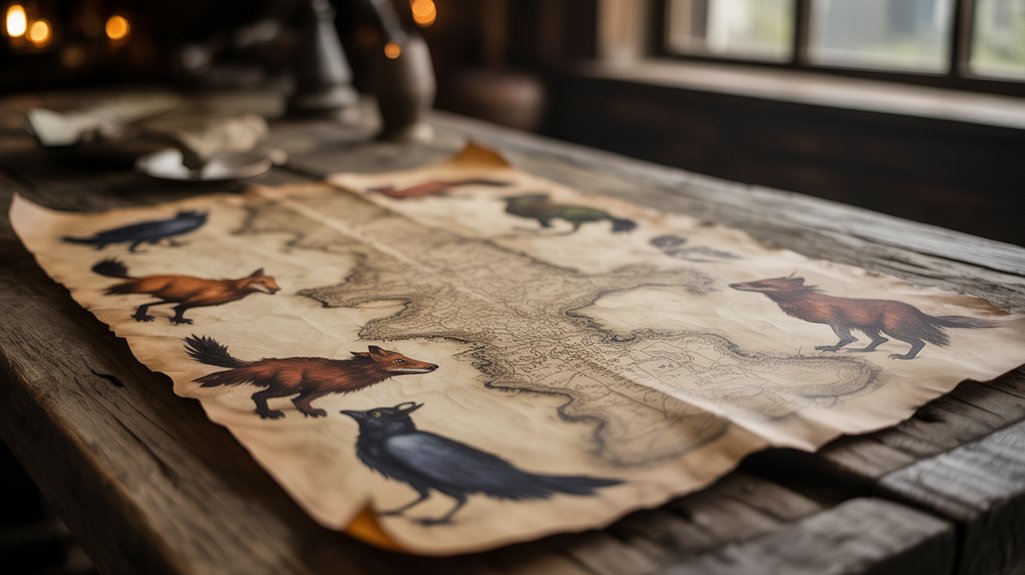
Across the world's mythological landscapes, trickster figures emerge as chimeric embodiments of cultural wisdom, each continent sculpting these liminal beings according to its own cosmological architecture and spiritual needs. African traditions birthed Anansi, whose web-spinning cleverness transmutes chaos into pedagogical vessels—moral instruction disguised as entertainment. Norse mythology conjured Loki, an eldritch shape-shifter whose unpredictability fractures cosmic order itself. Native American cosmologies positioned Coyote at creation's threshold, simultaneously sage and fool.
| Continental Origin | Archetypal Expression |
|---|---|
| Africa (Anansi) | Didactic cunning; wisdom through subversion |
| East Asia (Sun Wukong) | Innovative defiance; celestial rebellion |
| Mesoamerica (Tezcatlipoca) | Creative destruction; cosmic equilibrium |
These trickster traits reveal profound cultural significance: European figures like Puck orchestrate discord toward harmony, while Mesoamerican deities embody creation-destruction's sacred duality. Each tradition forges its own archetype, reflecting fundamental beliefs about freedom, authority, and existence's paradoxical nature.
Liminality and Boundary Breaking
Where orthodox deities maintain fixed domains and immutable stations, tricksters dwell in threshold spaces—those gossamer interstices between sky and earth, mortality and divinity, civilization and wilderness.
Trickster symbolism emerges precisely from this existential fluidity, manifesting in figures who refuse categorical containment. Loki traverses Asgard's golden halls yet consorts with frost giants; Anansi weaves between human villages and eldritch spirit territories; Coyote roams desert boundaries where order dissolves into primordial chaos.
Tricksters inhabit the gossamer spaces between worlds, refusing containment within fixed categories, forever traversing boundaries that constrain lesser beings.
Cultural liminality defines these boundary-breakers who reshape reality through transgression:
- Shape-shifting capacities enable navigation across ontological barriers, allowing manipulation of rigid social structures
- Authority-challenging antics expose vulnerabilities within established hierarchies, catalyzing alteration
- World-altering consequences manifest through their exploits—Maui's chimeric interventions literally pulled islands from oceanic depths
Anansi's Web of Stories
From the ancient kingdoms of West Africa—Ghana, the Ashanti territories, lands where oral tradition held dominion over written word—emerged Anansi, the spider-trickster whose eldritch cunning changed him into something far greater than folklore's plaything.
His tales, carried across the Atlantic's brutal Middle Passage in the minds of enslaved peoples, became vessels of resistance: each story a coded proof of survival, each web of words a chimeric blend of remembered homeland and desperate hope.
The spider's narratives evolved through diaspora, weaving themselves into Caribbean consciousness where Kweku Anansi's shape-shifting wisdom offered enslaved communities a trickster-guide who proved that the powerless, through wit alone, might outsmart their oppressors.
Origins in West Africa
Within the dense rainforests of what's now Ghana, among the Ashanti people who wove gold thread and governance into sophisticated networks of power, emerged Anansi—the spider trickster whose name itself means “spider” in the Twi language.
His chimeric form, shifting between arachnid and human manifestations, embodied trickster characteristics that transcended mere entertainment. Anansi wielded cunning as weapon and shield, demonstrating how intellect could topple tyranny, how wit could survive where strength faltered.
The cultural significance of his narratives extended beyond moral instruction; they preserved ancestral wisdom through oral tradition, encoded resistance strategies, celebrated adaptability. His stories became eldritch repositories of knowledge, teaching resourcefulness to generations who understood that survival demanded more than physical prowess.
The spider's web symbolized interconnectedness—threads binding community, memory, and liberation together.
Tales of Cunning Wisdom
Though Anansi possessed no physical strength to match the leopard's fangs or the python's crushing coils, his stories reveal how narrative itself becomes weaponry—each tale a carefully spun strand in his legendary web.
Through cunning strategies involving shape-shifting and linguistic manipulation, the spider altered vulnerability into advantage, capturing prey through intellect rather than force.
These narratives, preserved across centuries of oral tradition, embed moral lessons within their eldritch frameworks—warning against hubris, celebrating resourcefulness, honoring wisdom over brute power.
The transatlantic passage couldn't sever these chimeric threads; enslaved communities reimagined Anansi's trickery as spiritual resistance, his alterations mirroring their own survival adaptations.
Each tale functions simultaneously as entertainment, education, liberation theology—ancient knowledge systems disguised as children's fables, preserving West African cosmologies through coded performance.
Spreading Stories Through Slavery
When slave ships crossed the Middle Passage between 1525 and 1866, Anansi traveled in the minds of captive Akan, Ashanti, and Fante peoples—an incorporeal stowaway who couldn't be shackled, catalogued, or stripped away during those brutal transatlantic months.
His tales became instruments of cultural preservation, whispered beneath deck planks, sung in coded melodies, performed through gesture and memory. The spider-trickster's narratives demonstrated how smaller, cleverer beings could outwit tyrannical forces—eldritch wisdom disguised as entertainment, teaching survival through metaphor.
These oral traditions altered suffering into strategy, transmuting oppression into stories where cunning triumphed over brute strength. Anansi became chimeric: simultaneously African ancestor-spirit and New World groundbreaking symbol, weaving networks of resistance through folklore that colonizers couldn't comprehend, sustaining cultural identity across generations through storytelling's liberating power.
Tricksters in Comics and Film
These contemporary manifestations preserve essential trickster elements:
- Liminal power — Characters operate between moral categories, neither hero nor villain, existing in chimeric states that defy classification.
- Narrative disruption — From Puck's theatrical interventions in Shakespeare's enchanted forests to Huey's resourceful problem-solving, tricksters fracture expected story patterns.
- Cultural translation — Ancient archetypes evolve through modern media while maintaining their transformative essence, bridging millennia of human storytelling.
Jung's Shadow Archetype Theory
The trickster's psychological architecture finds its most profound theoretical framework in Carl Jung's conception of the Shadow, that repository of rejected elements dwelling beneath consciousness's ordered surface.
The Shadow harbors what consciousness rejects—those exiled fragments the trickster resurrects through transgression and revelation.
These eldritch figures—Loki, Anansi, Coyote—embody humanity's disowned aspects, those chimeric fragments of self we exile to preserve social acceptability.
Trickster symbolism operates as psychic mirror, reflecting back our suppressed desires, our transgressive impulses, our capacity for both creation and destruction. Through their boundary-crossing antics, these beings force confrontation with what we've buried.
Shadow integration demands this uncomfortable reckoning. The trickster's gift lies not in comfort but in revelation.
When Hermes steals Apollo's cattle, when Raven releases light into the world, they demonstrate that wholeness requires embracing contradiction, acknowledging the darkness coiled within each psyche.
This individuation process—Jung's path toward psychological completeness—necessitates accepting both luminous and shadowed territories of being. Liberation emerges through this sacred, often harrowing recognition.
Challenging Authority Through Humor
Across mythological traditions spanning continents and millennia, humor emerges as the trickster's most potent weapon against entrenched hierarchies—a blade sharpened not with steel but with laughter's subversive edge.
Loki's cunning manipulations expose the fragilities within Norse divine power structures, his jests revealing what solemnity conceals. Anansi weaves narratives where wit triumphs over strength, his comedic rebellion demonstrating intelligence's supremacy in African oral traditions.
Native American figures like Coyote and Heyoke practice subverting norms through deliberate absurdity, their antics simultaneously mocking and reinforcing communal boundaries. Eris orchestrates divine discord through chaos itself, her golden apple precipitating the Trojan War by exploiting celestial vanity.
Sun Wukong's playful defiance challenges the Jade Emperor's heavenly bureaucracy, his metamorphic abilities and irreverence altering rigid cosmic order. These chimeric beings operate within liminal spaces where laughter becomes revolution, where the fool speaks truths kings can't acknowledge.
Through comedic rebellion, they dismantle hierarchies without bloodshed, proving that mockery penetrates armor impervious to swords.
Tricksters' Enduring Modern Relevance
While ancient mythologies might seem distant from contemporary consciousness, trickster archetypes infiltrate modern narratives with startling persistence, their liminal essence adapting fluidly to twenty-first-century anxieties and aspirations. Loki emerges through cinematic universes, Anansi weaves through graphic novels, Coyote prowls video game landscapes—each manifestation serving as cultural commentary on authority's fragility.
These chimeric figures embody moral ambiguity, refusing binary distinctions between heroism and villainy, their eldritch wisdom questioning societal constructs through narrative evolution that spans millennia. The trickster's persistence reveals humanity's enduring need for rebellion's archetype.
Television, comics, interactive media—all accommodate these boundary-dissolvers who cultivate critical thinking against monolithic power structures. Their adaptability transcends cultural borders, speaking to universal desires for creative disruption and self-determination.
Academic discourse recognizes them as vessels linking ancestral narratives to contemporary struggles, their mischievous essence remaining fundamentally unchanged while their manifestations evolve. They won't be tamed. Won't be categorized. Their chaos mirrors society's complexities, offering nuanced perspectives that rigid moral frameworks can't contain.
Frequently Asked Questions
Are Trickster Figures Always Male or Do Female Tricksters Exist?
Female tricksters manifest powerfully across mythological traditions, shattering rigid gender roles through their cunning.
Japan's Uzume disrupts cosmic order with provocative dance, while West Africa's Mami Wata shape-shifts between dimensions, commanding waters with eldritch authority.
The Norse Freyja manipulates gods through seiðr magic, her seductive intelligence proving formidable.
These chimeric figures—from Anansi's occasional feminine incarnations to Celtic sovereignty goddesses—reveal trickery transcends masculine domains, embodying liminal power that refuses patriarchal constraints within sacred narratives.
Can Tricksters Be Heroes and Villains at the Same Time?
Though modern morality demands clear boundaries, tricksters transcend such limitations entirely. Their duality nature defies binary classifications—simultaneously liberator and destroyer, teacher and deceiver.
This heroic ambiguity manifests in figures like Anansi, who steals celestial wisdom for humanity yet manipulates without remorse. Loki births monstrous offspring while saving Asgard.
These chimeric beings operate beyond conventional ethics, their actions neither purely malevolent nor benevolent. They're catalysts of change, embodying the eldritch truth that chaos itself recognizes no masters, serves no singular purpose.
Why Do Children Seem Particularly Drawn to Trickster Characters?
Children recognize tricksters as liberators who transgress oppressive boundaries adults enforce. This childhood fascination emerges from witnessing playful mischief that challenges rigid hierarchies—tricksters like Anansi, Coyote, and Loki demonstrate that rules aren't immutable.
The liminal nature of these beings resonates with young souls traversing between dependence and autonomy. They embody forbidden desires: questioning authority, breaking constraints, reshaping reality through cunning rather than force.
Tricksters validate children's instinctive resistance to conformity, offering mythic permission to challenge established order.
Do Modern Internet Memes Have Roots in Trickster Mythology?
Like ancient spirits donning new masks, internet memes embody trickster archetypes through their shapeshifting nature and boundary-transgressing humor.
Internet culture's meme evolution mirrors the chimeric alterations of Coyote, Anansi, and Loki—each iteration challenging established norms, spreading chaos through networks rather than villages.
These digital tricksters thrive in liminal spaces between meaning and absurdity, wielding satire as their eldritch weapon.
The rebellious essence remains unchanged: subverting authority, questioning power structures, liberating consciousness through irreverent wisdom that can't be contained or controlled.
How Do Religious Traditions View Trickster Figures in Sacred Texts?
Religious traditions wrestle with trickster morality through paradox and ambivalence.
These liminal beings—Loki in Norse Edda, Anansi in West African Ashanti cosmology, Coyote in Indigenous Plateau traditions—dwell between profane and sacred, teaching through transgression.
They're neither wholly malevolent nor beneficent. Their chaos births sacred lessons: humility through humiliation, wisdom through folly.
The eldritch truth? Tricksters expose divine order's fragility, reminding seekers that spiritual liberation often emerges from breaking, not following, rigid doctrinal boundaries.
Conclusion
Like foxfire flickering between worlds, the trickster endures—neither wholly chaos nor wholly creation, but the liminal threshold where both converge. These chimeric figures, woven through humanity's oldest narratives, remain essential precisely because civilization itself demands their subversive wisdom. They're the necessary shadow, the eldritch laughter echoing through rigid hierarchies. Each generation resurrects them anew, recognizing what ancients understood: alteration requires disruption, and sacred order needs its divine fool to remain truly alive.