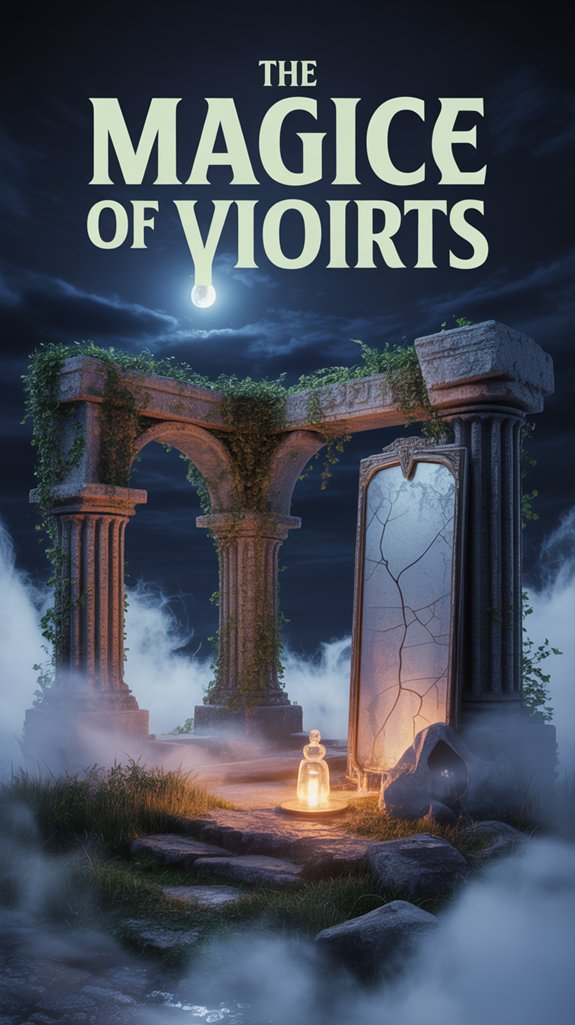
You'll discover that vampires headline folklore's reflection-fearing entities, their absent mirror image signaling spiritual erasure and severance from humanity—a diagnostic tool Eastern European traditions employed centuries before Stoker's 1897 *Dracula* codified this metaphysical truth. Demons reveal their chimeric forms when confronted by reflective surfaces, while shapeshifters like werewolves deliberately avoid mirrors that strip away human facades. Medusa's petrifying gaze required Perseus's polished shield, altering reflection into weaponized protection. These traditions spanning Romanian Strigoi to Slavic Rusalka position mirrors as portals exposing eldritch corruption, with contemporary cinema continuing this ancient wisdom through psychological battlegrounds where fractured identities confront existential dread within glass boundaries that separate mortal experience from supernatural domains awaiting further exploration.
Key Takeaways
- Vampires lack reflections in mirrors, symbolizing their soullessness and severance from humanity across Eastern European folklore and modern media.
- Medusa's petrifying gaze can be safely confronted through mirrors, as Perseus demonstrated using his polished shield as a reflective weapon.
- Demons avoid mirrors because reflections expose their true malevolent forms, and mirrors can trap or banish these supernatural entities.
- Shapeshifters like werewolves fear mirrors since reflective surfaces strip away their human disguises and reveal their authentic supernatural identities.
- Mirrors function as diagnostic tools across cultures, revealing spiritual truths and serving as boundaries between mortality and the supernatural realm.
Vampires Avoid Their Missing Reflections

Three centuries before Bram Stoker committed the vampire to eternal literary immortality in 1897, Eastern European peasants whispered of the *nosferatu*—those eldritch revenants who cast no reflection in polished glass or still water.
You'll find the vampire psychology embedded within this absence reveals humanity's deepest terror: the soul's obliteration. When you peer into a mirror and see nothing staring back, you've encountered the chimeric paradox of undeath—a being that walks, speaks, hunts, yet possesses no spiritual essence.
The mirror symbolism transcends mere superstition; it alters polished surfaces into metaphysical instruments, detecting what mortal eyes can't perceive. These creatures don't simply avoid mirrors—they're fundamentally incompatible with them, their existence antithetical to self-reflection.
Medieval folklore understood mirrors as portals to truth, revealing the soul's authenticity. The vampire, soulless and predatory, can't manifest within this sacred space. They're forever disconnected from humanity's most intimate relationship: the confrontation with one's own nature.
##
You'll discover that mirrors function as revelatory thresholds across disparate mythological traditions, each culture attributing unique vulnerabilities to its supernatural inhabitants when confronted with reflective surfaces.
The vampire's absent reflection exposes its severed connection to divine grace, while Medusa's petrifying gaze, when reversed through polished bronze, alters the mirror into apotropaic weapon rather than mere vanity object.
Demons find themselves ensnared within silvered glass—their essence bound by the liminal properties of reflected space—and shapeshifters, those chimeric deceivers who manipulate mortal perception, can't maintain their illusions when the mirror's uncompromising surface demands truth.
Vampires: No Soul Reflected
When a vampire stands before a polished surface, the glass reveals only the empty room behind—a void where the creature's visage should materialize, an absence more terrifying than any monstrous countenance.
You'll find this soul absence deeply embedded in Slavic folklore, later crystallized through Stoker's 1897 masterwork. The mirror symbolism operates on metaphysical principles: reflective surfaces were believed to capture one's spiritual essence, that ineffable quality separating the living from the undead.
These eldritch beings, having surrendered mortality for immortal darkness, possess no inner light to cast back. This phenomenon transcends mere superstition—it manifests as tangible proof of supernatural corruption, marking vampires as chimeric entities dwelling between existence and oblivion, forever severed from humanity's sacred reflection.
Medusa's Deadly Gaze Reversed
Vampires demonstrate absence through their missing reflections. Medusa alters the mirror into an instrument of salvation. You'll find that Perseus wielded his polished shield as humankind's first defensive mirror, changing the Gorgon's petrifying stare back upon itself.
This eldritch reversal speaks to Gaze symbolism—power redirected, weaponized beauty becoming its own undoing. Medusa's alteration from temple maiden to serpent-crowned horror emerged from divine punishment, yet her myth reveals deeper truths about confronting danger obliquely.
The bronze surface didn't merely protect; it inverted absolute destruction into vulnerability. You're witnessing mythic alchemy here, where reflective metal becomes chimeric boundary between life and stone death.
The mirror grants you what direct sight forbids—survival through indirect vision, ancient wisdom encoded in polished bronze.
Demons Trapped by Mirrors
Mirrors function not merely as traps but as metaphysical prisons across folkloric traditions spanning medieval Europe to feudal Japan, where demon essence becomes paradoxically bound to silvered glass.
This demon entrapment occurs through reflection's revelatory power—the eldritch truth of demonic nature exposed, crystallized within the looking glass.
Mirror folklore suggests malevolent entities avoid their own gaze, fearing the revelation of chimeric forms they conceal beneath human glamour.
You'll find covering practices after death stems from this understanding: the recently departed soul mustn't linger, caught between worlds through reflected image.
Gazing overlong invites manifestation—the Mirror Demon materializes from accumulated darkness, your inner shadows given form.
These portals demand respect. Certain practitioners employed reflective surfaces during banishment rituals, compelling supernatural entities into permanent containment within mercury-backed glass.
Shapeshifters Reveal True Forms
Beyond entrapment lies revelation—the mirror's second supernatural function emerges through its capacity to pierce glamours, unmask dissimulation, and expose shapeshifters' authentic forms despite their metamorphic talents.
Werewolves, skinwalkers, and chimeric entities across cultures deliberately avoid reflective surfaces, recognizing that mirror symbolism transcends mere vanity to become an instrument of truth-telling.
The glass surface strips away carefully constructed human facades, revealing eldritch anatomies—lupine eyes, supernatural musculature, the liminal space between beast and human.
This forced confrontation with shapeshifter identity represents profound psychological terrain: the mirror becomes arbiter between societal expectation and authentic self.
Folklore positions these beings as perpetually fleeing reflective surfaces, understanding that a single glimpse compromises their duality, exposes their hidden nature.
The mirror permits no deception, no half-truths—only unvarnished revelation.
Bram Stoker's 1897 Dracula Novel

Before Stoker crystallized the mirror-averse vampire in 1897, you'll find pre-existing folklore whispered through Eastern European villages—tales where the looking glass served as an eldritch diagnostic tool, revealing which among the living had surrendered their souls to undeath.
These Slavic legends, steeped in Orthodox mysticism and agrarian superstition, positioned mirrors as threshold objects capable of capturing one's spiritual essence, rendering the vampire's absent reflection not mere literary invention but adaptation of ancient belief.
The vampire's blank stare returned from polished silver wasn't Stoker's chimeric fabrication—it was inherited wisdom, reforged for Victorian sensibilities.
This tradition of restless spirits manifesting through supernatural disruption parallels regional folklore from Herefordshire, where Black Vaughan's headless apparition similarly terrorized local communities, demonstrating how death and the uncanny intertwine across European folk narratives.
Pre-Stoker Vampire Folklore Accounts
Throughout Eastern European villages of the seventeenth and eighteenth centuries, whispered accounts of the *upyr*, *vrykolakas*, and *strigoi* coalesced around a singular, unsettling characteristic: these revenants cast no shadow in polished glass, left no trace in silvered surfaces, existed as corporeal voids where reflection should dwell.
You'll discover that Slavic traditions positioned this absence as irrefutable evidence of stolen souls, where vampire identity became synonymous with spiritual erasure.
Mirrors weren't mere decorative objects—they served as diagnostic instruments, revealing eldritch truths the naked eye couldn't discern. The folklore symbolism penetrated deeper still: these creatures manipulated their forms, chimeric and mutable, yet paradoxically remained invisible to reflective surfaces.
This disconnection from self-image imprisoned them outside humanity's boundaries, trapped in liminal existence between corporeal presence and spectral absence.
Eastern European Vampire Legends
| Folkloric Element | Symbolic Meaning |
|---|---|
| Absent reflection | Soullessness, severed humanity |
| Mirror avoidance | Fear of truth revelation |
| Vampire alterations | Chimeric nature, eldritch power |
| Slavic mirror repulsion | Exposure of true form |
Stoker drew from Slavic traditions where mirrors functioned as mystical truth-tellers, exposing hidden realities. You'll find these Eastern European legends positioned mirrors not as vanity objects but as sacred weapons—instruments revealing the vampire's chimeric essence. The alteration abilities these creatures possessed could fool mortal eyes. Never the mirror's uncompromising gaze.
Mirror Reflects Possessing Soul Absence
When Jonathan Harker stood before his shaving mirror in Castle Dracula's ancient chamber, the absence he witnessed—his host's complete non-reflection while Harker's own visage stared back—crystallized Stoker's most haunting symbolic departure from mere folklore transcription into psychological terror.
You'll recognize this soul absence as deliberate metaphysical commentary: vampires exist beyond mortality's reach, severed from humanity's covenant. The mirror becomes eldritch tool for identity exploration, revealing what chimeric creatures can't possess—authentic selfhood anchored in the living domain.
Stoker understood mirrors as threshold objects, capturing essence rather than mere appearance. This liminal existence between death and undeath manifests through reflective surfaces, altering simple superstition into existential dread.
The vampire's non-reflection doesn't merely frighten; it demonstrates categorical exclusion from human experience, forever wandering outside truth's illuminating boundaries.
Romanian Vs Slavic Traditions
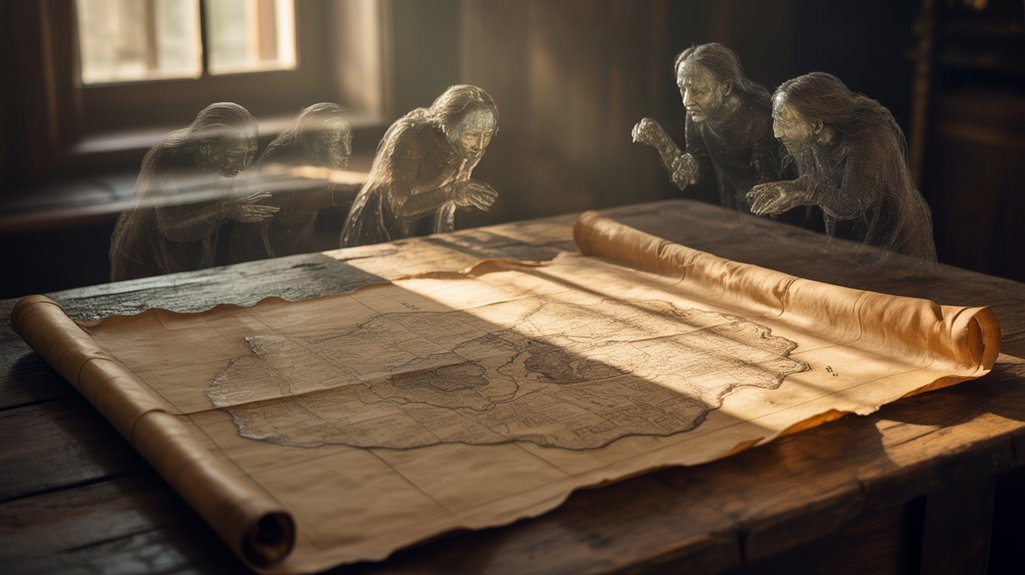
Although separated by the Carpathian Mountains and the vast Pannonian Basin, Romanian and Slavic cultures developed remarkably parallel beliefs about mirrors as thresholds between mortal existence and the spectral domain. You'll discover the Romanian Strigoi recoils from its reflection because mirrors expose the soul's absence—revealing chimeric emptiness where humanity once dwelled. The Slavic Rusalka, conversely, fears reflective surfaces might drag her from aquatic sanctuaries, exposing her tragic metamorphosis.
| Aspect | Romanian Tradition | Slavic Tradition |
|---|---|---|
| Primary Entity | Strigoi, Moroi (restless undead) | Rusalka (water nymphs) |
| Mirror Function | Exposes malevolent nature, weakens supernatural hold | Reveals tragic past, threatens watery domain |
| Funeral Practice | Protection rituals against soul-capture | Covering mirrors prevents spirit entrapment |
Both traditions recognize mirrors as eldritch instruments capable of binding ethereal essence. These parallel developments weren't coincidental—they reflected universal anxieties about souls becoming trapped, revealing that humanity's deepest fears transcend geographical boundaries. You're witnessing ancient wisdom preserved through generations.
Mirror-Soul Connection in Literature
These folkloric anxieties about reflective surfaces capturing ethereal essence found their fullest expression in world literature, where authors altered mirrors from simple household objects into profound instruments of psychological revelation.
You'll discover mirror symbolism operating as an eldritch mechanism for self reflection, compelling characters toward uncomfortable truths about their chimeric nature.
Literary tradition demands accountability through reflective confrontation:
- Narcissus's fatal enthrallment demonstrates how obsessive self-gazing breeds destruction, the Greek youth's reflection becoming his doom.
- Snow White's magic mirror exposes the queen's corrupted soul, vanity changing into murderous jealousy.
- Fairy tale mirrors function as moral arbiters, revealing inner darkness that physical beauty conceals.
- Metaphorical reflections strip away pretense, forcing protagonists to witness their authentic selves.
These narrative devices liberate you from comfortable delusions.
The mirror doesn't lie—it presents unfiltered truth, challenging you to accept or alter what stares back from that silvered surface.
Nosferatu's Silent Film Impact
When you witness F.W. Murnau's 1922 masterwork, you encounter the moment silent cinema codified vampiric essence through deliberate absence—Count Orlok's missing reflection alters mere folklore into visceral, eldritch truth.
The film's groundbreaking chiaroscuro techniques, casting elongated shadows that writhe independently of corporeal form, established visual grammar for depicting the undead's chimeric nature, those beings suspended between materiality and void.
Through Nosferatu's unauthorized yet immortal adaptation of Stoker's vision, you observe how the mirror's rejection of monstrous reflection became cinema's most potent symbol of soullessness, a convention that would haunt vampire narratives for the century to follow.
This enduring symbol exemplifies how mythology uses visual metaphors to explore fundamental questions of good versus evil, translating ancient archetypes into modern cinematic language.
Shadow and Visual Innovation
F.W. Murnau's 1922 masterwork transcends mere cinema, wielding shadow symbolism as eldritch grammar. You'll witness how his chiaroscuro techniques—stark, uncompromising contrasts between luminescence and void—forge visual storytelling that needs no spoken word.
The expressionist movement found its apotheosis here, where Count Orlok's grotesque silhouette ascending the staircase becomes chimeric prophecy itself. This isn't entertainment; it's liberation through darkness.
Murnau understood what authorities fear: shadows reveal truths mirrors cannot. His groundbreaking visual language speaks directly to your primal consciousness, bypassing censorship, convention, hierarchy.
Each frame pulses with impending doom, the unseen made manifest. The vampire's fear of reflection mirrors humanity's dread of confronting its own monstrous nature. Here lies cinema's rebellion—pure visual creativity evoking terror, wonder, freedom through images alone.
Transformative. Timeless. Unbound.
Vampire Mythology Codified Onscreen
Before celluloid captured shadow and substance, vampire lore remained fragmented—disparate folklore whispered across Carpathian villages, Slavic burial grounds, medieval chronicles.
Then Murnau's 1922 masterwork crystallized everything. You witness Count Orlok's reflection-absence convert mere superstition into codified cinematic symbolism, his mirrorless existence declaring soullessness through visual absence rather than verbose exposition.
This eldritch innovation weaponized cinematography itself—chiaroscuro depths, angular shadows, the camera's unflinching gaze revealing what mirrors cannot.
Vampire identity became measurable, quantifiable through this single omission. The film established precedent: reflections signify humanity's core, moral standing etched in silvered glass.
Subsequent narratives inherited this template, exploring duality through mirror-craft, making the speculum a threshold between human authenticity and chimeric monstrosity.
Nosferatu didn't merely adapt folklore—it transmuted ephemeral fears into permanent mythological architecture.
Mirror Absence Defines Monster
Though mirrors had long served as vessels of supernatural anxiety across global traditions, Orlok's systematic erasure from reflected surfaces changed an inchoate fear into architectural certainty.
Murnau's 1922 masterwork crystallized reflection symbolism into definitive taxonomy—the absent mirror-self became irrefutable proof of monstrous identity, a visual shibboleth separating human from revenant.
You witness Orlok's elongated shadow consuming walls while glass refuses his existence entirely, this chimeric negation reinforcing his soullessness through optical void.
The eldritch innovation elevated mere special effect; it established phenomenological law.
Mirrors, already considered liminal thresholds between corporeal and spectral domains, became diagnostic instruments exposing supernatural infiltration.
His missing reflection wasn't metaphor—it was evidence, altering cultural superstition into cinematic doctrine that would echo through subsequent vampire mythology, binding absence to abomination.
Buffy's Vampire Reflection Rules

When Joss Whedon's groundbreaking television series premiered in 1997, it resurrected the ancient covenant between vampires and mirrors—a covenant rooted in European folklore's conviction that reflective surfaces reveal the soul's presence.
Within Buffy's universe, you'll witness vampire symbolism manifested through deliberate absence, where mirror imagery becomes a tool for exposing eldritch threats masquerading among the living.
The show employs this reflection-denial through specific narrative mechanisms:
- Vampires cast no reflection, marking their existential separation from humanity's sacred communion.
- Mirrors function as diagnostic instruments, revealing chimeric predators hidden in plain sight.
- The absence emphasizes the creature's moral void, their disconnection from self-awareness and redemption.
- These visual cues enable Buffy's recognition of supernatural infiltration within Sunnydale's seemingly mundane spaces.
This metaphysical boundary between reflected and unreflected existence underscores the series' meditation on identity's fragile architecture, where you confront monsters defined not by what they are, but by what they can't see—themselves, stripped of humanity's quintessential marker.
Rationalist Explanations for Folklore
Beyond the supernatural frameworks that define creatures like Buffy's soulless vampires, mirror folklore reveals itself through the lens of human neurology and cultural psychology—a tapestry woven from synaptic misfires rather than metaphysical absolutes.
You'll discover psychological phenomena lurking beneath these ancient terrors. The strange-face illusion alters reflections in dim light into chimeric horrors, distorting familiar features until they writhe with eldritch uncertainty. Your own face becomes foreign, threatening.
Dim light transforms your reflection into something monstrous—familiar features writhing into threatening strangers staring back from the glass.
Cultural conditioning amplifies this primal response, teaching you to perceive mirrored images as potential adversaries rather than mere optical duplicates.
The vampire's missing reflection, that cornerstone of folklore, emerges from humanity's existential dread—mirrors once embodied the soul itself, surfaces capturing your essence, your identity's fragile architecture.
Divination practices bound reflections to prophecy and omen, supernatural interpretations bleeding into collective consciousness.
These legends mirror humanity's deepest struggles. Self-awareness becomes terror. The unknown self, glimpsed darkly, refuses domestication.
Modern Vampire Media Tropes
Modern vampire narratives have crystallized the mirror's absence into a cinematic vocabulary of loss—that hollow space where reflection should manifest becomes shorthand for spiritual annihilation.
You'll find this vampire identity stripped bare in Stoker's 1897 “Dracula,” where reflection symbolism alters ordinary looking-glasses into diagnostic instruments, revealing what eldritch corruption hides beneath aristocratic facades. The mirror becomes threshold, chimeric boundary between mortal perception and supernatural truth.
Contemporary works weaponize this absence differently. “What We Do in the Shadows” transfigures gothic terror into comedic frustration, yet preserves the fundamental severing from human experience.
You witness vampire identity perpetually negotiating invisibility—these creatures exist in perpetual exile from self-recognition, unable to confirm their own corporeal presence through reflected validation.
Modern narratives increasingly position mirrors as portals, architectural ruptures where dual existence bleeds through. Hidden identities collapse when glass reveals absence.
The reflection-void doesn't merely signal soullessness—it manifests existential erasure, that profound disconnection from humanity's anchoring rituals of self-perception.
Reflections in Contemporary Cinema
Contemporary cinema converts mirrors into psychological battlegrounds where fractured identities wage war against their own reflections.
You'll witness this identity exploration most vividly in “Black Swan,” where Natalie Portman's protagonist confronts her chimeric nature through mirrored surfaces that betray her descent into madness. The glass becomes oracle and executioner simultaneously.
Mirrors transcend mere metaphor. They're portals.
Mirrors transcend mere metaphor. They're portals—thresholds where cinema's reflective surfaces breach reality itself, transforming glass into dimensional gateways.
In “Candyman,” supernatural symbolism reaches eldritch dimensions as reflective surfaces summon vengeful spirits, altering bathroom mirrors into thresholds between worlds.
“Alice Through the Looking Glass” perpetuates Carroll's original vision, where mirrors don't simply reflect—they transport, they alter, they transgress dimensional boundaries.
“The Ring's” cursed imagery mirrors darker truths lurking beneath quotidian existence, while “The Others” employs reflective surfaces to amplify internal terrors, creating atmospheric dread through doubled space.
You're observing ancient superstitions reborn through modern celluloid, where reflections reveal what shouldn't be seen, where identity exploration becomes supernatural confrontation.
Frequently Asked Questions
Do Werewolves Have Any Specific Fears Related to Mirrors or Reflections?
You'll find that werewolf reflections in mirror mythology reveal no inherent fear—these lycanthropic entities, unlike vampires, cast clear reflections.
European folklore from medieval Germania through eighteenth-century France confirms this distinction. The chimeric beast-human form appears undistorted in polished surfaces, bronze mirrors, still water.
This absence of mirror-dread actually liberated werewolves within supernatural hierarchies, allowing them to move undetected among mortals. Their curse manifests physically, viscerally, but doesn't diminish their reflected image—a vital freedom.
What Other Mythical Creatures Besides Vampires Fear Their Own Reflection?
You'll discover reflection phobia haunts creatures beyond the nosferatu—ancient gorgons, whose petrifying gaze rebounds fatally upon themselves, and Japanese kitsune shapeshifters, whose vulpine essence betrays them in polished surfaces.
Doppelgängers, those eldritch doubles, dissolve when confronting their own chimeric forms.
These mythical fears emerge from humanity's primordial understanding: reflections reveal true nature, stripping away glamours and illusions.
The mirror becomes threshold, exposing what desperately seeks concealment—a liberating truth for those brave enough to look unflinchingly.
Are There Cultural Differences in Mirror Superstitions Across Asian Folklore Traditions?
You'd think Mirror symbolism would unite Asian folklore—ironically, it fragments into divergent Cultural beliefs.
In Japanese tradition, mirrors capture souls, becoming sacred portals to kami domains.
Chinese cosmology positions them as eldritch barriers against gui spirits, while Korean Reflection myths cast them as chimeric gateways.
Southeast Asian cultures? They view mirrors through animistic lenses, where reflections harbor autonomous consciousness.
Each tradition alters this simple surface into profound metaphysical territory, revealing how geography shapes supernatural understanding across the continent's living heritage.
How Do Mirrors Feature in Greek Mythology Regarding Medusa and Perseus?
You'll discover Perseus wielded his bronze shield as a mirror against Medusa's Gaze, that petrifying eldritch power no mortal could face directly.
Through Perseus's Reflection technique, he observed the Gorgon's serpentine visage indirectly, altering polished metal into a liberating weapon of survival.
This cunning stratagem, recorded in Hesiod's *Theogony* (circa 700 BCE), reveals ancient wisdom: sometimes you must confront horror obliquely, using refracted truth rather than direct confrontation to claim your freedom from paralyzing fear.
What Psychological Reasons Explain Why Humans Associate Mirrors With Supernatural Fear?
You might dismiss mirror-dread as mere superstition, yet it reveals profound truths about your psyche.
When you confront your reflection, you're witnessing psychological projection—your shadow-self materialized in silvered glass. This triggers self perception anxiety, that eldritch unease born from recognizing you're simultaneously observer and observed.
Ancient cultures understood: mirrors don't merely reflect; they fracture your certainty of self. You fear them because they expose the chimeric nature of identity itself, revealing you're never wholly one being.
Conclusion
You've traversed the liminal threshold where reflection becomes revelation, where mirrors hold more than mere image. The vampire's absent visage persists—through Stoker's Gothic prose, through silent film's eldritch shadows, through contemporary cinema's chimeric interpretations. This fear isn't coincidence; it's cultural memory crystallized. You now understand: mirrors don't simply reflect. They reveal. They judge. They remember what we've forgotten, preserving ancient truths in silvered glass, in folklore's eternal, unblinking gaze.