In the vast pantheon of Norse gods, none commands more reverence and fear than Odin, the All-Father who sacrificed his eye for wisdom and hanged himself from Yggdrasil for nine days to obtain the runes. This enigmatic deity represents the complex duality of Norse culture-both wise ruler and cunning trickster, creator and destroyer.
This post contains affiliate links. If you purchase through these links, we may earn a commission at no extra cost to you.
I've spent decades studying Norse mythology across archaeological sites and medieval manuscripts, and Odin consistently emerges as the most fascinating figure in the entire corpus. He's not your typical divine ruler sitting passively on a throne. Instead, he's a restless wanderer who disguises himself as a traveler to walk among mortals, constantly seeking knowledge even at tremendous personal cost.
The sources paint a picture of a god who embodies contradiction. He's simultaneously the wise king of Asgard and the oath-breaker who manipulates gods and mortals alike. This complexity reflects the harsh realities of medieval Scandinavian life, where survival often demanded both honor and cunning.
Origins and Etymology of Odin
The name “Odin” derives from the Old Norse “Óðinn,” which connects to the word “óðr,” meaning fury, inspiration, or poetic ecstasy. This linguistic root reveals something fundamental about his nature-he's the god of divine madness, the kind of frenzied inspiration that creates both great poetry and berserker rage in battle.
Archaeological evidence shows worship of Odin-like figures dating back to the Migration Period (roughly 400-800 CE). The Vendel-era helmet plates from Sweden depict scenes that scholars interpret as early Odinic imagery, including warriors with spears and ravens. Germanic tribes across Northern Europe knew variations of this deity: the Anglo-Saxons called him Woden, the Alamanni knew him as Wodan, and Lombards worshipped Godan.
In my research through medieval texts, I found that Adam of Bremen's 11th-century account describes a temple at Uppsala where Odin held the central position among three divine statues. This indicates his prominence had crystallized into formal religious practice by the late Viking Age.
The evolution from a Germanic war god to the complex All-Father of Norse mythology likely occurred during the Viking expansion period. As Scandinavian society became more sophisticated, so did their conception of Odin. He absorbed attributes from other deities and cultural influences, becoming the multifaceted figure we encounter in sources like the Prose Edda and Poetic Edda.
Continental Germanic sources like the Merseburg Charms show Wodan as a healing god alongside his warrior aspects. This magical dimension would become central to Odin's character in Norse tradition, where he masters runes, poetry, and shamanic practices.
Odin's Role as the All-Father
Odin earns the title “All-Father” (Allföðr in Old Norse) through his position as ruler of Asgard and patriarch of the Æsir gods. But his paternal role extends far beyond divine politics. He's literally the father of many gods, including Baldr, Höðr, Hermóðr, and Víðarr through various mothers, and the adoptive father of Loki after swearing blood brotherhood.
The cosmic dimension of his fatherhood appears in the creation myth. According to Snorri Sturluson's Prose Edda, Odin and his brothers Vili and Vé created the world from the body of the primordial giant Ymir. They fashioned the first humans, Ask and Embla, from ash and elm trees, with Odin providing the breath of life. This makes him the ultimate progenitor of both gods and humanity.
His leadership style differs markedly from other mythological sky-fathers like Zeus or Jupiter. Odin rules through wisdom and cunning rather than raw power. He maintains authority by staying better informed than anyone else, aided by his ravens Huginn and Muninn, who fly across all nine worlds daily to bring him news.
The All-Father convenes the divine assembly at Gladsheim, his hall in Asgard, where he sits on the high throne Hlidskjalf. From this elevated seat, he can see into all the worlds-a physical manifestation of his role as the god who must know everything to protect cosmic order. But he doesn't simply delegate and observe. Odin actively intervenes in mortal affairs, often in disguise, testing heroes and shaping events.
His relationship with fallen warriors reveals another aspect of his paternal nature. The einherjar (chosen slain) who feast in Valhalla aren't just dead soldiers-they're his adopted sons, gathered for the final battle at Ragnarök. He personally selects these warriors through his valkyries, taking responsibility for their eternal preparation.

The Quest for Wisdom and Knowledge
No aspect of Odin's character proves more compelling than his relentless pursuit of wisdom. The most famous example involves his sacrifice of an eye to Mimir's well for a drink of wisdom-granting water. But this represents just one episode in a lifelong quest that defines his identity.
The story of his acquisition of the runes demonstrates the extremes he'll endure for knowledge. According to the Hávamál, Odin hanged himself from Yggdrasil for nine nights, pierced by his own spear, without food or drink. This shamanic ordeal-described as “given to Odin, myself to myself”-allowed him to perceive the runes and their magical power.
I found this narrative particularly striking because it parallels shamanic initiation practices documented among Siberian and Arctic peoples. The self-sacrifice, the hanging from a world tree, the vision quest aspect-all suggest the preservation of genuine ritual practices within the mythological framework.
His pursuit of poetry proves equally dramatic. The mead of poetry, created from the blood of the wise god Kvasir, grants divine inspiration to whoever drinks it. Odin infiltrates the giant Suttungr's mountain stronghold by seducing his daughter Gunnlöð, spending three nights with her to obtain three drinks of the mead. He then transforms into an eagle to escape, carrying the mead back to Asgard in his stomach.
The god's traveling persona as Grímnir, Gangleri, or simply “the Wanderer” serves his information-gathering mission. Medieval sources describe him appearing as an old man with a wide-brimmed hat, single eye, and long cloak, carrying a staff. This disguise allows him to move freely among mortals, testing their hospitality and learning their secrets.
His eight-legged horse Sleipnir enables travel between worlds that would be impossible for other beings. Born from Loki's shape-changing encounter with a giant's stallion, Sleipnir can gallop through air and over water, carrying Odin on diplomatic missions to giants or journeys to the underworld.
Odin's Iconic Symbols and Companions
Odin's symbolic associations create a rich iconographic tradition that archaeologists recognize in Viking Age artifacts. His spear Gungnir, forged by the dwarfs, never misses its target and returns to his hand after being thrown. More than a weapon, it represents his role as oath-keeper-spears were thrown over enemy armies to dedicate them to Odin before battle.
The two ravens Huginn and Muninn (Thought and Memory) perch on his shoulders and serve as his intelligence network. Each dawn they fly out across all nine worlds, returning at evening to whisper everything they've seen and heard into his ears. The raven's association with battlefields-where they fed on the fallen-made them natural symbols for the war god, but their role as messengers emphasizes Odin's identity as the wise ruler who must know all.
His wolves Geri and Freki (both names meaning “greedy” or “ravenous”) receive all the meat from his table since Odin himself consumes only wine. These companions highlight his connection to predatory animals and the wild hunt tradition that survived in European folklore long after Christianization.
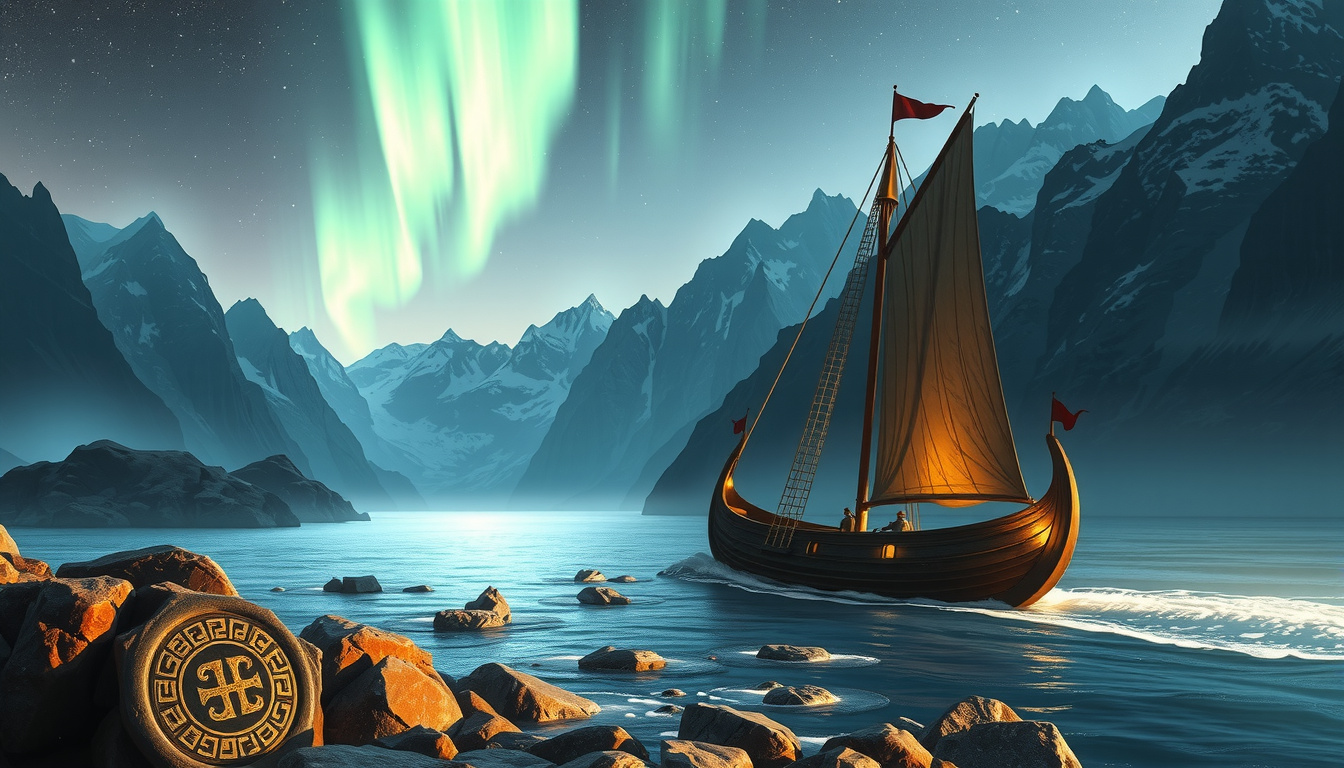
The Valknut, a symbol of three interlocked triangles, appears on numerous Viking Age memorial stones and artifacts in contexts suggesting connection to Odin and death magic. While we can't definitively decode its meaning from medieval sources, archaeological contexts associate it with battle, death, and passage between worlds-all central Odinic themes.
His ring Draupnir, another creation of the dwarfs, generates eight identical golden rings every ninth night. This symbolizes the abundance that flows from divine kingship, but also the cyclical nature of time and regeneration. Odin places it on Baldr's funeral pyre, and Baldr returns it to him from the underworld, emphasizing themes of death and renewal.
Archaeological finds from high-status Viking Age burials include items that evoke Odinic symbolism-spears, ravens, eight-legged horses in art, and single-eyed figures. The Sutton Hoo helmet's eyebrow decorations form flying birds, while Swedish helmet plates show mounted figures with spears accompanied by ravens and warriors.
Odin as the God of War and Death
Odin's role as war god differs significantly from straightforward battle deities like Mars or Tyr. He represents the intellectual aspects of warfare-strategy, tactics, the psychology of victory and defeat. The berserkers and úlfhéðnar (wolf-warriors) channel his battle fury, entering an ecstatic state called “oðr” that made them fearsome opponents.
His connection to death extends beyond simply ruling over fallen warriors. He's psychopomp and necromancer, capable of traveling to the underworld and speaking with the dead. The Baldrs draumar tells how he rides Sleipnir to Hel's realm to question a dead völva (seeress) about Baldr's prophetic dreams.
Valhalla serves multiple functions in his death dominion. The hall houses the einherjar who died bravely in battle, but they're not simply enjoying an eternal feast. Every day they fight each other in training combat, then return to life to feast on mead and the meat of the boar Sæhrímnir, who's slaughtered and renewed daily. This endless preparation serves Odin's strategic planning for Ragnarök.
The valkyries act as his agents in selecting the slain. These “choosers of the fallen” don't randomly gather battle-dead-they specifically identify warriors who'll prove most useful in the final conflict. Sources describe them as both supernatural battle-spirits and noble women who serve mead to the einherjar.
His mastery of seidr magic, traditionally associated with women, includes necromancy and shape-changing. The Ynglinga saga describes how he could “change skin and shape” and travel in animal form while his body lay as if sleeping. This shamanic ability allows him to gather intelligence across all worlds and communicate with various classes of beings.
Weapon offerings at bog sites across Scandinavia and Germanic Europe often show ritual destruction-bent swords, broken spearheads-suggesting dedication to Odin after victory. The massive weapon deposits at Illerup Ådal in Denmark, dating from 200-500 CE, represent systematic destruction of entire enemy armies' equipment, likely as offerings to the war god.
Odin's Complex Personality and Morality
Understanding Odin requires abandoning modern expectations about divine morality. He's explicitly described as an oath-breaker who uses deception and betrayal to achieve his goals. The giants call him “the deceiver” for good reason-his word means nothing when it conflicts with what he perceives as necessity.
The treatment of his human champions demonstrates this moral complexity. He grants them victory and glory, then arranges their deaths when they've outlived their usefulness. Legendary kings like Sigmund receive his favor until the god decides their time has ended, then breaks his gifts at the crucial moment. This pattern reflects the harsh reality that all mortal achievements prove temporary.
His seduction of Gunnlöð to steal the mead of poetry involves genuine betrayal. He spends three nights with her, swears oaths of love, then abandons her immediately after obtaining what he wants. Sources suggest she bears his child, making his abandonment even more callous. Yet the mythological framework presents this as necessary for bringing poetry to gods and worthy humans.
The god's relationship with Loki illustrates his pragmatic approach to alliances. Despite Loki's increasingly problematic behavior, Odin maintains their blood-brotherhood because Loki's cunning proves useful. Only after Loki orchestrates Baldr's death does Odin permit his punishment-and even then, he doesn't participate directly in binding him.
His testing of mortal hospitality through disguise serves multiple purposes. The Grímnismál shows him visiting King Geirröðr as a wanderer, being tortured when the king suspects him of sorcery. Odin's eventual revelation and curse of the king punish inhospitality but also demonstrate divine power and the importance of guest-rights.
Medieval sources emphasize that Odin's deceptions and betrayals serve a greater purpose-preserving cosmic order against the forces that will bring Ragnarök. His willingness to sacrifice personal honor for this goal makes him a tragic figure who bears the moral cost of leadership in an imperfect world.
Odin and Ragnarök
The prophecy of Ragnarök shapes every aspect of Odin's character and actions. He knows the twilight of the gods is inevitable-and that he'll die in combat with the wolf Fenrir-yet continues fighting against this destiny. This foreknowledge transforms him from a simple sky-god into a complex tragic hero.
His gathering of the einherjar in Valhalla represents desperate preparation for a battle he knows will end in defeat. The sources specify that he needs as many skilled warriors as possible for the final conflict, which explains his intervention in human battles to create more heroic dead. Every fallen champion he recruits marginally improves the odds, even though ultimate victory remains impossible.
The binding of Fenrir illustrates the moral compromises this knowledge forces upon him. The gods trick Loki's monstrous son into allowing them to bind him with the magical chain Gleipnir, requiring Tyr to sacrifice his hand as surety for their “good faith.” Odin knows this betrayal will ultimately lead to his own death-Fenrir's revenge-but perceives delaying the wolf's rampage as necessary.
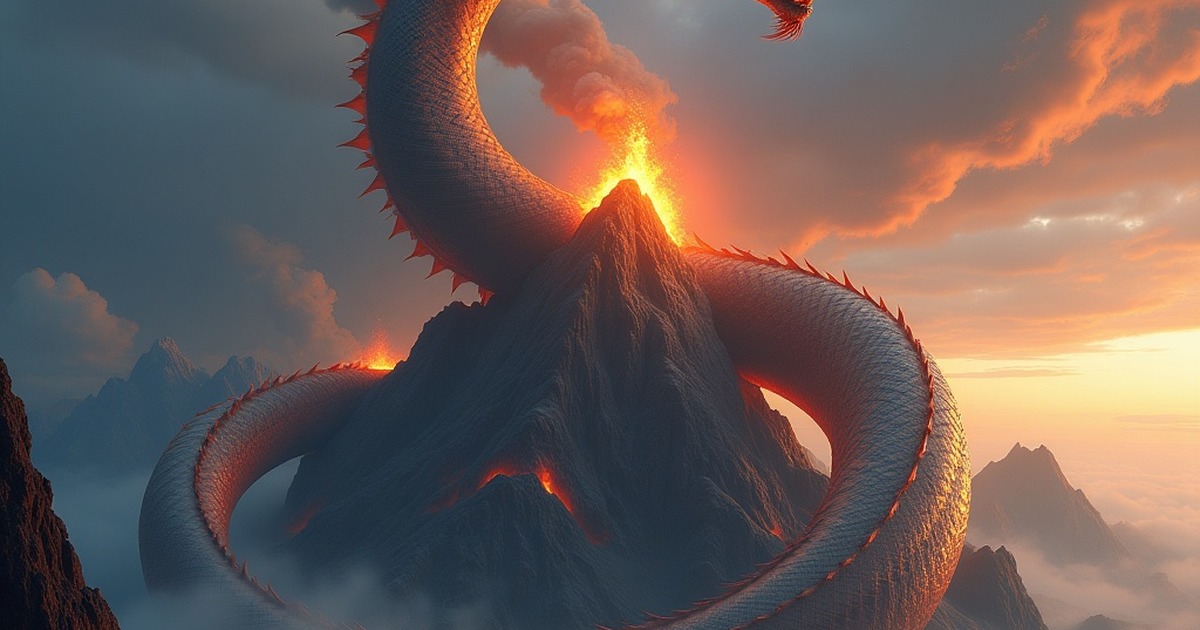
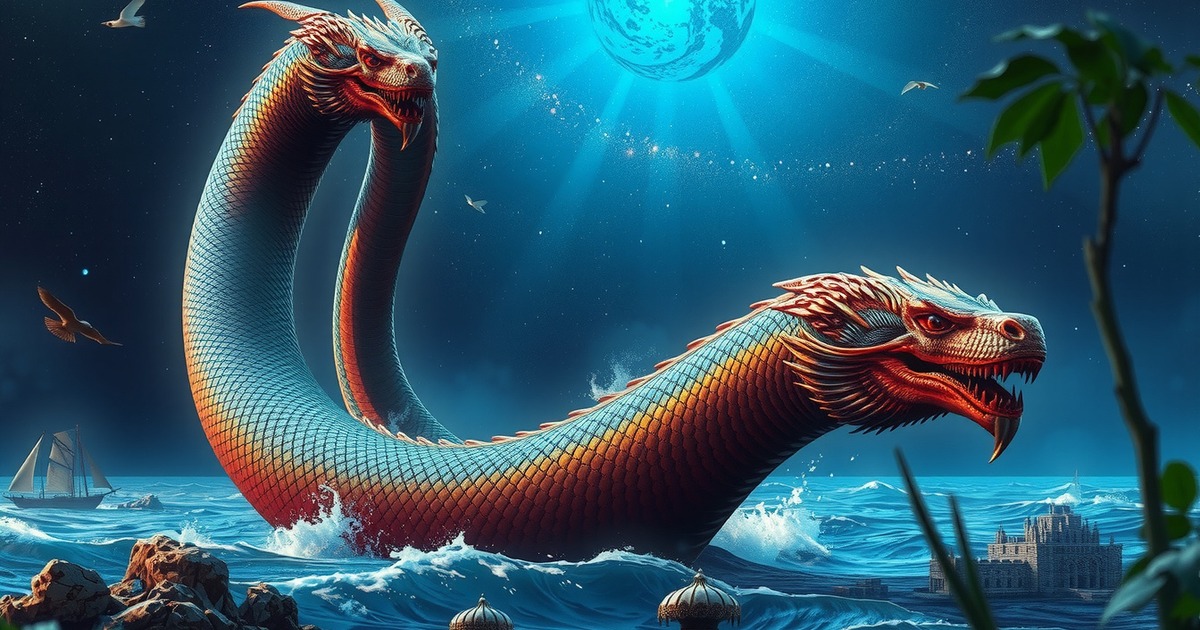
His treatment of his other prophesied enemies shows similar patterns. He casts Jörmungandr, the world serpent, into the ocean and banishes Hel to rule the underworld. These actions don't prevent their role in Ragnarök but postpone the final confrontation. The god makes tactical choices while accepting strategic inevitability.
The völva's prophecy in the Völuspá reveals details of the final battle that torture Odin with their precision. He'll lead the gods against the forces of chaos, see his sons fall, watch Asgard burn, then face Fenrir in single combat. The wolf will swallow him, though his son Víðarr will avenge him by killing Fenrir.
His consultation with the dead seeress in Baldrs draumar demonstrates his obsessive need to understand every detail of the approaching doom. Even in the underworld, he seeks information that might change the outcome or at least help him prepare more effectively. This quest for knowledge becomes increasingly desperate as events unfold according to prophecy.
Odin's Legacy in Modern Culture
Odin's influence on contemporary culture extends far beyond academic mythology studies. Wagner's Ring Cycle introduced Wotan to opera audiences, portraying him as a powerful but flawed ruler whose schemes ultimately destroy what he seeks to preserve. This interpretation influenced how subsequent creators approached the character.
Marvel Comics' Thor introduced Odin to mainstream popular culture, though their version emphasizes his kingly authority while minimizing the darker aspects of his mythology. The Marvel Odin serves as wise father figure and noble ruler rather than the morally ambiguous wanderer of medieval sources.
Neil Gaiman's American Gods presents a more faithful adaptation, showing Odin as Mr. Wednesday-a con man and manipulator whose schemes span decades. This version captures the mythological figure's cunning and willingness to sacrifice others for his goals. Gaiman's research into primary sources shows throughout the characterization.
The television series Vikings featured a complex portrayal where different characters experience Odin differently-as wise counselor, terrifying apparition, or mysterious stranger. This approach acknowledges the god's multiple aspects while avoiding the need to definitively explain his nature.
Modern Heathenry and Asatru practice includes Odin worship, though practitioners must grapple with his moral complexity. Some emphasize his wisdom-seeking aspects, others his role as inspiration for creativity and learning. Contemporary devotional practice often focuses on his positive attributes while acknowledging the darker elements as products of their historical context.
Archaeological tourism has grown around Odinic sites, particularly in Scandinavia. Uppsala's temple site draws visitors interested in connecting with pre-Christian Scandinavian religion, while runic inscriptions and picture stones provide tangible links to Viking Age Odin worship.
The god's association with shamanism and ecstatic practices attracts modern practitioners of various magical traditions. His self-sacrifice for wisdom resonates with contemporary spiritual seekers, though they often interpret the mythology metaphorically rather than literally.
Academic study continues revealing new aspects of Odin's historical development and cultural significance. Recent archaeological discoveries, linguistic analysis of medieval sources, and comparative mythology research deepen our understanding of how this complex deity evolved and what he meant to his original worshippers.
The enduring appeal of Odin across centuries and cultures suggests something universal in his character-the ruler who sacrifices everything, including moral certainty, in service of a greater purpose. Whether interpreted as divine figure, literary character, or psychological archetype, the All-Father continues challenging audiences to grapple with the complexities of power, wisdom, and moral choice in an uncertain world.